

There's so many questions I have about the upcoming Super Robot Wars Z2 remaster and it's driving me insane
Several weeks ago, Bandai Namco shocked Super Robot Wars fans across the world with the reveal of Super Robot Wars Z II: Ruination Remastered, an upcoming remaster of Dai-2-ji Super Robot Taisen Z: Hakai-hen. Our site contributor Kite did a fantastic write-up that briefly introduced the 2011 PSP-exclusive title that was only released in Japan, including which anime series were included in it, and its place in the Super Robot Wars Z pentalogy.
There has been an avalanche of reactions across the globe because nothing has been shown yet besides its logo. While disagreements are naturally rampant among fans of what it may or may not have, everyone does have the same central questions. What does a modern SRW remaster even look like, and why this one?
Why is SRW Z2 Part 1 being remastered first?
After all, the SRW title they’re remastering is a PSP game and it is not only a sequel, but it is Part 1 of a sequel duology. Bandai Namco recognized that fans would be understandably confused by its announcement, and their official answer on the Super Robot Wars 35th anniversary stream as to why they selected Hakai-hen was due to the result of a popularity poll, in which Hakai-hen supposedly ranked very high in it. I’ll admit I’m not entirely sure which poll they’re specifically referring to; it could have been held internally, or a poll held by Japanese video game magazine Famitsu in a past issue some time ago.
Either way, it’s not farfetched why Hakai-hen would be so popular domestically, if Bandai Namco’s word is to be trusted. The first Super Robot Wars Z was one of the best-selling SRW entries on the PS2 and of course, the PSP was incredibly well-received in Japan partially due to its portable, more commute-friendly nature.
Hakai-hen’s roster was nothing to scoff at either, and many suspect this is one of the primary reasons why Ruination Remastered is the first one being re-released in the SRW Z series. Almost all of the series from SRW Z1 are returning, and many of the anime series being added into it are popular internationally now. Some of these include Code Geass, Gurren Lagann, Macross Frontier, and Gundam Wing.
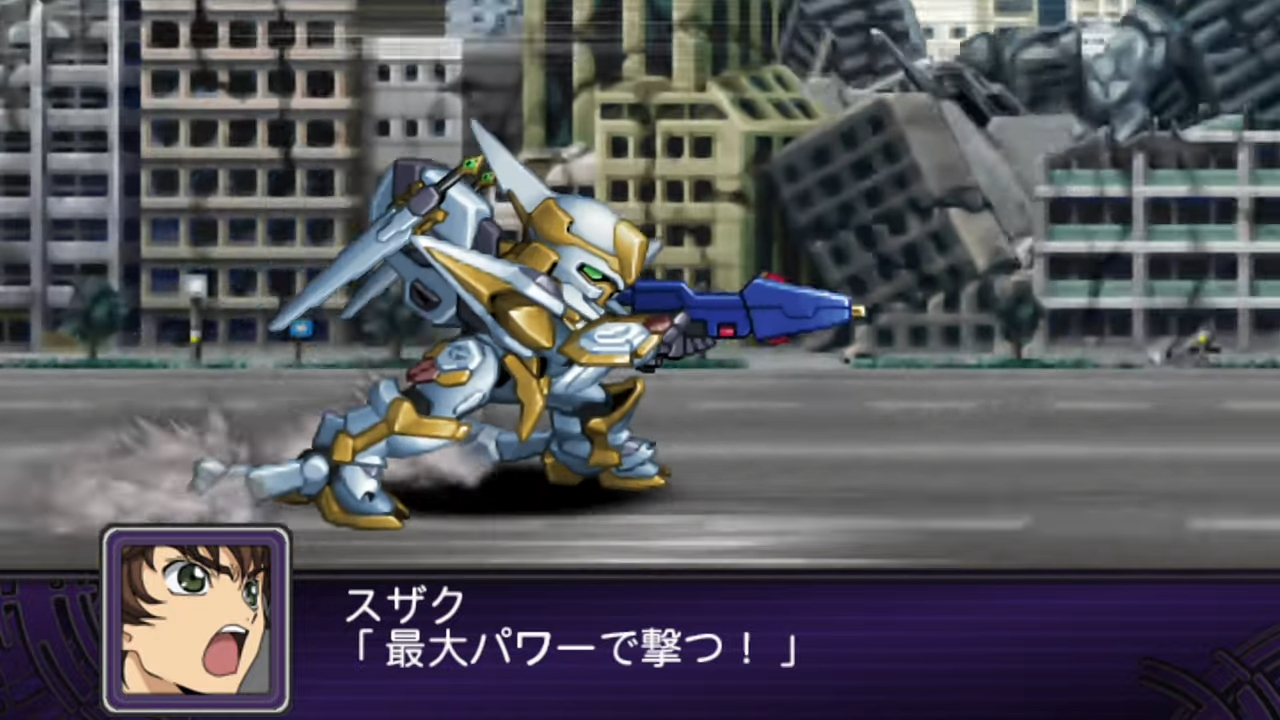
For better or worse, the addition of these series makes it a bit easier for international audiences to buy into it. While I adore the core cast of SRW Z1, I know that the overseas fanbase of King Gainer, Xabungle, Gundam X, and Aquarion aren’t as large as those aforementioned series. Nevertheless, one of Bandai Namco’s biggest challenges for SRW Z2 Ruination Remastered is convincing people around the world to not turn away after learning that it’s a sequel to a game they most likely never played, because it never released in their region before.
I think there are certainly other plausible reasons that factor into why Hakai-hen was chosen first.
An easy one to point out is that the copyright licensing situation of some of the anime series involved with SRW Z1 may make it a more complicated ordeal to get approved. The series that show up in SRW Z1, but not Hakai-hen are Mazinger Z, Great Mazinger, UFO Robot Grendizer, Getter Robo G, Eureka Seven, and Super Heavy God Gravion (S1).
Now you might be thinking “Wait a minute, but some of those are in Hakai-hen.” The characters and units involved in these shows do appear, but they are technically from other shows, a movie, or a second season of a show. For instance, the Mazinger cast in Hakai-hen is specifically from Mazinger Edition Z: The Impact! - not Mazinger Z and Great Mazinger. Mazinger Edition Z: The Impact! is a 26-episode TV series that aired in 2009 that retells the original Mazinger Z story.
This may seem like splitting hairs on the surface, but it is a tremendous difference behind-the-scenes in the world of copyright. Hypothetically, some regions around the world may have different licenseholders for Mazinger Edition Z: The Impact! and the original Mazinger Z / Great Mazinger series. Separate negotiations, contracts, and agreements would have to take place between those various licenseholders, and this is under the assumption that the licenseholders are easily accessible and hold relatively reasonable rates to allow Bandai Namco to distribute the game with that IP in their region.
Of course, I’m not saying that the Mazinger IP is the culprit if international copyright licensing was one of the primary issues holding back SRW Z1 in favor of Hakai-hen. It’s merely an example of how messy that whole situation can get, since the SRW series now has to account for it to release the games worldwide. For all I know, it might be Getter Robo G because that show tends to be absent, while Getter Robo Armageddon has been included in more recent SRW titles.
In fact, those familiar with the Macross franchise in the west understandably get frustrated immediately when they hear the words “Harmony Gold”. I won’t get too into the weeds, but Harmony Gold kept an iron fist over the international rights of Macross starting in 1984, and they let the IP stagnate in favor of Robotech. It wasn’t until March 2021 (and announced to the public the following month) that international rights over the Macross series was transferred to Big West, though the original Super Dimension Fortress Macross series and Do You Remember Love? film are still retained by Harmony Gold.
Think about that. Before 2021, there was no hope for any SRW game that included a Macross series to be released overseas. Fast-forward to today and the recent Super Robot Wars Y included Macross Delta’s console game debut and Ruination Remastered has Macross Frontier.
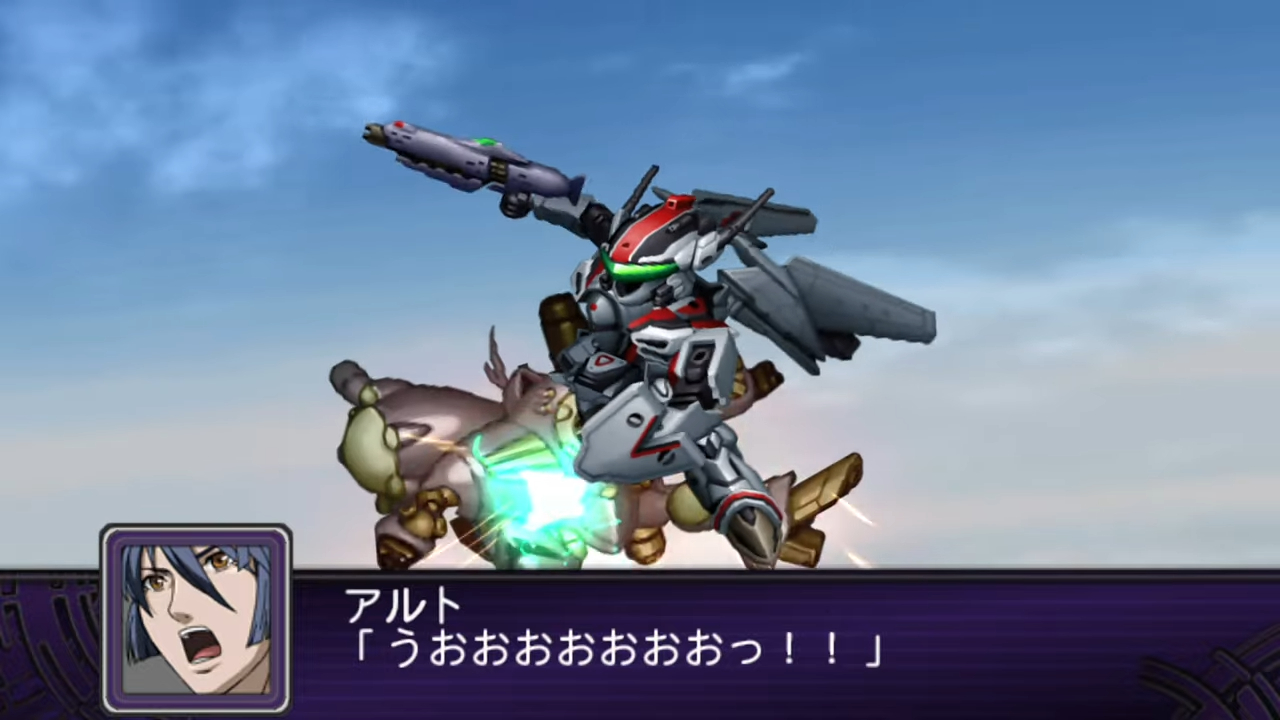
Another suspicion I have as to why Hakai-hen was selected over SRW Z1 to remaster revolves around the development team’s shift to the Unity engine. SRW Y was the first console SRW entry to run on Unity; they began using Unity for the SRW series starting with the SRW DD mobile game.
This is noteworthy because there’s a key difference between SRW Z1 and Hakai-hen. SRW Z1 had a squad system, a mechanic that only a few past SRW games utilized. In SRW Z1, players could form a squad with up to 3 units and assemble them into different formations in the middle of combat. These formations allowed incoming damage to be redirected to another squad member, and several attack options incorporated the entire squadron.
Visually, these would involve rendering three sprites at the start of a combat animation. Then in some attack options, it transitioned to a horizontal split across the screen to display two units initiating their attacks simultaneously before the leader took back command of the entire screen space to initiate their attack.
While this may sound simple on the surface from a player interaction level, it isn’t something that can easily be replicated or reproduced when rebuilding, and relearning, an entire development pipeline on a new game engine. I’m not claiming that I personally have the credentials to speak on this with any authority whatsoever, but when you read, watch, and hear enough stories from developers on how video games are made… it becomes evidently clear that making video games is an incredibly difficult process, and very little of that is considered “easy” for the ones creating them.
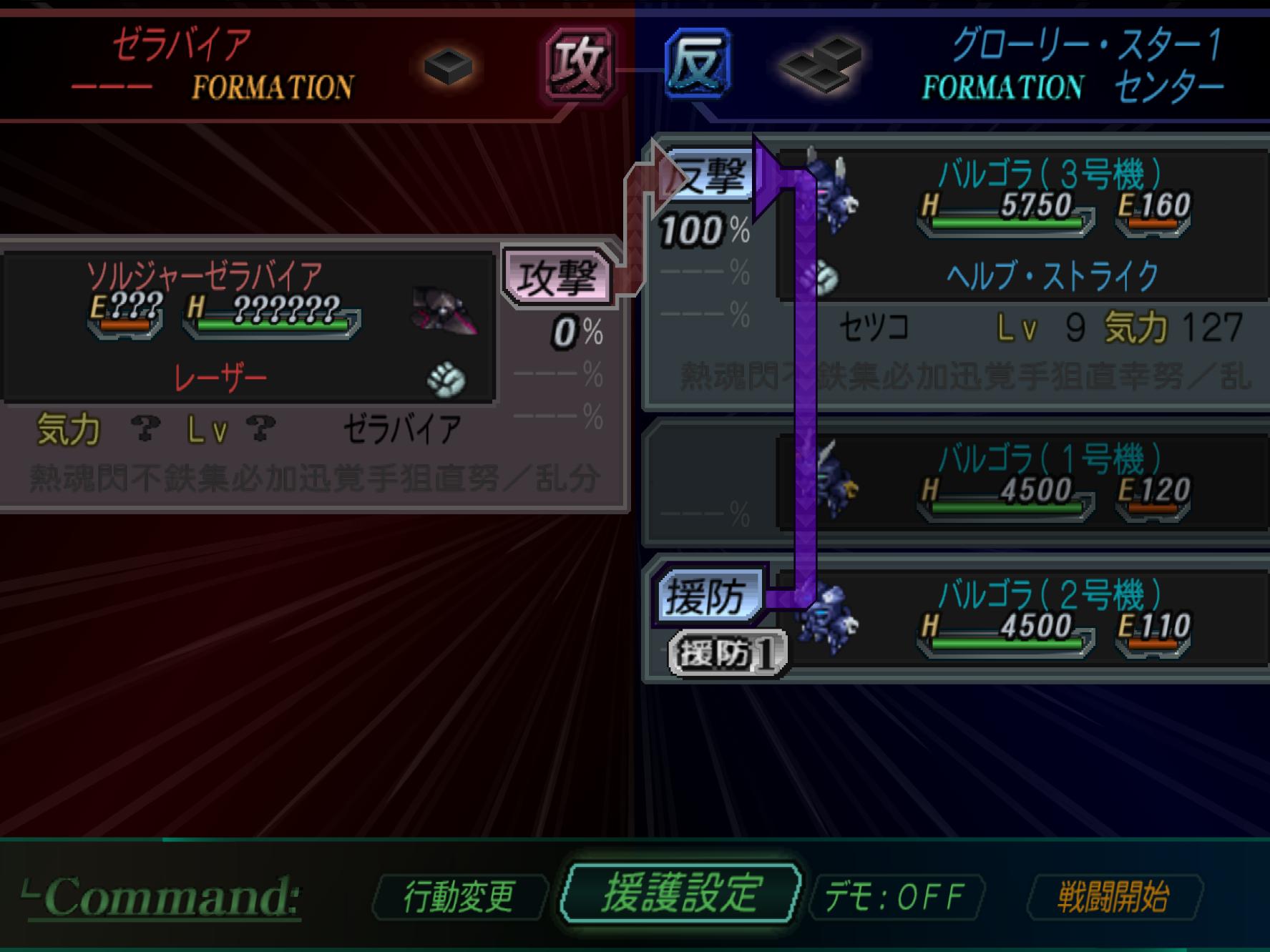
During SRW Z2 Ruination Remastered’s announcement, Bandai Namco mentioned that the game was being built from the ground-up with SRW Y’s engine. SRW Z2 Hakai-hen, and its sequel Saisei-hen, both got rid of SRW Z1’s squad system due to their technical limitations as PSP games. Plus, they had to be easily legible on the PSP’s smaller screen, and the squad system wouldn’t have been a good fit for that.
Therefore, Hakai-hen and Saisei-hen reverted back to the single unit system that most SRW games possessed, including SRW Y. The current SRW development team is still getting used to the Unity engine, and I bet Hakai-hen was relatively a more straightforward project to pursue on a technological level. I’m crossing my fingers that SRW Z1 does get remastered at some point, either after Hakai-hen or the hypothetical Saisei-hen remaster follow-up.
That’s my current line of thinking on why SRW Z2 Ruination Remastered exists. Let’s table all that speculation for now, and get into the meat of why I decided to write this piece.
What does a modern SRW remaster even look like?
First, I don’t think anyone should get too hung up on what the term “remaster” means in the modern utilization of that term in video games. It is solely a marketing term at this point, and is interchangeable with what a “remake” constitutes on a case-by-case basis.
There are some games, such as the original Final Fantasy VII running on modern systems and Final Fantasy VII Remake, that do provide a clear divide over what a “remaster” and “remake” are. Then there are projects like Raidou Remastered and Dynasty Warriors 3: Complete Edition Remastered that muddy the line between “remaster” and “remake”, so it’s not worth getting stunlocked over individual definitions and distinctions versus how the terms are employed by developers and publishers.
Although the SRW series is celebrating its 35th anniversary, the long-running franchise only has a few examples of re-releases that could be considered complete remasters or remakes. Much of its library amidst its 50+ unique entries leans more in the direction of basic ports to other systems that don’t significantly overhaul its visuals and add enhanced features.
The closest titles that spring to my mind of what a SRW “remaster” looks like are Super Robot Wars OG: Original Generations, Super Robot Wars A Portable, and Super Robot Wars HD.
SRW OG: Original Generations is a PS2 remake of two GBA titles and bundles them together; the GBA entries were released in the west via Atlus and 505 Games. It added 3D maps, 3D models to environments and units, all-new attack animations, voiced attack lines, and much more. This is considered the definitive edition of those titles, but it is indisputably a complete remake rather than a remaster.
- Footage of Super Robot Wars: Original Generation 1 on GBA
- Footage of Super Robot Wars OG: Original Generations on PS2
SRW A Portable was a similar type of re-release to Original Generations; it was a PSP remake of Super Robot Wars A on the GBA. While it didn’t add 3D environments and models, those art assets were still brand-new and the attack animations saw similar enhancements to how Original Generations overhauled them from its source GBA game.
Super Robot Wars HD is also more of a remake, rather than a remaster. Released in 2014 for PS3 and Vita, it was a remake of the first Super Robot Wars title from 1991 on the Game Boy. SRW HD massively enhanced the presentation of the original by adding color, adding background environments in combat encounters, new UI elements, and much, much more.
As you can tell, there isn’t really a contemporary re-release of a SRW entry aside from Super Robot Wars HD twelve years ago. I think there are a few “safe” assumptions and expectations for SRW Z2 Ruination Remastered though, based on these past examples and SRW Y.
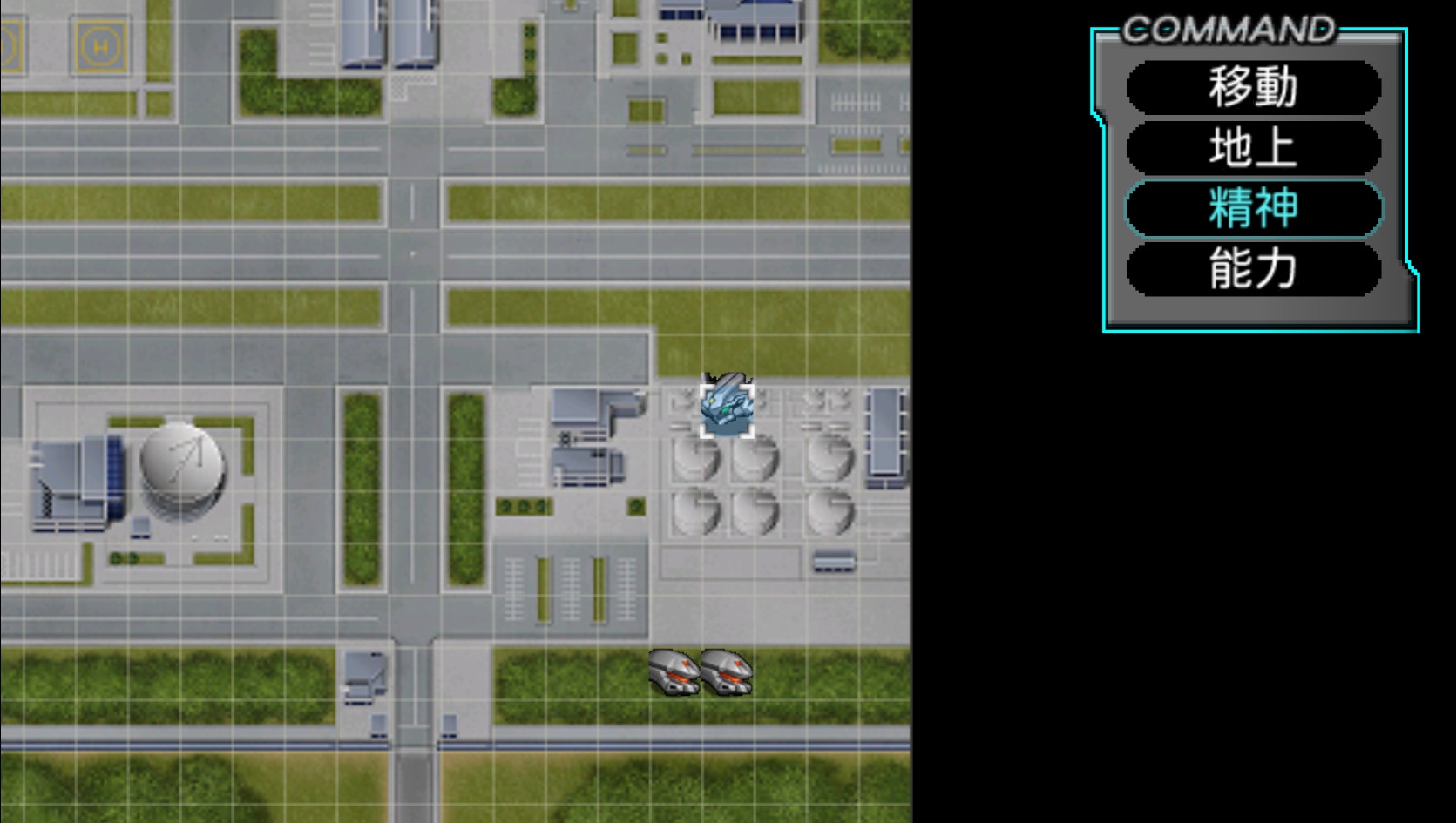
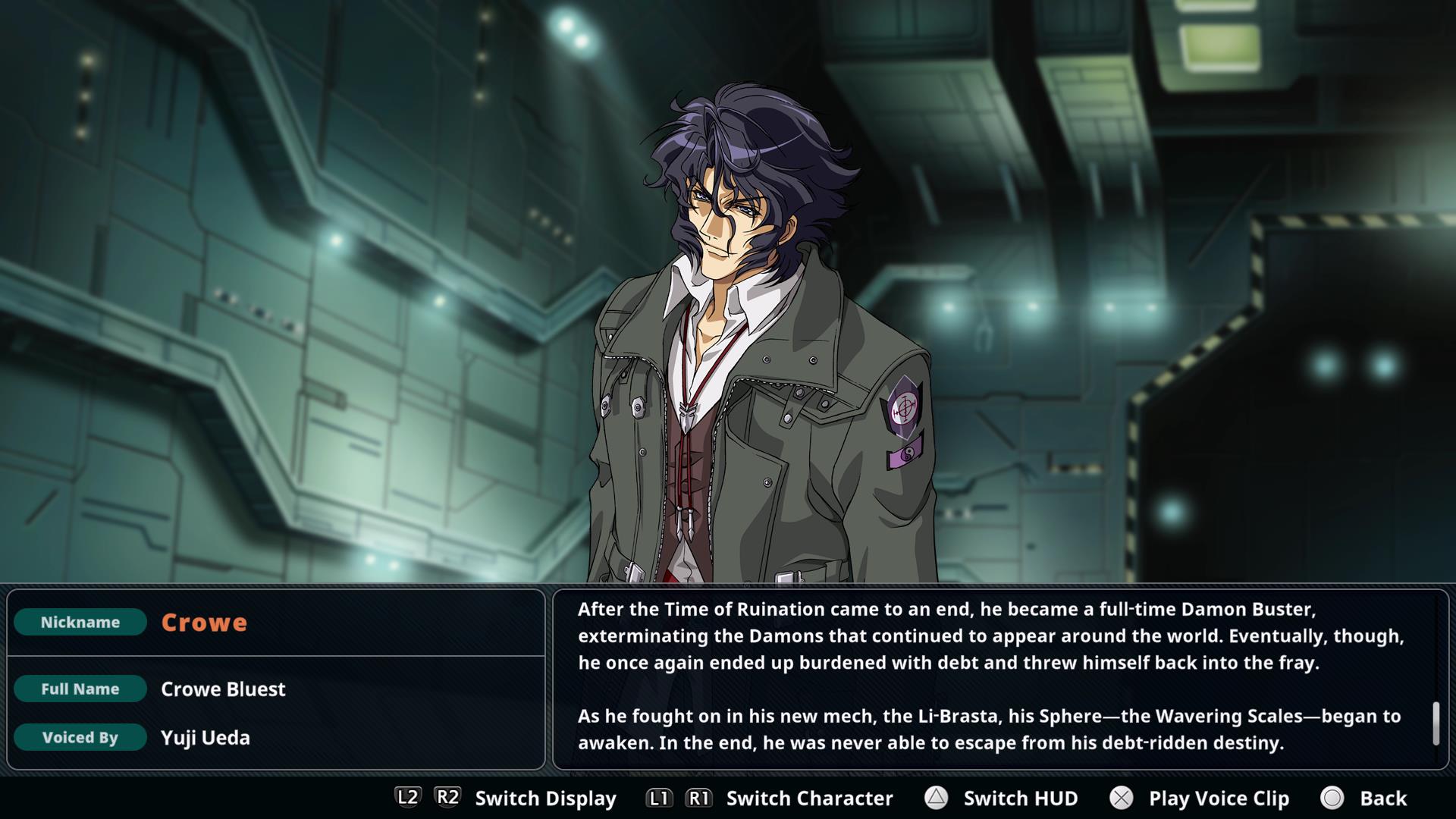
Since Ruination Remastered is coming to modern console platforms, 3D maps and 3D models for units in battles feels like a safe bet to bank on. After all, the recent Anniversary Expansion Pack for SRW Y added the protagonist of Hakai-hen, Crowe, and his unit got a 3D model. The last console SRW game to feature 2D maps and 2D head-only unit models moving in them were the two installments of SRW Z3 because both were released on Vita, as well as PS3.
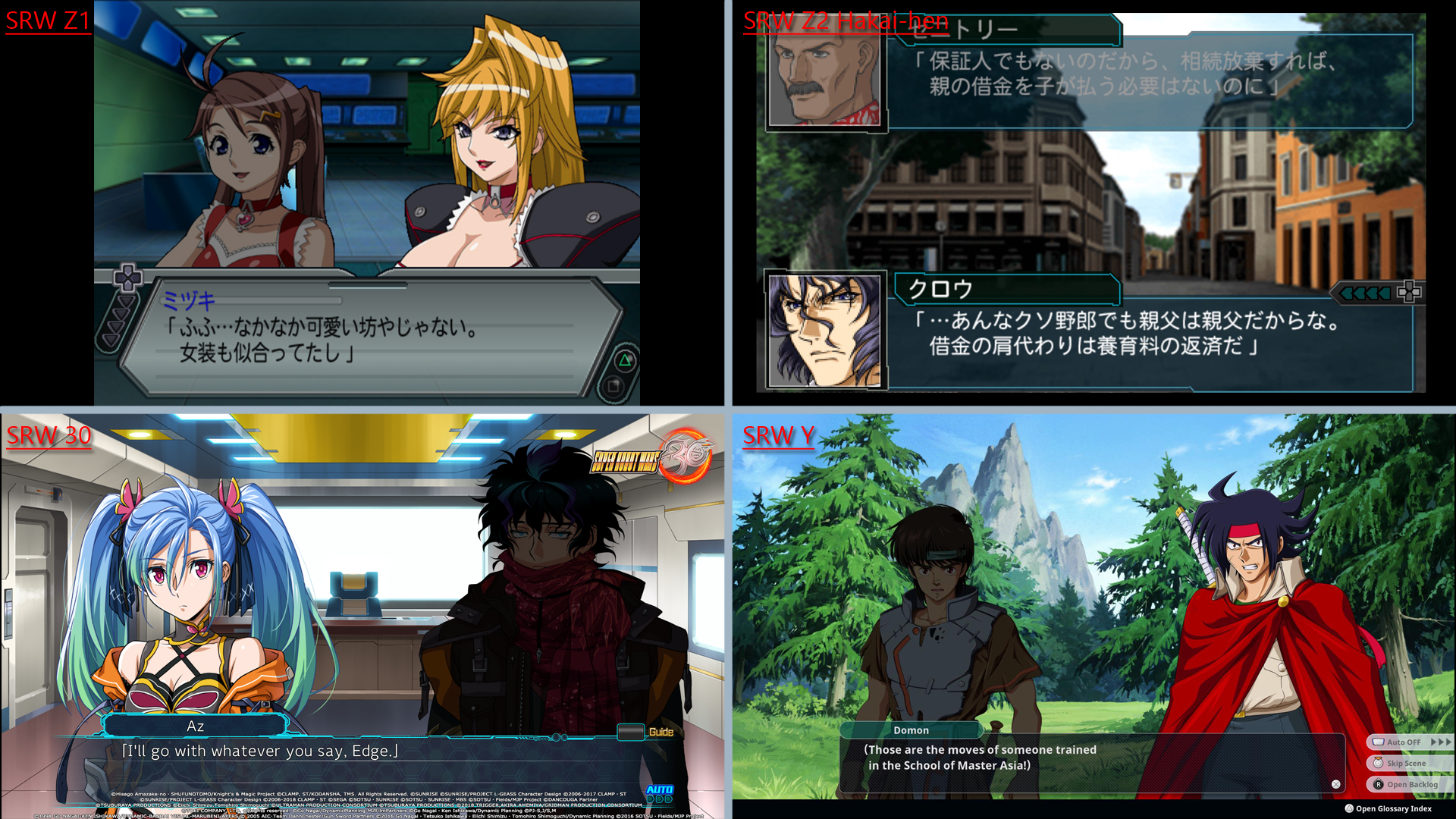
Another improvement that’s almost certainly coming to Ruination Remastered are that character interactions will exhibit more than the character’s face. One of the noticeable cutbacks from SRW Z1 on the PS2 to the Z2 duology on the PSP were the limitations of a character’s artwork during conversations. In SRW Z1, it featured the traditional system that displayed characters down to their bust area above the dialogue box while SRW Z2 strictly displayed only their faces.
Now the question is whether Ruination Remastered will exhibit the traditional SRW presentation for characters as I just described, or if it will adapt the changes that SRW Y introduced. In SRW Y, the character artwork during interactions was more zoomed out and occupied less screen space. Paired with the less stylized minimalist nature and reduced size of the dialogue box between past console SRW titles and SRW Y, this also caused a side effect of characters feeling small and less prominent in conversations. Personally, I’d like to see a return of the more traditional presentation that had the character artwork closer to the screen.
I feel like these two aspects are the only surefire elements that I can confidently say will be enhanced. Everything else feels like it’s up in the air until we get a new Ruination Remastered trailer that shows gameplay footage.
One major component of SRW that has consistently suffered in the shift to the HD era of video games is the variety of its backgrounds throughout its story scenes. Many older console SRW entries had several things working in their favor, including the then-standardized 4:3 aspect ratio and lower resolution targets. Therefore, SRW games could easily include a screenshot from episodes of the relevant shows to serve as the background during story sequences without looking too out of place.
The HD era hasn’t been kind to SRW. That solution is no longer viable, since it would look horrendous if the developers simply resized screenshots of anime episodes for modern resolutions, and no upscaling technology can make a natively 480p or lower shot look elegant on a 4K display. Copyright may also be a concerning factor as well, since utilizing those native scenes from anime episodes is directly incorporating that art asset into a monetized product. This can cause additional complications from a legal standpoint, as well.
That’s part of why many HD-era console SRW titles have felt a bit lackluster in story presentation compared to older titles. They lose some personality to the properties they represent, because they’re unable to fully faithfully reproduce the presentation of their stories. Instead, they’ll have a generic pool of standardized background scenes that serve as substitutes to represent the environment of those story events.
Don’t get me wrong; some unique backgrounds for anime shows do still exist in modern SRW installments. They aren’t screenshots or direct assets and are, instead, redrawn backgrounds to support modern display resolutions. This takes considerably more time, effort, and resources to achieve, which is why they aren’t as prolific compared to how often past SRW games employed them.
Ruination Remastered makes me curious how they’ll handle this component of Hakai-hen. Early into Hakai-hen, the game recreates the beginning of Gundam 00 in which a pre-recorded video of Aeolia Schenberg plays to the entire world introducing the Celestial Being organization that Gundam 00’s main cast works under. This sequence shows a screenshot from Gundam 00’s episode of that video playing, and the reactions of several characters in Hakai-hen throughout its world.
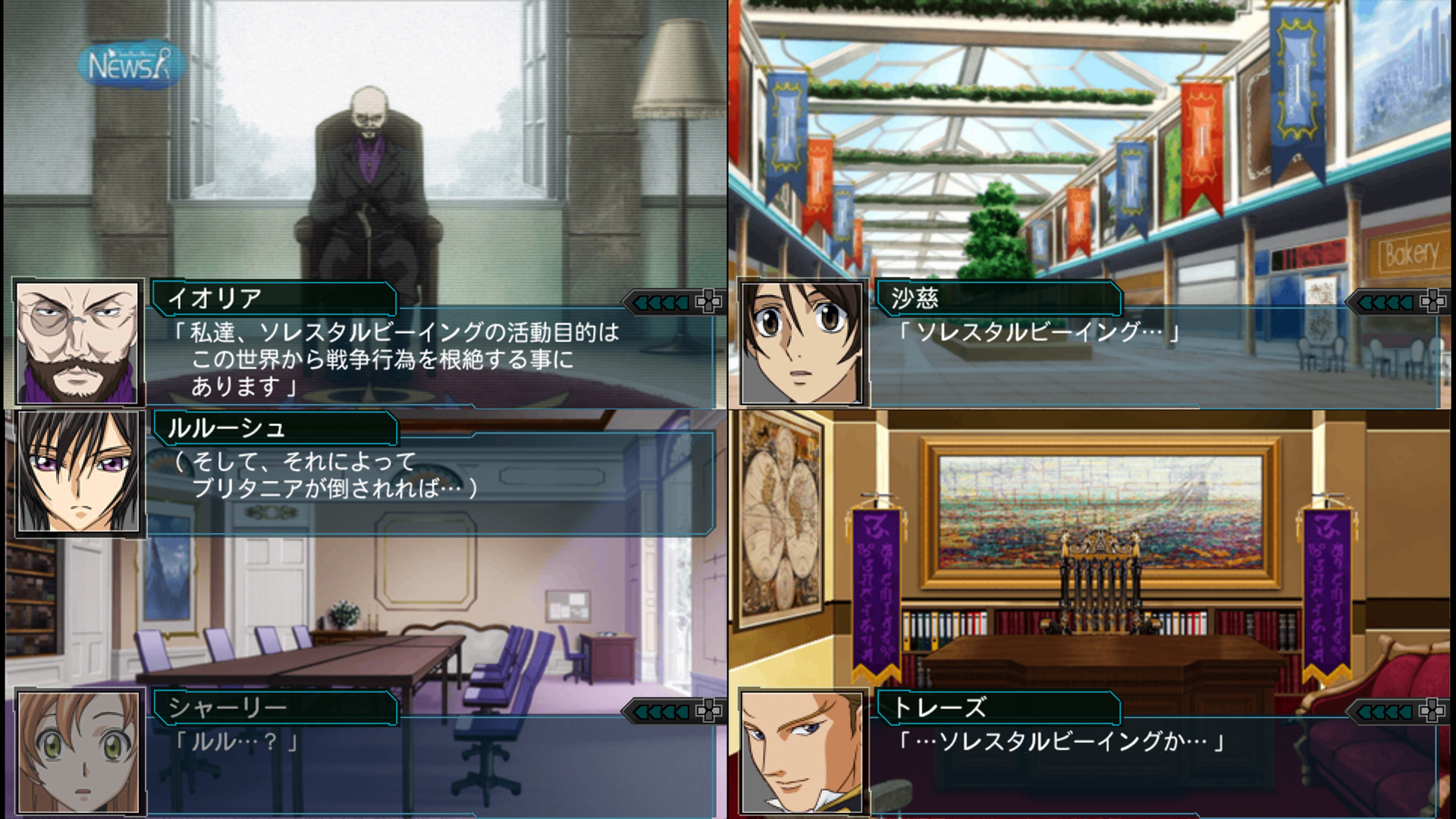
These include Saji from Gundam 00 at a shopping mall, Lelouch from Code Geass at the student council room in Ashford Academy, and Treize from Gundam Wing in his office. All three of these scenes have distinct unique backgrounds from their work, especially the one for Lelouch because it’s a direct screenshot from the show.
If a modern new SRW entry tackled this same sequence, the backgrounds would most likely be generic, standard backgrounds to depict an outside shopping district, a classroom, and an office that would be repeatedly used by different characters irrespective of time and place.
I wonder how Ruination Remastered will handle it. Will the development team go through the effort to redraw all of Hakai-hen’s scene backgrounds faithfully? That also includes the one-off snapshot of Aeolia Schenberg’s video message. Gundam 00 is natively a HD-era show, so it might be viable to just upscale a direct frame from it without having to redraw it entirely.
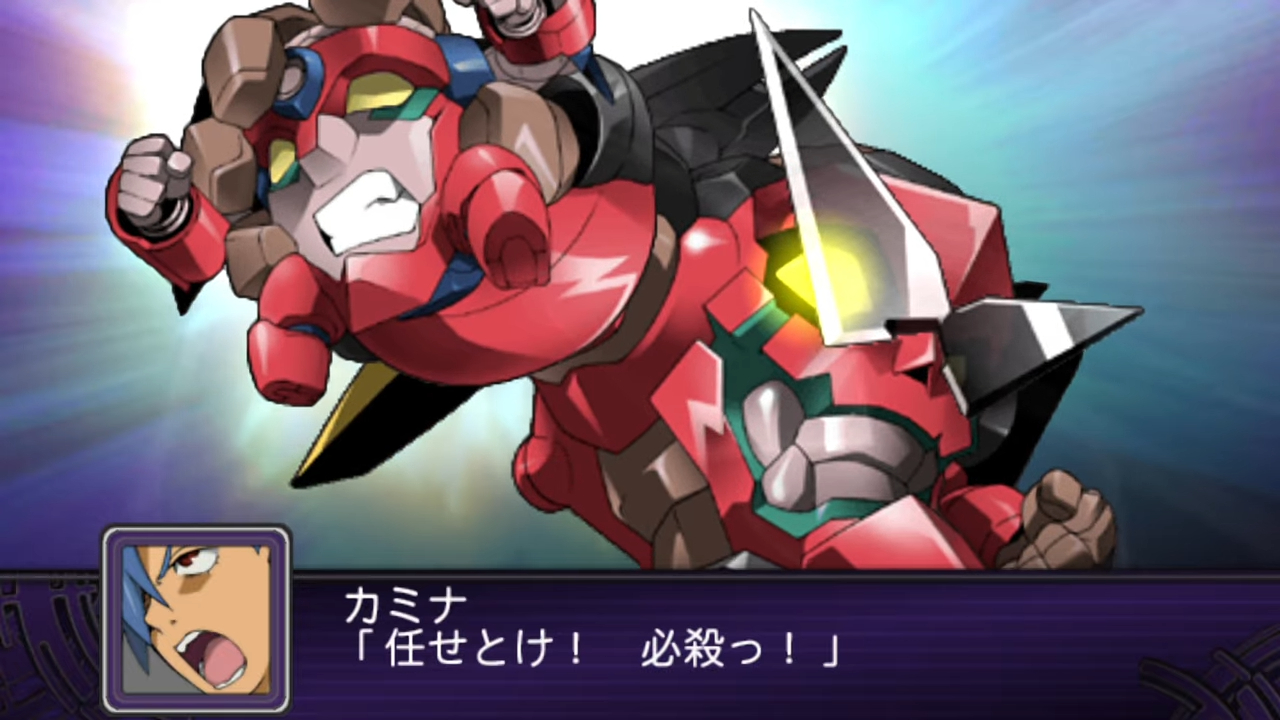
The elephant in the room looming over Ruination Remastered for many SRW fans is how will the current development team handle the unit models and their attack animations. Once again, it’s no secret that HD-era SRW titles haven’t been able to reach the same peaks as its older entries when it comes to the quality of their attack animations. Even watching the same character’s attacks from SRW Z1, Z2, and Z3 will tell you more than I can ever describe with words alone.
Here's the Strike Freedom Gundam's attack animations in:
- Super Robot Wars Z on PS2
- Super Robot Wars Z2 Part 2 Saisei-hen on PSP
- Super Robot Wars Z3 Part 2 Tengoku-hen on PS3
- Super Robot Wars Y on PS5
There is an observable dropoff in the smoothness of a unit’s motions, choreography, and special effects that have HD-era titles come off with a more stuttery presentation to their older counterparts. Of course, the line details on the HD models are much better, but the flow of action on HD-era units are more concerned with emulating the camerawork and cinematography of its attacks to their source series.
Meanwhile, older SRW installments tended to focus on the motion and trajectory of the sprite model itself with less cuts and close-ups that led to a stronger feeling of cohesion from a cinematographic angle. Both approaches are no doubt valid, yet there is a common sentiment that the SRW Z2 duology was the last time the mainline SRW series with licensed shows truly stuck to its status as an animation tour de force before it branched into a different design philosophy to keep HD-era games’ costs in check.
The only exceptions to this perception were The 2nd Super Robot Wars OG on PS3 and Super Robot Wars OG: The Moon Dwellers on PS3 and PS4. They were excellent showcases that the SRW series could still deliver on impressive attack animations in HD games, but it skyrocketed development time, costs, and resources
Depending on what Bandai Namco decides to do, SRW Y may provide somewhat of a blueprint. I’m still holding out hope that the approach to Ruination Remastered’s attack animations will closely adhere to, if not exactly replicate, how Hakai-hen did them. Crowe’s unit in SRW Y, the Li-Brasta T, is the upgraded “final form” of his past units consisting of the Brasta, Li-Brasta B, and Li-Brasta R throughout Hakai-hen and Saisei-hen. Li-Brasta T first debuted in SRW Z3 and its touched up SRW Y model is the closest clue we currently have as to how the visuals of Ruination Remastered may be shaping up.
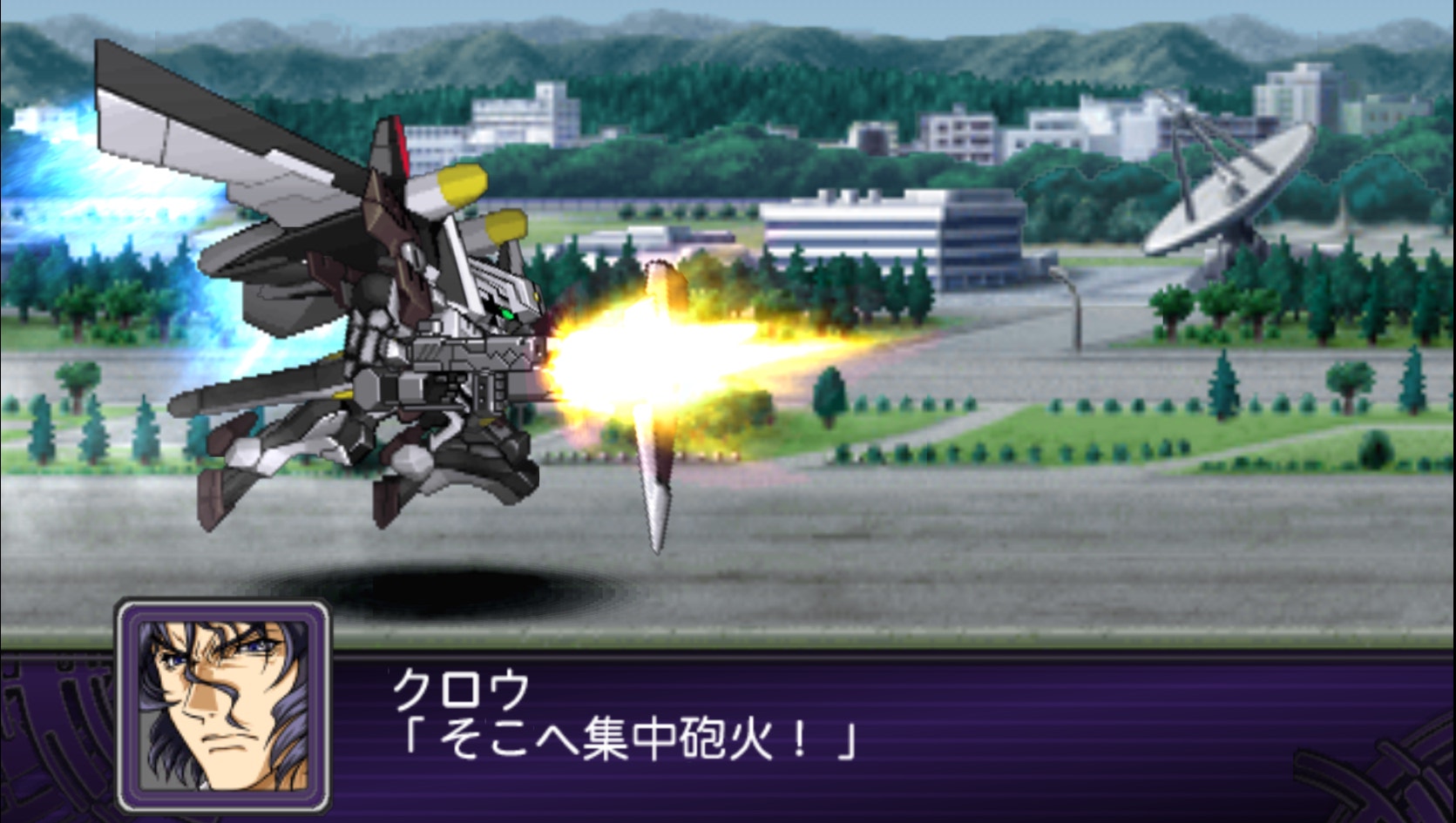
Keep in mind that his base starting unit, the Brasta, in Hakai-hen mostly carries a different arsenal than the Li-Brasta T. It’s currently hard to gauge if the Li-Brasta T’s attack animations in SRW Y are strong indications of what to expect out of Ruination Remastered, since most of it is lifted from SRW Z3.
Several other units that Hakai-hen and SRW Y share come from “veteran” series that are consistently in almost all modern SRW games these days, such as Char’s Counterattack, Zeta Gundam, and Gundam SEED Destiny. It’ll be interesting to see if Ruination Remastered will simply reuse the exact same attack weapon sets and attack animations for units such as the Nu Gundam, Zeta Gundam, Strike Freedom Gundam, and Destiny Gundam from SRW Y - or will it recreate their exact same Hakai-hen attack options and animations? There’s a lot to look forward to, whenever the next trailer drops.
Lastly, will Bandai Namco add DLC to Ruination Remastered? It’s a bit of an odd thing to ponder about right now, since Hakai-hen has a set anime series list with a finalized roster. Would DLC just be one-off new scenarios with the existing cast? Would it make sense to add more anime series as DLC, if they won’t even participate in the main story at all? I’m personally not thinking that much of giving Ruination Remastered DLC at the moment, since there are larger questions about it occupying my headspace.
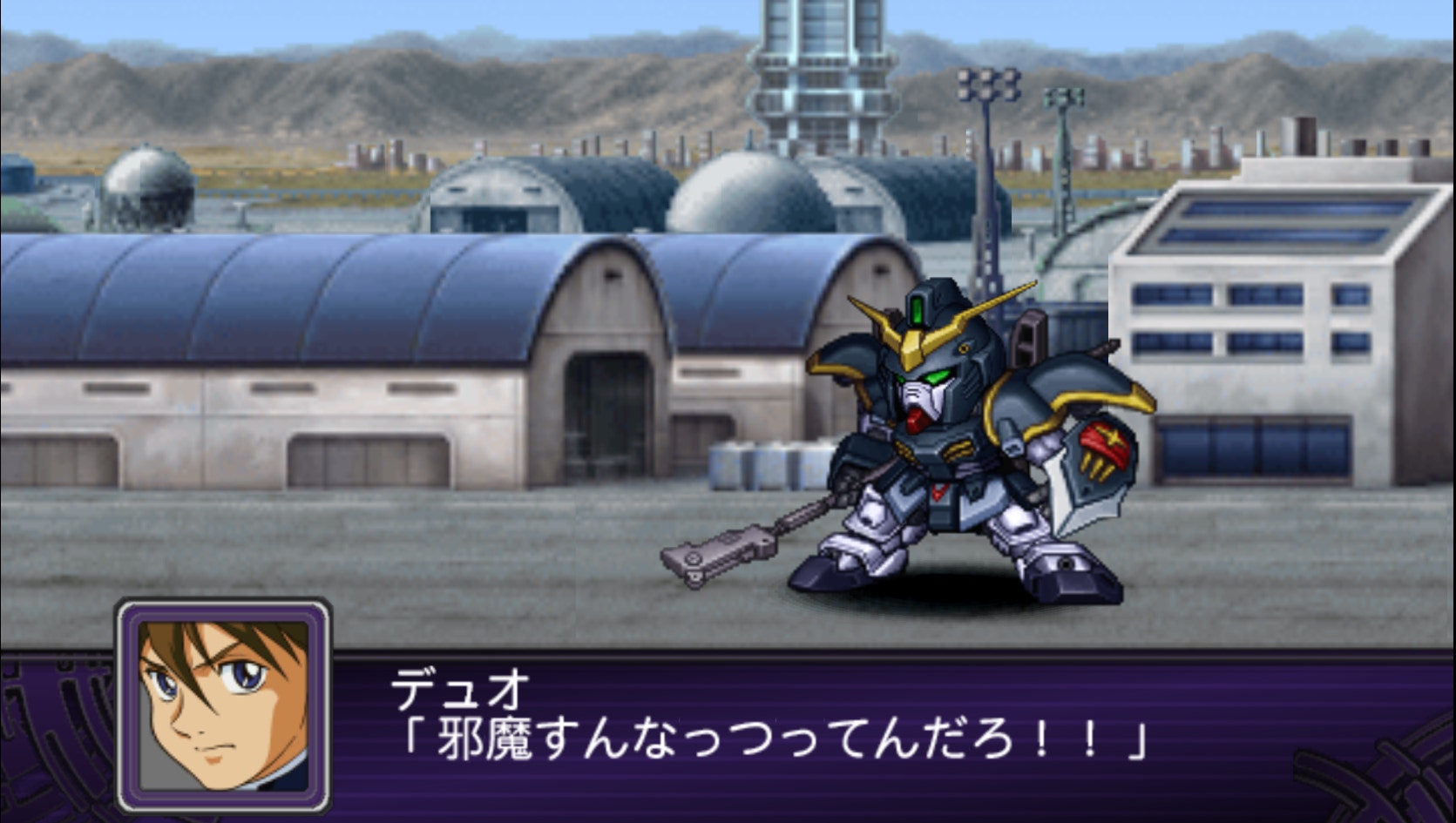
In a strange way, I'm incredibly grateful that Hakai-hen was chosen first to spearhead this initiative - assuming it does lead to further remasters of other SRW Z titles. It is one of the only titles in the entire SRW series that includes the stories and units of the early seasons and plot arcs of Gundam 00, Code Geass, and Gurren Lagann. Later SRW installments usually just include units from the A Wakening of the Trailblazer and Lelouch of the Re;surrection films from Gundam 00 and Code Geass respectively, as they try to stretch their paper-thin plotlines. There aren't any recent console SRW titles that also include the TV version of Gundam Wing either; they usually opt to just include Endless Waltz, instead. Revisiting the TV series of these tales is always a treat in my opinion.
Anyway, there's so many questions I have about the upcoming Super Robot Wars Z2 remaster and it's driving me insane. I’m incredibly excited, and a little worried, on how Ruination Remastered is shaping up. If its attack animations mimic Hakai-hen’s almost perfectly, I hope this is giving the current development team the experience they need on how to return to the older SRW games’ approach to attack animations on the Unity engine toolset they’ve migrated to. If Ruination Remastered, and future SRW remasters, are the initiative they need to return to the golden age of SRW, I’ll support it all the way.