

A Look Back at Kingdom Hearts' Portable Era
Like many gamer millennials, I’ve been with the Kingdom Hearts series since childhood. Kingdom Hearts was the first game to ever make me understand that games can create worlds to explore, and moments worth cherishing. After the halcyon days of the Playstation 2 came and went, I took a break from console RPGs. My time spent in front of a TV was mostly spent playing the popular shooter of the year, with few meaningful diversions. The industry started to shift in the 2000s, with RPGs mostly filling the libraries of portable consoles. Console gaming became where I played games to fit in, but portable game consoles opened the door for me to play so many series experimenting with weird ideas.
This is why I rarely felt Kingdom Hearts’ absence after the second game. The series grew up alongside me on GBA, DS, and PSP. Getting a new, weird, Kingdom Hearts game every few years allowed the series to never leave my mind. When Dream Drop Distance came out, I begged a friend in school to borrow his 3DS for a week just so I couldn’t miss it. Not just to see where the story would be going next, but to see what wild new swings they’d take with the gameplay.
Portable Kingdom Hearts showed that the goals of the series ultimately exist to redefine it with every single entry, and that likely put me in the right mindset to enjoy how III deviated so far from II. Portable games shot for lower fidelity, decreasing development costs enough to afford to get experimental with many aspects of it. They would often need to, just to accommodate for lower hardware specs. If you were there in the moment and had the consoles they released on, it truly felt special to be there to play these as they came out- even if they weren’t perfect.
The 2010s threw a bit of a wrench in this. As the series focused on its big console return, remaster collections were necessary to consolidate Kingdom Hearts on a single platform so as many people as possible were able to be caught up without shelling out the money for several aging portable systems. However, these portable “spin-offs” that make up for most of the series have not been consistently preserved. We’ve got a remake of a GBA game, two movie compilations, one straight port, and an HD revision. In an ideal world, there’d be more options to experience all these games in every possible way, but that’s not the world we live in.
With the new Switch and Switch 2 versions of most of the series, this is the first time all of Kingdom Hearts has made it back onto a portable system (not counting PC handhelds). Not cloud versions, but bespoke ports that run natively. While it’s amazing to get to bust out Kingdom Hearts I, II, or III on the go (do you know how often I’ve wished to start up new KH2 critical playthroughs without having to dust off the PS5?) I thought it’d be an interesting use of my time to focus on re-visiting how the portable entries have been presented for a modern audience on the most popular modern handheld system.
Re:Chain of Memories
The remake of Chain of Memories gets a lot of flack for essentially being an asset flip adaptation of a snappy, 2D Kingdom Hearts card-battler RPG. The original was one of my favorite GBA games, but something about the remake was too much for me. Battles felt needlessly complex now, and it was a lot harder than the original (which was already difficult for my childhood self). I later grew to appreciate it via cutscene compilations on YouTube, but across many times of re-purchasing the remaster there was never a moment of wanting to give it a re-appraisal as a game itself.
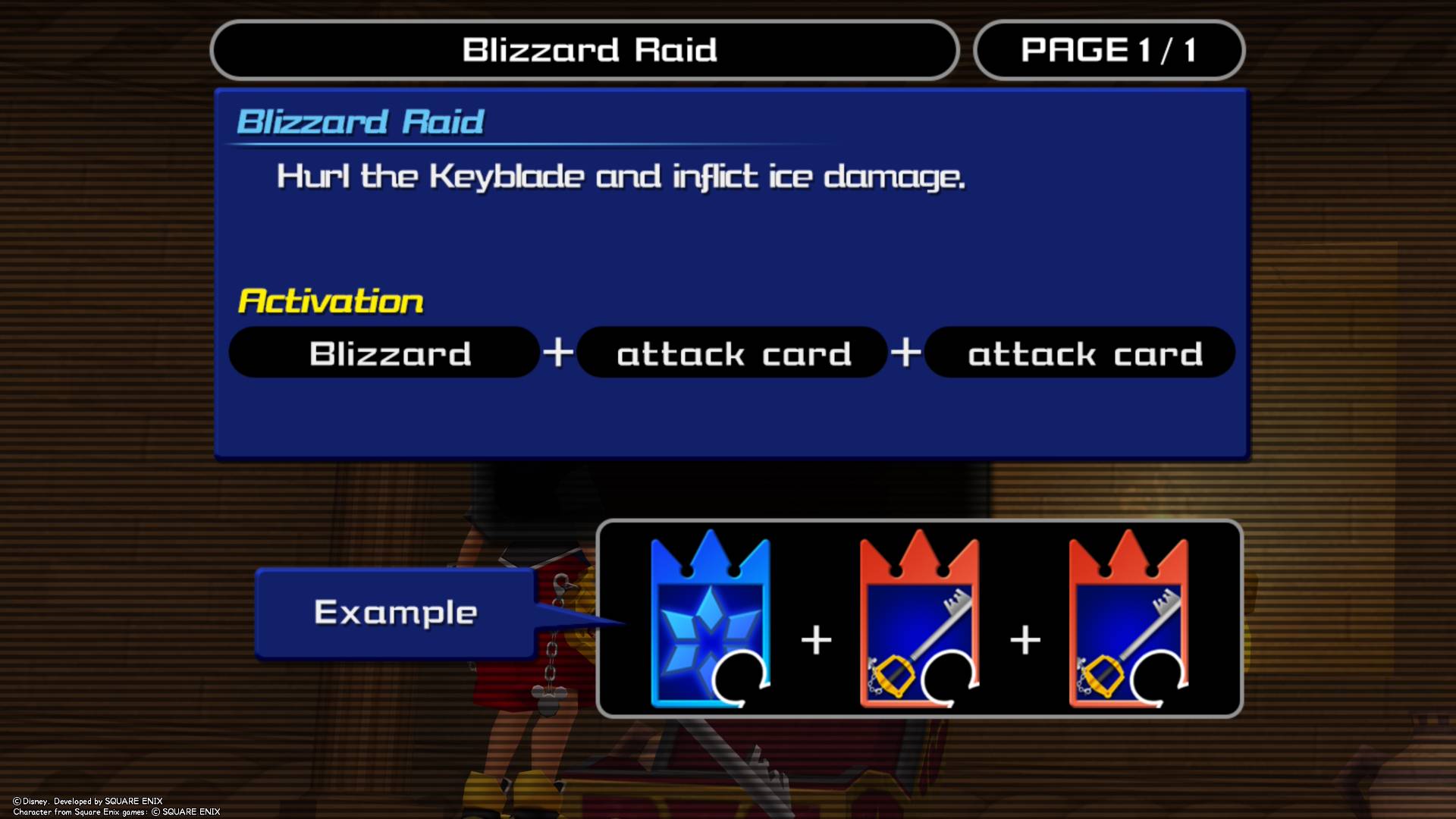
After all these years? I think I’m a Re:Chain of Memories guy. The original GBA game is undoubtedly a tighter experience, but I found myself appreciating having to play a 3D Kingdom Hearts action game while juggling deck management and card game systems. Having to properly dodge attacks, navigate the 3D space filled with more enemies, and cycling through your deck meant my brain had very little downtime while playing. Even my favorite games in the series have moments where I allow muscle memory to take over for me, but that wasn’t really possible in Chain of Memories. It’s not the smoothest battle system, but the novelty of it was fun this time around.
Every map in this game is made up of rooms you decide to build, using room cards you gather by defeating heartless, with specific effects. These rooms are made up of re-purposed assets and can feel pretty copy and paste, but I always liked getting to essentially build my own dungeon. Room cards have a color and number value, and doors have a set of qualifications that room cards need to meet before they can be opened with one. The requirements for cards get more demanding the further into the castle you get, which means you’ll have to keep fighting battles to get specific card combinations to advance.
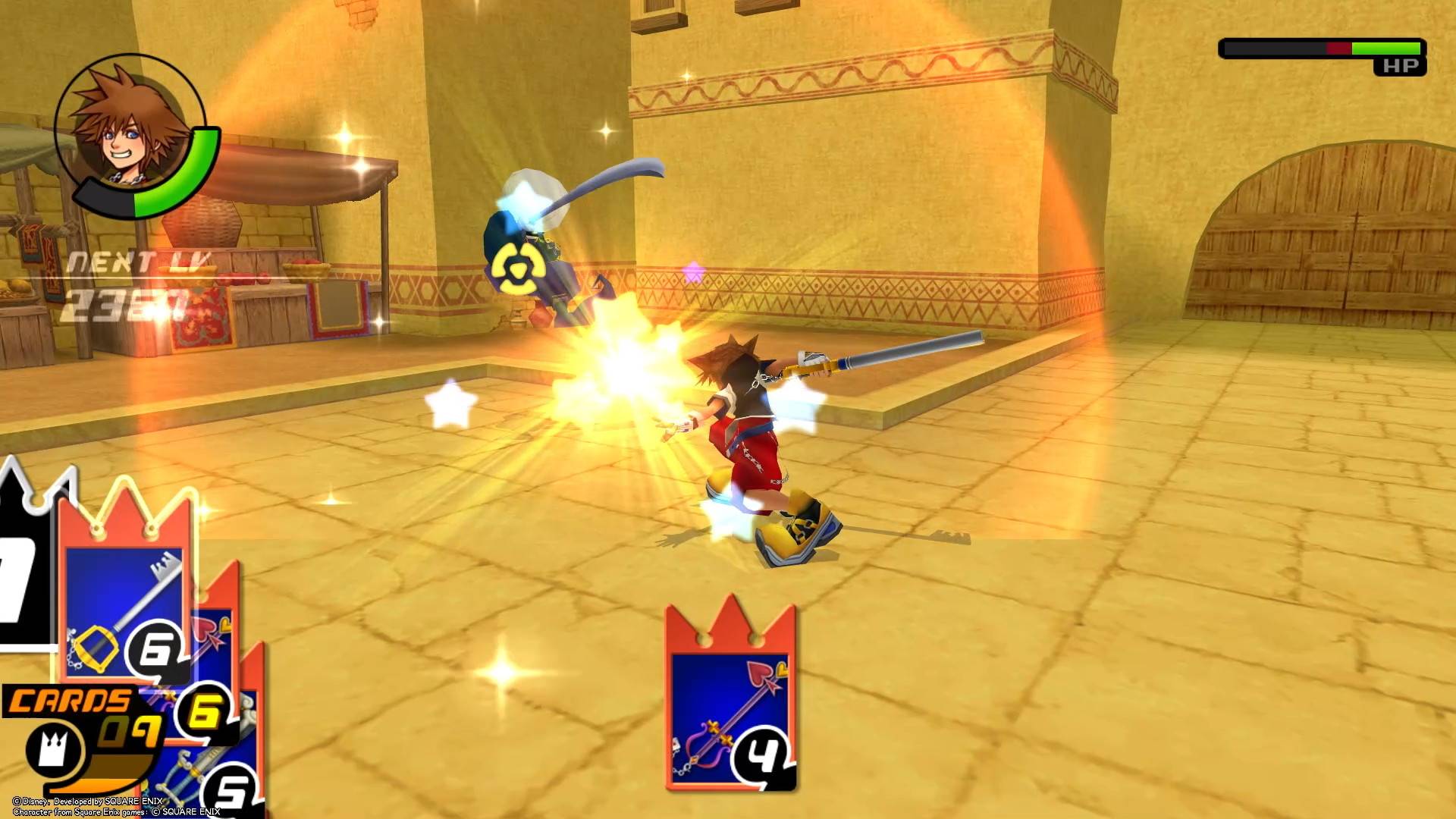
Personally, I’m the type of guy where if your game’s core battle system is compelling, and it’s the type of RPG suitable for grinding, then I’m more than happy to dedicate hours to doing just that. Leveling up in Re:Chain of Memories is not traditional; the game makes you choose between HP, expanding the max card value in your deck, or learning new sleights. You can’t just grind away to increase Sora’s damage output. Level-ups really only improve the utilization of your deck. With card drops being random, this leads to grinding.
I’m only just now getting into my TCG era, having spent most of my adult life with RPGs and despising card game modes in them. Only when an RPG’s entire design focus is centered on the card game does something begin to click with me. Grinding fights for currency, using that to buy packs, and then reworking your entire deck is pure, simple fun. Balancing around card collection to maximize high value cards and a variety of different options to be ready for any fight made Re:Chain of Memories the game I spent the most time on during these revisits. These aren’t things exclusive to the remake either, since the GBA version just had a really strong core to build off of.
While many of the heartless don’t put up much of a fight, the game shines brightest during boss encounters. The Organization members specifically feel like they’re meant to test your deck-building skills. They all have unique sleights and strategies, and can properly mess you up if you aren’t taking the time to improve your deck in every world with all the new abilities and cards you get access to.
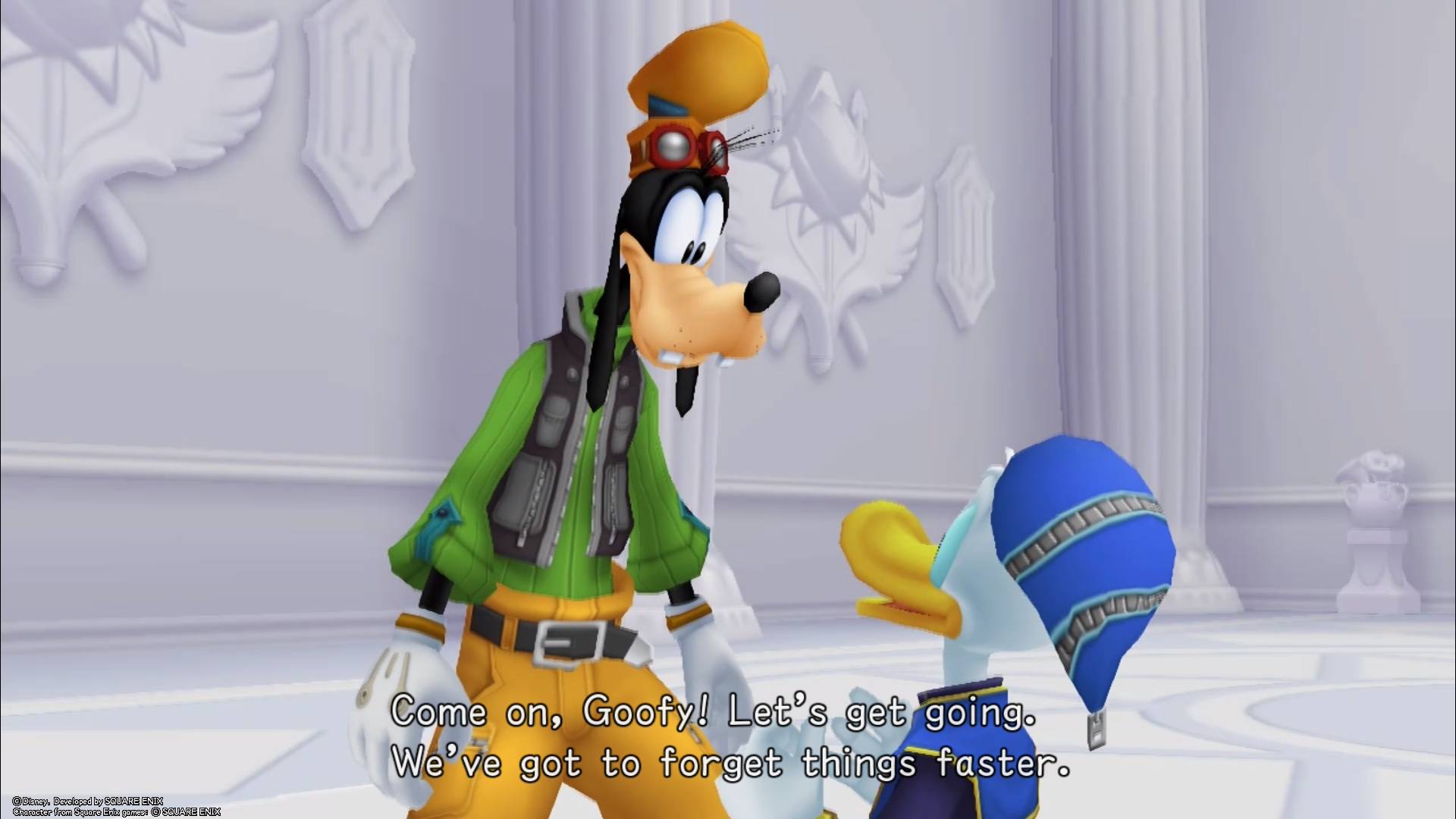
I was shocked to find I enjoyed Re:Chain of Memories’ versions of the Disney world stories. Mainly, because they’re short and to the point. You get about four major cutscenes per world, a boss, and then are off to the next one. The dialogue scenes with these usually flat Disney characters in other games convey a bit more personality as well. This may be due to the localization team having more experience under their belt and familiarity with the series after working on a couple of games. I found myself skipping Disney cutscenes less often here than in my re-visits to the original three games.
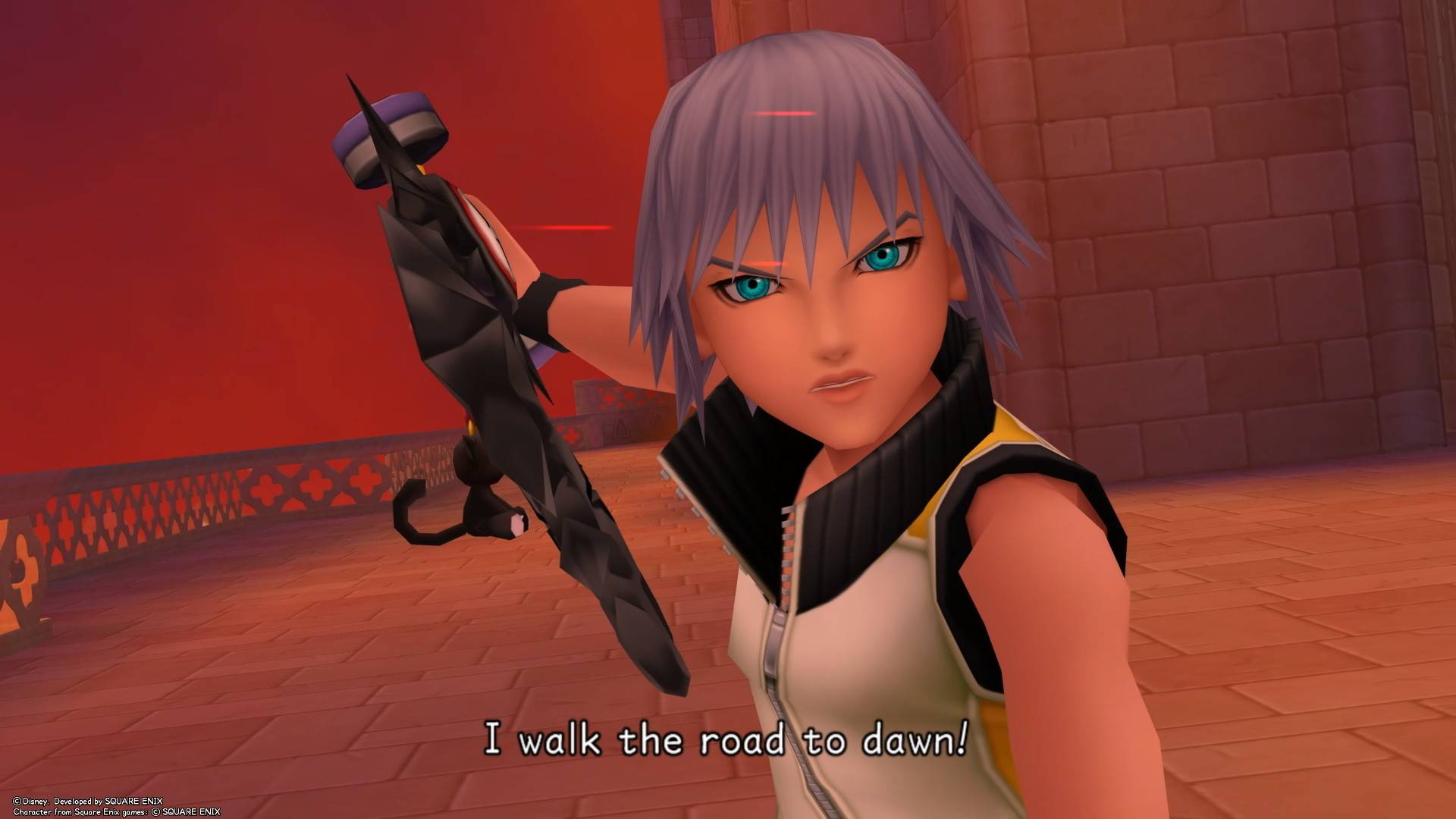
Even if you don’t enjoy grinding for cards or building decks, its presentation of Chain of Memories’ story is the remake’s best aspect. Every major cutscene now has voice acting and animation on par with the other PS2 games. Haley Joel Osment’s performance in Re:Chain of Memories has always stood with me as his best in the series. Sora goes through it in this game, his brain picked apart and used against him, and the voice acting sells that wonderfully.
It’s truly a shame that, for whatever reason, the original PS2 version felt the need to make these cutscenes pre-rendered video files. This was fine back in the day (if not still a downgrade from the previous two PS2 entries), but has clearly hurt things in the long term, since there’s only so much you can do to clean them up. I don’t find them too distracting given that the story on offer here is one of the best in the series, but they can be offputting if you have eyes sharp enough to notice it. Something about exposing a young audience to the concept of gaslighting tickles me. I cannot stress it enough, they put this happy go lucky kid through hell.
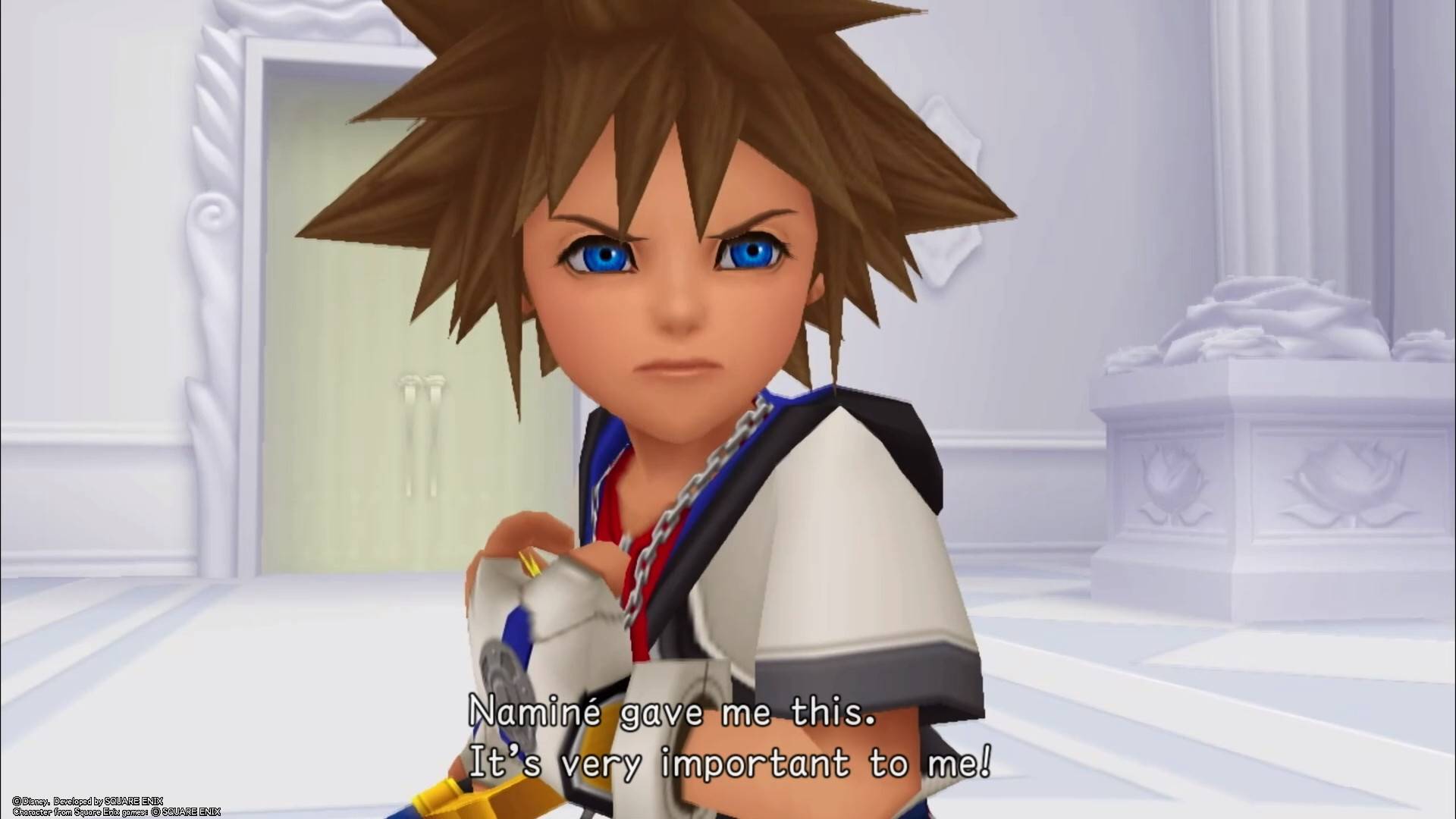
Re:CoM gets a pretty bad rap from fans, but I found it to be a fascinating adaptation. This is my preferred way to play Chain of Memories for the story alone, but I found a lot to appreciate with its gameplay this go around. It is unfortunate the GBA version remains inaccessible, even on services like NSO. The ship has likely sailed on giving it a bespoke new port, but I feel like even offering an emulation of the ROM inside this collection would go a long way.
In a way, the deck-building concept stayed a central component of portable Kingdom Hearts games. After this, the Command Deck system was introduced, removing a traditional MP bar, and having abilities that can be cycled through, used, and then put on cooldown. Future games would definitely lower the skill floor, though.
385/2 Days and Re:Coded
Of the portable games, I think I’m frustrated with how the DS games have been preserved the most. The collections have a pattern of featuring two games and a cutscene movie. These movies adapt titles in the series that seemingly were not worth remaking: 358/2 Days, Re:Coded, and Kingdom Hearts χ.
As a DS kid, and Number One Roxas fan, Days was an instant classic for me. No really, I even had Jesse McCartney CDs. I loved getting a chance to see what happened in his time at Organization XIII. The mission mode with a plethora of playable characters to level up was a quick favorite of mine, and I spent an entire summer completing everything to unlock Sora (and then proceeded to have nothing to do with him, funny enough).
As a DS adult, I’m less hot on it. Back during my marathon in 2024 I binged most of the game stuck in a shut down airport overnight, sick with one of the worst cases of covid I’ve ever had. There were definitely worse games to play under those circumstances, but it gave me a particularly strong attention to detail. The missions sometimes feel too long, the combat never quite clicks in place thanks to the stiff DS controls, and bosses can get really annoying. Breaking everything up into missions does wonders for the story, but makes the Disney worlds pretty forgettable. With the exception of Neverland, which I really just like because it wasn’t just the pirate ship or the clock tower.
There’s very little 385/2 Days’ gameplays excels at, but I’m willing to give it a lot of slack, given that it's the first proper 3D spin-off game, coming right off the heels of Kingdom Hearts II. Mission Mode, and getting to play as all the different Organization members with your friends, are a forgotten yet valuable part of the package. Days is carried hard by its narrative, but there’s enough there’s enough in its gameplay I appreciate to still recommend people play it over just watching the cutscenes. There’s even some fun dual screen gimmicks that show Sora fighting similar Heartless as Roxas does to show he’s slowly taking in his memories. It’s little moments like that which make the whole experience on DS memorable.
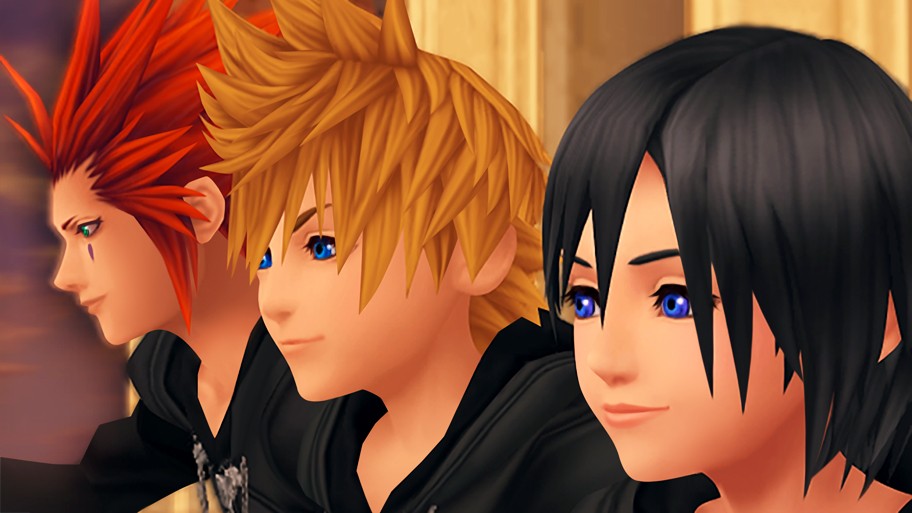
As a cutscene collection, I’m glad to see so many iconic moments in Days presented in HD. The hyper compressed, pre-rendered cutscenes were always a delight back on DS, so seeing them in even 720p is nice. However, I’ll always wish we received a port of the game instead. Days’ mission-based structure creates the proper pacing for these cutscenes. You really do feel the monotony of Roxas’ miserable day to day life, and it allows his moments of joy with his unlikely friends to deliver a strong pay-off. His story pulls at your heartstrings as it comes to a close to set up the events of Kingdom Hearts II, because you spent plenty of time getting to know the characters.
Coming in at three hours, it’s both too long as a movie and not long enough as an adaptation of Days. You only get the highlights, with everything else condensed into text blurbs explaining what Roxas and Xion do at various worlds. The pacing is too quick, and it’s difficult doing it all in one go. A movie is kind of the antithesis to the pick-up and play nature of the original Days. You can take it in chunks if you want, but I’ve always felt actually watching it to be difficult. You can fill those gaps, but not having those little moments in-between bigger events lessens that heart breaking ending.
To complain about something that has bothered me since the original release of 1.5, is Days’ awkward placement in the collection. New Kingdom Hearts fans might be inclined to go from Re:CoM directly to Days, since it’s listed right below it, but doing so massively deflates the mystery behind Kingdom Hearts II’s prologue. Despite Chain of Memories introducing the organization, and Days existing as a prequel to II, you should play these games in release order instead. You’re clearly intended to already know about how Roxas’ story starts and ends in II, and this game gives away just too much information to be played before that. 1.5 and 2.5 have been bundled together in one package longer than they haven’t been, so it really feels like they should be sorting the games in release order.
I’m going to disappoint the passionate Re:Coded fanbase by saying: even trying to play the DS version of it in my last marathon of the series led to me dropping it just like I did the cutscene movie back in the day. The combat is fun; it’s a great take on the command deck system that’s a delight to control. I just don’t care for everything else around it. The worlds have too many gimmicks, and the System Sectors challenges get old fast. Despite my feelings, a port in this collection would still have been much better than a collection of cutscenes.
Re:Coded’s story is often considered the most skippable in the series. Which is true.
As these movies exist today, they’re clogging up space on an already massive file size for 1.5+2.5 (54.1 GB on Switch 2, by the way). The way Kingdom Hearts tells its story through gameplay mechanics is crucial to what I love about it. Just watching the cutscenes of a Kingdom Hearts game doesn't properly convey the passage of time those scenes express when paced out naturally between engaging gameplay. It’s the kind of thing that doesn’t seem like it’d matter, but I’d rather have proper remakes or ports of these games even if I’m not fond of every aspect of playing them.
Birth By Sleep
Birth By Sleep was the first game I ever pre-ordered with my own money, yet I still needed to have my mom drive me to gamestop after school to get it. Just looking at it in game magazines blew me away, as it was the first portable Kingdom Hearts to closely resemble the look of the PS2 games. I’d revisit it several times throughout my life, finding something new to appreciate about it with every replay. I’d played the Final Mix version with an english patch on my PSP on a whim a few years after launch in high school, and gave it another go with the steam release in 2024 to try out Proud mode.
Something about the combat in Birth By Sleep always did something for me. The extra headroom the PSP hardware offered allowed for a truly expressive battle system with a lot of customization and flexibility. With command fusion and styles, this is probably the closest Kingdom Hearts ever gets to being a true RPG. I lost countless hours to grinding out every character, giving them the best commands possible and unleashing that on the endgame bosses. More than any other game in the series, you define your own playthrough through these decisions. This game wants you to delve into the depths of the RPG systems, and ultimately you get a less casual friendly experience. Anyone can pick up Kingdom Hearts II and probably have a great time just mashing through it, but I can’t say the same about BBS.
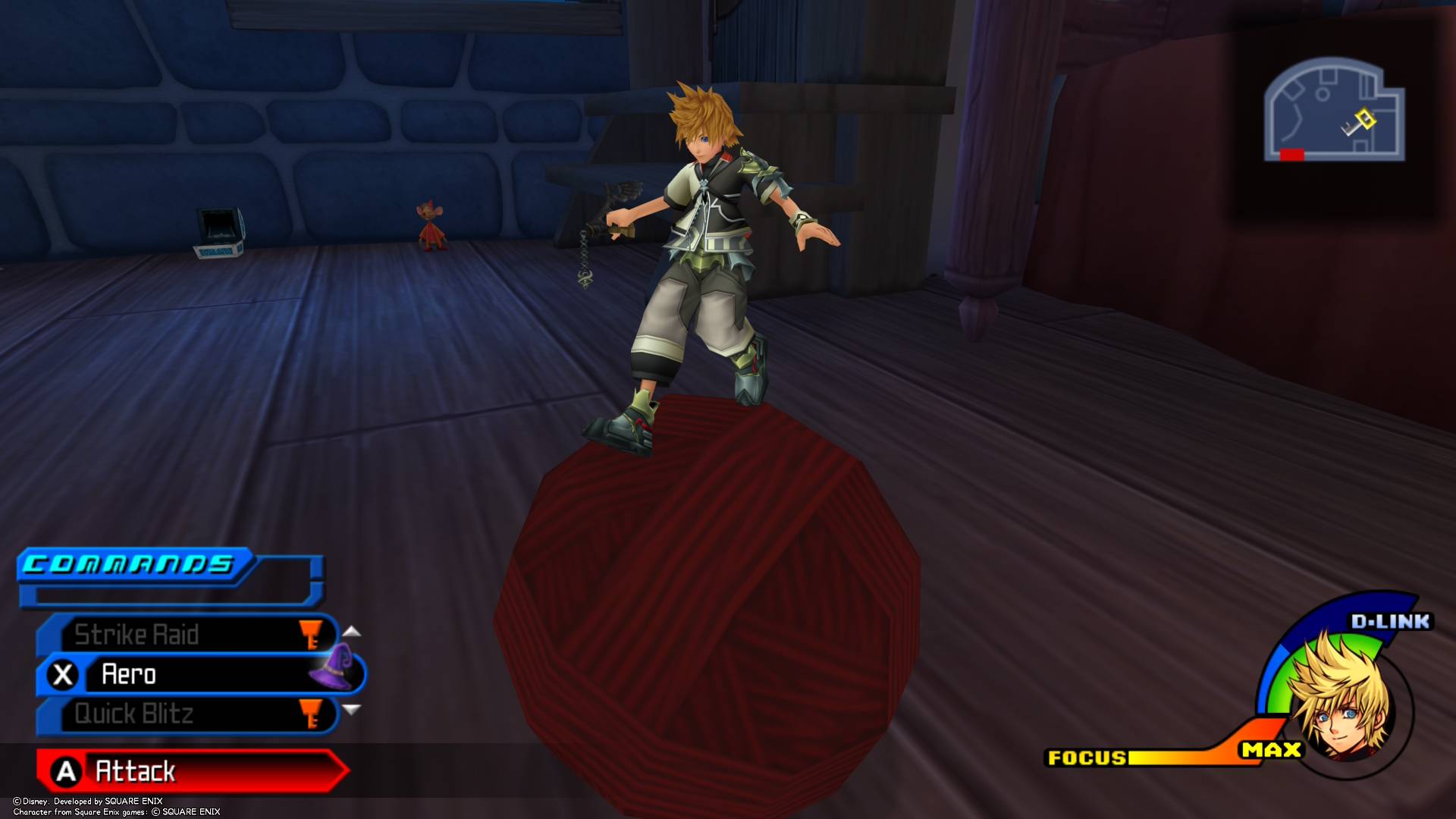
Shotlocks, command styles, leveling up your commands, and D-Links always give you so many tools at your disposal to face anything. The three playable characters each have their own playstyles pushing you into experimenting with just about everything on offer. Bosses demand a lot from you, and basic commands offer you little freedom to meet those demands. Grinding can be a pretty unpopular part of RPGs, but as I mentioned when discussing Re:CoM, I don’t mind it much if the core gameplay is entertaining. I love the experiment of combining two commands together and seeing what I get. Then leveling that up to max as fast as I can and chucking it back in the blender. Enjoying Birth By Sleep to the fullest involves making your own fun, and the command system is a true playground.
There’s a lot to be said about weird hit-boxes, recovery frames, floaty air combat, and a lot of those action game buzzwords you see thrown around. This sounds dismissive, but I do genuinely understand why some people don’t like Birth By Sleep. Some of the worlds have weird gimmicks or annoying enemies. Both of these are true of Deep Space, for example. It’s a game that shows the limitations of the PSP on its sleeve if you really want to slice it. But of Square Enix’s many PSP spin-off games, this one feels closest to the series it's based on. The previous portable games feel too segmented to feel like “true” Kingdom Hearts experiences, but Birth By Sleep can keep up appearances without much struggle. The worlds are smaller, but there’s no gimmicks for how to approach them. They’re cropped, but uniquely designed, with full voiced Disney cutscenes to boot.
Ven’s, Terra’s, and Aqua’s story are fan favorites for a reason. Even if some of the choices are a bit silly, Birth by Sleep having a lonely and ultimately pretty miserable story complemented the series well. It was able to show a true darkness that existed under the surface of the series, which has always been a striking contrast to the happy Disney worlds. Putting the work into the game’s true ending just to have to overcome one of the hardest bosses in the series will always stick with me. Blank Points, the secret ending, is also just one of the strongest emotional notes any of these games have ended on. As a prequel to Kingdom Hearts 1, BBS enjoys wallowing in the same bad vibes End of the World reveled in.
Of the modern ports we’re talking about, this is the most faithful to the original version. The HD remaster is based on the Final Mix release, but with cleaned up visuals and the ability to fully move the camera with the right thumbstick. In my most recent replay, the one from 2024, its only bothersome trait is the camera’s position. With Dream Drop Distance HD in the rear view mirror, I’m shocked Square has never felt the urge to revisit BBS’ zoomed in camera and large UI. Playing with a mod that pulled it out helped me appreciate the game so much more, and felt like the kind of thing you’d expect from an HD remaster. But on the Switch 2’s handheld mode, this “problem” quickly melted away since the smaller screen is closer to what this game was always made to be played on. I’d wish for more camera and UI scaling options, but in a way I’m glad that one of my favorite Kingdom Hearts games is just presented exactly as is. I had to cut my revisit to Birth By Sleep on Switch 2 short, because I quickly saw how easy it’d be to make 40 hours vanish before my eyes.
Dream Drop Distance
DDD was the first time I felt the series was able to recreate the scale and graphics of the PS2 games on a portable system. The HD version upgrade closes the gap even more. Dream Drop Distance is a frustrating but fascinating experiment for the series. It clearly tries to split the difference between the console and portable games in an effort to properly set the stage for Kingdom Hearts III. The combat feels like it’s trying to do much, yet simultaneously not enough. I loved this game when it came out on 3DS, but I’m seeing now why it cut my previous marathon attempt short back in 2024.
The Command Deck returns, but commands are found in chests, or unlocked by upgrading Dream Eaters. They act as the party members for Riku and Sora, and can be leveled up to unlock commands and passive abilities. I like this conceptually, but in practice it adds a layer of obfuscation to grinding for new, stronger commands that bothered me. I immediately clicked with BBS when I went back to it. Leveling up commands meant that playing optimally required you to be switching out your deck often with new commands. If you were getting bored with your commands, you probably weren’t experimenting enough.
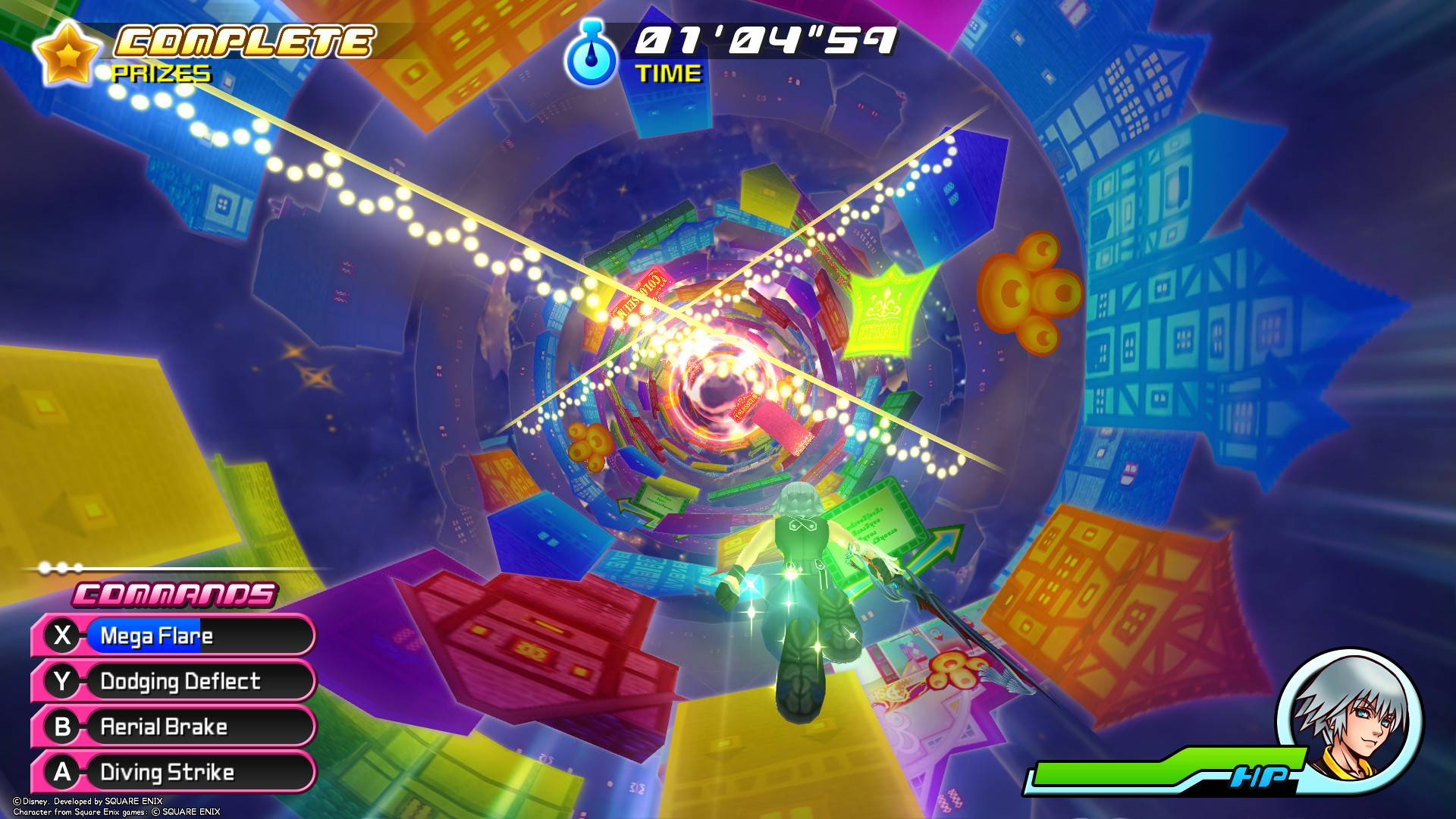
Dream Drop Distance has no commands to level up. Instead, you can use them to power up Dream Eaters, who level up in battle. You fill out a board for each Dream Eater, which can give you permanent passive buffs and new commands. Some of the best commands in the game are found here, but I found myself disinterested in engaging with the system like I did with BBS. All that game’s exciting combat options were replaced with shallower substitutes, so the combat is less captivating for large chunks of the experience. Sora and Riku are fun to play as, but I don’t think the RPG and action elements come together as well as I’d like.
What’s wildly surprising to me is that Square didn’t feel the need to implement the Switch 2 touch screen into this modern port. While the game was re-designed to work exclusively for controllers, so many gimmick segments still feel lacking when you’re unable to use the touch screen. The Switch 2 touch screen becomes a more tacked-on and unused feature by the day, but getting to pet my Dream Eaters while leveling them up would have at least been a cute novelty. Without the touch screen functionality, the Dream Eater minigames bore me, and that impacts my overall enjoyment of how you progress in the game.
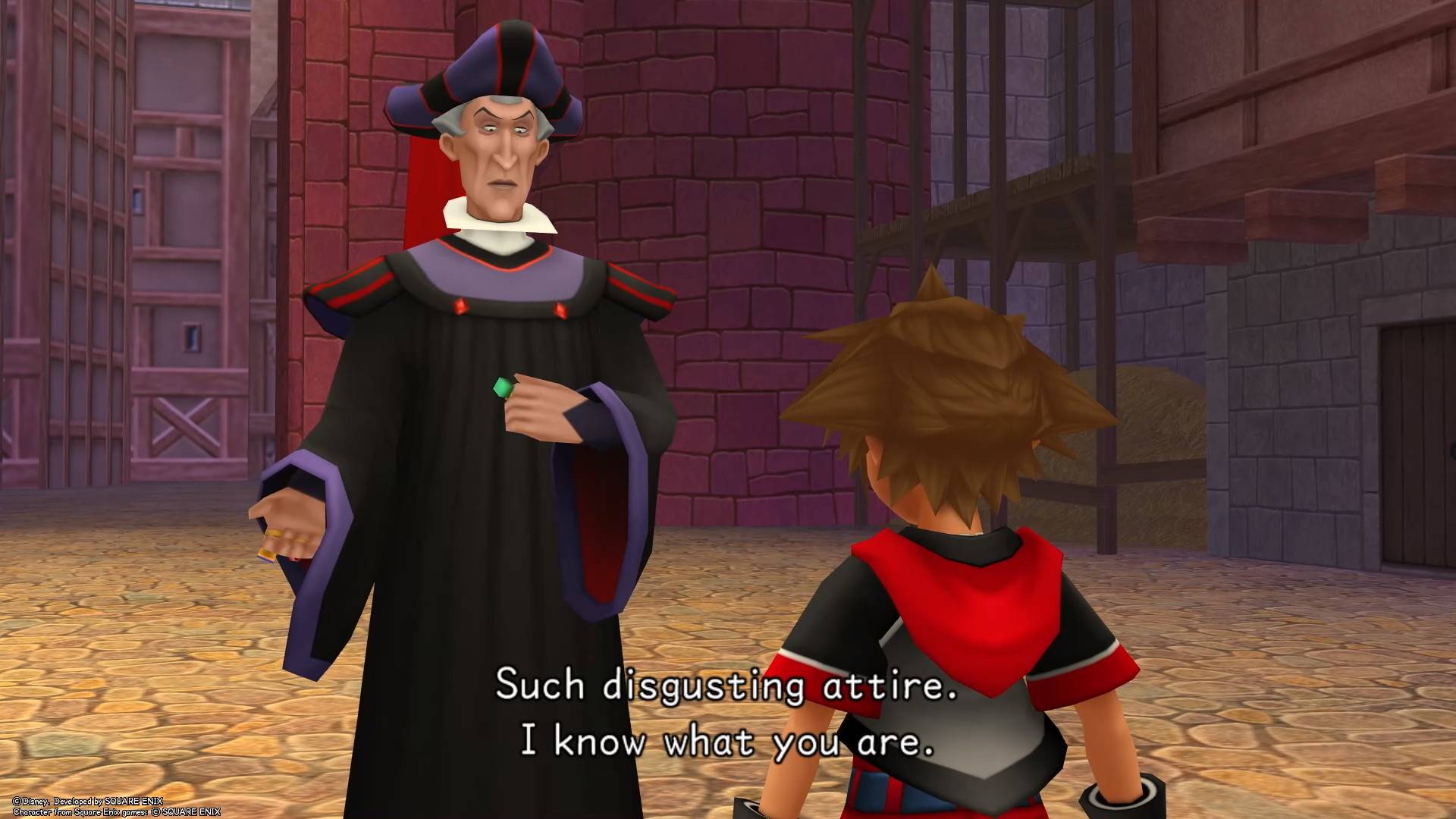
It's not all bad, though. The world selection in Dream Drop Distance is pretty interesting, and might be my favorite collection of Disney movies chosen for a game. The Hunchback of Notre Dame, Tron: Legacy, Three Musketeers, and Fantasia all being in the same game is such a wild selection. There’s just a lot of variety, with Tron specifically being a fun choice to fill the “recently released Disney movie” quota. The game is genuinely challenging, even on Standard, and while the experience of getting better commands isn't as good as it is in BBS, you're frequently coming across difficulty walls requiring you to either improve your skills or your deck to get over them. I also appreciate the wild story swings it takes to set up the arc’s final set of antagonists.
While Flow Motion is a tad unbalanced and trivializes level design (likely why it’s justifiably nerfed in KH3), it still is Dream Drop Distance’s biggest new combat addition. Bouncing all over the walls to dodge attacks and then counter with serious damage to foes is still eye-catching. Though I wish there were more unique flow motion attacks, the system works just as well as a traversal tool as it does for combat. This was the game trying to expand level design outside of just small maps or hallways, something Kingdom Hearts would improve on in III.
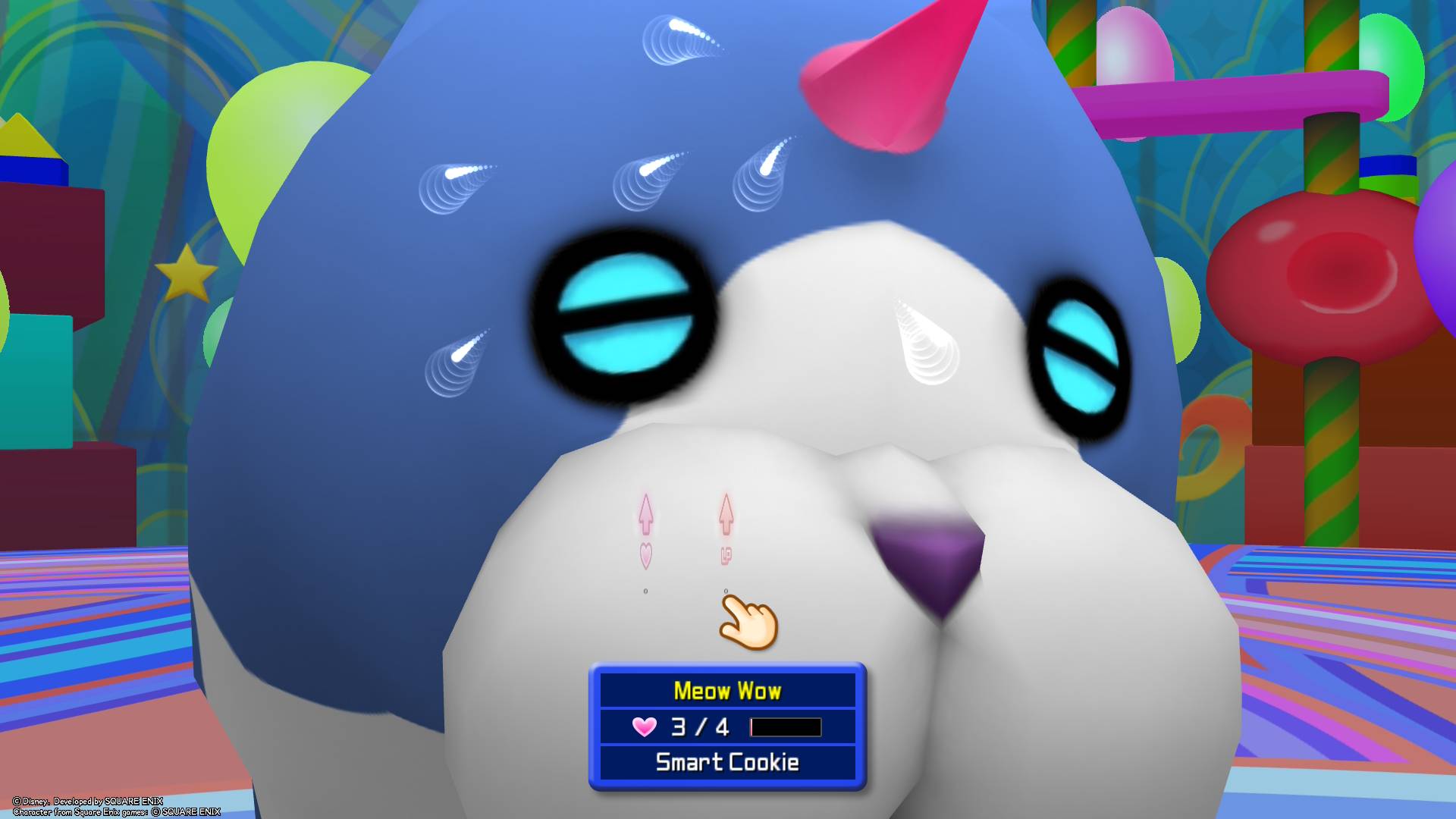
The modern port of DDD is pretty snazzy, with cleaned up HD graphics and a smooth 60 FPS. All the dual screen parts of the game have been consolidated onto a single screen. Even if I really like how Dream Drop uses the dual screens for visual flare and the reality shift system, it’s an understandable cut you’d need to make to keep the game preserved for modern audiences. Playing the 3DS version of DDD for this piece though, I vastly prefer how the 3DS original handles reality shifting during combat. Not only do you have to do a quick down motion on the bottom touch screen, but we actually get to see Riku or Sora dive into the bottom screen and control what’s going on in that new window. That was a captivating system that used its gimmick well.
Despite how great the HD version is to play, something about this game on an actual 3DS feels right to me. I'm more forgiving of its missteps when playing it in the context of its original release. The smaller screen, zoomed in camera, and even lower FPS explain its otherwise weird design choices. Slap on a circle pad pro or have any model of the new 3ds system and Dream Drop Distance is still cozy. As long as you’re fine with the reduced frame rate. This modern version is definitely “better”, and playing it undocked allows my brain to connect the dots to its portable roots, but I was still left wanting. It’s a shame this couldn’t get a Final Mix version, since that helped BBS a lot.
A Bygone Era
Overall, revisiting these games has made me sad to see this era of the series is far behind us. Getting smaller, more experimental games more frequently made for some of my most definitive gaming memories growing up. The handheld Kingdom Hearts games provided an opportunity to take risks, since the budgets for portable games will always be cheaper than a fancy HD console game. Not every experiment yielded totally positive results, but it also meant the games never stayed in one place for very long. They kept the series relevant, even at the cost of spreading itself thin across three different consoles.
I’m left conflicted. I loved this era, but I can see why some didn’t. I definitely don’t want so many lower scale games to dilute the value of a new Kingdom Hearts game, but the series going dormant for six years wasn’t ideal either. A rhythm game and cancelled mobile game making up Kingdom Hearts’ line-up for the 2020s is deflating to say the least. At least Melody of Memory, despite being just okay, felt like the series was jumping back into smaller scale experimental titles. That just didn't happen, unfortunately, despite Square Enix being one of the only big publishers continuously funding lower budget RPG projects in the 2020s.
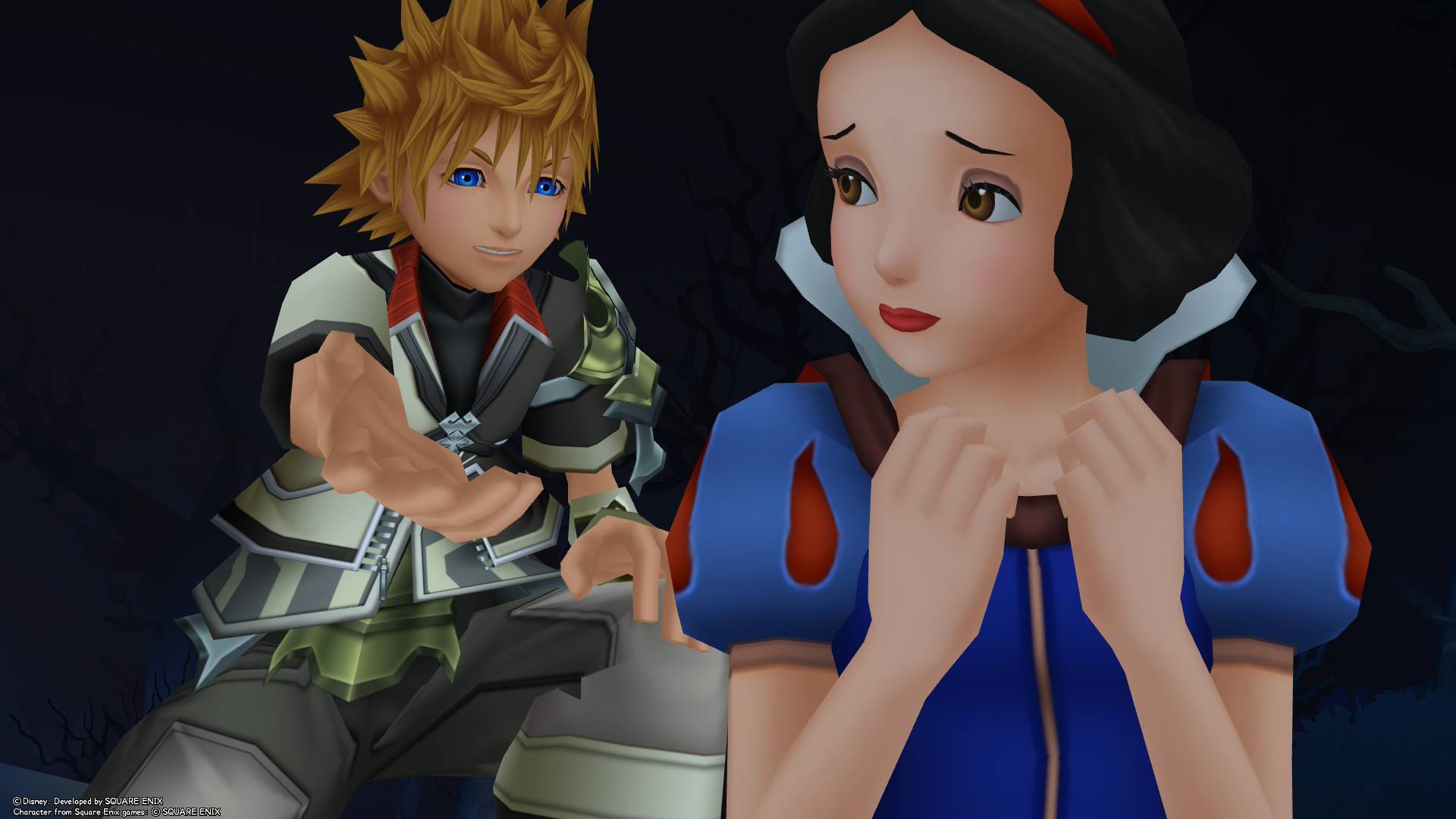
I'm excited for Kingdom Hearts IV, but the realities of the modern game industry mean massive gaps between releases might be the norm. Games cost a lot and take years to make now. The idea that Kingdom Hearts games all need to be landmark AAA titles feels wrong to me, given how much of the series’ identity truly formed during its portable era. None of this is Kingdom Hearts’ fault. My feelings lay somewhere between associating these with nostalgia for better days, and these games defining and melding my gaming tastes as I grew up. They’re kind of the quintessential portable spin-off titles.
Kingdom Hearts IV is aiming to launch on Switch 2 day and date with everything else, yet I’m not sure I’d count it as a portable game. I love my Switch 2, but it’s definitely a system with a home console library instead of a dedicated portable. With consoles shooting up in price, maybe we’ll see a return to lower fidelity portable hardware some day, or maybe it’s better that we move on. Maybe the industry will stop rushing to spend an unhealthy amount of money, chasing smaller and smaller returns.
Maybe.