

Interview with Matt Sernett - Narrative Leader on Battlemarked and former Lore Master for D&D
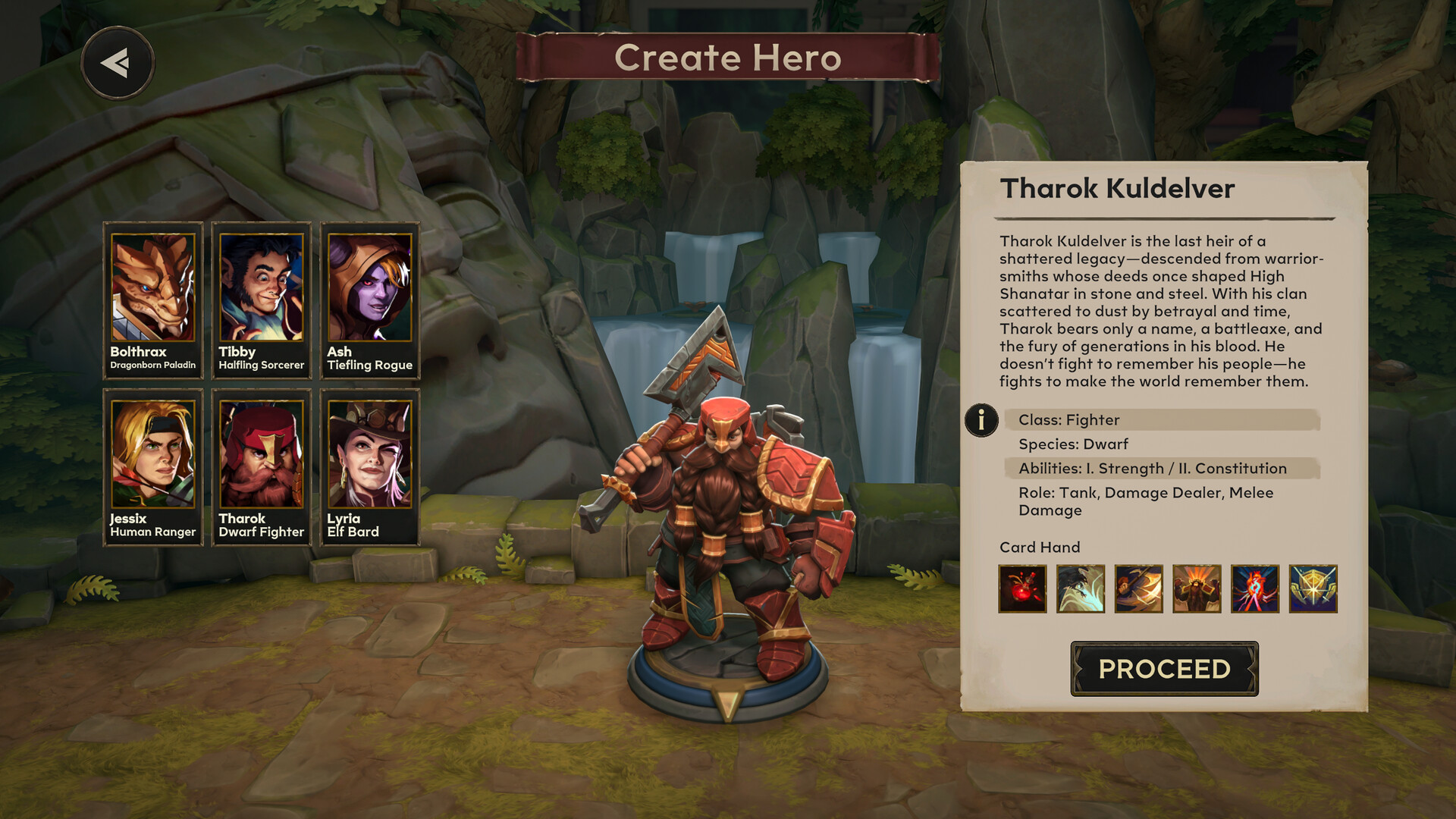
About a month ago, we reviewed the latest dungeon-diving multiplayer title from Resolution Games, Demeo x Dungeons & Dragons: Battlemarked. Taking place in the lands of the Forgotten Realms, while from a gameplay standpoint, it retained much of the spirit of its predecessor Demeo, the injection of DnDNA brought with it exciting campaigns and narratives that told tales of warring factions and other dastardly plots. These adventures were the work of Matt Sernett, the Narrative Lead for Battlemarked, and a storyteller with his own legendary history. We had a chance to sit down and speak with him about his work on Battlemarked, along with getting a glimpse at his time as Wizards of the Coast's very own Lore Master for Dungeons & Dragons. This interview has been slightly edited for clarity purposes.
.jpg)
Matt: Oh, okay. I'll try to do the quick version. *laughs* So, like a lot of kids growing up, I was a big fan of D&D. I started out when I was probably about eight years old. We didn't know how to play. We didn't know what we were doing. But my friend introduced me to the concept of the game, and I was just enthralled with the idea of, you know, creatures in the dungeons and adventures and everything like that. Eventually, we learned how to play for real. And, I was at a sleepover at a friend's house, and we discovered for the first time that people make games for a living. That was revelatory to us. Like, we had no idea that that was actually a career path. And when we discovered that my friend's dad was walking past the room and said to my friend, basically put that idea out of their head, you're going to grow up to be a doctor or a lawyer, and just walked away.
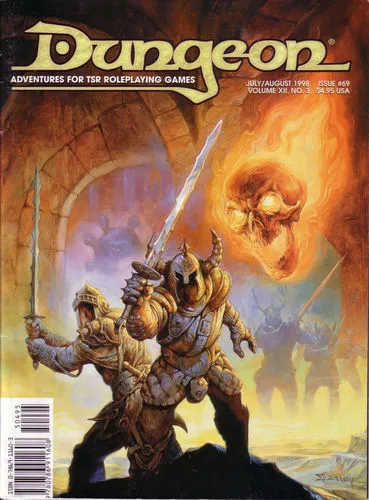
This sort of weird drive-by parenting, I think, hit my friend, but left me unscathed. Because I was like, well, wait a minute, why not me? Like what? What's preventing me from doing this thing? Well, it took me a few years to learn, and I eventually did figure it out, and I ended up getting a magazine degree from Syracuse University, working for magazines, Dragon Magazine and Dungeon Magazine, starting back in 2000. And then, eventually working my way into the R&D department for D&D, where I worked at Wizards of the Coast for many years on many different projects.
And then I left in 2018 to pursue digital games because I had had some experience at Wizards working on the D&D games that licensees were partnering Wizards with. And then, on some internal efforts that kind of floundered at Wizards. But it was super fun to work on digital games, so I branched out into that, and I've been doing it ever since. Battlemarked is my opportunity to kind of come back to the brand that I love and that I fell in love with, that made me fall in love with the games. And so it's a match made in heaven.
Matt: I mean, they're certainly all different. I mean, I enjoy all kinds of writing and world creation. Ultimately, that's what draws me to writing and game design and that kind of thing. It is creating things for other people to enjoy. It gives me an immense amount of joy to sort of build these characters and these worlds, and then, you know, know that other people are going to experience those things and take away happiness from that, like that. That's very fulfilling. And so, you know, whatever capacity in which I'm doing that, that's what I love to do. As far as what's the most challenging, I would say the most challenging for me personally is finishing a screenplay and having it be any good. So that's a separate issue *laughs*.
But, so I'm learning there. But in terms of, like, you know, dialog design or telling a story in games or that kind of thing, you know, really the process is sort of a lot like being a good DM, right? You have a story you want to tell, and you want people to see and experience it. But you have other players at the table, and they are the ones helping to make the game. Those players are the constraints that the game itself has. And ultimately, what you need to do is not just tell the story that you want to tell, but tell the story that collectively you can tell together that everyone enjoys. And ultimately, you know, that process is what produces a great game that the players enjoy.
.jpg)
Matt: Yeah, I mean, I would say that the canon impacts the approach, wholly. So my approach is to assume, whatever game or is being made or story is being told, whether that's on a tabletop game or in, in Battlemarked, is that it's taking place in whatever sort of the present day is, there's wiggle room there, because we don't give any dates away in this, you know, so is it, ten years from when Baldur's Gate 3 took place, or is it ten years before? You know, I mean, canon-wise, like, it's not nailed down in a particular place. But, like the, the, the idea is that we, we write it to be taking place in the present day, assuming that, the, the canon that's been established is extant, and, and then you build around that while building the basis of a story that doesn't really need all of that canon.
One of the things about working in any setting with a lot of canon is it needs to be a story that lives on its own and breathes on its own and relies on all of those details of canon and all that kind of stuff. But it doesn't feel like it's just surfacing canon for the sake of it. Or, you have to have played the last six games or read the last six books or whatever to understand it. It really needs to sort of live on its own two feet while it's still, at the same time, working hand in hand with all of that established lore.
Matt: So I guess it sort of depends on how you define an Easter egg. I like to have the game touch upon other elements of lore. I love surfacing obscure elements of lore in the setting that haven't been seen or talked about since Second Edition (of Dungeons & Dragons) or something like that. But it kind of has to serve the plot. It's got to serve the story. It has to serve the game that we're making. And so, I'm not inclined to add an Easter egg, just for the sake of it being cute. It has to actually work within the Battlemarked itself.
Matt: There's a weirdly large amount of lore in Neverwinter that kind of goes untouched about sort of the former kings of Neverwinter. The line of those kings that passed in the earlier editions. So, in the early editions, like the Second and Third editions, there is this sort of storied line of leaders of Neverwinter and stuff like that. And in the Fourth Edition and then the Fifth Edition onward, those people are dead. And there's actually like, almost like a, tomb of, Arthurian knights kind of a thing in Neverwinter Castle. That kind of stuff is cool, like I, I love those echoes of other types of storytelling. The references to the broader body of myth and stories we live with in the world. Whether that's a theory in legend or, you know, Norse myth or something like that. I love it when you can see those echoes of storytelling in different things.
Matt: Not necessarily. There are ways in which the Forgotten Realms is very much a mirror of Earth in a fantasy setting. You have far to the East, which is the sort of an Asia area, the area that most of the Forgotten Realms storytelling takes place in, is kind of a European area. And then all the way over on the other side of the ocean, it was sort of an American-like area. And so to that degree, there's a similarity in there. And then when you get down to the specifics of the various settings, those settings sometimes echo certain types of storytelling.
So, the Dalelands are more pastoral and have elements of both The Lord of the Rings and Robin Hood, and things like that. But generally, I'm not looking for that when I'm telling the stories that I'm telling. It's more about the overall tone of the Forgotten Realms, which is one of heroic optimism, as compared to, say, something like Greyhawk, which is much more cynical, of a setting. And so I just try to keep to that sort of heroic optimism tone.
Matt: I think one of the, the early discussions that we had when we were talking about the narrative for this game and how it was going to work, was about that incorporation because my instinct was to have the characters talk and be part of the story and that kind of thing, but it's just it's impractical because, you can come to the table, with four players different from, each playing a different character or the problem is they can each play the same character. It becomes nonsensical for the world to be responding to those characters, as specific individuals, when in fact, there could be four clones of them running around and talking to people. And so the game is designed to give you the sense that the NPCs are talking to you and that you are talking to them, but you won't see the players' dialog pop up. You won't have a choice of dialogue that is specific to your character. You have choices for what you would say and how you respond.
But again, because of the limitations of how the those those are built, you know, we couldn't put, you know, the all the variations for how a different character would say this line, you know, or whatever, or these five lines, you know, often as I was just a choice of like three or 4 or 5 different things that you can say in response to somebody else. And, as a narrative designer and as a storyteller, you know, I want those lines to represent the character of the person who's saying them. So if they're saying if they're asking a question and it's the dwarf, I want the question to be asked kind of gruffly, right, or something like that. But the reality of it is that there's only so much space on that line for words. And so if I've only got space for like 3 or 4 words for a question, there's not that much variation that I can build into there, you know, that, or there is, but then it's got to be built in for every single character and change in and out. And that's just super complex for the kind of game that Battlemarked is.
Matt: Many aspects are very similar in terms of just writing an RPG book versus writing a game. In terms of the basic “sit-down at your desk by yourself” work, it's very similar. Right? You do research, you do a lot of writing, that kind of thing. But then the aspects of the writing in the creation of Battlemarked and similar games are very different. The product that you're asked to develop and write for people is a very different sort of work. Writing a few thousand words in a day for an RPG adventure or for a tabletop game is a very different experience from trying to come up with the 16th version of what someone says when they make a range attack. It's just a different sort of mindset, a different process, and a different sort of challenge in that way.
Fundamentally, the aspect of writing is very similar, and working on video games, there's a lot more, sort of co-development of the story and the world with other teams and other teams. And whereas, you know, on the tabletop RPG, there really aren't that many limitations on what you do or where you go or how you tell your story or whatever. It's really just sort of whatever it is that you think makes sense, and, you know, within limited of a product like D&D, within the limitations of the canon, whereas, you know, video games like Battlemarked, there of course, are always going to be different constraints.
Matt: It's not featured in either of these adventures, but the adventurer is burning down the inn, the tavern, right? Like, I can't count how many D&D games in which that just happened as a natural course of events. Yeah. So that's my favorite.*laughs*
.jpg)
Matt: So, before I went to work for Wizards of the Coast, I was an absolutely mad collector. was going on eBay and buying obscure books, you know, from Second edition and First edition and stuff like that, back in the day when eBay first started. Just scraping the world on the internet for these products to add them to my collection. I would read these books when I got them. When I started working on Dungeons & Dragons, I already had a base of knowledge. At one point, there was a guy, Curt Gould, who came around the offices with a stack of DVDs and asked anyone if they wanted PDFs of a bunch of the products, a huge sort of library of products that was in the building at the time. And I took that and ran with it. And so what I did over the course of years was build up on my computer Wizards. Just an ever-growing library of PDFs that I could dive into, search, and do research at a moment's notice. It allowed me to do things like search for Red Dragon and Elminster and find every reference to, you know, in any book that had both Elminster and a Red Dragon in it.
I could locate all of that information, really quickly. Eventually, that became what Wizards used as its official library of PDFs for the time. That's sort of what I use whenever I was looking for material, whether it was for a licensee or internally on an adventure book that was being made, or something like that.
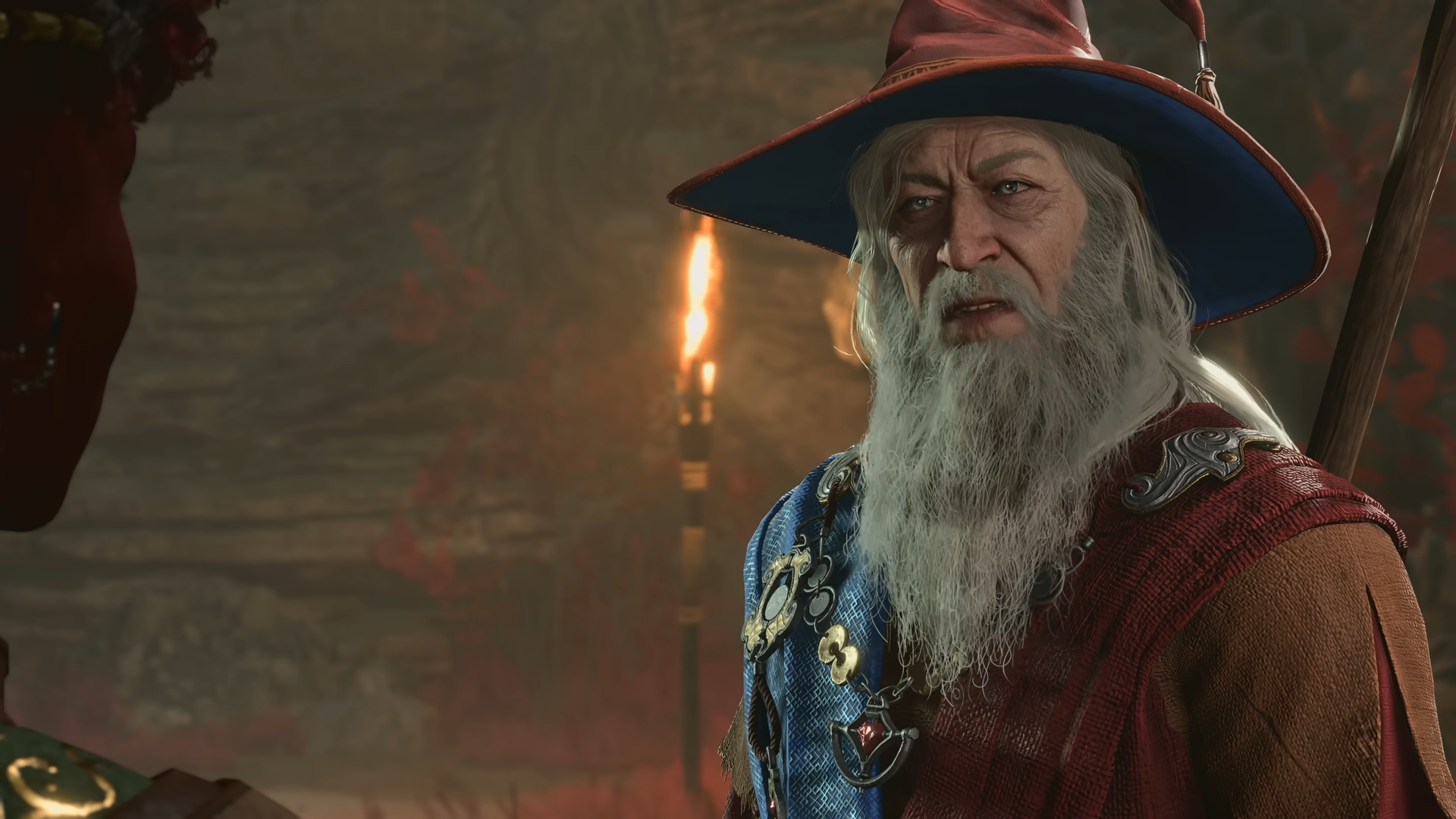
Most of the time, my work in that lore master role was reading over that stuff. My brain would hit and bump into red flags. It would just be “like, wait, what? Is that true?? So I would go back, look, and do the research to figure out whether it was or wasn't. Other times, my work was more in front of the products. So with Baldur’s Gate 3, when Larian came to Wizards, some of the work that I did was “hey, here's Baldur's Gate. It's not as weird and sort of bland as it used to be in, you know, the old Baldur's Gate games. Here's the conflict between the Githyanki and the Mind Flayers, and here's what that's all about.” Creating those documents and briefs that show people the potential within the setting. I was doing both those things in that role at the time.
Matt: You can have lots of different ways. But it depends on where I'm getting it.
Matt: Gosh, there are so many. The first thing that sprang to mind, to be honest, iss Star Trek.
Matt: I would love to do the Kirk and Spock era of Star Trek. To be honest, that would be the most fun. The next property I left in mind was James Bond. And in that case, I can definitely tell you it's a Cold War-era bond.
Matt: Well, Chris Perkins (former creative director of D&D, now at Critical Role) had many long-running internal campaigns. In one of those games, I played a fighter, and I'm going to flub his name because I don't remember it. I think it was Batho or something like that, but I don't remember. He started out as just a sort of big, dumb fighter type character, and over the course of the campaign, he slowly went mad. At the end of that campaign, a lot of the other players were legitimately terrified of what my character would do.
Matt: Forgotten Realms. That's my bread and butter. First love.
Matt: Pie.
Matt: No.
Matt: Yes.
Matt: Tough one. I'm going to go with Wish because it could be anything.
Matt: I'm not sure. There. I don't know. I like the simple ones that aren't complex. So like, Alertness. Is that easy?
Matt: I don't know that there's a lot that I miss other than, in a lot of these settings that we currently play in, the sense that there was so much left to learn and explore, and I mean that in that there is so much left to learn and explore about the Forgotten Realms. Don't get me wrong, it's an entire planet and half of it we don't even see. So, there's a lot left to explore. But early on in Forgotten Realms and all these other settings, you would get a little bit of the world piece by piece, and that was a really fun aspect of learning about the world. The storytelling was that you would get, like, Germany, then France, and then you'd move all the way over to Britain. You'd get little bits and bobs of it, piece by piece.
Matt: Thank you so much!
Demeo X Dungeons & Dragons: Battlemarked is currently available on Steam, Meta Quest, PS5, and PSVR2