

"We are extremely grateful that so many players have enjoyed the game, and we are genuinely delighted" - Team Ninja talks Nioh 3 reception and the new Hell Rising DLC
One of RPG Site's favorite titles that released in the first half of the year is Nioh 3, which managed to successfully take an open-field formula and apply it to Nioh's signature combat stylings and character building. However, the journey is not over quite yet, with the first of two DLCs, Hell Rising, set to release this week.
In looking at the game's reception so far, as well as what's to come, RPG Site had a chance to speak with Team Ninja project manager Kohei Shibata, director Masaki Fujita, and level design Lead Atsushi Takahashi about feedback to the game, new weapon styles in the DLC, the importance of the Keian Era in Japanese history, and more.
Nioh 3: Hell Rising is set to release on August 19 for PlayStation 5 and PC (Steam). You can find the full update patch notes here.
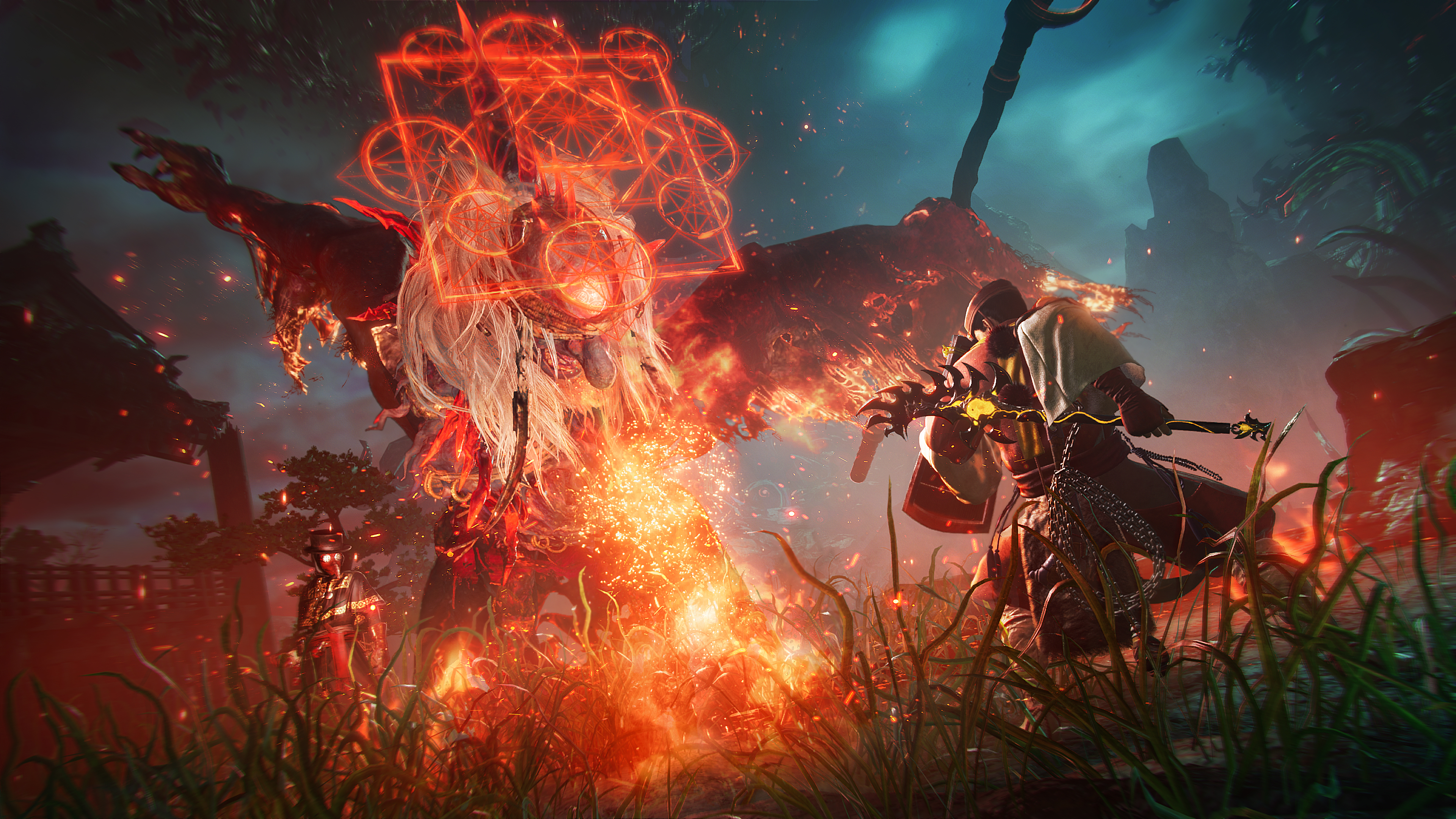
Kohei Shibata: We are extremely grateful that so many players have enjoyed the game, and we are genuinely delighted. We also ended up announcing that the series had surpassed 10 million copies in total earlier than expected, so we had to prepare for the announcement in a hurry! The development team has also been reviewing the various reactions and feedback from players, using them as reference and incorporating them into the updates released so far.
Kohei Shibata: Since this was our first attempt at creating an open-field map for the series, we were concerned that opinions might be more divided. It was particularly memorable to receive such positive feedback from so many players saying, “Nioh and open-fields are a great match!”
Masaki Fujita: First, we conduct extensive research among walkthrough sites, walkthrough videos, and social media posts to compile an overview of how set bonuses, skills, and martial arts are perceived by the community. Next, we use this information to conduct our own internal re-evaluation. If the re-evaluation reveals that certain elements are too weak, we implement adjustments to improve them.
For elements that are overpowered, the ideal approach is to balance the game by strengthening other options; however, if an element is so powerful that this isn't feasible, we may be forced to consider nerfing its performance. Even in such cases, we take great care to ensure the element does not become too weak and retains its viability and purpose within the game. We often employ a trade-off strategy where we reduce the effectiveness of one aspect while strengthening another.
The time players invest in carefully selecting gear to perfect their builds represents a tangible achievement — essentially an in-game asset. Since nerfing performance effectively diminishes the value of that asset, we approach any decision to do so with extreme caution.
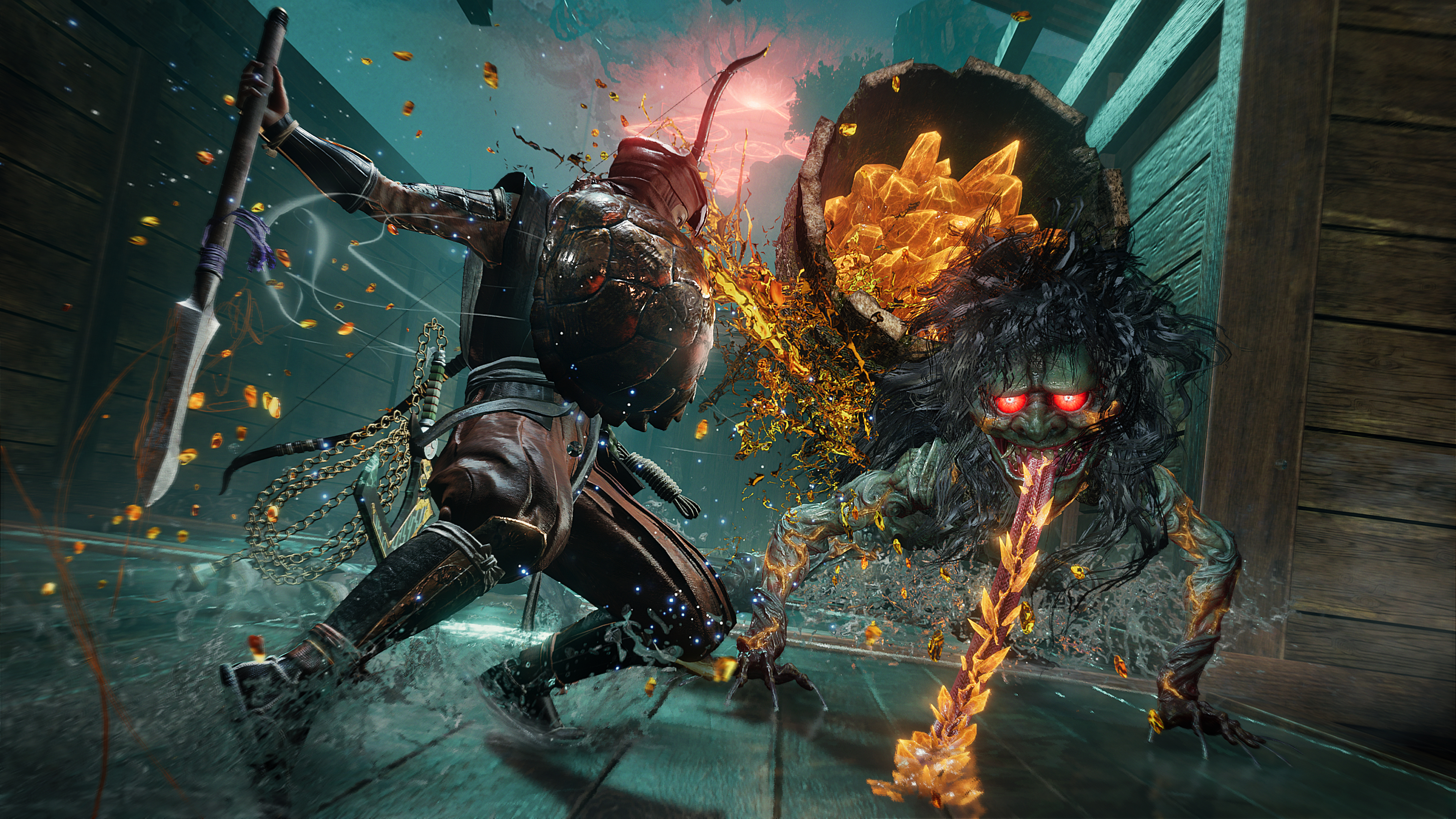
Masaki Fujita: The initial reason for featuring a shield was that, since factions from overseas appears during this DLC, we wanted to create a weapon type that could incorporate Western- style designs. From there, we considered what could offer a gameplay experience different from existing weapon types and decided to adopt the “Hoko and Shield,” which combines both offense and defense. Its defining characteristic is the integration of offense and defense.
In conventional combat, players deal with enemy attacks by guarding or evading, then strike during the opening that follows. With the Hoko and Shield, however, correctly judging the timing allows players to turn even the enemy’s attack phase into their own opportunity to attack. The timing has been set to be somewhat demanding, but by taking the risk of charging into an enemy’s attack, players can gain a significant reward. This makes it a weapon type that offers the tension of high-risk, high- reward combat.
The hoko is similar to a one-handed spear, but its blade is broader, and it is not as specialized for thrusting as a spear. It was a common weapon in ancient Japan, and several legendary hoko also appear in Japanese mythology. Hoko are also used in religious rituals. During the famous Gion Festival, floats bearing enormous hoko are paraded through the city.
Masaki Fujita: When it was decided that the theme would be “Shogun” and that Takechiyo, the grandson of Tokugawa Ieyasu, would be the protagonist, we also broadly determined what the main story and the DLC would cover. The main story is “the story of the protagonist becoming shogun,” while the DLC is “the story of what the protagonist accomplishes after becoming shogun.”
When we think of historical figures who actually served as shogun, we tend to think about what they did. We felt that only by addressing what the protagonist accomplished as shogun could we properly bring a story centered on the theme of the shogun to a conclusion. The Keian era is the period immediately following the rule of the protagonist Takechiyo as the Shogun. The incidents that occurred during that time were strongly influenced by Takechiyo’s rule. In this title, he travels through time into the future, where he comes to witness both the light and darkness of his own rule.
We hope players will see how that experience is ultimately put to use in the conclusion encompassing both DLC 1 and DLC 2.
Atsushi Takahashi: Precisely because it depicts the same era, we were conscious of creating clear differences. Place names that are still familiar in present-day Japan, such as Kanda and Ueno, also appear, but each location has been shaped into visuals unique to Nioh, ruined under the influence of the manifested hell and overrun by yokai, so we hope players will take the time to explore them.
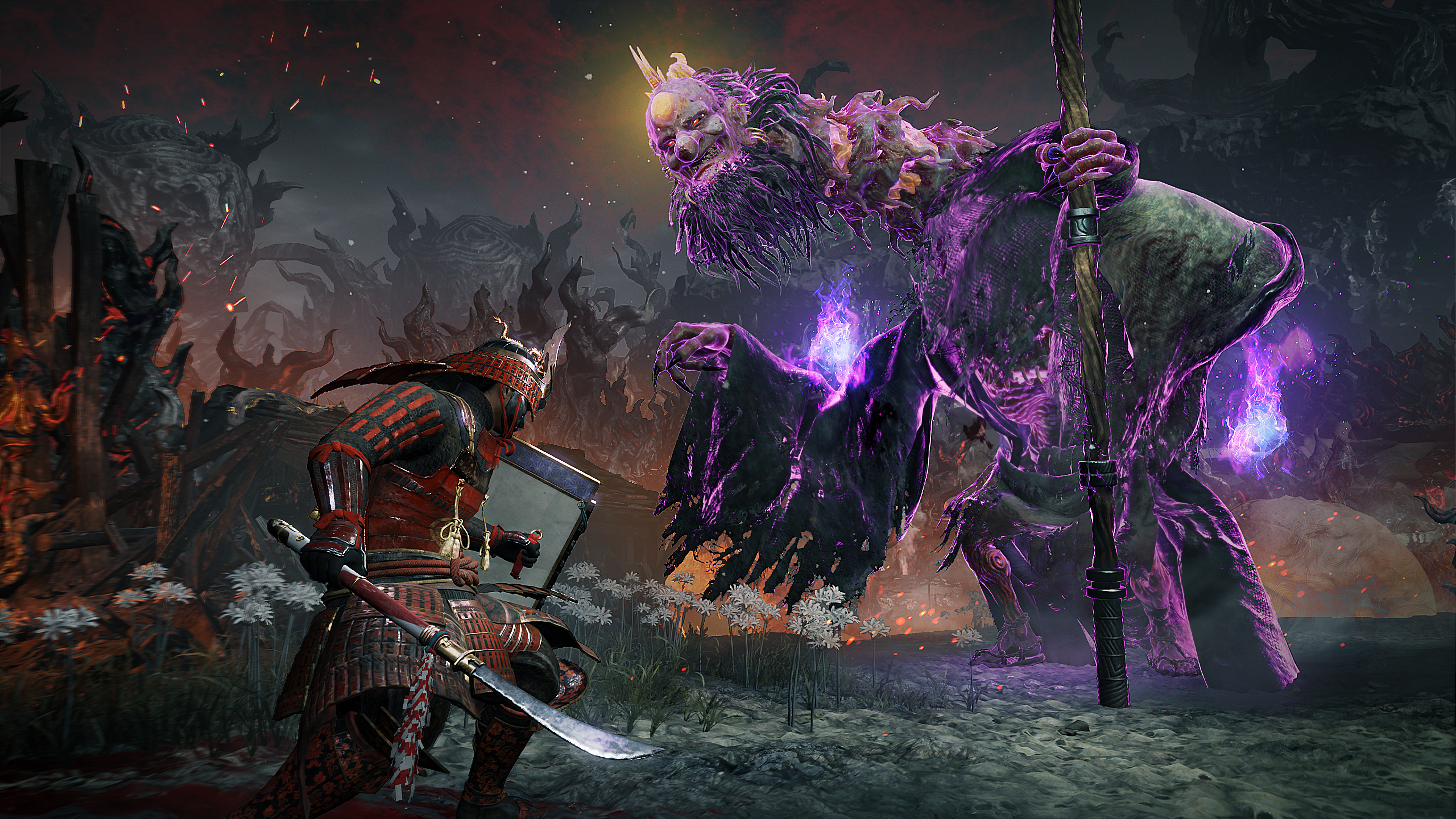
Masaki Fujita: Of course. One example of this is Yagyu Jubei, whose appearance has already been announced. According to historical records, Yagyu Jubei is believed to have died the year before 1651. However, we interpreted this as Jubei disappearing from the public stage of history and delving even deeper into the underworld.
Kohei Shibata: Creating an open field for DLC was a first for the series. The missions have, of course, been balanced to provide a satisfying challenge at key points, but the open-field format has also allowed us to include strange tales featuring Edo ghost stories and figures connected to the Shogun. The result is a gameplay experience in which players can discover something new each time they explore.