

"We really wanted it this way; to show the difference in the scale between Rebirth and Revelation" - Naoki Hamaguchi on Final Fantasy VII Revelation's multiple media demos
There's hardly been a game I've played at a preview session that was as immediately overwhelming as Final Fantasy VII Revelation. To the point where when I'd played it several weeks prior to Tokyo Game Show, I deliberately opted to wait until after I'd had a chance to play the second - much more linear - demo designed for the show floor, so I could get my bearings.
The first demo I'd played for Final Fantasy VII: Revelation was exactly the same as the one Josh, Scott and Alex had all played. If you've read any of their impressions from earlier in the month, you probably already have an idea of what I mean when I say that it's an overwhelming demo; players offered so many different directions to head, but with only so much direction. You can play Queen's Blood, you can explore either of the new zones, or you can revisit areas from 2024's Final Fantasy Rebirth - but even with using just the bare minimum time allotted to the tutorial, the hour we had to explore the world was always going to be restrictive.

While my first thought while playing wasn't even so much a thought but rather a panic about what the next hour of my life would look like, halfway through my play session a coherent one did begin to form - what if all this noise was being exacerbated by the constraints of a preview session? The nexus for this wasn't anything special; I was in the middle of completing one sidequest, chasing a chocobo across Mideel, when I ended up running across an entirely different sidequest NPC - one that appeared on my map, but I was multiple "Party Levels" away from being able to accept. The NPC in question even shooed me away until I could come back once my group's collective strength had grown.
In a way, I suppose I was unable to accept that Revelation as an RPG would be so free-form that players would have so little direction when it could come to which order to tackle side activities; this one, singular sidequest suggested that this is indeed the case, along with specific encampments of enemies dotted across Mideel considerably stronger than my party. It pointed to if not a linear progression, a structure to exploration that players could latch onto within the unending storm of objective markers. You clearly aren't meant to just do everything in a zone the first time you see it; even if it's not immediately obvious, there is guidance baked into Revelation's open world.
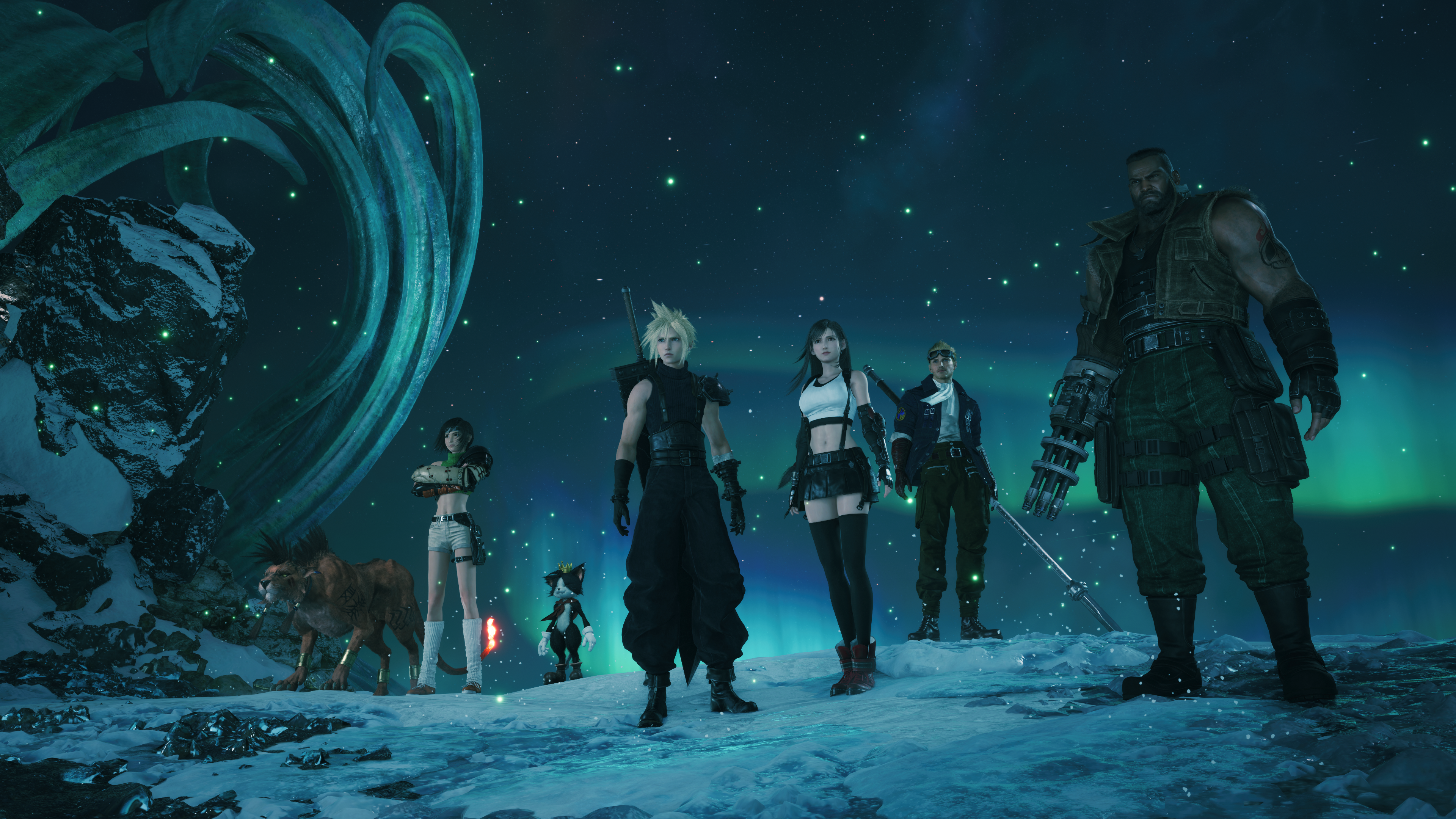
Heading into Tokyo Game Show, I wanted to try and crack the code for what the experience of playing Final Fantasy VII: Revelation would actually feel like once it reached my hands early next year. I had the opportunity to go hands-on with the Crater segment near the beginning of the game, a linear moment that feels like it's out of a different game entirely compared to the open world segment I'd played just a bit over a week prior. Why did it feel so alien, though? The more I simmered on the two demos, I thought back on my experience with Rebirth, and remembered how that game's structure alternated linear set-pieces and open-world exploration moments - the Crater demo simply reminded me that these moments do still exist in Revelation, which I should have expected anyway considering the structure of the original Final Fantasy VII.
I still didn't know exactly what to make of Revelation's overall structure, but I did have enough pieces of the puzzle to start piecing it together with some help - and what better help than the game's Director, Naoki Hamaguchi? Shortly after my demo, I had the opportunity to pick his mind about a number of elements of the game's production:
[Note: This interview was transcribed from a recording mere feet away from Square Enix's Tokyo Game Show 2026 booth.]
Naoki Hamaguchi: Across Remake, Rebirth and Revalation, we're trying to do a few different things. For Remake, the very 1st game in the Remake trilogy, it was very story focused. It was basically on rails - like a rollercoaster, actually. For Rebirth, it became open world, and one thing I specifically wanted to focus on was the option to - rather than get lost in this world and just do everything - was to keep Remake's story focus. I always wanted that to be an option; I feel rather strongly about that.
So, for Revelation, it was the same as Rebirth as well. There was always going to be an option to just stay focused on the story. I think with the two demos, we're allowing people to see "Look at this huge open world, look at all the things you can do!" and then with this demo at TGS it's really story focused and linear. I think we managed to show what the game is capable of with these two demos.
Final Fantasy as a series is really all about the story and its characters, and that's something we wanted to keep from Rebirth as well, despite this huge open world; one thing that really stuck with people was the characters, and the story.
With the media demo, we wanted to show off the variety of things on offer, the scale of everything that was on offer. So… the media previews were largely positive. There was, of course, this feedback along the lines of "Oh, is this too big? Maybe it is too big!", but that's kind of what we were hoping for; we wanted that reaction. Between then and now this is exactly what we were hoping for, to show off the variety of game that's available; this huge, enormous world alongside the linear story segments.
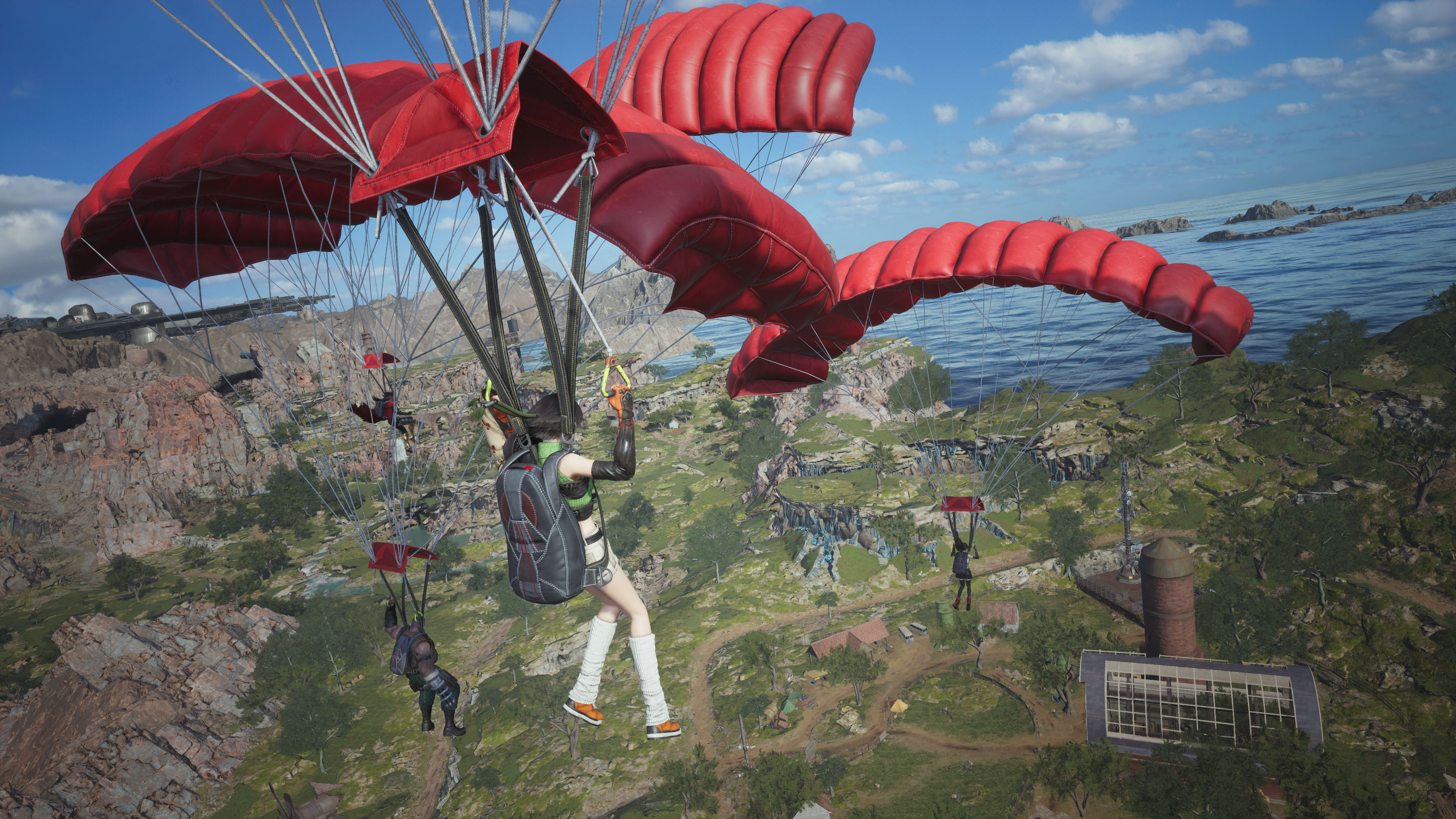
Hamaguchi: It's sort of similar to the way Rebirth works. You're locked into these moments where the story ramps up, it brings you across the setting with a really good tempo and speed that takes you out of the open world, and then afterwards you're left back to your own devices in the open world again, until you're filed back into a story moment.
Meanwhile, the demo I played a few weeks ago was Chapter 4, and basically the whole world was available to me. How has the team been trying to keep that same feeling of the progression between linear and open that was in Rebirth? If the structure is similar to Rebirth, how is the team planning to handle that when the whole world is seemingly open to you so early on in Revelation?
Hamaguchi: Like you said, with Rebirth you unlock these sections of the world one by one as you progress the story - and then at the end, they all come together. With Revelation, there are multiple areas that open up all at once, and you're meant to hop around to each one rather than focus on a specific one, through these segments of the game.
We really wanted it this way; to show the difference in the scale between Rebirth and Revelation. One example of that is how quests themselves work; if you picked up a quest in the Grasslands in Rebirth, they would end in the Grasslands. Just as an example, if you pick up a quest in the Grasslands in Revelation it won't necessarily conclude in the Grasslands; it will take you to other parts of the world. In practice, though, the main story progresses in a similar vein to Rebirth, you're moving beat by beat through the world.
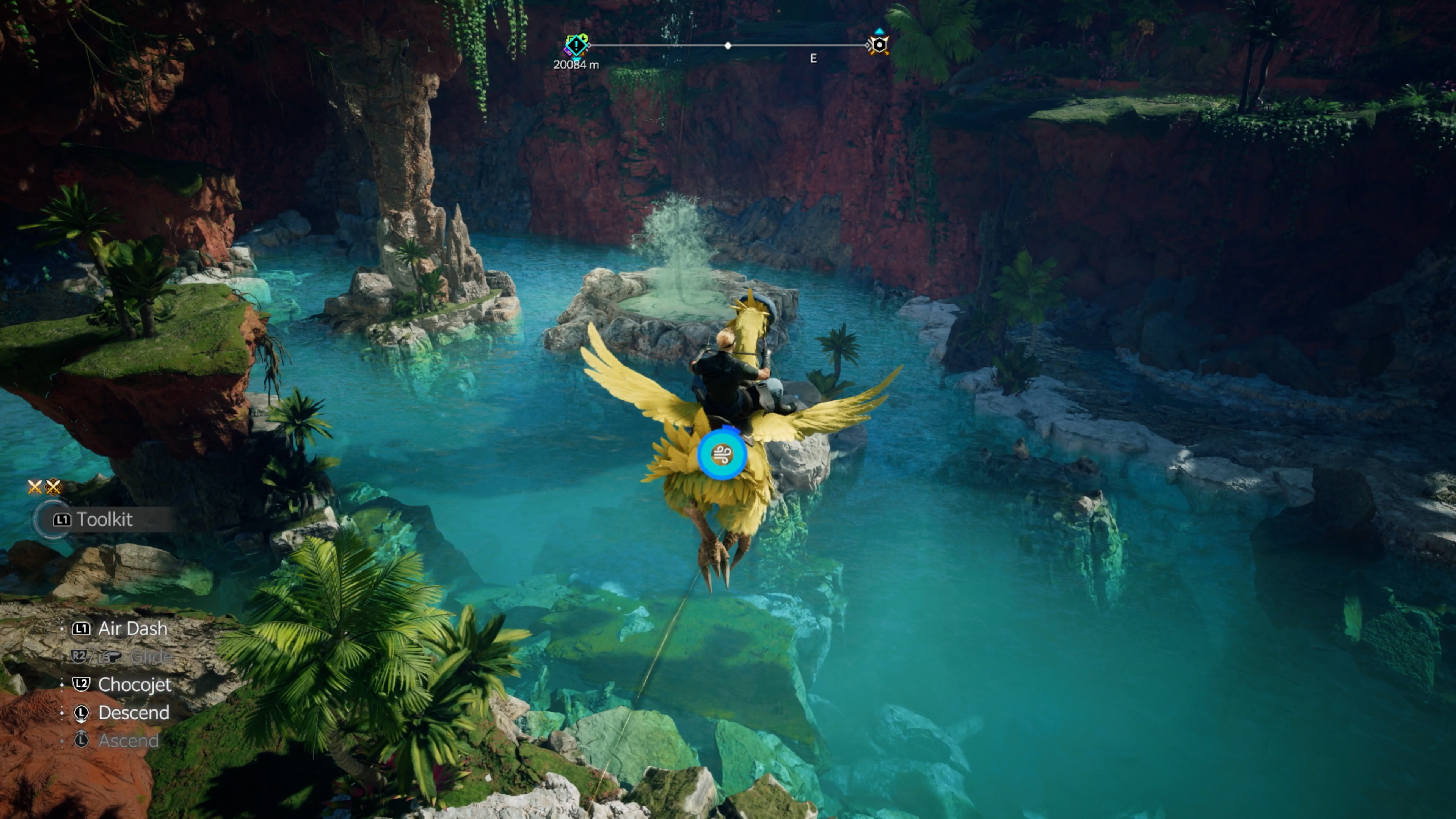
Hamaguchi: More or less. That's one part of how we're trying to block people off so they don't tire themselves out from doing too much at once. Setting a high difficulty level to signal you're not meant to tackle this right now, or in cases like what you mentioned - an actual level barrier for entry, more directly saying "Hey, come back later!"
We've done hundreds of interviews over the past few months, and frankly this is the first time someone has realized that was part of our design intention. I'm pretty happy that someone finally realized what we were going for… [laughs]
Hamaguchi: I will say - I'm very blessed to have the team that I have, with the incredible engineers who are truly talented. I want to stress something, though; I hope players can understand they don't need to worry about the multiplatform experience, when it comes to development.
The team setup is such that we can have a segment of the team focus exclusively on the gameplay elements, and leave all the optimization work to a whole other team that are all very talented people. So that's the kind of setup we have internally. We're always reading comments; fans are always doubting, saying things like "oh, no, this is never gonna work on low spec hardware. There's no way!"
To see all this doubt is disappointing, because as we have explained many times across just as many interviews, we have separate teams dedicated to focusing on the gameplay and a team dedicated to optimizing everything. Please, just believe us!
Hamaguchi: I want to thank everyone for all this attention that Final Fantasy VII: Revelation is getting; it means a lot. As a creator, and as a fan who's been the closest to this project as humanly possible, and who has been working on it for 10 years - I will say we've made something really, really special. So, I'm really looking forward to people experiencing it when it comes out on April 8.
Thanks again to Square Enix and especially Naoki Hamaguchi for the opportunities over the last several weeks; I feel like I'm beginning to get a grasp for Final Fantasy VII Revelation's structure. We'll have to see exactly how that holds up when it launches on April 8, 2027 for PlayStation 5, Xbox Series X|S, Nintendo Switch 2 and PC (Steam). Stay tuned for more of our thoughts in the months ahead.