

“It’s ultimately up to the players” - Dragon’s Dogma 2: Dark Arisen’s devs explain the philosophy of choice behind easing some of the game’s infamous friction
Expanding a cult classic must be a nightmare. I don’t just mean this in the sense of making the game bigger, as is happening with Dragon's Dogma 2: Dark Arisen - but I also mean expansion in terms of growing the audience for something that is specifically loved by a whole lot of people because it is slightly prickly, weird, and unapproachable.
Dragon’s Dogma: Dark Arisen is, for my money, one of the all-time-great expansions. It took the original, flawed but replete with brilliant ideas, and buffed, nipped, and tucked it into a masterwork. It was with the release of the original Dark Arisen that the original Dragon’s Dogma became a cult classic: but that is not the situation DD2 finds itself in. Thanks to the reputation of the first, DD2 already has a subset of players - sickos all - frothing at the mouth. Capcom wants to keep them happy - but it also wants the game to enjoy a bigger audience.
Up steps Kento Kinoshita, originally the Lead Game Designer on DD2. With series creator Hideaki Itsuno having now left Capcom, Kinoshita is in the director’s chair for the expansion - but he’s no stranger to that. In fact, this mirrors his journey with that classic original - a section lead on the main game, director on Dark Arisen.
We sat down with Kinoshita and DD2 producer Naoto Oyama (who himself is having a banner year having also produced cult hit Pragmata) to talk about all things Dark Arisen - from handling a cult favourite with care, to softening it up, grappling with optimization for weaker hardware, and even letting players do things that you as a designer might not really want them to do, if it makes them happy.
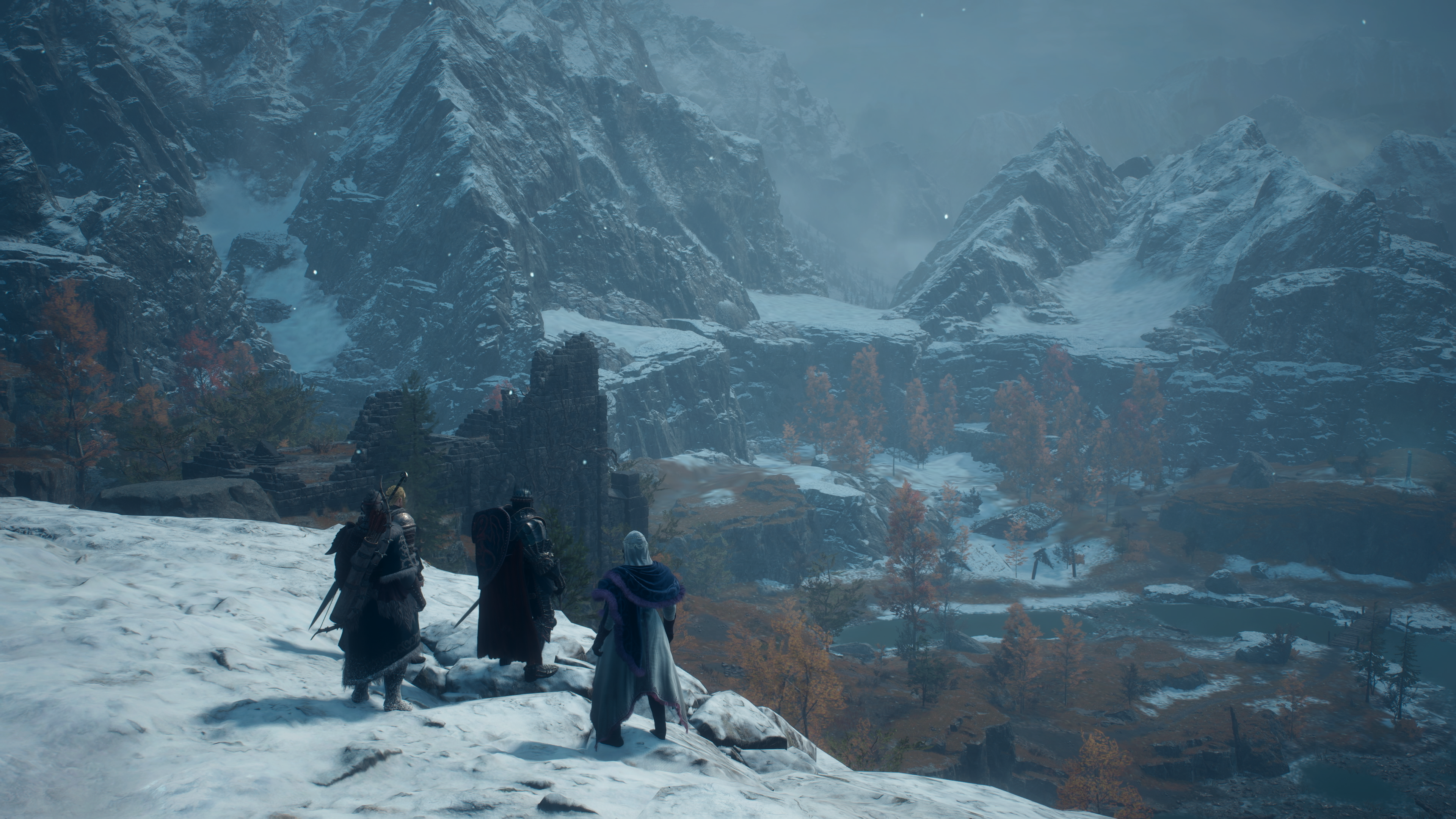
Kento Kinoshita: I think in terms of a counterpoint, in Dragon's Dogma 2, the adventuring that you do in the original map has got - I wouldn't call it peacefulness, but a certain bucolic nature to the wide open fields and the kind of scenery that you see on your way from different areas, whereas the brutality of the cold wasteland that you're facing in Norgon is probably the best counterpoint example I could give. Where they're both still open map areas, so they're not different in that sense, but you're not going to casually stroll down the road in Norgon because there's always the intensity of the climate and the weather facing you.
So that open, expansive field will feel very different to Bitterblack Isle. But we know that there's a lot of people who really enjoyed that dungeon-crawling style that Bitterblack Isle had, where you've got one specific area and you're diving deeper and deeper into it.
So to provide both player experiences, Norgon is the expansion of the open world, whereas the new 12 Lost Rites dungeons that are being added to the base game, they're kind of a nod to that dungeon crawling. So if you're a fan of the original Dark Arisen, and maybe in a sense with the new open Norgon you'd almost miss the dungeon crawling, then you can check out the additional added content that has a bit of a feel of that hack-and-slash dungeon feel.
We're trying to bring both experiences, and overall the theme goes from starting off from a kind of cold atmosphere into a certain darkness towards the end of the story, and that speaks back to the main choice as well.
Kinoshita: The main thrust of the concept was the fans had said that they loved the base game and played so many hours, they want to do more adventuring in this world. So the first concept was: add a new area to go to for that fresh experience of - you know, it's built on the same engine, but it's going to feel totally different.
Once we did that, we were like, well, you might miss Vernworth a bit; it's almost like that's the area you've got to know and love, and you sort of know the map inside out, so it'd be a shame if you totally left it behind for the expansion. And then that was when we decided that adding in these extra dungeons would have a reason to return to the original map and not just never see it again, but also bring something fresh to that familiar area. So it was really the new map first and then additional content second.
Naoto Oyama: Another consideration was we were bringing it to Nintendo Switch 2, where the original game was never released, so anyone who's purchasing Dark Arisen, the bundle as it were, on Switch 2 is starting from the start no matter what; they can't just jump into the new content. So we wanted to have something that was ready alongside the original story.
You can almost treat it as an extra opportunity to get XP and leveling up while you progress the main story, because there's nothing stopping you exploring the new Lost Rites dungeons in parallel alongside the original story - or even in parallel visiting Norgon if you want to. So it isn't strictly ordered like endgame content; you can attack these in any order you want, and we felt that that would make for a richer, broader experience for first-time DD2 players on Nintendo Switch 2.
Oyama: Well, if you're going to revisit it from the start with the new content included, you'll get to do things like meet the Evil Eye, the classic monster from the previous games that has been added as part of the 12 new dungeons. So for veteran fans like yourself, you'll have this sort of... even if you're a DD2 veteran and you've already played through the game, there'll be surprises waiting in the story if you play with the new content installed.
Also, you’re the perfect candidate for Hard Mode. Hard Mode isn’t part of the DLC, but it’s a free update on all platforms and on Switch 2 will be built in. You can start a fresh new save file on Hard Mode if you think that you want a meatier challenge. So maybe give that a try to sort of shake things up the second time around.
RPG Site: It’s more a question of if I have the time…! [laughs]
Oyama: Choose wisely, because once you go Hard Mode, you actually can't revert it until you've cleared the story! [laughs] So if you're unsure, maybe stick with Normal.
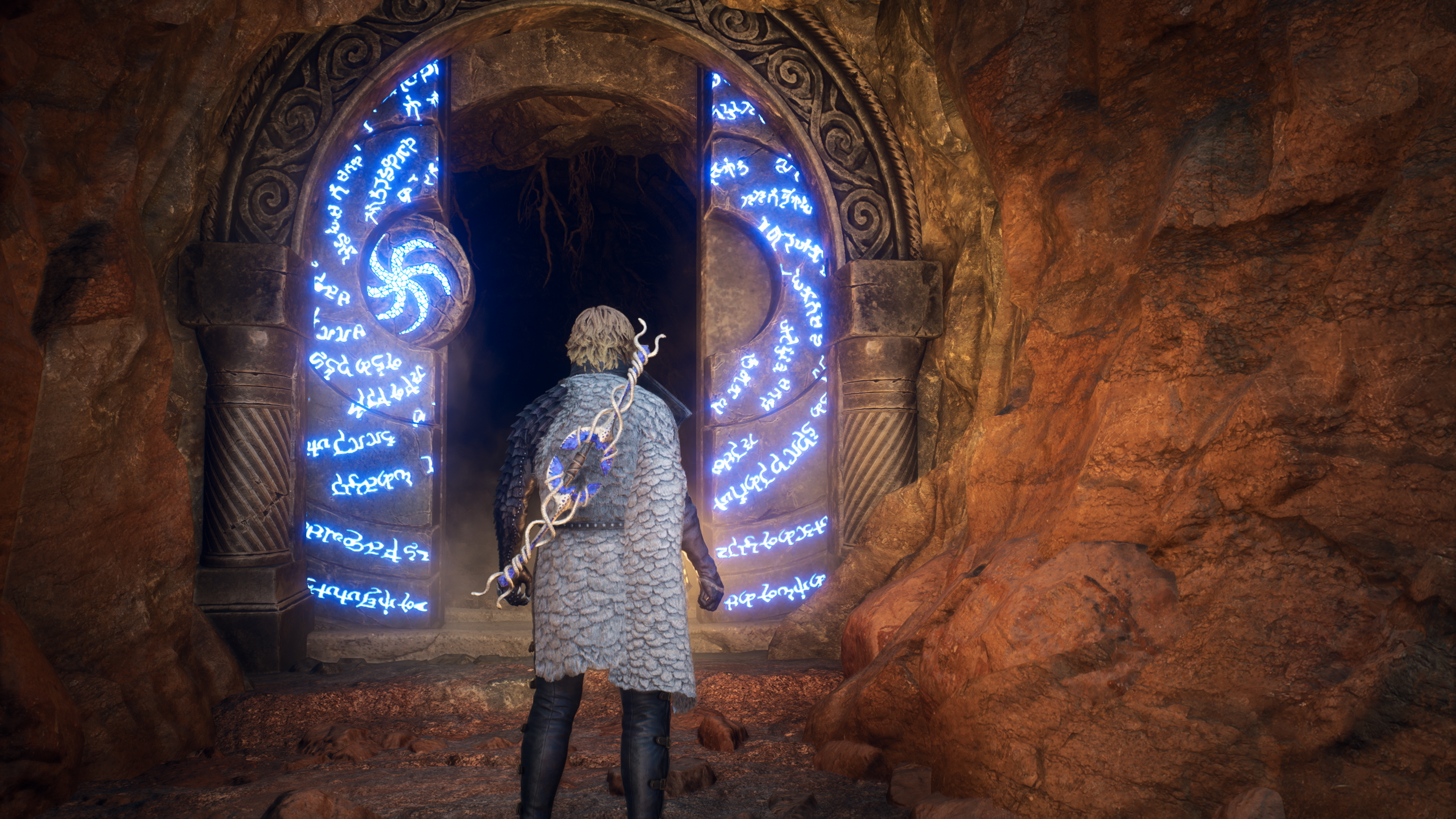
Kinoshita: Well, it's a balance between the intentional friction that you can enjoy and the kind of friction that just becomes frustration at the end of the day. And that's different for each player, but it's also something that each player may feel differently depending on the particular day that you're playing on.
Like you said, 'I haven't got too much time today, do I want to be having to walk back and forth to every location, or do I want to use fast travel just for my own convenience?' My approach is essentially giving the players the options to set that level of where the line is between a fun, crunchy adventure and just an annoyance by themselves.
So taking the Eternal Ferrystone as an example, we've of course added it in already through a title update - but if you don't want to use it because you really think that getting there on foot or the oxcart risk-reward is part of what makes DD2 special, then just don't use it. You don't have to use it.
On the other hand, if in the course of doing the Relic Expedition cycle on the DLC, there'll be a lot of back-and-forth. You'll be going out from the settlement, exploring Norgon, getting relics, and once you've got the drops, you want to go back to the settlement to get them appraised. If you just want to go straight back, that might make more sense.
Or if there's certain journeys you're making a lot from A to B back and forth in the course of your adventure and you feel like you've kind of seen that road and you've done those battles and you don't need to see it again, then once it gets repetitive for you, then fast travel will just eliminate repetitious travel that isn't fun for you anymore.
By giving players this kind of suite of choices, we'd like to think that they can again choose their own level of crunchiness, so to speak.
Kinoshita: The Norgon thing came later, or rather was like an added benefit. The first approach, or the first thought, was finding ways to update the game that would let players who are feeling frustration with the base game design maybe relieve some of that frustration in different ways. So it was a great benefit that it also gels well with the design of the loot acquisition cycle of the DLC.
I think it's best if people don't use it to get straight to somewhere that they've just been to. Like, it's good to explore the world on foot first and get to know it, and then you use it as a way to skip a journey that you just don't have time to make right now. You feel like, you know, you've done it five times in the last hour, so let's just get on with it. I'd like players to use it that way, but it's ultimately up to players.
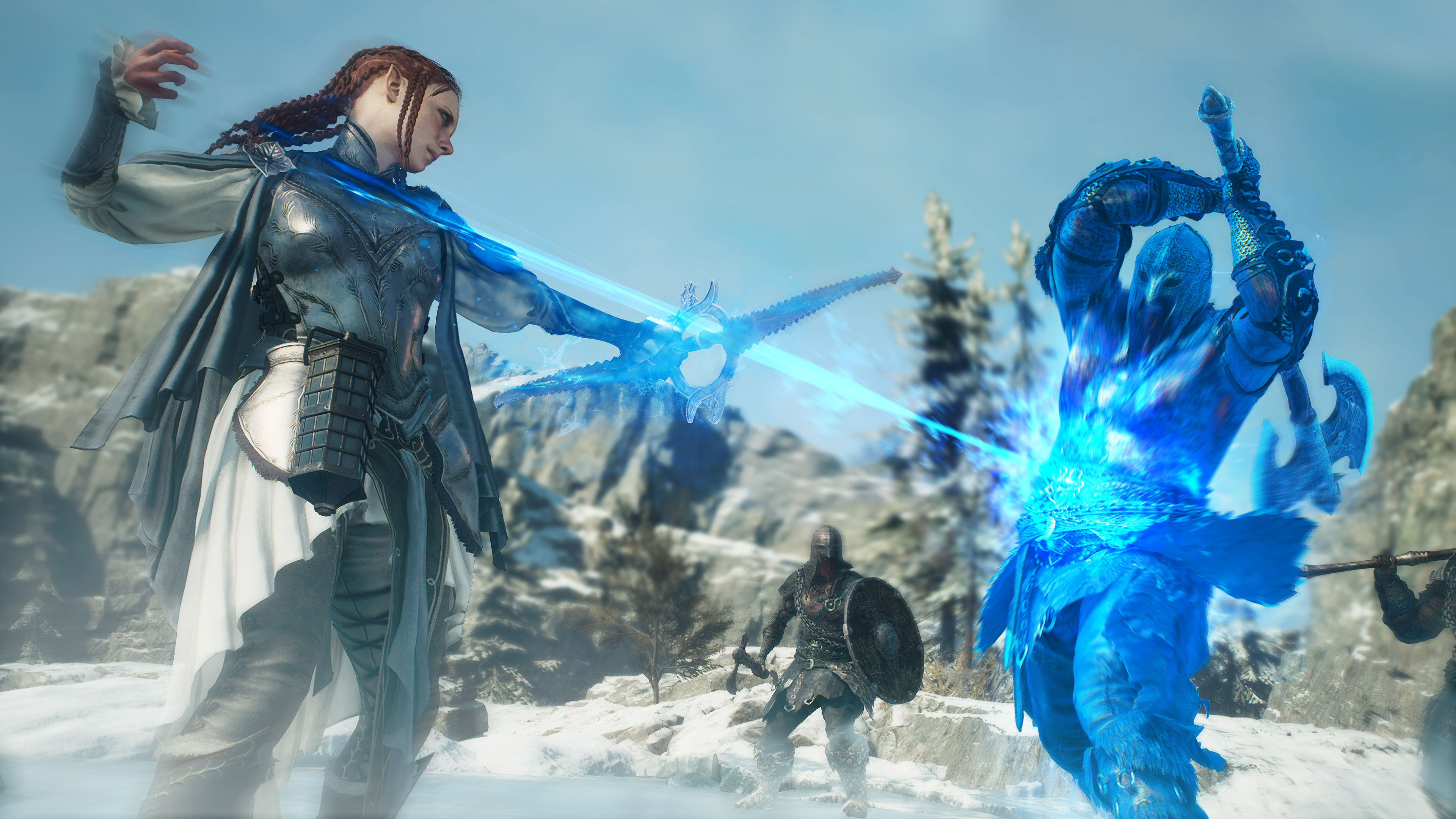
Kinoshita: As you said, it's absolutely not just a pretty visual effect. We wanted it to feel a very plausible and concrete part of the experience, so something as simple as the wind could be blowing up in a certain direction, and the wind direction is a mechanic.
So if the wind is at your back and you're running, it'll make you run faster, but if you're running into a headwind, then it'll slow you down. But you can use that creatively to your advantage, like if you've got a gap between you and an enemy and you're above them and the wind's behind you, you could use it to jump much further than usual and get behind them, or even get across a gap you couldn't usually get across.
There'll be sudden blizzards and storms; it's almost like a whiteout where the visibility drops immediately, and then you'll hear these sinister noises and you're surrounded by monsters who've seemingly come out of nowhere. So that's an interesting wrinkle to your adventures. There’s also other, more physical map gimmicks like icicles, which you can fall onto but you can also push enemies onto them. Even the way that snow gathers up can eventually create a literal snowball effect, where you can roll things down hills.
These are all tools that are available to both yourself and the enemies, so it could be a bit of a plus or a minus depending on the situation, but you can get creative with the environment for sure.
RPG Site: I laughed when I was playing, as a Pawn picked up an enemy that I’d knocked over, and they ran halfway across the battlefield with it. I was like, ‘what are they doing…?’, but then they threw the enemy onto icicle spikes to kill them. [laughs]
Kinoshita: That’s it! [laughs] The extreme cold itself is also a factor, so not permanently throughout Norgon, but whenever blizzards come in and other environmental effects happen, you'll suddenly notice your characters shivering. The colder they get in these extreme cold situations, the slower they move, and your maximum stamina gradually decreases.
You'll first and foremost maybe want to duck into a cave and get out of the worst of it. But you'll have to figure out a strategy, whether that's finding or forging gear that has anti-cold effects built into it, or certain items can help you out with it - so it's another thing to consider.
Oyama: We first started as a base to get both docked mode and handheld mode running at a stable 30 frames a second. In addition to that, we've added FSR Frame Generation. AS you know, that creates a 60fps equivalent experience. So I think that's a big part of the reason why you felt it was so smooth. FSR was forced on in the version you played, but you can turn it on and off in the final version.
Like any such sort of performance balancing, Frame Generation has its merits and demerits: it's a smoother experience, but in certain scenes you may find visual artifacting and stuff occurs, so each player can decide whether they want to choose sort of fidelity versus performance on that basis. But it's a way for us to create amazing performance that we can squeeze out of the Nintendo Switch 2 hardware.
Oyama: It has been challenging, and there isn't one big magic fix we made; we just had to work very hard and find lots and lots of optimizations across the board on the game.
The great part of that is, though, that it's actually fed back into the other versions, so as we release title updates on existing platforms, all of the work we've been doing to challenge ourselves to bring the game to Nintendo Switch 2 has actually resulted in higher optimization levels for those, too. It's a sort of a virtuous circle where both processes are able to benefit each other, so it's been a lot of work.