

Monster Hunter Stories 3: Twisted Reflection wants you to conserve and protect the Monster Hunter World
I've been playing Monster Hunter Stories 3: Twisted Reflection for a few weeks now; Capcom gave us early access to the full version of the game, and broadly we have the option to talk about the first 20 or so hours of the experience. That presents a small problem; while I haven't quite finished the game, 20 hours is a lot of time - and I don't want to regurgitate much of the same writing between these impressions and my final thoughts in the review. Instead, I want to talk about what feels to be Stories 3's raison d'être - wildlife conservation.
In previous games, players take control of a young Monster Rider, fresh on their journey and learning more about themselves and the world in the process. Stories 3, while there's still plenty of self-discovery, isn't quite that sort of story - instead it's directly focused on the Monster Hunter Stories world, and protecting it. Whether that be by physically stopping threats, or by helping rebuild ecosystems that have been thrown into disarray.
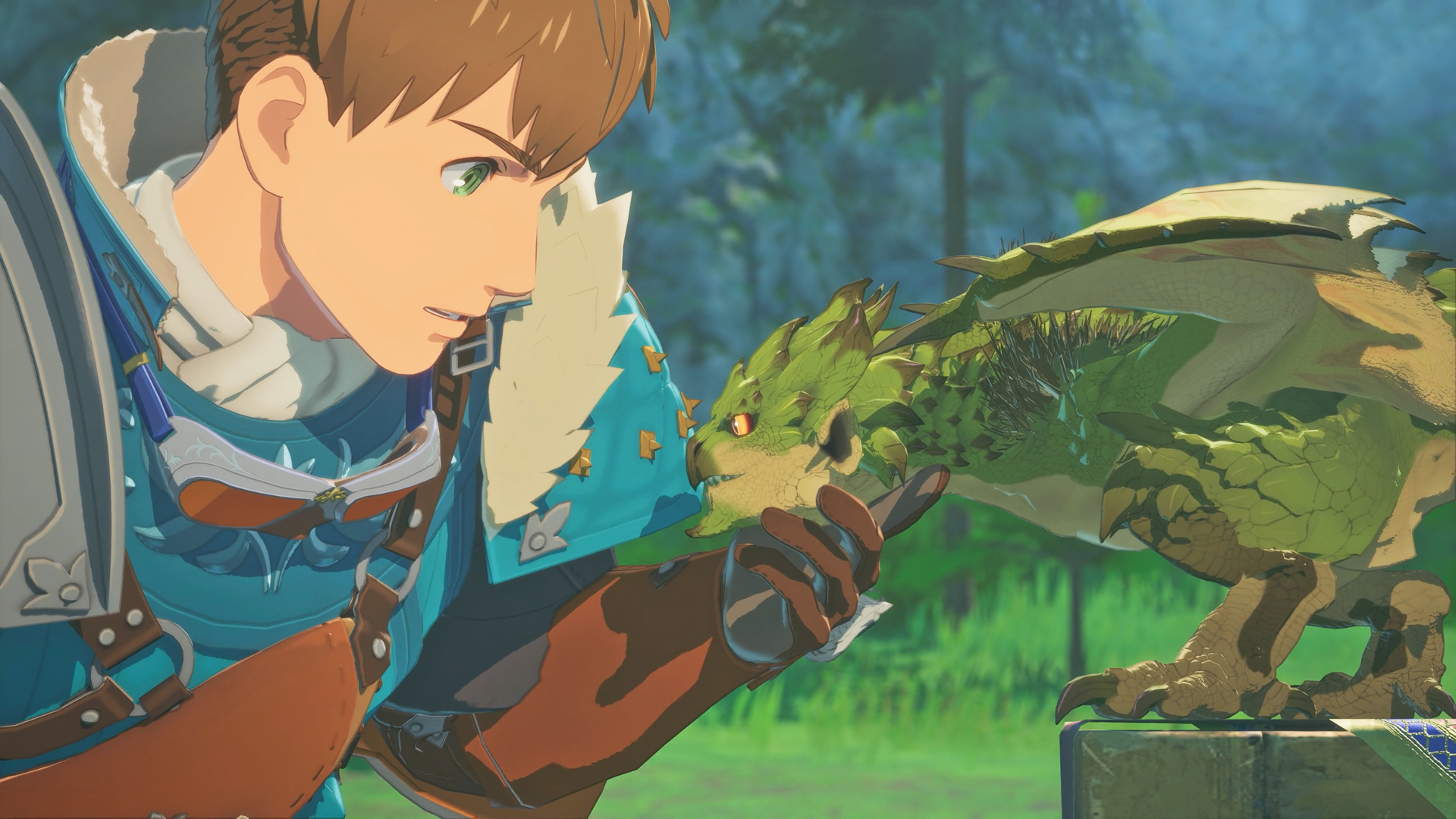
Core to this system is Habitat Restoration. Each of the game's maps are themselves split into separate sub-regions, each haunted by a Feral Monster; quell it, and you'll be able to setup a camp and get to work restoring the environment that its presence had been impacting. Each region has a number of Monsters that normally appear in them; yet there are also some monsters that normally would appear, but have been driven to the point of near extinction. Some of these Monsters, like Rathian, require you to seek out an Invasive Monster's territory by investigating endemic life, whose reactions at night will help guide you to where these ferocious monsters keep their den.
These encounters are different, with the goal never to outright defeat them - it's clear that if you could, it won't be until endgame, as their damage output is much higher than what you'd be ready for when you originally discover them. Instead, the goal is to sneak around the Invasive Monster's lair while paying attention to what you find around you. These remnants of the Monster's activity, as well as your companion's commentary, are your hint for the solution to driving off these Invasive Monsters and spawning a den where you can find an Endangered Monster egg.
Often these Endangered Monsters, when released back into the environment, can eventually spawn subspecies Monsters. One key element of Habitat Restoration is the rank of each Monster in an environment, and keeping an eye on the journal for each region will let you know when there's a possibility for a specific Monster's subspecies, variant and even Deviant can spawn if the rank is increased high enough.
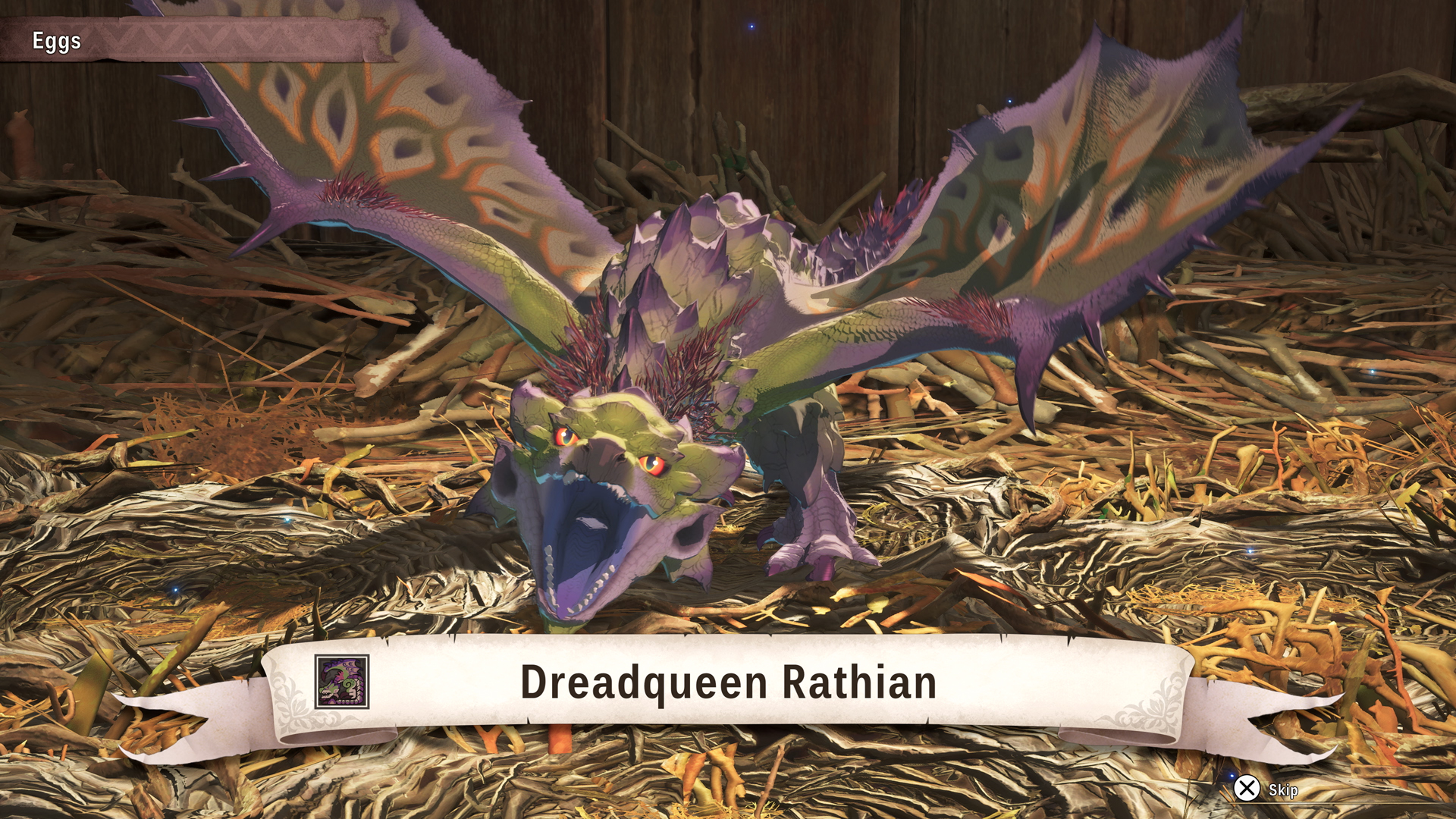
As their rank increases, so to does the chance for them to spawn in the overworld; their eggs seemingly are far more likely to spawn as higher qualities, and once maxed out will come with special genes - the traits that determine a Monster's passive abilities and attacks - too. It's maybe a little grim, but even if you don't intend to add these Monsters to your party directly, battling them in the overworld gives access to materials for equipment you wouldn't find otherwise.
It's a strong gameplay loop, that at the same time feels deeply entwined with the considerably more grounded story the team wanted to tell with Stories 3. More than a Monster Rider, you're a Monster Ranger; and while you're not immediately out to save the world, your job in-universe is explicitly to find a way to help balance the scales for life in a world on the brink of a slow destruction. I can't wait to talk more about the full game in the coming weeks, because Capcom has something special on their hands. Monster Hunter Stories 3: Twisted Reflection is out March 13 for Nintendo Switch 2, PlayStation 5, Xbox Series X|S and PC (Steam).