

Fire Emblem: Fortune's Weave remixes what's come before, taking the strategy series in a new direction
In the time we’ve had the opportunity to preview Fire Emblem: Fortune's Weave so far, we’ve had a chance to play the first five chapters of each of the main characters’ routes — Cai, Dietrich, Theodora, and Leda — along with the game’s opening prologue section set five years after the Heroic Games. While we’re clearly only scratching the surface of what this game entails in full, the ambition to this latest entry is evident already, taking what’s come before and putting a whole new twist on it.
At a glance, our immediate impression is that Intelligent Systems is using this new entry to make a Fire Emblem combination of several of the core design principles the series is broadly known for. The overworld map is back, dungeons return in a manner reminiscent of Shadows of Valentia, the route structure of Three Houses makes a return (albeit presented in a new context), the customizable avatar makes its return for the first time since Fates, and the flashy presentation improvements of Engage are pushed even further. The avatar in this one is named Eshmel by default (although you can change it), a character you get to design in the first chapter. However, they actually aren’t too present in this preview section, since as part of the game’s premise, you quickly jump into the events of the Heroic Games (five years into the past) part of the story after a few introductory missions.

In Three Houses, some of us here at RPG Site played it as was likely intended by the developers, by picking a single route and only finishing that one route. A first playthrough of that game was long and felt full-featured as a full video game, even though you’d be missing some narrative context needed to understand the greater story and world of Fódlan. This felt thematically important, but we can see the desire to change that structure for a sequel. By framing Fortune’s Weave around a mission to go back in time and interfere with the fates of four key players, it takes the conceits of Three Houses’ structure and expands it to the progress of the game itself. Your goal is to recruit soldiers for some Final campaign to save Dagda, and you are allowed to play as many or as few of these four campaigns as you want before moving on. That, of course, entices us to play each of them.
To be clear, Fortune’s Weave clearly takes many elements familiar to those who have played Three Houses, but it is also very different in many ways, including its narrative framing. In Three Houses, (most) everyone comes to Garreg Mach Monastery for the same reason, only later diverting into narrative branches partway through the game. In Fortune’s Weave, however, each of the main characters has a different reason for heading to the city of Dagsion to participate in the Heroic Games. It feels more like a convergence point of many varying motives, which will undoubtedly coalesce into a grander narrative later on.
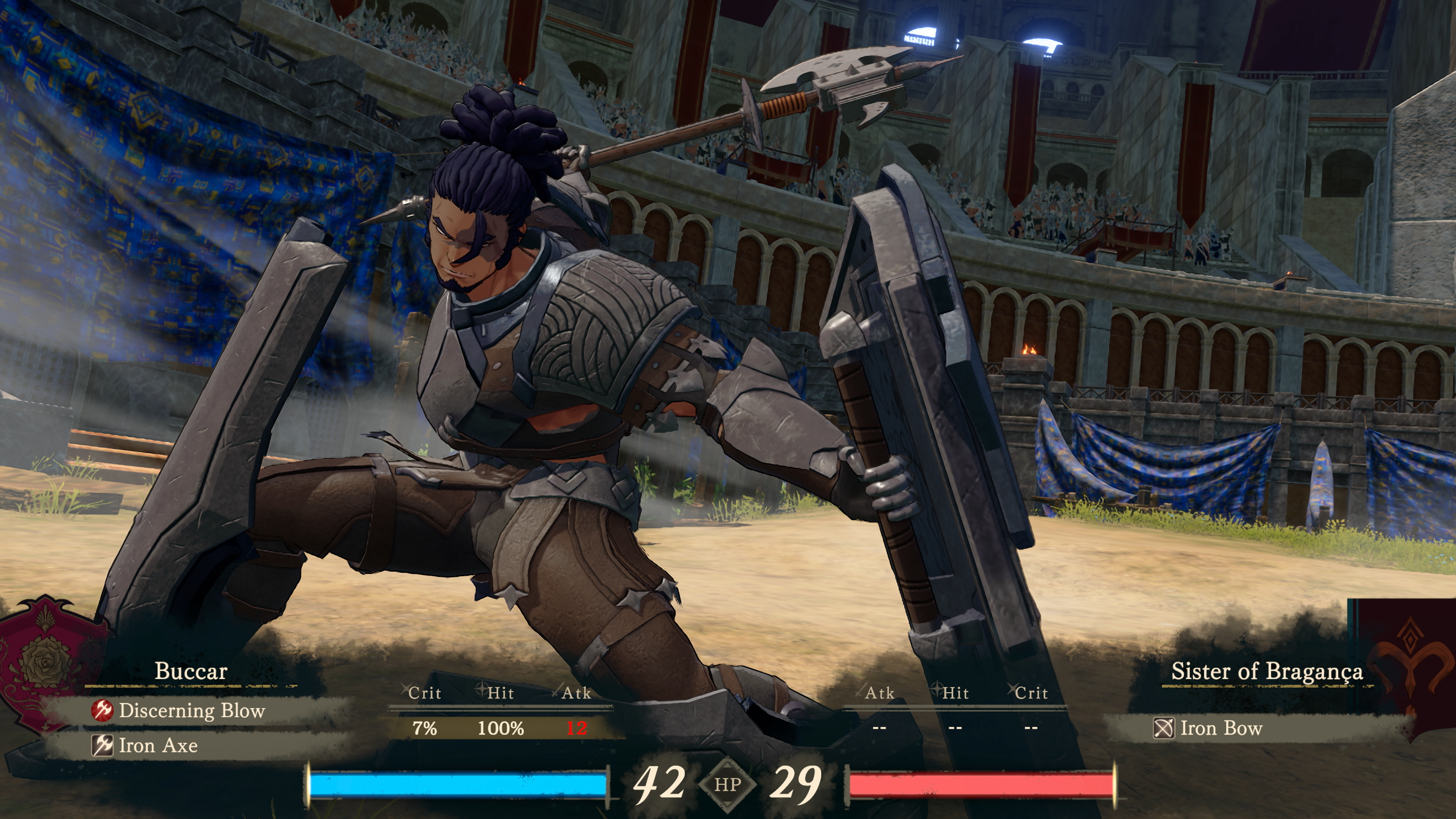
To that point, each of the four routes starts quite differently from the others. Leda seeks to find her father’s killer as one of the survivors of her home nation. Theodora aims to curry favor with the Divine Sovereign to help her young nation of Saramis. Dietrich washes ashore nearby and simply decides to take part in the games for the thrill of it. Cai, meanwhile, wants to save his incarcerated father.
There are many, many people in Dagsion, and you will seemingly not become well-acquainted with all of them in just one route. As we dive into the early sections of each character’s route, there are clearly many actors at play, and many in conflict. To get the full picture of all the goings-on during the Heroic Games, you will probably want to see each route, eventually. Unlike Three Houses, however, you can jump from route to route within a single save file, so you don’t quite have to start from scratch to check out another. All of your progress is saved, even if you decide to jump to a new route partway through.
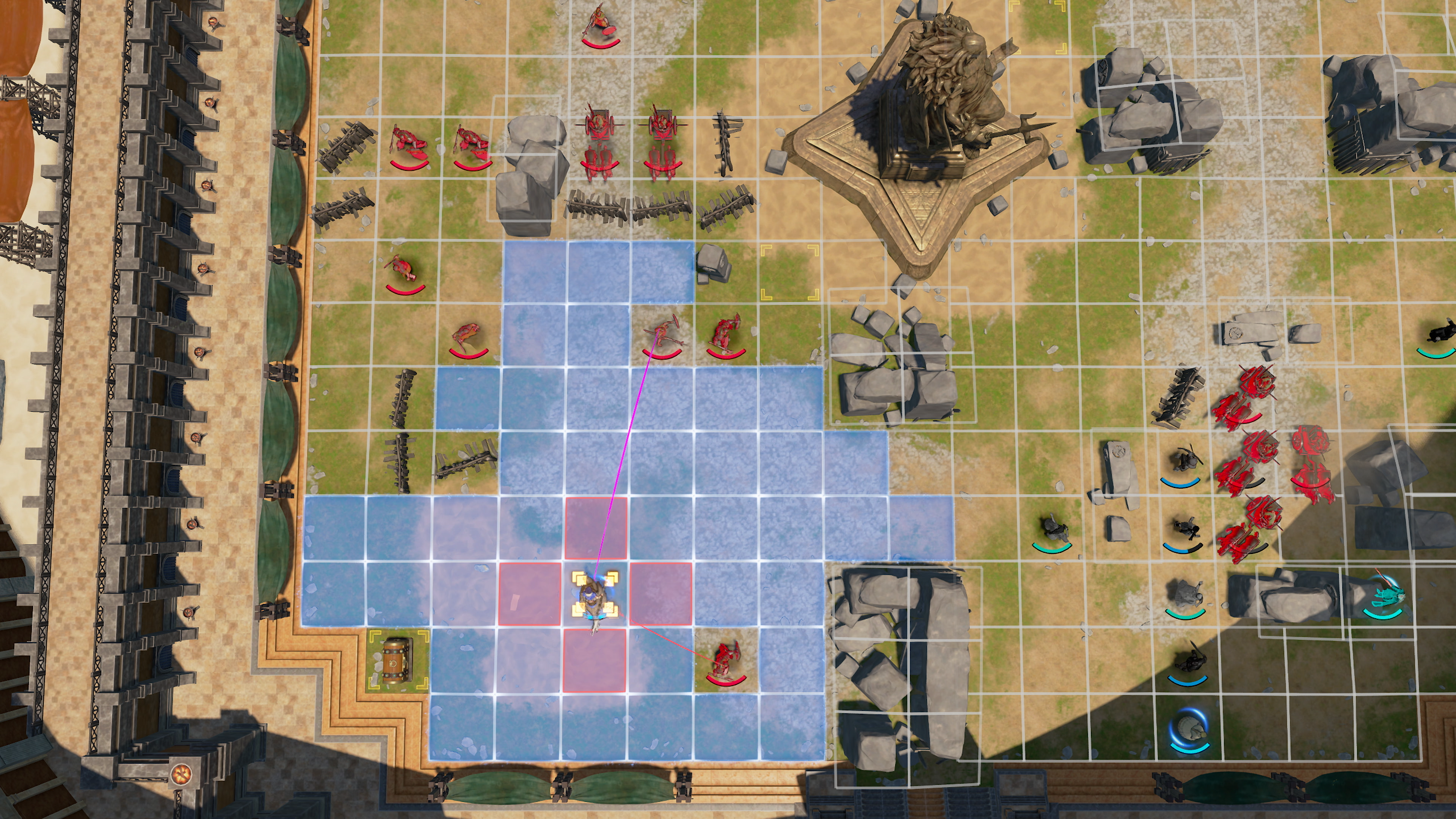
Also, just to be as clear as possible, the four storyline ‘routes’ you see are not actually concurrent within the same exact timeline; it’s more like four different versions of the events that take place at the Heroic Games. Eshmel is using the goddess Fortuna’s magic to change the causality of events in varying realities to bolster forces, although how that actually takes place later in the game remains to be seen.
So far, we’re appreciating the attempts to differentiate the four campaigns. Cai feels designed to ease you into the world slowly, carefully taking you through each mechanic so that anyone can wet their feet before going on to the seemingly more demanding campaigns. It makes sense, given that he’s the youngest member of the core cast. Battles aren’t too difficult, even on Hard, and the main systems like free time and exploration are slowly introduced to players. You learn a lot more about the Heroic Games in the context of Cai wanting to win them to save his father’s life from execution. Considering this might be a new generation’s intro to Fire Emblem, taking it slow early on was a good move.
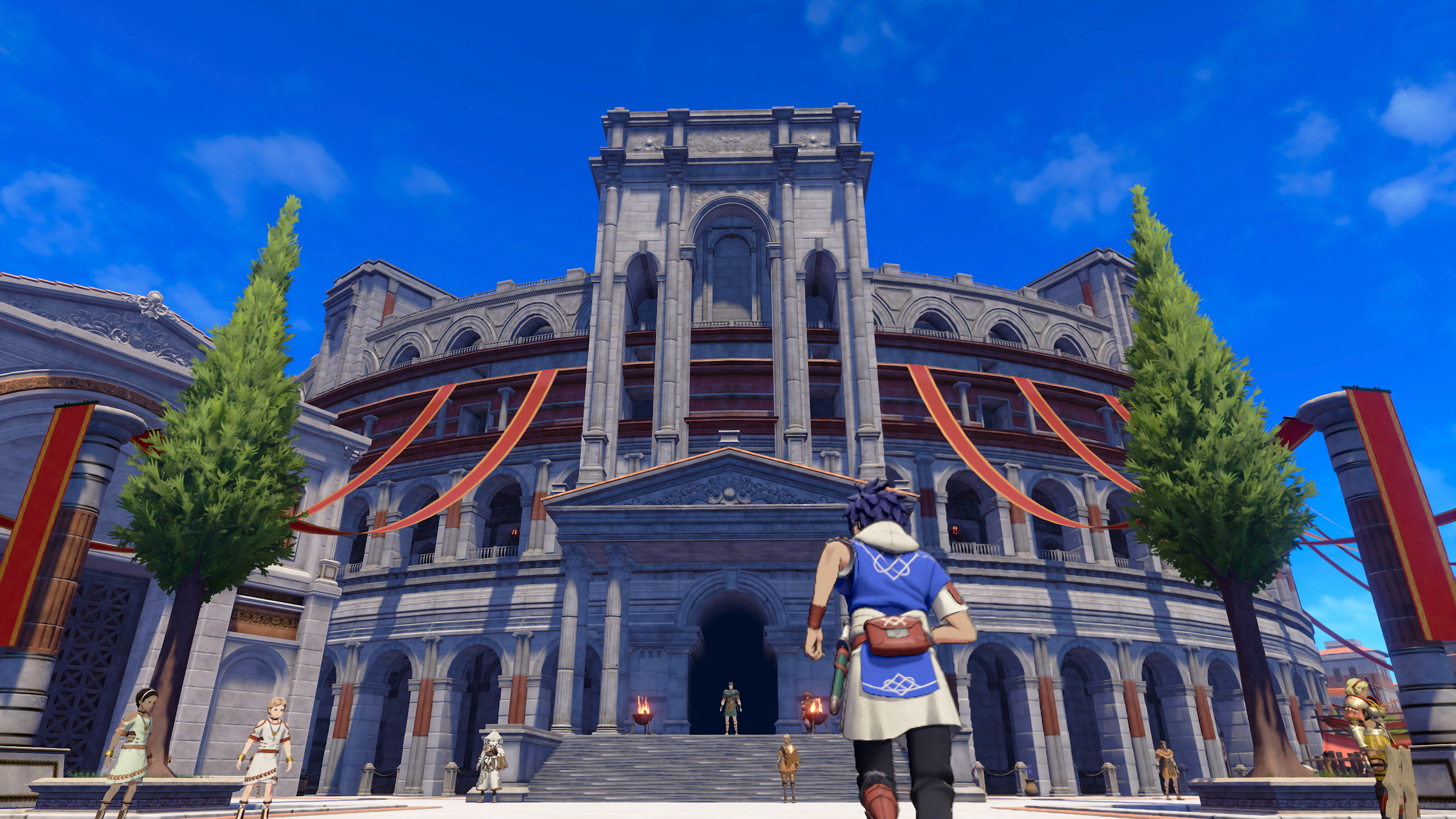
After we finished Cai’s intro, we went back to Fortuna’s Obelisk room and switched over to Dietrich’s campaign. You can do this at just about any time you’re back at Dagsion, as long as you are not in a main story battle, with each character’s progress being stored on your one save file. A lot is going on under the hood in this game that we can only speculate on.
It is worth noting that the game has a fairly strict autosave function. There is only one save file, and the game will autosave over it frequently. You can’t just rotate through multiple save slots as you could in Three Houses. Although there is *some* leeway to knowing the game’s autosaving behavior, once you’ve made a decision, you are usually stuck with it. We’re looking forward to seeing how this comes into play when we start properly engaging with Free Time before important matches in the Heroic Games.
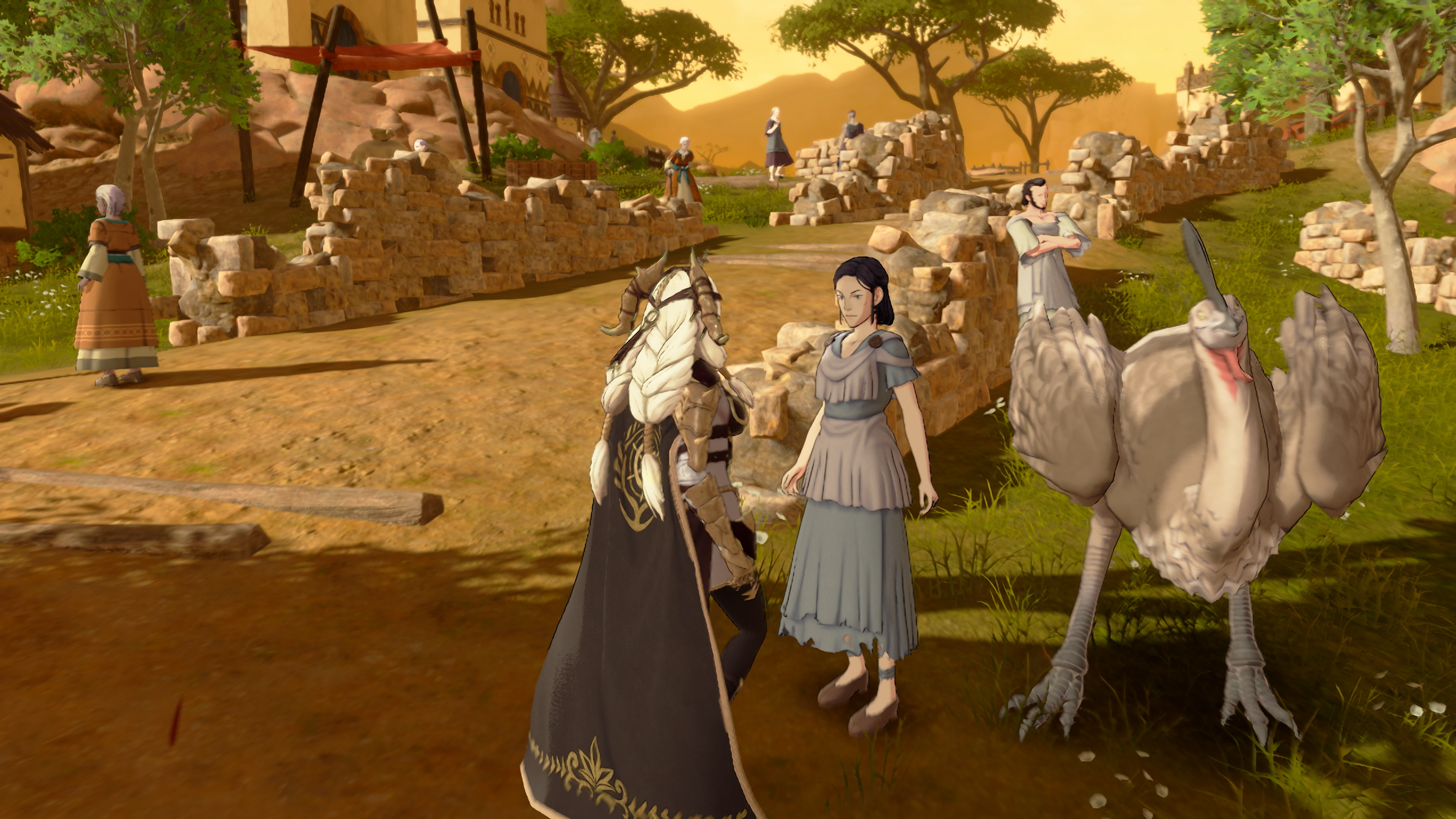
Dietrich’s intro was mostly a linear series of battles, similar to classic Fire Emblem. He shows up to the city of Dagsion in the last chapter we were allowed to play, but perhaps this is a hint that his route will be more focused on combat. He’s not as sympathetic as Cai, but this makes him fun in a sort of shonen anti-hero way. His initial motivator is wanting to hunt down a sea creature that broke his boat as he came in from Fódlan. The ragtag trio of himself, Fabio, and Esmerelda is an enjoyable and stark difference from Cai’s wide-eyed team. Dietrich is so single-minded that he barely cares that Fabio and Esmerelda are always at each other's throats. This also felt considerably more difficult than Cai’s campaign, presumably primed for either returning players or people who have already finished that campaign.
Mechanically, the biggest gameplay alteration made to Fortune’s Weave is the world map, which you’ll get to navigate during Free Time. Although we only got to see a small bit of this so far, while several other Fire Emblem titles have had maps, they were usually much simpler, with nodes to main battles and others to side content. While Three Houses’ Free Time usually had you running around Garreg Mach each day, now you’ll be traversing the entire continent. You’ll only have so many days to explore before the next main event, so you’ll have to decide your priorities. Do you fight battles for EXP and training? Do you explore dungeons you haven’t seen yet? Should you stop by city shops for new weapons and items? You’ll also want to be sure to set time aside to revisit Dagsion every once in a while, as you’ll be able to do many things in the city. This seems like it will be a defining component of Fortune’s Weave, at least during the Heroic Games.
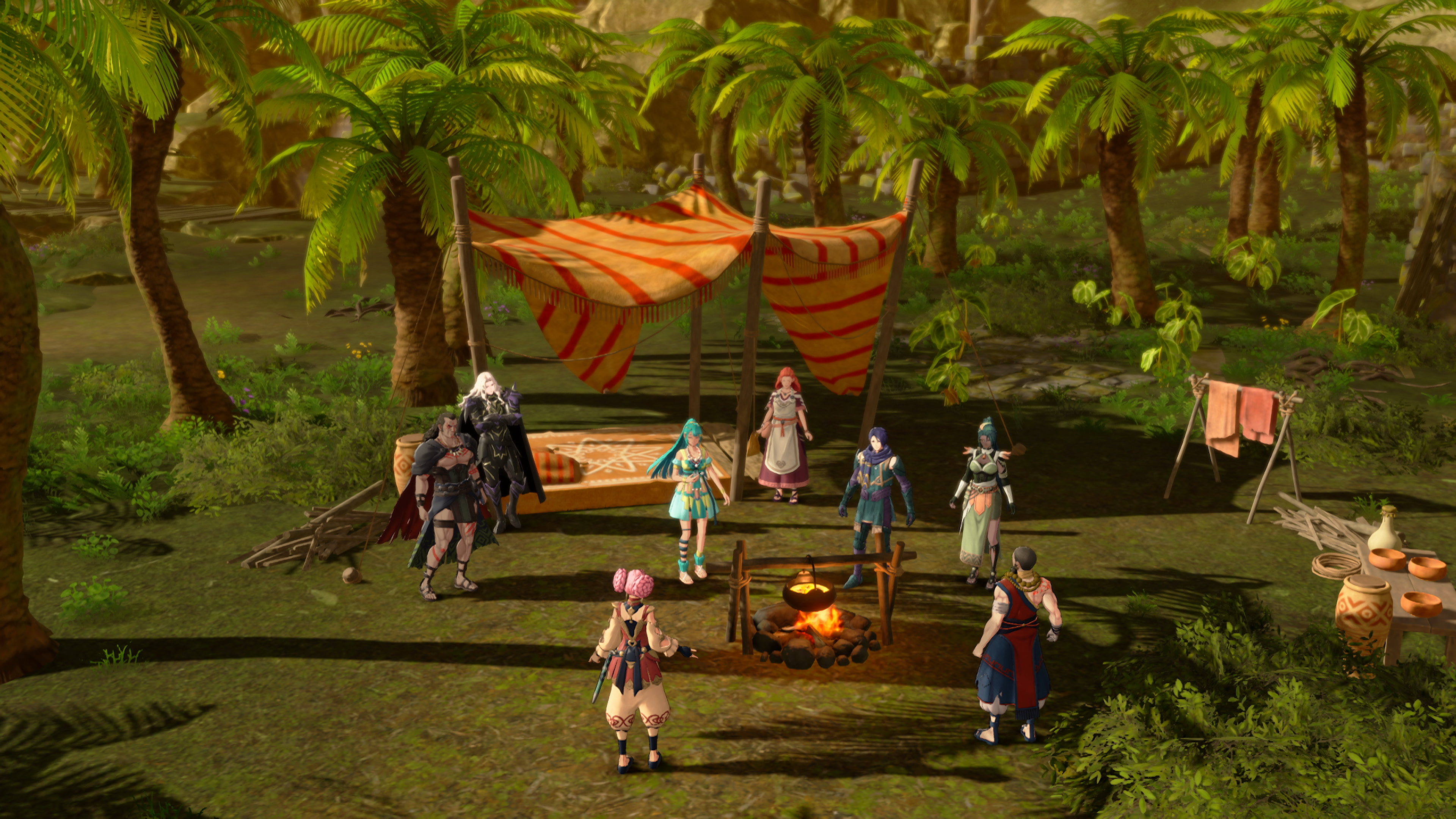
Those dungeons, by the way, are rather interesting. Instead of tactical SRPG gameplay, as you’d see in Shadows of Valentia’s dungeons, here you’ll encounter traditional turn-based battles instead (called Clashes), with you and a squad of four others you select. This means tackling a dungeon is not as time-consuming, at least so far. None of these dungeon ‘clashes’ ever lasted more than about a minute, and they keep the pace snappy by being able to Link character moves together. You have a set amount of Link Points (LP), and this is a resource that needs to be maintained. If you spam LP in every encounter, you’ll finish those early ones quickly, but will be left vulnerable to stronger enemies further on. We’re really curious how dungeons will play out later on.
Fortune’s Weave doesn’t seem to want to simply retread Three Houses, despite how it initially seemed on the surface. The new route system is a fun novelty, potentially aiming to address the criticism from completionists who felt burnt out by trying to do all the routes in Three Houses. While we’re mostly excited about how to manage our time and explore the world, we’re excited to check out more of an experimental yet tightly-designed Fire Emblem again. We’re also really curious how the full experience will stack up, and just how long of a game it’ll even be once we are done with the Heroic Games. With the reveal of the game’s structure, doing everything Fortune’s Weave has to offer seems like a behemoth of a task. It’s fine; I didn’t need to sleep for the coming month anyway.