

Nioh 3 Review
While Koei Tecmo has long developed several games rooted in Japanese historical fiction, Nioh and Nioh 2 are a pair of action RPGs that I have grown to become quite fond of. The dark fantasy depictions of historical events, coupled with challenging action battles, have delivered very engaging titles that carved their own niche in the genre. I thought that when Koei Tecmo shifted their attention to the Chinese Three Kingdoms period with Wo Long: Fallen Dynasty, or when they tried something new with the Bakumatsu-era Rise of the Ronin, that Nioh was effectively a sunsetted series. So, I was caught by surprise when they decided make a franchise return with Nioh 3.
This was surprising to me, because the Nioh series had seemed set on a premise to primarily cover the Japanese Warring States period, yet functionally all of the era's primary highlights are already covered within the first two games. The first title mostly featured the climactic battles of Sekigahara and Osaka, while Nioh 2 covered the lifespans of Oda Nobunaga and Toyotomi Hideyoshi — two of the period's most influential figures. So, it would seem that Koei Tecmo would have to expand the coverage beyond the Warring States era to keep the Nioh series relevant, which is exactly what they do here.
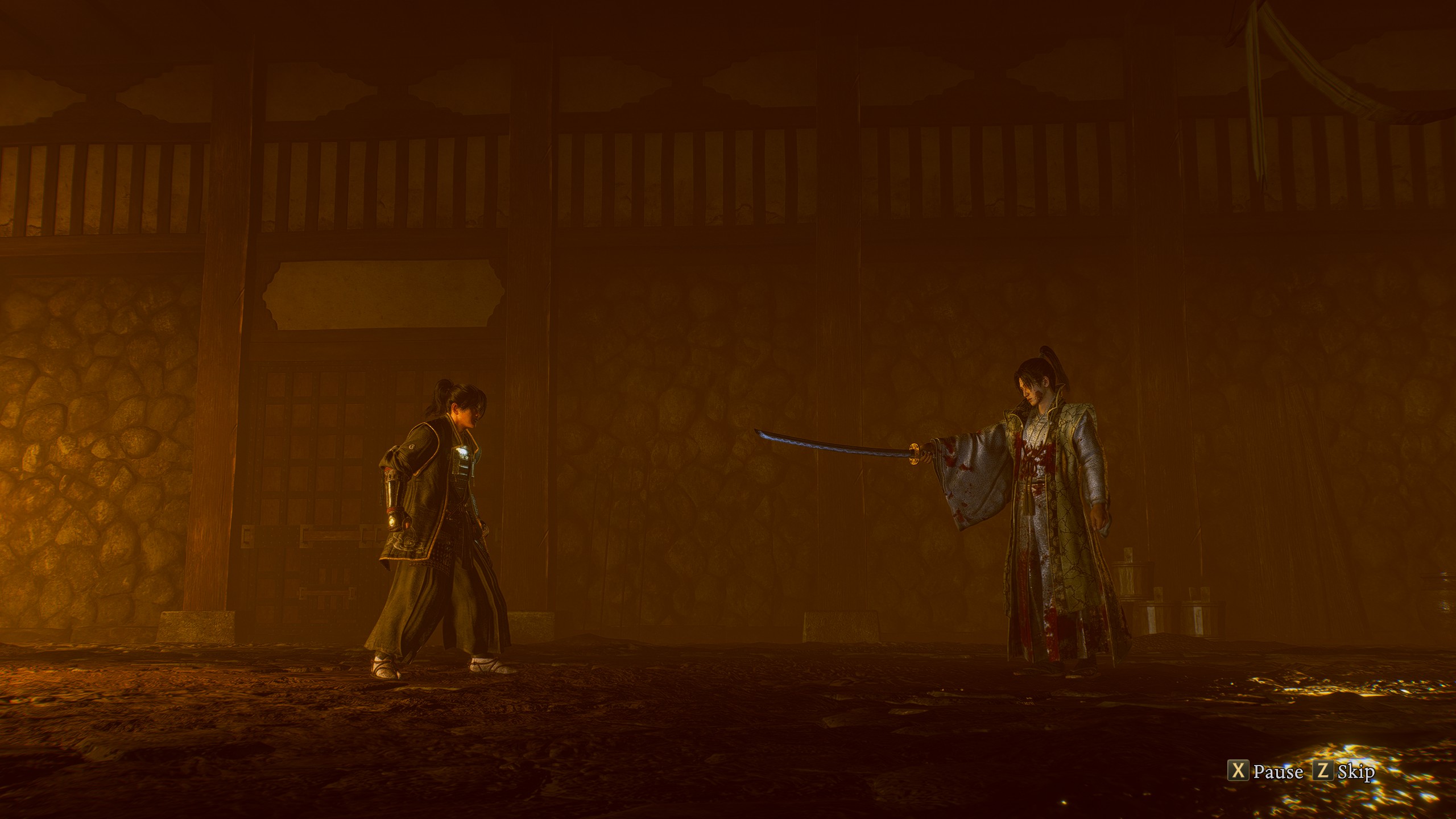
Let's start with some more commonly known Japanese history: Tokugawa Iemitsu was appointed as the third Tokugawa Shogun in the early Edo period of the 1620s in Japan. He was also the one who would later enact the infamous isolation policy known as Sakoku, around the 1630s. Perhaps less well known is that Iemitsu used 'Takechiyo' as his childhood name, which was also the same name shared by his grandfather, Ieyasu. Iemitsu also had a younger brother named Tadanaga, who used 'Kunimatsu' as one of his childhood names. History says that there was a heated debate on which brother — Takechiyo or Kunimatsu — should be the next Shogun at the time, until Ieyasu eventually made a decision to appoint the position to Iemitsu.
This particular anecdote serves as an inspiration for the primary story premise behind Nioh 3. Consumed with extreme jealousy and hate over losing the Shogun position, Tokugawa Kunimatsu would end up descending into darkness and summoning a yokai horde to wreak havoc in Edo and seize the position from Takechiyo through sheer force.
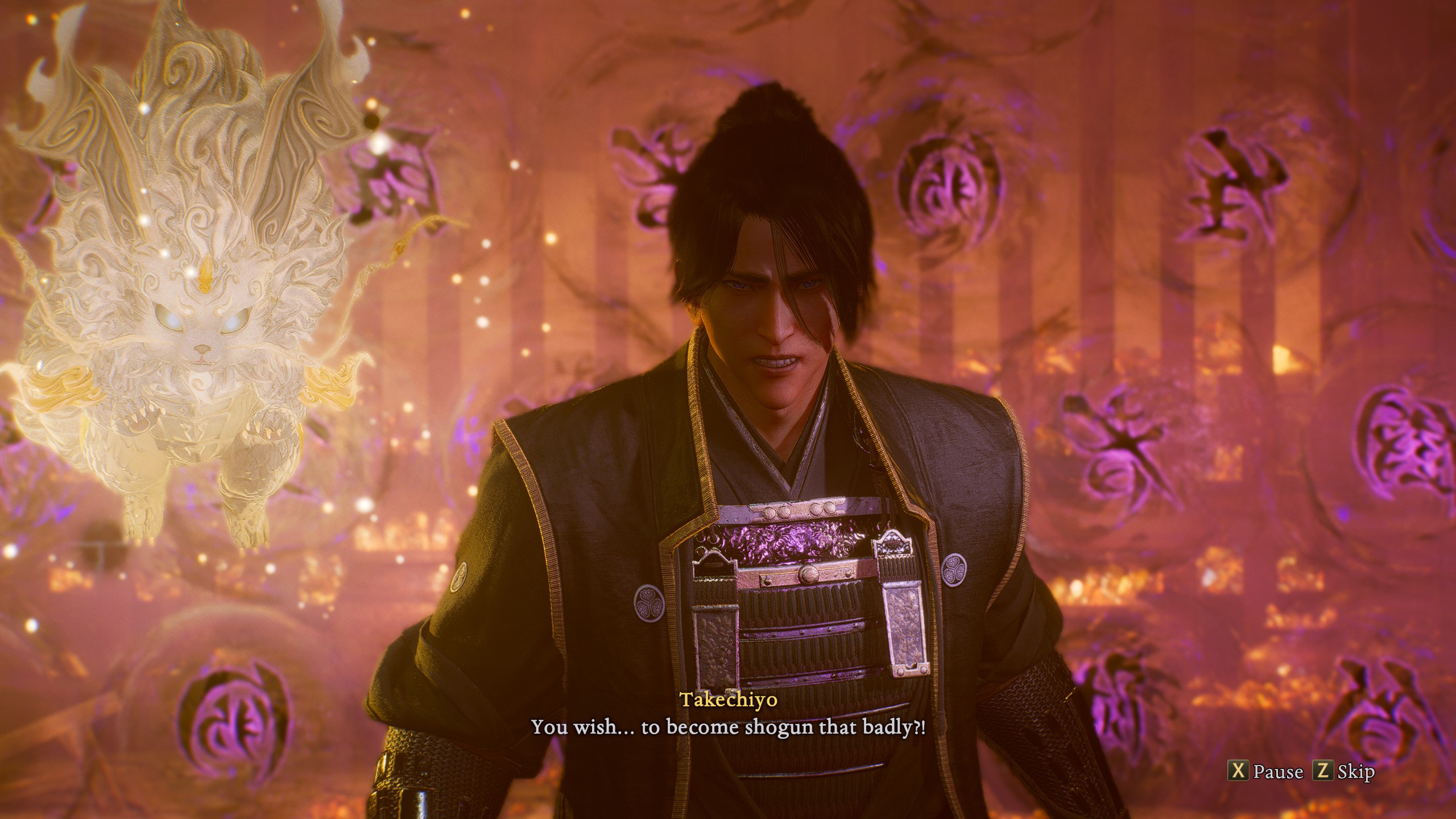
In a dark fantasy-esque turn, rather than getting assassinated by their brother, Takechiyo ends up getting spirited away in time instead. Takechiyo soon learns that the yokai corruption of Japan transcends time, corrupting various eras with a demonic phenomenon known as the Crucible. It will be up to the real Shogun heir to hone their skills and save all the eras — including Takechiyo's own original era — from a yokai apocalypse.
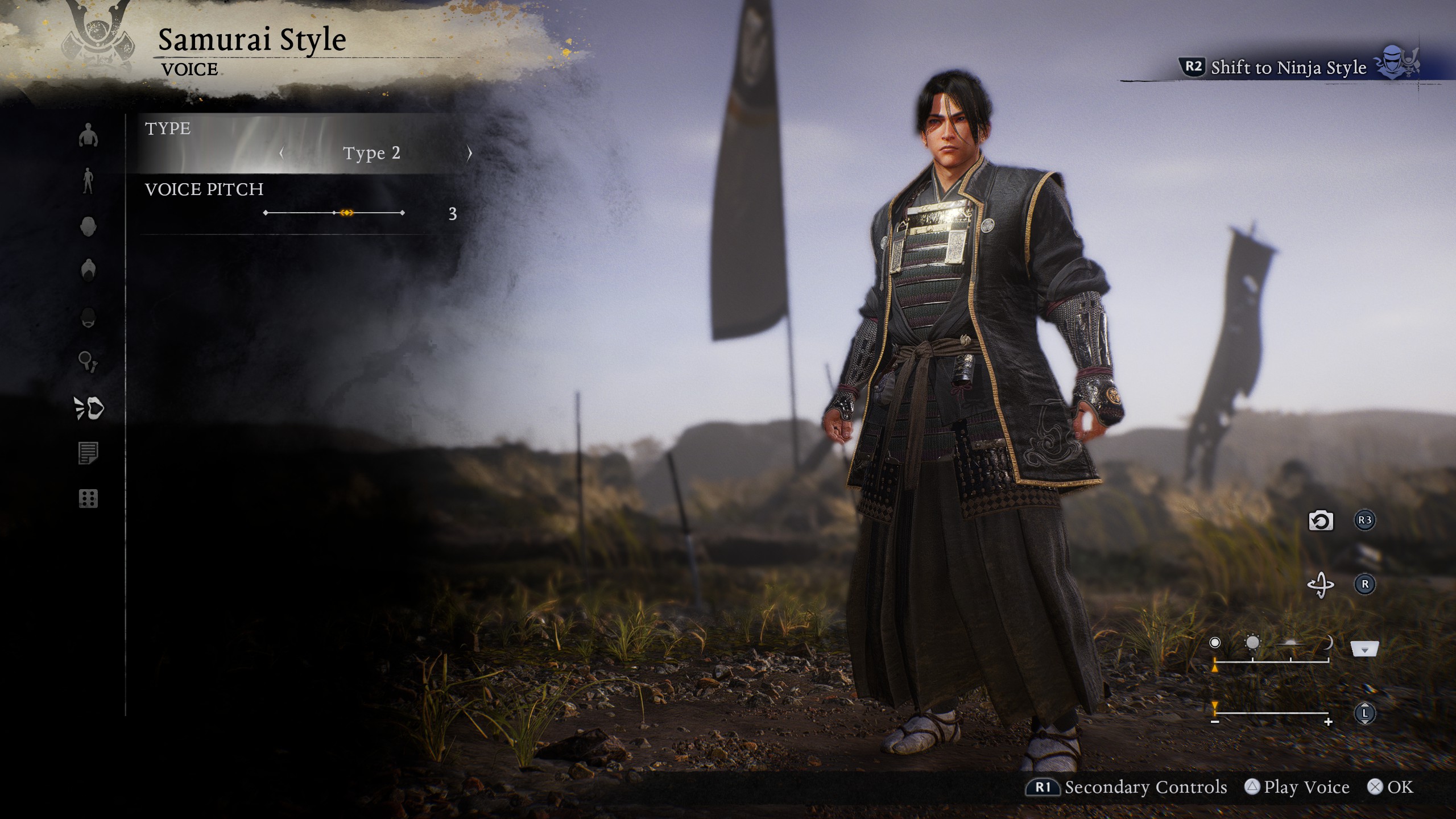
Just like the preceding game, Nioh 3 has a robust character creator where you can meticulously adjust the details of your avatar's appearance, including various head contours from cheekbone to jawline. This game will put the very avatar you have created as Tokugawa Iemitsu, known primarily through the game as Tokugawa Takechiyo.
This situation is interesting to compare to Nioh 2's avatar creation. Players are absolutely free to apply their own personal personifications, or they may decide to go with a full waifu design (yes, you can make Takechiyo a woman set to be Shogun). Personally, I felt Nioh 2's fictional half-yokai protagonist Hide justified a more open-ended approach for avatar design, so here, I decided to make sure that my Takechiyo did not appear too outlandish, as this protagonist is based on a famous historical figure.
In addition, while Hide was a practically complete mute throughout Nioh 2, Takechiyo does speak a few key quotes in this game's storyline, although their talkativeness is less than William's, the fixed hero of the first Nioh. This could have factored in a smaller lineup of selectable voice sets with only four available in total, although each of them can also have the pitch adjusted to produce a different tone.
While an English voiceover option is also available in Nioh 3, as it was in Nioh 2, I opted to play through with Japanese voiceovers and English subtitles. With the game taking place in historical Japan and starring Japanese characters, the original Japanese voiceover feels the most natural for me to follow here.
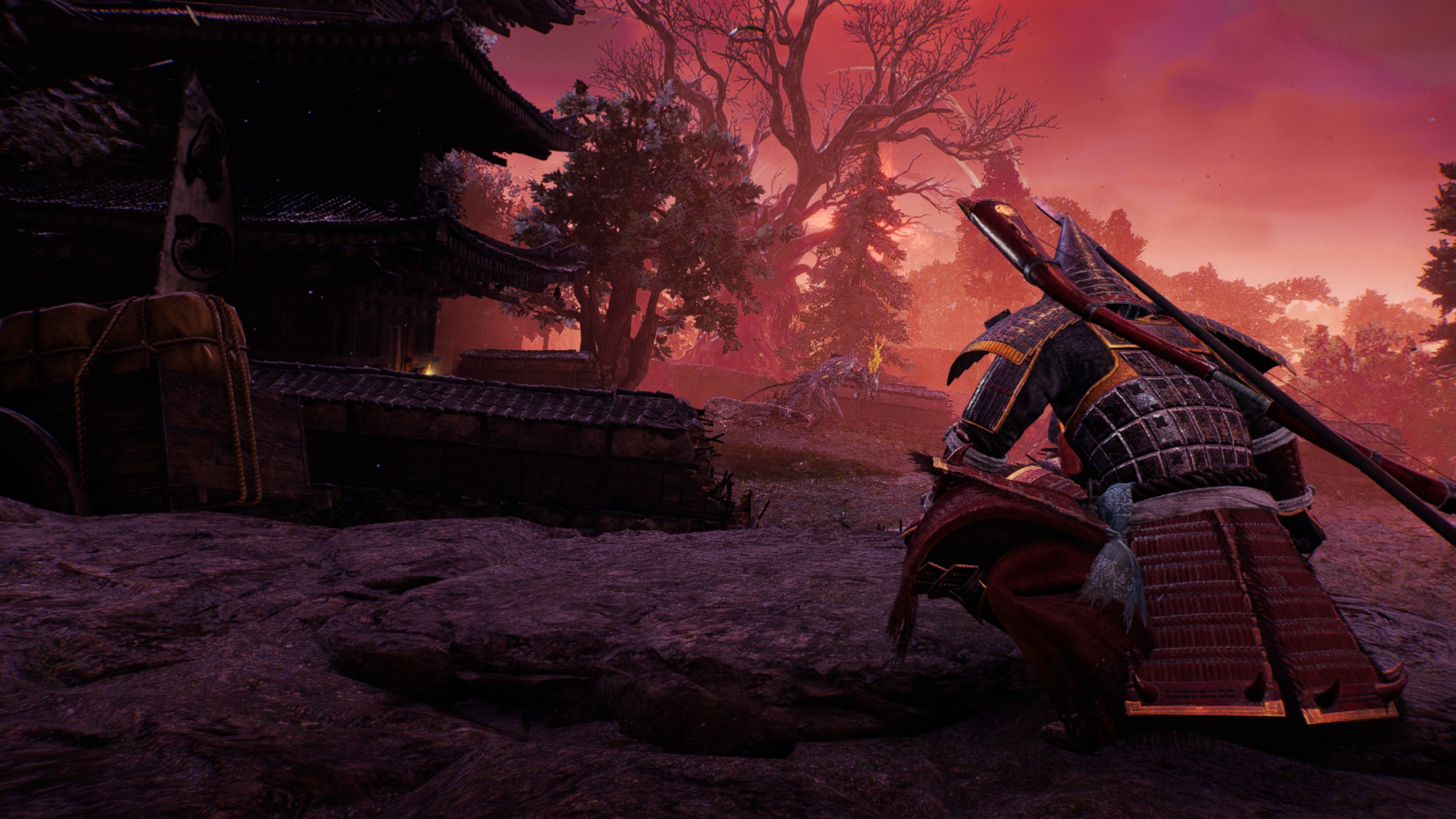
After completing my playable avatar design and proceeding through a largely linear tutorial section, the game introduces you to a vast open field in the series' usual Warring States period. This is where Nioh 3 makes a significant departure from prior entries in the series.
While the first two entries consisted entirely of missions listed in a map menu, Nioh 3 gives you an explorable area to roam instead. Including major hostile spots like Enemy Bases and Dark Realms, the map also contains several characters or spirits who offer side quests formally called Myths, as well as treasure boxes ready to open, hot springs to bathe in, groups of Six Jizo statues that provide specific buffs, and friendly creatures collectively known as Nigitama.
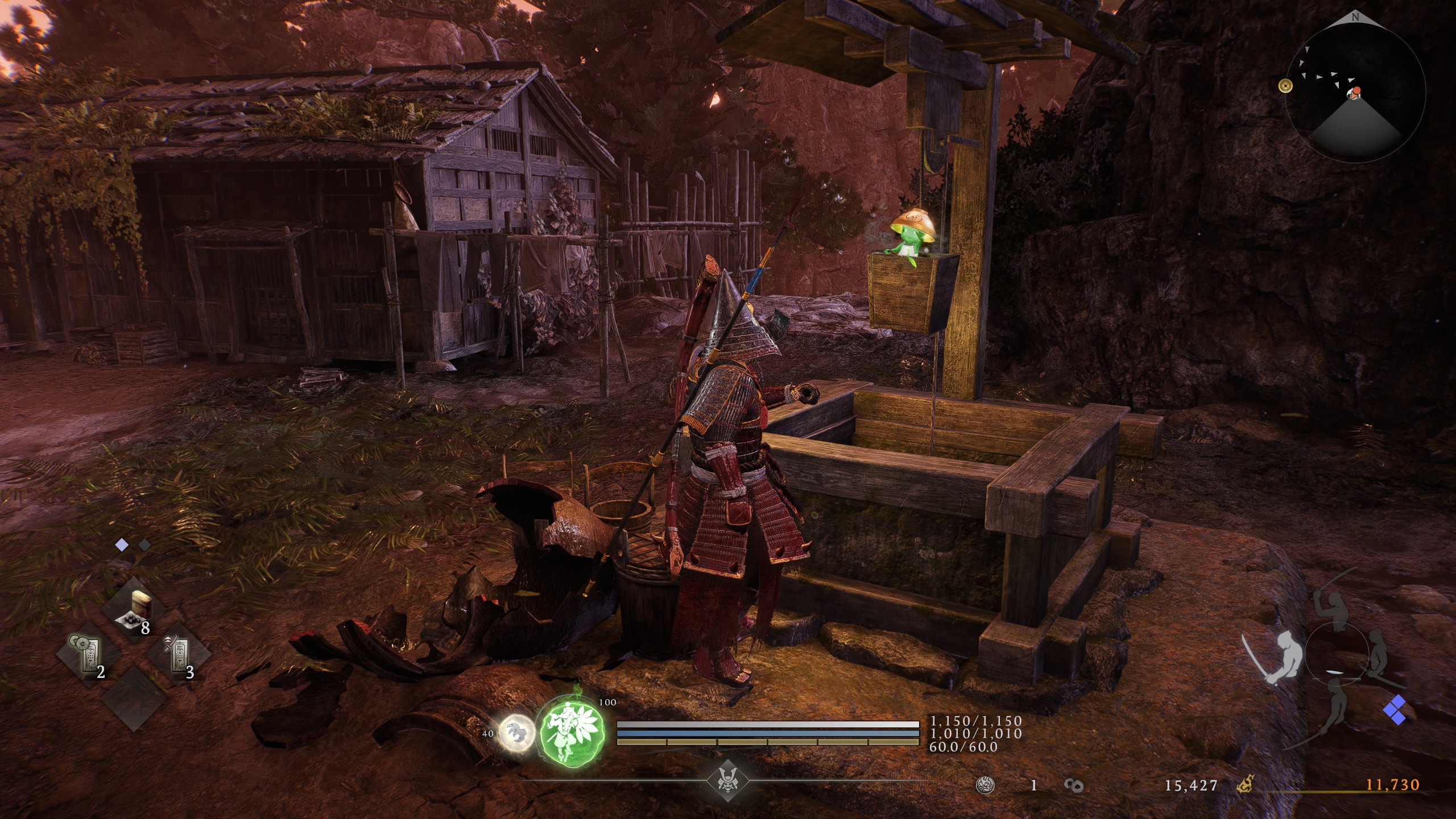
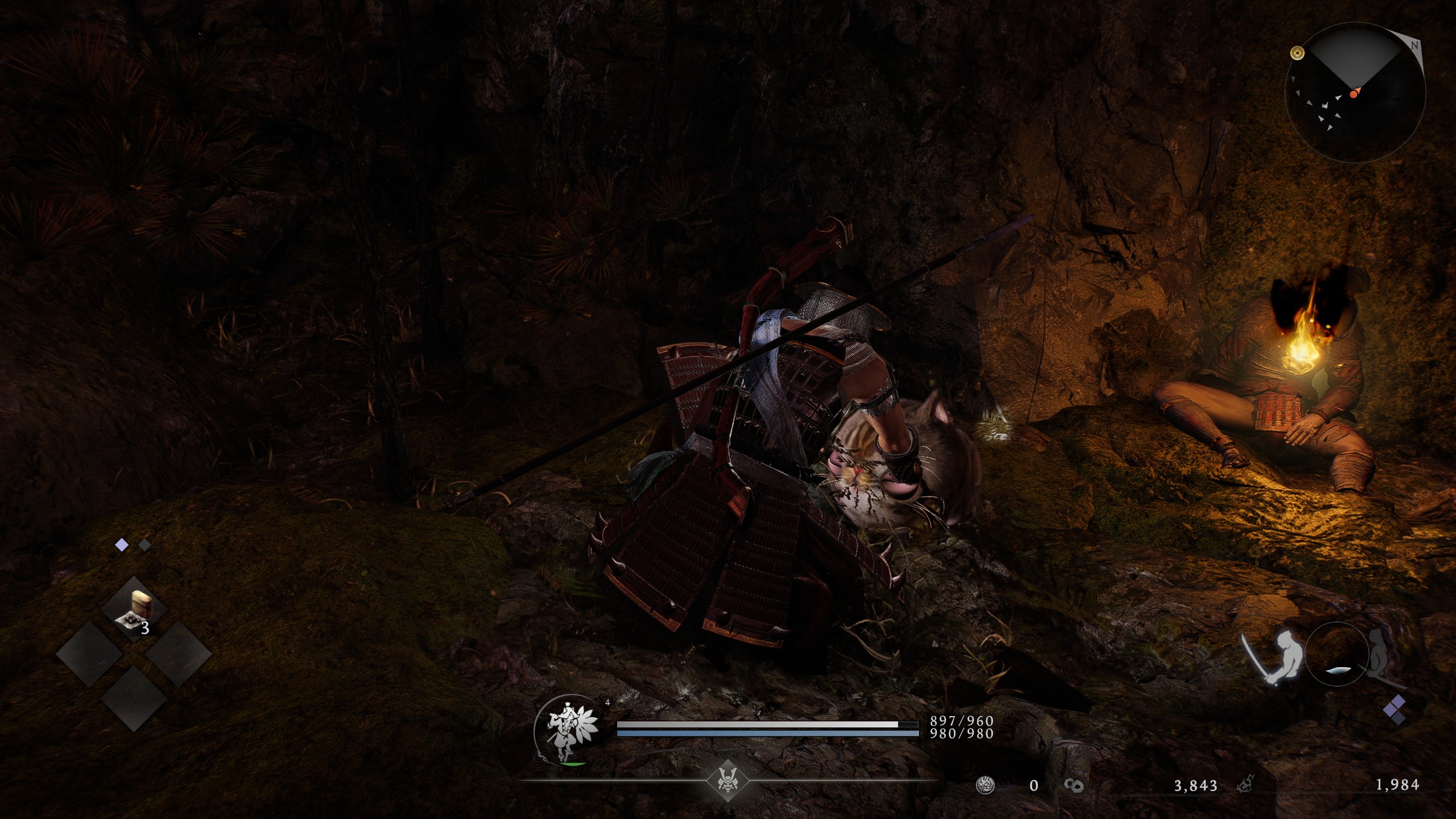
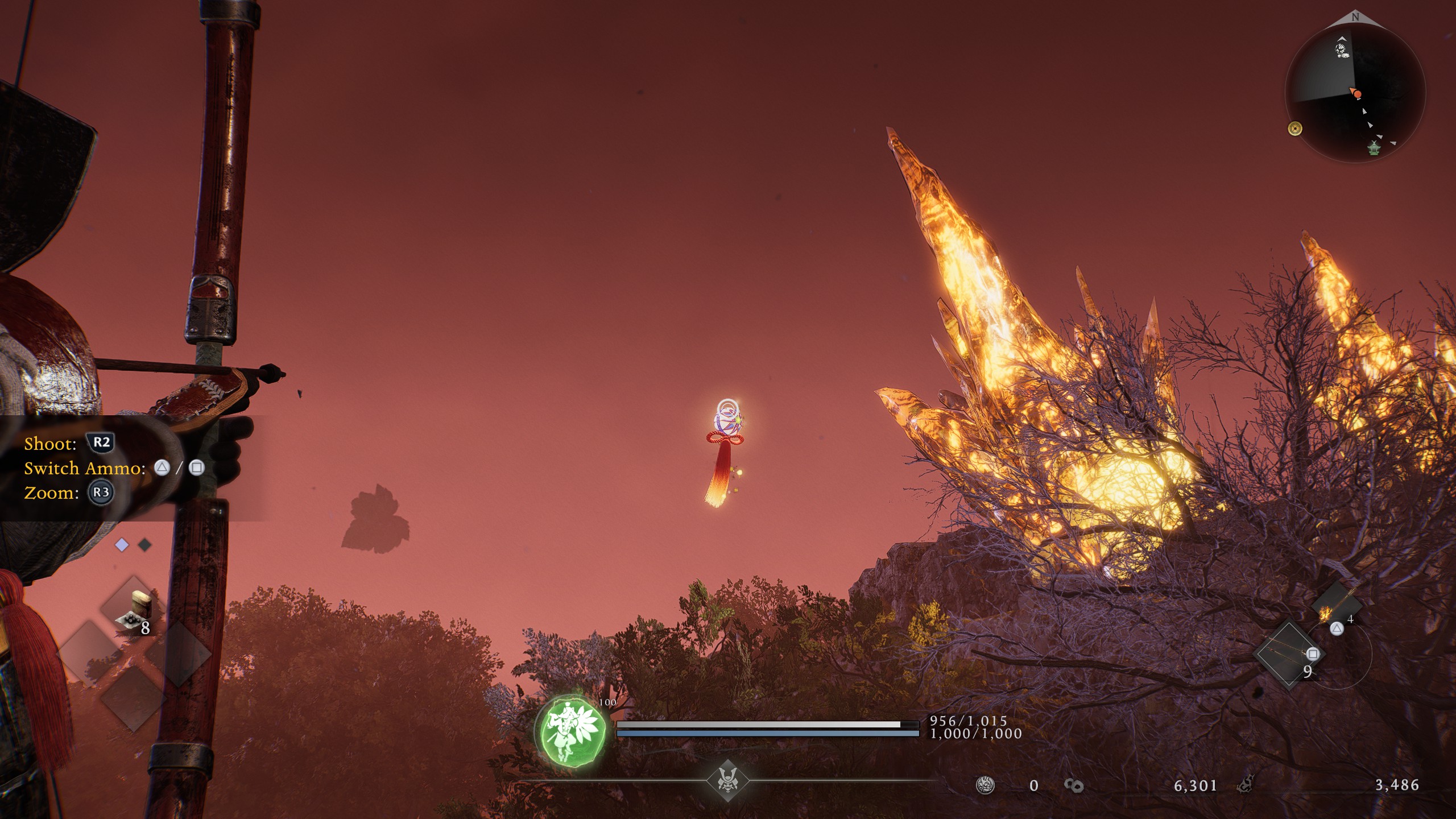
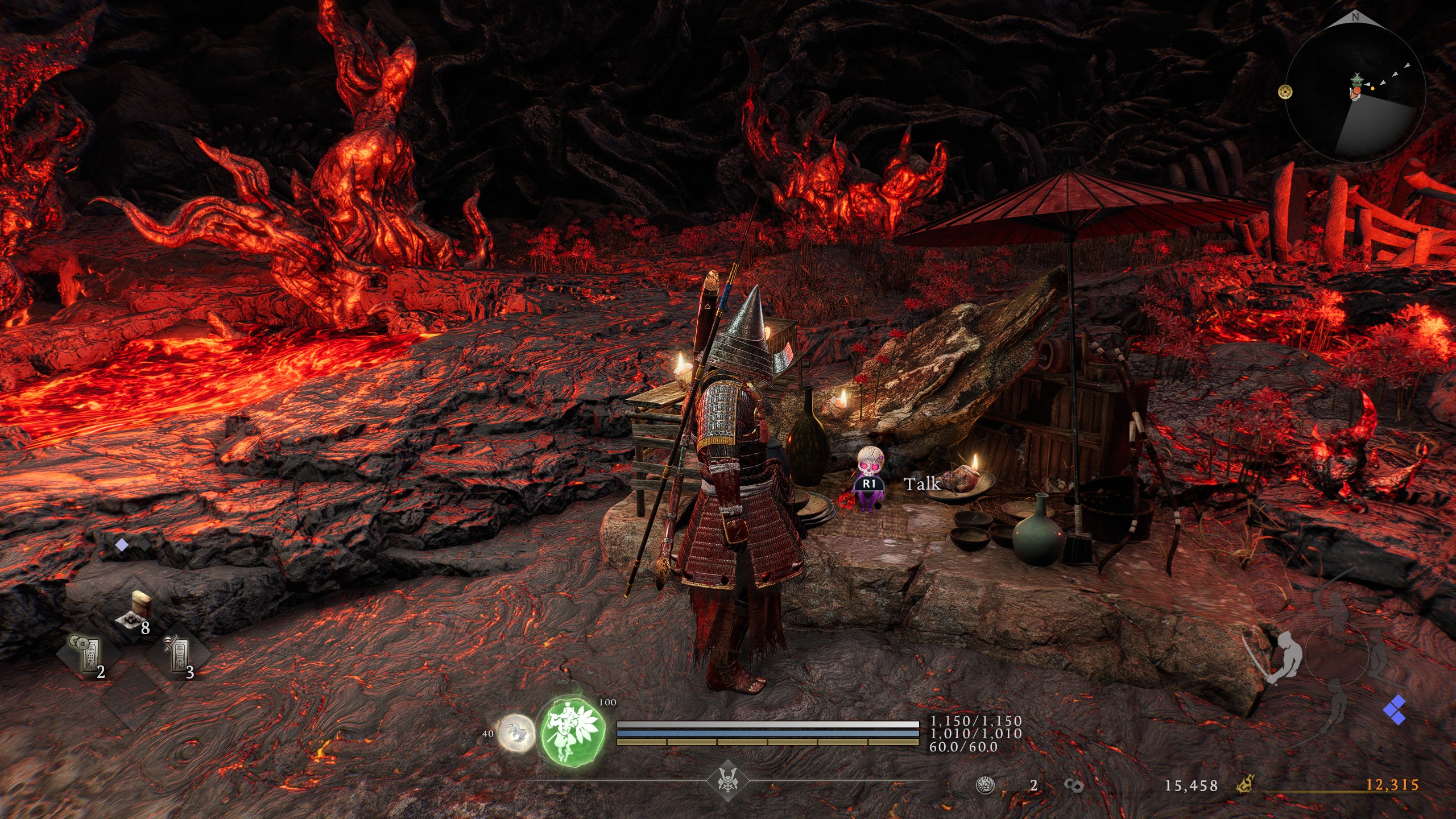
Out of the four kinds of Nigitama, only the purple Sudamas are interactable permanently on the maps, as they run shops from which you can purchase items. The initial series mascot Kodamas are to be guided to Shrines as usual, as gathering Kodamas also allows you to gradually enhance blessing buffs related to the healing elixirs.
The Scampuss also makes its return from Nioh 2, but with a small twist. Trying to pet one will now startle it, as it then challenges you to chase and catch it as it rolls around gracefully. Different Scampusses require different approaches, as some of them are so timid that you must sneak up on them under tall grasses so that they do not get scared, and some others will lead you to hostile yokais that must be defeated first before you can clear the segment.
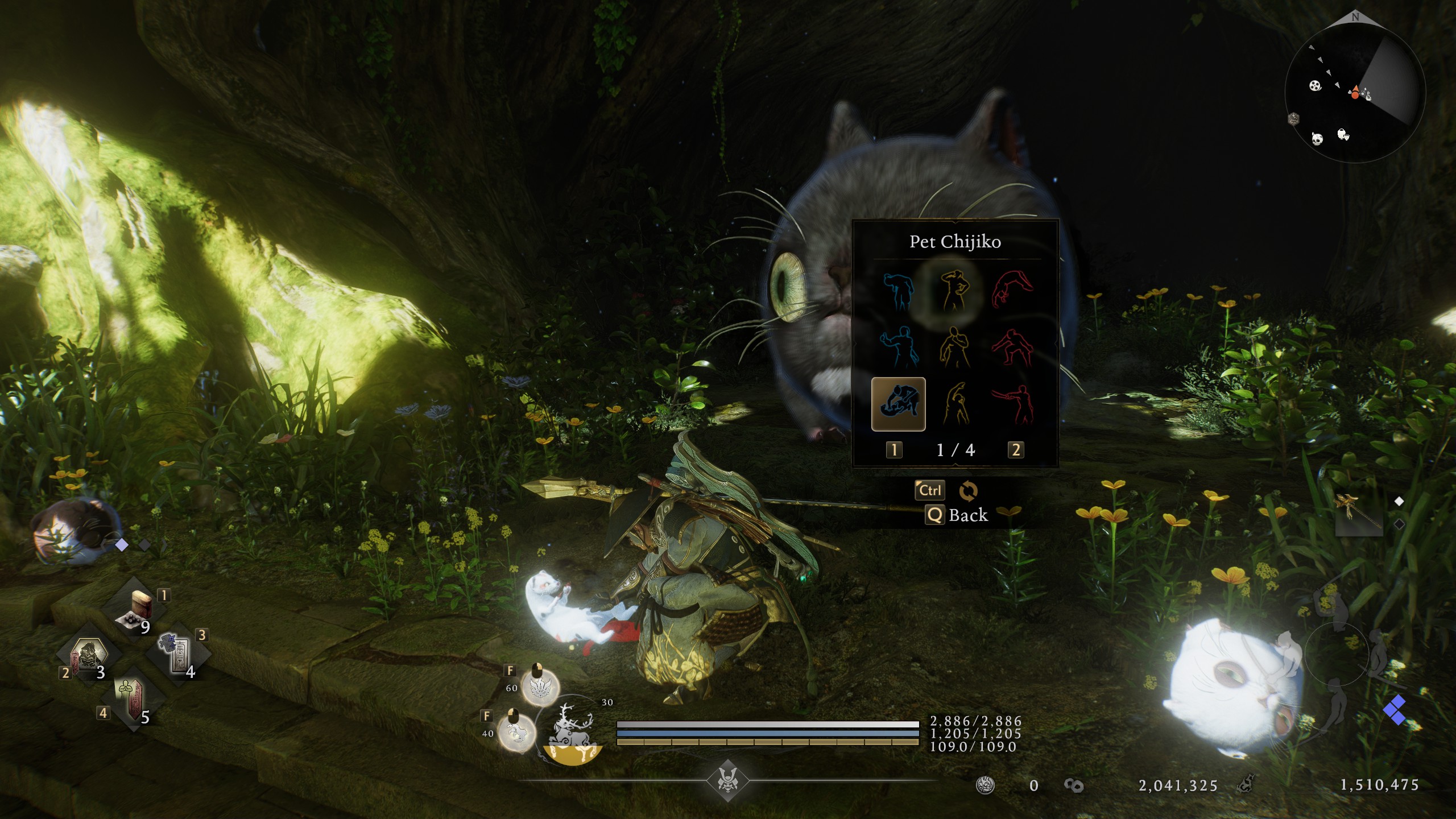
Additionally, a new creature joining the lineup is the white weasel known as Chijiko. These guys will usually wander around in the sky as a flying bell, practically begging to be shot with an arrow or a bullet. Doing exactly so will make it drop nearby Takechiyo, so you can pet it to get more bonuses. These creatures work well within Nioh 3's expanded zones and landscapes.
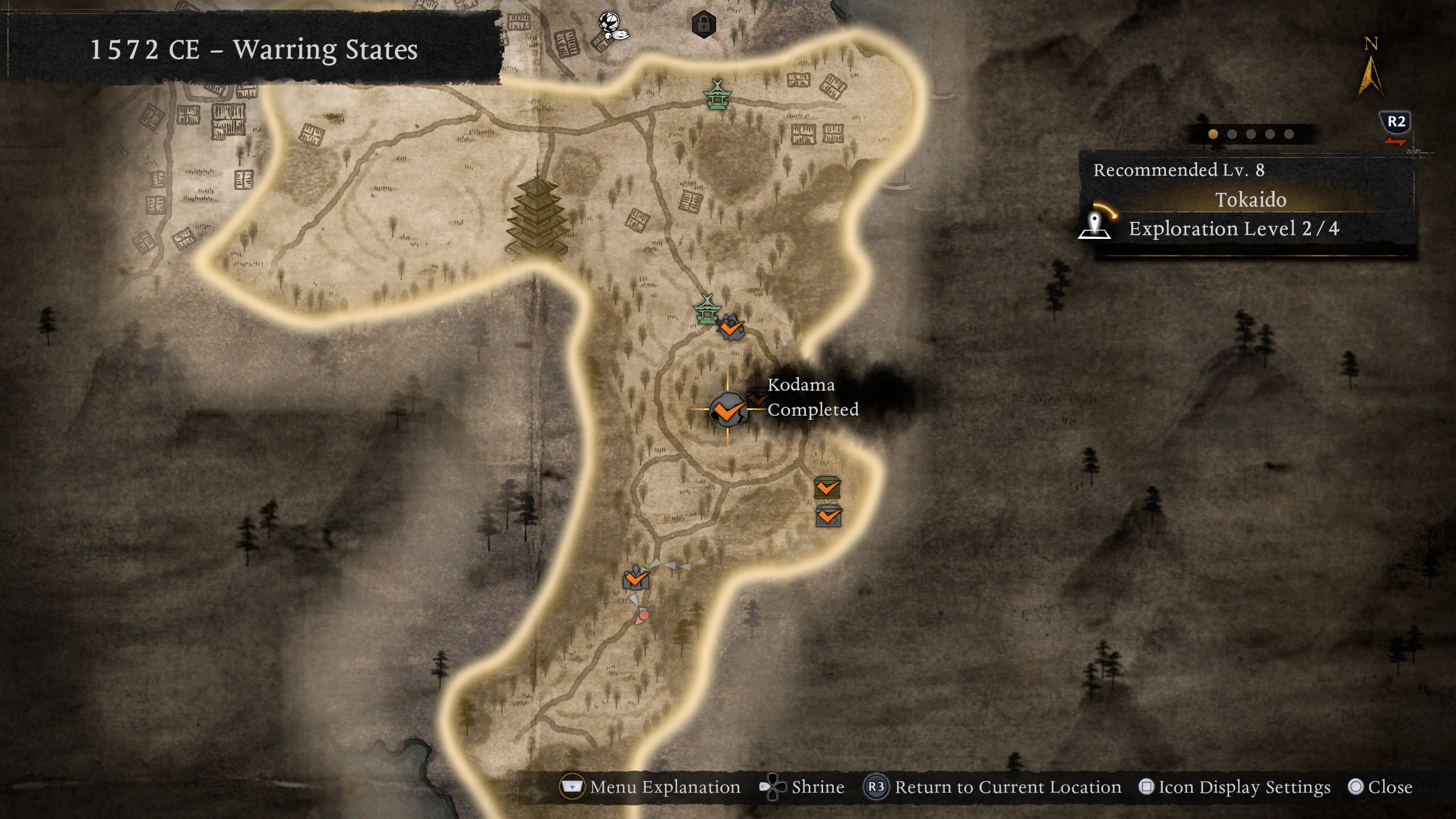
Nioh 3 also has an Exploration Level that increases based on how many of the game's various collectables you have obtained in any given area, which is a component carried over from Rise of the Ronin. In addition to permanent stat buffs, raising this level will gradually reveal the entire area map, as well as the locations for each piece of collectible content. That means you should be able to find most, if not all, the collectibles this way without having to rely on external guides or walkthroughs.
Honestly, though, I feel like the new open fields approach feels like a shallow gimmick in the overall Nioh 3 construction. Even within this framework, the game ultimately rarely strays far away from the series' staple linear stage approach; it's just accessed a bit differently without the menu system of previous games. Even in the open field zones, there are at most two possible routes to proceed through to the next zone, with one of them offering windows for sneak attacks against enemies from behind. Some ledges and cliffs even appear to have invisible barriers that prevent you from hopping on them as a shortcut, even though it feels like it would have been possible in other open-world games.
Separate from the open fields themselves, stages inside caves and major Crucible areas will also have their maps obscured, thus forcing you to learn the level layout just like in prior series entries. Some of the sidequest Battle Scroll stages accessible from the Shrine also feature alternate versions of in-game zones from a different timeframe, and the progression here practically feels identical to how side-missions did in the earlier Nioh games.
The game's soundtrack, though, is still as gorgeous as ever. I can confirm that Yugo Kanno has returned to compose the original soundtrack, with Akihiro Manabe accompanying him since Nioh 2. The battle and boss themes particularly have the same energy and excitement as the wonderfully orchestrated pieces from the earlier entries.
I also found the new boss battles to be tougher overall compared to Nioh 2. Even with my experience from the first two games, where I could more easily beat most of the returning bosses, I still ended up dying a couple of times on average before I could finally clear the new bosses introduced here.
Major stages that have been cleared will also be listed on the Battle Scroll menu, so that you can re-access the Crucible zones that have been purified. But take note that if you miss any collectibles that appear exclusively in Crucibles, every time you start the Battle Scroll version, it will reset the shrine checkpoints, so you will have to retread through the whole linear zone from the beginning.
After you have cleared the first major Crucible, you will gain access to the Eternal Rift, which acts as the game's central hub. Other than viewing the character and yokai biographies, you can gradually take on advanced training missions to unlock more arts, and you can also interact with the eternal Blacksmith to forge or upgrade your gear here.
Later on, you can access the series' staple Hidden Teahouse, where you can pledge allegiance to a clan that offers you a couple of gameplay buffs. You can also eventually set a fixed outfit loadout based on the gear you have collected, so you no longer have to worry about the forced armor mismatch every time you acquire a new piece of equipment.
And after you have finished all main story fights in the era map, the game will then bring you to other historical periods. I had compared it to Toukiden 2 earlier in my Alpha Demo impressions, but it turns out that the similarities run much deeper than I initially thought. Each era map has its own elemental traits, such as the Warring States era Crucibles featuring hot lava, while the Heian Crucible has ice platforms that can practically freeze your Ki recovery.
Aside from the newly featured eras, the Warring States period depicting the Takeda-Tokugawa wars should easily be enjoyable even if you have not played prior Nioh games, as there are no direct references that connect to this story. However, while the other featured eras are brand-new, the Heian era in Nioh 3 actually takes place right after the events of the first Nioh 2 DLC. I can't help but feel like there are some references lost if you haven't played that particular DLC, or are not well-versed in that specific part of history.
Before we go to the combat elements directly, I'd like to talk about the technical aspects. I played this game on a custom PC build with a Ryzen 9800X3D processor, an RTX 4070 Ti Super GPU, more than ample RAM, a 1440p monitor, and a PlayStation controller. This PC is actually capable of running Nioh 3 at a stable maximum frame rate set — whether it's 60 or 120 fps — with all graphical settings set at the highest for this resolution.
However, every time I booted the game with these settings, the game threw an additional pop-up cautioning me that it would make the game unstable and more prone to crashes. And true enough, I had a couple of in-game crashes with that message in effect.
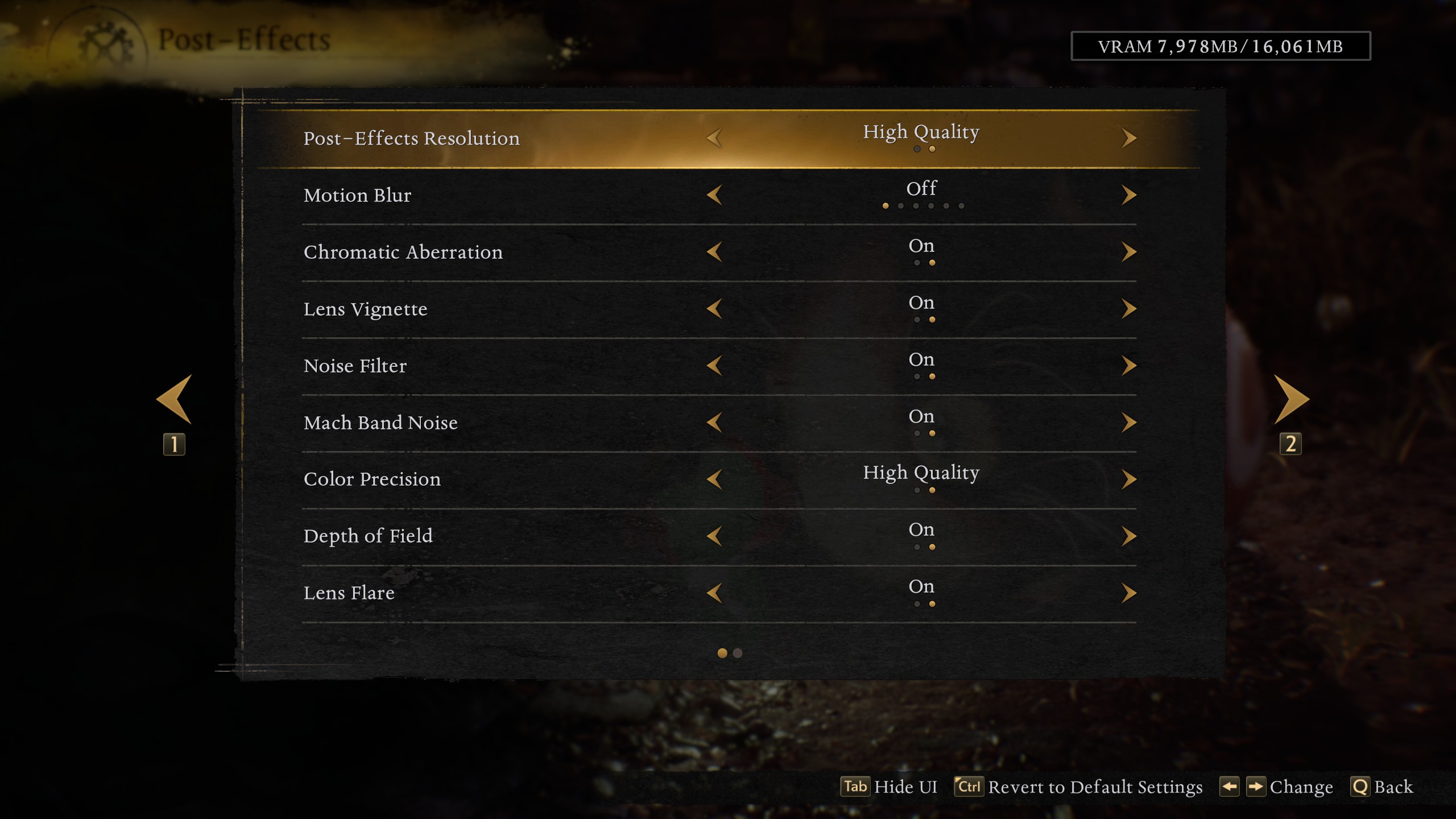
After I reduced a few of the graphics options in the Post-Effects and Advanced Settings (as shown below), I was able to stop the unstable warning from popping up, and I did not experience any more in-game crashes after that. Regardless, I still encountered a crash message even if I exited the game normally, though I heard that Team Ninja is already working to fix that for the public full release.
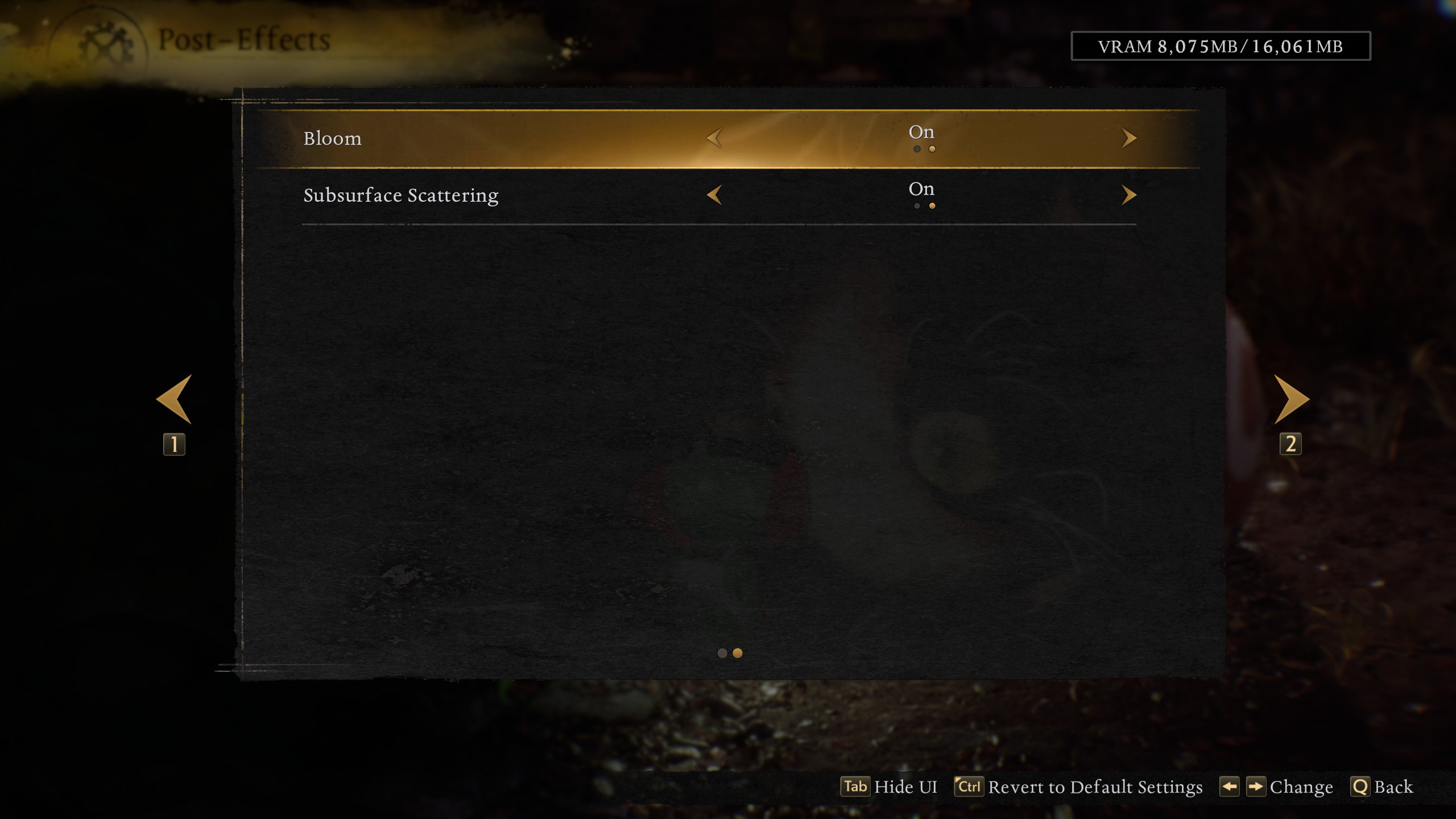
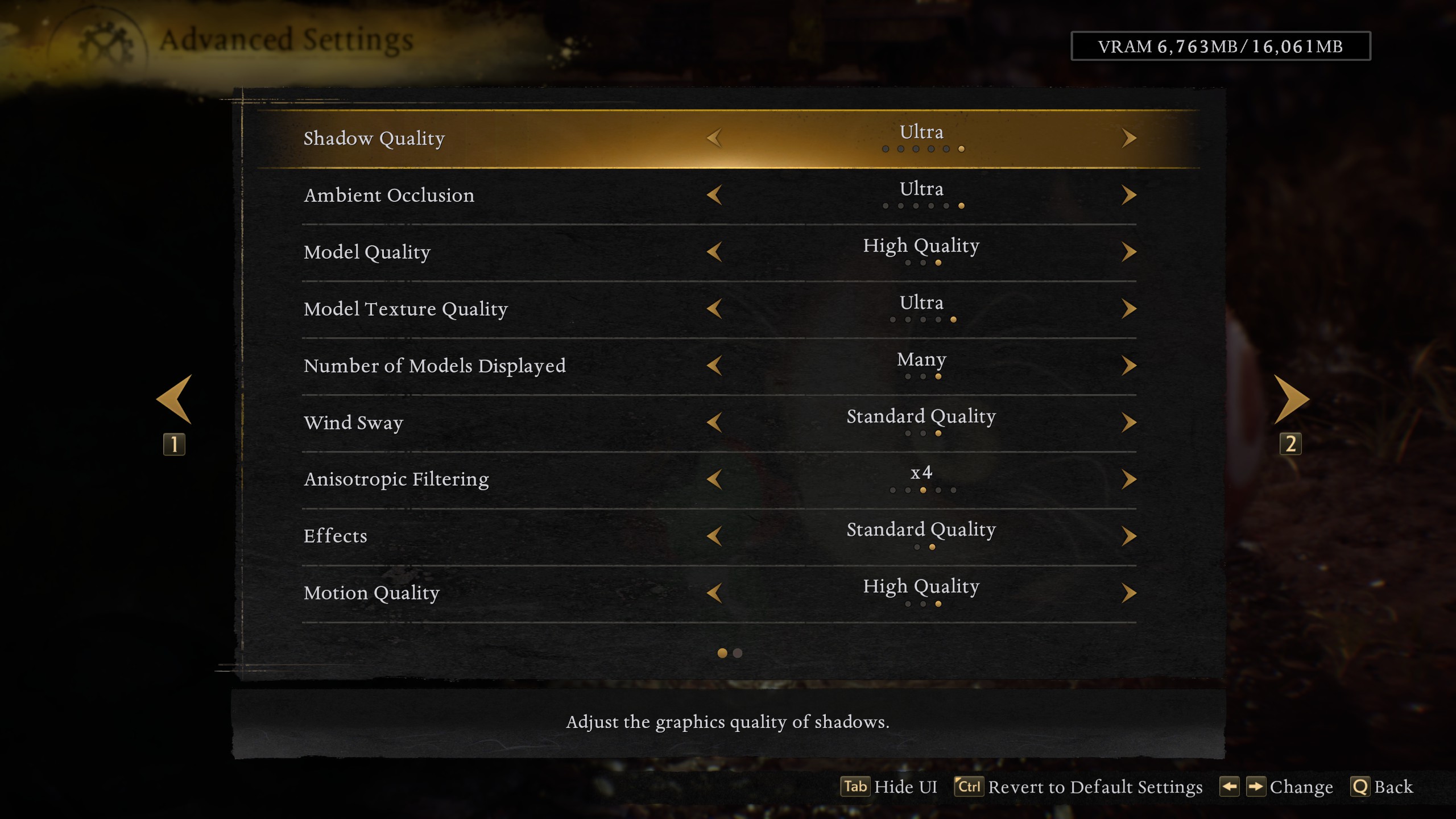
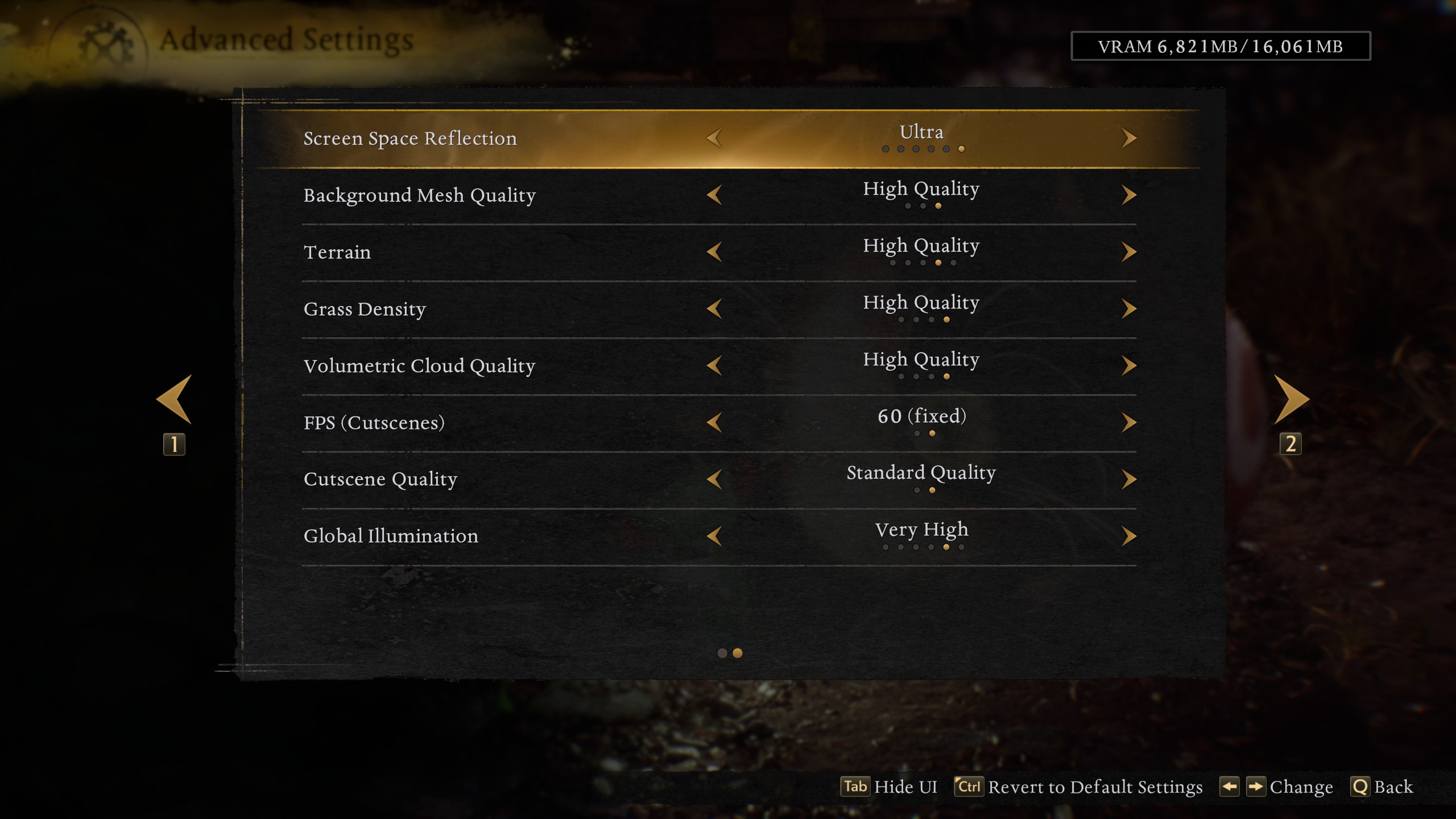
It is worth noting that there is also a dedicated option to set the frame rate for cutscenes to 60 fps instead of 30 fps. However, take note that some of the cutscenes that lack Takechiyo's appearance are pre-rendered and thus locked to 30 fps no matter what you set, so be prepared for an awkward frame rate transition if you set this option.
With the PC version review copy, we were also allowed access to the online server. A multiplayer co-op mode that supports up to 3 players is available, although I only played it single-player due to my spotty network environment. Just like prior Nioh games, you will be able to spot graves of other players with their causes of death listed. The Righteous Jasper that lets you set a Benevolent Grave to let other players summon your avatar as a friendly Acolyte also returns from Nioh 2.
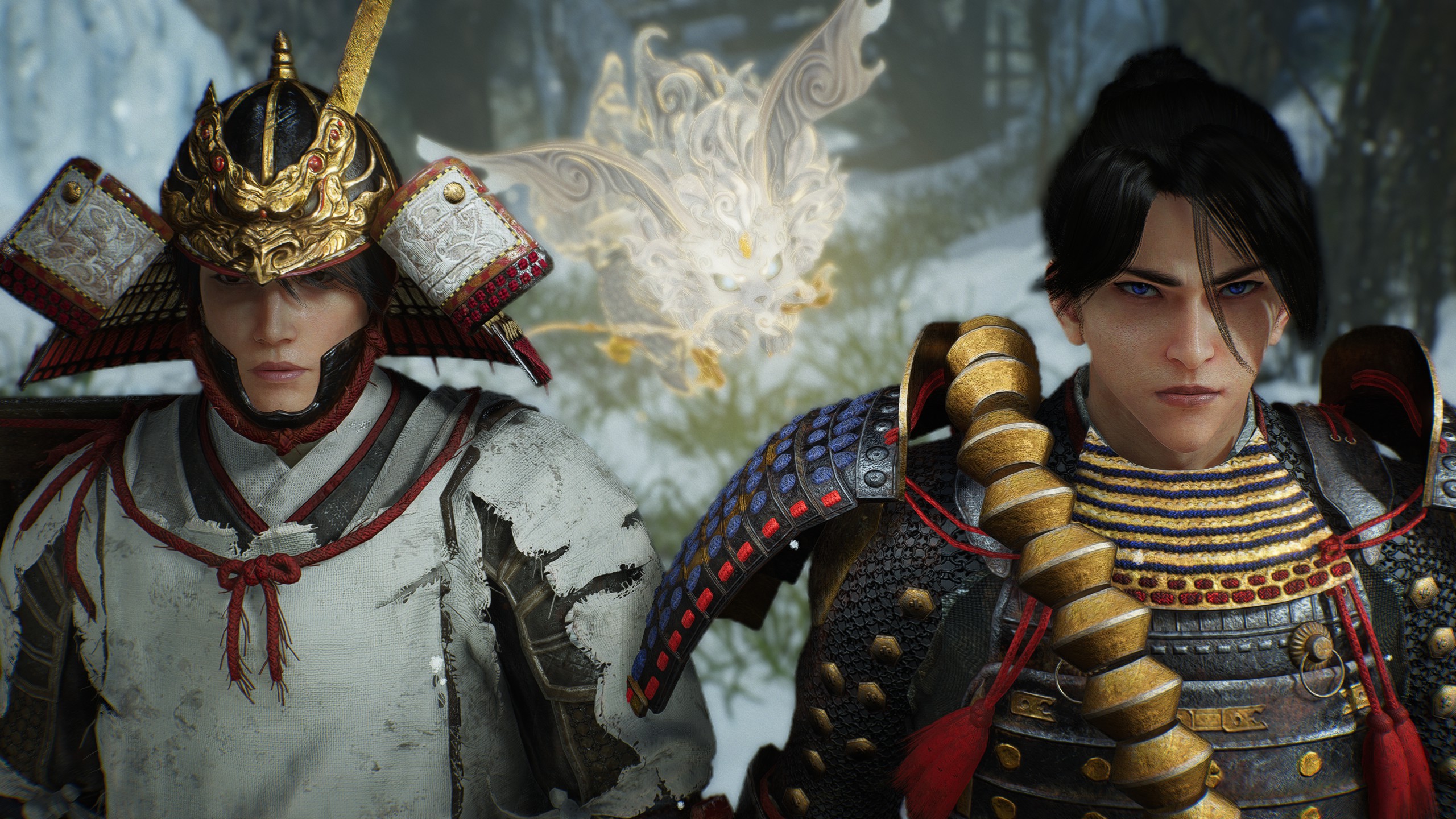
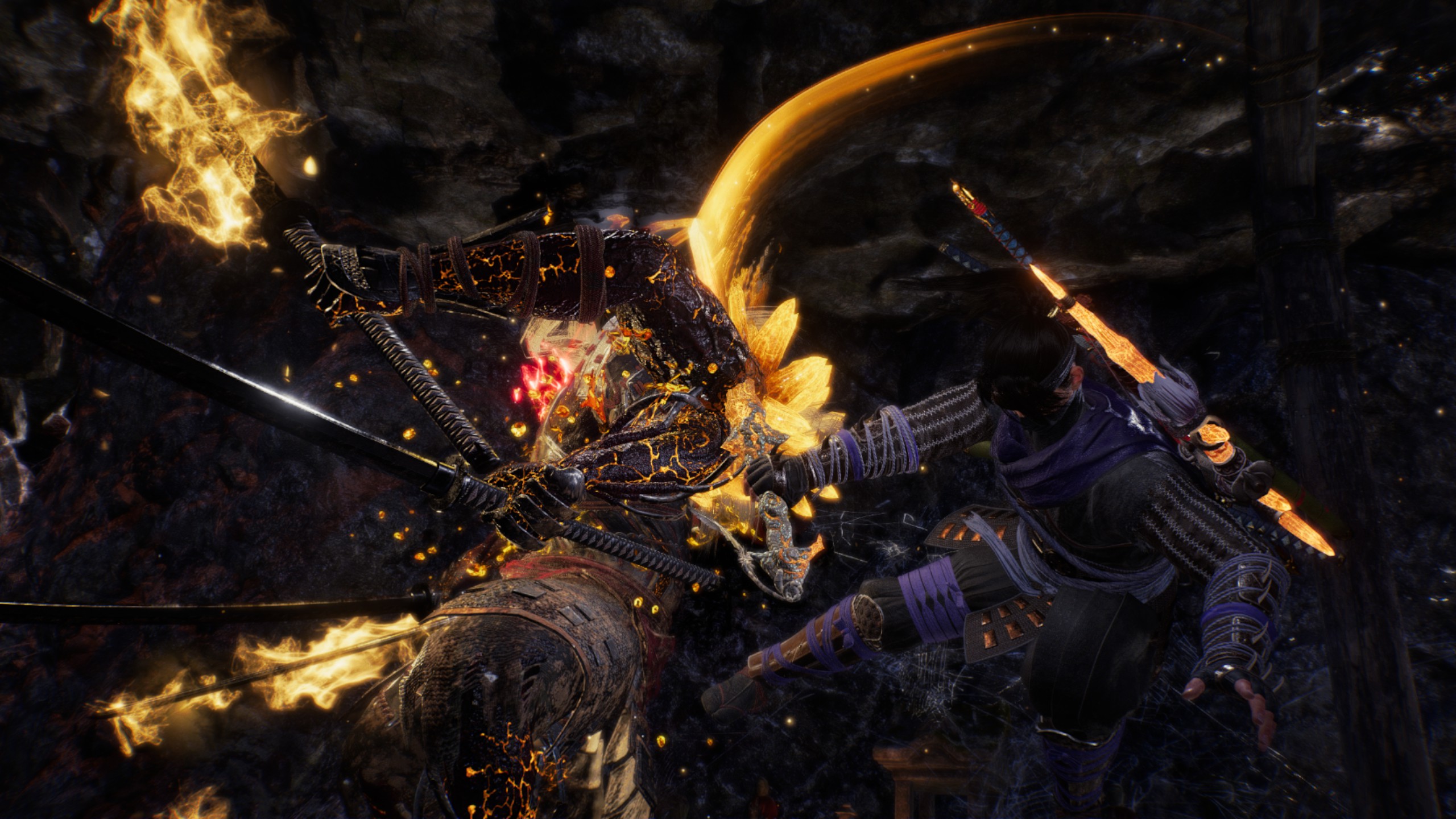
The Photo Mode that was added in a Nioh 2 post-launch update is available in Nioh 3 from the get-go. You can adjust the angles, blurs, and color filters to make the best photos even without further external editing. You can also activate Photo Mode in the middle of combat, provided you have activated the shortcut keys beforehand, with an example available right below.
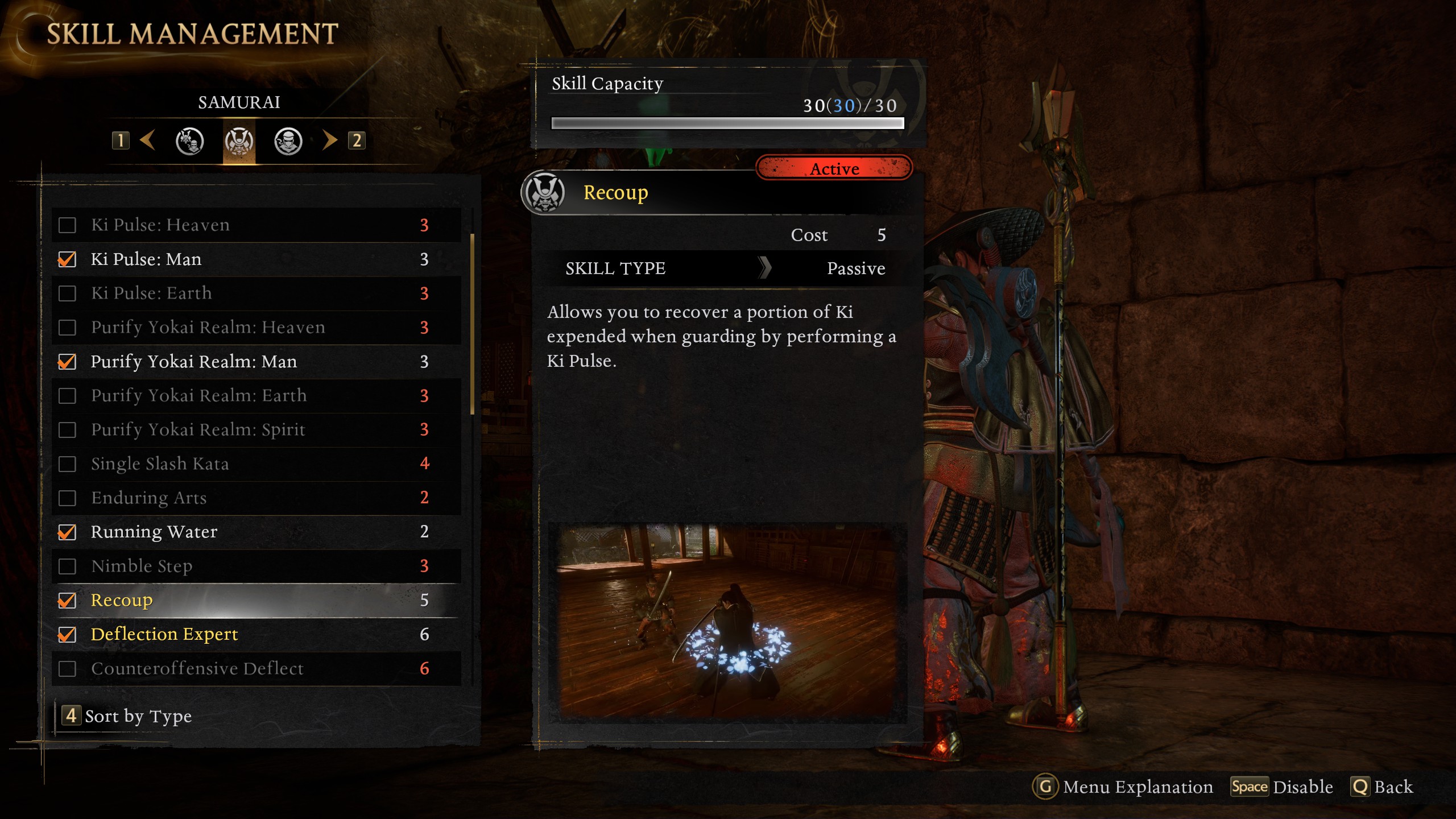
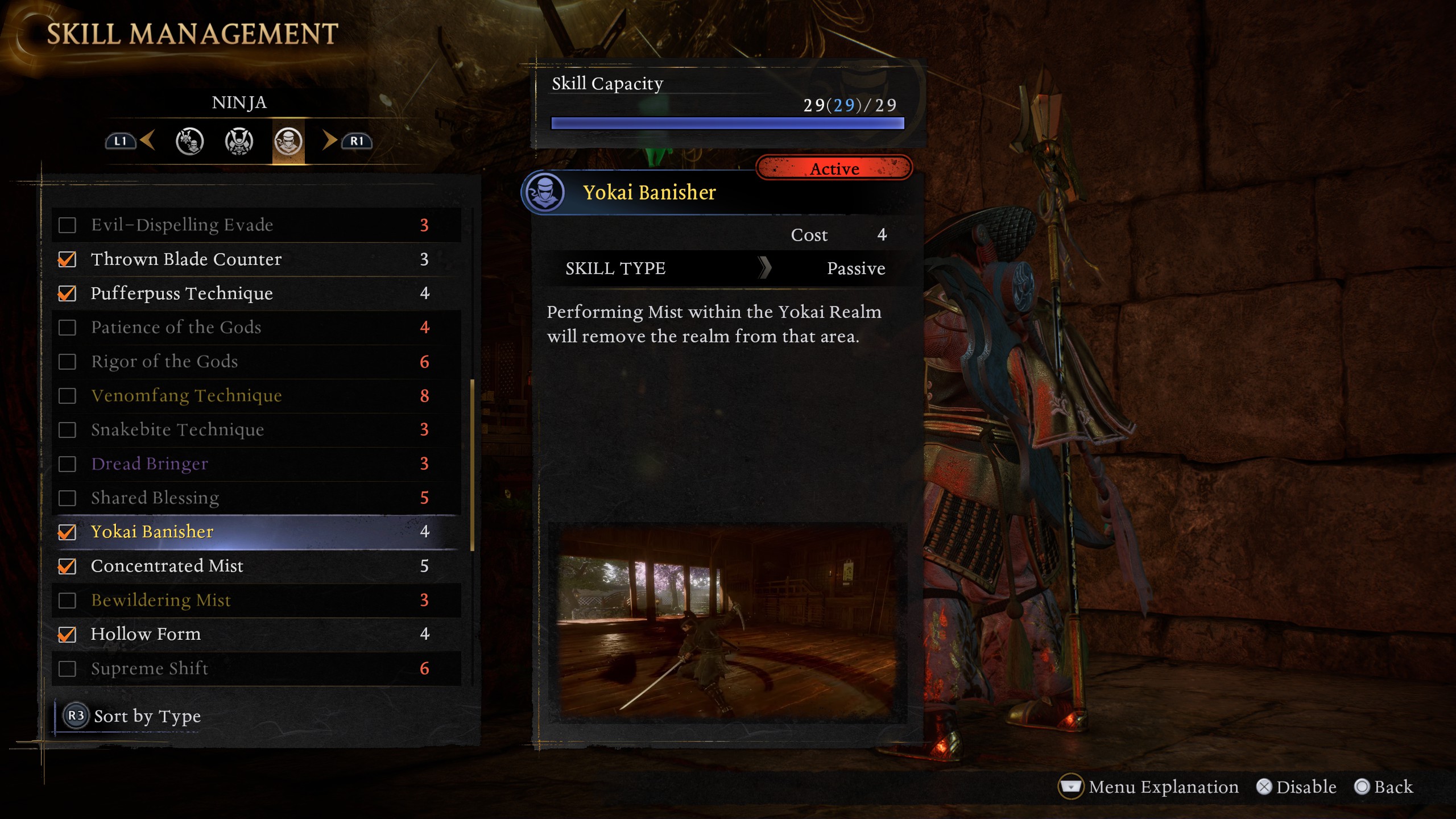
It probably comes as little surprise that the combat elements are definitely the highlight of Nioh 3. Most of my gameplay-related concerns that I voiced from earlier demos were resolved over time through a lineup of new customization skills, most of which are obtained from the map-marked treasure chests. These skills consist of various passive abilities that you can equip to your character, although you can only equip so many before you reach a limit based on your total skill points. Players can equip and unequip skills at their discretion, so it's up to preference what type of skills should be used to fit a particular playstyle.
One of Nioh 3's most advertised new features is a 'Ninja Style' with a different approach from the usual playstyle, which is now branded as 'Samurai Style'. My primary issue with Ninja Style, initially, was how it could not purify Yokai Realms, which felt like it put it at a big disadvantage. However, one of the unlockable and equippable optional Ninja skills let me do exactly that. Thanks to this, I gradually warmed up to the Ninja Style, which notably has a much faster Ki recovery rate compared to Samurai.
There is also another optional skill where the Mist — the Ninja alternative for Ki Pulse — can generate an afterimage that recovers more of your Ki if it gets touched by the enemy, and thus making it function even closer to Ki Pulse. And while the game also seemingly has an emphasis on perfectly-timed Deflect and Burst Break parries, there are skills that widen the timing windows for those as well.
I also noticed that some of the perks that were weapon-based in prior games have been reassigned to the optional skills. Since I like to play defensively with a lot of blocking in Samurai Style, one of my favorite skills allows me to generate a Ki Pulse from the stamina spent by regular blocks. It turns out that this skill was previously based on Blessed weapons in Nioh 2, so I no longer have to procure this weapon type in order to use it.
In fact, Nioh 3 no longer seems to have any Blessed or Yokai Weapons at all. It instead features Crucible Weapons that let you learn new exclusive martial arts. However, these weapons also have the same disadvantage as fighting inside Crucible areas: Taking damage while being influenced by any kind of Crucible will cause Life Corrosion that blocks a portion of your HP gauge from recovering, although this effect can be managed by doing things like successfully attacking enemies or using a healing elixir.
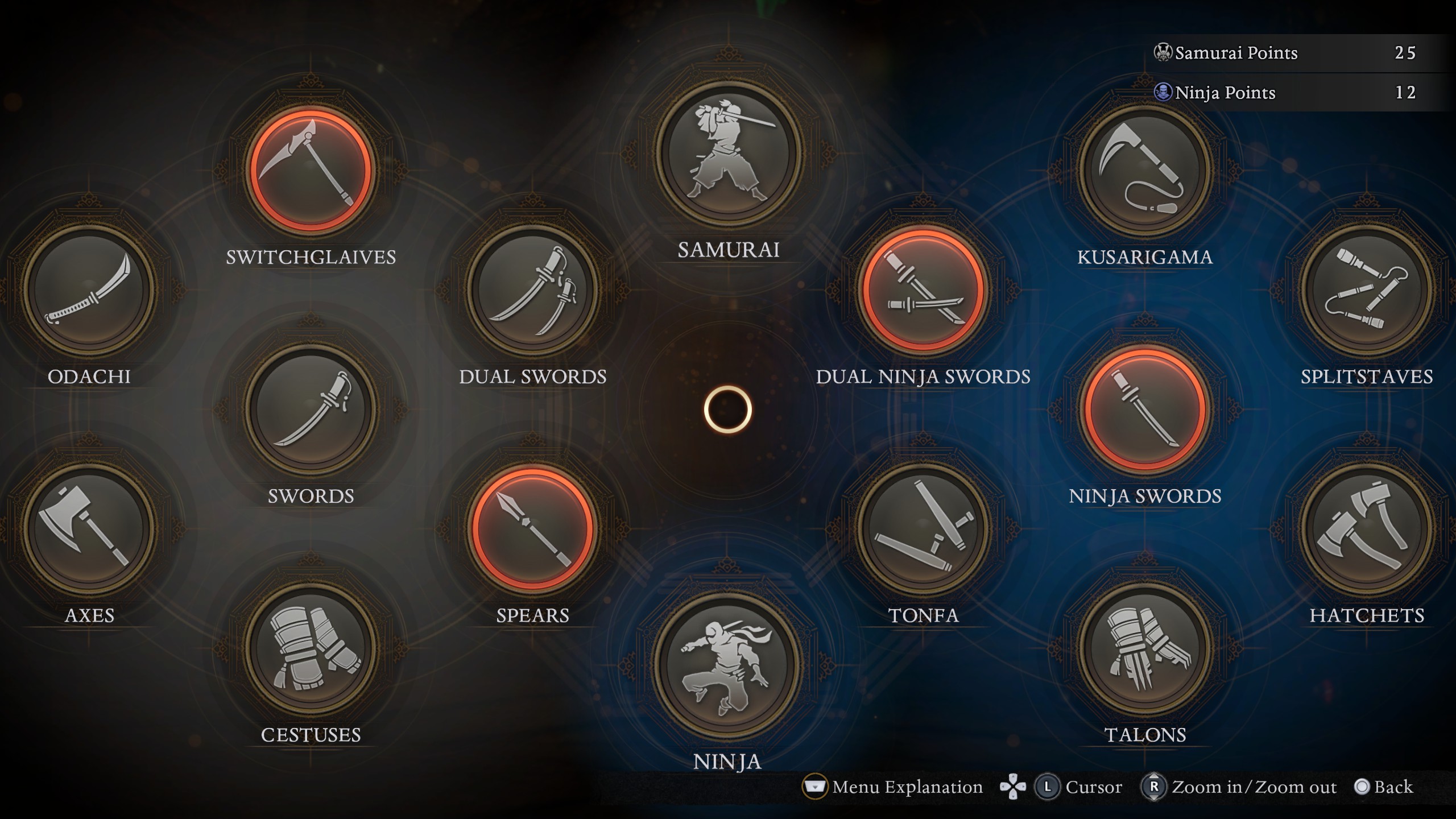
Speaking of weapons, the game's tutorial only allows you to choose from a subset of the weapon types to start. As you progress through the game, however, you will gradually obtain the remaining weapons. Additionally, while you can only use a single weapon type to start, as well as only the 'middle stance', you will also gradually unlock the second weapon slot and other stances. So, while the game may feel more limited to prior entries to start with, your capabilities will widen to give more options over time. Ninja Style and Samurai Style also use completely different weapon sets, with Samurai weapon types allowing alternate stances, as the same button combinations for Ninja weapons are instead used to launch Ninjutsu techniques and tools.
In short, all weapon types added gradually in prior Nioh entries and DLC packs are still available in Nioh 3. While Nioh 2's Complete Edition had 11 melee weapon types, Nioh 3 also added Ninja versions of the Sword and Dual Swords, as well as splitting the Fist weapons to Cestuses for Samurai and Talons for Ninja, so there are now 14 melee weapon types in total — split into 7 for each Style.
In your initial playthrough, you will gradually exhaust the interactable elements on the open maps, such as the collectible creatures and hostile zones. When you aren't taking down bosses or going through Crucibles, most of your time in Nioh 3 will be spent 'clearing' the various zones of the game. Once you've hit credits, which took me about 80 hours to complete along with all side content, the newly unlocked post-game difficulty allows for enemy bases to be restored — either by themselves or with an intervention item from you, so the world will practically never run out of hostile zones to clear.
Even when you have exhausted the Scampuss and Chijiko spots in all maps, you can still pet them as many times as you like. Scampusses of various colors are all dwelling and ready to pet in the Eternal Rift, and you can also summon a Chijiko to pet via an unlockable emote gesture.
To me, one of the most disappointing components of Nioh 3 is the massive lack of friendly character appearances or interactions. Even as you gradually work on restoring the lands, there are barely any allies you can interact with, even in the zones that have been saved by the demon onslaught. The only friendlies you can always talk to are the major story characters whose sidequests have all been finished, as well as the few living Masters whom you have bested.
One of the only moments where I actually found an interactable live minor character was in the early part of the game, where Tokugawa soldiers guard an outpost to defend it from a Takeda march. However, once the area beyond the outpost becomes accessible, those soldiers are completely gone, making the outpost as desolate as most other locations. Lesser ally generals you could meet in battles, such as Sakai Tadatsugu and Sakakibara Yasumasa, are nowhere to be seen in the supposedly restored castle town either, where I feel Team Ninja could have easily placed them relaxing somewhere inside.
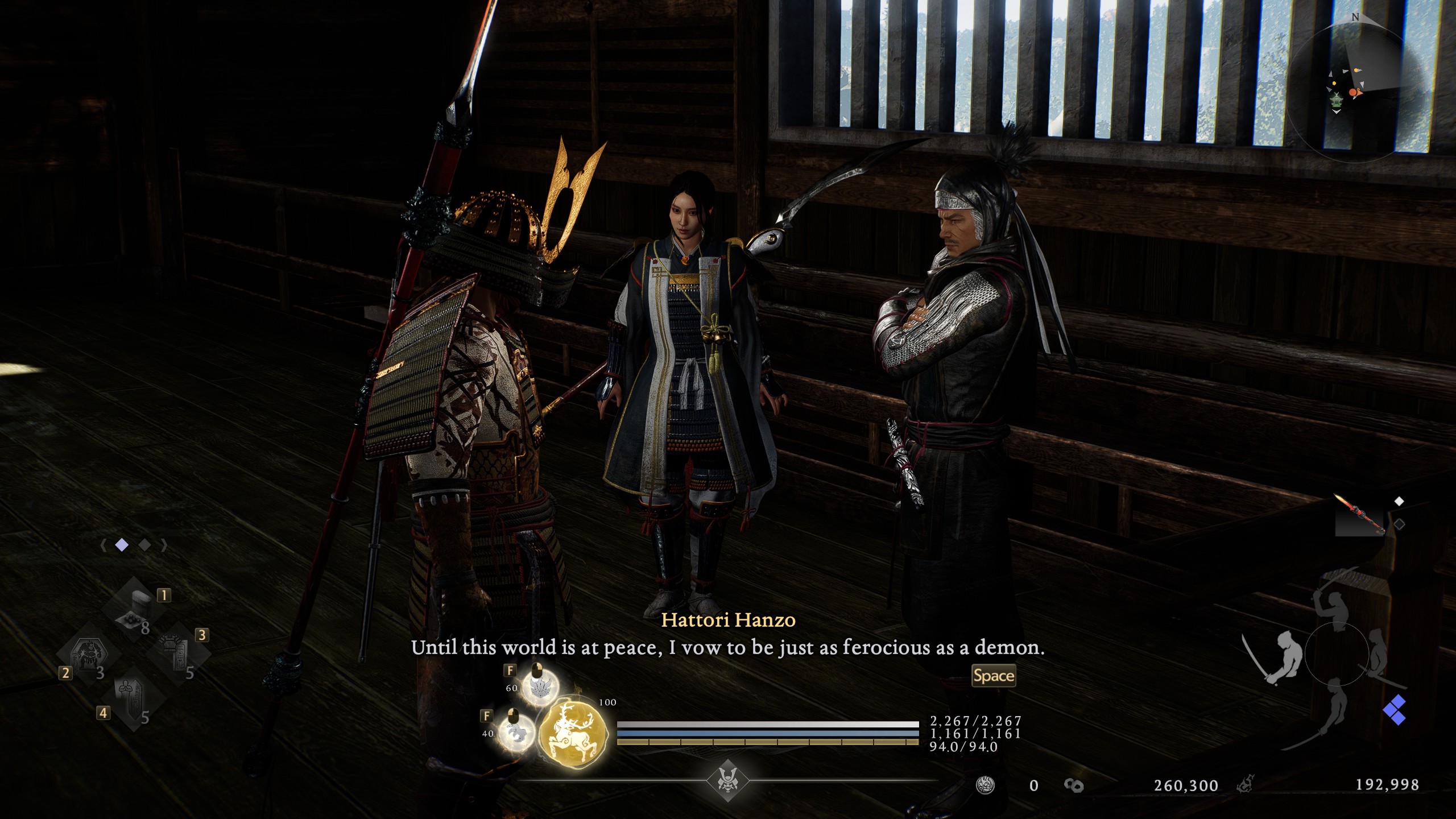
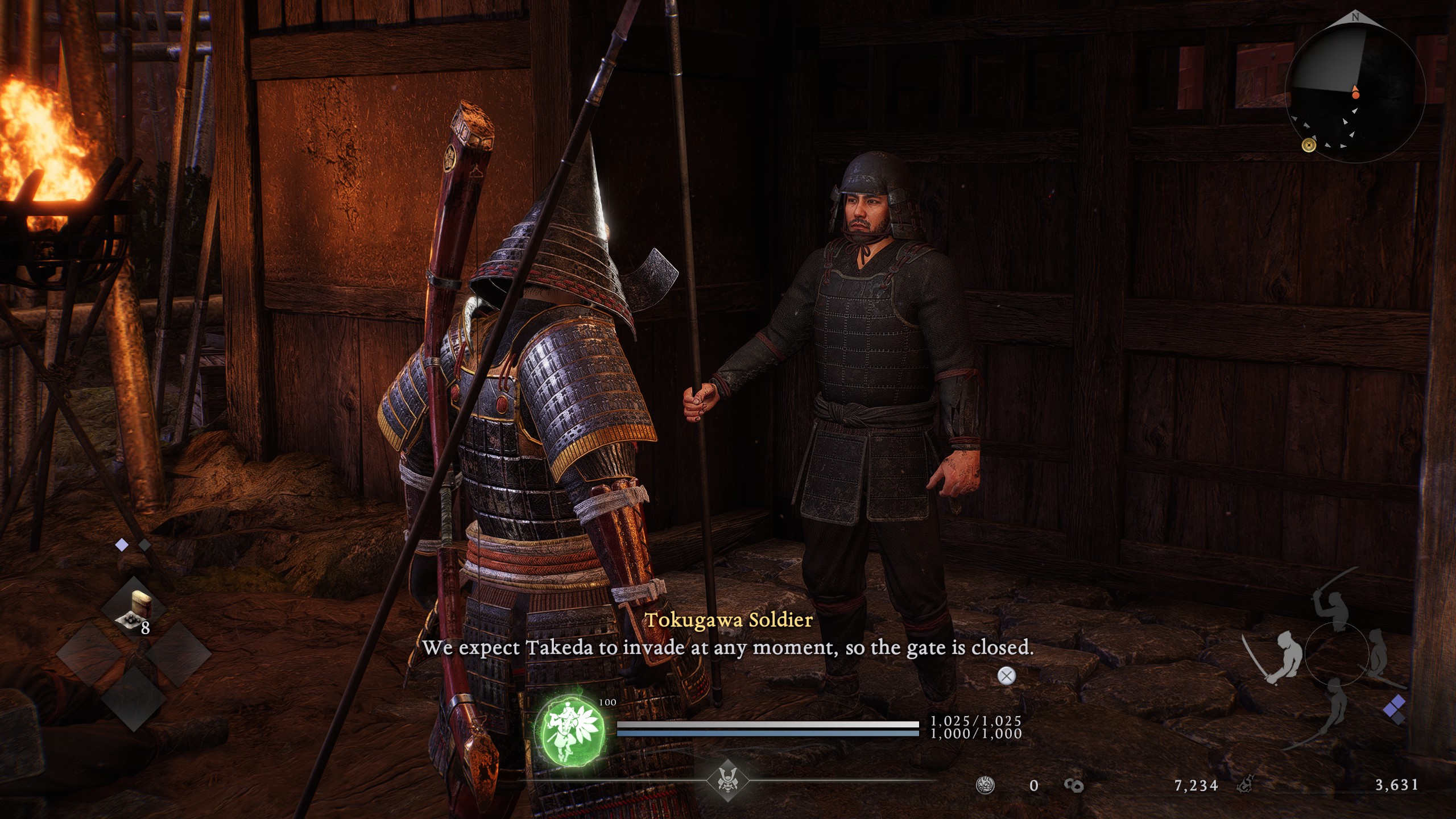
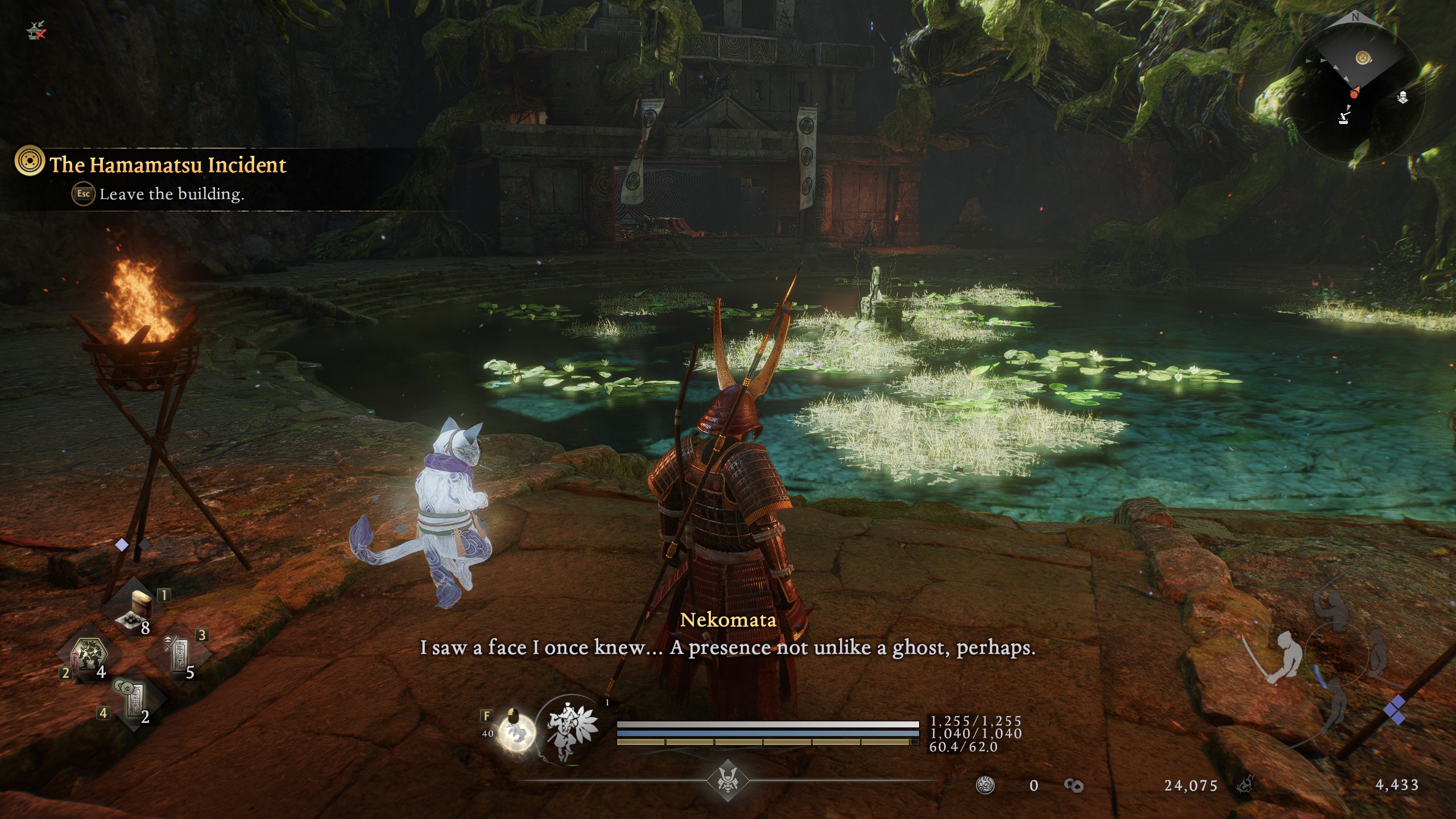
As just one example, in the first region of the game, you'll clear the Crucible corrupting the town of Hamamatsu, liberating it from the Yokai threat. As you run through the liberated Hamamatsu, the demons are gone, but so is the populace. It feels weird that no soldiers are working on rebuilding the facilities, and no citizens are returning to check their residences. To me, this feels like there is absolutely no sense of peace and restoration in the liberated areas, which greatly hampers the world's immersiveness. It makes the game feel less like a place and more like a vehicle for collectables.
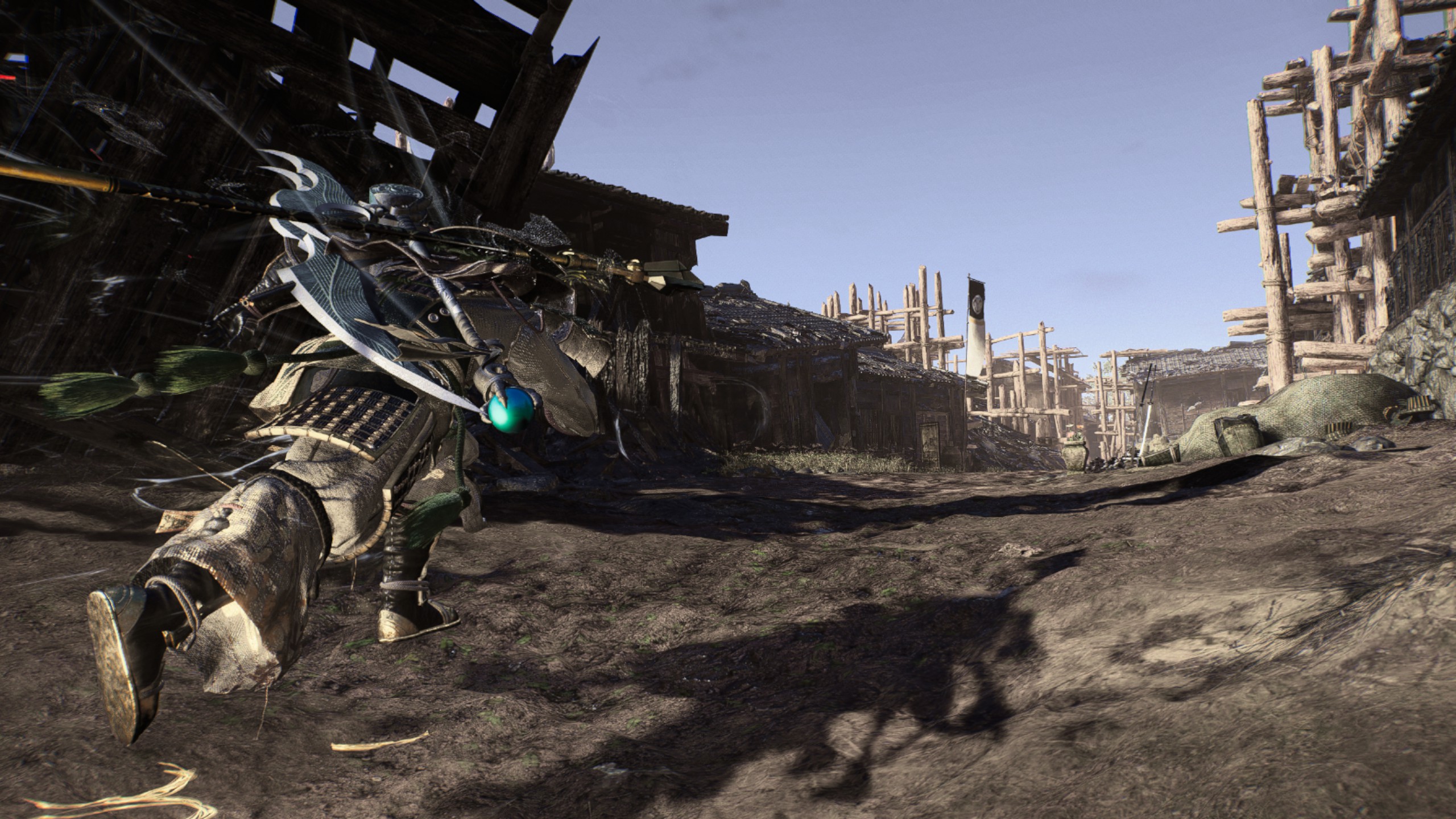
Just like the recently released Dynasty Warriors Origins, I find it most disappointing when the team omitted existing series characters even as they could have had a prime appearance in the new entry. One good example is Torii Mototada, the veteran retainer in the first Nioh, who had been serving Tokugawa Ieyasu ever since his youth. His absence in Nioh 2's Battle of Anegawa was tolerable, as the Tokugawa clan was not the focus in that game. But Mototada is nowhere to be seen in this period of Nioh 3 either, and that makes the already scant roster of characters look even more jarring.
Some people will inevitably wonder whether William appears in Nioh 3, either as a cameo or a boss encounter. I hate to break that he does not appear and is only mentioned in passing by several characters. In some ways, this makes sense, because the historical William Adams was not present during the Takeda-Tokugawa wars of 1572 and already died in 1620, a couple of years before Nioh 3's story formally begins in 1622. William's son Joseph, who appeared in Nioh 2, also does not appear at all in the base story, either. Overall, Nioh 3's cast of characters feels somewhat thin relative to previous entries, despite hopping through multiple eras of time.
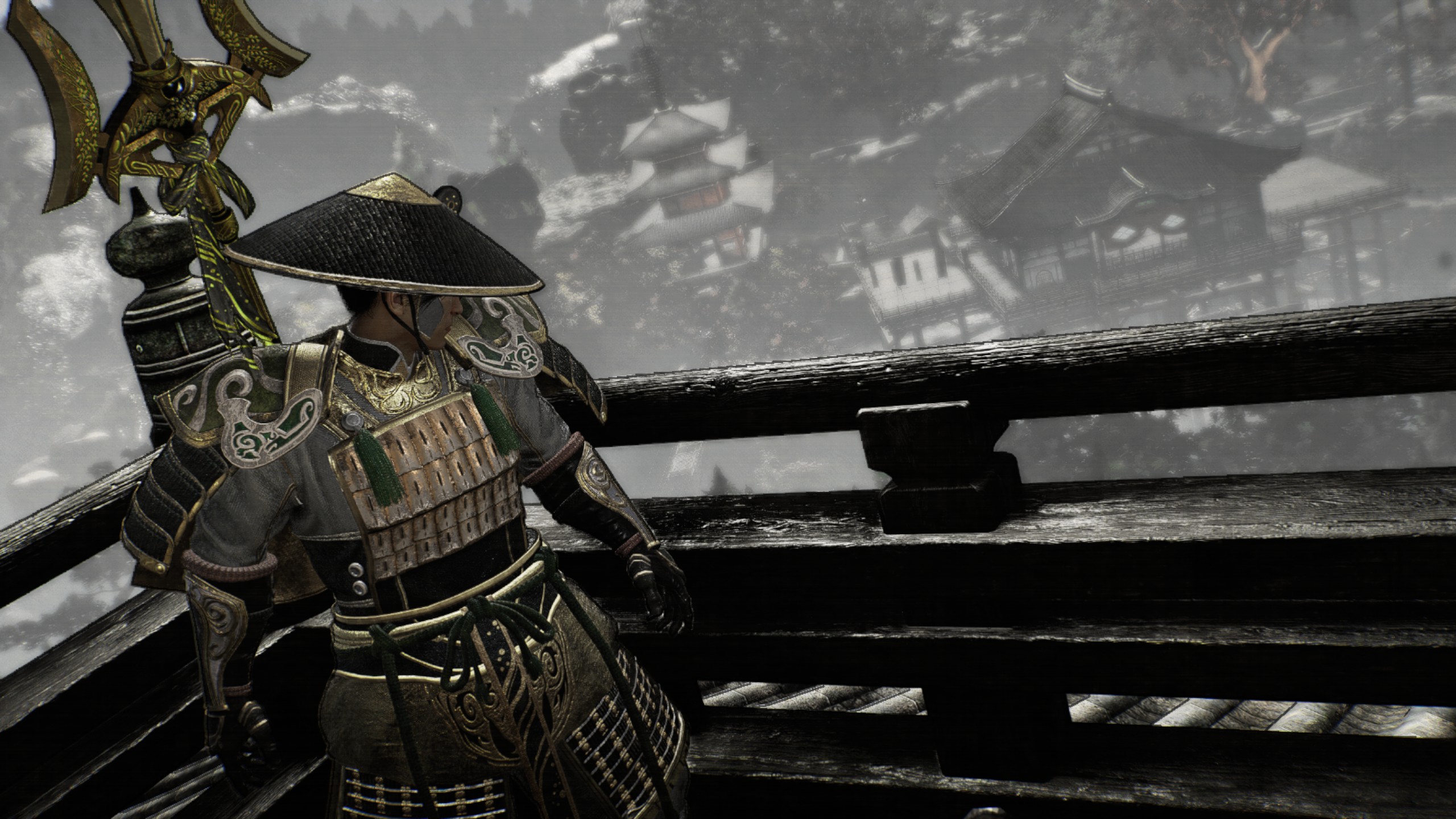
The first Nioh marked a great debut for a long-dormant project that had been considered vaporware at one point, and Nioh 2 refined both the mechanics and the storytelling style. In places, Nioh 3 feels like a manufactured return to the series, changing up the formula and resulting in a more mixed bag, and that's what Nioh 3 turned out to be in my eyes. If you come to Nioh primarily for fights and challenges, you will enjoy this new game because it brings an even more varied action combat system. Overall though, those also hoping to find compelling storytelling and worldbuilding might end up finding those aspects rather lackluster. I sincerely hope Team Ninja can use this lesson should they ever get to make a Wo Long 2.