

Romeo is a Dead Man Review
The entire video game industry is in a pretty rough spot. Good games can still be found, but this feels almost in spite of a litany of problems like lay-offs, studio closures, games as a service, flattening genres, and the growing abundance of GenAI. If you truly love this medium and find yourself struggling to deal with the art of it being commodified into a grey paste, then I think it's time you embrace Punk. Grasshopper Manufacture, run by Suda51, might be one of the last remaining punk-filled studios in the game industry. Indies have endeavored to keep this spirit alive, but Grasshopper takes studio-tier budgets and makes games that could only be made by them. They’re abrasive, violent, and polarizing to many. Since playing Flower, Sun, and Rain back over a decade ago, this company has had a hold on my soul that has never let up.
Romeo Stargazer is a young deputy who falls in love with the mysterious, amnesiac Juliet. The day they’re meant to elope, Romeo is met by a creature known as a white devil who rips his right arm and half of his face off. Romeo’s quirky scientist grandfather (you can say, “Great Scott!” and it would be accurate) saves him on the brink of death and brings him back to pseudo life as DeadMan. There’s little time to dwell on that, as Romeo is immediately recruited to join the FBI and travel across a fragmented space-time to fix the timeline. That, and kill all the alternate Juliets scattered around the galaxy on his way to the “real” one.
Romeo is a Dead Man is a lot to grapple with if you’re not attuned to Grasshopper games already. Like the rest of their Kill The Past games, you are thrown into the deep end right away with little time to fully grasp what is going on. Your grandpa is dead, there are many Juliets, here’s a katana. Go kill zombies and Juliets. Also now your grandpa’s spirit exists as a patch on the back of your jacket. The beginning of this game is a violent shock to your senses, fueled by raw emotions and viscera. This pace does not let up throughout the entire game.
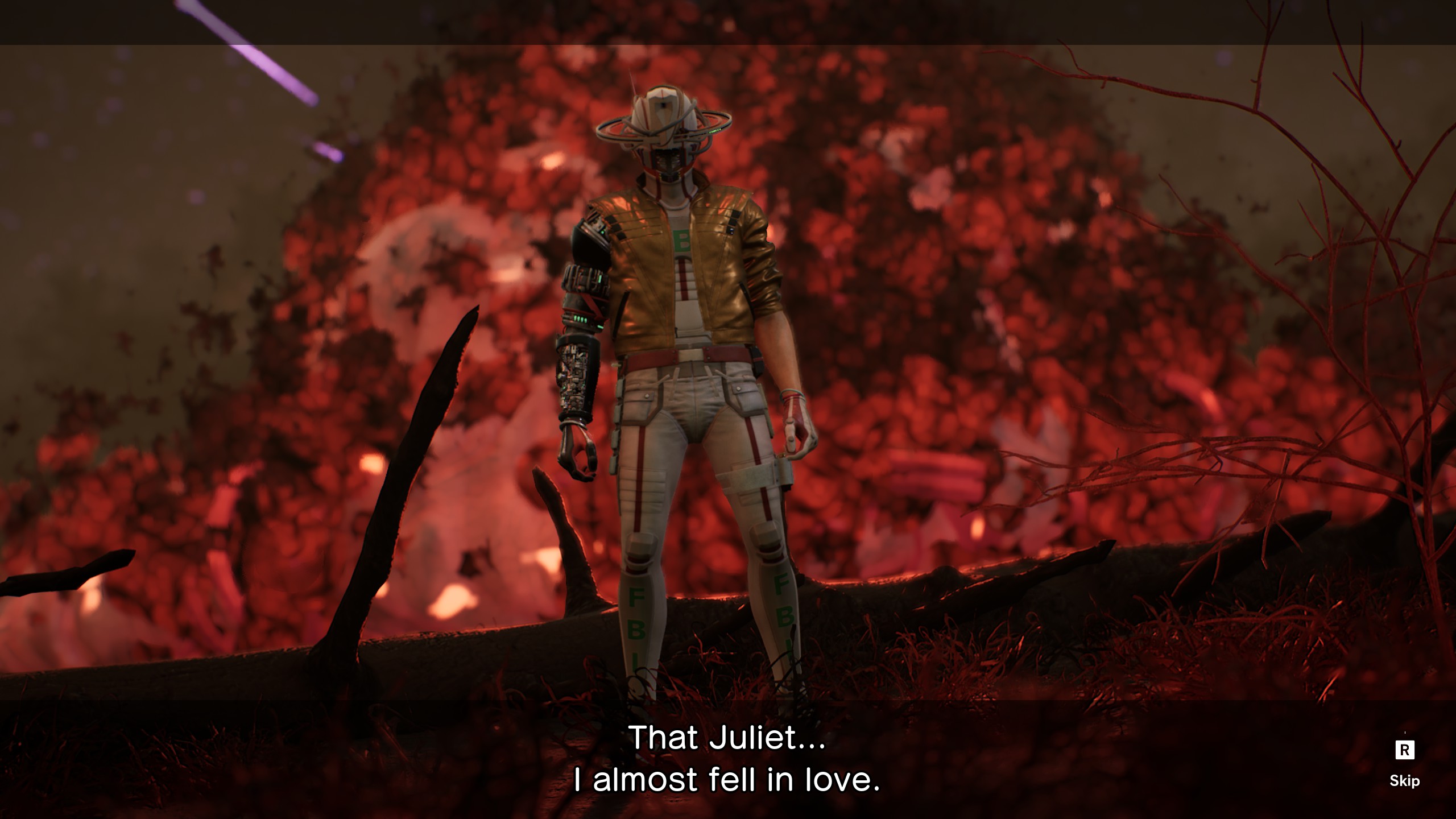
This studio thrives in self-indulgent, maximalist storytelling. Romeo is no exception. Characters speak to one another philosophically, waxing poetically, and sometimes make pop culture references that not everyone will get. Knowing Suda was a Gundam fan like myself, I definitely caught a reference to Newtype philosophy. Romeo himself has a piece of art shown between chapters of him depicted doing the iconic RX-78-2 beam saber slash from the first episode of Mobile Suit Gundam. I also remembered “Getter Rays” from my time with Super Robot Wars Y, and that's just to name a few. I have not seen any Ultraman media, but I have it on good authority that Suda51 is a big fan, so I’m sure some nods went over my head. It’s hard to really care about references you don’t get, which applies doubly to the ties to other games in the Kill The Past series. They’re here for flavor. If you don't taste that, then you can just be here for the violence, humor, and messy human relationships. All on full display. You can play this as your first Grasshopper game, no baggage required.
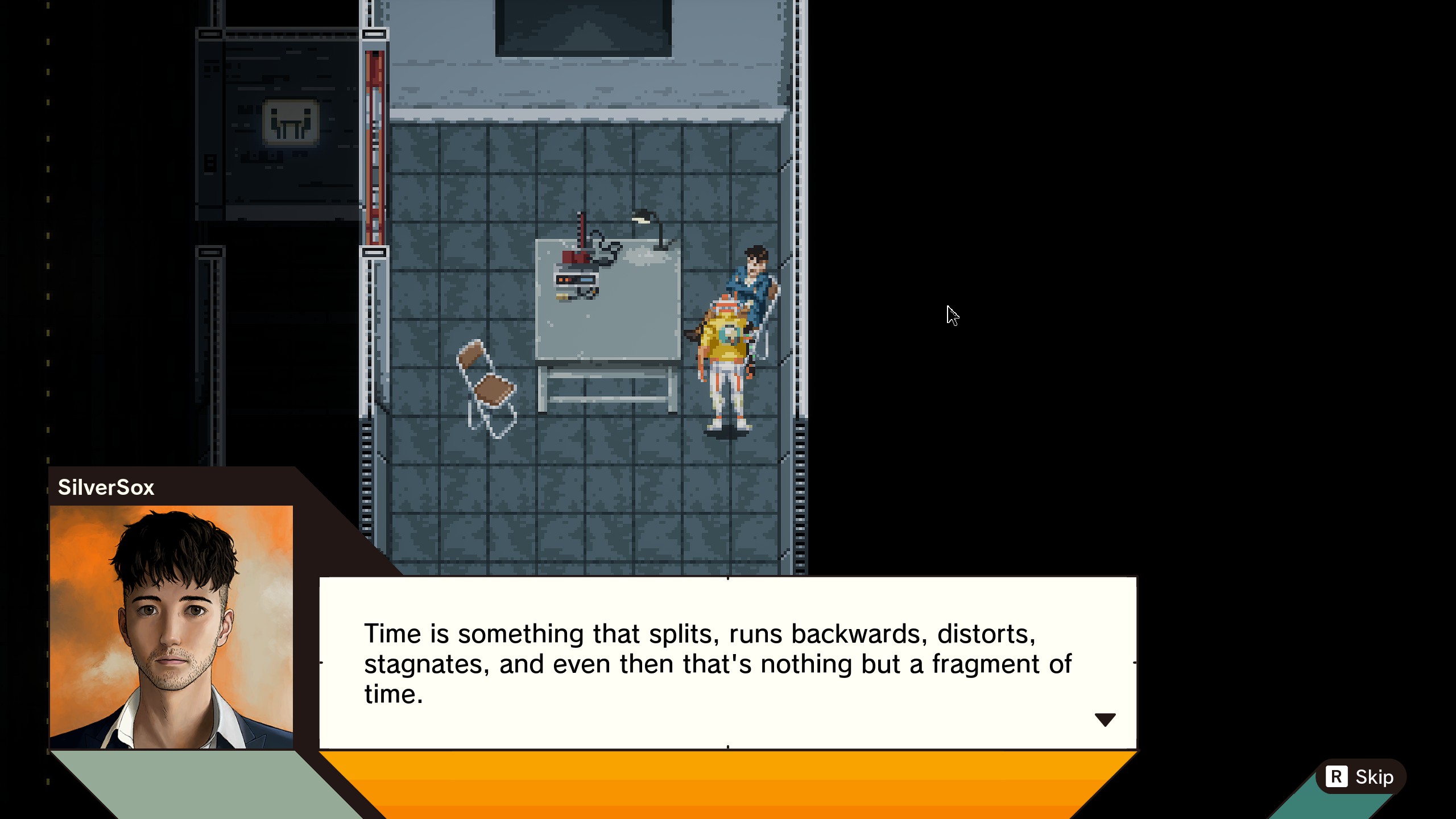
Complimenting this melting pot of tones is a stunning mixed media approach to its presentation. I cannot begin to convey to you how many art styles have been amassed for this game. Romeo is Dead Man is such a collaborative effort between so many artists, as if it were a zine action game. Cutscenes go back and forth between in-engine, 2D sprites with text boxes, or full-on motion comics. Hell, there’s even some stop motion here and there. Want some scarce 2D animation as well? You got it. Every visual element in this game is turned up to 11, and all crafted by passionate, real artists.
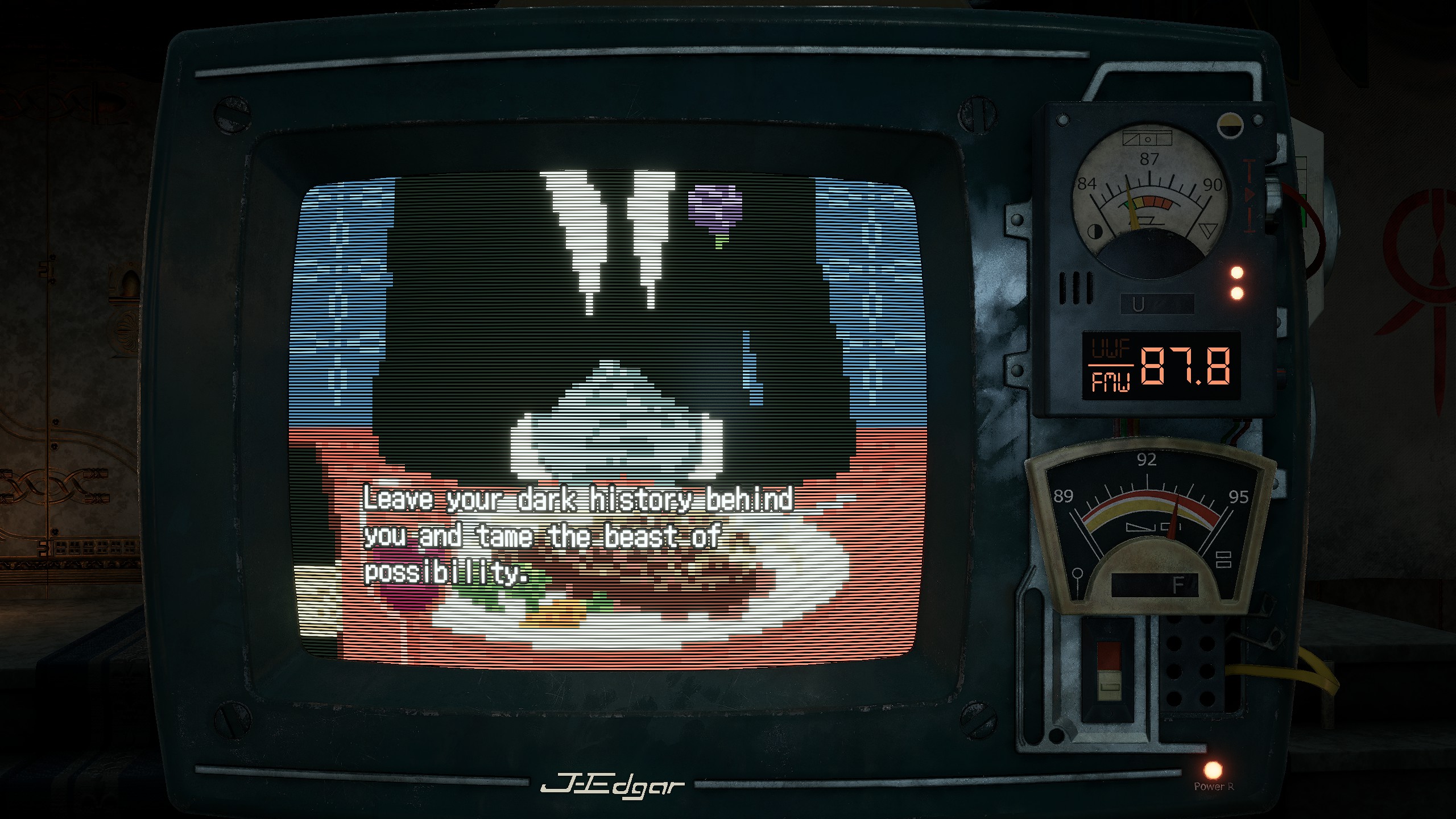
Let me give some examples. Your item shop is run by Shiroyabu from The 25th Ward: The Silver Case. Every time you go to buy something, the visuals, sound effects, fonts, and music immediately transform into the Film Window style from that game. Each swing of your weapon causes explosions of blood, with special Bloody Summer attacks exploding in a display of visual fireworks that consumes your screen. Sometimes my PC just couldn’t handle all the effects on screen at once, depending on how many enemies were getting killed at once, and each time that happened, I could only just applaud.
That’s not even covering the music, which is as varied as you can expect from a modern Grasshopper Manufacture game. There are three main composers in this game, each bringing a distinct and bombastic score for every second of action. Additional musicians make an appearance with vocal music seemingly made just for this game. Each boss even has their own vocal theme. Fitting the zine-like approach to visual aesthetics, Romeo is a Dead Man’s score feels like a juvenile yet nostalgic mixtape someone made for the titular Romeo to jam out to. You’ve got a blend of different genres and musical influences, all making something I could listen to for hours on end. I haven’t felt this passionate about one of their soundtracks since Travis Strikes Again. All this to say, I need the soundtrack release immediately.
As much of a fan of Grasshopper games as I am, I remember leaving their previous title, No More Heroes III, a bit cold. I respect so much of it, especially with its great combat and outlandish humor, but they messed with a key part of the No More Heroes formula for me: The stages. Seeing all the themed stages for boss fights is how you build tension up, and allows the designers to flex their chops. No More Heroes III became a boss rush, with only a barren open world to connect all the fights. It lessened the impact of boss fights that should have been memorable, and it took me out of the game more than I’d like. Romeo takes an opposite approach to this.
Every chapter has a full stage to work through before the boss encounters. Each is based on a specific era of time, with a unique visual motif. There’s a shopping mall, an asylum, and a cult farm, just to name a handful. You might not have as many chapters and stages as you would in the original No More Heroes or Travis Strikes Again, but each makes up for this by being pretty lengthy. Each stage has a gimmick, with one going as far as to change the entire genre of game to great effect. While they might not all be the most visually exciting locations I’ve ever seen in a game, I was always excited to see what lay in store for me.
There’s even a puzzle-focused Subspace section to break up each one, but the assets for these are shared between every stage. There’s also one of the main stages that is used twice. I’m not against the idea of re-used content, but some more visual variety in stages would have been nice. Scope mostly manages to keep in line with the ambition, with re-purposed assets at least being remixed when necessary.
Another criticismI voiced for No More Heroes III was that while the base moveset felt incredibly satisfying, it plateaued quickly, leaving Travis with not many options. Romeo does not have this problem, with plenty to work with in your base kit. The combat in this feels like a culmination of all the disparate kinds of gameplay styles from past Grasshopper games, with a couple of new ideas sprinkled throughout. Not only do you have melee combat that feels like it builds off of NMH3, but guns are a viable and crucial addition.
You have eight different kinds of weapons to unlock and upgrade - four ranged and four melee. I was partial to the Spazer katana, with a special move to hold down the heavy attack button on your third combo hit and rev up the chainsaw blades to build up your blood meter fast. For guns, I would often switch between the Diaspora shotgun and the Yggdrasil rocket launcher depending on my needs. Not only do each of these weapons have a varied moveset, but they all have unique context-sensitive Bloody Summer special attacks. With enough blood stored up from your attacks, you can unleash one of these attacks to do serious damage and restore some of your health. These have different attacks based on whether they’re used stationary, while jumping, or even while dodging. If you gain enough meter, you can even chain up to three together to get different animations.
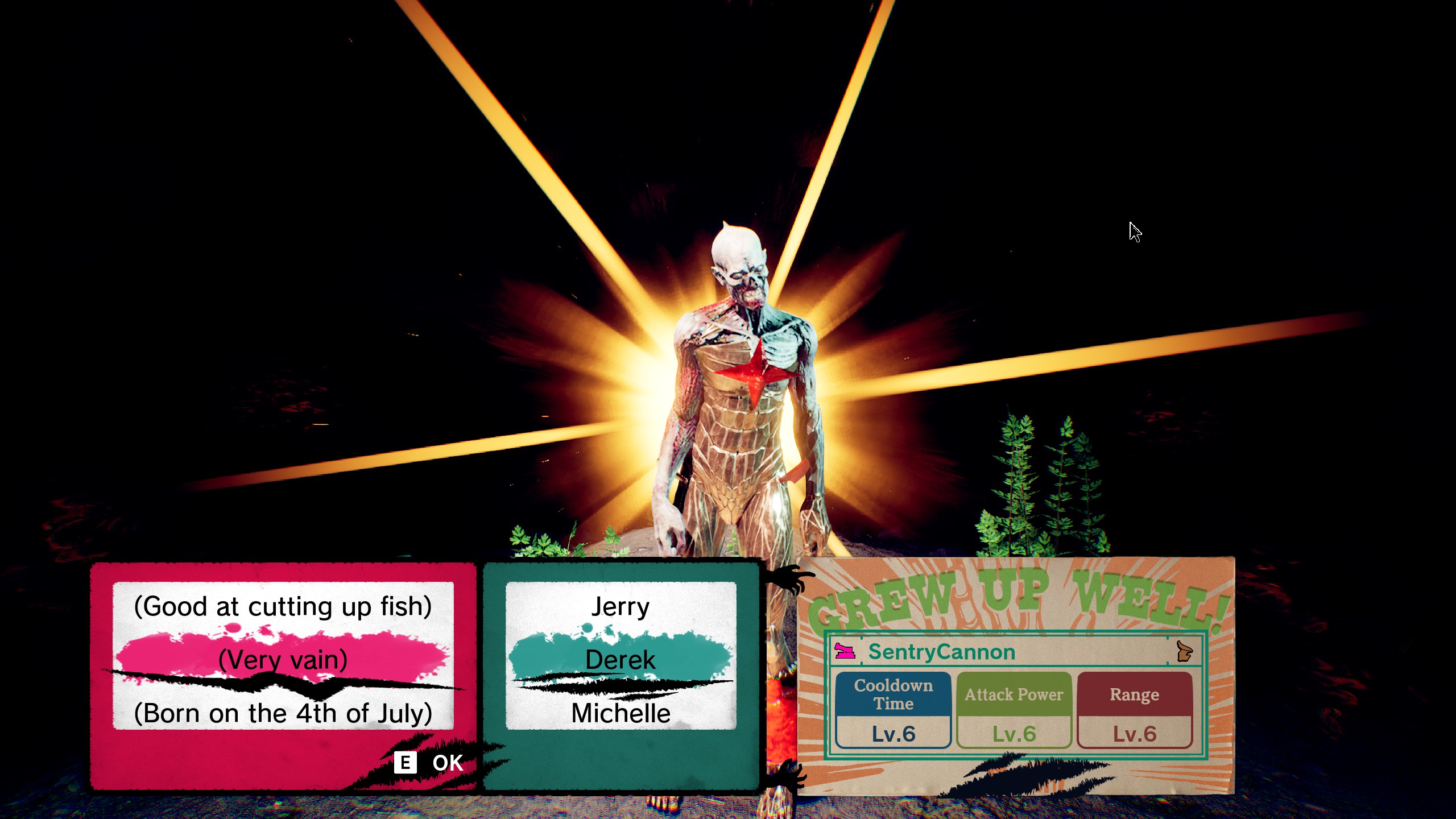
This would have honestly been enough for me, but there’s one more layer of complexity on the combat system that I think will lead every playthrough to be at least slightly unique. Romeo has the ability to grow, fuse, and summon creatures called Bastards. In MMO terms, these are your own personal “adds”. They function on a cooldown system, and when summoned, do a specific task. This can be sending out a shock, spinning to create a tornado, healing, and more. There are a lot of different bastards you can find in the game, all with different skills and stats to mix up your kit. I think I might have gotten too into combat in Romeo, as I was looking for fun extra applications for Bastards just to get an edge up. Even if they die in one hit, their models still have their collision up for a few extra seconds until they despawn. They’re great meat shields for projectiles.
I played Romeo is a Dead Man on Orange Chocolate (because of course the difficulties are based on food, it's Grasshopper Manufacture here), the hardest difficulty available for a first playthrough. I’ve never quite stopped chasing the high of the original No More Heroes’ difficulty. I’ve decided to play all of their action games on the hardest difficulty, on the off chance of hitting that sweet spot between engaging and punishing gameplay. Orange Chocolate kicked my ass in every way I craved. It was so fulfilling for me that I don’t know if I can ever make myself replay it on easier difficulties. I just had too much fun retraining my brain into becoming the ultimate DeadMan to beat this. Enemies hit hard, requiring you to use everything in your kit and master enemy attack patterns. I had to engage with every mechanic, run through every available floor of the optional Palace Athene dungeon to keep pace with the challenge, and comb each stage for extra items to further improve my Romeo.
One of the ways I was able to do this as well was to try and really fit guns into my play style. Guns might seem like weak alternatives to melee, but they’re great at hitting enemy weak spots in the form of blossoming flowers on enemies. These are finite, but with certain Bastards you can plant new flowers, turning ranged weapons into a dominant strategy. For the middle of the game I would wait for my moment to fire off new weak spots, then use the Yggdrasil to explode them at a distance. Having said that, you’re still rewarded by getting up close and getting some melee hits in since those increase your blood gauge fast. Stages feel designed well around this difficulty, with enemy formations designed to keep you on your toes at all times. I could have used maybe a bit tighter hitboxes and I-frame windows, but it at least does mostly stay consistent with its rules.
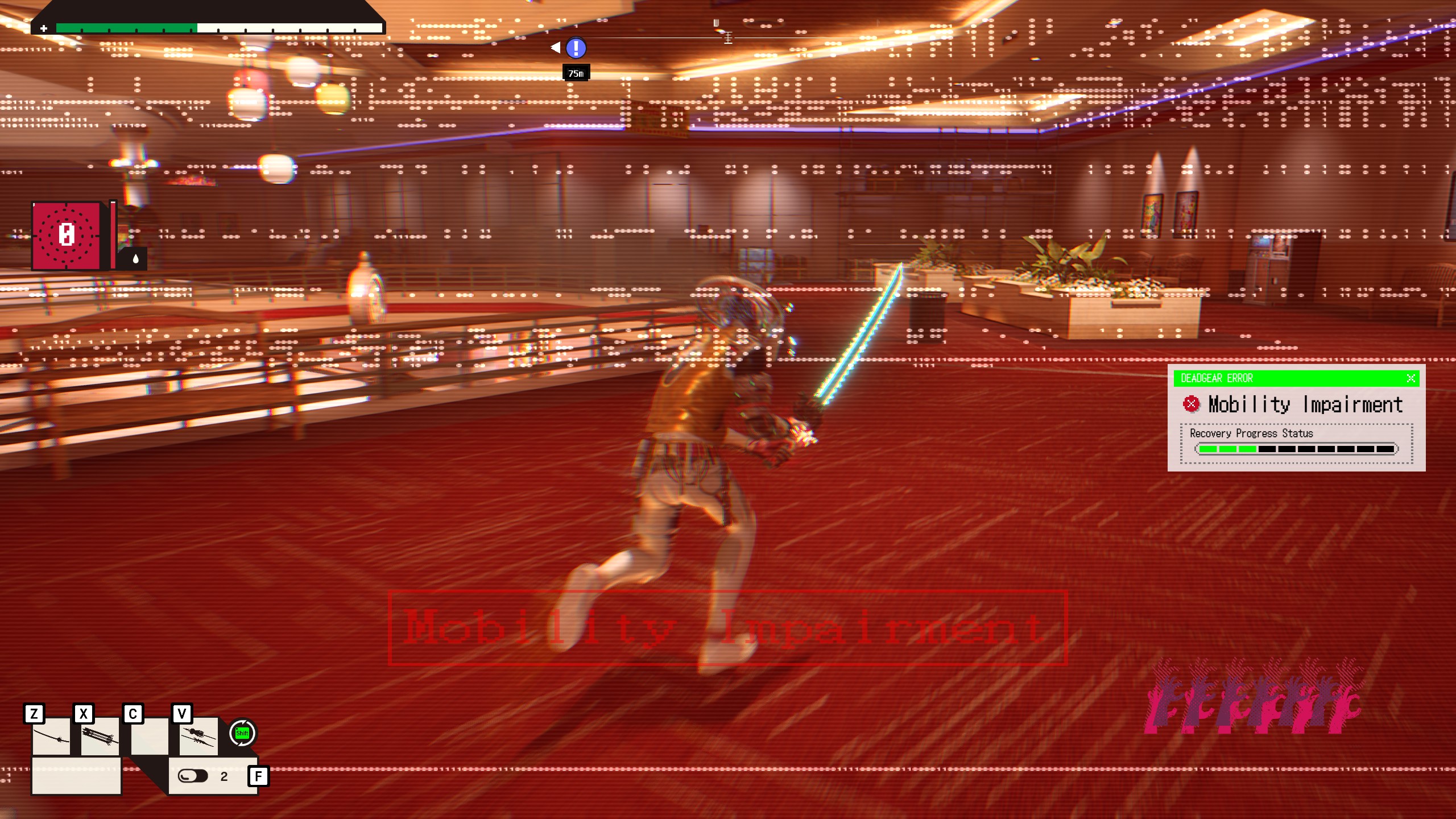
Bosses become huge endeavors, with each one taking me up to an hour or two just to surpass. You are expected to fully master the systems given to you if you want to survive them, and I respect that the game refuses to let you change the difficulty during a playthrough. You have to know how best to deal with every threat, and that’s best figured out by experimenting during failed boss runs. I became mindful of how I was using my limited health restoratives, figuring out how to maximize when to use my Bloody Summers to keep my health up and not dip into my items during the long boss fights. I was constantly weighing when to rush in, how best to use each Bastard, when to back off, and switch to my guns to keep consistent DPS. These boss fights are incredibly well designed, with the occasional unfair attack thrown in to keep you on your toes. They aren’t always fair, but once you truly study all of their moves, they’re definitely surmountable.
Across all of the main chapters, you have a tiny hub that serves as a base, depicted with 2D sprites. This is your ship, the Last Night, and it houses your crew of NPCs to chat with. You’ll buy items here, cultivate bastards, and do a couple of fun minigames. You can cook Katsu Curry with your mom to give you temporary benefits in battle, controlling the timing of how long the chicken is held in the oil to get worse or better effects from the item. The 100 Question Kumite from The Silver Case returns with a vengeance as the Time Shocking Labyrinth if you go get a “check-up” from crew member WorstPink. I honestly don’t even know if there are more than 100 questions, or what you even get from getting to the end, but since these are timed now, I had to tap out at question 26. These extra activities keep the Last Night worth visiting often, with ongoing conversations between Romeo and his fellow crew members updating regularly for nice flavor.
This feels like a successor to the No More Heroes series, but this time fully owned by Grasshopper instead of shared with another publisher. The structure is similar, and both use the violent nature of video games as a way to convey their themes. However, if you're not looking for anything deep, you’ll still get an extremely insane action game story. Everyone wins. Romeo, as a character, feels like the inverse of Travis, but both characters are equally scrutinized by the narrative. No More Heroes is a game about killing, and the kind of person you need to be to be the best assassin in the world. Romeo is fine with killing, but the creatures are intentionally monstrous by design. The death loop of Romeo is a Dead Man tells the real story. This isn’t about the killing; it’s a story that focuses mainly on what it means to die.
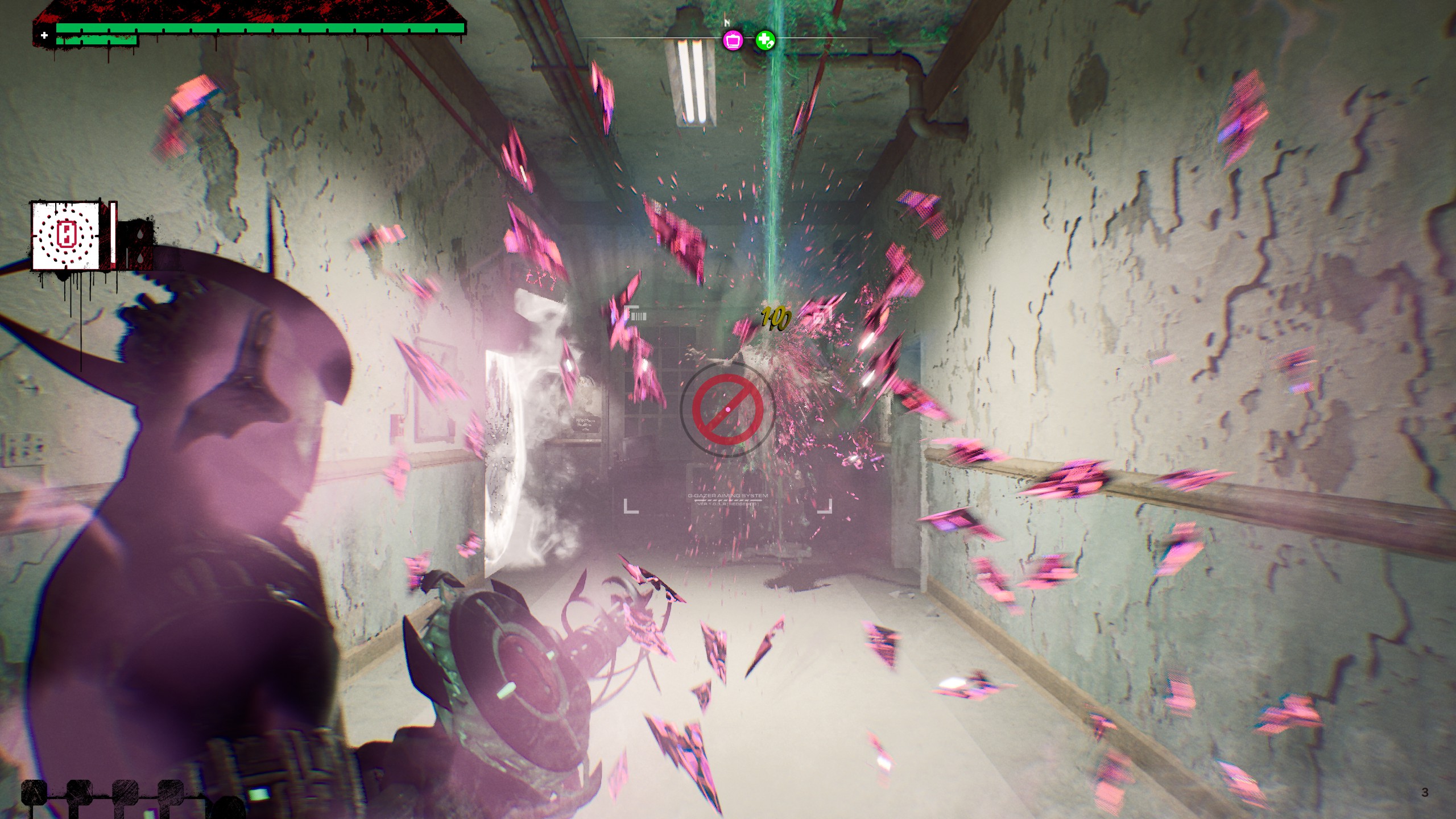
Every time you get a game over, you see the skin melt off Romeo’s flesh as he screams in agony, before reversing the scene to give you another go. You get desensitized to it after a while, as death means less and less. Is Romeo getting more violent because death becomes less of an issue? He’s stuck between the lands of the living and the dead, all while trying to find himself during all the craziness of the main plot. On a surface level examination, he seems like a more generic protagonist than Travis. I think there’s just as much going on under the hood, and that’s before even getting into his relationship with Juliet.
If you love your art featuring raw, messy, toxic relationships, then this will be your game. I know they can gross people out, but I can’t get enough of it. Humans are complicated creatures who don’t know how to love each other properly. Grasshopper has always found this to be a fascinating topic in its stories, and I think they know how to write flawed people well. Juliet and Romeo are fascinating, flawed people. Because a lot of the backstory is told from the perspective of dreams and nightmares, the details and history of their relationship are hard to fully pin down. They’re not the most deep characters, but the way they talk to each other and how the game portrays their unhealthy relationship was really captivating to me.
A single playthrough of this game took me 20 hours. You could probably do it in 15 if you don’t delve in as deep as I did. After the credits, I’d say I “get” the plot. Yet, I still don’t feel like I fully understand it. Initially, I was left wanting more from the story after. A sudden ending is pretty common for the studio, and it seems to just be Suda’s writing style. There’s just so much packed into this game that leaving parts up to my interpretation feels deliberate. Every line of dialogue feels loaded with multiple layers of meaning, and I want to replay the game sometime just to take notes on what they could all mean. I’ve been stuck thinking about this game for weeks, and I feel like discussing it with other players is going to click a lot into place. It’s exciting to have a game that I could talk about for hours on end.
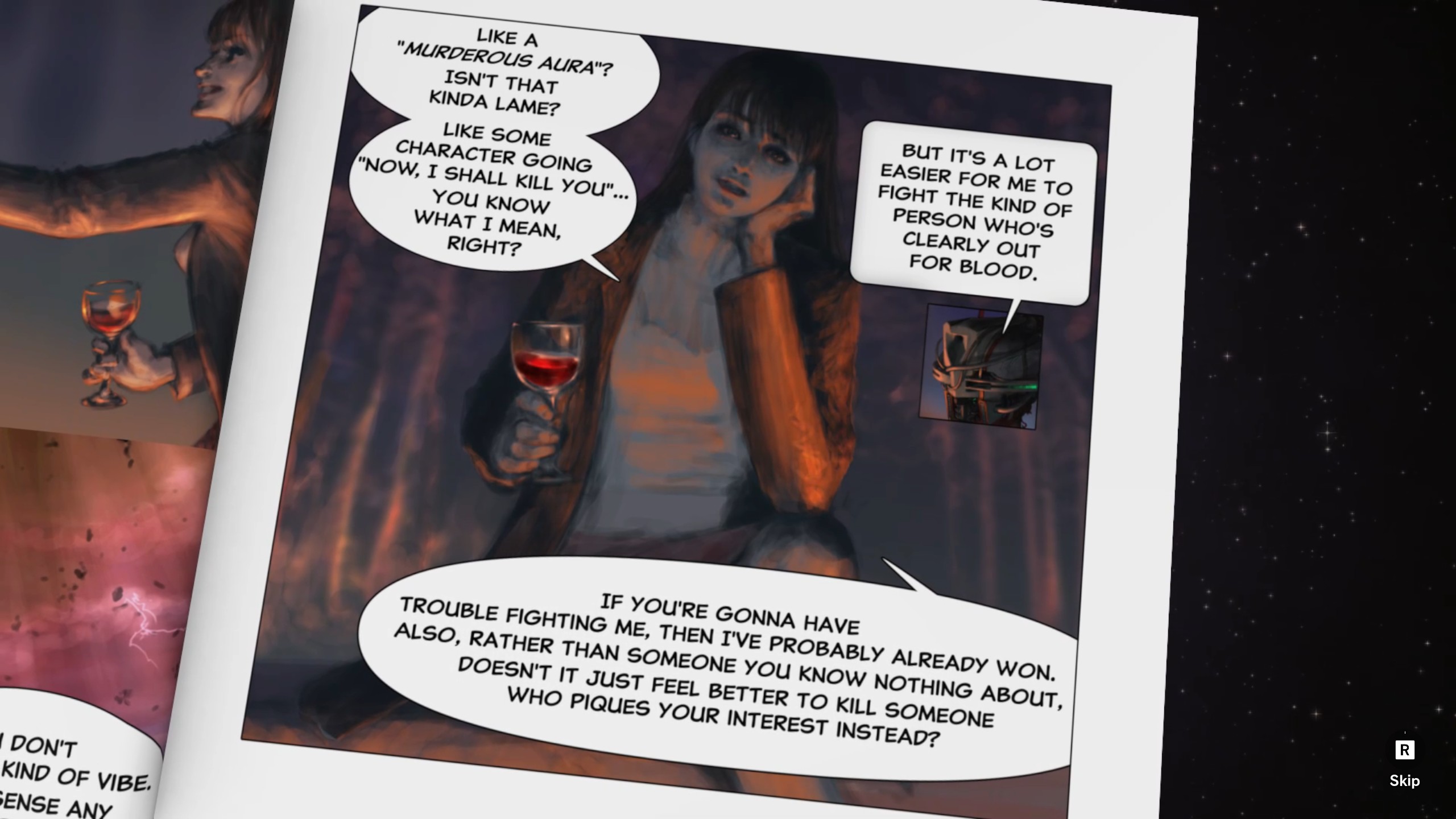
Romeo is a Dead Man is sure to polarize some people, but I think it was the glass of water I needed in this parched period of gaming culture. Not only do I get a fun action game for the sickos, but I also get a maximalist art game? Both with few visible compromises? It’s just an absolute treat for long-time Grasshopper fans like myself. The way they work within established gameplay formulas to blend, nip, and staple together in a way only they could think of. I would love nothing more to champion this as the game to popularize these kinds of “zine games”.
This is why I love video games. This game doesn’t feel like just another piece of content to check off a list. This is what art should be. Messy, fun, uncomfortable, imperfect, free of corporate meddling, and drenched in the soul of the human beings who made it.