

Brigandine Abyss Review
Strategy RPGs have always been niche outside of select franchise entries. I'm sure many people haven't even heard of the Brigandine franchise, but the series has actually been around since the PlayStation era. Back in 2020, a sequel to the original PlayStation game titled Brigandine: The Legend of Runersia was released. It was quite an unexpected sequel. I reviewed it and enjoyed it a lot. Fast-forward to today, and we have another follow-up in the form of Brigandine Abyss. Even though Abyss is a new entry in the Brigandine series, it is very much a standalone release.
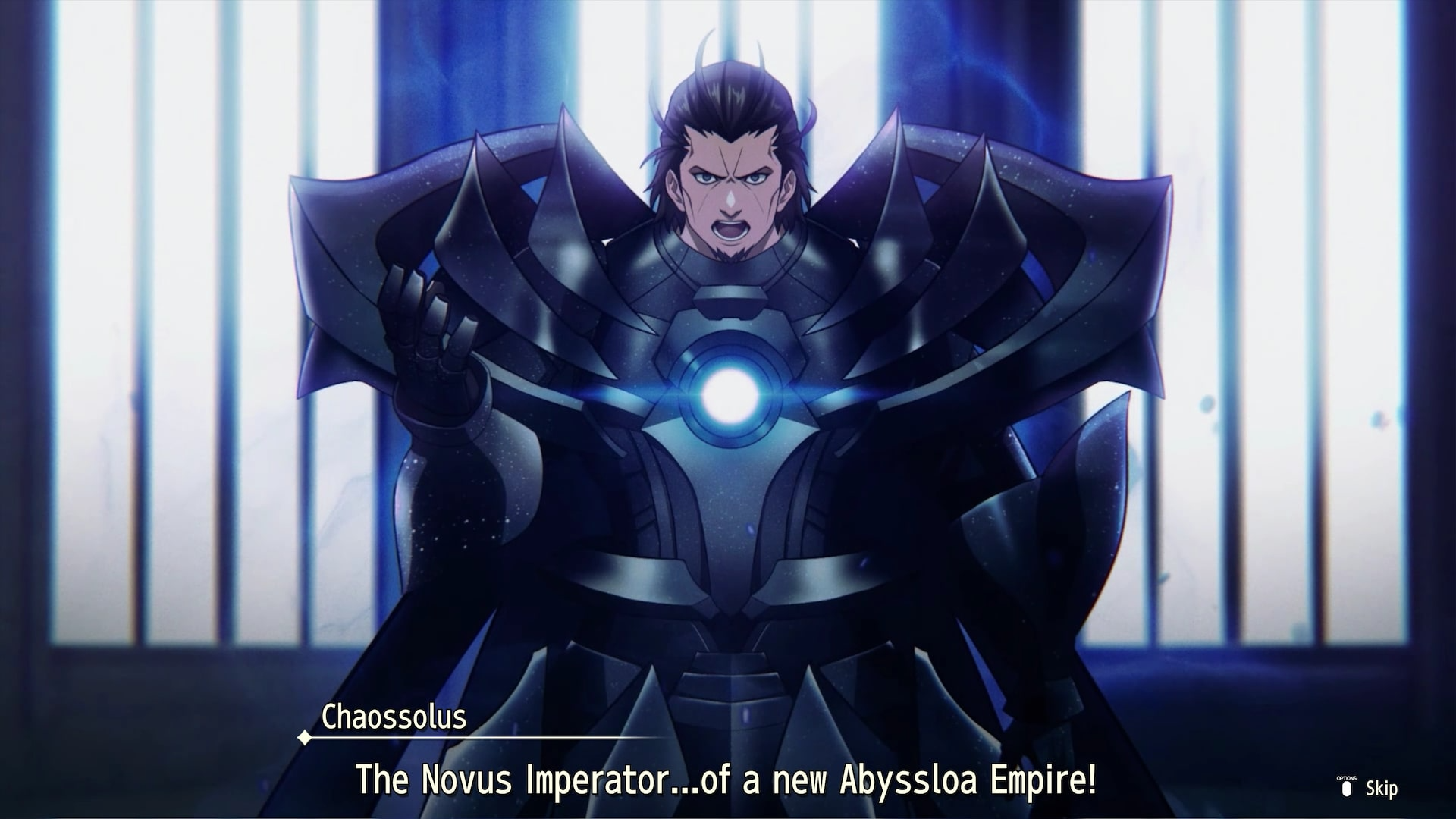
Brigandine Abyss begins by introducing the Brigandine as an arcane suit of armor that once saved the world. From there, one of the emperor's generals, Chaossolus steals the Brigandine; he then betrays the current ruler and kills him in front of his retainers before setting his sights on conquering the world. After setting the stage there, Abyss begins with six playable factions that you can choose before beginning the actual game. A brief introduction scene is followed by the story, which will branch out.
The scenario I chose was Scarlet Will, as it seemed to be the faction most directly opposed to the main antagonist from the get-go. You play as Garnet, whose father is killed by Chaossolus during the opening events, and follow her as she rallies an army to stop him. One of the key areas where Abyss improves over Runeseria is that there are more cutscenes and character interactions here. While Runeseria gives you a huge exposition dump to explain each faction's motivations, it doesn't dive much deeper once the game starts.
However, while I appreciate the increased amount of events and interactions, Garnet's scenario falls apart during its later stages. The characters are poorly handled, particularly those with the main antagonist faction, Abyssloa. Their motivations are some of the weakest I've seen, and the story eventually becomes difficult to take seriously. By the time I reached the finale, I honestly would have preferred no story at all over this. I haven't cleared all the faction routes yet, but the story of Scarlet Will leaves a lot to be desired.
Abyss' core gameplay is divided into two phases, the Organization Phase and the Invasion Phase. During the Organization Phase, you manage your forces and assign leaders to various tasks. Whenever a leader is assigned to a quest, they can provide useful benefits such as materials that aren't sold in shops, but they cannot participate in combat. This can leave a territory vulnerable if no leader is available to defend it. When units reach level 10, they can also change classes. When they reach level 20, this requires a class change item, which can be obtained by sending units on expeditions through the quest menu. Faction leaders, however, can change classes without needing these special items.
Another major change is how resurrection works. At the end of every season, the game automatically restocks resurrection items. While resurrecting units was also possible in the previous game, these items were extremely scarce and expensive. In Abyss, however, you purchase stock of resurrection items every season, making it much easier to recover from losing units in battle. The game also makes things more forgiving by preventing story-related units from dying upon defeat. As a result, there is rarely a reason to spend resurrection items on leaders. Unless you're using generic units in combat.
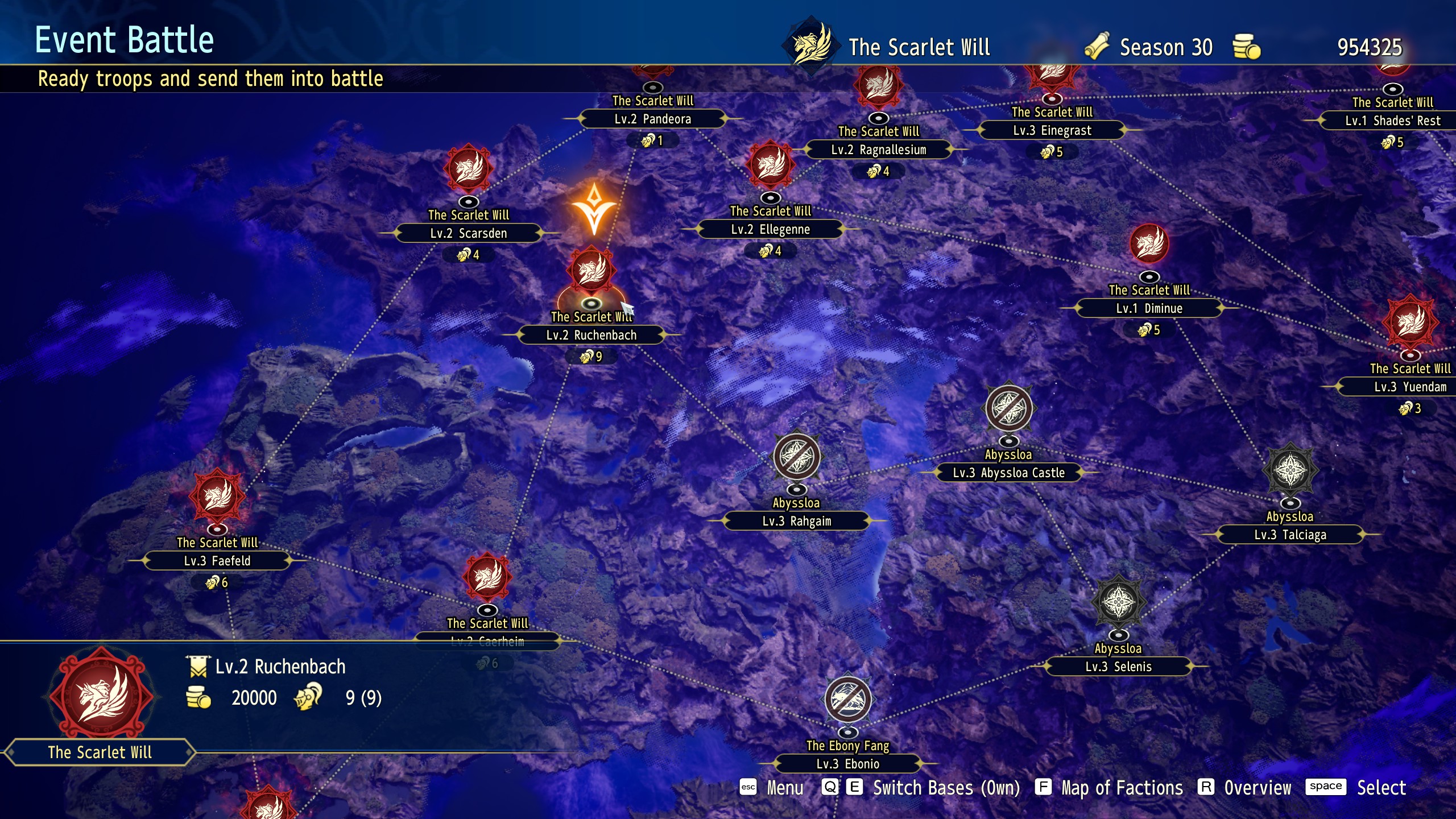
The Invasion Phase is where you assign a leader to invade your opponents, allowing you to expand your territory and gain access to additional resources. Each invasion will allow you to send in a maximum of three leaders and their assigned forces. When the combat starts, the game will be in a hex-grid turn-based strategy RPG. The battle maps are tied to the territories where the fights take place, so you'll often be fighting on the same maps if a particular location is frequently attacked. In battle, each unit has its own set of skills, and these skills will improve the more they are used.
A leader unit also has an army of monsters assigned to them, unlike the Langrisser series, these units don't gain a buff while fighting near their leaders. Just like those games, if you manage to defeat the leader, all forces assigned to that leader will also be removed. This usually leads you into fights where you want to aim for leaders to efficiently win your battles.
One of the biggest changes in Abyss is the implementation of the Rally system. A leader can now absorb a monster on the battlefield and gain some of their passive traits, and then you can dismiss them whenever you need an extra unit in the field or switch to a different monster. This system can be downright broken depending on how you use it, as the game isn't particularly well balanced. Like many games, some traits are simply much better than others. One of the strongest traits in the game comes from the Lizard race, which allows a leader to take two turns in a row.
The game does offer three difficulty options, but from my experience, the AI doesn't seem to be any smarter through the difficulty options, but rather, there is some hidden status modifier that makes the computer harder to hit and gives it higher defense. This makes it nearly impossible to hit thief-type units on hard, and you have to rely on magic, as they have a guaranteed strike. Enemy units will usually remain stationary unless you move one of your units into their attack range.
The opposite is true when you're the defending side. The attacking army can win by breaching your last line of defense; this condition doesn't apply to you, however. The battle can also be won by surviving for 12 turns.
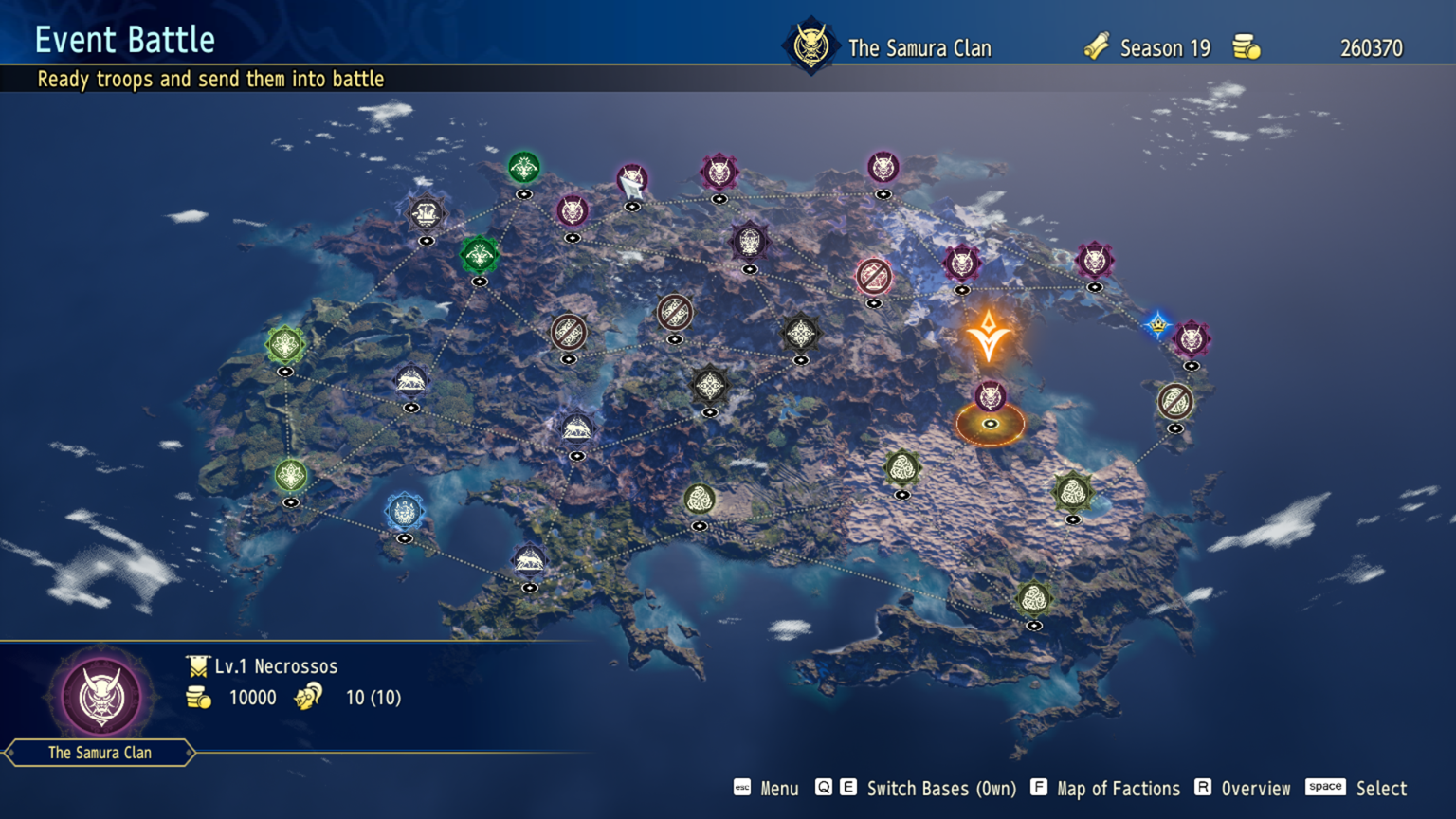
Another change in Story Mode is that certain factions cannot be attacked directly. Even if your faction and another are supposed to be sworn enemies, the game prevents you from invading their territory and instead leaves those conflicts to predetermined events. These events occur after a certain number of seasons have passed, but if you can't win these battles, it will be game over. The story events will also let you use any units regardless of where they are located on the world map.
If you don't really care about the Story Mode, the game also offers a Mission Mode, where you can control a total of 24 different factions, each with its own objective for completing the scenario.
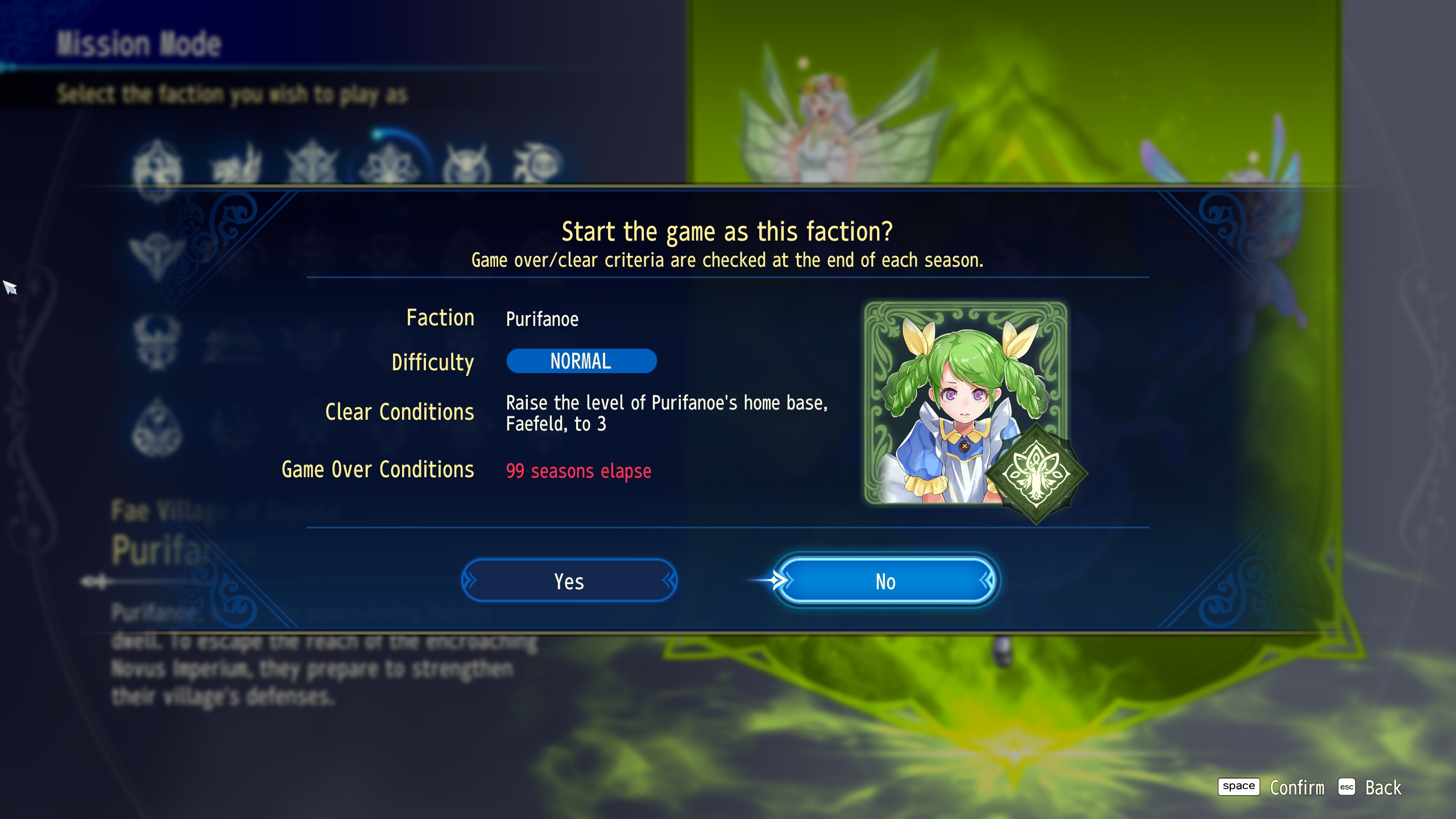
The missions can range from relatively easy to extremely difficult depending on which faction you choose. For example, one faction must constantly pay off a debt at the end of every season, while another may have the objective of accumulating a certain amount of money. Some of the more challenging scenarios require you to conquer the entire world within a limited number of seasons, such as 20 turns.
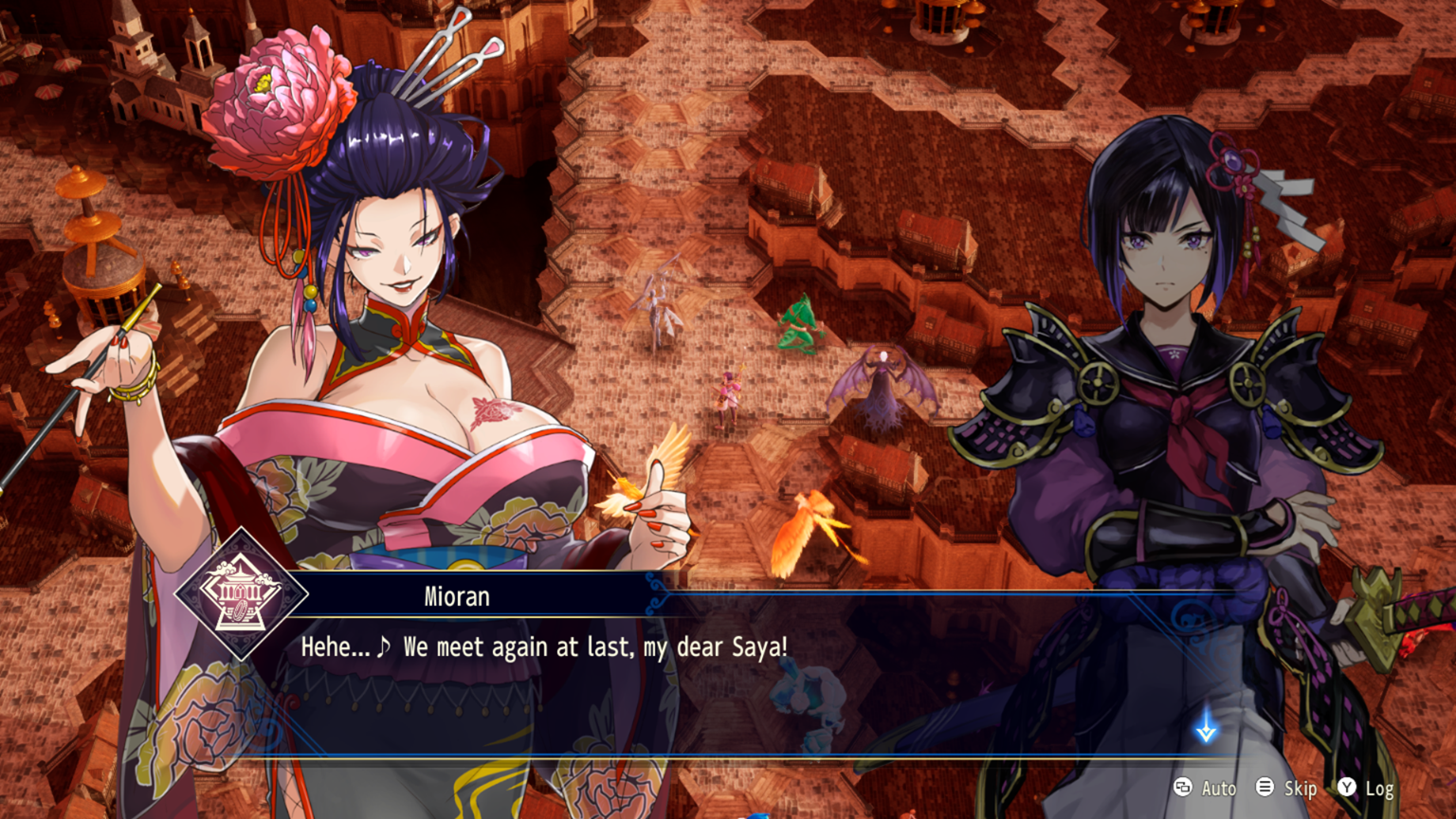
Abyss' presentation has also taken a hit with its switch to anime-style character portraits, which isn't necessarily a bad thing, but compared to the previous game, the art direction feels like a huge downgrade. The UI also looks considerably worse than its predecessor. Many of the menus and icons are placed inside gradient circles, making the interface look dated. I also didn't like that only faction leaders have unique sprites on the battlefield. Even story characters with their own unique portraits share the same generic sprites.
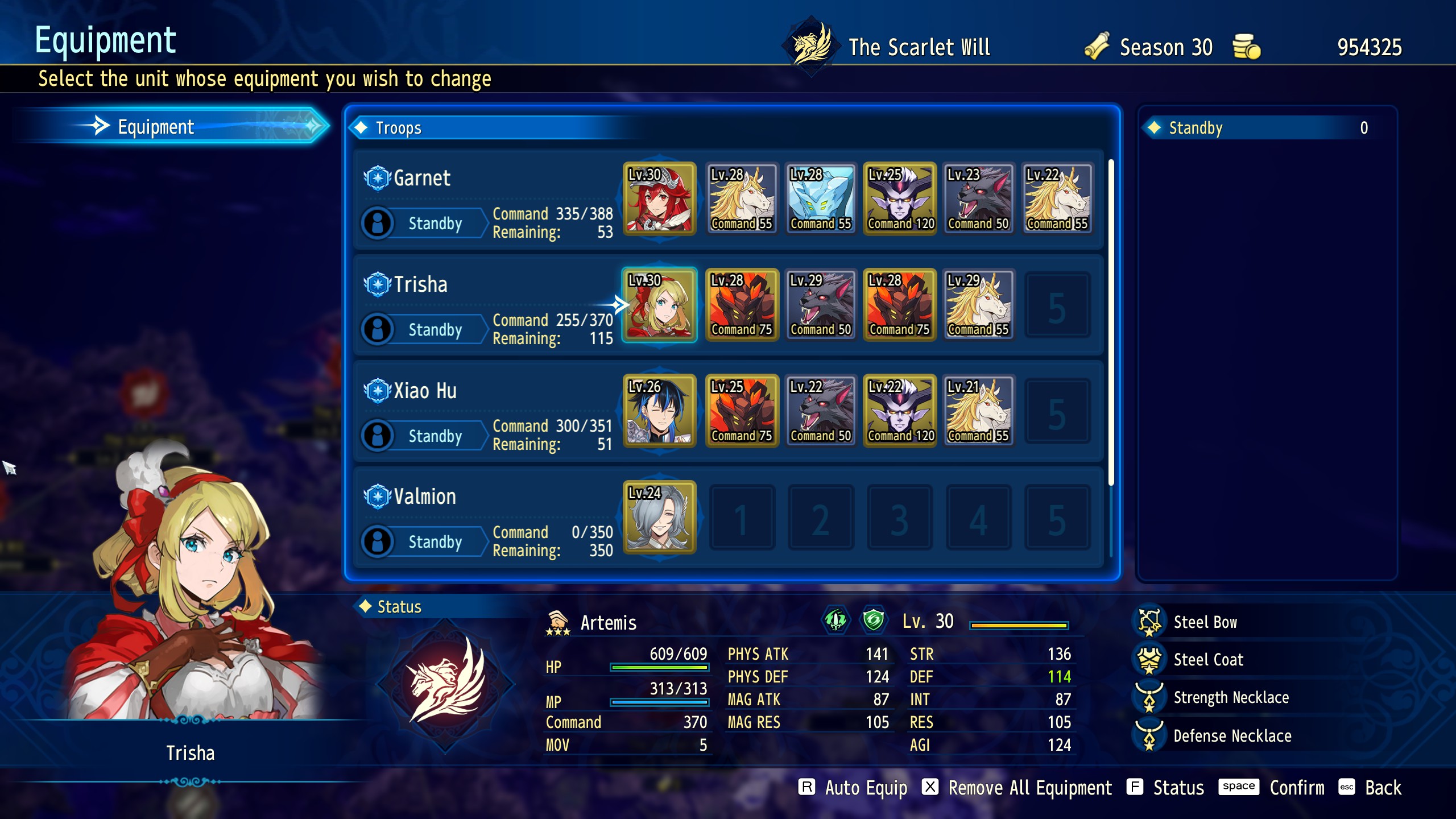
Visually, Abyss doesn't look particularly impressive. It uses a heavy engine (Unreal Engine 5) with high resolution texture work in the background, but everything else seems unimpressive. The character models and other elements feel out of place with the level of detail found in these environments. Brigandine Abyss recommended I play at the maximum settings on my PC, but I found that my PC would begin to noticeably throttle after playing for a relatively short period, even on low settings. Abyss doesn't feel particularly well optimized.
Brigandine Abyss is a very dense SRPG. I unfortunately didn't enjoy the gameplay loop of the Story Mode as much as I did in prior entries. Abyss removes many of the obstacles you would find in Runeseria, and while this makes the game more accessible, it also takes away some of the tension. In its current state, the poor balancing, weak presentation, and lacking PC performance hold Brigandine Abyss back from being an easy recommendation.