

Branching Path: Resident Evil Requiem is a fascinating puzzlebox that faces the past with uncertainty
When hovering over the Main Story option on the Resident Evil Requiem main menu, a blurb of text over the Confirm button mentions to “face the past”. This stuck with me more and more each time I would begin a new session. Culturally, it feels as if video games have been grappling with the past of their own medium ad nauseum for the entire 2020s. Remakes, whether good or bad, have become a staple in the release schedule every single year. Resident Evil has had a pretty good track record with those in the current RE Engine era. Play enough of these games, and you know that this is a series that has often been in conversation with its own past.
This is especially true of the freshman title of the modern era: Resident Evil 7: Biohazard. That was a way for the series to reinvent itself by calling back to the very first entry after the lopsided Resident Evil 6. Following that we got lavish, modern reinterpretations of 2 and 3. Then came Village, a spiritual throwback to Resident Evil 4 that embraced full fantasy horror and branched the series off into an entirely new realm of possibilities. Following that was a remake of Resident Evil 4, taking one of the most important third person shooters ever made and re-examining what makes it tick. Lay all these games out on the table, and it becomes clear that the current era is about playing with old ideas in new ways. The mainline games, however, are where Capcom makes an effort to push forward the idea of what a Resident Evil game can be. Village ends with a promise: Resident Evil is going in brave new directions. Since Requiem was announced, I've been eager to see it live up to that promise.
Requiem is, if nothing else, a fascinating game to think about. I’ve finished my first playthrough and have already started my second one. These games are typically meant to be replayed several times, with you optimizing your way through them on familiar difficulties or finding surprises in unlockable higher ones. I approach each of them with a completionist mindset, trying to find as many items and secrets as possible. Yet even with my 18 hours logged (12 on my clear save, I assume map viewing and crafting doesn’t count) I can’t say I understand every single moving piece under the hood. What I do know is that I absolutely devoured the game during the weekend I had to do so. There’s truly nothing my brain craves more than solving the dangerous puzzle box of a Resident Evil game. At the end of the day, Requiem is a pretty engaging puzzle box.
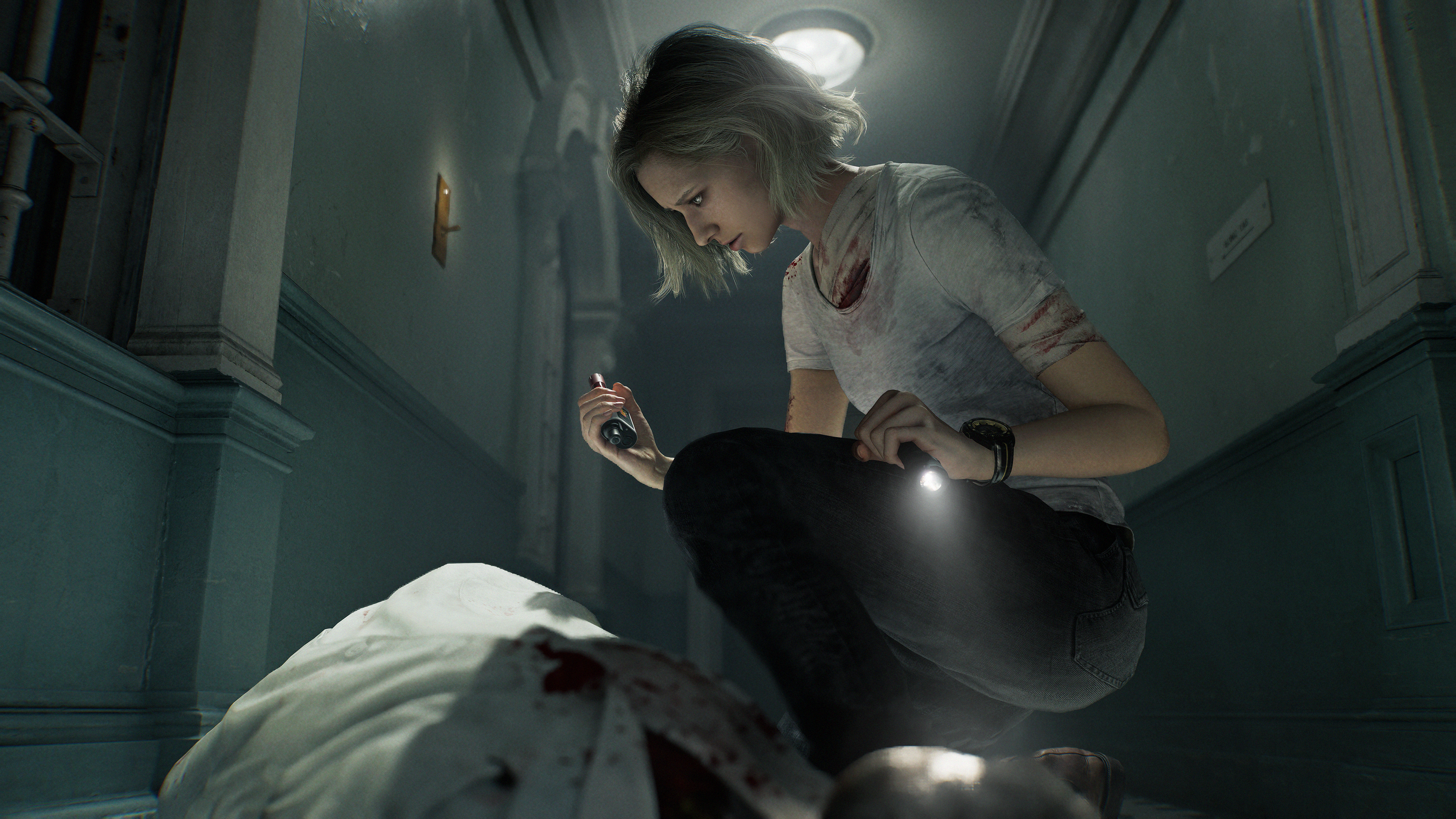
Instead of choosing either the identity of the third person action horror of the remakes (2,3,4) or the immersive horror of the mainline games (7,8), Requiem wishes to have its cake and eat it too. There are two Resident Evil games included here. It splits itself evenly into two main chapters, broken up with occasional visits to the other Resident Evil game taking place. Grace Ashcroft is the new blood of the game, finding herself trapped and hunted in the Rhodes Hill Care Center. Series favorite Leon Kennedy is investigating the location as well, trying to find the cause of a string of deaths from other Raccoon City survivors.
Both characters can freely change their camera perspectives between first or third person, but the game makes it very clear that Grace’s intended experience is first and Leon’s is third. I’d say you should do that on your first run, but it’s a better game overall for the option either way. I’m actually pretty interested in a challenge run where I do all of Grace’s campaign in third person and Leon’s in first. I can’t even imagine how doing the latter would feel to play, especially considering how his gameplay involves getting swarmed by enemies on all sides. Sign me up.
Due to past trauma and a lack of experience, Grace is an introverted character not suited for high-octane action. The bulk of your time exploring the Care Center is done by her, as she sneaks through the dark halls filled with zombies and mutated creatures with limited resources. The Care Center section is the puzzle-focused, tense, slow Resident Evil. The weapon pool has shrunk to about two pistols, a series of knives you craft yourself, and a magnum in case of emergencies.
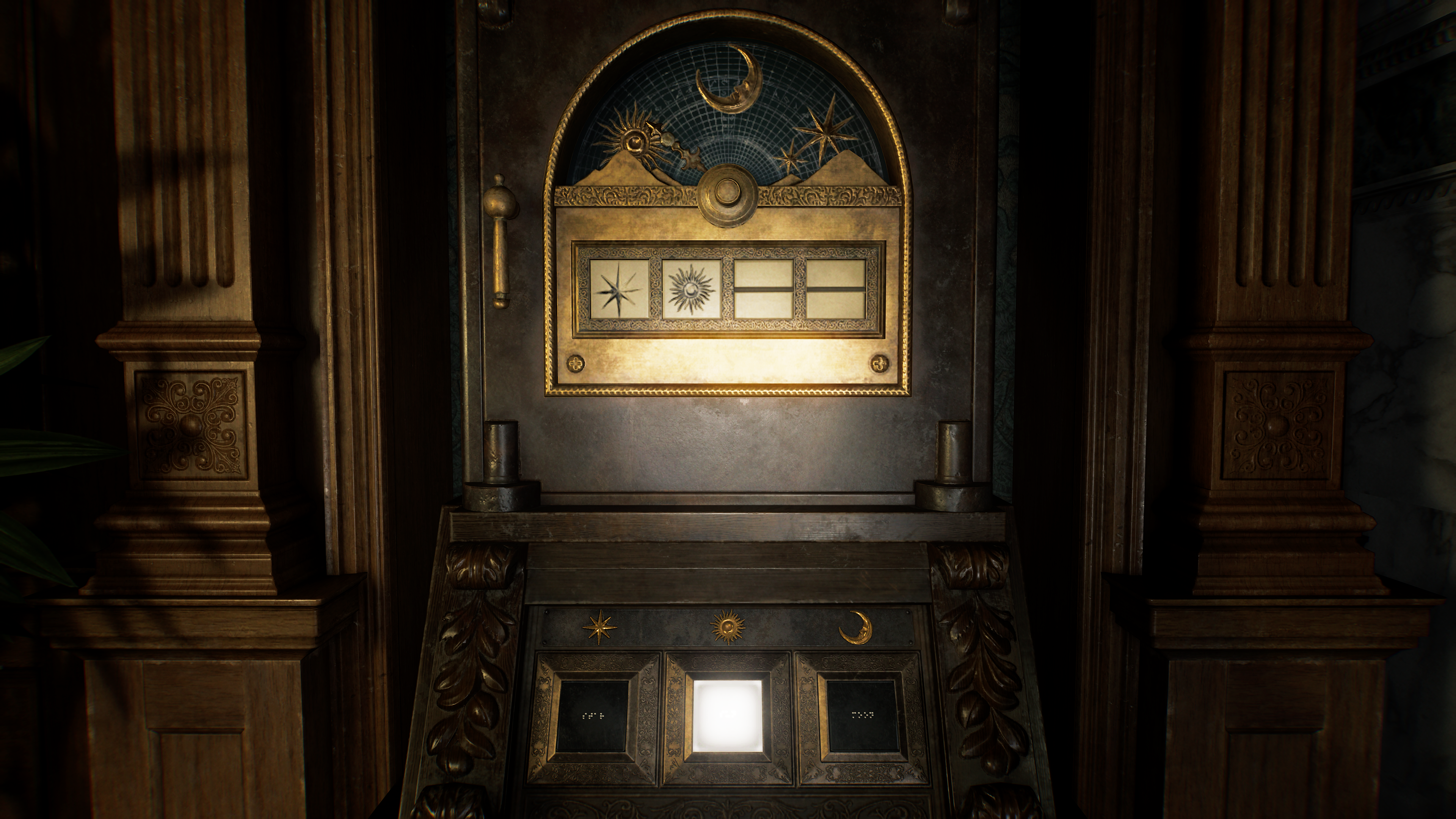
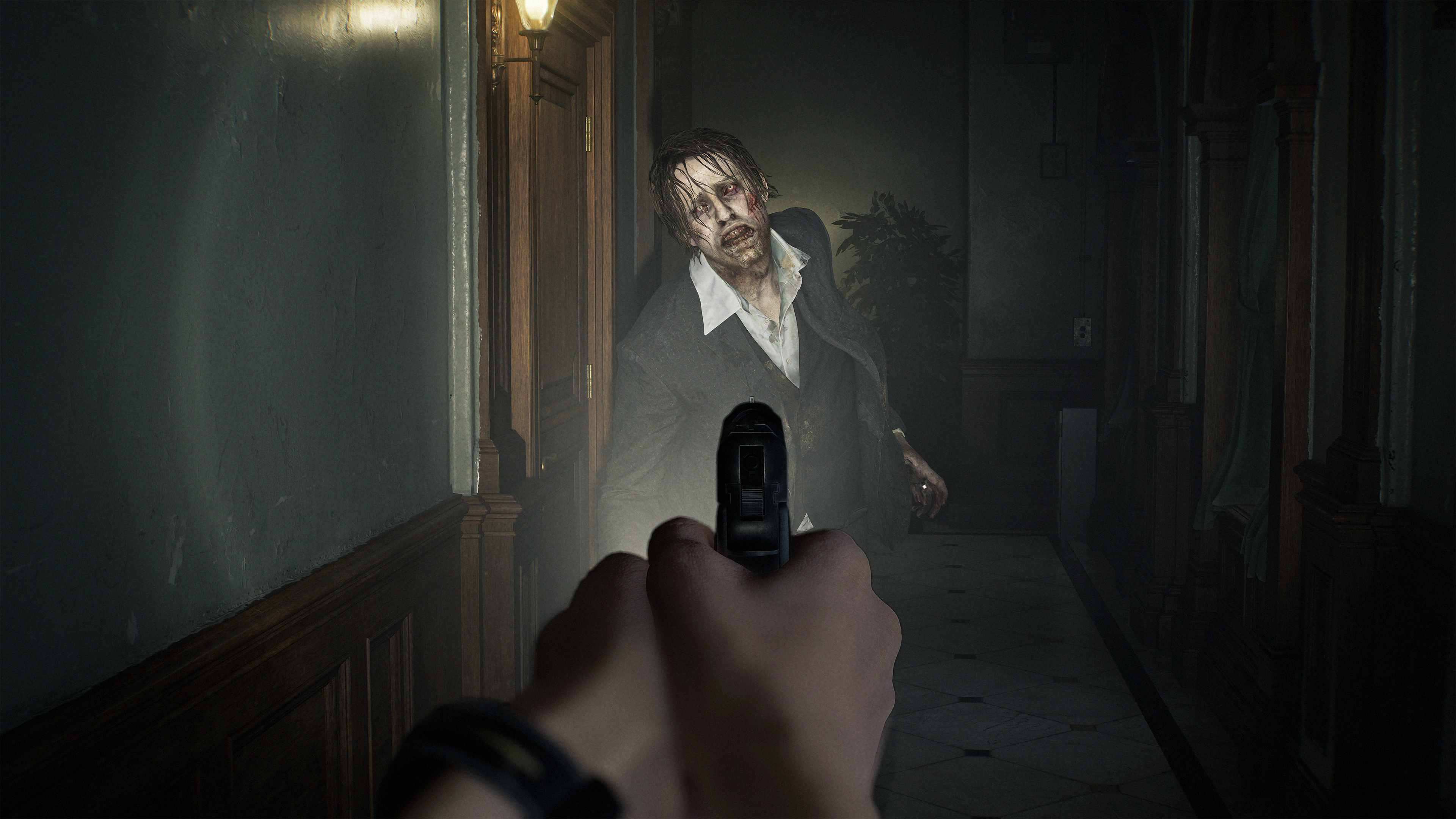
Being the 30th Anniversary title, Requiem has decided to bring back zombies. Experiments have been going on in the Care Center, and these new zombies have a semblance of their original selves still in there. They’ll frustratingly mutter things about their old jobs, stuck in a brainless feedback loop of their old tasks. It’s creepy and poignant, but also opens up entire areas for tackling in multiple ways. Resident Evil 2 Remake has trained me to run and gun, and those habits have never really left. I never want to stop moving, so I play quickly and make split-second decisions at every moment.
Here’s a scenario. The top of the staircase I’m on has about three zombies at the top. Okay, how’s my health and ammunition? Decent amount of health, but only two bullets and one restorative item. I need to get up there, though. If I sacrifice a single hit, I can likely manage to make it through without wasting any ammo. Or maybe I can get my aim perfect, shoot a zombie in the head, and shove it into the other zombies to clear a path. The timing of it would be tight. What if I missed? There might be extra resources up in that part of the Care Center, which would make the risk worth it. But if there isn’t, there might be a progression item. Or maybe a shortcut. That risk is exciting to me, and I love having to live with those gambles. Sometimes that involves engaging with the stealth, but I found it fun to play dangerously and see what I could get away with. Every area has a unique stalker as well, that you might randomly run into to throw a wrench into your plans if they happen to be in the same area as you.
On my second playthrough attempt, I tried a more stealth-focused approach and was able to see every room in an entirely new light. There’s likely a way to sneak around every single threat in the game if you play your cards right. A zombified chef in his kitchen is the stalker for the first area, and in his first encounter, I decided to alert him with a magnum shot to run past him. He didn’t really find it too funny, but in the confusion, I was able to slip by him without issue. Risk and reward. For those more cautious, you can wait him out and slowly push a cart of blood blocking your way to the exit when he’s not looking. It’s pretty tense to push it slowly and back off when he turns back around to get more blood out of it.
Speaking of blood, that’s actually used as the main crafting mechanic for Grace. You can gather infected blood from corpses around the environment. This can be used to make crucial items that can give you an edge, or even upgrade her stats. These also have a risk-reward element to them, though. You’re vulnerable when you get blood, and you can only hold so much at a time. Wasting time to go collect some and bring it back to a safe place to craft can strain your resources. I always found it worth it, but as we’ve already discussed, I’m a glutton for punishment.
To make matters worse (better, in my opinion), you’ll find that dead zombies will eventually turn themselves into Blister Heads as you progress through the game. If you remember Resident Evil Remake’s Crimson Head mechanic, this is the triumphant return of it in the series. If you decide it's worth it in the short term to kill an enemy to clear out a hallway towards progress, circling back through it later will see that zombie back and stronger than ever. If you kill that one, its head will explode and infect other nearby zombies into Blister Heads. You can craft a resource to prevent this, but that needs to be used decisively. Another split-second decision onto the pile in the heat of the moment. The stress of juggling all these options as you navigate the unknown horrors of the situation in your first run is simply delectable.
I think the fact that the Care Center is designed for those two different kinds of Resident Evil players is brilliant. As long as you solve the puzzles to progress, the game doesn’t really care how you do it. There’s little to hold your hand here, and progress needs to be figured out solely by your own instincts. You need to find the items you need to accomplish your vague objectives, narrowing down how and where to do that. I don’t think long-time fans will find this any easier or harder compared to usual, but the way it mixes and matches the formula from the distinct eras of the series makes for a compelling iteration that I think will play well.
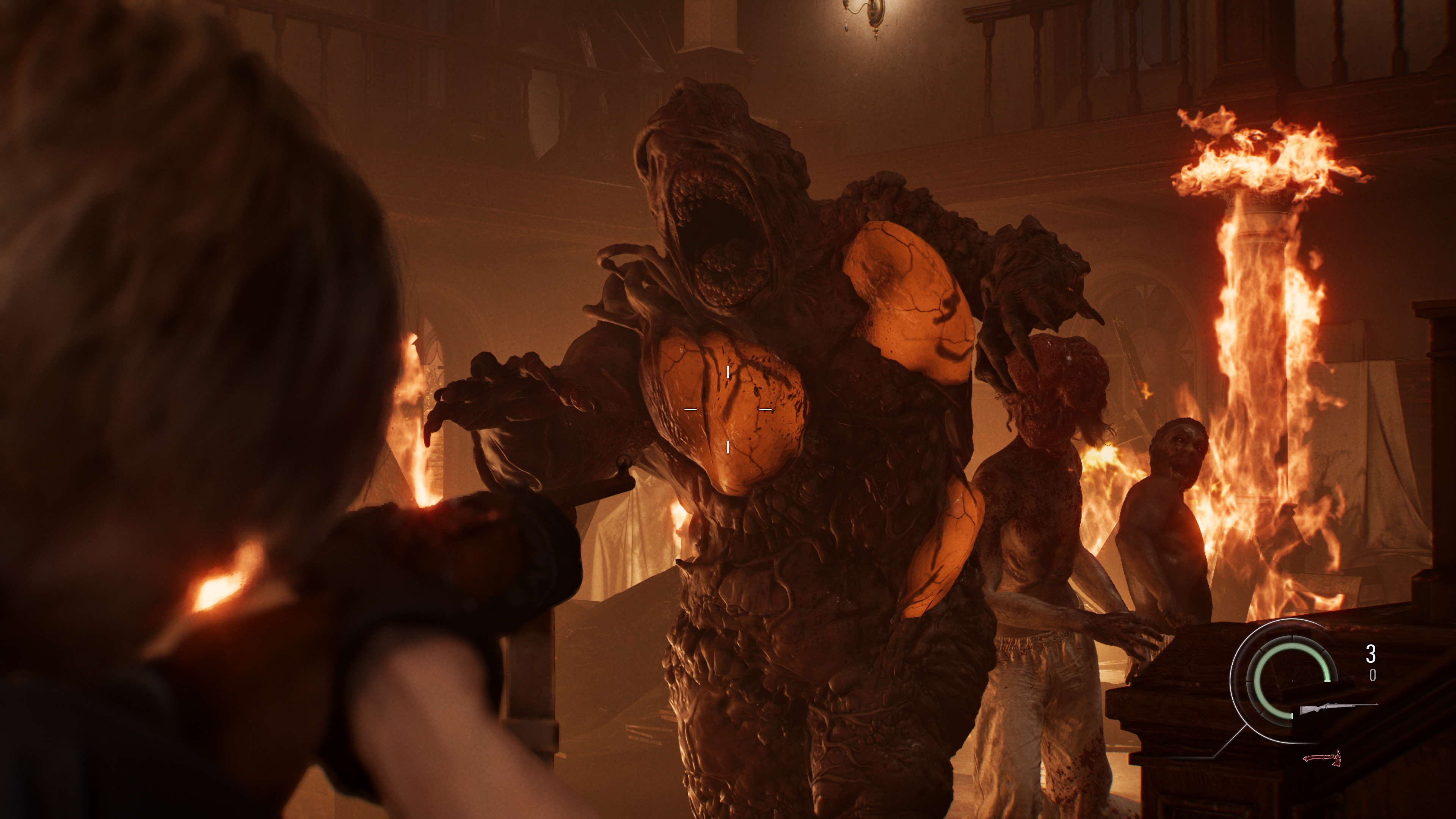
Leon’s segment of the game is where things continue to build off of the Remake gameplay style, specifically RE4. Resource management isn’t a big concern, shooting hordes of zombies good and dead are. You have upgradeable guns, gear, and are incentivised to kill as many things as possible. This is the horror-themed action game kind of Resident Evil I love in equal measure. It’s the release of tension needed from Grace’s section, and it becomes just as engaging to work through in its own right.
You’ve got all the context-sensitive kill animations, dweeby one-liners to himself (one of my favorites involves him clearing out a room of zombies and saying “guess that’s my cardio for the day”), and split-second parries. You are always moving, always killing, and always striving to improve. The way tension is delivered to the player is by flooding areas with so many enemies and testing your crisis management skills. You need to be somewhat mindful to stock up on bullets and healing items just to stay alive, but the game does a good job of always giving you just enough to surmount anything if you play it smart.
From a character perspective, Requiem lives up to its premise of revisiting the past. Grace is deeply traumatized by witnessing her mother get murdered in front of her. Notes and logs you find strewn about the game paint a picture of someone who never got over it. She doesn’t go out much besides work and home, filled with anxiety at the thought of going outside of her comfort zone. It makes sense then that she is overwhelmed by the zombie outbreak in the Care Center, and the events of the game give her a chance to overcome those thoughts and feelings. Her story is about working through her trauma, and trying to make amends for others in ways she feels she failed her mother. She's immensely hard on herself because of this, and her arc was satisfying to see play out.
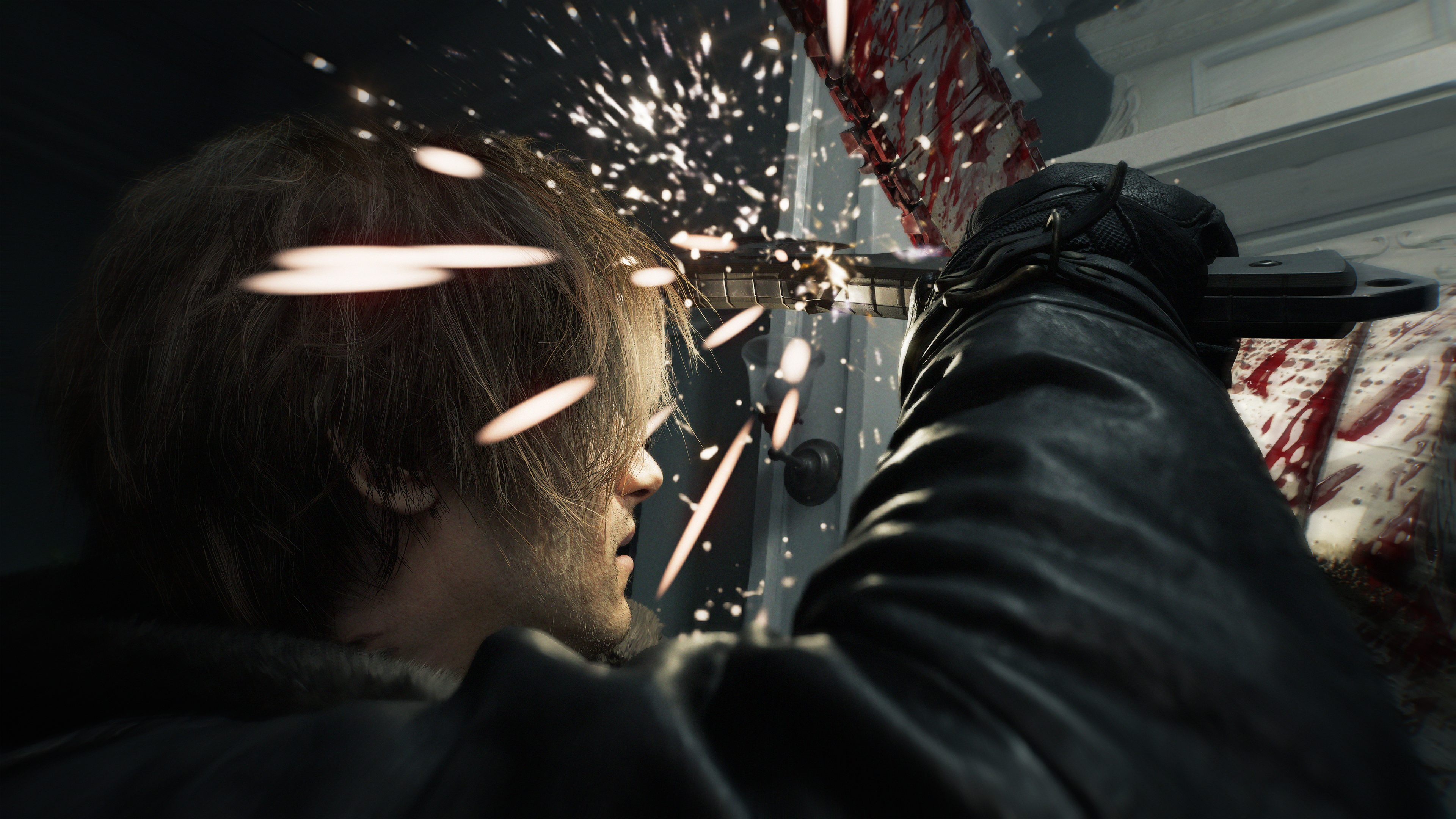
Leon, the wisecracking action hero, has moments to genuinely reflect back on the horrors of what took place in Raccoon City. These can work absolute wonders, building off story threads established in the remake timeline where the events of Resident Evil 2 have clearly bothered him more than he lets on. He’s my favorite character in the series, and it’s great to see him drop the cool guy routine to be honest with himself. His time is running short, and he has a lot of regrets to work through. His visit down memory lane he’s forced to relive isn’t pleasant, yet his established determination has him press through.
I don’t mind the writing pulling obscure details from past games to connect to present incidents, I even expect it. Every Resident Evil loves to pull back the curtain and explain how this seemingly isolated incident has major secret connections to events of previous games. I adore the complex lore of the series, I have no qualms with what they do with it here. Where I think nostalgia as a focal point in Requiem starts to ring hollow is in the imagery and iconography as it reaches its conclusion. Especially coming off a trilogy of remakes that already has kept the series past so fresh in our minds because of recent remakes.
Ultimately, I wish Requiem didn’t fall back on the familiar in key moments as it takes me down its own version of the famous third act horror roller coaster. As much as I adore the gameplay in both campaign’s, Leon’s shows a shift in focus for the game design. Requiem is at its best when it's innovating on old ideas, as any game in a series celebrating its past should do. Taking something iconic, and presenting it in a fun new way. At a few key moments though, it just plays the hits straight. I'm not trying to claim the entire end game is flatly uncreative, but that makes it all the more frustrating when fanservice gets in the way of innovation. It happened enough for me to notice.
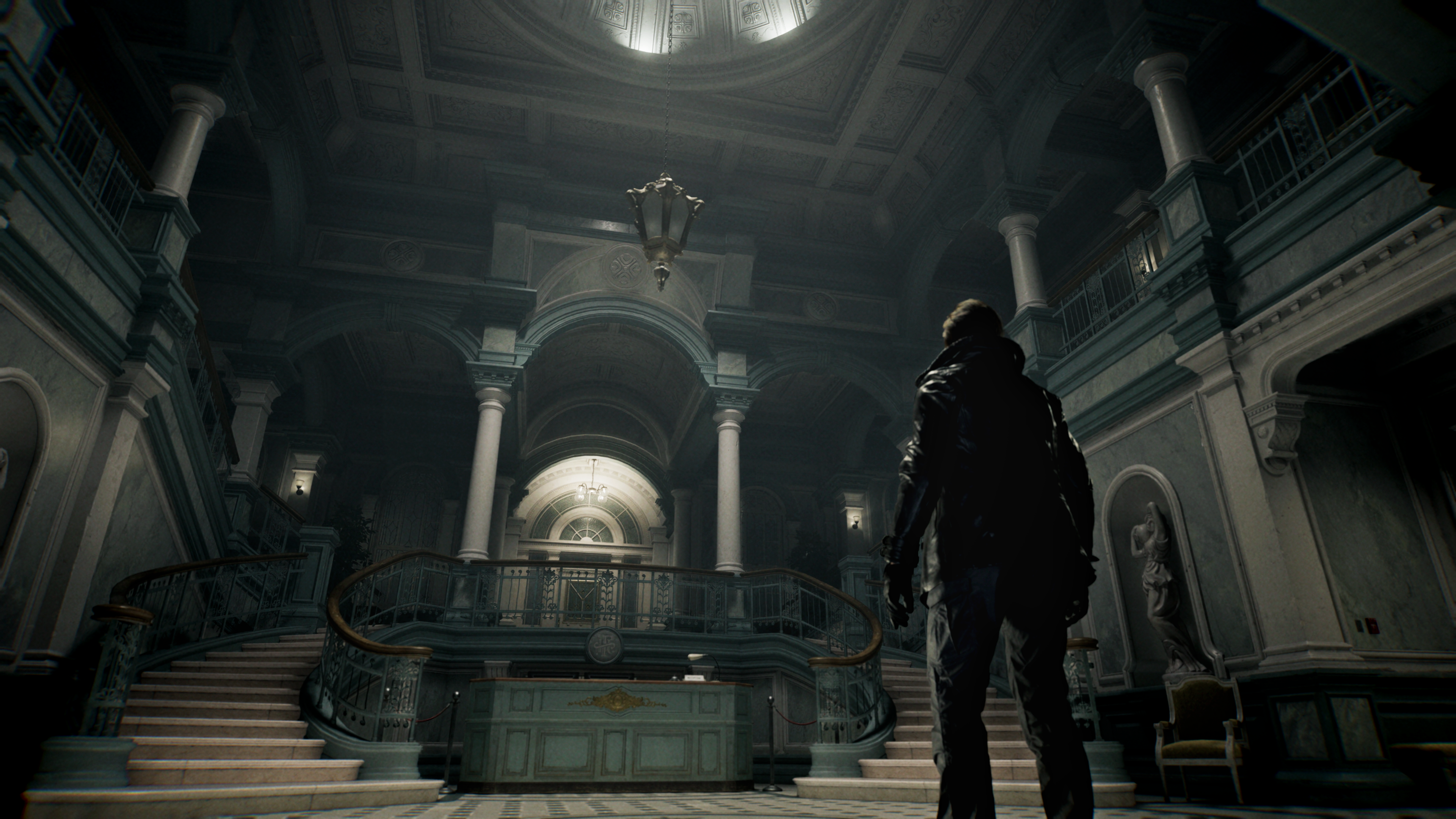
Yet, I’m not pretentious enough to think all fanservice is bad. In fact, my favorite area in the game is found in this latter half. It’s a place that only gestures at the familiar, while mostly being filled with new gameplay setpieces and open-ended progression. There's a sequence that's so original and fun, that I think many will find it to be a highlight of the entire game. I couldn’t get enough of it, and if the game adds a Mercenaries mode in a future update I sincerely hope it takes me back there. There's even a particular fanservice rich encounter that is taken so far that I couldn’t help but be won over by the audacity. If Requiem's view of fanservice was always this playful, I'd have no issues. Where these tend to falter though is when the game doesn’t feel like it has its heart in it.
When trying to make peace with the story of a Resident Evil game, it’s important to understand that these have never strived to be high art. The series is packed to the brim with outlandish events and awkward missteps across the long running canon. This doesn’t mean Resident Evil is incapable of saying anything poignant. The contrast between the biting social commentary and B Horror camp is why this series is so beloved. There’s plenty of that to go around here. What I feel detracts the most from one of these stories is if it can’t meaningfully keep me surprised, emotionally invested, or entertained. Requiem’s story started to lose me at the very end, leaning a bit too much into things I’ve seen before. I like it overall, but there are definitely parts that feel like wasted potential.
As a long time fan, Requiem has had me assess what exactly I love so much about the series. That isn’t meant to be a snide condemnation of this ninth mainline entry. On the contrary, I think most of Requiem works pretty well. It’s a fascinating game with high highs and a few low lows. So, a Resident Evil game. It’s a fun ol’ time that I just can’t get out of my head, and will already be planning to replay over the weekend. Requiem is a celebration of the two distinct gameplay styles that have defined the modern era, even if they don’t feel fully cohesive. Two games in one, bound by the character you play as, is an experiment that works for me. Cohesion be damned, I am being fed two cakes and loved eating them.
I didn’t even realize until after playing it that Requiem was supposed to be the 30th anniversary title. I’m almost willing to give the indulgence in nostalgia a pass under this context, even if I would have preferred for it to be more bold. Yet I’m curious if the gesturing towards this being the series closing the book on its past will hold weight in the years to come. If this is Resident Evil telling its longtime fans that it’s ready to fully move on from Raccoon City, I think it’s a decent way to do so. If we immediately dive back into the back catalogue to bring another game into the RE Engine, that’ll cheapen what this game is trying to do. I’m ready for Resident Evil to move into exciting new territories, and I hope Capcom agrees.