

Kyoto Xanadu sets the stage for Falcom's next franchise, but feels like a mere dress rehearsal
There was exactly one thing I'd hoped to find when I played Kyoto Xanadu; a game secure in its own identity. If you've played as many Falcom games as I have, across the broader scope of their history, its continued to become a problem that essentially everything their company puts out now abides by the same framework. Sure, Ys and Trails have different gameplay on paper - but the broad strokes? The chapter structure, the way sidequests are handled, and how completion is doled out? If the games aren't copying each other's homework, they're rewriting what their own series had already done a decade prior.
Back in 2015, Tokyo Xanadu released on PlayStation Vita in Japan. While it was far from the first Falcom game to adopt this trend, it still remains in my mind as the worst offender. The overall structure is textbook Trails; storybeats and character archetypes sometimes lifted directly. Maybe if I didn't have familiarity with the games it was referencing I would have liked it better, but all I felt was a bland amalgamation of plot points that had been executed in a far more interesting manner in earlier games. Most of all, I just didn't like Kou as a protagonist. He was boring, and what little character development he had was thrown away in the 11th hour by an asinine true ending that even Falcom themselves realized was a mistake.
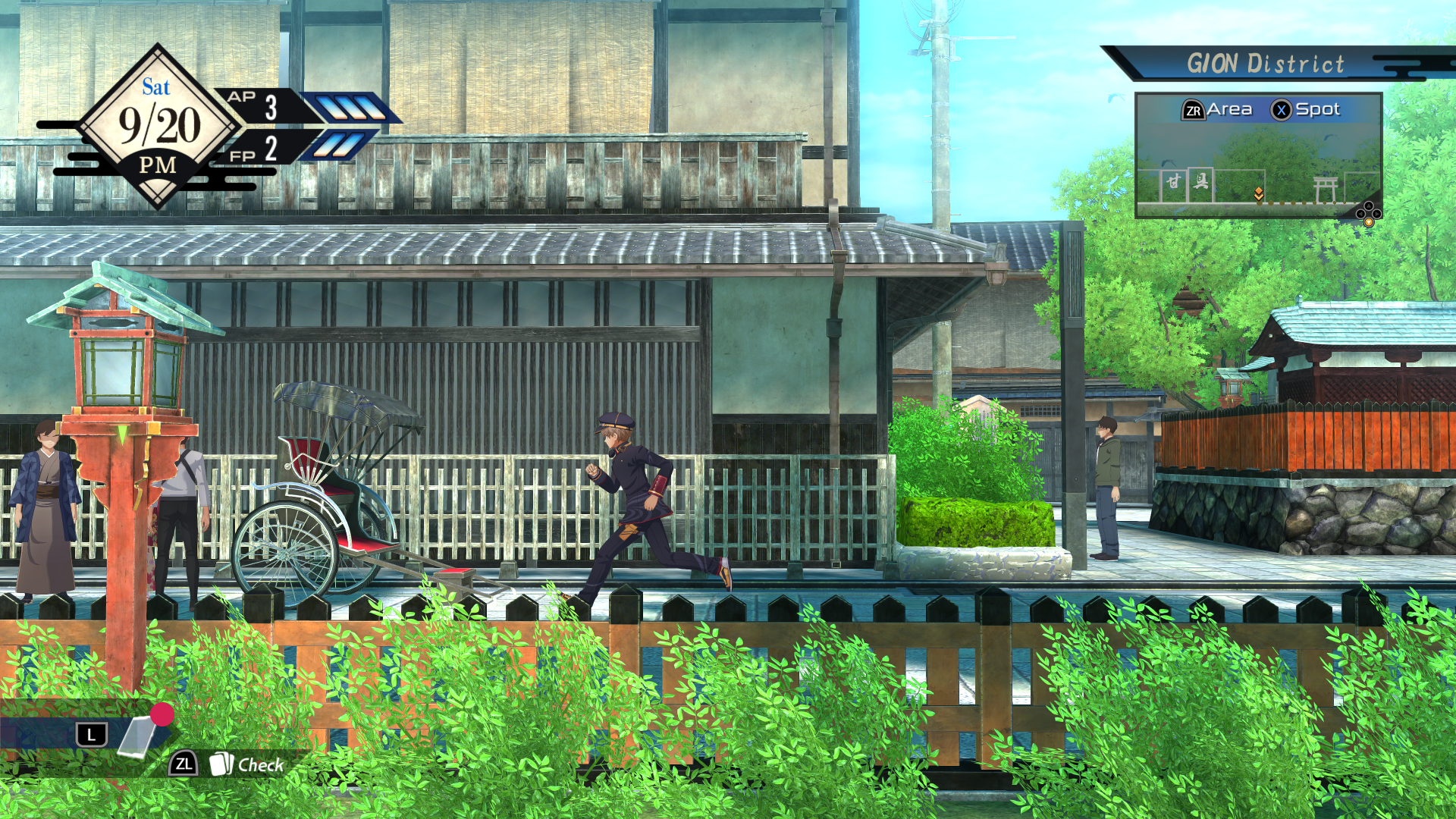
Kyoto Xanadu manages a much better balance on all fronts. First and foremost, Rei is a markedly better protagonist than Kou ever was. Even that feels like it's downplaying things - I'd go as far as to say that Rei is one of the best protagonists that Falcom has ever written. The same goes for your other party members; Sena, Kazuki, Fuuka and Rului are all delightful. Their individual character arcs - at least, the ones that get resolved - are great, and I'm left excited for how they could be expanded upon in the future if Falcom so chooses.
On the gameplay front, Kyoto Xanadu is a bit trickier to explain. This is, of course, a good problem to have. While there are still elements that you can point to that are reminiscent of other Falcom games, Kyoto Xanadu is the most refreshingly different Falcom project since The Legend of Nayuta. Most of the game takes place with a VN or ADV structure; players have a certain number of Action Points and Friend Points to spend each day; FP allowing you to interact with different NPCs to grow your bonds, and replenish their Support Cards, while AP letting you explore Xanadu, interact with facilities that can increase your "Soul Level" or base stats.
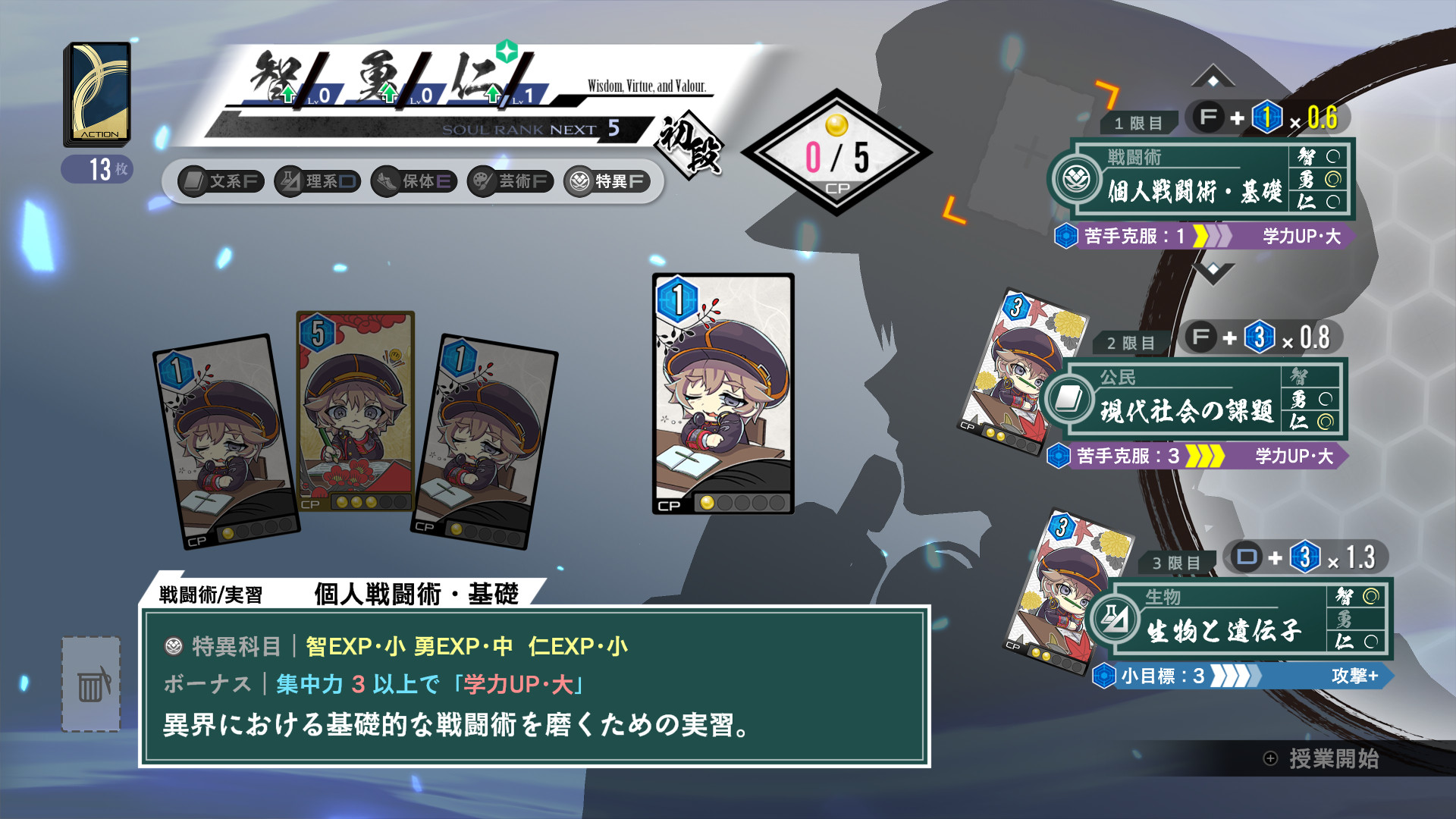
On school days, Rei has to juggle his attention as exemplified by concepts drawn from his deck of Action Cards corresponding to how seriously he can handle a given subject. More effective cards cost more Concentration Points, which means early on especially you'll have to carefully decide when to use specific cards and where. It's a neat enough system, and min-maxxing your specific Action Cards and Support Cards to maximize your academic and Soul Level stats is neat; especially once you gain access to your additional party member's cards, with their unique abilities.
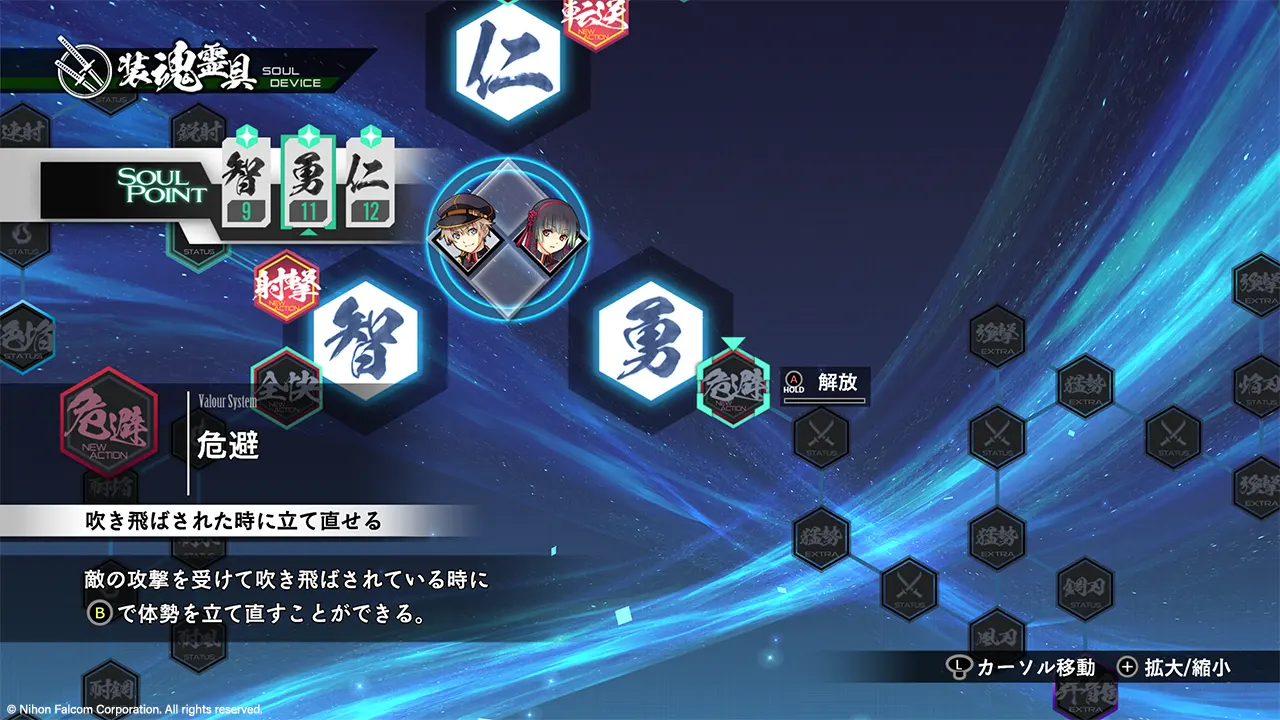
On paper, the skill tree for your three virtues tied into your Soul Level is interesting, but I don't know if the game does enough with it to keep it engaging for the full length of the playtime. I also desperately wished that the cursor could have been made to move faster; especially later on when all of your unlocks are at the fringes of the skill tree, shifting from one end to another got annoying fast. It just felt like pointless busywork - going through the motions when the game itself hadn't changed much in the past dozen or so hours.
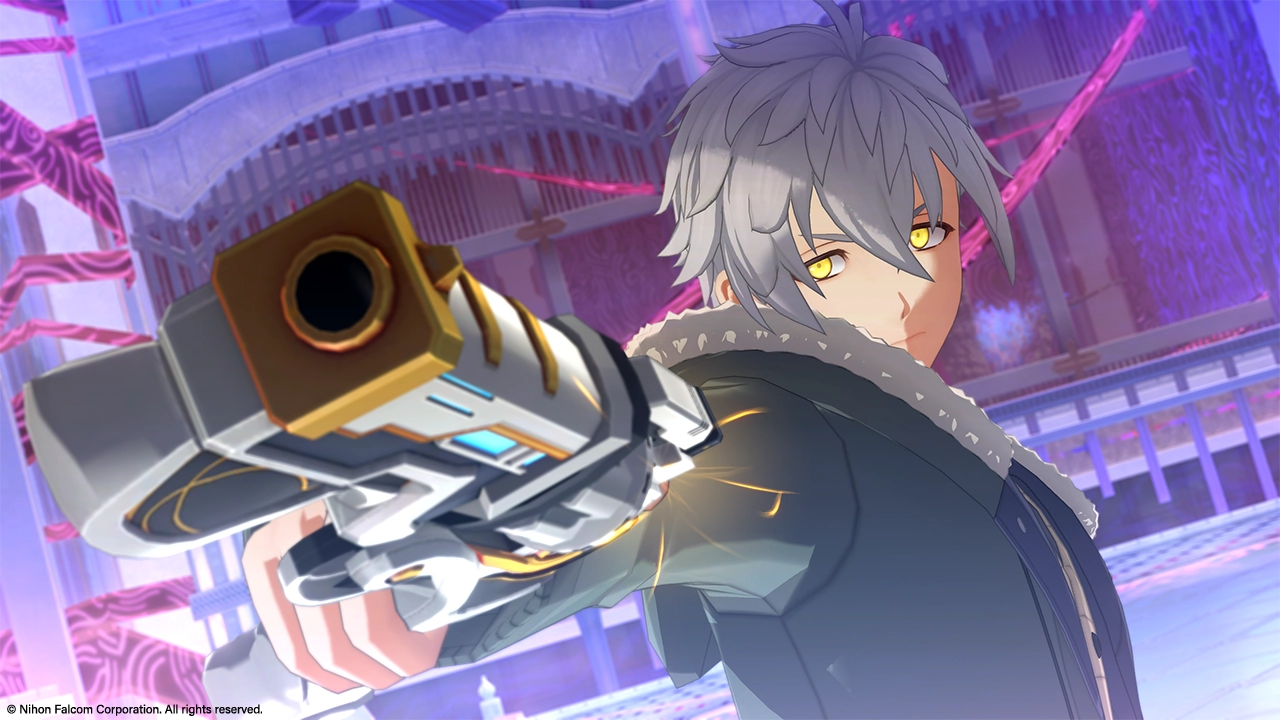
This is the crux of the issue with Kyoto Xanadu; a solid foundation, but stretched out to the point where that foundation becomes increasingly bare. Dungeon-crawling in Xanadu is interesting enough, but it's only in the latter half of the game that the game starts to experiment with tying multiple floors together in an interesting way. The McGuffin that prevents you from lingering too long is understandable, but the end result is that Xanadu, too, ends up feeling like a checkmark well before you hit credits. Combat starts feeling far too basic 10 hours in, let alone 30; a simplified musou-style combat system with an even heavier reliance on parries that modern Ys ever has.
The game's story is much the same; starts off strong, but it just feels like it meanders far too much starting around the halfway point. A plot certainly resolves, but much like Trails From Zero it's abundantly clear that things aren't really over yet. Whether that means we'll be seeing Kyoto Xana-Two in 2027, some sort of DLC, or an expanded re-release that will cement the idea that you should never buy a Falcom game at launch is yet to be seen. My money would be on a sequel; they've mentioned a desire to build Xanadu up as a series in preparation for Trails' eventual conclusion, after all.
Maybe whatever comes next will have me singing a different tune. While I'd hoped Kyoto Xanadu would immediately make me fall in love with a new Falcom universe, it feels like it was all just a dress rehearsal for the real debut performance to come. I'm invested enough to stick around for it, but I can't help but wonder how others will fare? We'll simply have to wait to find out. Kyoto Xanadu is out now on PlayStation 5, Nintendo Switch, Nintendo Switch 2 and PC (Steam) in Japan; a western release has been announced, but no release date or publisher has been confirmed as of the time of writing.