

Demon Kill Demon ~Yomi 1984~ is a celebration of all of Experience Inc's history, and is all the better for it
If you're reading this, it probably comes at no surprise that I'm a bit of a DRPG aficionado. To say that I love Atlus' Etrian Odyssey titles, NIS' Labyrinth of Refrain and Labyrinth of Galleria, and - yes - a number of Experience Inc's catalog, including games like Stranger of Sword City and Undernauts: Labyrinth of Yomi. Despite some fairly major qualms, I'd say that Demon Kill Demon ~Yomi 1984~ manages to stick the landing well enough that it earns my recommendation to fans of the genre.
Dungeon RPGs, or blobbers, exist on a sort of sliding scale. At the best of times they're a bit of an acquired taste, and certain titles - Stranger of Sword City absolutely falls in this camp - they're actively hostile to the player, not merely asking but rather demanding them to fully engage with their various systems. Very rarely do RPGs ask you to spend so much time and effort deliberately building parties tailored to any and all situations they might find themselves in, up to and including level design designed to actively make the player's lives a living hell.
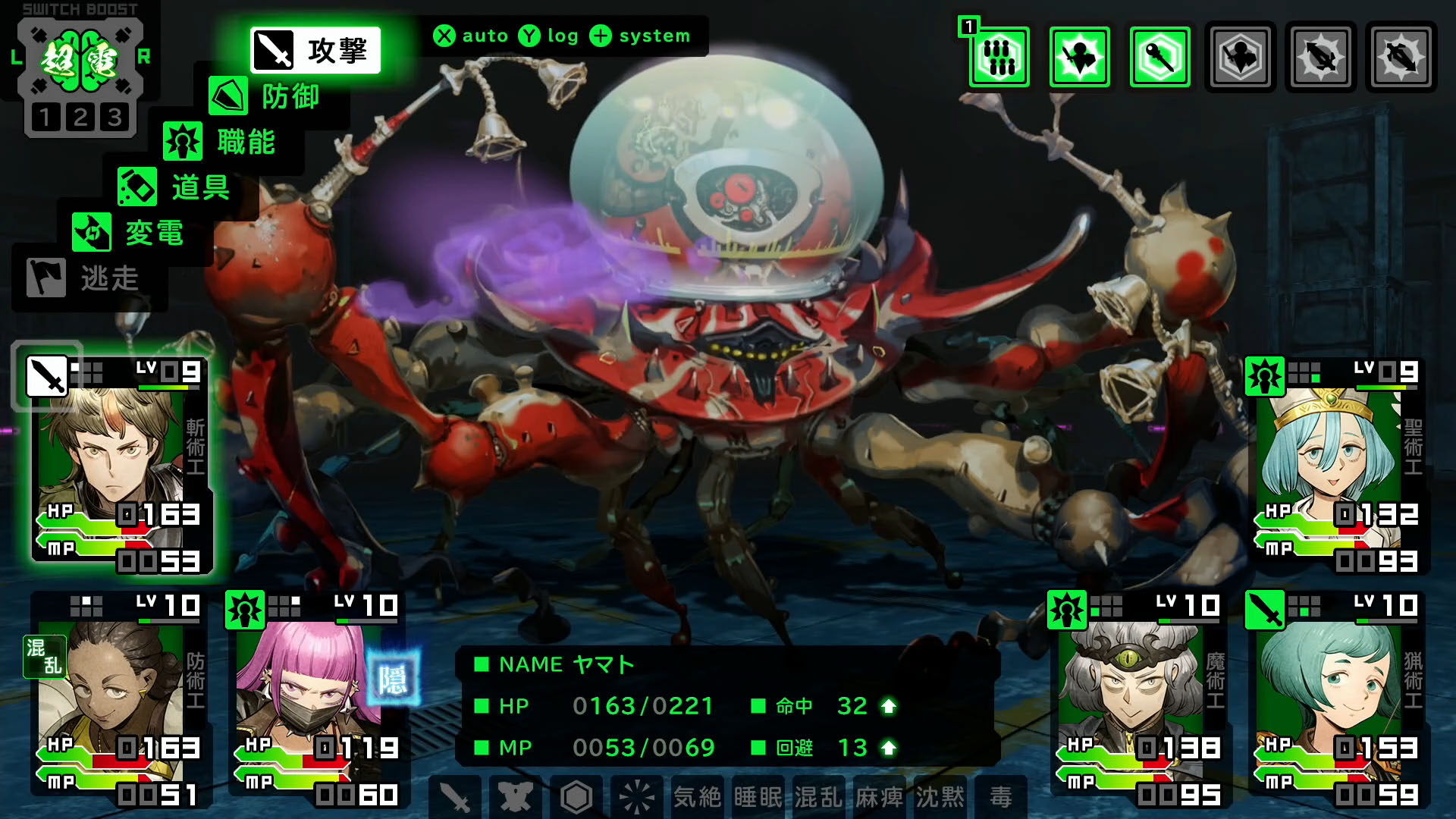
I mention this to clarify that much like Undernauts before it - which Demon Kill Demon is rather explicitly directly following up on that games' formulas, though it does borrow liberally from the other games in Experience's expanded universe - for the vast majority of its runtime, this game is absolutely not designed to antagonize the player in nearly the same way. It's very much a refinement and evolution of Undernauts, borrowing some elements from titles like Demon Gaze, and wrapped up in a presentation that encompasses much more of a story focus than some of their previous works.
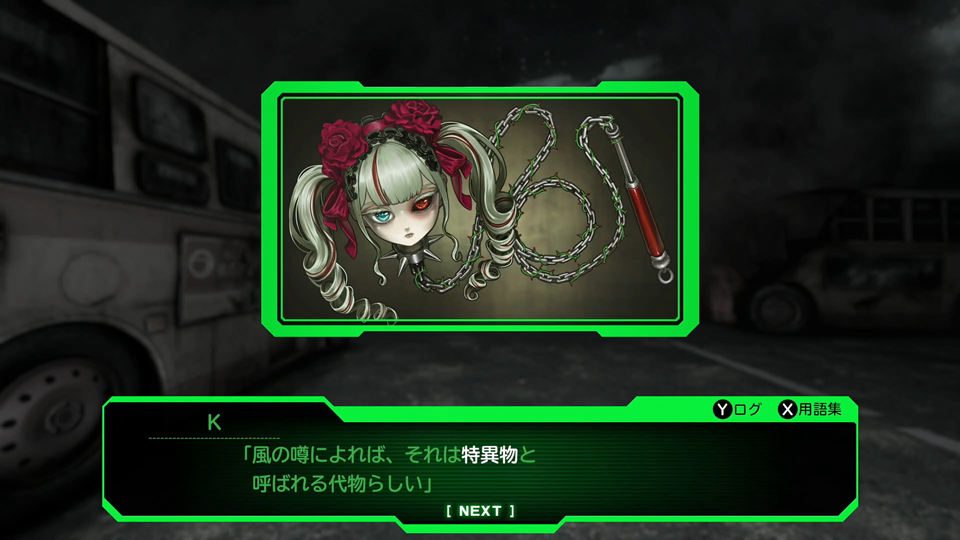
I'll defer to my original Undernauts review, rather than explain all of these systems - and my complaints - anew. First things first; treasure dungeons are gone. In their place are "Junk Dungeons", where players explore an abridged version of a previous dungeon from the first Undernauts. While in these dungeons, players' units have half HP - though the rest of their stats remain unchanged. Rather than being planted in place, enemies will actively chase you down - and the potential rewards skew considerably higher than whichever area you've entered the Junk Dungeon from. Clearing one will gift you an item directly referencing another Experience Inc game.
Per my original review, one of my greatest issues with the Treasure Dungeons were how they exacerbated my issues with the Flower system; the system itself remains completely unchanged in terms of function, but the way that dungeons are designed means that players are not using them nearly as often. Dungeons in the first half have designs that remind me far more of Death Mark; they use far less space, and are considerably more linear than their contemporaries in the genre.
Progressing through them entails speaking with NPCs and deciphering riddles far more than figuring out the physical way ahead. One benefit is that each of the game's dungeons in the first half feel quite different; even if the dungeons themselves don't lodge themselves in their memory as much as Experience's previous works.
This is, of course, a major change - and one that I'll cop to not feeling the best about, at least at first. Things do start to ratchet up in intensity towards the halfway point, but there's something funky going on with the game's structure. Undernauts was originally released in two halves back in Japan, with the postgame offered as a separate purchase entirely, though the western release did away with this entirely. On paper, Demon Kill Demon is the same; except in reality it's not the "postgame" that players purchase separately, but rather the proper meat of the game.
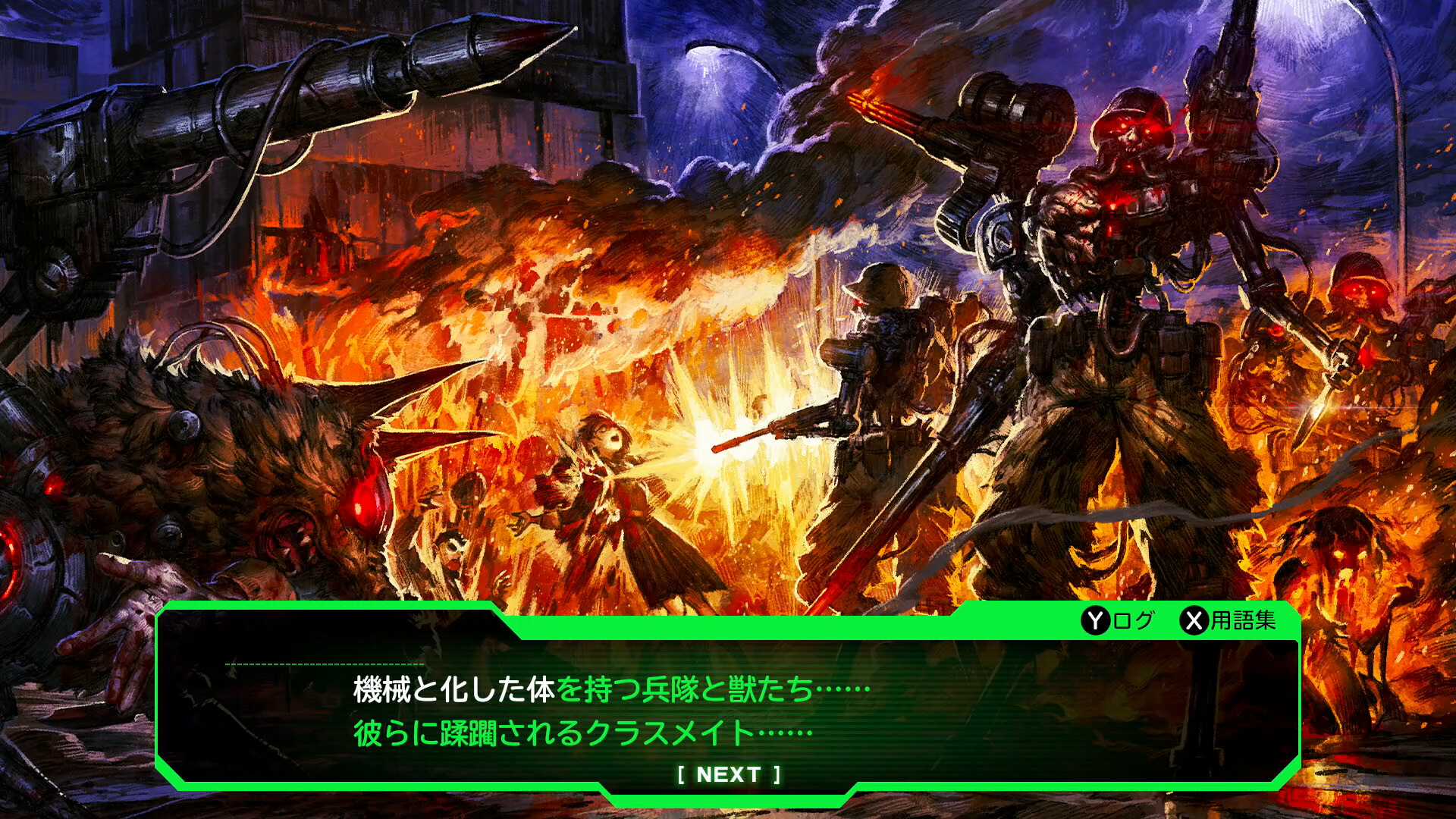
While the physical release comes with "both halves" of the game, if players opt to purchase the game digitally they'll hit the credits in about 20 hours with what is the most obvious cliffhanger in existence. Purchase the DLC, with the same cost as the basegame, and suddenly you start up right back where you left off - yet now the game's dungeons are longer, more elaborate, make use of more of the hazard tiles you would have expected from an Experience game. If I thought the first half was decent, but underwhelming, the latter half felt like the game I'd actually been expecting when I bought the game.
Undernauts' party customization was absolutely just a little too restrictive in retrospect. While the basic systems from that game are all the same, with unit progression limited to the option of whether to offer a unit a standard promotion or something akin to a cross-class upgrade, the new Chip system offers just enough of the proper unit customization I'd craved. Chips as an accessory offer additional stats, but more than that they come with a number of skills or abilities attached. These include class skills - you can give your wizard the ability to cast healing spells like a cleric, or maybe give your ranger the same ability to hide like a Ninja, or the ability for a Samurai to dual-wield axes.
It doesn't matter that the game doesn't quite keep up with this level of customization; every DRPG is going to have broken builds that trivialize the challenge. It just matters that this level of skill expression, once again, exists - I might even go as far as to say that it decidedly not being tied to grinding is a boon, even if other DRPGs that do tie cross-class abilities to grinding out from scratch offer more variety still. It's a good middle ground for a game that so clearly feels like Experience attempting to appeal to all of their fans with one release.
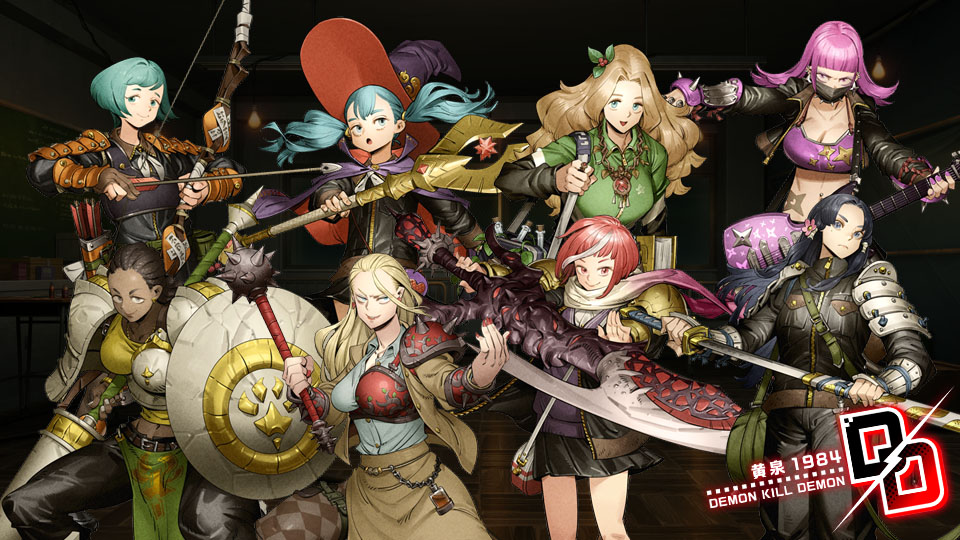
For a game with that unstated goal, it's almost impossible for me to determine whether or not that has been a success; I already liked their previous games, and not just one singular release. Do I think the game is better for the attempt? Maybe. While the earlier half of the game is restrained, I would imagine that for those that haven't played a DRPG before it may be successful at teaching them about how these games are played, and hopefully train them for the latter half of the game. Boss encounters at least were no cakewalk; they'll still have to learn how to swim, even if the pool as it were is more shallow than usual.
Normally, I would write about the game's story here - but I don't quite know how best to proceed. In terms of emotional response and breadth, Demon Kill Demon's narrative is pretty great. The themes of loss of autonomy - in terms of bodily autonomy, with the main character and other's Demonization, the subtext is obvious; only heightened by the fact that the default, and clearly, intended main character is a high school girl - is pretty strong, especially when it ties into Experience's recent strengths with body horror.
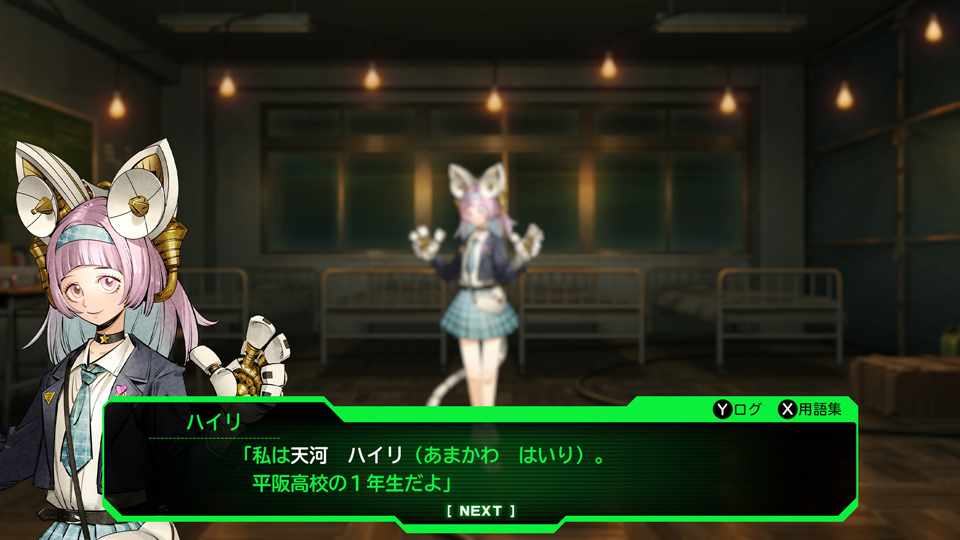
The thing is, and why I have my hesitations here, is that it's not just "bodily" autonomy that the story focuses on. As significant is the focus on Japan's own national autonomy; in the wake of the original Undernauts narrative, control over the Yomi District falls in the hand of a new company, controlled by international - read, American - interests. Characters repeatedly languish under the dread of having lost their autonomy over Yomi, and how this extrapolates towards the whole country of Japan having been "colonized". There are even moments where speaking to NPCs in dungeons that it is made abundantly clear that your character is meant to be expressing the same concerns.
I am not Japanese, but this does stand out quite a bit when just earlier this year Kyoto Xanadu offered an opposing take on a very similar premise. It also does not help when Undernauts itself outright acknowledges Japanese war crimes from World War II, even naming Unit 731 and condemning its actions. I am not saying that Demon Kill Demon's story is jingoistic, but at the same time I can't deny that at a minimum it certainly feels like it uncomfortably walks that line.
Walking this own tightrope of mine, discussing these themes, is similarly uncomfortable. I don't want to make any definitive statements about the intent of the game's development team; yet, at the same time I feel like I would not be doing my due diligence without mentioning this wrinkle. The "colonization" rhetoric especially draws immediate and obvious comparison to Japan's extreme right-wing, Sanseito - even though that very much feels at odds with the game's themes of bodily autonomy. On its own the story is still engaging, the themes do land more-or-less - I'm just left wondering if I might have read too deeply into matters, or if I'm right on the money; I do wonder if this may be part of why a localization has yet to be announced.
Demon Kill Demon ~Yomi 1984~ might still be my favorite Experience Inc DRPG, despite these issues - and it gives me hope that the inevitable follow-up can improve on this formula even more. I certainly hope so, as the market for developers working on DRPGs has shrunk considerably in the last decade. At one time, Experience Inc was contending with titans of the genre, and yet it feels that they're the only ones left standing. I'd truly hate to lose their output, too.
Demon Kill Demon ~Yomi 1984~ is currently available for Nintendo Switch in Japan. The game launches for PlayStation 5 and PC (Steam) in Japan on February 25, 2027.