

The God Slayer interview: Pathea Games' Zifei Wu on martial arts film inspirations, open-world combat, music, Switch 2, and more
Earlier today, Pathea Games showcased a new trailer for its upcoming open-world steampunk fantasy RPG The God Slayer and confirmed plans to launch it on PS5, Xbox, and PC (Steam). I had a chance to chat with Zifei Wu (Creative Director and Founder of Pathea Games) about The God Slayer based on a presentation and gameplay showcase last month. I discussed combat, music, learnings from the developer's My Time series, inspirations, coffee, and more. This interview has been slightly edited for clarity after transcribing.
RPG Site: Based on the gameplay video you've just shown, Assassin's Creed is obviously an influence for The God Slayer. I'm curious what else you looked at for the game's combat?
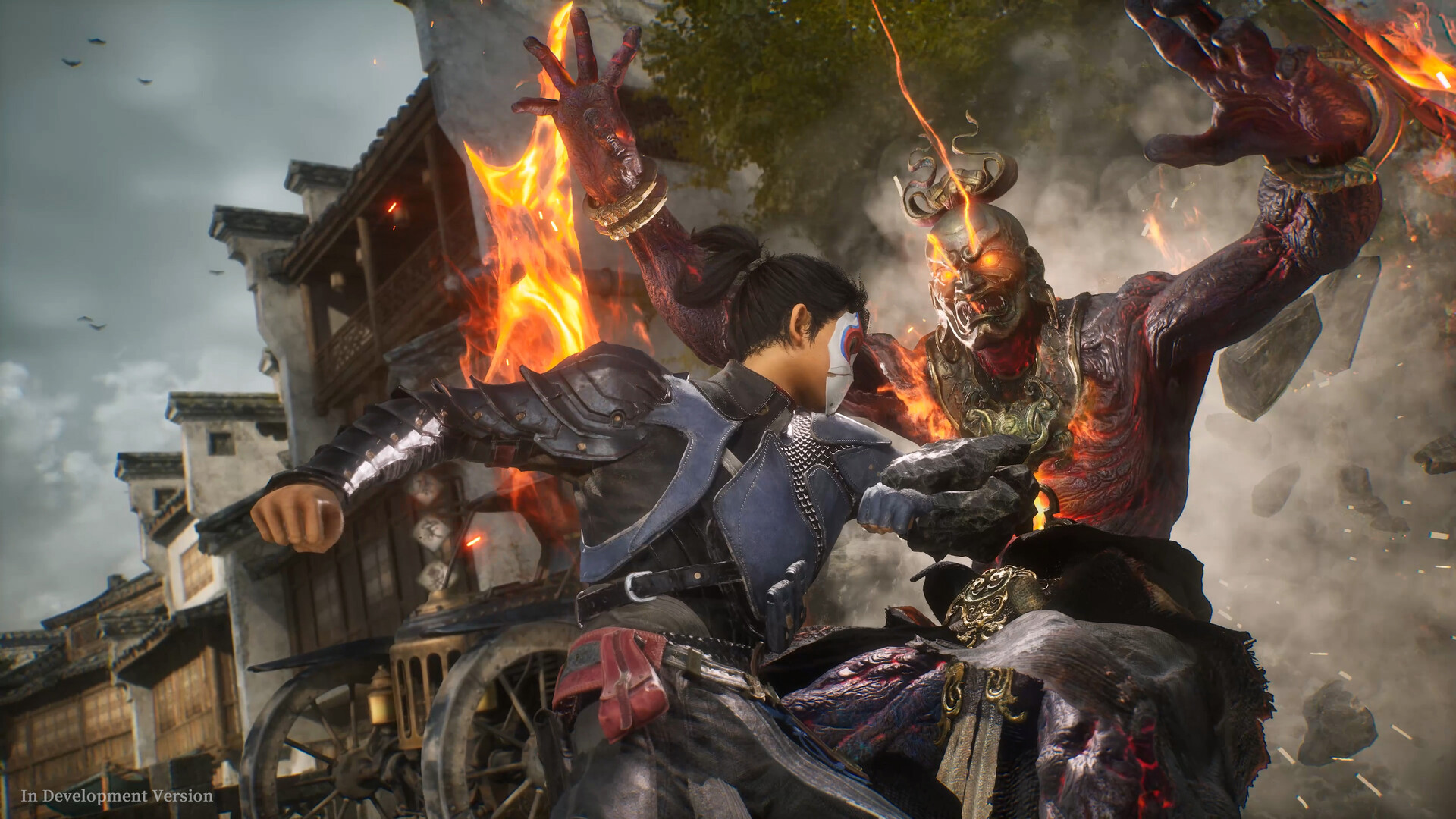
Zifei Wu: Actually, when we started making this game, we looked at a lot of different martial arts films, like Jackie Chan films, Jet Li films, Hong Kong cinema from the 80s. We just wanted to get the fighting style right so we also looked at a lot of different games like Spider-Man, Batman, and Sifu. We also looked at The Last Airbender, the cartoon as well as the live-action Netflix series. So we're talking about a lot of inspirations from different places, but what we wanted was a martial arts game with elemental powers that you can use and interact with.
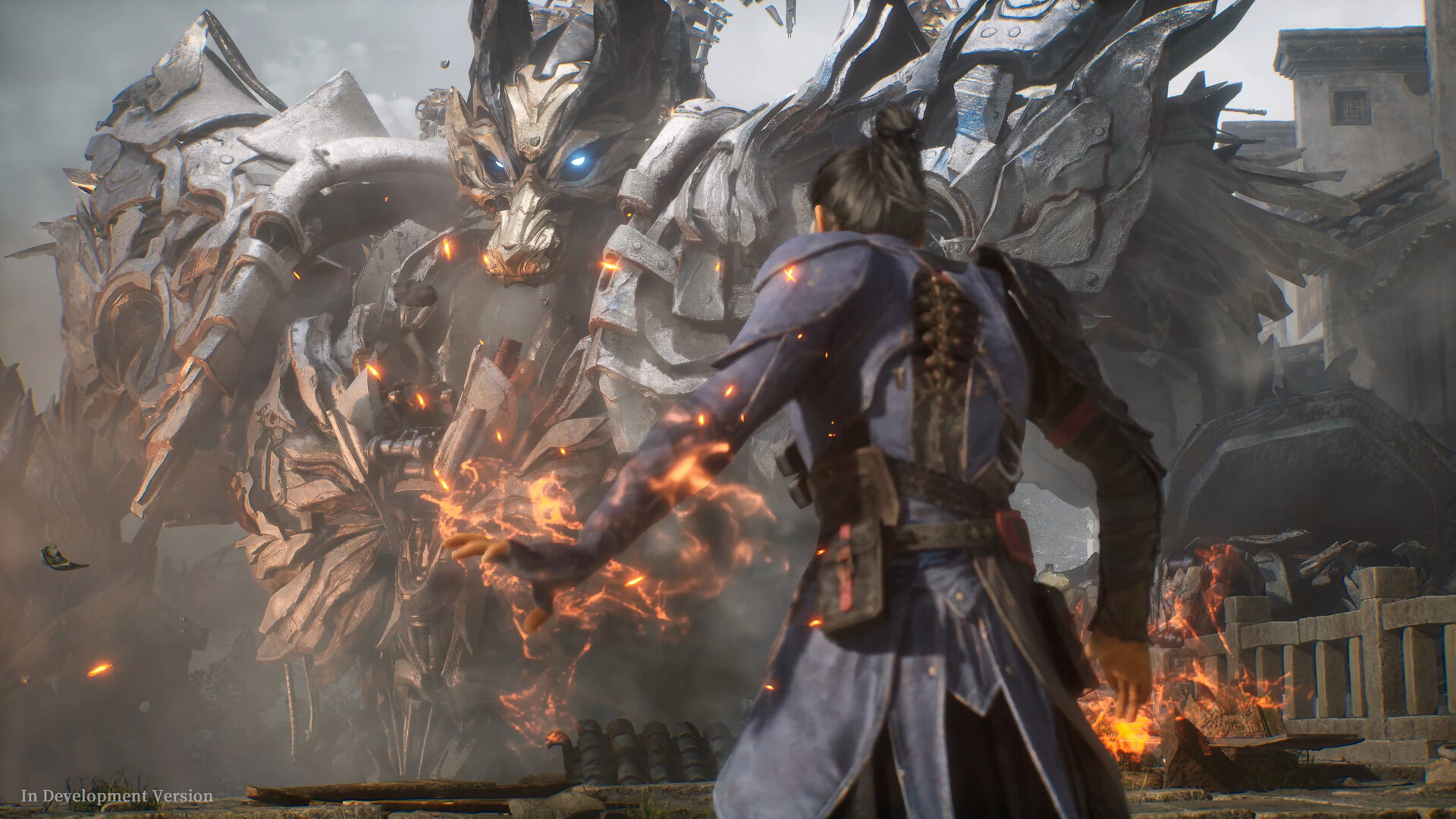
When using the combat system you can have a DIY style where you can mix and match different elements, and they have actual physical interactions like whatever you expect should happen, most likely will happen if you mix and match different elements. At first, we wanted to be able to have complete physical based elements so we even thought about how you could dig a hole in the ground and then you fill that with actual volumetric water and the enemies in that will just drown. Our programmers told us that it would be pretty hard to optimize for all the different platforms so we backed off of that idea.
In the end, we still wanted a very fluid, but rhythmic battle system where the casual players and the RPG players can button mash their way through a battle, but at the same time our action-based players who want to play for a challenge, can play using the challenge mode. We're gonna have two modes: the story mode and the challenge mode. In the challenge mode, you get hit twice and die. So we're gonna try to make it so that all types of different players that want to play this game will be satisfied.
Zifei Wu: Actually, when we started making this game, we looked at a lot of different martial arts films, like Jackie Chan films, Jet Li films, Hong Kong cinema from the 80s. We just wanted to get the fighting style right so we also looked at a lot of different games like Spider-Man, Batman, and Sifu. We also looked at The Last Airbender, the cartoon as well as the live-action Netflix series. So we're talking about a lot of inspirations from different places, but what we wanted was a martial arts game with elemental powers that you can use and interact with.
When using the combat system you can have a DIY style where you can mix and match different elements, and they have actual physical interactions like whatever you expect should happen, most likely will happen if you mix and match different elements. At first, we wanted to be able to have complete physical based elements so we even thought about how you could dig a hole in the ground and then you fill that with actual volumetric water and the enemies in that will just drown. Our programmers told us that it would be pretty hard to optimize for all the different platforms so we backed off of that idea.
In the end, we still wanted a very fluid, but rhythmic battle system where the casual players and the RPG players can button mash their way through a battle, but at the same time our action-based players who want to play for a challenge, can play using the challenge mode. We're gonna have two modes: the story mode and the challenge mode. In the challenge mode, you get hit twice and die. So we're gonna try to make it so that all types of different players that want to play this game will be satisfied.
RPG Site: One more thing I noticed from the gameplay showcase is that there was a lot of interaction with the environment during combat through QTEs to pull out windows and more. Was environmental interaction a focus for combat?
Zifei Wu: Yes, because we're basing this off of East Asian meteorology so you have fire, earth, water, metal, and wood right?
So for that to have an impact on the gameplay, we thought about, again going back to the rhythm of the combat, if you arrive into a combat area, what we want first is for the player to pick up whatever they are able to pick up and toss that at the enemy, or interact with that elemental object. It's based on those four or five types of elements that you can use.
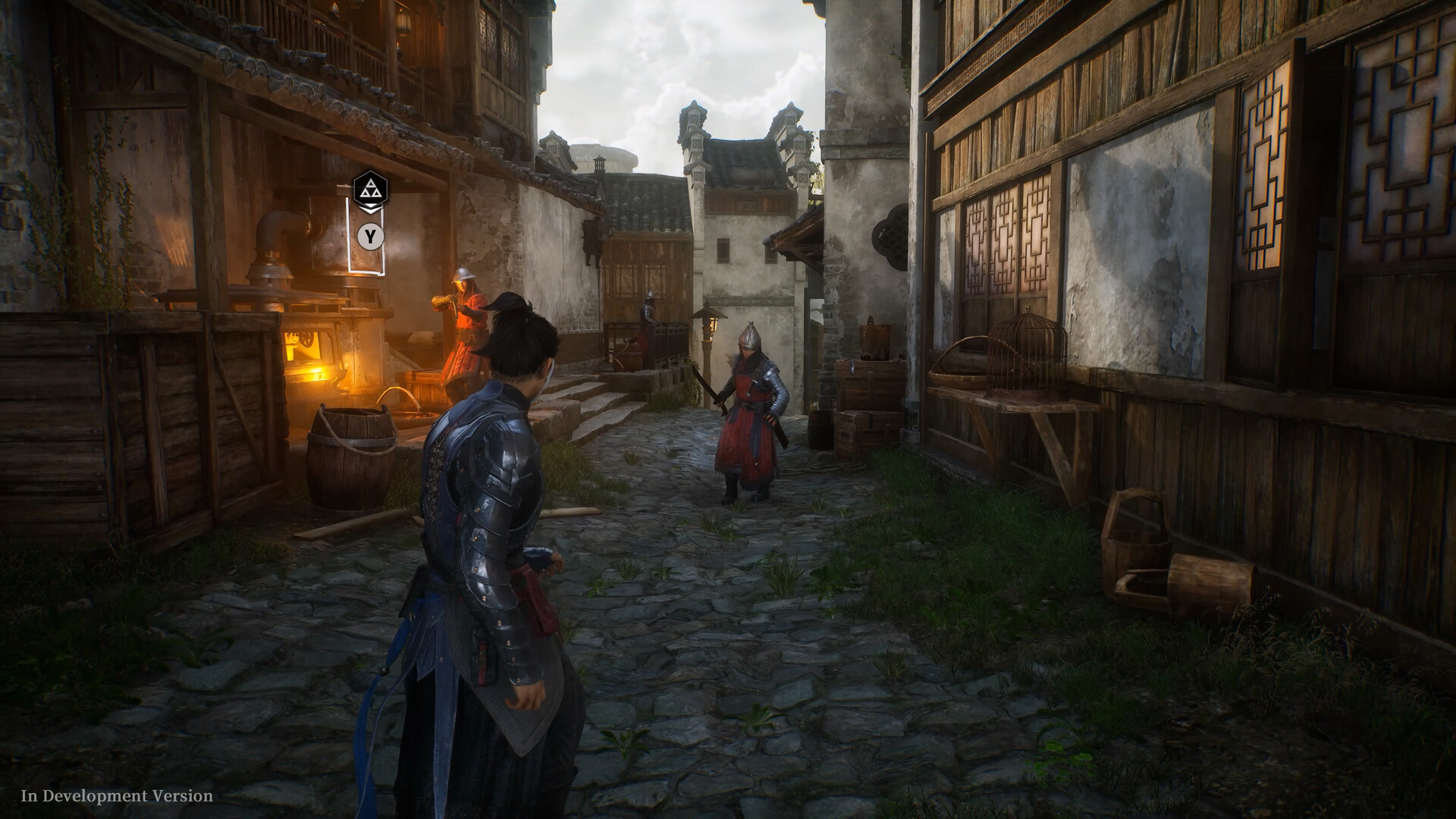
We place a lot of those objects around the world and when you walk to an area, there is a very small highlight, and then if you press the left shoulder button, you can start interacting with them. So it's very intuitive in that way, and also as you fight enemies, they might drop, like we showed an example where the big steam soldier dropped the giant hammer. You can pick that up as well.
As you use the fire element in an area, and that entire area starts to burn, it actually affects your fire attacks and makes them stronger. If you're by the river or near water in a specific area, your water attacks become stronger. On the opposite side, if you're inside some type of dungeon, and it's all cave-based, your earth's attacks become stronger, but then you don't have any water so your water attacks become weaker.
Zifei Wu: Yes, because we're basing this off of East Asian meteorology so you have fire, earth, water, metal, and wood right?
So for that to have an impact on the gameplay, we thought about, again going back to the rhythm of the combat, if you arrive into a combat area, what we want first is for the player to pick up whatever they are able to pick up and toss that at the enemy, or interact with that elemental object. It's based on those four or five types of elements that you can use.
We place a lot of those objects around the world and when you walk to an area, there is a very small highlight, and then if you press the left shoulder button, you can start interacting with them. So it's very intuitive in that way, and also as you fight enemies, they might drop, like we showed an example where the big steam soldier dropped the giant hammer. You can pick that up as well.
As you use the fire element in an area, and that entire area starts to burn, it actually affects your fire attacks and makes them stronger. If you're by the river or near water in a specific area, your water attacks become stronger. On the opposite side, if you're inside some type of dungeon, and it's all cave-based, your earth's attacks become stronger, but then you don't have any water so your water attacks become weaker.
RPG Site: Back in 2023 when this project was revealed, it was a part of Sony's PlayStation China Hero Project. Is Sony still involved?
Zifei Wu: We are still part of Sony's China Hero Project. Yes.
Zifei Wu: We are still part of Sony's China Hero Project. Yes.
RPG Site: I was curious since those projects usually release on PS5 and PC, but you said The God Slayer is coming to Xbox as well right?
Zifei Wu: Yes, we're gonna be able to do Xbox as well.
Zifei Wu: Yes, we're gonna be able to do Xbox as well.
RPG Site: Are there any plans to bring it to Nintendo Switch 2?
Zifei Wu: Right now we are still in the process of figuring out if it's possible or not, because the physics effects and elemental interactions involved in this game take a lot of CPU power. So we are still not sure yet, but we're gonna try our best to bring it to the Nintendo Switch 2 as well.
Zifei Wu: Right now we are still in the process of figuring out if it's possible or not, because the physics effects and elemental interactions involved in this game take a lot of CPU power. So we are still not sure yet, but we're gonna try our best to bring it to the Nintendo Switch 2 as well.
RPG Site: The combat looked like it had a lot of weight to it, and that got me thinking about how you could use the DualSense haptics and adaptive trigger features. Are you planning on implementing those?
Zifei Wu: We will try our best for that as well. Right now we haven't put them into our game yet, but that's something we're planning on doing.
Zifei Wu: We will try our best for that as well. Right now we haven't put them into our game yet, but that's something we're planning on doing.
RPG Site: During the presentation, you mentioned this is going to be a premium single player game and it is not going to be a soulslike. I'm curious what your plans are for post-launch support and how you handle those aspects. As an example, Granblue Fantasy: Relink was a premium game, but it had multiple updates to keep players coming back.
Zifei Wu: We do have some plans for different gameplay elements as well as DLC elements, but I think right now it's too early to say. We're still working on the main portion of the game right now.
Hopefully, if we do well with this game, we will have more and more stuff coming. We do want players to keep playing and as it is an open world game, players don't have to only do the mainline mission. They can just stay in this world and play based on whatever they like. Just like when you play a Grand Theft Auto game, you go into it and you don't really do the main missions for the first two hours. You just run around and beat up people and steal cars. I think the same thing can happen in our game as well.
Zifei Wu: We do have some plans for different gameplay elements as well as DLC elements, but I think right now it's too early to say. We're still working on the main portion of the game right now.
Hopefully, if we do well with this game, we will have more and more stuff coming. We do want players to keep playing and as it is an open world game, players don't have to only do the mainline mission. They can just stay in this world and play based on whatever they like. Just like when you play a Grand Theft Auto game, you go into it and you don't really do the main missions for the first two hours. You just run around and beat up people and steal cars. I think the same thing can happen in our game as well.
RPG Site: Should we expect the whole game to have very dense locations like the ones shown in the trailer and how many locations or biomes are you planning to include?
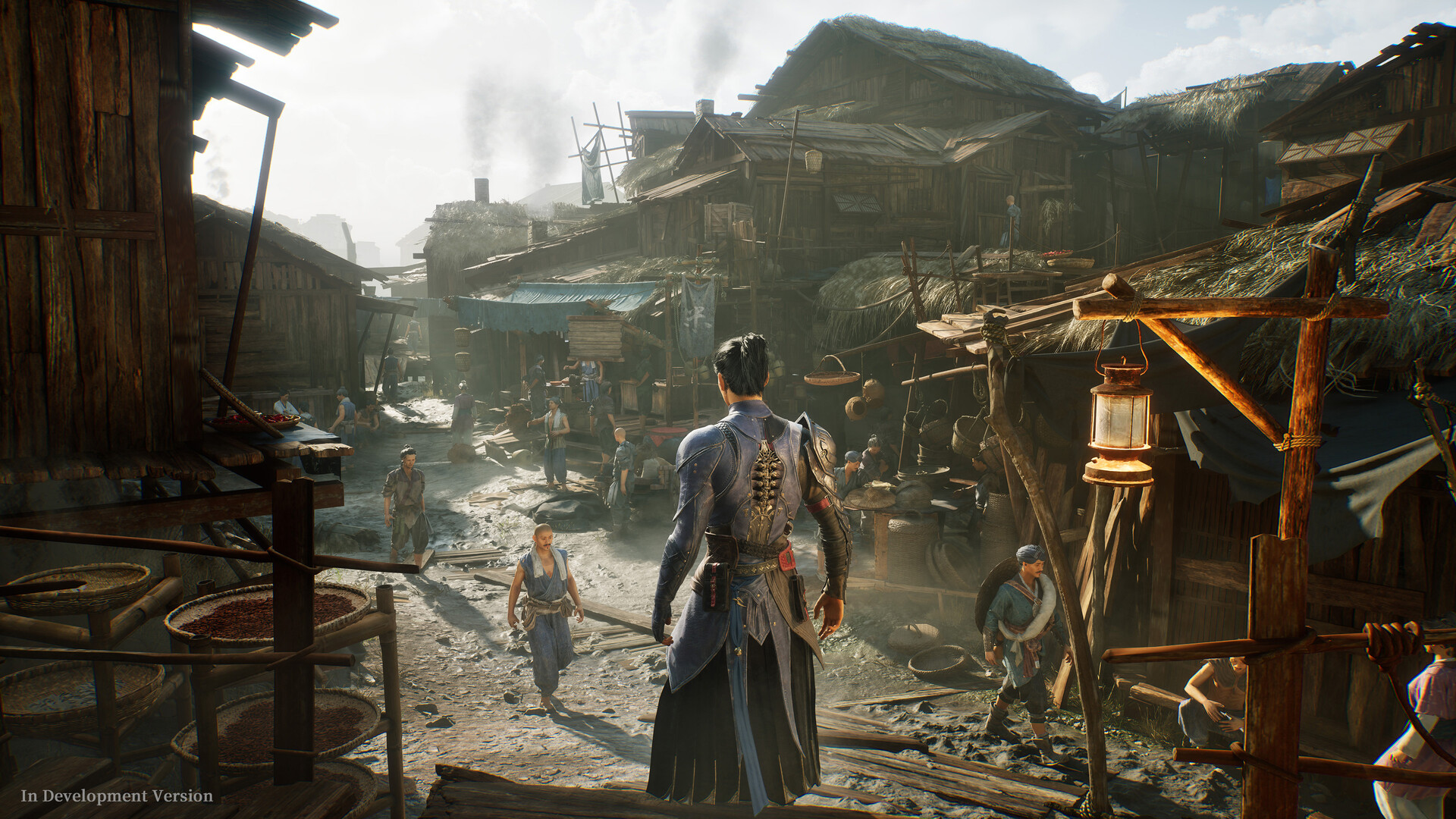
Zifei Wu: The whole game actually takes place in the capital city of Zhou. It's mostly a 5 by 5 kilometer map and the city is going to be around 3 by 3-ish kilometers. It's not as big as an Assassin's Creed or GTA map. I think the density, since we are basing it off of the city where we're in, which is Chongqing in China, it's a very dense city and our capital city is pretty dense as well.
As far as biomes there's going to be different locales as well as like dungeons. You get the underground or ancient temples, or anything you would expect that's in a cityscape will be there in addition to some of the rice fields or small villages next to the city. We will explore those as well.
Zifei Wu: The whole game actually takes place in the capital city of Zhou. It's mostly a 5 by 5 kilometer map and the city is going to be around 3 by 3-ish kilometers. It's not as big as an Assassin's Creed or GTA map. I think the density, since we are basing it off of the city where we're in, which is Chongqing in China, it's a very dense city and our capital city is pretty dense as well.
As far as biomes there's going to be different locales as well as like dungeons. You get the underground or ancient temples, or anything you would expect that's in a cityscape will be there in addition to some of the rice fields or small villages next to the city. We will explore those as well.
RPG Site: So I enjoyed My Time at Portia a lot and played it on basically every platform. I've also enjoyed My Time at Sandrock quite a bit from Pathea Games. What learnings from developing games like those helped you with The God Slayer because this is a much more ambitious title.
Zifei Wu: I think technically we learned a lot just by finishing and shipping projects. You have to make sure everything's optimized, everything's bug free, and you have to finish the game on time and budget. That really helped us in the way we organize, fund, and how we work our pipelines. We make sure we hit our deadlines for this project.
I think from a development point of view, you played Sandrock and Portia. So in Portia, it was more of a flat story even though there is a climax, but it's more of a "here's the climax and it's over" so you don't get the overall player satisfaction where it felt like you played a part in it.
Sandrock kind of fixed that. In Sandrock we gave you a problem at the start where it's like "oh this town is just going under and it's got a lot of problems with everyone's leaving and the state of this town is just bad." That's the feeling you get, but as you go through the story your actions matter to the story and to the citizens of Sandrock. Eventually, you become part of that family. So when you add up all the hard work that the people in Sandrock and you did, the town was saved in the end. The satisfaction level is way bigger than in Portia.
I think we're taking that into account for the story and development for The God Slayer as well, in that we start off with the God Fall. The player's family is gonna die pretty much. The main character's family and then you're gonna have to reconcile with that and face this world where most people will believe the Celestials are the good guys. They're the gods. Gods are always right. You have to face that society. At the same time, you have to face those super-powerful deities.
How do you grow in that? If you can make friends, how do we make you feel like you want to go fight those deities? How do you grow as a character and go from a nobody to a hero character on this heroic journey? We're taking all of that into account and I think we learned that from doing the My Time series.
This is also a journey. We want the player to not just be told about it, but actually experience it. The player will make friends and enemies in the game and then they will see reasons where they have to stand up for what is right. So in the end, when the player fights that final boss, we also want them to be very satisfied and to think the journey was worth it. That's what we learned.
Zifei Wu: I think technically we learned a lot just by finishing and shipping projects. You have to make sure everything's optimized, everything's bug free, and you have to finish the game on time and budget. That really helped us in the way we organize, fund, and how we work our pipelines. We make sure we hit our deadlines for this project.
I think from a development point of view, you played Sandrock and Portia. So in Portia, it was more of a flat story even though there is a climax, but it's more of a "here's the climax and it's over" so you don't get the overall player satisfaction where it felt like you played a part in it.
Sandrock kind of fixed that. In Sandrock we gave you a problem at the start where it's like "oh this town is just going under and it's got a lot of problems with everyone's leaving and the state of this town is just bad." That's the feeling you get, but as you go through the story your actions matter to the story and to the citizens of Sandrock. Eventually, you become part of that family. So when you add up all the hard work that the people in Sandrock and you did, the town was saved in the end. The satisfaction level is way bigger than in Portia.
I think we're taking that into account for the story and development for The God Slayer as well, in that we start off with the God Fall. The player's family is gonna die pretty much. The main character's family and then you're gonna have to reconcile with that and face this world where most people will believe the Celestials are the good guys. They're the gods. Gods are always right. You have to face that society. At the same time, you have to face those super-powerful deities.
How do you grow in that? If you can make friends, how do we make you feel like you want to go fight those deities? How do you grow as a character and go from a nobody to a hero character on this heroic journey? We're taking all of that into account and I think we learned that from doing the My Time series.
This is also a journey. We want the player to not just be told about it, but actually experience it. The player will make friends and enemies in the game and then they will see reasons where they have to stand up for what is right. So in the end, when the player fights that final boss, we also want them to be very satisfied and to think the journey was worth it. That's what we learned.
RPG Site: Do you have a rough release year when you're planning on shipping because it was announced for 2027 back in 2023, but a lot has changed since then.
Zifei Wu: We're still aiming for that time frame. The marketing team told me not to say anything about it, but we already announced it at the Sony event a long time ago, and obviously you found out about it. laughs
RPG Site: I do my research.
Zifei Wu: We're still aiming for that time frame. The marketing team told me not to say anything about it, but we already announced it at the Sony event a long time ago, and obviously you found out about it. laughs
RPG Site: I do my research.
RPG Site: I want to touch a bit on the music. While a lot of it sounds good and it looks fantastic, there were some parts where the audio levels were too low. I'm curious what your aim is for the soundtrack of the game because in these open world games, the soundtrack is very important to me.
Zifei Wu: Right now, I think the reason for that is because some of the sounds at the end of the trailer actually are not in there yet. They're in the current version, in tonight's build, but yeah, the airship didn't have any sound at all. The guns from the airship didn't have any sounds. That entire part is kind of silent. In the final trailer that we're going to ship, it should be fixed.
Sound effects for us are very important as well. This time, we actually sat down and thought about what type of music we're going to put into this world. Like Yvonne said before, this is an Asian steampunk world, and you don't really see a lot of Asian steampunk anything out there. East Asia mostly. In that sense, when we started, we were not sure what we wanted to put in. We experimented with a lot of different styles like even electric guitars or a lot of drums and even more ancient Chinese instruments. The idea is that we wanted it to feel East Asian, but at the same time, we want that steampunk industrial feel.
Like some of the music you heard today, it was the result of some of our experiments. We thought that eventually we do want it to be orchestrated, but then we want different Chinese instruments to be playing in that, and we also want maybe some parts to feature some electric guitar, like when you're fighting bosses or something. So it's a mix of different cultural elements, as well as just a more industrial element to that music base so that we can get the steampunk vibe out of it. At the same time, it's the exact East Asian authenticity for music that you would expect.
There's going to be a lot of music because, as you said, it is an open world and it's reactive, so different music will have different rhythms that it goes into. For example, you're fighting or if you're going into battle, it might be the same scene, but it will flow differently with different rhythms based on what the player is doing at the time.
Zifei Wu: Right now, I think the reason for that is because some of the sounds at the end of the trailer actually are not in there yet. They're in the current version, in tonight's build, but yeah, the airship didn't have any sound at all. The guns from the airship didn't have any sounds. That entire part is kind of silent. In the final trailer that we're going to ship, it should be fixed.
Sound effects for us are very important as well. This time, we actually sat down and thought about what type of music we're going to put into this world. Like Yvonne said before, this is an Asian steampunk world, and you don't really see a lot of Asian steampunk anything out there. East Asia mostly. In that sense, when we started, we were not sure what we wanted to put in. We experimented with a lot of different styles like even electric guitars or a lot of drums and even more ancient Chinese instruments. The idea is that we wanted it to feel East Asian, but at the same time, we want that steampunk industrial feel.
Like some of the music you heard today, it was the result of some of our experiments. We thought that eventually we do want it to be orchestrated, but then we want different Chinese instruments to be playing in that, and we also want maybe some parts to feature some electric guitar, like when you're fighting bosses or something. So it's a mix of different cultural elements, as well as just a more industrial element to that music base so that we can get the steampunk vibe out of it. At the same time, it's the exact East Asian authenticity for music that you would expect.
There's going to be a lot of music because, as you said, it is an open world and it's reactive, so different music will have different rhythms that it goes into. For example, you're fighting or if you're going into battle, it might be the same scene, but it will flow differently with different rhythms based on what the player is doing at the time.
RPG Site: Are you planning on having a lot of animated cut-scenes or doing in-engine ones? One of the highlights of 2024 was Black Myth: Wukong's animated cut-scenes.
Zifei Wu: Our cut-scenes will all be real-time. There aren't going to be any CGs or anything like that. We actually made our own mocap studio downstairs and we hired a team of mocap actors and martial artists. We're very serious about making our cutscenes high quality. It's all going to be motion captured and the direction for it will be or we are aiming for a very good cinematic quality to them and we want to mix them in with the gameplay, kind of like in our trailer which starts out with a cut-scene, but it seamlessly goes into gameplay. So that's kind of what we want for all of our cut-scenes mostly. Unless it's just like a pure piece of storytelling, otherwise we do want our gameplay, animation sequences, and the cut scenes to be seamlessly intertwined.
Zifei Wu: Our cut-scenes will all be real-time. There aren't going to be any CGs or anything like that. We actually made our own mocap studio downstairs and we hired a team of mocap actors and martial artists. We're very serious about making our cutscenes high quality. It's all going to be motion captured and the direction for it will be or we are aiming for a very good cinematic quality to them and we want to mix them in with the gameplay, kind of like in our trailer which starts out with a cut-scene, but it seamlessly goes into gameplay. So that's kind of what we want for all of our cut-scenes mostly. Unless it's just like a pure piece of storytelling, otherwise we do want our gameplay, animation sequences, and the cut scenes to be seamlessly intertwined.
RPG Site: What dubs are you planning on including when it comes to voice acting? I assume you will have Chinese and English.
Zifei Wu: Yes, we're gonna have Chinese and English for now. We might do other languages if the opportunity arises, but for now we're for sure going to do English and Chinese. The trailer right now is in Chinese only, but the trailer that we're gonna release in a few days will have English as well.
Zifei Wu: Yes, we're gonna have Chinese and English for now. We might do other languages if the opportunity arises, but for now we're for sure going to do English and Chinese. The trailer right now is in Chinese only, but the trailer that we're gonna release in a few days will have English as well.
RPG Site: How do you like your coffee?
Zifei Wu: I drink a lot of coffee. Mostly Americano. I like coffee because I can't survive without it. laughs
Zifei Wu: I drink a lot of coffee. Mostly Americano. I like coffee because I can't survive without it. laughs