

Shinra Archeology Cut Interview – Final Fantasy VII Modding, Restoring Content, FF7R Consistency, and More
A few days ago, Final Fantasy VII celebrated its 29th anniversary. In celebration of its anniversary, I've been working on two features relating to the original Final Fantasy VII for the occasion. The first is this interview with the Shinra Archaeology Department team. A little while ago, our site founder and director Alex told me about Shinra Archaeology Department's work. I have been following the team since then through the many tidbits shared on social media covering all things Final Fantasy VII and have been looking at the work done for the Shinra Archaeology Cut retranslation mod. The team recently released a version of the mod for the original PS1 version following its PC release. I had a chance to chat with a few key members of the team to discuss Shinra Archaeology Department, translating literature relating to Final Fantasy VII, the mod, challenges involved, and much more. This interview was conducted at the end of January 2025 and there will be some minor spoilers for the original Final Fantasy VII.

TurquoiseHammer: SAD was started by two members of TheLifestream.net’s (TLS) forums—Cae Lumis and 0bsidianFire. They were interested in exploring some of the more obscure Final Fantasy VII guidebooks, like the Crisis Core Complete Guide, and mining those for information. TLS’s translations had more or less come to a standstill after six years of no new FFVII content. The Remake trilogy of course got the community’s gears turning again, and SAD was one project born of that renewed excitement.
I’d posted a bit on TLS after the release of Final Fantasy VII Remake, and contributed some translation snippets when the Material Ultimania Plus released. 0bsidian saw those and asked if I wanted to help with translating some other material. I agreed and joined the group on Discord. Things took off pretty fast after that.
Ody: I do a lot of what I’ve been broadly calling the “editing” work for SAD, whether that be image editing, typesetting, modding the game, or video editing. I have been using various software like Photoshop for years, and before joining SAD I had independently been making custom books out of various manga and web comics (such as Obstinate Melon’s “FFVII: The Sevening”), so when I saw SAD working on doing a scanlation of the FFVII Ultimania Omega, I offered to help out. Their main scanlator at the time was a guy named Round2Gaming, but I quickly took over as the primary person behind it. Before I knew it we’d scanlated thousands of pages of FFVII Guidebooks, including the Ultimania Omega, FFVII Dismantled, the Remake Ultimania and Material Ultimania Plus (got that one out like a year before Square did *laughs*) and several others. I also had minimal experience using Adobe Premiere due to some embarrassing old high school projects, so when Turq wanted to form the Last Elixir Productions YouTube channel, I was able to help out there as well.
TurquoiseHammer: I do the bulk of SAD’s translation work. That includes guidebooks like Ultimanias, old Japanese magazines, novellas, and of course the Shinra Archaeology Cut retranslation. For the Last Elixir YouTube channel, I write the scripts and do the voice recordings. I’ve also been taking on some of the editing lately—at least the more straightforward parts that don’t require Ody’s graphic design and modding skills.
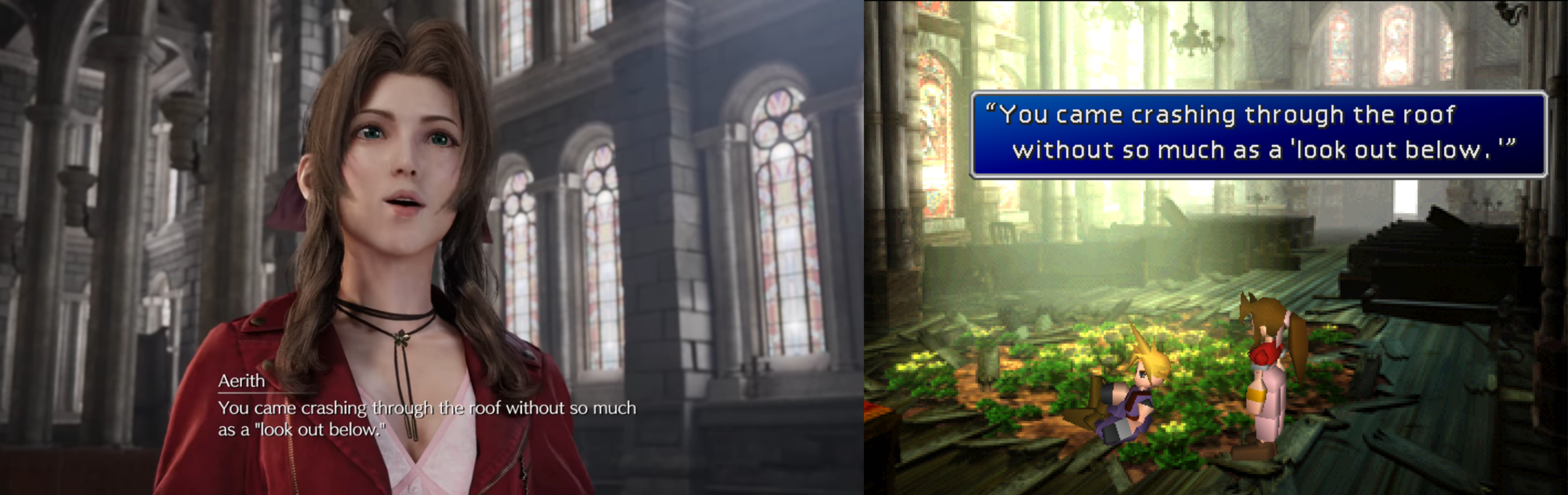
TurquoiseHammer: I guess the first reason is: because I like FFVII a lot. The second reason is: because it needs it more than any other FF game. But the truth is this retranslation never would have happened if not for two things. As Ody and I went about scanlating FFVII guidebooks—particularly the Ultimania Omega—it became clear that the 1997 translation was too shoddy to match the commentary and captions written by the guidebook’s authors. For example, you’d have a character analysis section about Barret and it would mention lines that aren’t even present in the original localization. Our initial solution was to retranslate the offending portions and photoshop them over the Japanese text. But the cases just kept piling up, and the more they did, the more I realized we ought to create an entire retranslation that we could draw on while doing scanlation work. That was the first catalyst.
The second was that Ody had already been working on an FFVII modding project of his own. If not for that, this retranslation probably never would have left the confines of Google Sheets. I don’t think we would have had the will to implement it on its own without the excitement of working on a totally unprecedented cut content mod. Of course, you can play the mod with cut content disabled, but I think the full package is something fans won’t want to miss.
Ody: Like many a starry-eyed teenager, FFVII gave me brain worms I could never be cured of. The other FFs just never hit me the same way (though I do also love FFIX).
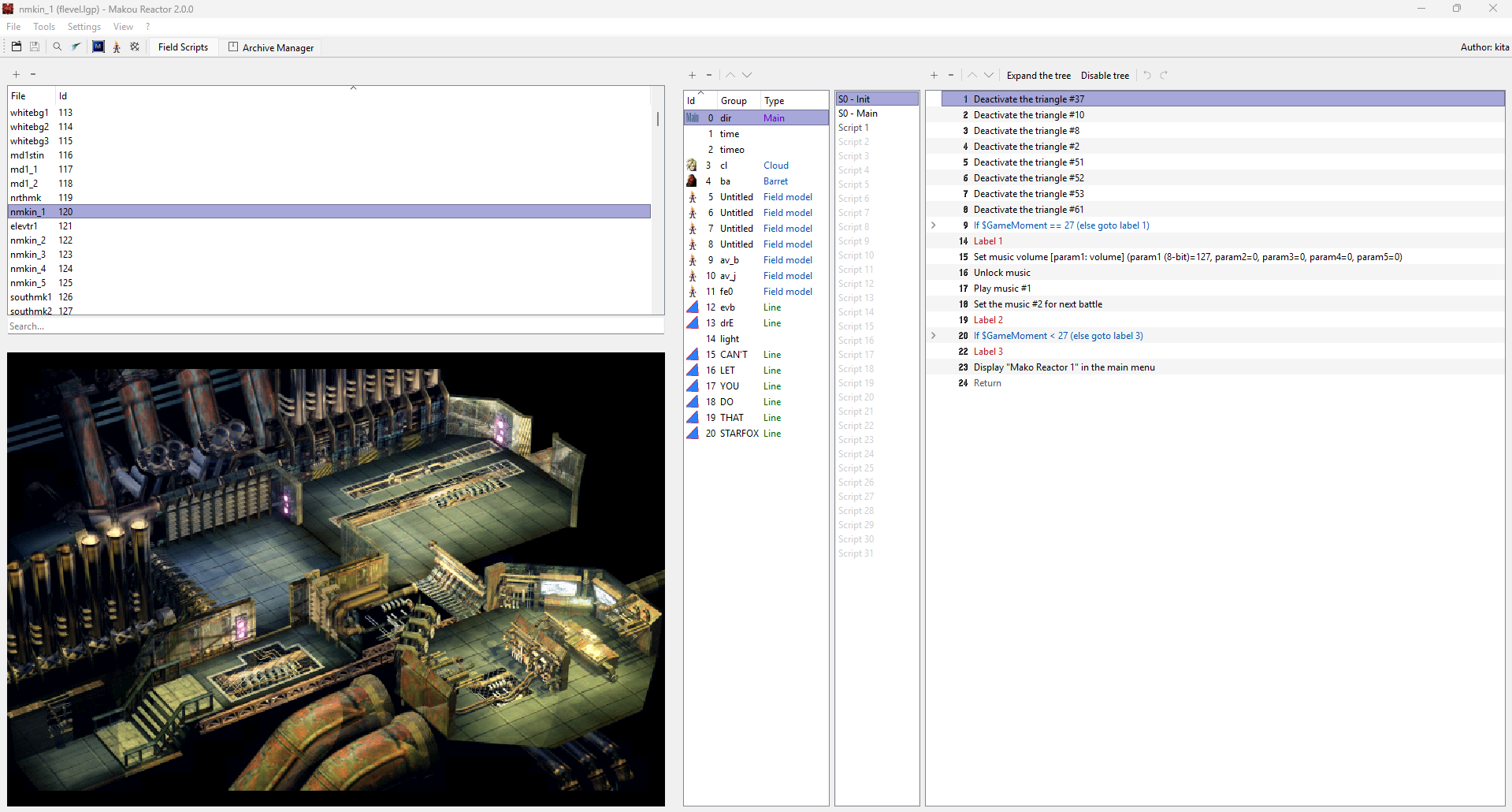
The reason I started modding FFVII in the first place is because only a year after I originally played it in 2012, I stumbled upon Shademp’s incredible “FFVII Unused Text” article series on TLS. It’s a truly incredible piece of work covering the vast majority of the game’s unused content with insightful commentary, and after reading it and seeing things like the original Honeybee Inn, I couldn’t help but want to see a version of the game with all of that stuff included. Thus started a decade-long journey to slowly learn how to mod the game using tools like Myst6re’s Makou Reactor field editor to implement it all.
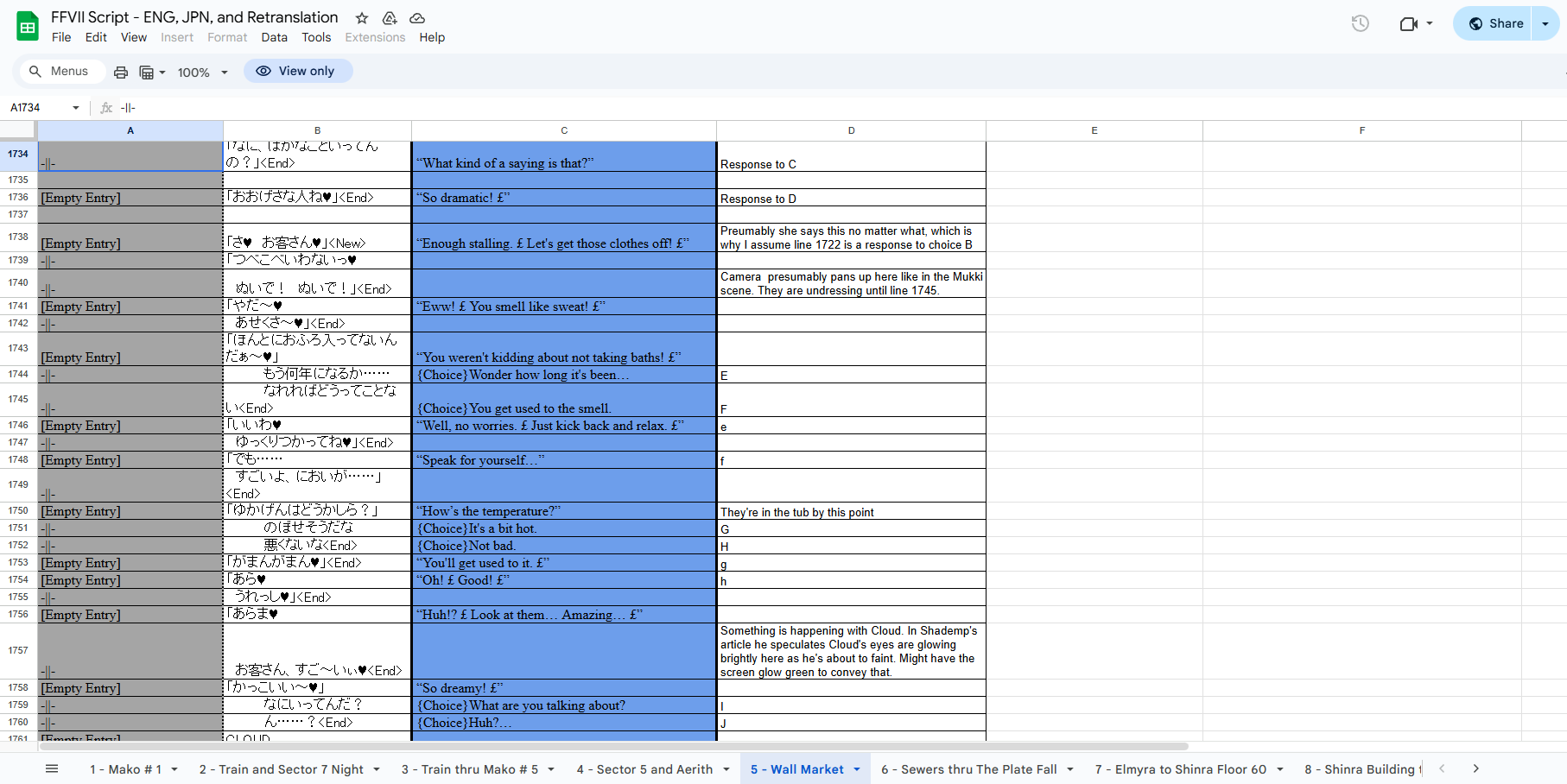
After I joined SAD, Turq expressed interest in doing a translation of the game’s script (not even as a mod, just in text form if I recall correctly) and I was just like, “Hey, I can actually put that in the game! And I also have this cut content mod I’ve been poking at forever that we could use to make it unique from the existing retranslation.” And so the projects were married and SAC was born. Turq is obviously solely responsible for the actual translation, and had a very intentional and regimented approach I could never dream of, but I like to think my crassness and appreciation for the stupid bullshit in the original script brought some needed levity at least.
TurquoiseHammer: I’m a huge fan of the English localization work Square Enix has done on the Remake trilogy. It’s hard to think of another lip-synced, story-forward Japanese game with a translation of this caliber. Localization can be a pretty thankless job, especially when the fandom is as fractious as FFVII’s. Remake’s English localization taking more liberties than other languages has unsurprisingly led to accusations of bias—but the trade-off is a superior narrative experience with very little friction for Western audiences. And of course, this is all by design; Square Enix has seasoned staff coordinating its various localization units. Nobody’s tricking the Japanese scenario team into greenlighting a dishonest translation.
That said, I do have some minor nitpicks about Remake and Rebirth’s localization. There are lines here and there that I think fail to capture the nuance of a scene or preserve a nod to other titles in the series — but these are few and far between. More irksome to me is how inconsistent the English translation is with preserving terminology from the OG. I think most fans will agree that Climhazzard sounds a whole lot cooler than Ascension (even if it’s etymologically inscrutable), and that the new Jenova boss names muddy an already effective naming scheme. I’m a lot more forgiving of the fact that Remake and Rebirth reuse almost no dialogue from the 1997 release. That’s only natural considering the stiffness of the OG translation. Lastly, I just have to comment on the localization’s aggressive tendency to lowercase what should be proper nouns. airbuster, anyone?
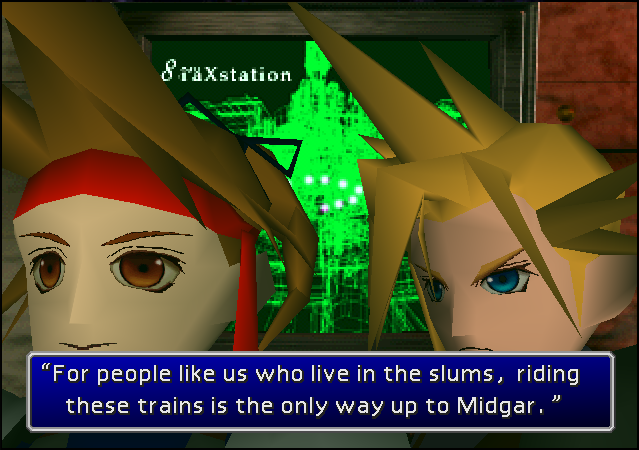
Ody: Well, when it comes to FFVII itself I can’t be very charitable. The modern ports of the game are awful. Broken lighting, broken audio, broken visual effects, and a translation left untouched since 1998 (slurs and all). It leaves a lot to be desired. The fine folks who made FFNx, particularly my pal TrueOdin, really did a monumental job lifting that PC port out of the muck and making something of it, but even now there are still many issues left to fix.
As for their other efforts, I think they can be pretty hit or miss. The FFVIII remaster is embarrassing, but the FFIX port is very well done. The FFX HD ports look awful, but the Kingdom Hearts collections are a triumph of series accessibility and preserve the games’ unique art style wonderfully (there are some broken audio effects in KH1 though smh). The pixel remasters are ugly and I hate them, but it’s nice they remade Live A Live. Overall, my main thought is why haven’t you done a modern port of Parasite Eve yet you hacks what’s wrong with you?
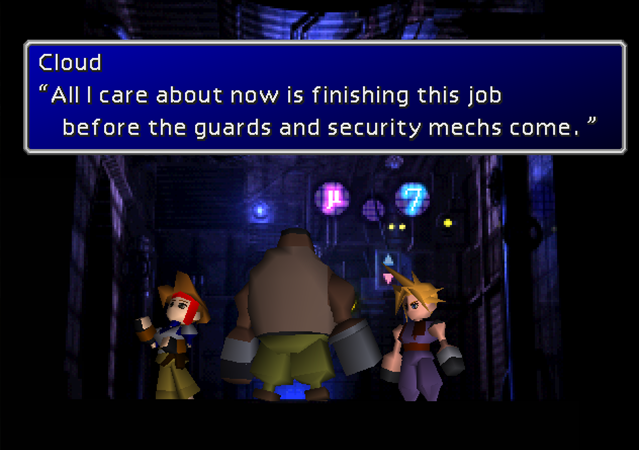
Ody: FFVII is somewhat unique among games for just how much cut content was left over, and how much of it was just a clean cut out of the game rather than scenes being totally reworked. A lot of this is probably owed to the game’s frankly insane one-year development cycle, only five months of which was spent actually implementing the game’s contents. This made restoring it to the game a lot more straightforward than it might be for other titles, though a lot of intuiting intent and digging around was still needed.
I’d say there are three tiers of cut content in the game:
Tier 1: Fully scripted scenes that were dummied out.
Tier 2: Scenes that have no associated scripting but still exist in text form.
Tier 3: Unimplemented scenes found only in the game’s development documentation.
Tier 1 is the easiest to work with, because the developers effectively already finished it and then clipped it off for one reason or another. For example, when approaching Barret’s hometown of North Corel, there was originally meant to be a short scene on the long bridge leading up to the shantytown where whatever party members you have with you break from Cloud and comment on the surroundings, with Aerith and Tifa expressing fear over how high the bridge is, Yuffie jumping up and down to shake it, Barret remarking on returning home, and Red XIII commenting on how strange humans are. This scene is fully complete and ready to go, no adjustments needed, but the developers just disabled the flag that would trigger it for some reason, so restoring it is as easy as turning that back on. Other mostly complete things such as the Honeybee Inn required considerably more work piecing it back together, but are still overall fairly easy to work with.
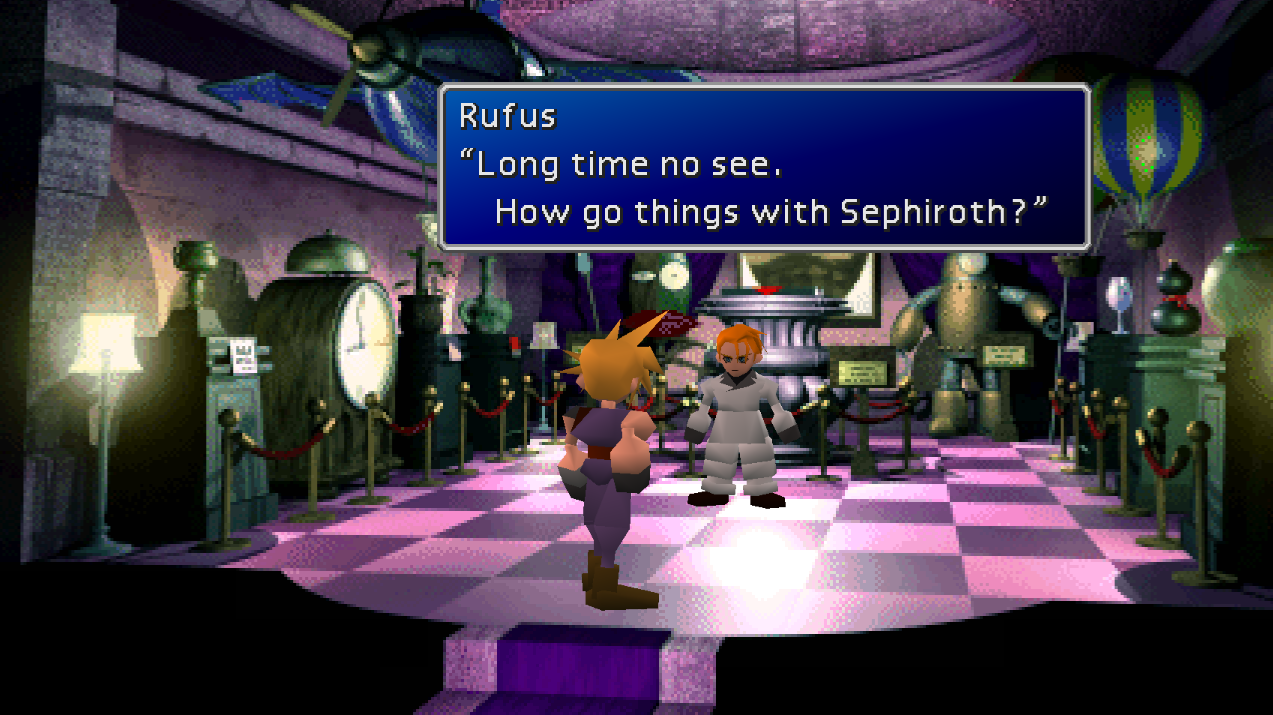
Tiers 2 and 3 are very similar in practice. You only have the text for the scene, so the actual scripting needs to be created from scratch. This of course requires making a lot of assumptions regarding the context and choreography of events. For example, in the Honeybee Inn, there was a fairly elaborate scene that only existed in text where Cloud would undress and get into the tub with the Honeygirl, with some strange dialogue surrounding it that Turq only realized much later was actually a flashback to Zack visiting the inn being intercut with Cloud’s present visit, to disorienting effect. Needless to say the version of this in SAC saw many revisions, and is probably due for another *laughs*. Tier 3 may actually be easier to work with because those scenes at least have script notes to go along with them. A particular highlight of that tier for me is a final meeting between Cloud and Rufus that never made the released game, which I think puts a better cap on the arrogant young CEO’s character than we originally got.
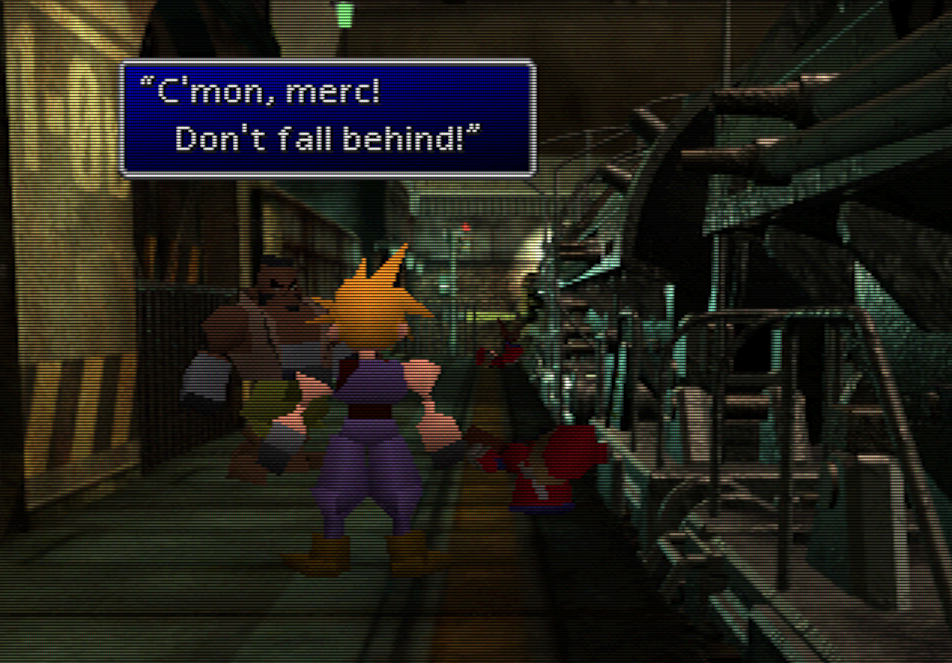
There’s also a lot of more minor cut content—just individual lines of dialogue or even background elements—that got snipped out of scenes neatly and were easy to just slot back in. It’s very important that players be able to see Barret say “...” after Cloud sasses him in the elevator at the start of the game.
Implementing the retranslation was very straightforward for the most part thanks to the Makou Reactor tool, which displays the game’s text in a very convenient UI. A smarter man than me might have automated the process, but I would just copy the text line by line into the game from our spreadsheet. The more difficult text to implement was the text stored in very niche places such as the game’s executable file. Tools for editing that text were not readily available outside of doing some good old fashioned hex editing until very recently; it’s only thanks to my good pal Petfriendamy and her “Scarlet” tool that it became easy to do. She was a good sport about adding features as I requested them to make implementing that text much less of a hassle.
I was not overly involved with the creation of the PSX port. That is owed entirely to my pal HitByBricks, who decided of his own accord to make the port. I’ll let him speak for himself regarding the process.
HitByBricks: For the work that went into the PS1 ROM hack, “little” is really the key word. Working within the original disc’s tight size constraints made romhacking a much more delicate, incremental process—but because the PC files were largely compatible with the PS1 toolchain, a lot of the hardest groundwork was already done.
Since this was my first serious attempt at romhacking, the biggest challenge was learning the toolset and building a reliable workflow: extracting and reinserting field text with Makou Reactor, handling assets and images with ff7tools and psximager (cebix), and importing FMVs via jPSXdec. Without these, it would've taken exponentially longer to make changes to the ROMs, so I'm eternally grateful to the brilliant authors behind them.
Those size constraints also limited how much text we could safely bring over. As a result, we abbreviated a small number of item/spell/materia/summon names and trimmed some dialogue in a surprisingly convoluted area (the Chocobo Farm)—edits that TurquoiseHammer authored while I consulted him to keep everything consistent with the mod’s intent. I also had to make manual edits to two FMVs that were ported from the PC version, since video integration on PS1 is far less forgiving than on Steam (thankfully, the final product ended up looking just as good).
Unlike many PS1 hacks, I intentionally avoided gameplay and UI changes. I see the retranslation as the definitive experience (TurquoiseHammer: I would not personally make this claim, but go off), and this hacking effort a look into what could’ve been if the translation team of the original release were given more leeway. If someone wants broader enhancements, I’d rather those complement the official release through Steam modding, which achieves undoubtedly grander effects.
In practice, most of the work was careful experimentation: finding how far changes could go before breaking something. With better foresight, it could have been a simpler process, but it genuinely wouldn’t have been possible without Odysseus and TurquoiseHammer being so open and supportive as consultants throughout.
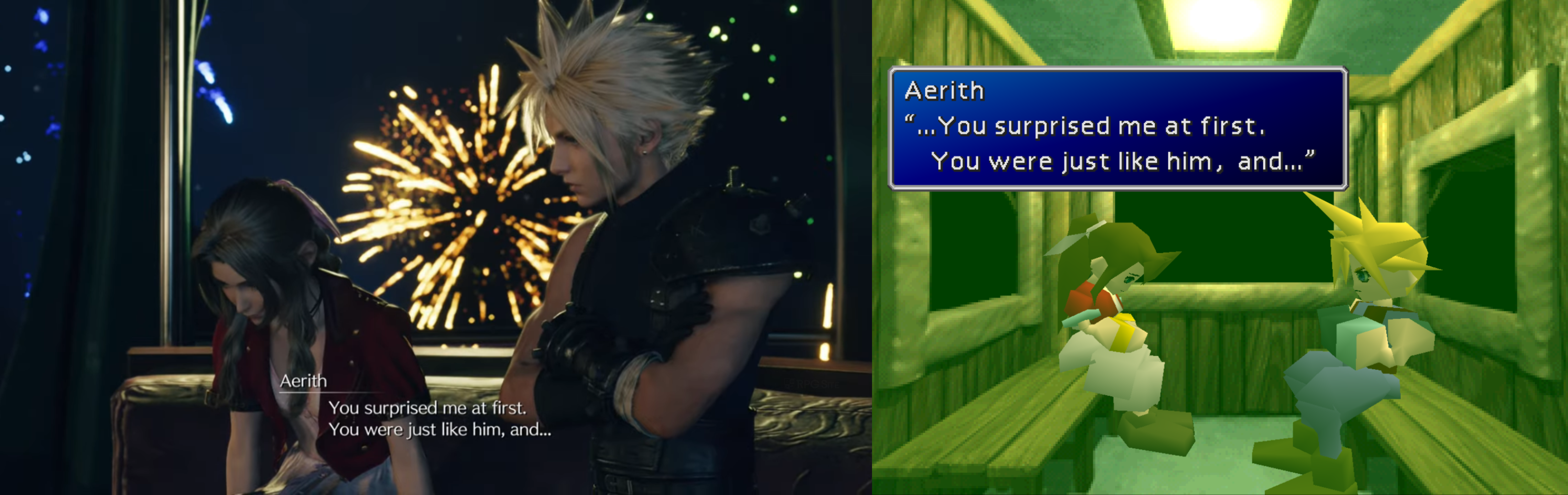
TurquoiseHammer: Player feedback has been a big part of the translation process from the get-go. Both Ody and I are long-time FFVII fans and have played the original in English dozens of times. On top of that, we’ve been active in the community for a long time, and have a good grasp of which lines players consider iconic. We were careful to maintain these in the translation where appropriate. Obviously, gaffes like “This guy are sick” weren’t retained, but we did make a dedicated “Heritage Mode” that players can toggle on to restore content like that (it’ll bring back Climhazzard, too).
Throughout the translation process, we polled the community about various creative decisions, such as using characters’ last names (we didn’t, with one exception), including swearing as opposed to grawlix (we did), and retaining certain naming conventions when official modern localizations didn’t take precedence. We’re also always watchful for fan feedback as people play through the mod. We’ve tweaked countless lines to sound more natural based on suggestions from the community. If you’re taking the mod for a spin and something doesn’t sit right with you, there’s no harm in bringing it to our attention: it might be worth changing.
All that said, I do have pretty strict standards that I like to stick to with SAC’s translation. I’m an editor by trade, and consistency in vocabulary, tone, and formatting is of the highest importance. We go to great lengths to ensure English terminology aligns with the rest of the series (and broader FF franchise) the same way it does in Japanese. This also means that in the rare cases where FFVII’s Japanese entries borrow lines verbatim from the original, those lines also match in English—so long as it fits the context of the scene.
Ody: Just to add on, feedback was also instrumental in weeding out typos and fixing bugs with the added content. Everyone who adopted SAC early on was a big help in shaping it into what it is now.
Ody: SAC has been a tale of shifting goal posts. The things I might have been content with in 2014 aren’t what they are in 2026 *laughs*. As FFVII’s modding tools have become more sophisticated, new doors have been opened to further improvements to the mod that I never would have dreamed possible when I started working on it. Like, the original Honeybee Inn was my white whale for almost a decade, then Myst’s improvements to Makou made implementing it (comparatively) trivial. SAC really is the sort of thing I could plink away at forever. laughs
At the moment, there are a few things I still really want to do with it that I won’t be able to consider “definitive” without. The big one that is SAC-exclusive is porting over PSX version assets. Among SAC’s lesser-mentioned features is the option to use a bunch of assets from FFVII’s original 1996 demo, including music, map backgrounds, and battle arenas. It’s only thanks to my pal Mav that I was recently able to port the 3D models for the battle arenas from the demo disc to PC, but the character models still aren’t port-able. Barret’s battle model is entirely different from the final game, and Cloud’s field model is shorter and stockier. This isn’t something that most players will ever care about, but to achieve my vague dream of making the most “complete” version of FFVII possible, they’re a must. Being able to use the different animation for Sephiroth’s Super Nova attack from the initial Japanese version of the game also eludes me currently.
Another more general thing is to fix the various remaining issues with the PC port. In particular, there is a broken lighting opcode that drastically affects how several scenes look that I have been badgering FFNx’s TrueOdin to look at for a while, as well as an issue where several of the game’s FMVs that have the normal chibi character models on top of them (like the scene in Bugenhagen’s observatory) will cull out the models when they get too close to the camera, which doesn’t happen in the PSX version. These fixes would help out not just SAC, but the PC version of FFVII as a whole. While I am glad we have the PSX port now, I still want the PC version to be the unequivocally definitive version of the mod.
I also have a few pipe dream things I want but will probably never have as well, such as getting Yusuke Naora—the game’s primary environmental artist—to tell me what the deal is with that ice cave that only appears in some of the game’s promotional material and isn’t in the game itself at all, or uncovering the full details of the game’s scrapped underwater dungeon and the massive hole its removal seemingly left in the game’s third act. Probably never getting those *laughs*. There’s also some more minor things like redoing the Fort Condor minigame text I haven’t gotten around to yet, as well as the inevitable post–Remake Part 3 script update.
TurquoiseHammer: Very few. None on the modding front, and that’s thanks to the 7th Heaven team’s decision to require players to have a Steam copy of FFVII or the original PC discs. Lots of fans who’ve purchased FFVII on modern consoles also buy on Steam so they can play the game with 7th Heaven’s huge selection of mods. This drives considerable sales for Square Enix, so it would be unwise for them to intervene both fiscally and from a PR perspective.
As for scanlations, the bulk of what we work with is old material that will never be translated into English—and quite a bit of that is stuff Square Enix no longer holds the publishing rights to anyway. With newer content, we generally wait for an indication that Square Enix isn’t planning on putting out an English version themselves. Square Enix has never localized a mainline Ultimania into English, and that trend has continued with FFVII Remake. We did get in a spot of trouble after the FFVII Rebirth Ultimania released and we started tweeting out full translations of the developer interviews. A member of the social media division contacted us and cordially advised us to remove them and post only non-sequential snippets. I hoped at the time this might mean Square Enix had plans for an English edition of the Rebirth Ultimania, but a year and a half later, it looks like that isn’t the case.
SE has localized some spinoff Ultimanias, including artbooks for FFVII Remake. After releasing the FFVII Remake Material Ultimania in English, they announced preorders for the FFVII Remake Material Ultimania Plus (are you lost with the naming yet?). However, after over a year of delays, we concluded it was never going to be released, and scanlated the full volume ourselves. About ten months later, Square Enix finally came out with their official version, and we withdrew our scanlation from the website to avoid stepping on any corporate toes.
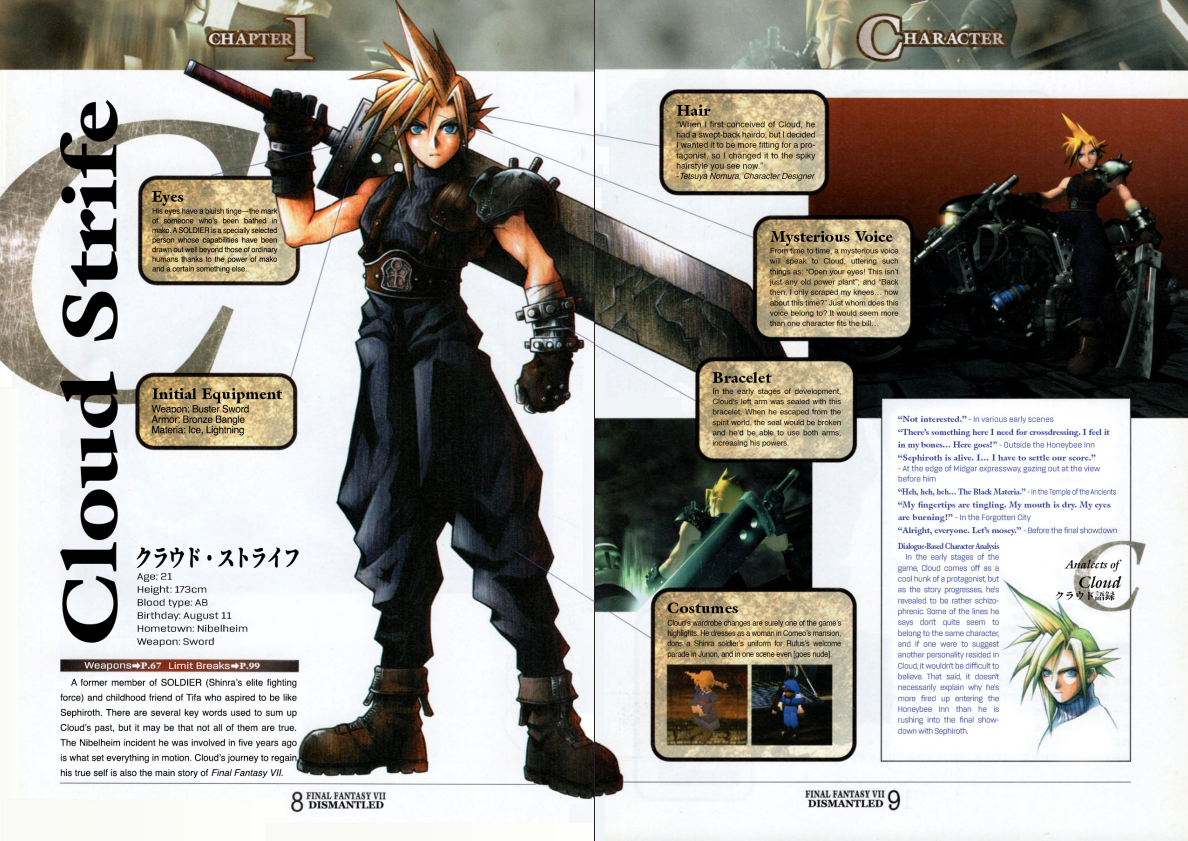
TurquoiseHammer: In terms of information, the 2005 FFVII Ultimania Omega is going to give you the most bang for your buck. The Early Material File, World Guide, and developer interview sections are essential reading if you’re a hardcore fan. In terms of humour and good energy, there’s a pair of interviews the Japanese magazine Jugemu conducted in early 1997 on the eve of the game’s release. Most of the dev team’s upper echelon are present, including Kitase, Uematsu, Nomura, and Nojima. The conversation sort of goes off the rails as everyone continues to drink (they’re at a pub). I’m also a huge fan of the 2018 Bra-Bra concert pamphlet interview with Kitase, Uematsu, and Nojima.
Ody: Their timeframes for English releases of their Japanese books is pretty dire. They released the Remake Material Ultimania Plus nine months after Rebirth came out. That’s just embarrassing. The quality of the translation of that release was also a bit questionable iirc, and some even suspected the use of AI (not unfounded given recent statements from the company). I fully expect the English version of Nojima’s new novel Dear Destiny to release a year after FFVII Remake Part 3 at their current rate. It’s bad.
Editor's note: An English release of Dear Destiny was announced a day after this interview was conducted.
TurquoiseHammer: The FFVII Remake series has given me faith Square Enix has the technical talent to restore the franchise to prominence. Now I want to see the company put that talent to use with ambitious game design. I think the biggest problem facing FF (and many other big-name titles) is the rut it’s fallen into segregating story, exploration, combat, and minigames. I want to see an FF that shatters the boundaries between those aspects of gameplay.
Ody: To be real, I would not say I am a big fan of FF as a larger franchise. I have played less than half of the main numbered titles, and finished fewer still. Honestly, I think FF as a brand has sort of run its course. I run a bit younger than the average FF fan (I was born the year VII came out) and none of my zoomer contemporaries know or care about the franchise beyond vaguely knowing a few characters, like Sephiroth. A common question I get when talking about FFVII with them is, “Do I need to play the first six before FFVII?” so just imagine when FFXVII rolls around *laughs*. I’m more interested in seeing Square Enix explore new ideas free from the baggage of the FF brand.
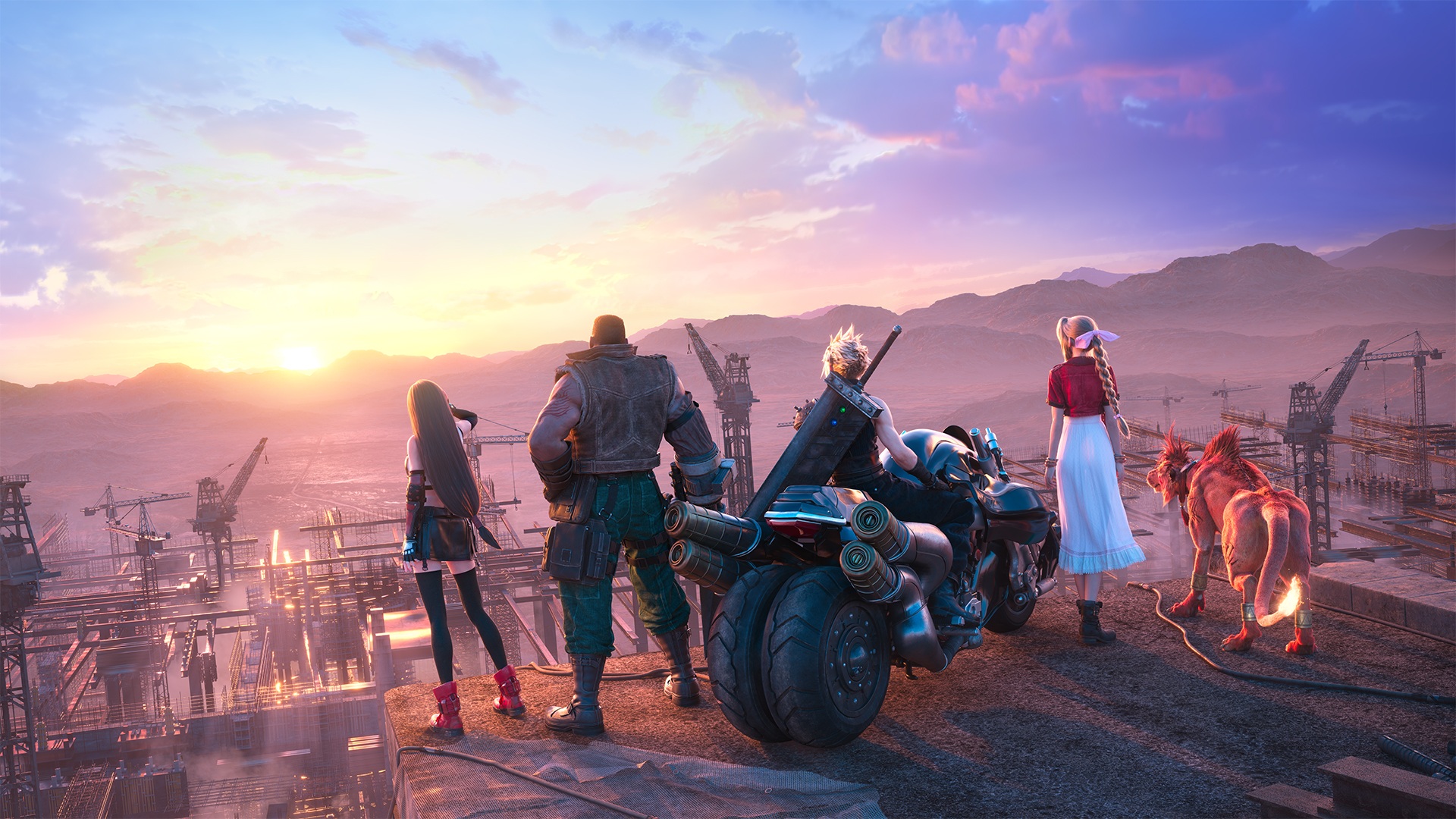
Ody: I'm going to level with you, FFVII is the only game I have ever modded and the PC version went untouched for so long that I don't have any experience with this sort of situation *laughs*. Ultimately it's not really our problem, it's more on the shoulders of the FFNx team to make mods work with this new version. They are a smart and capable bunch so I'm not too worried. I'm pretty sure it's going to be a port of the current console versions, which is just a touched up version of the PC version to start with, so hopefully it won't be too rough of a transition.
Ody: Definitely unexpected given how long the PC version has gone untouched, but perhaps not too surprising if you think about it. The console version has more cheats and accessibility features than the old pc port which make it easy to breeze through the game, and they also recently updated Remake with a baby mode presumably with the purpose of making it easy to get through the story as well (with a Rebirth version to come probably). News of the third Remake title is probably soon to come, so I think they want people to be able to experience the other FFVII titles easily, and as such want all platforms to have the version of OG with the most ease of enjoyment features. *laughs*
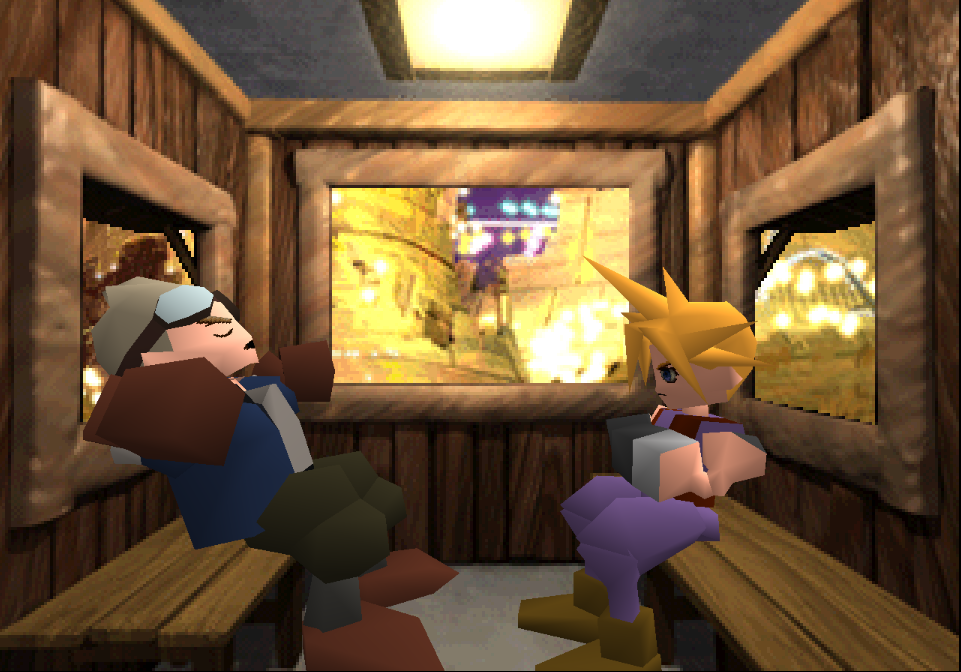
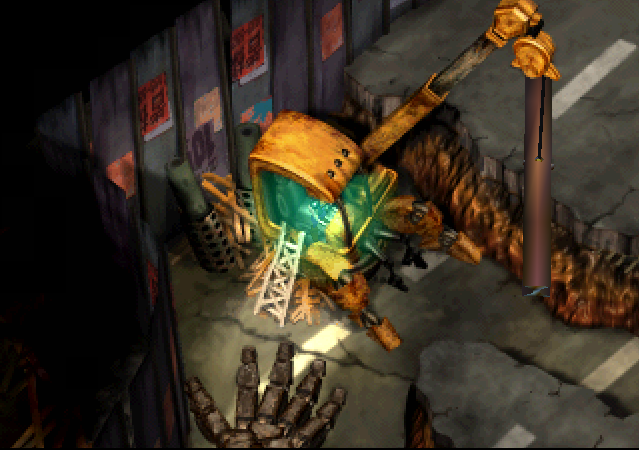
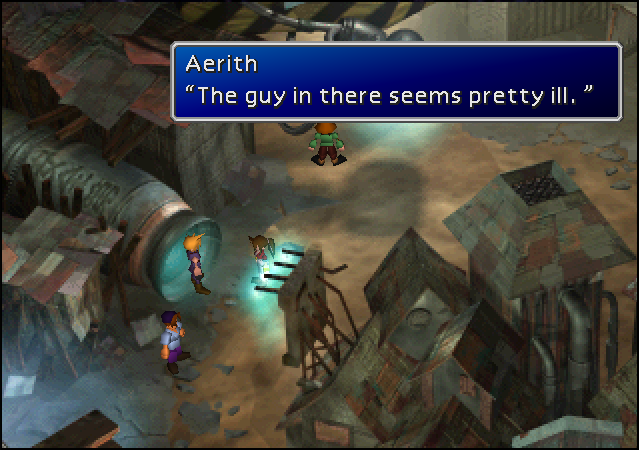
Ody: Well, I already sort of made my ideal version by adding all the cut content back, but if I could change something about the original game, I'd make the stretch from Corel through Rocket Town have a more cohesive narrative flow. You're following Sephiroth on paper, but in practice it's really just a loosely strung together collection of episodic character stories. That's by and large fine, but I think Shinra and Seph could have used more presence. Let's fight a platoon led by Heidegger or Scarlet in a mech. Show more signs of the destruction wrought in Sephiroth's wake. Stuff like that. The Magnus Materia plot is also pretty thrown together and could use a major overhaul.
TurquoiseHammer: I'd bring it up to snuff with the original PS1 version in terms of lighting and camera behavior—basically, heavy-duty, foundational coding stuff we can't really address until the PS1 version is decompiled. That's something that will happen one day, however far into the future. If I'm going full-on pipe dream, I'd magically resurrect the original background assets so we could get genuine high-res versions.
Ody: Still PC. It has its disadvantages but they're growing fewer all the time.
TurquoiseHammer: I guess for the JP version, the original PS1 International discs. For EN, gotta go with our Shinra Archaeology Cut. I think there are tons of excellent ways to play, though, and it all depends on the experience you're looking for.
TurquoiseHammer: I’ve been a pretty delinquent gamer this past year. Ody got me to play Deltarune and I’m absolutely hooked now.
Ody: Yeah, Deltarune haha. It’s quickly on its way to replacing FFVII as my favorite game. I also played another Hit Indie Title™ called In Stars and Time a few months ago that I really enjoyed. Dunno if this counts as a video game, but I have been doing a group read of the VN Umineko with my sister and her friend once a week as well, and that’s been pretty enjoyable too.
Ody: Deltarune Chapter 5 releasing, and “it” hopefully happening. I also hope to make a lot of headway on a certain nightmare project I started last year.
TurquoiseHammer: Delatrune Chapter 5, Resident Evil 9, and Remake Part 3 news; working more on SAC, SAD translations, and Last Elixir videos; and the November primaries. I honestly don’t know what Ody means by “it.”
Ody: “It.”
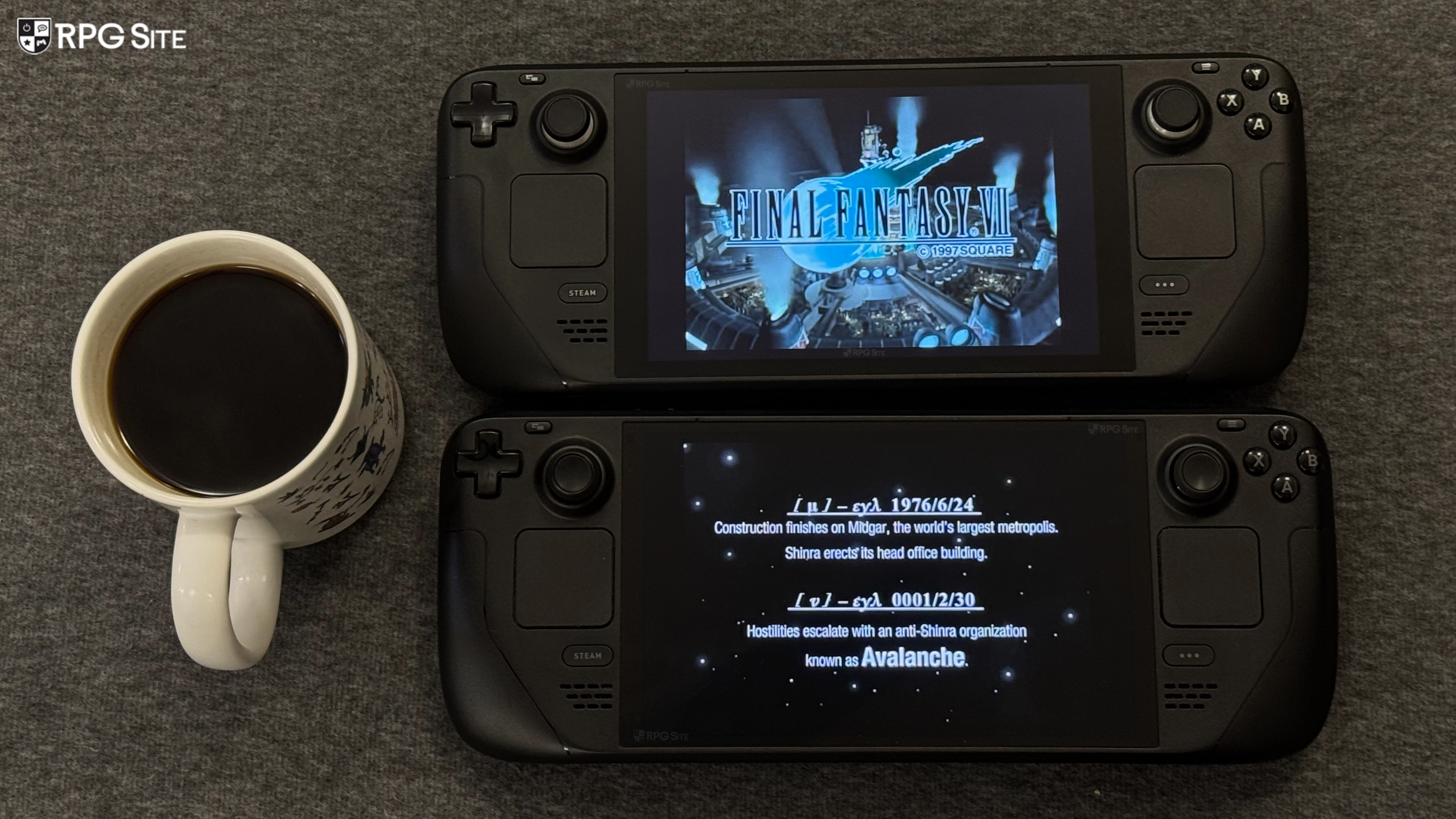
TurquoiseHammer: When I’m not overwhelmed with anxiety, I take two teaspoons of instant coffee powder and chuck it in with my chocolate protein shake. It’s despicable.
Ody: I like it when it’s so loaded with sugary junk that it no longer tastes like coffee.
CaeLumis: Personally I prefer either cappuccinos or lattes, with a lean to cappuccinos due to the added coffee amount in relation to milk. I never could develop a taste for straight coffee, and creamers never had the right taste and texture for me. To that end I own a Breville Bambino Barista Machine with a steam wand so I can make cappuccinos at home. Given that I am diabetic (Type-2, and I've fought my blood sugar down to a point I’ve almost beaten it now), I don’t use regular sugar to sweeten my coffee, but a really good brand of syrups that are sugar free called “Skinny Mixes” by Jordans. I personally enjoy vanilla, cinnamon roll, toasted marshmallow, and brown butter toffee as my go-to flavors, though I recently had the opportunity to try their holiday flavors of eggnog and gingerbread and found both of them really good, too. Even if you aren’t diabetic, I highly recommend the brand!
Shademp: I always have coffee with milk, to lower the acidity. I could drink it without milk if none is available though. I can drink coffee warm or cold, I honestly don’t care. Both are delicious. I am not picky when it comes to the quality. I can have instant coffee, filter coffee, fancy coffee. I enjoy the taste regardless, probably because it’s the “buzz” I favor.
Anonymous Social Media Manager: Don’t really drink coffee.
HitByBricks: Black.