

"This time, portraying a single protagonist was one of our key challenges" Naofumi Matsushita on developing The Adventures of Elliot: The Millennium Tales
In addition to our recent opportunity to go hands-on with more of The Adventures of Elliot: The Millennium Tales, Square Enix offered us the chance to ask a few questions to the team behind the upcoming Action RPG - and we've received a few responses from the game's Producer, Naofumi Matsushita. We're only a month away from launch, so it's nice to get some last minute questions answered as things ramp up to release!
RPG Site: What led to the decision for the team to work on an Action RPG; what were the challenges and opportunities in using HD-2D in an action RPG for the first time?
Naofumi Matsushita: Through the HD-2D visual style, we first explored the RPG genre with OCTOPATH TRAVELER, followed by the strategy genre with TRIANGLE STRATEGY. Building on that progression, we wanted to reach an even broader, newer audience with this latest entry, which led us to adopt the action RPG genre for this title. The appeal of the HD‑2D visual style lies in its use of 3D backgrounds, which give the world a real sense of depth even though the characters themselves are 2D. One of the main challenges was finding a way to bring that strength into a 2D action game.
In pixel‑based 2D action games, the screen can easily become dominated by the ground plane of the map, making it difficult for players to feel any sense of three‑dimensional depth and causing the visuals to feel somewhat flat. In this title, particularly in the overworld, we adopted a “drumroll” approach, where the map curves into the background to reveal distant terrain. By incorporating original techniques to further maximize the visible range, we were able to create an experience that conveys a strong sense of depth while still being a 2D action game. This was also an area where we spent a significant amount of time carefully fine‑tuning the details in close collaboration with the development studio.
Naofumi Matsushita: Through the HD-2D visual style, we first explored the RPG genre with OCTOPATH TRAVELER, followed by the strategy genre with TRIANGLE STRATEGY. Building on that progression, we wanted to reach an even broader, newer audience with this latest entry, which led us to adopt the action RPG genre for this title. The appeal of the HD‑2D visual style lies in its use of 3D backgrounds, which give the world a real sense of depth even though the characters themselves are 2D. One of the main challenges was finding a way to bring that strength into a 2D action game.
In pixel‑based 2D action games, the screen can easily become dominated by the ground plane of the map, making it difficult for players to feel any sense of three‑dimensional depth and causing the visuals to feel somewhat flat. In this title, particularly in the overworld, we adopted a “drumroll” approach, where the map curves into the background to reveal distant terrain. By incorporating original techniques to further maximize the visible range, we were able to create an experience that conveys a strong sense of depth while still being a 2D action game. This was also an area where we spent a significant amount of time carefully fine‑tuning the details in close collaboration with the development studio.
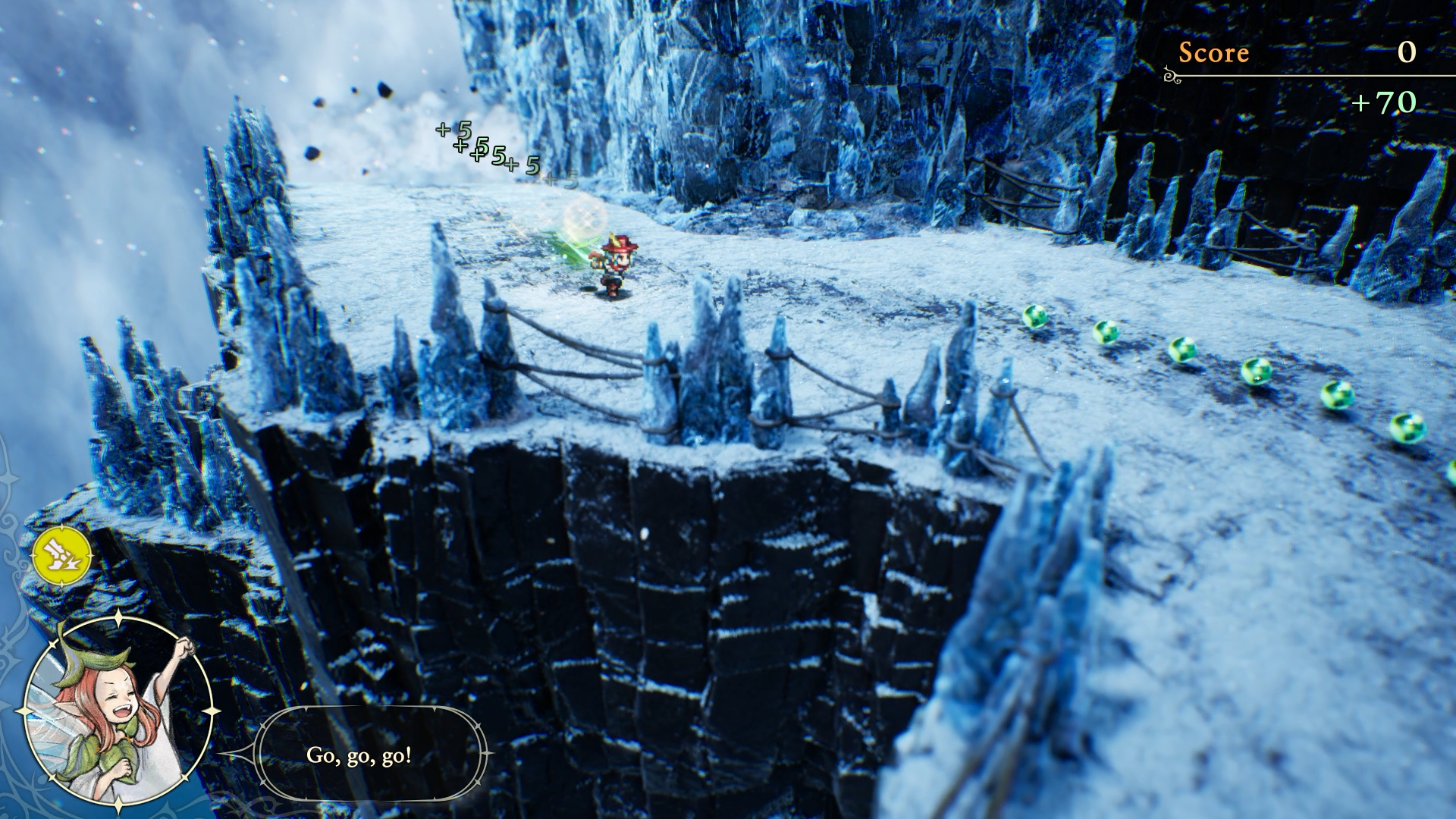
RPG Site: One element of the game that stands out is the strong focus on Elliot's fairy companion, Faie - even down to their portrait, ever-present in the corner of the screen. What led to the decision to include Faie so heavily on the UI?
Matsushita: From the early planning stages, we knew we wanted this to be a buddy-style experience. Once the fairy Faie took shape and we began testing how she behaved in-game, we decided to reflect that partnership in the UI as well, so players could more strongly feel like Faie is traveling alongside Elliot.
I think players will be able to feel it in many small details throughout the game, so I hope they’ll enjoy discovering them.
Matsushita: From the early planning stages, we knew we wanted this to be a buddy-style experience. Once the fairy Faie took shape and we began testing how she behaved in-game, we decided to reflect that partnership in the UI as well, so players could more strongly feel like Faie is traveling alongside Elliot.
I think players will be able to feel it in many small details throughout the game, so I hope they’ll enjoy discovering them.
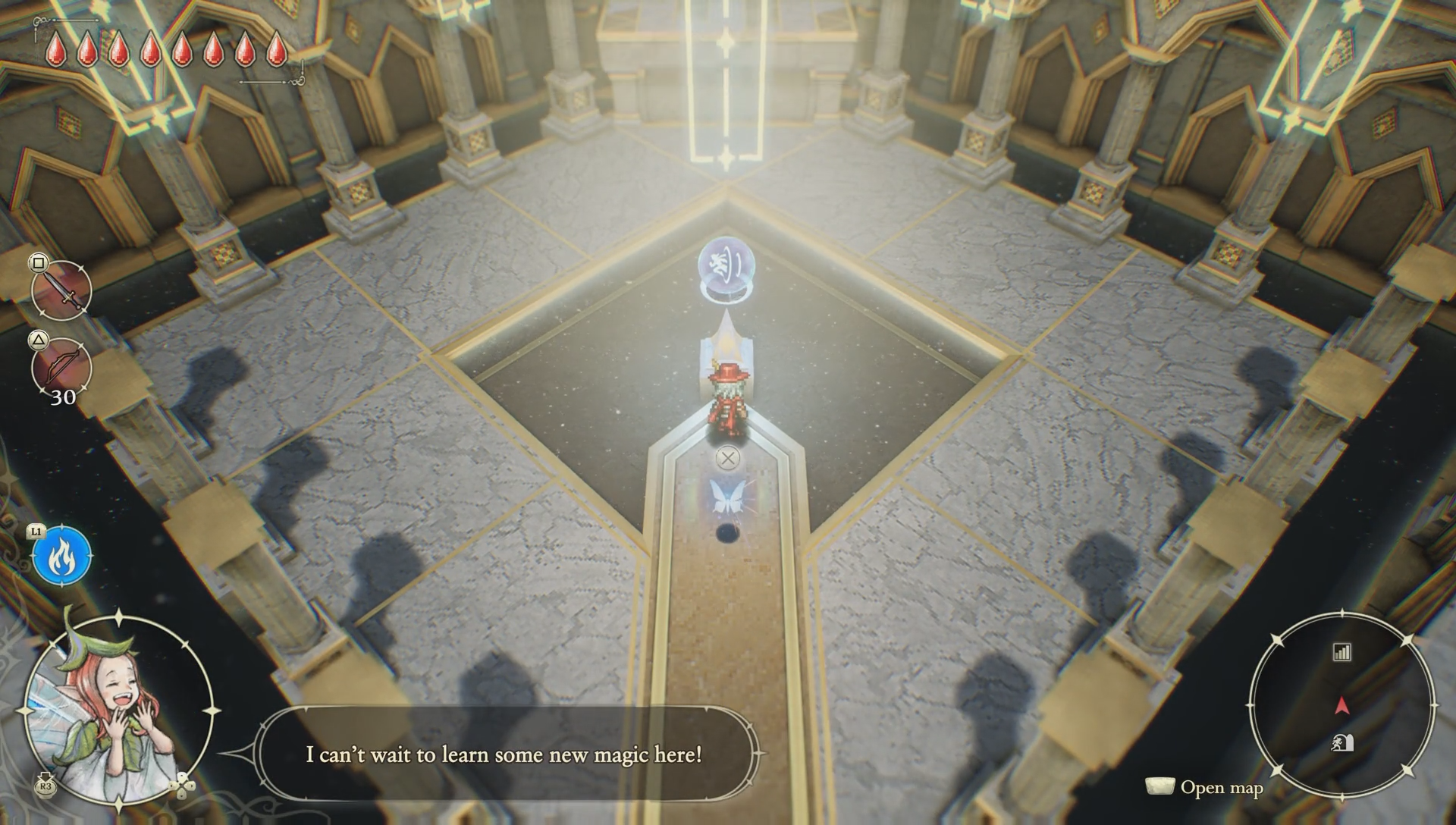
RPG Site: Elliot feels like a particularly unique name for the protagonist of an RPG. Is there anything the team can share about what went into naming the protagonist?
Matsushita: As explained in the game, Elliot’s name comes from the fact that he was found under the Eldertree. I’m glad you find it unique. I’d heard that it’s actually a fairly common name in some parts of the world, so I was a bit nervous about how it would be received. Also, most of the games our team has created so far, such as the OCTOPATH TRAVELER series and TRIANGLE STRATEGY, have had an ensemble cast. This time, portraying a single protagonist was one of our key challenges, so we made that clear in the title and designed the game so players can intuitively understand what to do just by playing. We took this approach in the hope that an even wider range of players will be able to enjoy the game.
Matsushita: As explained in the game, Elliot’s name comes from the fact that he was found under the Eldertree. I’m glad you find it unique. I’d heard that it’s actually a fairly common name in some parts of the world, so I was a bit nervous about how it would be received. Also, most of the games our team has created so far, such as the OCTOPATH TRAVELER series and TRIANGLE STRATEGY, have had an ensemble cast. This time, portraying a single protagonist was one of our key challenges, so we made that clear in the title and designed the game so players can intuitively understand what to do just by playing. We took this approach in the hope that an even wider range of players will be able to enjoy the game.
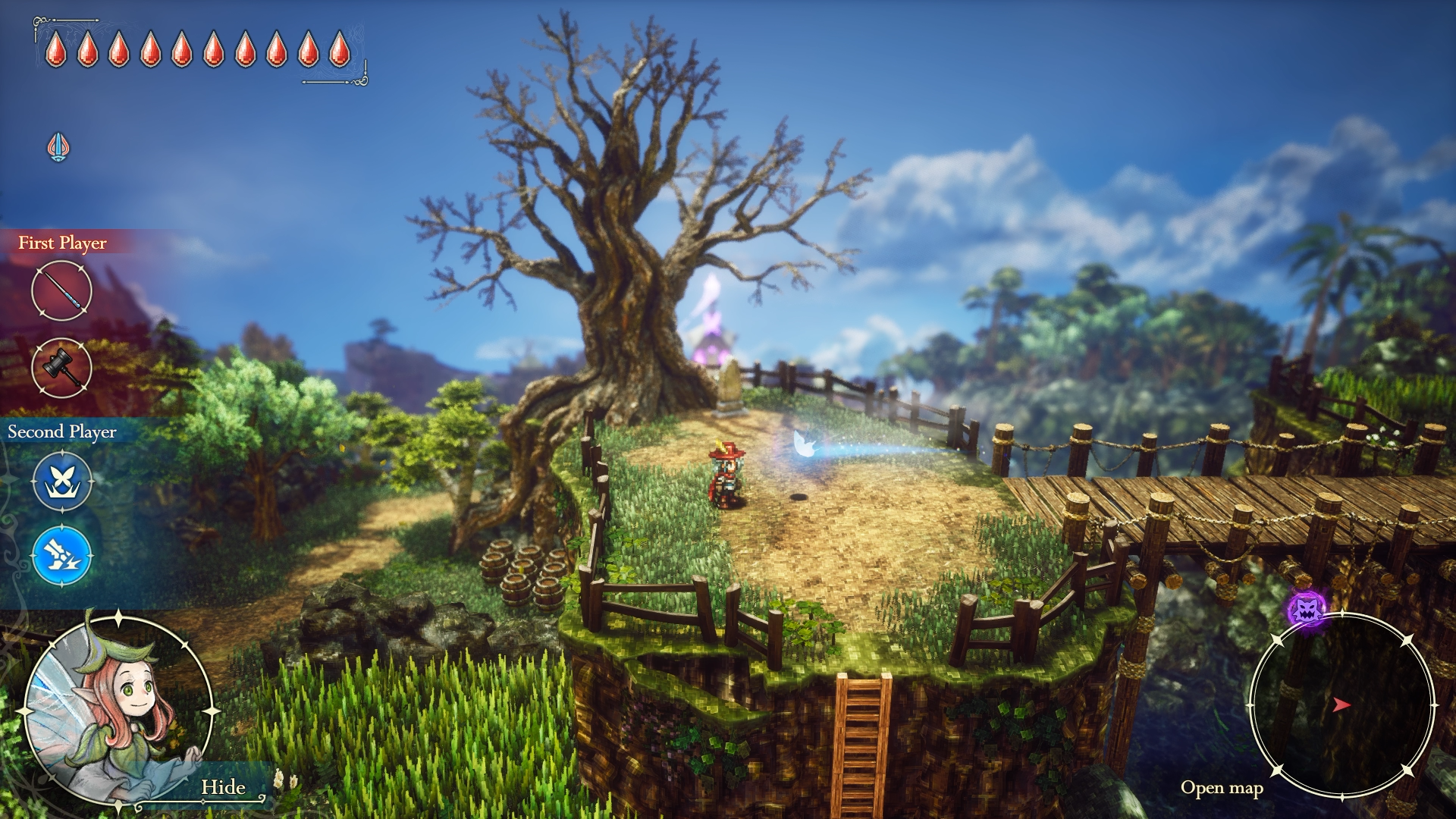
RPG Site: With The Adventures of Elliot being a time-travel story, how did the team decide what sorts of eras to showcase in the game - were there any that the team wanted to include, but were left on the cutting room floor?
Matsushita: We developed the game’s world and story in tandem. As we worked through its history, each era emerged organically from the needs of the narrative: the Age of Safekeeping, the present-day; the Age of Reconstruction, following humanity’s collapse; the Age of Magic, when humanity reached its greatest prosperity; and the Age of Budding, before magic was discovered. As a result, there weren’t any eras that we ultimately had to cut.
Matsushita: We developed the game’s world and story in tandem. As we worked through its history, each era emerged organically from the needs of the narrative: the Age of Safekeeping, the present-day; the Age of Reconstruction, following humanity’s collapse; the Age of Magic, when humanity reached its greatest prosperity; and the Age of Budding, before magic was discovered. As a result, there weren’t any eras that we ultimately had to cut.
Thanks, as always, for the opportunity. The Adventures of Elliot: The Millenium Tales launches on June 18 for PlayStation 5, Xbox Series X|S, PC (Steam, MS Store) and Switch 2. Stay tuned for our full review in the weeks ahead.