

"All the choices you make influence how the game evolves" - We speak with Flyos about making a CRPG in Vampire: The Masquerade - Eternal Whispers
While Summer Game Fest often brings us big announcements from beloved developers, we often get numerous reveals from smaller creators alongside the splashy headliners. One of these games was a CRPG set in the World of Darkness called Vampire: The Masquerade - Eternal Whispers, which was revealed with a debut trailer during the PC Gaming Show stream.
Ahead of the SGF weekend, we had a chance to speak with Gary Paitre, Co-Founder and Creative Director at Flyos, who gave us an introduction to the newly announced game, the approach to the development, creating a CRPG in the World of Darkness, and much more.
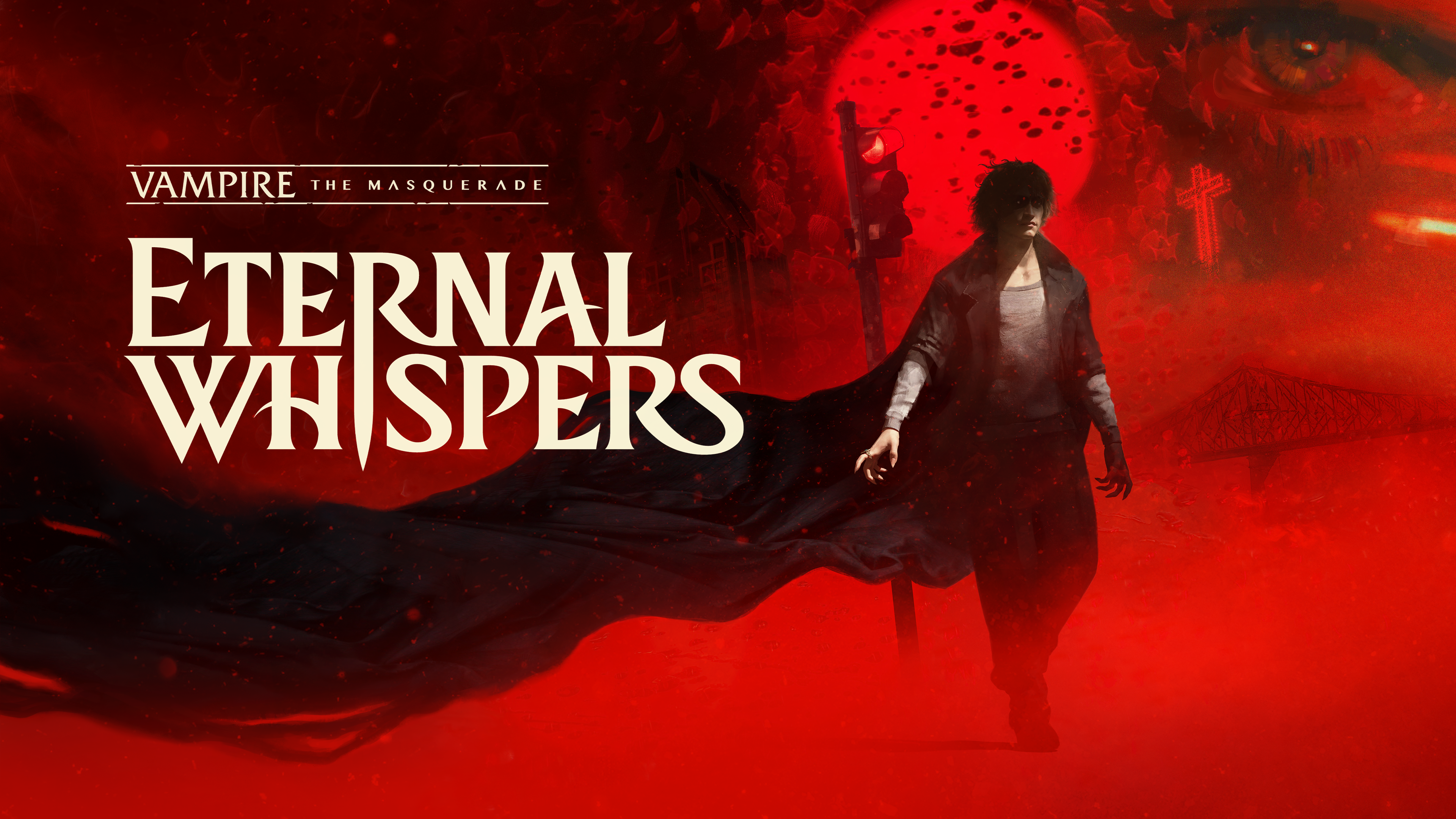
Vampire: The Masquerade - Eternal Whispers is set to release for PC (Steam).
RPG Site: Can you describe what type of game Vampire: The Masquerade - Eternal Whispers is and what you consider the core of the game to be?
Gary Paitre: The game is essentially designed so you can choose your own path to achieve your goals, so you move through the story, and you have an objective to achieve. Pick the way that works best for you, and you will have to deal with the consequences of your choice. The core features of the game are, of course ... this is a narrative CRPG, so top-down most of the time. The camera can, at times, move around to show you a specific angle to dive deeper into an investigation, but otherwise, it is a fixed camera position. We decided not to go with any traditional combat system. However, you can still choose a more combat-oriented approach when you encounter an NPC that blocks your way or is otherwise impeding you. You can decide to kill, use your disciplines, trick their mind, beat them up, whatever you want to do to move forward.
Gary Paitre: The game is essentially designed so you can choose your own path to achieve your goals, so you move through the story, and you have an objective to achieve. Pick the way that works best for you, and you will have to deal with the consequences of your choice. The core features of the game are, of course ... this is a narrative CRPG, so top-down most of the time. The camera can, at times, move around to show you a specific angle to dive deeper into an investigation, but otherwise, it is a fixed camera position. We decided not to go with any traditional combat system. However, you can still choose a more combat-oriented approach when you encounter an NPC that blocks your way or is otherwise impeding you. You can decide to kill, use your disciplines, trick their mind, beat them up, whatever you want to do to move forward.
RPG Site: Does Eternal Whispers have different character builds that might be good, or not good, in certain attributes?
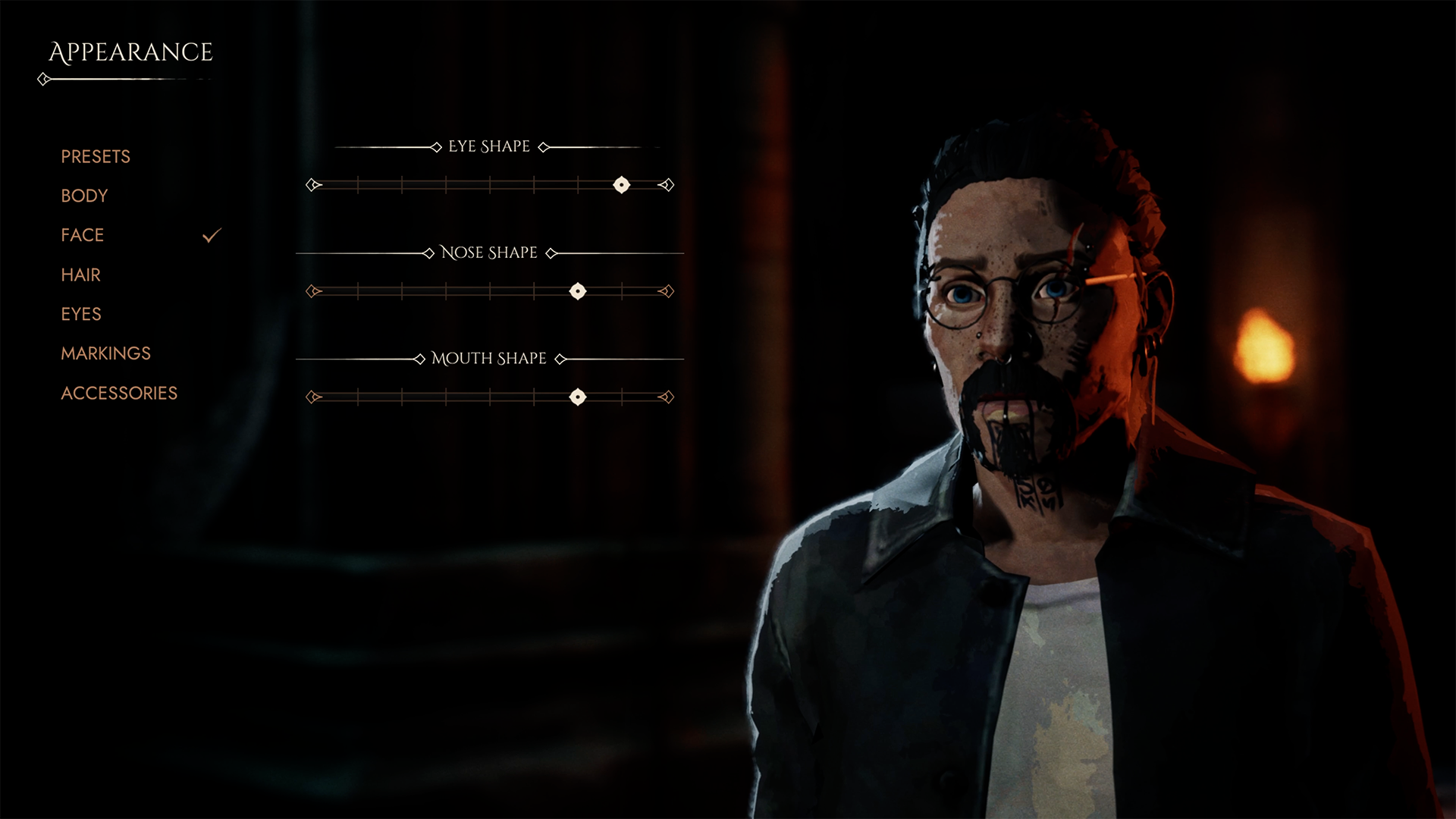
Gary Paitre: Not in that way, because you will build your character visually first, so you decide what your character will look like, so you really design your own Kindred, so you're male, female, long hair, bald, whatever. Then, right after you finish designing your character, you start creating your character sheet. So, just like the TTRPG, you have your three attributes and your skills that are affiliated.
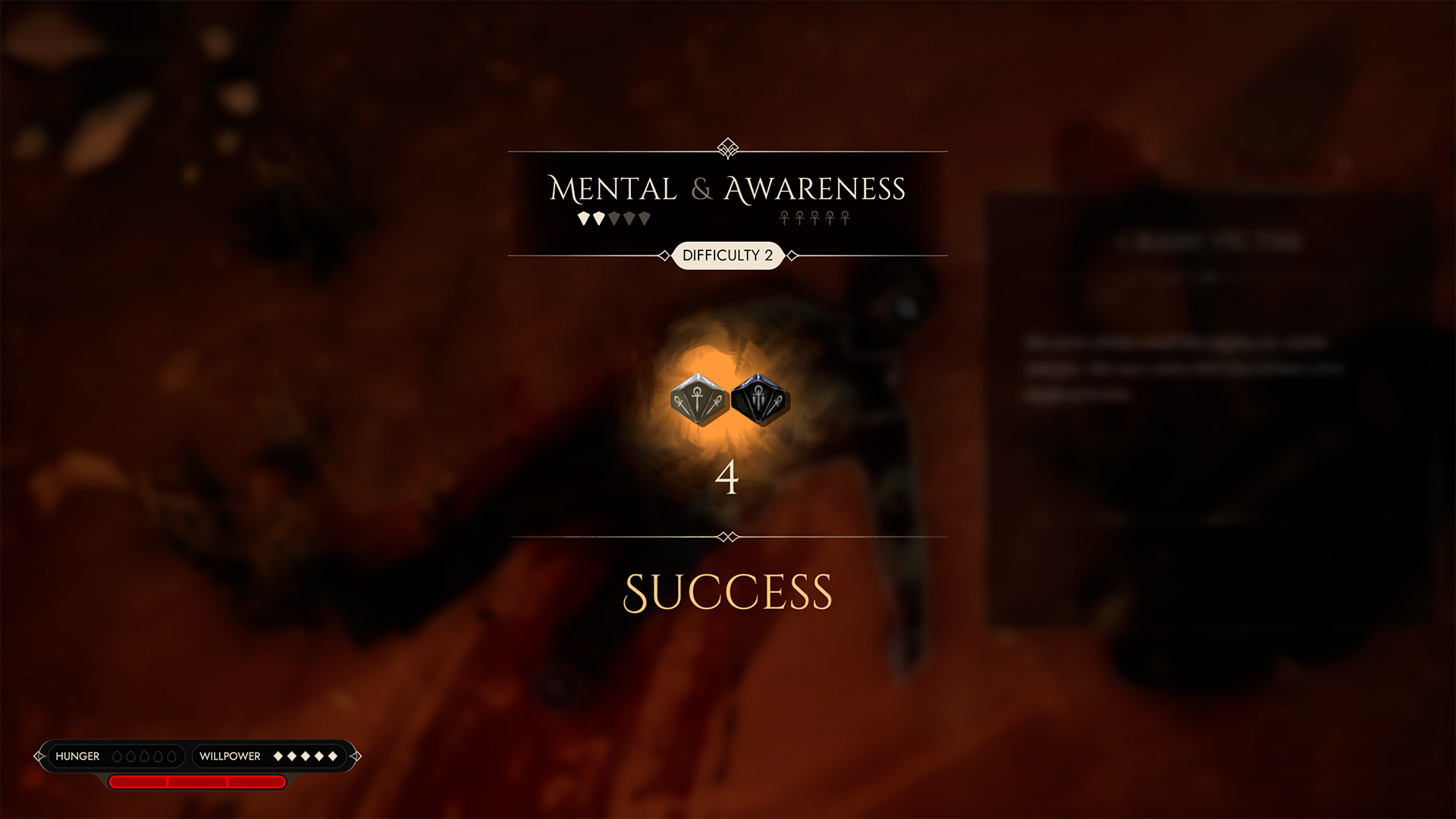
The difference with the TTRPG is that your skills define the number of auto-successes you get when you roll a check. So, let's say you have three points in your Insight skill. If you have a difficulty five skill check, you don't need to roll five successes; you automatically have three successes because of your Insight, but you roll the number of dice corresponding to your attributes, which are Social, Mental, and Physical. You also have gear, weapons that might influence the number of dice you roll.
Most importantly, all the choices you make influence how the game evolves. If you decide to kill everybody in the game, of course, the other NPCs you will encounter will feel threatened by your deeds, but it won't outright block you from moving forward. There's no real "good" or "bad" in the game. The moral is just always "grey", and it depends on the different people who interpret what you've just done. One character might feel that what you've done is wrong, while another one tells you, "Wow, that was great, thank you!" - you know what I mean.
Also, there's one thing we wanted to avoid: players feeling like they need to abuse game saves to always succeed in skill checks. If they want to do it, they can, but we want to reward players who decide to fail forward. Sometimes, succeeding in a skill check might not be the most fun or most interesting approach. Failing can unlock new paths or new ways to explore a mission. While there's no combat, this is a game that is designed for investigation and exploration. There's a big focus on music, sound .. how the way you observe the world tells you a lot about what you're going to experience as a player or as the Kindred. As a vampire, the narrative is related to dark deeds ... so it's not a horror game per se, but it just questions your morals through the entire experience.
Gary Paitre: Not in that way, because you will build your character visually first, so you decide what your character will look like, so you really design your own Kindred, so you're male, female, long hair, bald, whatever. Then, right after you finish designing your character, you start creating your character sheet. So, just like the TTRPG, you have your three attributes and your skills that are affiliated.
The difference with the TTRPG is that your skills define the number of auto-successes you get when you roll a check. So, let's say you have three points in your Insight skill. If you have a difficulty five skill check, you don't need to roll five successes; you automatically have three successes because of your Insight, but you roll the number of dice corresponding to your attributes, which are Social, Mental, and Physical. You also have gear, weapons that might influence the number of dice you roll.
Most importantly, all the choices you make influence how the game evolves. If you decide to kill everybody in the game, of course, the other NPCs you will encounter will feel threatened by your deeds, but it won't outright block you from moving forward. There's no real "good" or "bad" in the game. The moral is just always "grey", and it depends on the different people who interpret what you've just done. One character might feel that what you've done is wrong, while another one tells you, "Wow, that was great, thank you!" - you know what I mean.
Also, there's one thing we wanted to avoid: players feeling like they need to abuse game saves to always succeed in skill checks. If they want to do it, they can, but we want to reward players who decide to fail forward. Sometimes, succeeding in a skill check might not be the most fun or most interesting approach. Failing can unlock new paths or new ways to explore a mission. While there's no combat, this is a game that is designed for investigation and exploration. There's a big focus on music, sound .. how the way you observe the world tells you a lot about what you're going to experience as a player or as the Kindred. As a vampire, the narrative is related to dark deeds ... so it's not a horror game per se, but it just questions your morals through the entire experience.
RPG Site: Would you say that there are disparate branching narrative paths, or is it more like different avenues along the same path? Can you approach your objective in a variety of ways?
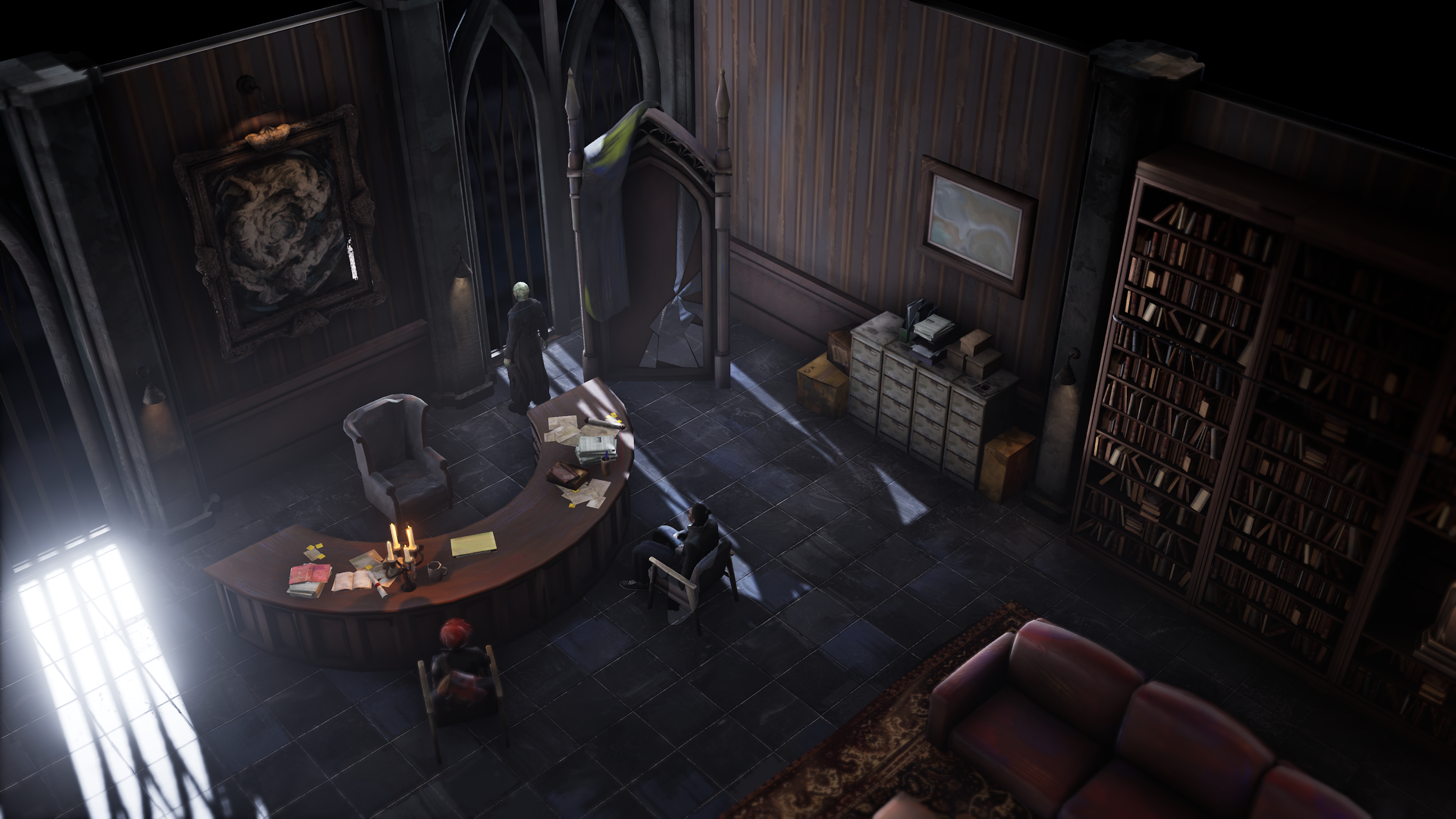
Gary Paitre: So it depends on the situation, but you can. There are some different paths depending on some of the major deeds. The game is not an open world, so it's not about which direction you explore. The game is designed as Haven-to-mission. You start at the Haven of your sidekick Thinblood character, Sam. Her Haven is a library where the basement serves as a place to sleep while it's daytime, but the ground floor is a regular library. So, you encounter regular humans, like angry customers, as well as other Kindred who just need to talk with Sam. So it's regular life where your impact is more about how you develop the conversation with this character, with Sam.
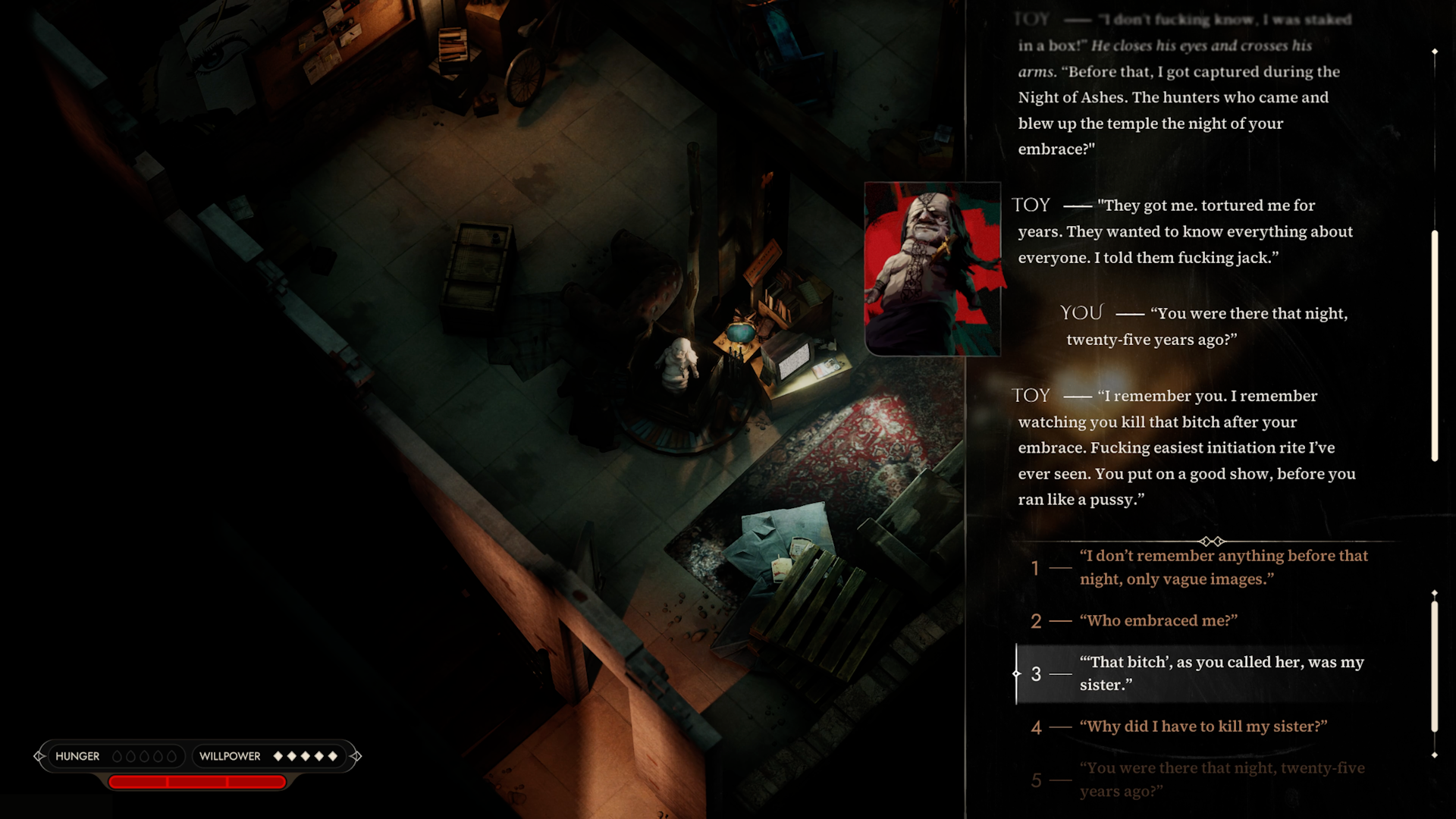
This character is romanceable as well, along with another one that we may talk about later on. When you decide to go to your next mission, you have an objective to achieve, so let's pick the objective of the first mission. You are running after a man called Eric. He's a ghoul that is acting like hecticly, like, he's doing weird stuff. So Sam's sent by the sheriff just to observe that guy, because he might breach the Masquerade, right? So she has to take you with her, because you are her burden at the very beginning, and you start to follow the trails. Now, the way you will encounter this ghoul called Eric is up to you, but if you decide to do some specific action along the course, if you decide to kill some specific characters or behave in a certain way, this might have an impact on later scenarios and change how the scenario is presented. More specifically, at the end of the story, of course, at the end of the game, all the consequences have a branch that is connected to it, so it really feels like a true TTRPG game session, but with the limitation of, okay, there are still missions to complete to proceed onward.
Gary Paitre: So it depends on the situation, but you can. There are some different paths depending on some of the major deeds. The game is not an open world, so it's not about which direction you explore. The game is designed as Haven-to-mission. You start at the Haven of your sidekick Thinblood character, Sam. Her Haven is a library where the basement serves as a place to sleep while it's daytime, but the ground floor is a regular library. So, you encounter regular humans, like angry customers, as well as other Kindred who just need to talk with Sam. So it's regular life where your impact is more about how you develop the conversation with this character, with Sam.
This character is romanceable as well, along with another one that we may talk about later on. When you decide to go to your next mission, you have an objective to achieve, so let's pick the objective of the first mission. You are running after a man called Eric. He's a ghoul that is acting like hecticly, like, he's doing weird stuff. So Sam's sent by the sheriff just to observe that guy, because he might breach the Masquerade, right? So she has to take you with her, because you are her burden at the very beginning, and you start to follow the trails. Now, the way you will encounter this ghoul called Eric is up to you, but if you decide to do some specific action along the course, if you decide to kill some specific characters or behave in a certain way, this might have an impact on later scenarios and change how the scenario is presented. More specifically, at the end of the story, of course, at the end of the game, all the consequences have a branch that is connected to it, so it really feels like a true TTRPG game session, but with the limitation of, okay, there are still missions to complete to proceed onward.
RPG Site: Is there a game mechanic tied to the Masquerade, or is that just your choice as a player, as in, do I want to break it here, or do you have to keep it?
Gary Paitre: Yeah, that's also a great question. The Masquerade obviously takes a major role in the game, because as a vampire, there are like five or six rules that you must follow, but the most important one is the Masquerade. So, you must not reveal your true nature to mortals, right? We have a Masquerade tracker in the game, and at the end of every mission, we calculate how you used your vampire abilities, your disciplines in the game, and whether some NPCs saw you doing so. This increases the chances of you breaking the Masquerade, of course. If you use your power to explode someone, this is obvious. You have, like, a 95% chance of having breached the Masquerade. But the more subtle your actions, the lower the chances that you break it.
If you breach it once, you have one consequence to face. I won't tell you what right now, because we will reveal it in development, but the more you break the Masquerade, the more chances are that you will face your final death. So, you might lose the game just right there. However, there are different levels up until everyone feels you like pure threat to security among Kindred. So, it really plays a role, and if your Masquerade risk level is high, some other NPCs might notice it and might react, and they'll react differently to you. For example, say, they might lead hunters to you. So this definitely has an impact in the game.
Gary Paitre: Yeah, that's also a great question. The Masquerade obviously takes a major role in the game, because as a vampire, there are like five or six rules that you must follow, but the most important one is the Masquerade. So, you must not reveal your true nature to mortals, right? We have a Masquerade tracker in the game, and at the end of every mission, we calculate how you used your vampire abilities, your disciplines in the game, and whether some NPCs saw you doing so. This increases the chances of you breaking the Masquerade, of course. If you use your power to explode someone, this is obvious. You have, like, a 95% chance of having breached the Masquerade. But the more subtle your actions, the lower the chances that you break it.
If you breach it once, you have one consequence to face. I won't tell you what right now, because we will reveal it in development, but the more you break the Masquerade, the more chances are that you will face your final death. So, you might lose the game just right there. However, there are different levels up until everyone feels you like pure threat to security among Kindred. So, it really plays a role, and if your Masquerade risk level is high, some other NPCs might notice it and might react, and they'll react differently to you. For example, say, they might lead hunters to you. So this definitely has an impact in the game.
RPG Site: When you create your character, do you choose your clan or discipline? Does that play a role at all in this game?
Gary Paitre: That's a good question. You start as a Caitiff. However, you can choose a preset, so you will play as, say, a Ventrue, you will play as a Brujah, or any clan you like. So, there are eight clans to begin with in the game, for now, but you are not a Brujah if you choose a preset Brujah, because you were made during the Sabbat time. In the perspective of the game, you have no sire, or at least you don't know yet who your sire is. Clans often are referred to as who embraced you, right? If you're not aware of who embraced you — and as you can see in the trailer video we released, there are several hands around your head, dripping blood on you. In Sabbat ritual, they all shared some sort of blood pool, and you're not really related to a clan to begin with, but you can tend to play as a Ventrue, and when you encounter different Ventrues in the game, they might give you their ways. They may teach you what being a true Ventrue is, and if you act as a Ventrue, or if they feel that you are approaching the clan rules, they will give you insight, and they will even unlock new powers for you. That's a way to approach it, but you are a Caitiff when you start a game.
RPG Site: It's cool to see how you approach the tabletop mechanics and world lore and incorporate them into this game.
Gary Paitre: This is an IP I've been living with for 25 years. I've played countless hours, especially the TTRPG, of course, also online and stuff, but it really is something that we wanted to do: give this TTRPG feeling when you play it. That is one reason why it is not an action RPG at all; it's slow pace. It really drives you, leads you into questioning what is being a vampire, or what humanity is from a vampire perspective. So this is the long story that you will slowly unfold, and that you will discover.
Gary Paitre: That's a good question. You start as a Caitiff. However, you can choose a preset, so you will play as, say, a Ventrue, you will play as a Brujah, or any clan you like. So, there are eight clans to begin with in the game, for now, but you are not a Brujah if you choose a preset Brujah, because you were made during the Sabbat time. In the perspective of the game, you have no sire, or at least you don't know yet who your sire is. Clans often are referred to as who embraced you, right? If you're not aware of who embraced you — and as you can see in the trailer video we released, there are several hands around your head, dripping blood on you. In Sabbat ritual, they all shared some sort of blood pool, and you're not really related to a clan to begin with, but you can tend to play as a Ventrue, and when you encounter different Ventrues in the game, they might give you their ways. They may teach you what being a true Ventrue is, and if you act as a Ventrue, or if they feel that you are approaching the clan rules, they will give you insight, and they will even unlock new powers for you. That's a way to approach it, but you are a Caitiff when you start a game.
RPG Site: It's cool to see how you approach the tabletop mechanics and world lore and incorporate them into this game.
Gary Paitre: This is an IP I've been living with for 25 years. I've played countless hours, especially the TTRPG, of course, also online and stuff, but it really is something that we wanted to do: give this TTRPG feeling when you play it. That is one reason why it is not an action RPG at all; it's slow pace. It really drives you, leads you into questioning what is being a vampire, or what humanity is from a vampire perspective. So this is the long story that you will slowly unfold, and that you will discover.
RPG Site: I think the concept of this going the CRPG route is especially cool. Many World of Darkness games seem to focus on more action or adventure genres. That this is going with a more CRPG slant ... there have been many different World of Darkness games, but not quite like this.
Gary Paitre: I appreciate it a lot that you feel the same way as we did. We were very surprised that there was no World of Darkness game in this genre. So, we are exploring this, and we're doing our best to give more and more to the player, so they feel that their character is unique and their choices are meaningful, and they're not judged by the game itself by having a golden path.
There is actually no golden path in the game. You can even decide to be a killer, and the game rewards you for this. This is very important from our creative perspective.
Gary Paitre: I appreciate it a lot that you feel the same way as we did. We were very surprised that there was no World of Darkness game in this genre. So, we are exploring this, and we're doing our best to give more and more to the player, so they feel that their character is unique and their choices are meaningful, and they're not judged by the game itself by having a golden path.
There is actually no golden path in the game. You can even decide to be a killer, and the game rewards you for this. This is very important from our creative perspective.
RPG Site: So there's no "true ending" where you have to do this thing, that thing, this thing, and line them up all perfectly?
Gary Paitre: The stories of the other NPCs are a real story. You're not the god of this story; you're not the central reason things keep moving. Of course, you have a role to play in all that, but you approach it as if other NPCs have their own agenda and what you can do to affect it in a way. So this is your story among the stories of all other characters in the game. We want players to play their own style and feel like the game rewards them for that.
Gary Paitre: The stories of the other NPCs are a real story. You're not the god of this story; you're not the central reason things keep moving. Of course, you have a role to play in all that, but you approach it as if other NPCs have their own agenda and what you can do to affect it in a way. So this is your story among the stories of all other characters in the game. We want players to play their own style and feel like the game rewards them for that.
RPG Site: Can you describe how you approached the art style and color palette in creating Eternal Whispers?
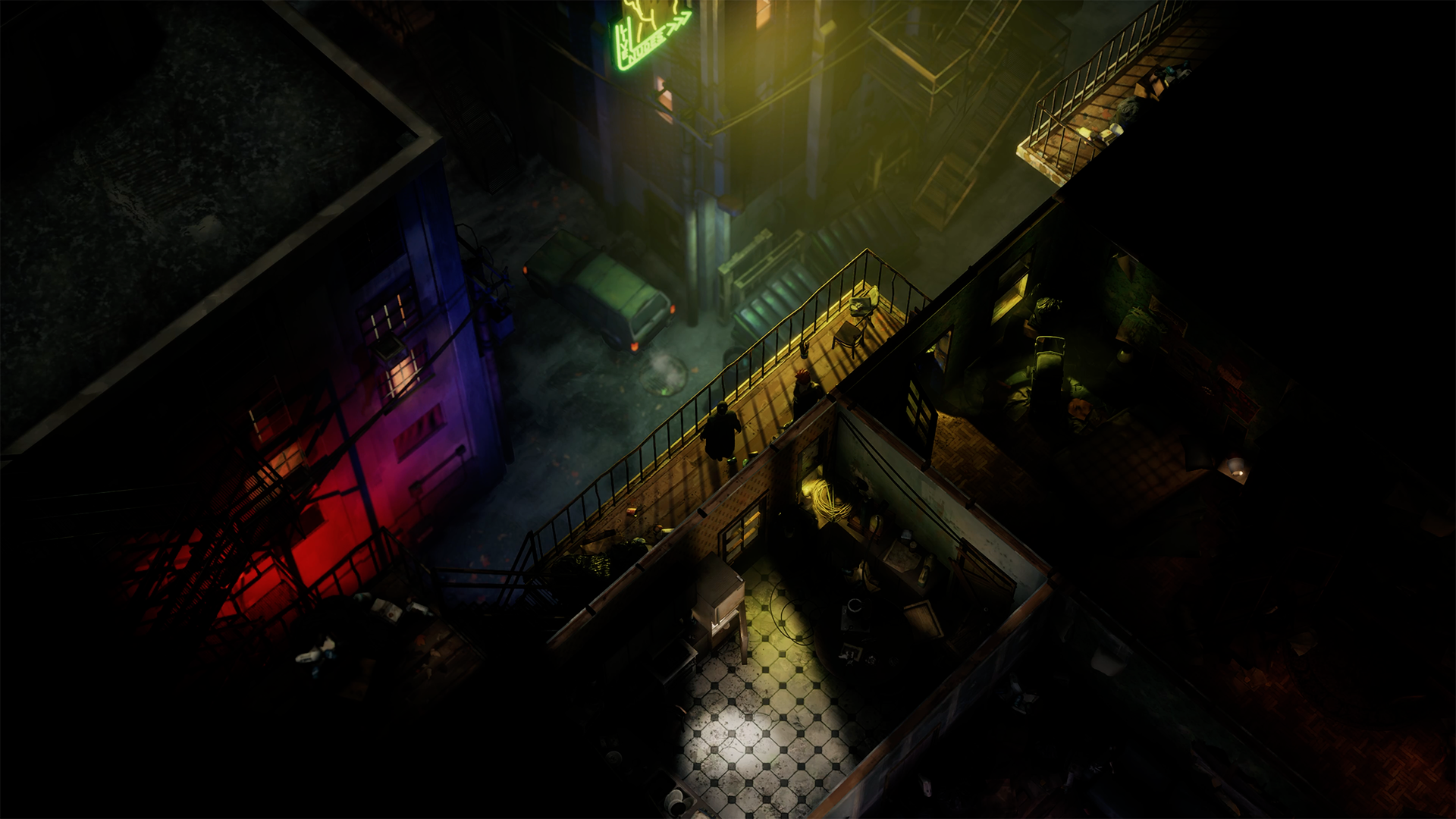
Gary Paitre: This is a vampire game, so mostly you play at night. That means there's a big challenge in how you light the scenes, how dirty this world is. The game layers the World of Darkness with the real world. The game takes place in Montreal, so you have real architectural observations, real city behaviors, but you also have this layer of dark fantasy attached to it, hence why the art style is not a pure photorealistic approach. You have this painterly effect, and sometimes characters' proportions are not exactly realistic, so it gives a unique look to the game.
RPG Site: Can you explain the game's story premise?
Gary Paitre: You play as Gabe, and you were made during Sabbat time. You wake up after two decades, and the city is no longer in the hands of the Sabbat. You play in Camarilla times, but of course, perhaps the Sabbat is still around, so that's what you will discover as you are awakened. The game takes its name from the Temple of Eternal Whispers, which, in the lore, is a gigantic cathedral underneath the city, where all the Sabbat vampires regrouped for their cult. You are tied to this, and you're tied to a specific Kindred that is buried there, so how you will approach that Kindred, what it will tell you about who you are. This is the core of the story, and of course, this attracts a lot of attention ... not only to the Kindred Society, but to other forces in the World of Darkness. I think you saw in the trailer a Garou. So this is a taste of the type of creatures that you may encounter.
Gary Paitre: This is a vampire game, so mostly you play at night. That means there's a big challenge in how you light the scenes, how dirty this world is. The game layers the World of Darkness with the real world. The game takes place in Montreal, so you have real architectural observations, real city behaviors, but you also have this layer of dark fantasy attached to it, hence why the art style is not a pure photorealistic approach. You have this painterly effect, and sometimes characters' proportions are not exactly realistic, so it gives a unique look to the game.
RPG Site: Can you explain the game's story premise?
Gary Paitre: You play as Gabe, and you were made during Sabbat time. You wake up after two decades, and the city is no longer in the hands of the Sabbat. You play in Camarilla times, but of course, perhaps the Sabbat is still around, so that's what you will discover as you are awakened. The game takes its name from the Temple of Eternal Whispers, which, in the lore, is a gigantic cathedral underneath the city, where all the Sabbat vampires regrouped for their cult. You are tied to this, and you're tied to a specific Kindred that is buried there, so how you will approach that Kindred, what it will tell you about who you are. This is the core of the story, and of course, this attracts a lot of attention ... not only to the Kindred Society, but to other forces in the World of Darkness. I think you saw in the trailer a Garou. So this is a taste of the type of creatures that you may encounter.
RPG Site: You seem very familiar with World of Darkness terminology and lore, but let's just say someone is not very familiar with Vampire: The Masquerade. Are they going to be completely lost? How do you, how do you use this game to introduce the world to them?
Gary Paitre: That's one of the greatest questions I have gotten so far. It's a big challenge for us to make a game that is appealing to the fans, because they are going to have certain expectations. But let's set that aside. I want my wife, who is not familiar at all with the World of Darkness, but she loves Baldur's Gate, Disco Elysium, and she loves RPG. I want to make a game that someone like her can play, and she's like, okay, well, I understand this world, I understand the rules, I am deeply attached to these different characters, so we have two methods to put players into that setup. The first one is not having a narrator voiceover telling you explicitly, "In the Masquerade, you can do this or that"; it is instead introduced more subtly in dialogue, where you learn how the world reacts. Sometimes you have to commit a reprehensible act, so other people react and say, "Wait, this is not how we behave now in the Camarilla." This is only one of many examples, but the lore will be taught slowly at the right pace without being too in your face.
The game will also feature a sort of index menu, in which every time you learn a new word, let's say the Prince or the Sheriff, which are two roles in the vampire society, it will be added to the index. You will have all this lore that will help you go through, if needed.
So this is a challenge, but we wanted it to feel very natural. Character dialogue in the game can be somewhat self-aware, too. Sometimes the terminology can sound a bit wacky, for example, especially like the word Sheriff. It can give the impression of, like, there's a sheriff in town; it feels like a western. So, it's approached by the NPCs that they know themselves that sometimes the wording is a bit unusual, but they're conscious about that. This is the kind of approach we're trying to achieve.
RPG Site: You have the hard job of developing this; I just have the job of looking at it, but sometimes you get narratives that are set in a very dense world, but then some character becomes a literal walking dictionary, explaining everything to the player.
Gary Paitre: This is exactly what you want to avoid. So we're working hard on it, and we're starting intense QA sessions soon. So we are very, very sensitive to what players, fans, non-fans will say. Maybe they'll say. "I don't understand a single thing about this world" or "It's pretty clear to me", etc. So we'll be very focused and involved in how players learn the setting.
Gary Paitre: That's one of the greatest questions I have gotten so far. It's a big challenge for us to make a game that is appealing to the fans, because they are going to have certain expectations. But let's set that aside. I want my wife, who is not familiar at all with the World of Darkness, but she loves Baldur's Gate, Disco Elysium, and she loves RPG. I want to make a game that someone like her can play, and she's like, okay, well, I understand this world, I understand the rules, I am deeply attached to these different characters, so we have two methods to put players into that setup. The first one is not having a narrator voiceover telling you explicitly, "In the Masquerade, you can do this or that"; it is instead introduced more subtly in dialogue, where you learn how the world reacts. Sometimes you have to commit a reprehensible act, so other people react and say, "Wait, this is not how we behave now in the Camarilla." This is only one of many examples, but the lore will be taught slowly at the right pace without being too in your face.
The game will also feature a sort of index menu, in which every time you learn a new word, let's say the Prince or the Sheriff, which are two roles in the vampire society, it will be added to the index. You will have all this lore that will help you go through, if needed.
So this is a challenge, but we wanted it to feel very natural. Character dialogue in the game can be somewhat self-aware, too. Sometimes the terminology can sound a bit wacky, for example, especially like the word Sheriff. It can give the impression of, like, there's a sheriff in town; it feels like a western. So, it's approached by the NPCs that they know themselves that sometimes the wording is a bit unusual, but they're conscious about that. This is the kind of approach we're trying to achieve.
RPG Site: You have the hard job of developing this; I just have the job of looking at it, but sometimes you get narratives that are set in a very dense world, but then some character becomes a literal walking dictionary, explaining everything to the player.
Gary Paitre: This is exactly what you want to avoid. So we're working hard on it, and we're starting intense QA sessions soon. So we are very, very sensitive to what players, fans, non-fans will say. Maybe they'll say. "I don't understand a single thing about this world" or "It's pretty clear to me", etc. So we'll be very focused and involved in how players learn the setting.
RPG Site: On the flip side of that, do you think you're going to get super fans who are going to be particular about if your portrayal of Vampire the Masquerade?
Gary Paitre: I think so, for one simple reason. It's because Eternal Whispers is not an action RPG; it's a CRPG. Whenever you want to push a conversation and dive super deep into the lore of the world, the IP, you can do so, even if it does not affect how you progress in the game. So, you can have moments where you can talk at length with a character about, say, vampire society, what it is like in this clan, what happened in the Sabbat, so all these subjects are very addressed to the fans of the IP. A lot of this isn't necessarily mandatory, and you're not forced to pass through these dialogue branches. But there are many considerations to make, including in the art direction and the environmental storytelling. We have tons of details in the environment, so players who just want to get lost themselves in the missions will learn a lot about the world without a word being said. This is very important to us to transmit this passion to the fans as well.
Gary Paitre: I think so, for one simple reason. It's because Eternal Whispers is not an action RPG; it's a CRPG. Whenever you want to push a conversation and dive super deep into the lore of the world, the IP, you can do so, even if it does not affect how you progress in the game. So, you can have moments where you can talk at length with a character about, say, vampire society, what it is like in this clan, what happened in the Sabbat, so all these subjects are very addressed to the fans of the IP. A lot of this isn't necessarily mandatory, and you're not forced to pass through these dialogue branches. But there are many considerations to make, including in the art direction and the environmental storytelling. We have tons of details in the environment, so players who just want to get lost themselves in the missions will learn a lot about the world without a word being said. This is very important to us to transmit this passion to the fans as well.
RPG Site: Do you have an idea how long the game is expected to be?
Gary Paitre: We are aiming at a 20-hour experience; this is something we want to achieve for launch. Now, I'm a passionate designer, and I will definitely do more along the way, produce more material, more missions, and give more to the fans after launch. I think we will have more to say, but we have a main story to tell, and we need to do it in a certain number of missions. Each mission is around two hours of gameplay, and we have 11 missions and nine Haven scenes, so you go back to your Haven, and then you go to your mission. So, yeah, around 20 hours, maybe a bit more, if you spend a lot of time digging into each subject.
I want to do more and more, so the world feels even more alive afterwards. But for now, I need to focus on the story, because if I start to get lost in too many tiny details right now, we're never gonna deliver. I just try to do my best, so we can tell a great story in a perfect time frame, so it feels right at the moment.
Gary Paitre: We are aiming at a 20-hour experience; this is something we want to achieve for launch. Now, I'm a passionate designer, and I will definitely do more along the way, produce more material, more missions, and give more to the fans after launch. I think we will have more to say, but we have a main story to tell, and we need to do it in a certain number of missions. Each mission is around two hours of gameplay, and we have 11 missions and nine Haven scenes, so you go back to your Haven, and then you go to your mission. So, yeah, around 20 hours, maybe a bit more, if you spend a lot of time digging into each subject.
I want to do more and more, so the world feels even more alive afterwards. But for now, I need to focus on the story, because if I start to get lost in too many tiny details right now, we're never gonna deliver. I just try to do my best, so we can tell a great story in a perfect time frame, so it feels right at the moment.
RPG Site: Do you think the game will be replayable such that, in the back half of the game, I'm wondering to myself, 'what could have happened had I made other decisions throughout the game?'
Gary Paitre: This is like one of the cores of our motivation. What would happen if I decided to do this instead of that? Hence, why you have these two sidekick companion characters that I told you about. The first is Sam; she is this Thinblood. She tends more toward humanity. However, right after the first mission, you save a Kindred called Tory. Tory is the pure opposite of Sam. He is instead leaning toward the Sabbat. He just wants to kill and become 'the beast you naturally are'. So he's really, really pushing you toward doing bad stuff, right? Throughout the story, you can be closer to what Sam believes is proper behavior, or lean toward what Tory thinks is proper behavior. For example, you can play the whole story exclusively doing what Sam thinks is good, such as not killing anybody. By the way, you can finish the game without killing anyone throughout the game.
On the other hand, you can decide to kill any killable NPC, and this will have a wholly different effect on your experience. Choosing different approaches is very, very important, not only for replayability, but even just to keep the player curious, 'what would happen if I made a different choice?'. You can even watch someone else streaming their game, realizing what options you may have missed depending on your choices. There are tons of secrets like that slightly hidden in the game for players to discover.
Gary Paitre: This is like one of the cores of our motivation. What would happen if I decided to do this instead of that? Hence, why you have these two sidekick companion characters that I told you about. The first is Sam; she is this Thinblood. She tends more toward humanity. However, right after the first mission, you save a Kindred called Tory. Tory is the pure opposite of Sam. He is instead leaning toward the Sabbat. He just wants to kill and become 'the beast you naturally are'. So he's really, really pushing you toward doing bad stuff, right? Throughout the story, you can be closer to what Sam believes is proper behavior, or lean toward what Tory thinks is proper behavior. For example, you can play the whole story exclusively doing what Sam thinks is good, such as not killing anybody. By the way, you can finish the game without killing anyone throughout the game.
On the other hand, you can decide to kill any killable NPC, and this will have a wholly different effect on your experience. Choosing different approaches is very, very important, not only for replayability, but even just to keep the player curious, 'what would happen if I made a different choice?'. You can even watch someone else streaming their game, realizing what options you may have missed depending on your choices. There are tons of secrets like that slightly hidden in the game for players to discover.
RPG Site: To wrap up, did you have any information to share regarding expected release timing or release platforms, other than the announced Steam release?
Gary Paitre: This is a discussion that needs to pass through quality, and it's a strategy. What I can say is that we're fairly advanced in the development of the game. I would say that we have around 50% or even a bit more developed at this moment, and it's ramping up. It's really going well in terms of production, but we don't have a release window yet.
Gary Paitre: This is a discussion that needs to pass through quality, and it's a strategy. What I can say is that we're fairly advanced in the development of the game. I would say that we have around 50% or even a bit more developed at this moment, and it's ramping up. It's really going well in terms of production, but we don't have a release window yet.