

"We sat down and watched a lot of old action movies," — Onimusha: Way of the Sword's developers on crafting intense combat, difficulty, the Switch 2 version, and more
Despite already having a strong year, Capcom's 2026 isn't over yet, as after nearly two decades, the Onimusha franchise is set to finally make its long-awaited return. A lot has changed in 20 years, and Onimusha: Way of the Sword looks to push the supernatural samurai series in a new, bolder action-focused direction, while still trying to retain the heart of what's made it special.
However, one of the other interesting aspects of Onimusha has long been its use of real history and locations in Japan. That aspect has been doubled down on in Way of the Sword, as players take on the role of the legendary samurai Miyamoto Musashi to battle the demonic Genma in Kyoto.
Ahead of Way of the Sword's release, we had the chance to talk to director Satoru Nihei and producer Akihito Kadowaki, digging into the way the game embraces real history, the action film-inspired combat, making the Nintendo Switch 2 version, and more.
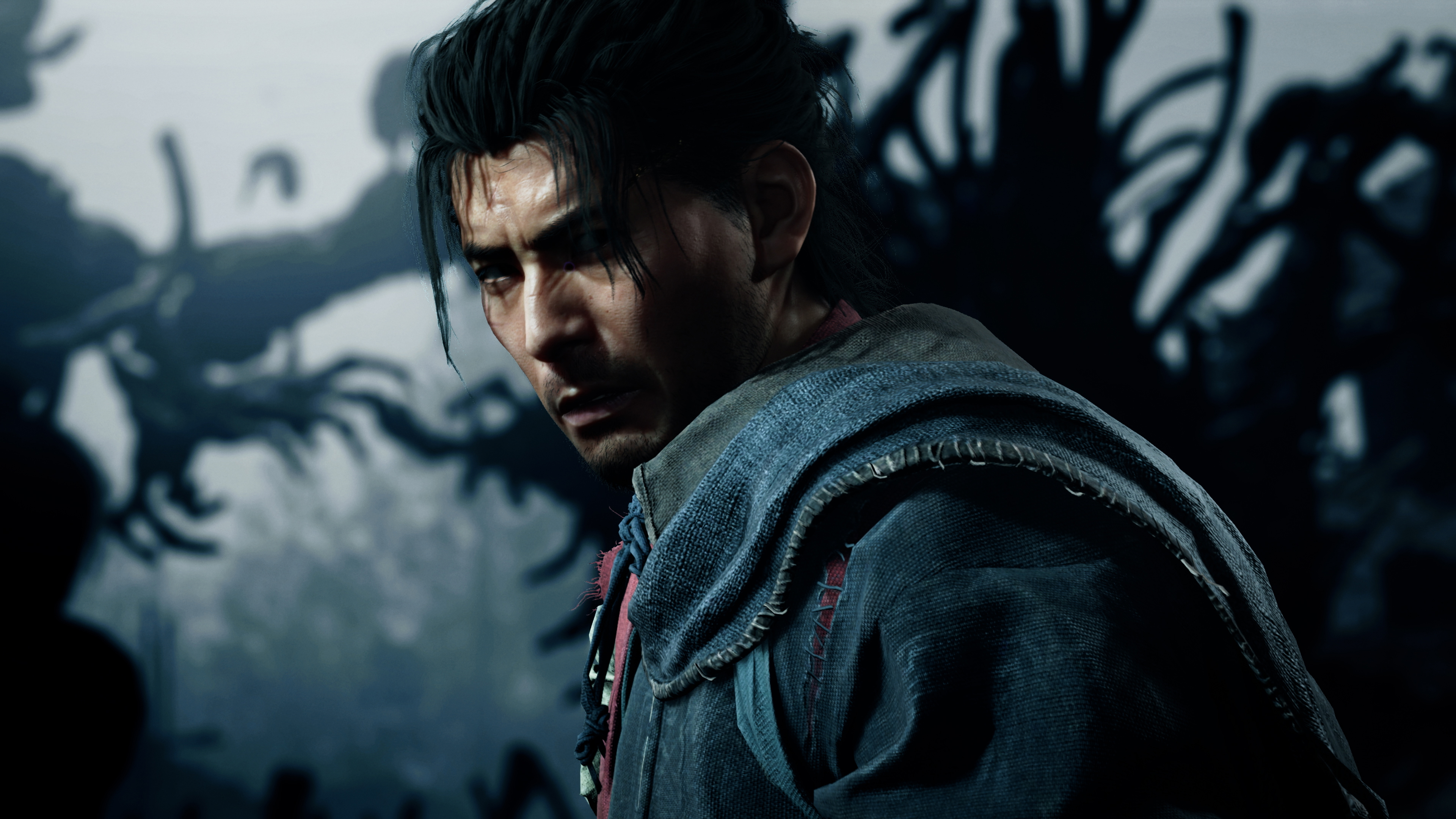
Nihei: Definitely, we would love people to like Musashi. We made him with that in mind in terms of the character design and personality. But yes, Capcom as a whole, as a company, we know we do have a lot of these very charismatic characters that become fan favorites and really well known around the world through gaming.
So in making Musashi, and even Ganryu in this title as well, where they form a bit of a pair there, we definitely made them these charming characters that hopefully people will come to like.
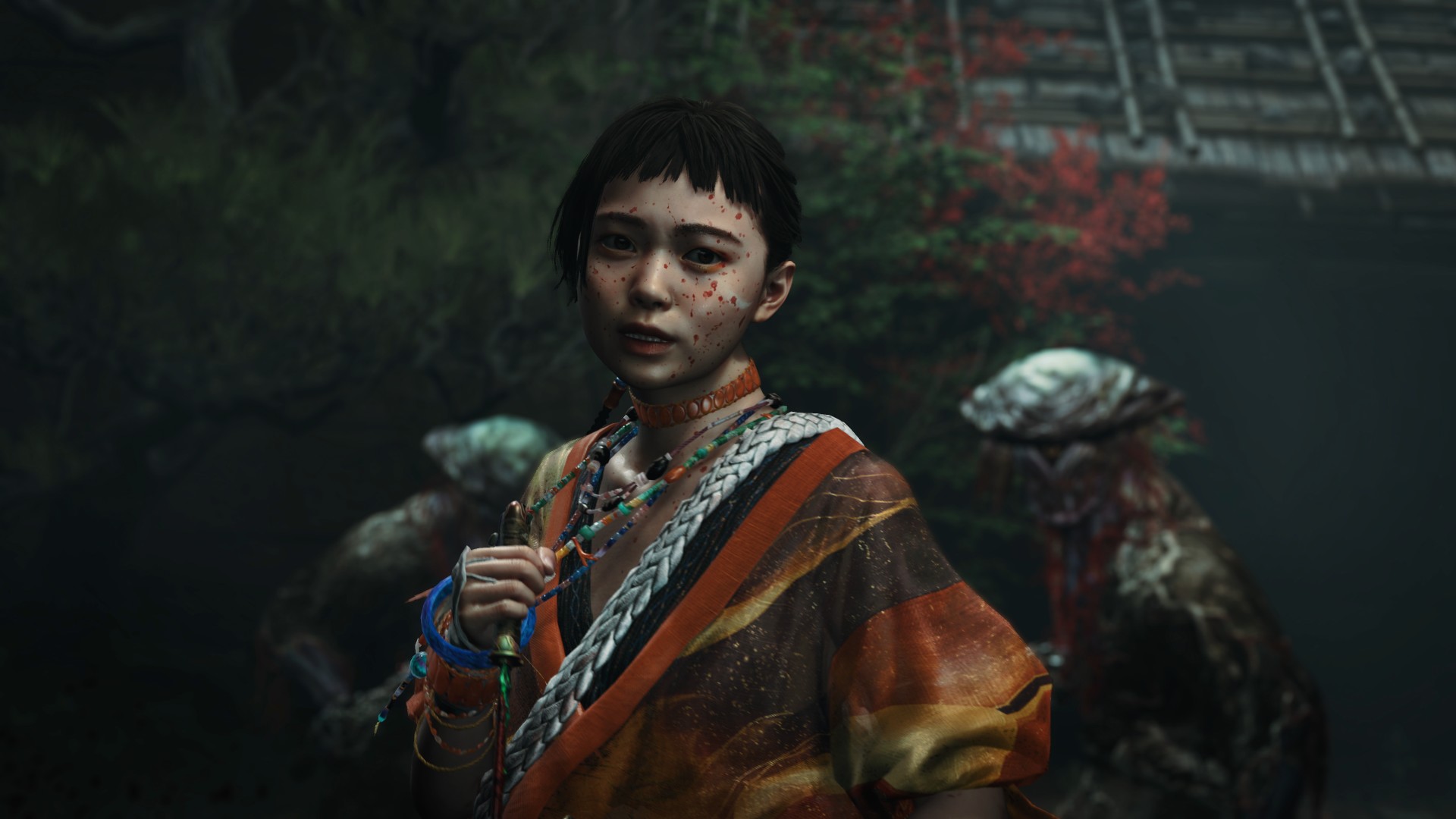
Nihei: In terms of having these historical figures appear in this title, aside from Miyamoto Musashi, of course, for those other characters they came from essentially trying to align with the time period we had picked. So we had this early Edo period setting, and also the location of Kyoto. We wanted to bring in historical figures that would be tied, essentially, to that period and location, but would also bring some interesting or exciting elements to the world-building that we wanted to set.
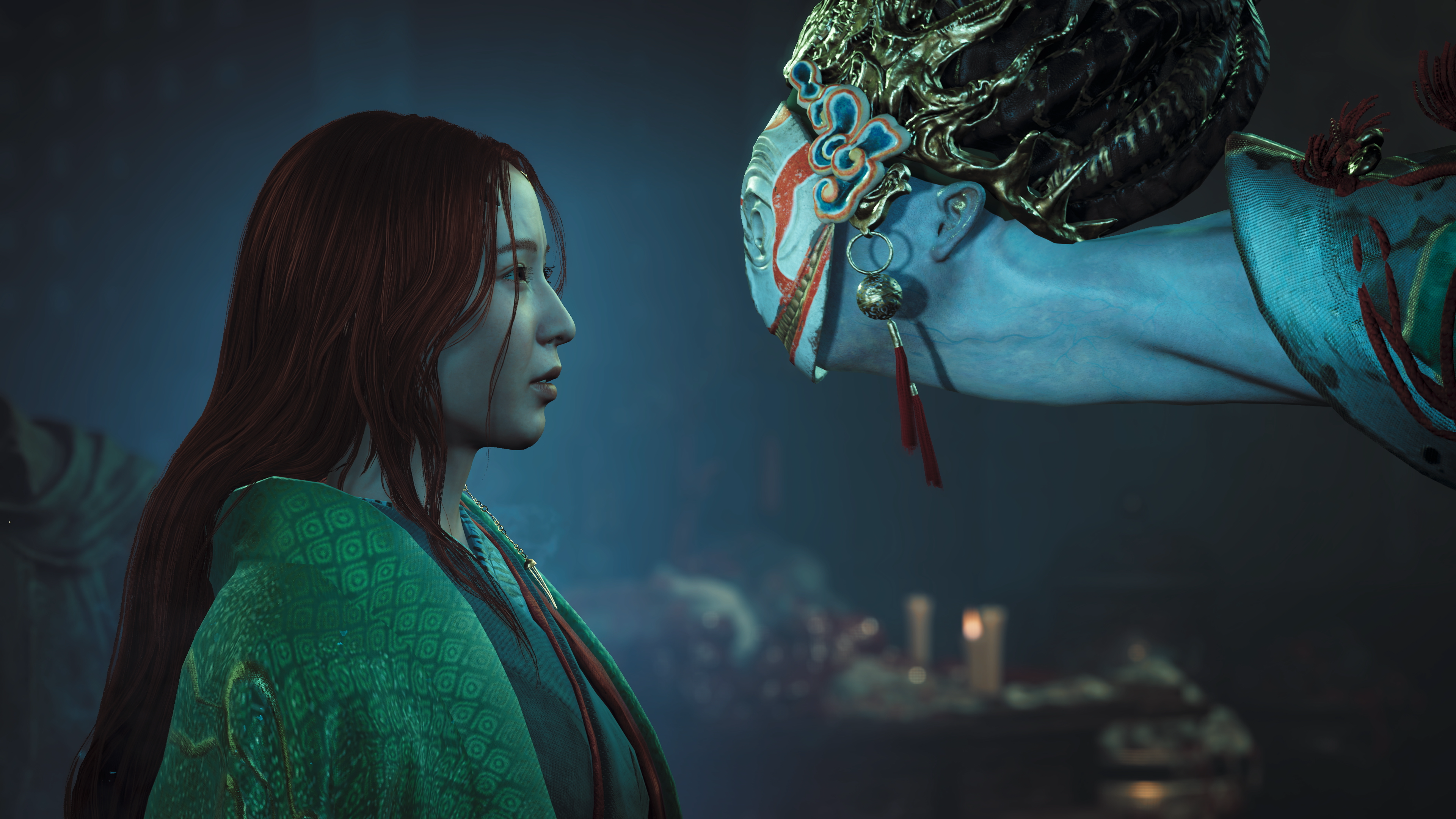
In the case of Okuni, we had this very charming historical figure who had ties to the origin of Kabuki. So that was something that we could incorporate and put into the game. We felt it would be a very interesting angle to have in there, and very unique to our setting in particular.
And also for Kyoto itself, in history we have this figure Ono no Takamura, and if you look back in history, he’s not from the Edo period. He’s from a period beyond that. But there were these interesting legends surrounding him, with him being essentially Lord Enma, kind of the warden of hell. So that was also something that influenced us. Even though he’s crossing these different time periods, we wanted to incorporate him into the story to make our world very unique. So while we do put in these historical figures, we mix it with these fantastical elements as well to flesh them out.
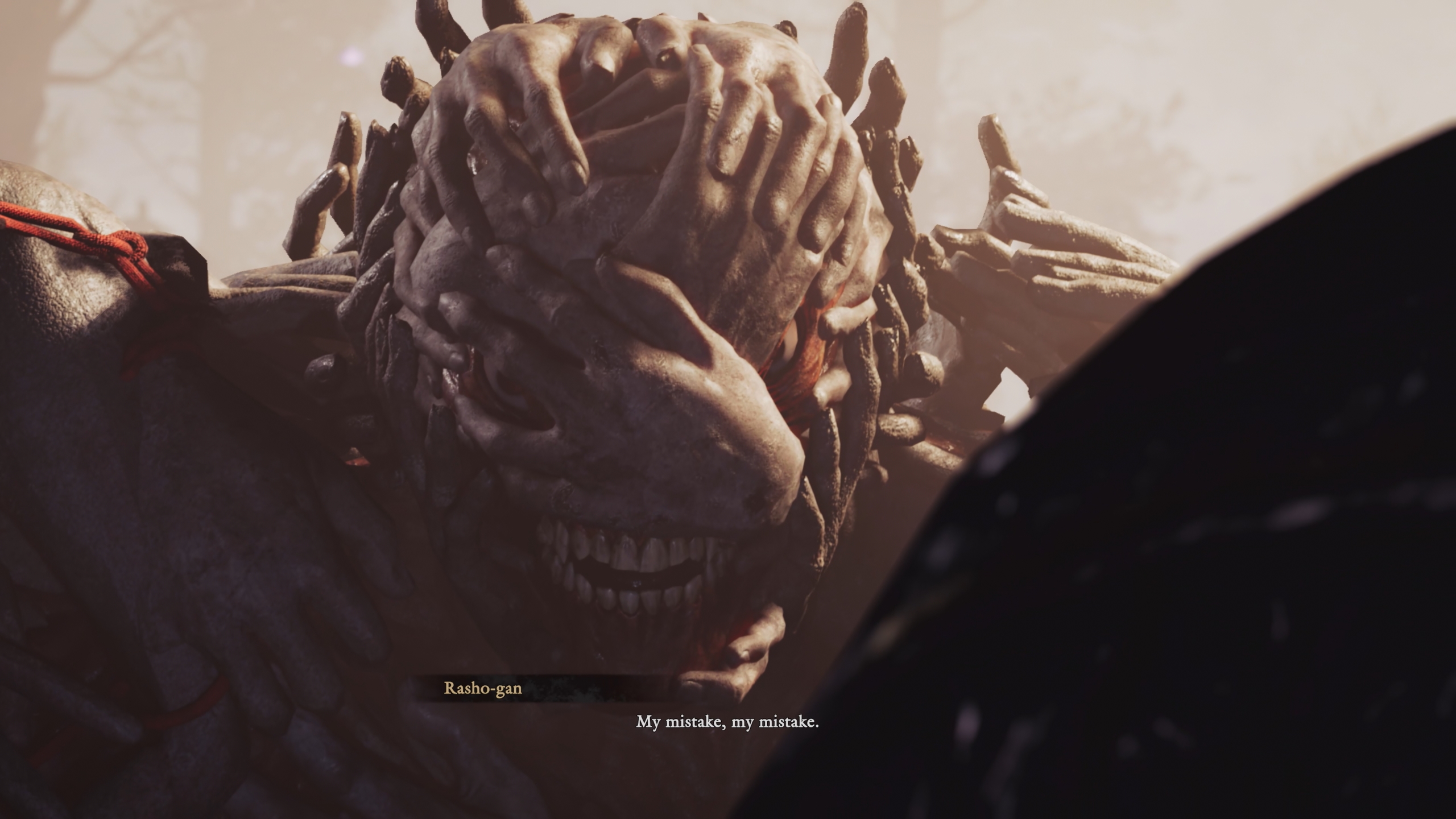
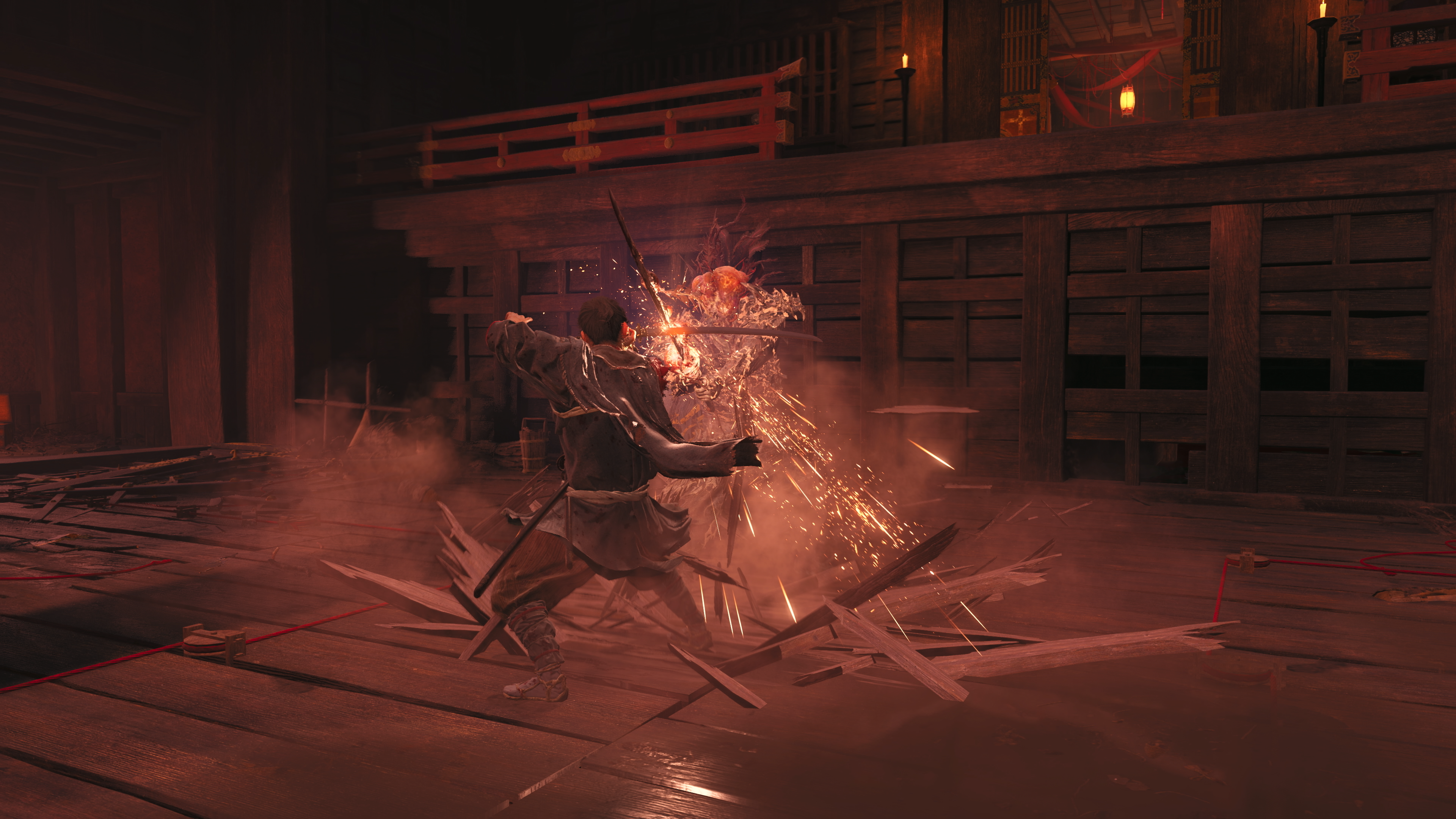
Nihei: For the creation of a lot of these enemies, these sort of crazy, very unique ones. Essentially, the root of the process is tying them to a location and working from there. In the case of Rasho-gan, the boss that you quite like, he’s tied to this location, Yasui Konpiragu Shrine, which you fight him in.
That shrine, in reality in Japan, is tied to this concept of severing and bonding fates. There are a lot of stories tied to that shrine based around that, and it informed a lot of the decision-making for the design of Rasho-gan himself.
In terms of bonding fates or creating these connections between people and fates. In Japan, we have this motif of red threads, tying things together and connecting them. That’s something we wanted to incorporate into his motif as well. But for Rasho-gan’s weapon, he has a sword that transforms into these giant shears – that came from the idea of severing fates.
Already you can see from the location, and these kinds of stories help inform a lot of the design. But with Rasho-gan in particular, there’s his actual body design. He’s there at the shrine; he’s deceiving people and harvesting these body parts from them. Even in his design, he’s got all these harvested parts attached to him. Extra arms, multiple eyes. Even from just a visual appearance, you can get a sense of the history or lore from that character. That’s something we really focused on when designing a lot of the boss enemies. And then also on top of that, adding in Japanese visual flourishes, aesthetics, and traditional garments and accessories.
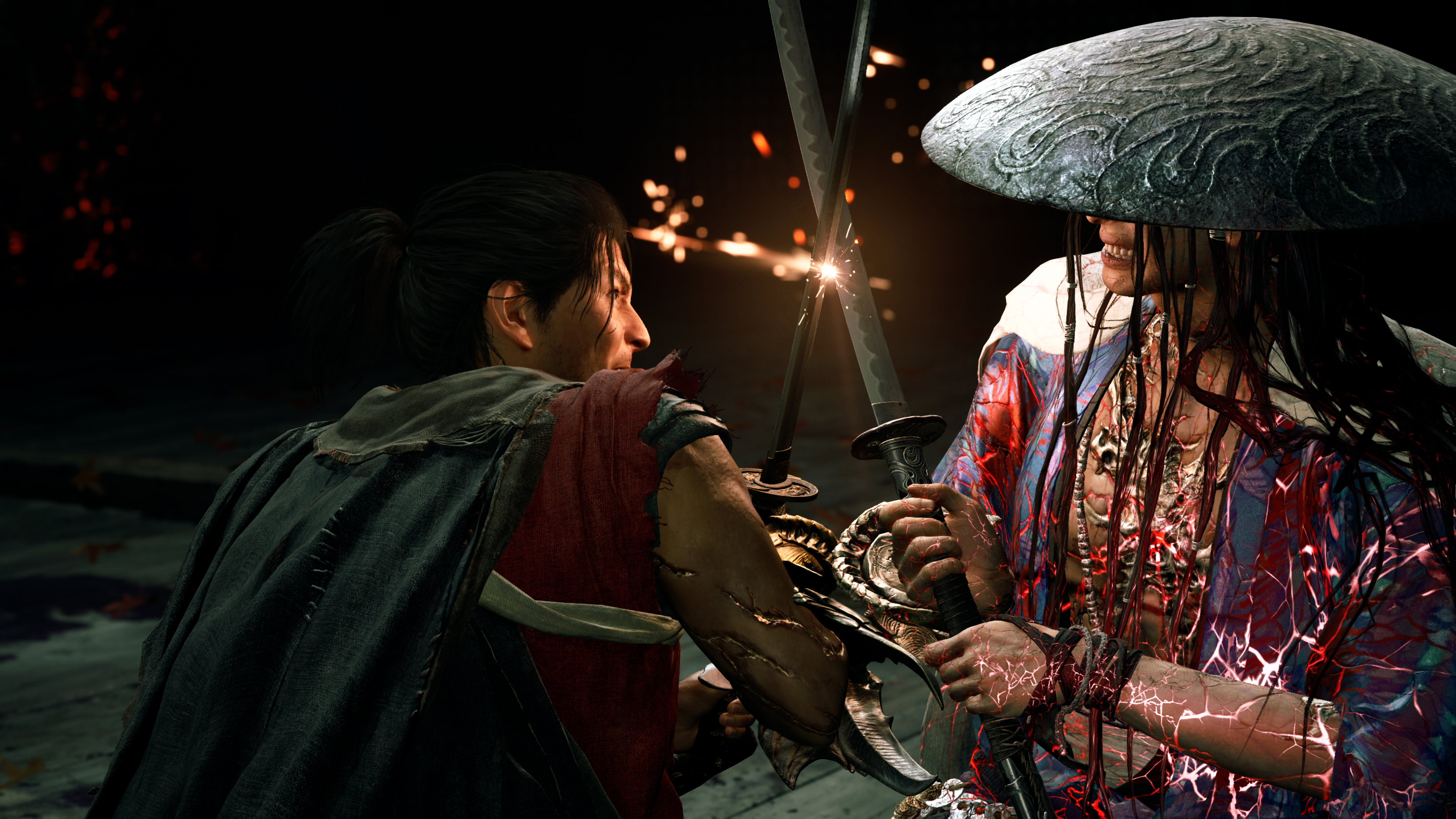
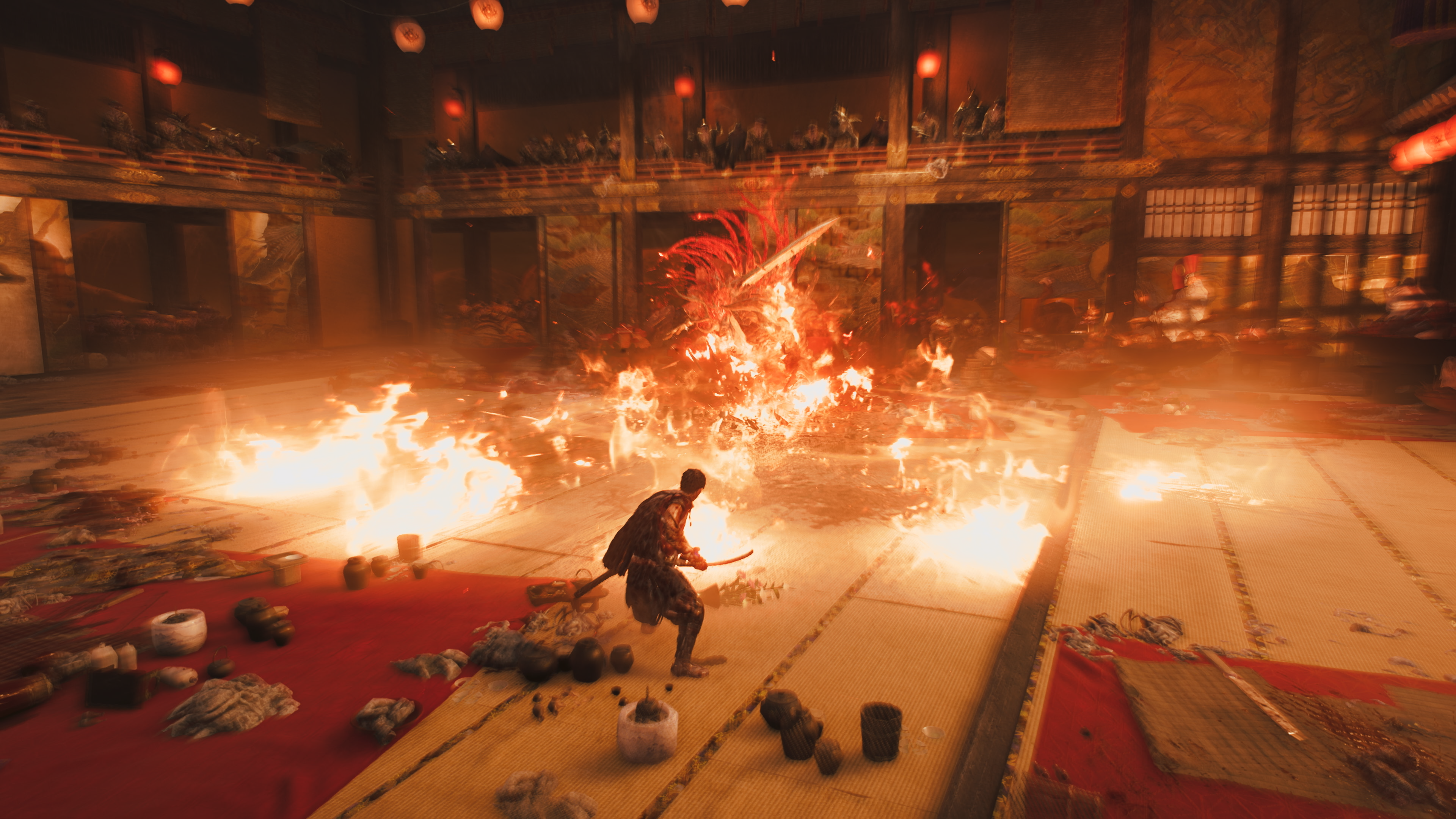
Nihei: With the environmental elements you can use in combat, other than the Tatami Mats you can flip up and boot into people or shield yourself, we also have carts that you can pick up and wheel into enemy crowds. Also, later in the game, when you get the Oni strength ability, you can use that superhuman strength to pick up elements in a stage that you usually wouldn’t be able to, and use them as weapons. So there are definitely more of those instances of environmental action that you’ll find in the main game when you play.
But yeah, for the inspiration, as you said, we sat down and watched a lot of old action movies, and when you have those very cool scenes where the hero is using whatever is necessary to clinch victory, it’s something we took on board and wanted to incorporate into the kind of samurai we wanted to depict.
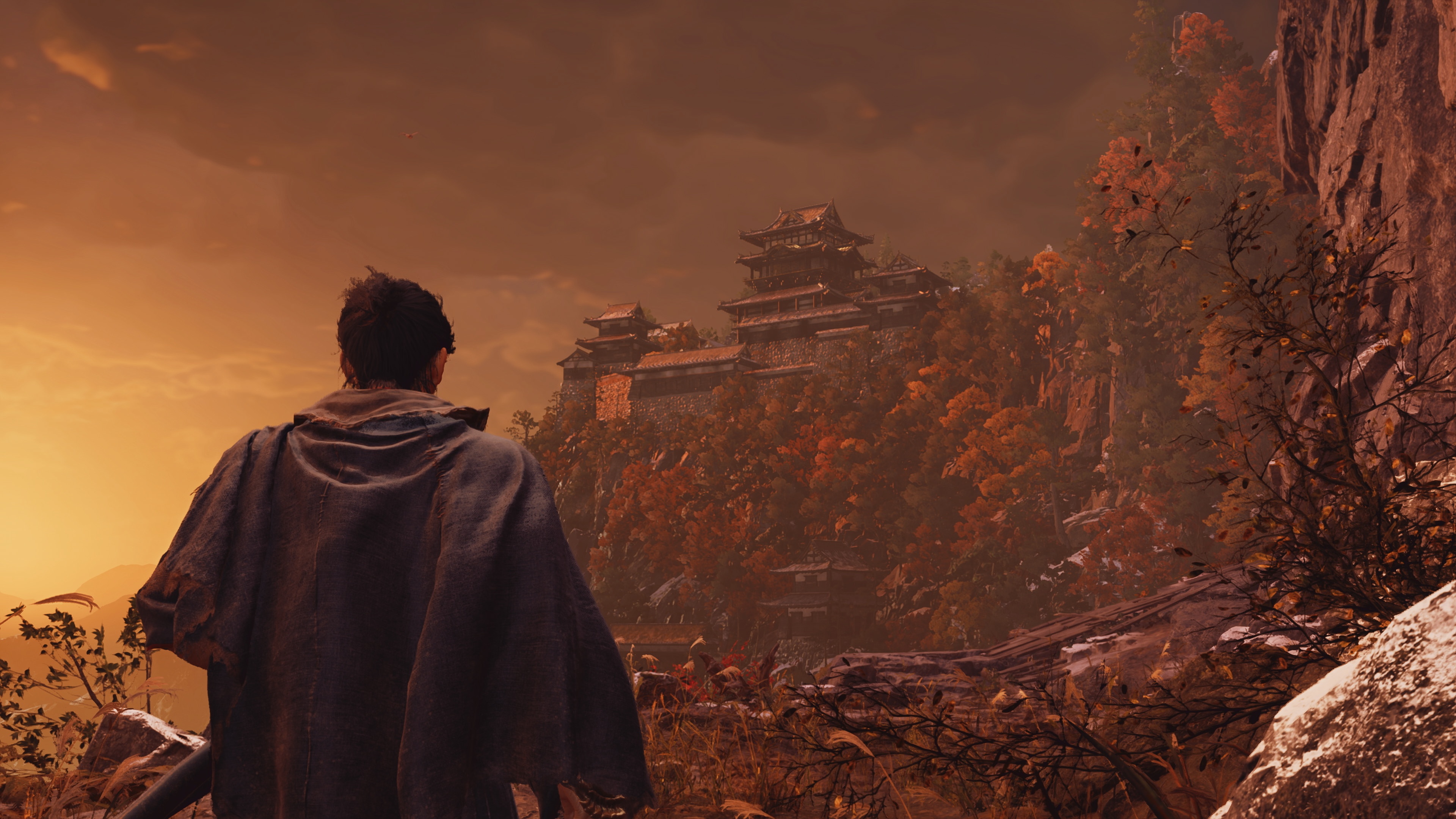
Nihei: Behind the decisions for those wider areas, obviously the past titles were very linear in their design. And while we’ve maintained some of that linear design in this game, we also wanted to have this element where you could essentially adventure in Kyoto and explore to see more of the city. But obviously we have the Genma there, so it was something that we felt we could use to flesh the city out.
Kyoto has these very strange tales and legends, and so we had this connection to the Genma. We felt that having players be able to explore the Kyoto area, experience those legends, and figure out the origins of them in connection to the Onimusha series would be quite an interesting element.
Kadowaki: Making adjustments to the difficulty or to the game based on feedback about the difficulty is not something we’ve done in this case. The demo, after we released it, is taken from a very early section of the game, which means it’s not designed to be that difficult. But on top of that, we wanted players to get a good feel for the range of actions that Musashi has available to him. So in the demo, there are actually abilities and things he can do that you wouldn’t usually have at that point in the game, which I guess sort of exacerbated the feeling of it being easier for some people.
But when we set out to make this game, we didn’t want to make a game that was going to be too difficult or inaccessible for a lot of people. With the released version, there will be a range of difficulties to choose from. One is more focused on the story elements for people who don’t want too much of a challenge, and then one that’s more geared toward experienced players. We’re quite confident that the release version is going to have this experience and difficulty balance that we set forward with in mind when we were making the title. So, no adjustments there.
Kadowaki: Just to quickly answer the first question, because the answer is shorter. We didn’t really run into any particular troubles based on the hardware.
In terms of the features, or things we were excited to use and focus on, obviously there’s the portability of the Switch 2. So we have the portable mode and TV mode. We wanted to make sure that we delivered an experience where you won’t feel much of a difference between playing in TV or portable mode – that was something we really wanted to focus on.
But, obviously, the Switch 2 version also has motion control that you can play through the game with, and it wasn’t necessarily something we felt that we had to add, but something that we felt would be interesting. With making the Switch 2 version, our key priority in making it was to make sure we can deliver the same experience players are going to get playing the game on Steam, PS5, and other platforms. That was the core driving factor in terms of development for Switch 2, and where a lot of energy was spent.
Kadowaki: Actually, there probably wouldn’t be much influence in that sense. Just because, the company as a whole, we’re always looking at the IPs that we have and the lineup that we have, so there are already people looking at those dormant IPs and thinking about how we could bring those back.
So whether another dormant IP coming back does well or not wouldn’t necessarily influence the decision-making on that side. But, of course, as producer of our Onimusha series, we do have that obligation and responsibility to try and make this title do as well as it can. So that’s definitely something on my mind.