

After nearly 3 hours of Pragmata, it's cemented that 2026 is Capcom's year - we're just living in it
I'll keep things brief, since I've previewed Pragmata not once, but twice now. Earlier this month we had the chance to play nearly 3 hours of Pragmata - starting from the second major zone of the game, which was recently showcased during the same Pragmata trailer that revealed the game's release date was being brought a week forward to April 17. Unlike previous demos we had the chance to test, this one was the first opportunity we had to explore an area from beginning to end.
Everything about Pragmata's shooting and hacking gameplay remains the same as before, of course - yet the first wrinkle comes in the form of the game's Shelter. Players can return to this hub at any save point; this is where you can spent currency to upgrade the tools at Hugh and Diana's disposal with a combination of regular currency picked up from crates and across the game world, as well as a more limited resource that is spent for more exhaustive upgrades, as well as unlocking new weapons and mods for your loadout.
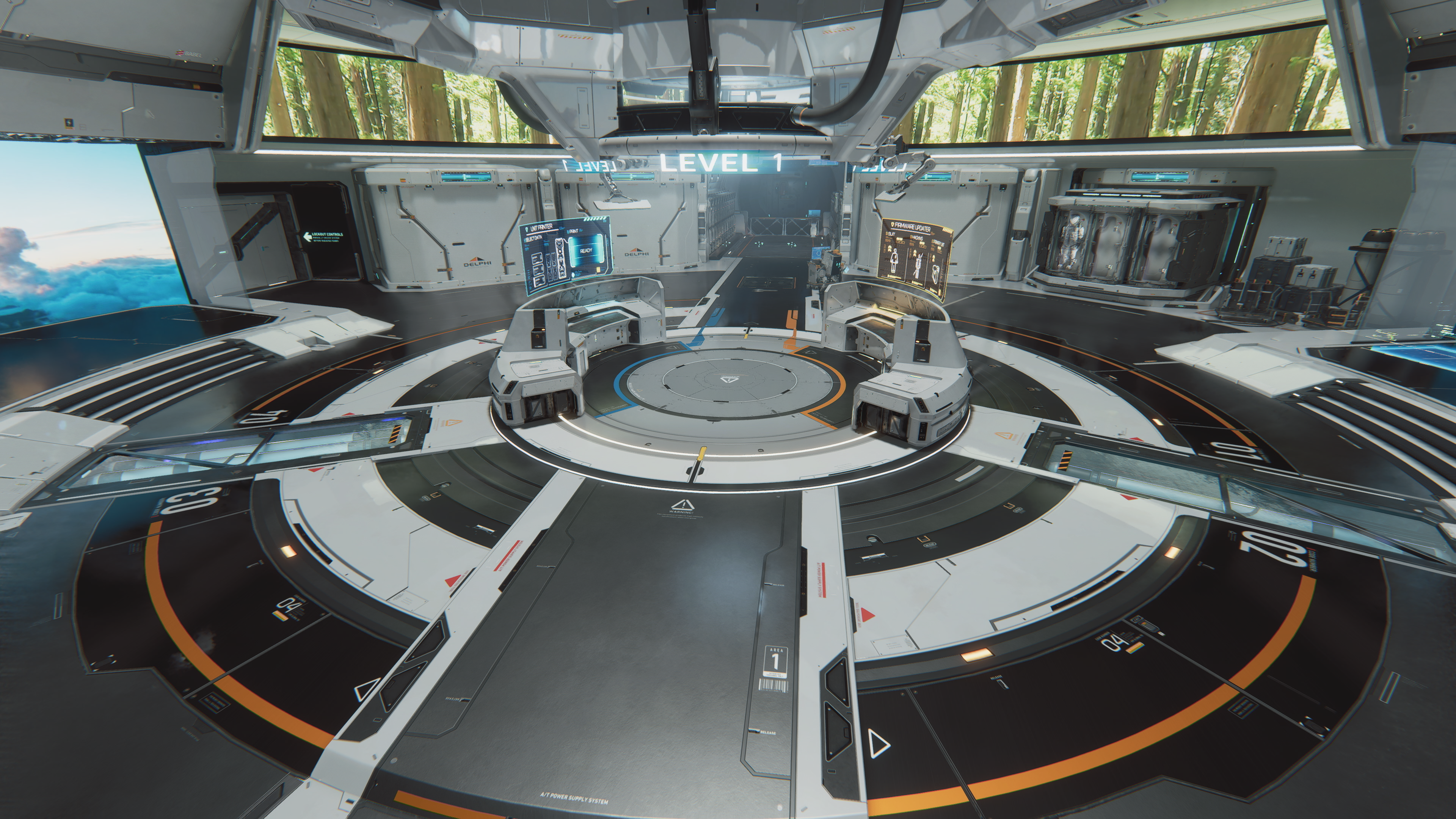
Weapons are one thing, but mods weren't present during previous demos. These offer unique upgrades to your actions, and which you'd want to tailor to other elements of your preferred loadout. For a simple example, we ran across a pair of mods with opposite effects - one which increases damage dealt in close range, while the other does the opposite by improving damage dealt past a certain range. These work best with the game's equivalent of a shotgun and railgun respectively; there's other types of mods with more granular effects too, and upgrading Hugh allows you to equip multiple at the same time. Exploring the lunar research station also finds players discovering Cabin coins, replicas of toys and other objects from Earth for Diana to play with, and miniature "Cabin" statues to be displayed in the Shelter.
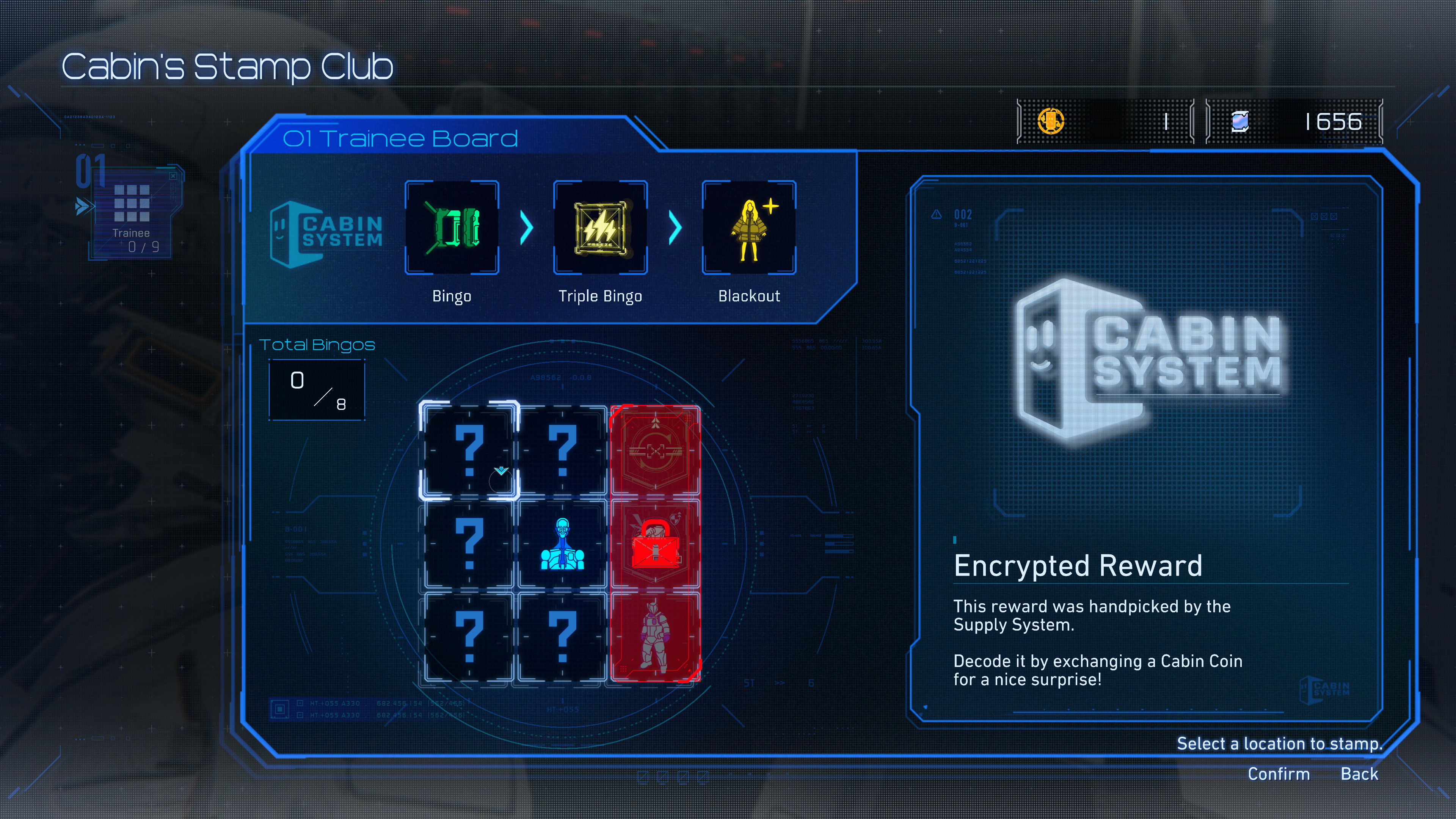
Cabin coins offer a number of immediate upgrades, accessed via a "bingo board" with various unlocks available for exchange. These can range from items such as mods, cosmetics, and more - and players receive bonuses for completing as many bingo lines as possible. As an added wrinkle, during our session an entire column of the board was blocked off until we completed a "Red Zone". These special combat arenas challenge players to tackle waves of difficult enemies, and require a key to even access to begin with. Not only do you get an immediate collectible for successfully clearing out the room, you may be unable to make full use of your Cabin coins if you're simply avoiding these areas instead of tackling them directly.
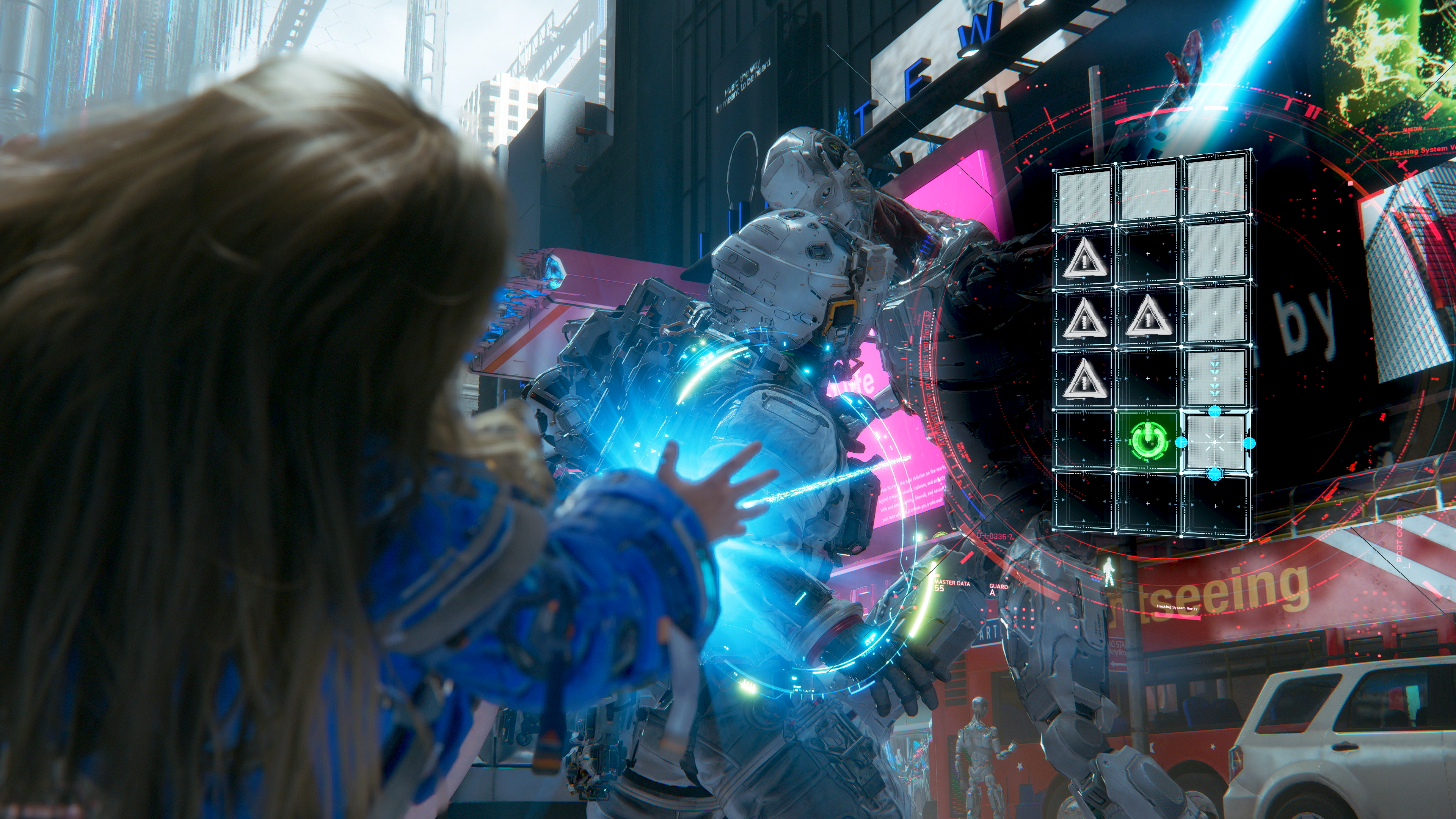
One element of Pragmata I was still curious about prior to our preview revolved around the hacking minigame. It's all well and good on its own, but I did wonder if there would be any changes to how it worked over time; if there would be any additional gimmicks to account for. Thankfully, there's at least a few we've already had a chance to contend with. The first of these is a drone that drops some loot, but you'll have to chase around an area to keep close enough to continue hacking it. Unlike other bots, this one's hacking grid isn't as open as the others - with a clearly defined path surrounded by caution icons. I never ran directly into these, but the message is clear - you're only hacking this bot one way, and you'll have to be equal parts swift and decisive. It doesn't fight back, so as long as you've dealt with other enemies it's not that stressful. I could see Capcom deviously adding one to a late-game engagement, forcing that issue.
The second example are, for lack of a better term, "firewalls". These block Diana's hacking ability, overlaying themselves atop the grid. To clear things out and help Diana activate the robot's weak spot, you'll need to shoot down the corresponding physical firewall on the bot first, which also unlocks that portion of the hacking grid once again. It's never just one firewall covering the grid, either, so it becomes a question of whether you're willing to spend ammo taking it down, or doing the bare minimum to stun and enemy; with extra nodes simply an afterthought.
This marks a trend for this segment of the game that I'd hoped for - a greater focus on enemy variety for one, as well as numerous other weapons and tools to contend with. Level design, too, kept itself interesting. There was far more expected platforming, and the whole thing felt far more open than the areas from the Sketchbook demo - which, for the record, matched up closely with our previous demo opportunities. One favorite of mine near the end of the demo revolved around lasers I could activate in the environment, in order to essentially instantly kill an enemy, with the caveat being you could only activate each laser once. These lasers are clearly marked in the environment, letting there be no misunderstanding what section of a room will be impacted. Taking out multiple large robots at once with a laser was continually a satisfying endeavor.
All in all, there was a clear escalation to the preview build, culminating in a boss fight which handily leapfrogged the previous we had fought in the earlier demo. Not only did it incorporate the same firewalls that earlier enemies in the area tasked us with clearing, but the arena was also much larger. Certain attacks force us to ascend pillars to avoid an attack which could very easily cover the entire ground, while others ask us to time our dodges to avoid a "wave" of spikes rising up from the ground. It's a very notable setpiece, and a suitable spot to conclude our time with the game - for now, anyway.
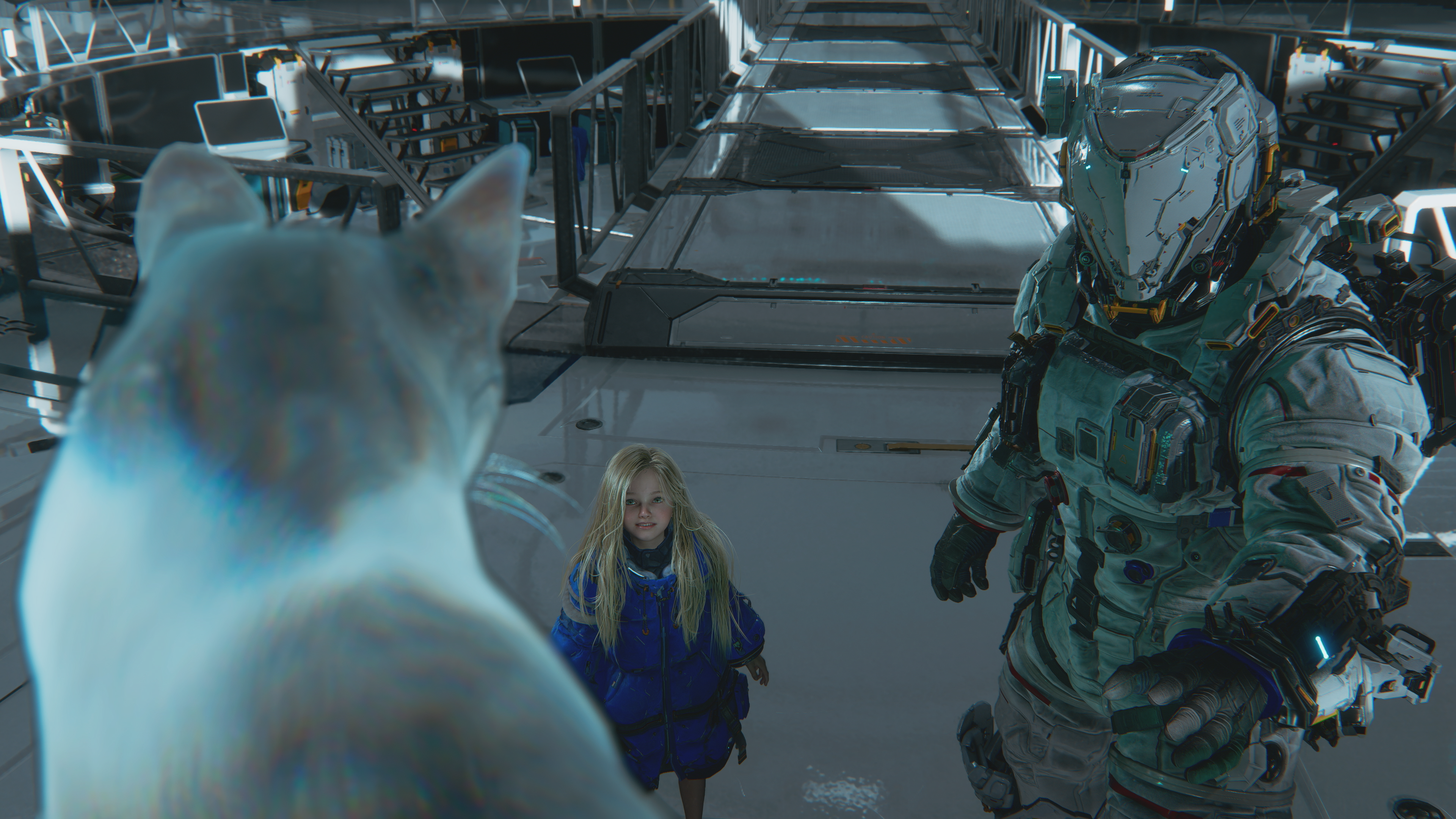
Taken as a whole, it's very clear that Pragmata is equal parts familiar and novel. It's easy to see some of the modern Resident Evil DNA present within Pragmata's design, yet the hacking minigame has yet to overstay its welcome, and I have every confidence that I won't tire of it anytime soon. While we had debated on whether or not Pragmata was enough of an RPG for coverage previously, leveling up Hugh's guns to increase their damage and core attributes of them - as well as Hugh's armor to increase his base HP, defense, and even permanent upgrades such as a "witch time" for perfectly dodging an attack - makes it clear that even if Pragmata's genre is a bit of a medley, there's a decent chance RPG fans will find something to engage with by the end.
Thankfully, we don't have much longer to wait. Pragmata launches in exactly a month, on April 17 for PlayStation 5, Xbox Series X|S, Nintendo Switch 2 and PC (Steam). Stay tuned for our full review, in the weeks ahead.