

Crimson Moon has the right feel, but it's the rest of the game that I'm uncertain about
If Crimson Moon looks at all familiar to you, it's probably because it was announced earlier this year during the February 2026 PlayStation State of Play. However, coming from a relatively unknown developer in ProbablyMonsters and showcased alongside several more recognizable game series, I would not be surprised if Crimson Moon struggled to maintain attention among the numerous other games coming out this year.
Crimson Moon is a mission-based action RPG where you control a half-angelic warrior known as the Nephilim. Your goal to wipe out an undead horde known as the Legion, as ruthlessly as possible. A surface-level comparison brings to mind Dark Souls, of course, but that's apparently not the only source of inspiration. I met with the development team at GDC the following March, who showed me a hands-off demo at the time. "Dark Souls, Darksiders, Diablo, Lies of P, Nioh, Elden Ring ... we play them all," is what Chief Product Officer Mark “Bot” Subotnick told me.
After meeting with the development team a second time and finally going hands-on with Crimson Moon at Summer Game Fest Play Days, my immediate takeaway is that the game seems to get at least one crucial component right — it feels good to play.
Swings with your various weapon types have a certain acceleration to them such that the timing of attack animations is easy to get accustomed to. The contact with the enemy feels appropriately weighted and intuitive, all accompanied by satisfying sound effects. I have some experience with action RPGs in this style, and getting used to the combat controls came naturally and quickly. It seems deliberate effort was put here to prevent the game from feeling floaty or weightless. My minor qualm here was that the lock-on behavior and camera controls could use a little bit of polish.
One part about Crimson Moon that is somewhat unique in comparison to its action RPG contemporaries is that it utilizes something similar to a 'lives' system. If you lose all your health in combat, be it to a surprise attack or a poorly timed dodge, you aren't necessarily out of it yet. You get three 'revives' that allow you to come back from the "dead" and continue on, stunning enemies in your way. In this way, the game feels a little bit more arcade-y, which may help the game find an identity away from other mission-based RPGs like Nioh. You can move a little faster and be a little more reckless, knowing you are at least given some wiggle room to make a mistake or two.
All of Crimson Moon can be played in co-op as well. I can't speak to how well this works in practice, because neither the demo I saw at GDC nor the demo I played at SGF showcased this feature. Even middling games can be fun with a friend, although other games (such as Nioh 3) may be more interesting options.
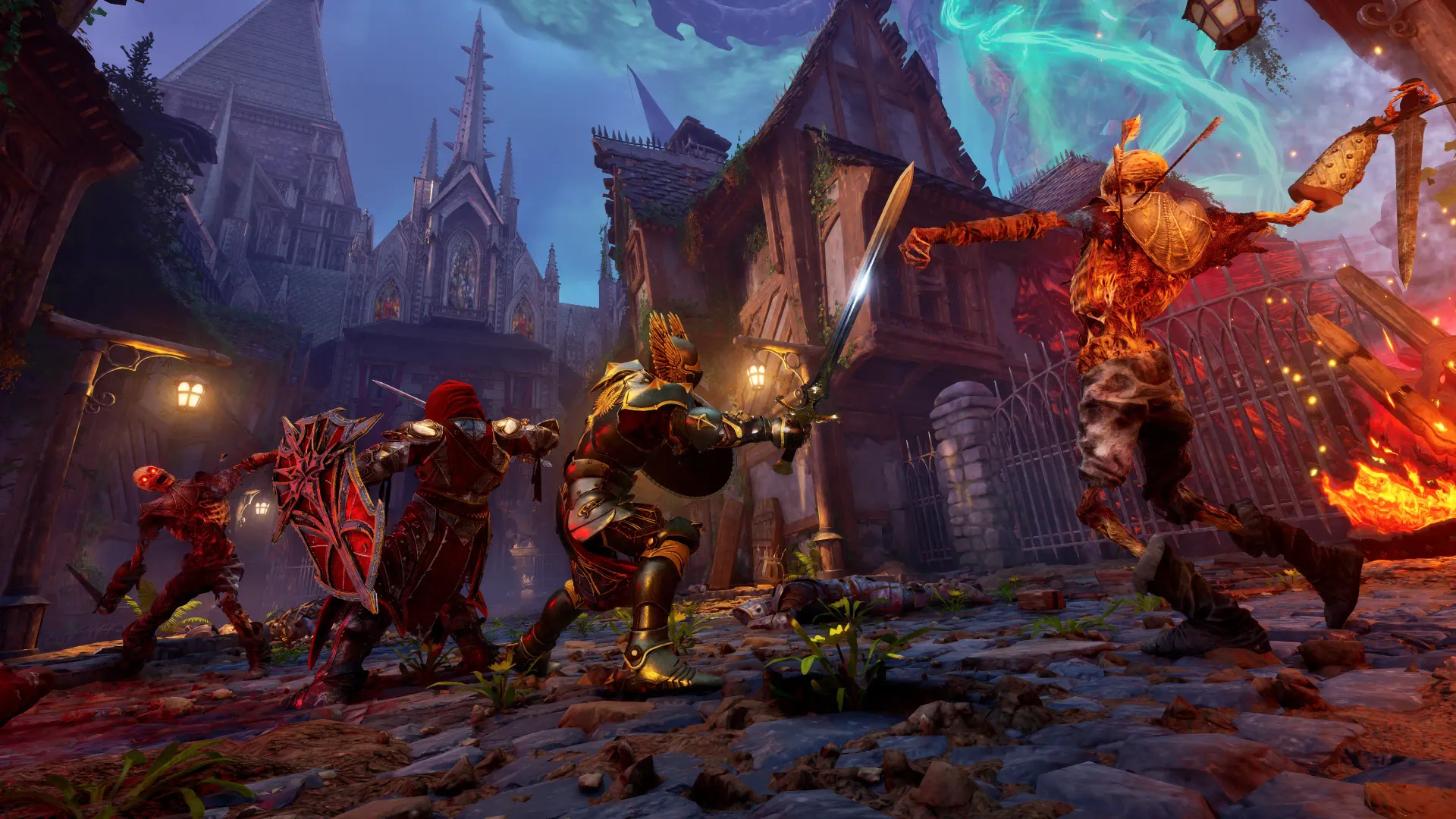
While I came away feeling pretty good about the combat controls, other components of the demo left me more uncertain or even a little bit confused. The level design is uneven at best, for starters. One of the crucial components to action RPGs without a map (such as Dark Souls or earlier Nioh titles) is that the design of the world, both aesthetically and mechanically, should naturally guide players to where they need to go while rewarding a sense of wanderlust. Crimson Moon didn't 'feel' right here. I'm not sure if the levels in the game are actually procedurally stitched-together connecting 'rooms', but that's what it seemed like regardless. Granted, I only got to play one level during my time with the game, but the demo did not put its best foot forward in this regard.
Crimson Moon is also described as being 'built around intense, replayable missions'. When I talked to the development team at GDC, they described the game as a 'mission roguelike', although it's not quite clear how this actually manifests in the game. Many games have mission-based structures without being 'roguelike' in nature, and it wasn't clear to me how this comes together combined with its action RPG combat stylings. During my demo, I did see a variation of the 'pick one-of-three boon power-ups' that has become commonplace in roguelike games, in this case adding small modifiers to my attacks. I'm honestly not sure if there's more to it than that.
I also don't know how character build-craft works in the big picture, or what parts of the progression are permanent and what parts are temporal. I'm not sure how collecting loot fits into this concept, either. Action RPGs can be made or broken depending on the options available in creating your character or progressing your build, but I couldn't get a grasp on those components. In a way, I feel like I left the demo with more questions than answers.
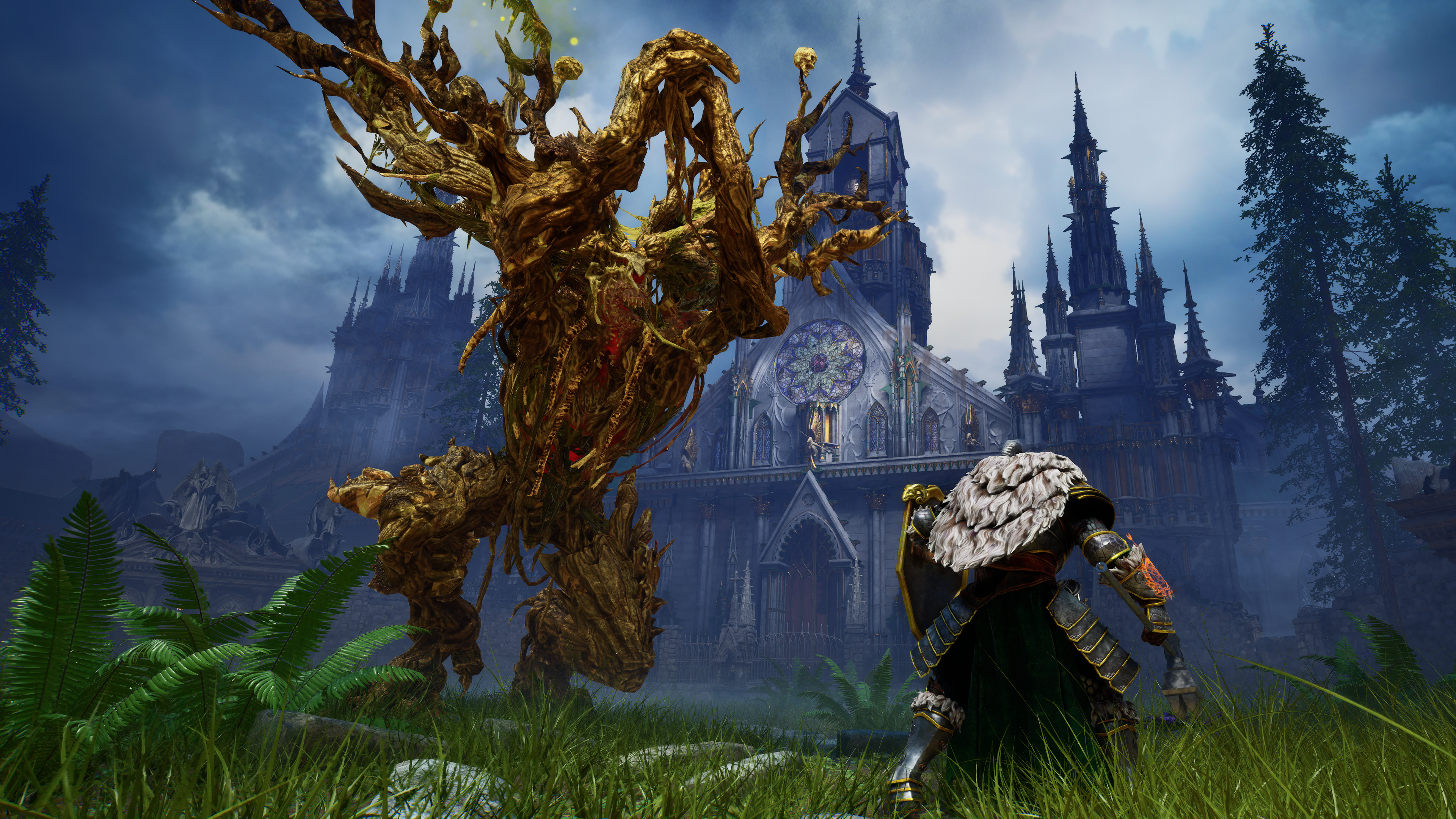
The larger structure of a mission-based roguelike game, or whatever Crimson Moon actually is, is no doubt difficult to portray properly in a 20-minute demo. I don't know how the short-loop / long-loop roguelike progression works, and when I spoke with the development team at GDC, they didn't seem certain either.
Crimson Moon is currently scheduled to launch in September. I probably don't need to tell you that September is absolutely packed (take a glance at our RPG release date calendar), and I'm certain that what I've seen and played of Crimson Moon so far won't have me carving out time for it. RPG fans already have a lot to choose from between Fire Emblem, Trails, Onimusha, Control, and others, so Crimson Moon might struggle to claim space in a crowded month.
I remain uncertain but curious about Crimson Moon. We could use more mid-sized RPGs that aren't massive behemoths or small-scope indies.