

Steel Century Groove Review
The last I spoke about Steel Century Groove, I was impressed with the game's GDC demo and excited to go hands-on with the full game; now that I've had the chance to do just that, I'm happy to report that the team not only stuck the landing - they absolutely aced it.
Almost everything I reported with my preview last year remains the same; players take control of a character on their "First Pilot" journey, controlling giant mechs in dance battles as they aim to become the grooviest in the land in the post-post-apocalypse. While rhythm battles remain mostly the same across which robot you choose to pilot, each have their own set of quirks and gameplay loops that determine the feel of combat.
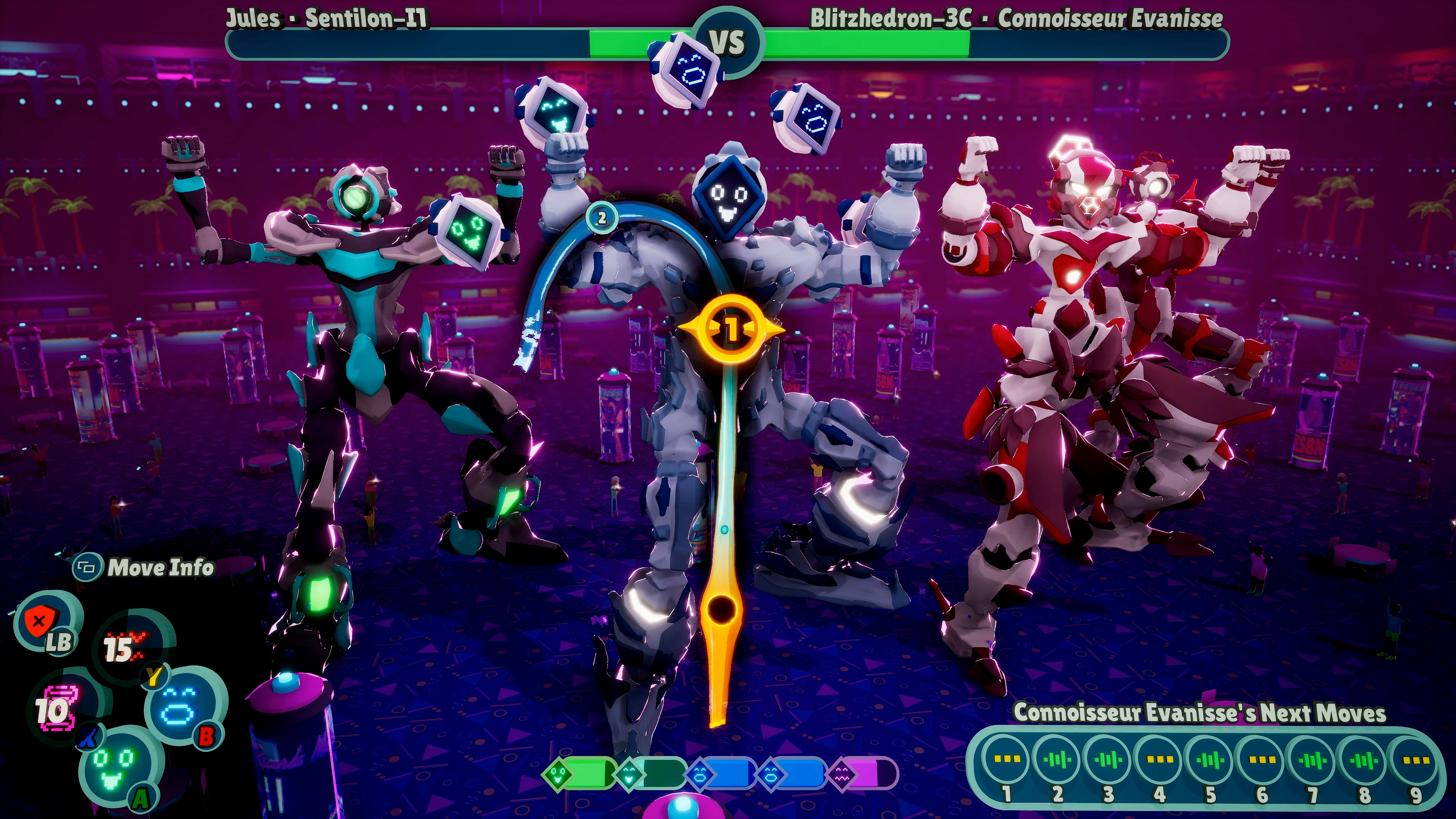
In addition to the two I mentioned during the preview, some additional options include a mech that will "plant" seeds on notes on the timeline, requiring the player to plan their cooldowns around watering nearby sprouts and then harvesting the fruits of their labor. Another tasks players with juggling two separate bars, banking slowly depleting resources in order to level up another and boost the rates of specific notes spawning on the timeline.
While it was already apparent during the preview, the team (mainly a solo developer), has succeeded at delivering a gameplay loop that both transfers across different mechs but also feels radically different when shifting between them. Add in enemy-specific debuffs players have to keep an eye out for that can be countered, mitigated or healed - as well as some additional gameplay styles during key story moments, such as a boss battle that strips away the individuality of your mech to turn the game into something more akin to Hatsune Miku: Project Diva - and the game doesn't overstay its welcome during its roughly 10 to 12 hour playtime.
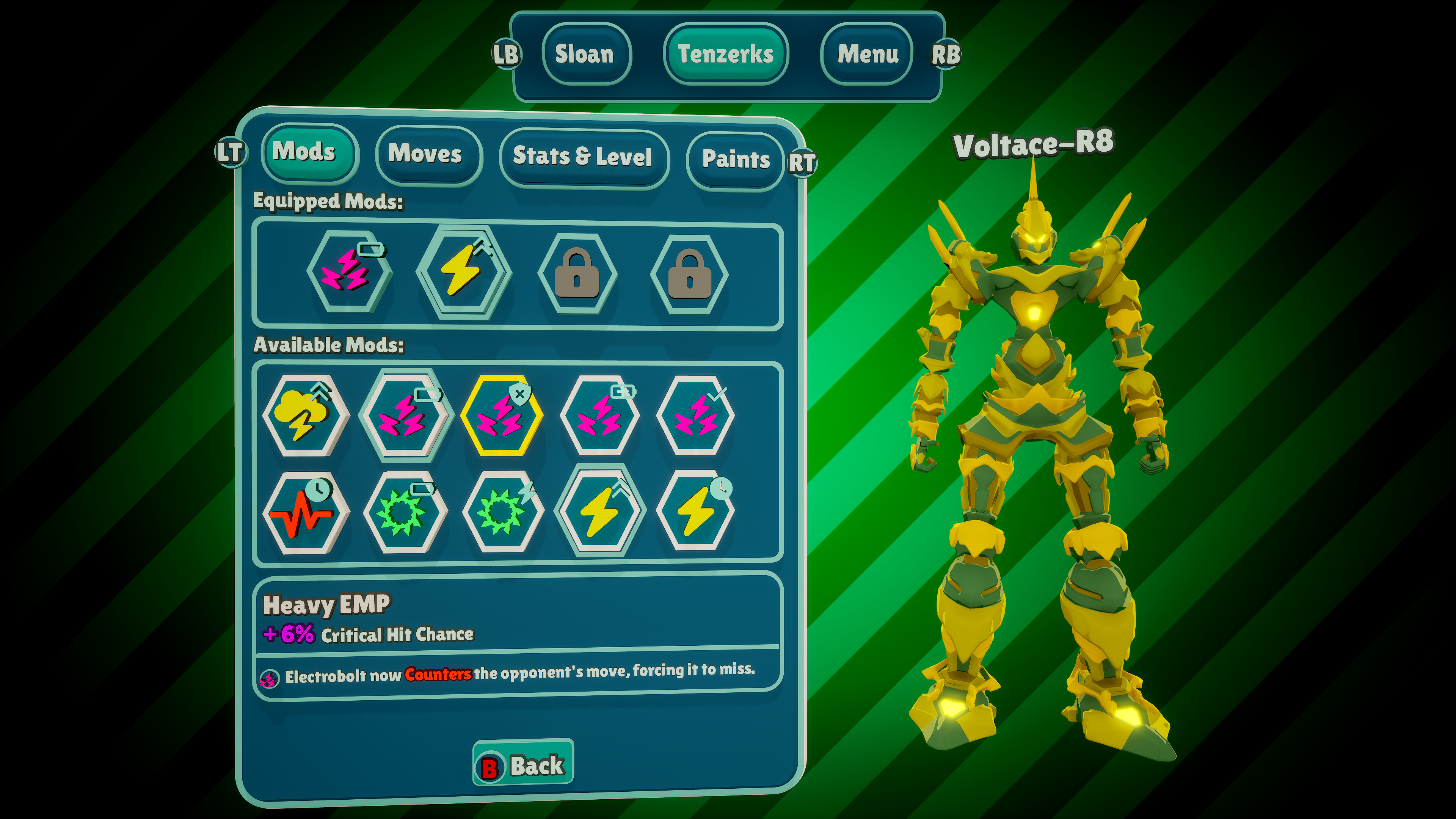
Quite simply, it's a ton of fun, and the wealth of mods that you can equip that can also radically change how you tackle each moveset is fascinating. There's only 6 mechs in total, but between how differently each play and the variety introduced by mods it feels like the roster is much larger than it actually is.
Sloth Gloss Games also successfully threads a similar needle with the story. At its core, Steel Century Groove is a similar coming-of-age story akin to Pokemon, but by the end it ramps up into something more - about the human condition, our relationship to technology, and the history we leave behind. It's not the deepest story most of the time, but it makes use out of the setting to great results. While the comedy can sometimes lean a bit heavy on cynicism, at the end of the day the game's sincerity still shines through.
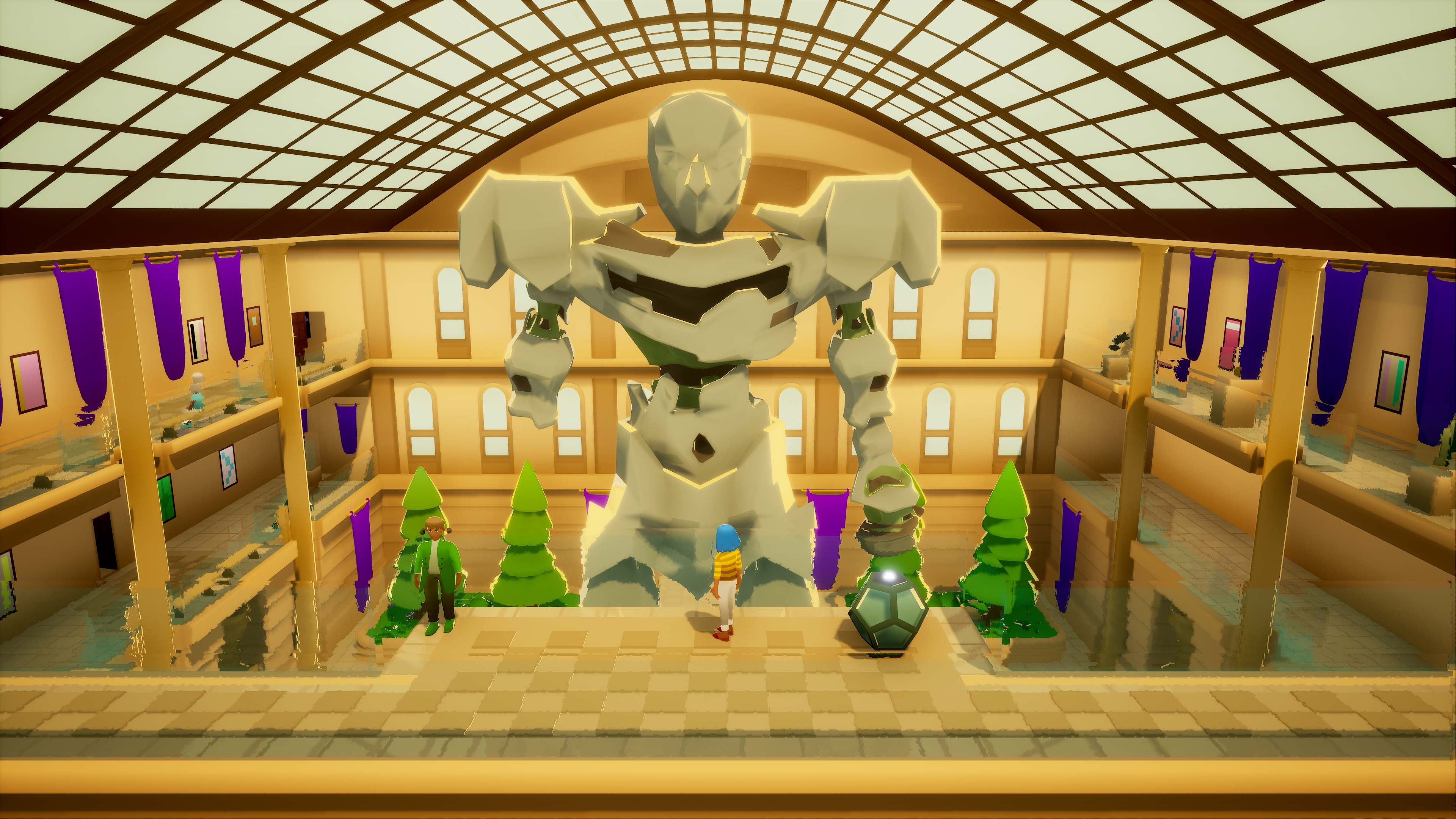
As previously mentioned, Sloth Gloss Games is a mostly solo developer - and full kudos to the developer for managing to deliver a game with its own clear artstyle and direction under the constrains of it all. Most of the game's soundtrack is filled with songs licensed under Creative Commons; going by the credits, a decent amount of the game's art assets fall under a similar purview, originating from various asset stores. Yet if it weren't for the credits, that wouldn't have been immediately apparent. The game's depiction of a post-post-apocalyptic United States - down to a dilapidated and flooded San Francisco - is striking and delightful in all the best ways.
When I first heard about Steel Century Groove, I was ready to root for it - and I'm glad that those hopes weren't misplaced. Steel Century Groove is a feel good indie RPG, and the type of project that reminds you of just how much creativity can be found outside of the AAA industry. I can't wait to see what project they decide to work on next.