

Code Vein II Review
Code Vein II is a perplexing game to evaluate. There are several parts of it I enjoy in isolation, but the way they come together as a package is incohesive. It is a sequel that chases industry trends often to its detriment, instead of capitalizing and improving upon what made the first Code Vein carve out its own niche in the ever-expanding Soulslike space.
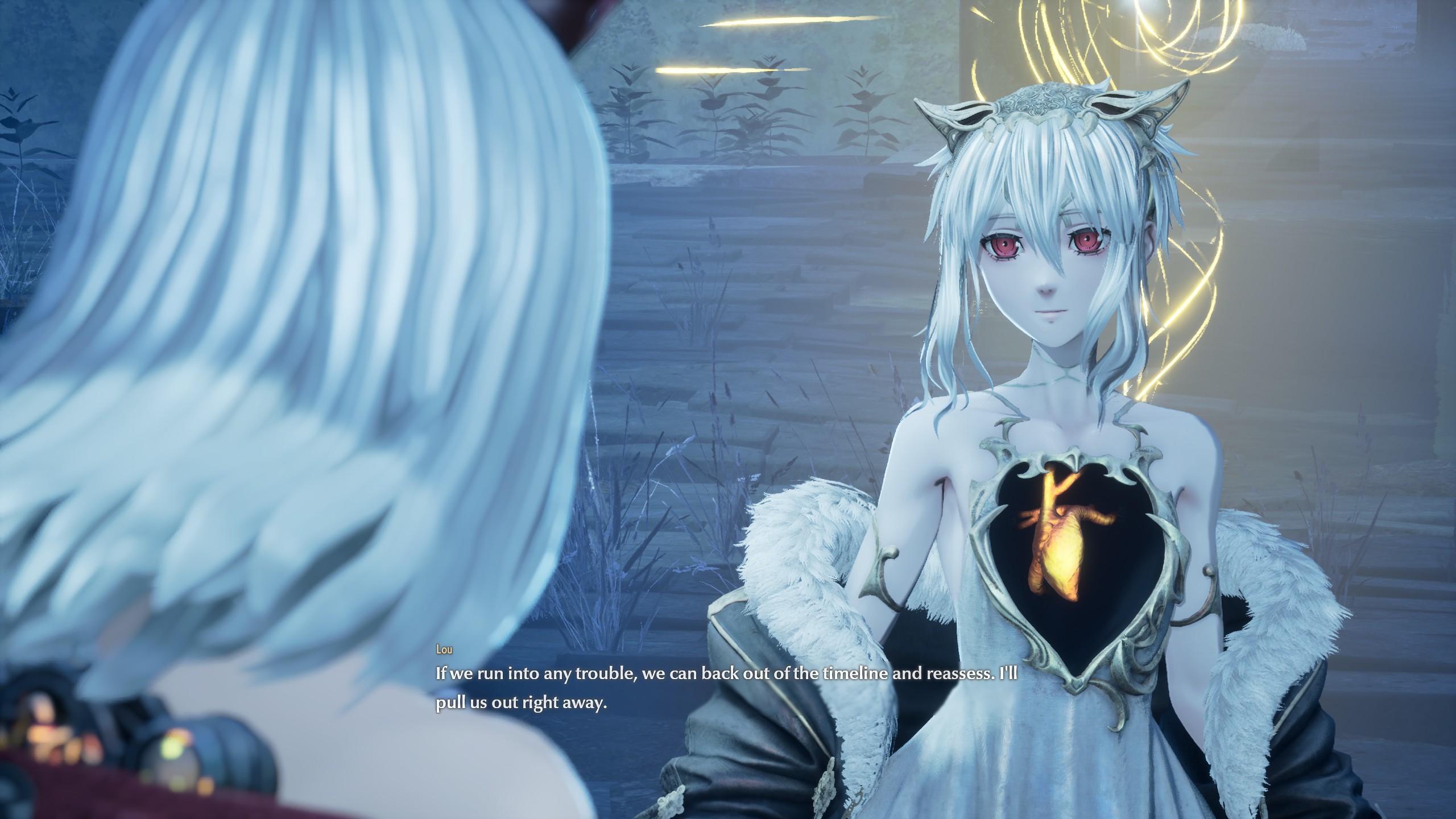
The first thing that stuck out to me upon Code Vein II’s announcement was that it was a completely separate follow-up to its predecessor; there were no direct story ties aside from the broad concept of co-existence struggles between humans and vampire Revenants. While I usually advocate for brand-new entries that shouldn’t be beholden to past entanglements, the first Code Vein ended on a pretty intriguing revelation that it had some relation to the dormant God Eater series. The immediate pivot away from that fascinating reveal is a bit of a bummer, honestly.
Instead, Code Vein II revolves around a time-travel plot to prevent a Resurgence catastrophe from ending the world. In order to do so, players are tasked with slaying a handful of bygone heroes that act as seals to a central Luna Rapacis construct that contains the key to stopping the apocalypse. The heroes can’t be killed when they’re in their cocoons, though; they must first emerge from them willingly, and their now-monstrous forms must be taken down.
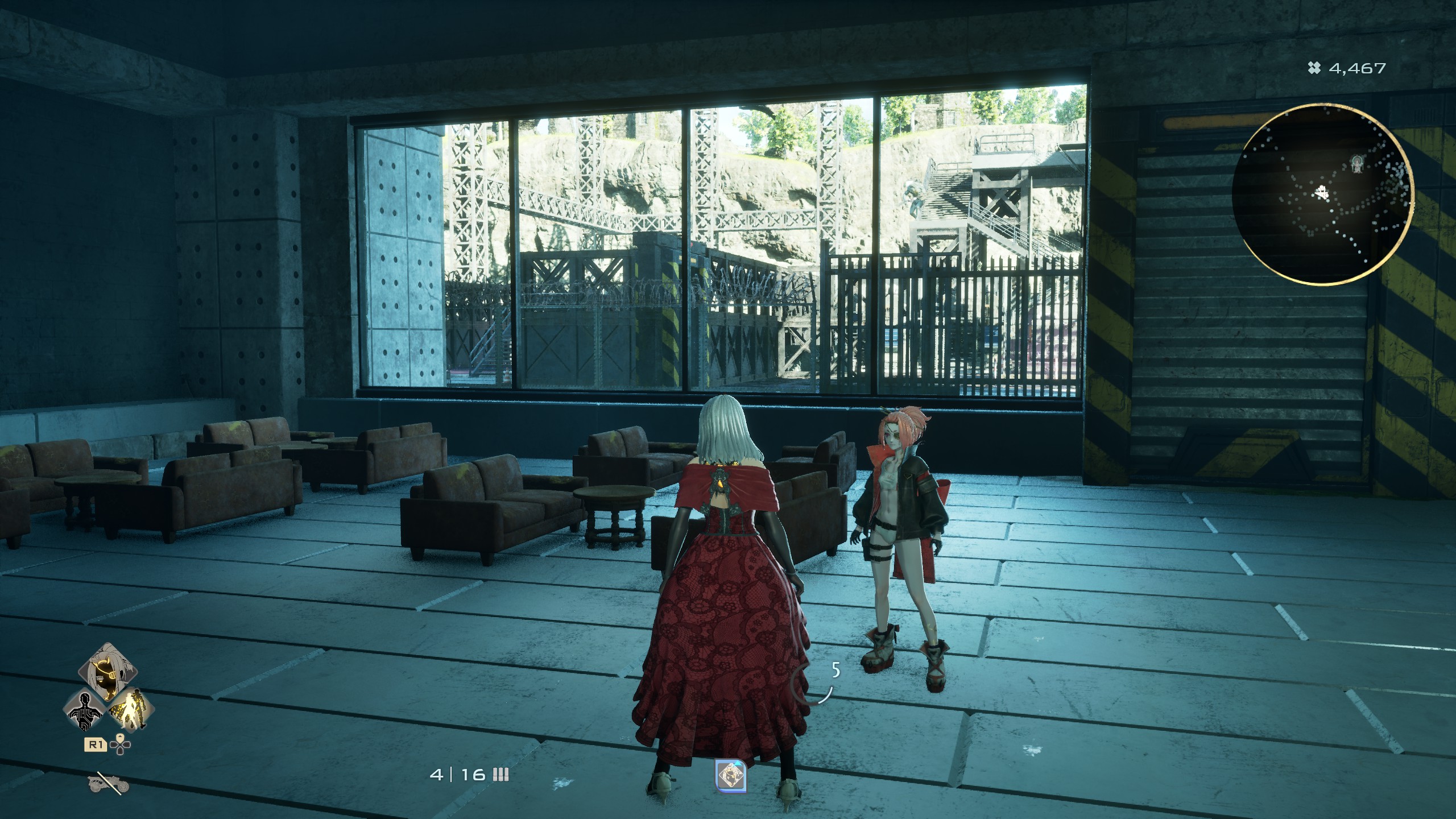
Therefore, players must form a bond with the heroes when they were still alive. Code Vein II’s main heroine Lou thankfully has the handy power of traveling 100 years into the past, so Code Vein II’s primary loop consists of locating a hero’s cocoon, going back in time to meet said hero to prevent what caused their untimely demise, and obtaining an important memento that will cause them to emerge from their cocoon in the present day.
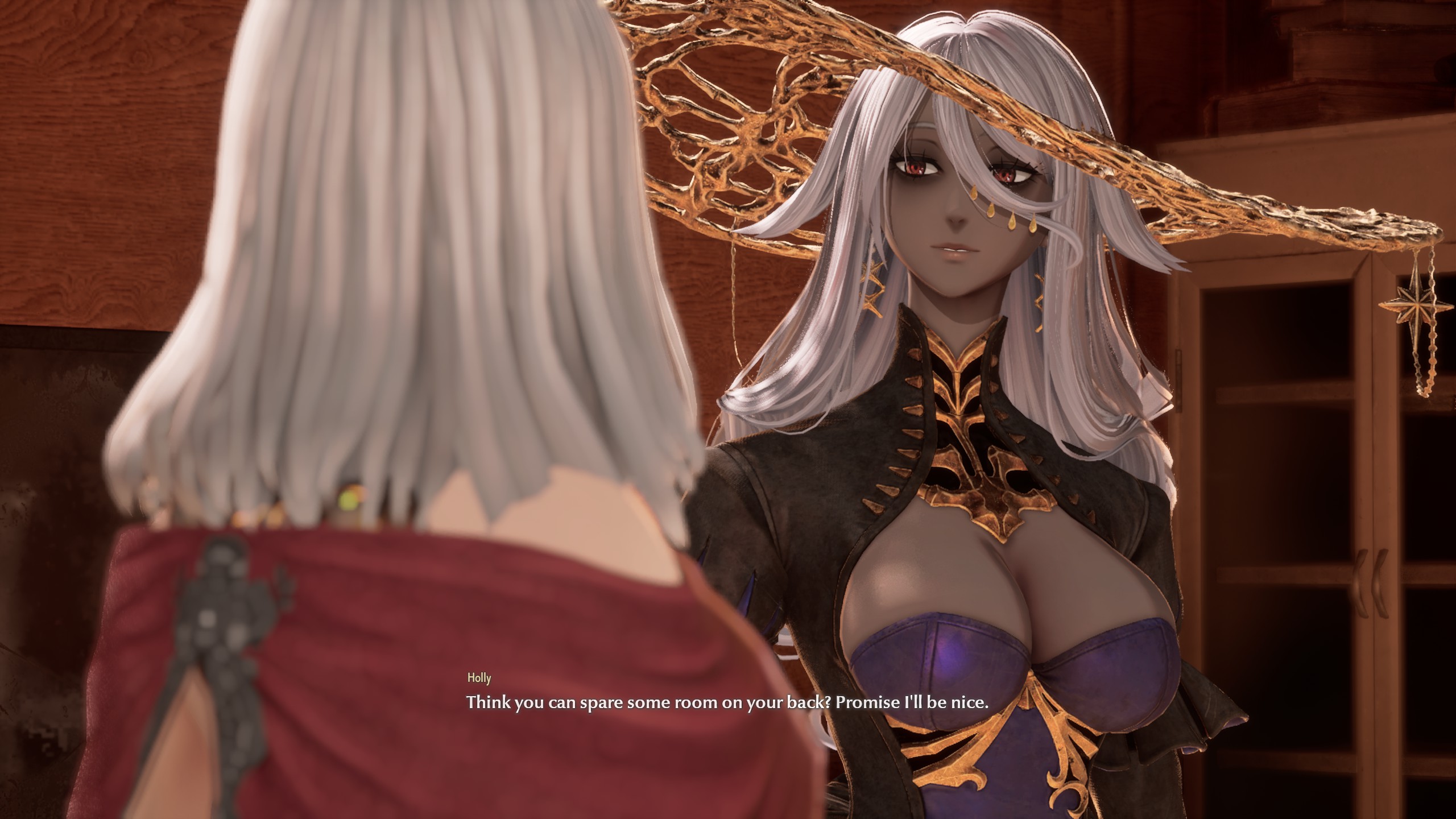
Although I think the overarching main story is a bit of a mess, the individual story arcs for each of the heroes themselves are decent. They often touch upon messy, complex relationships with family figures, and how people can lose themselves in trying to help the people they love the most. The tragic stories concerning the heroes Holly and Josee, for instance, are glimpses into some of the potential Code Vein II could’ve reached, if it was able to maintain a more consistent experience across the board.
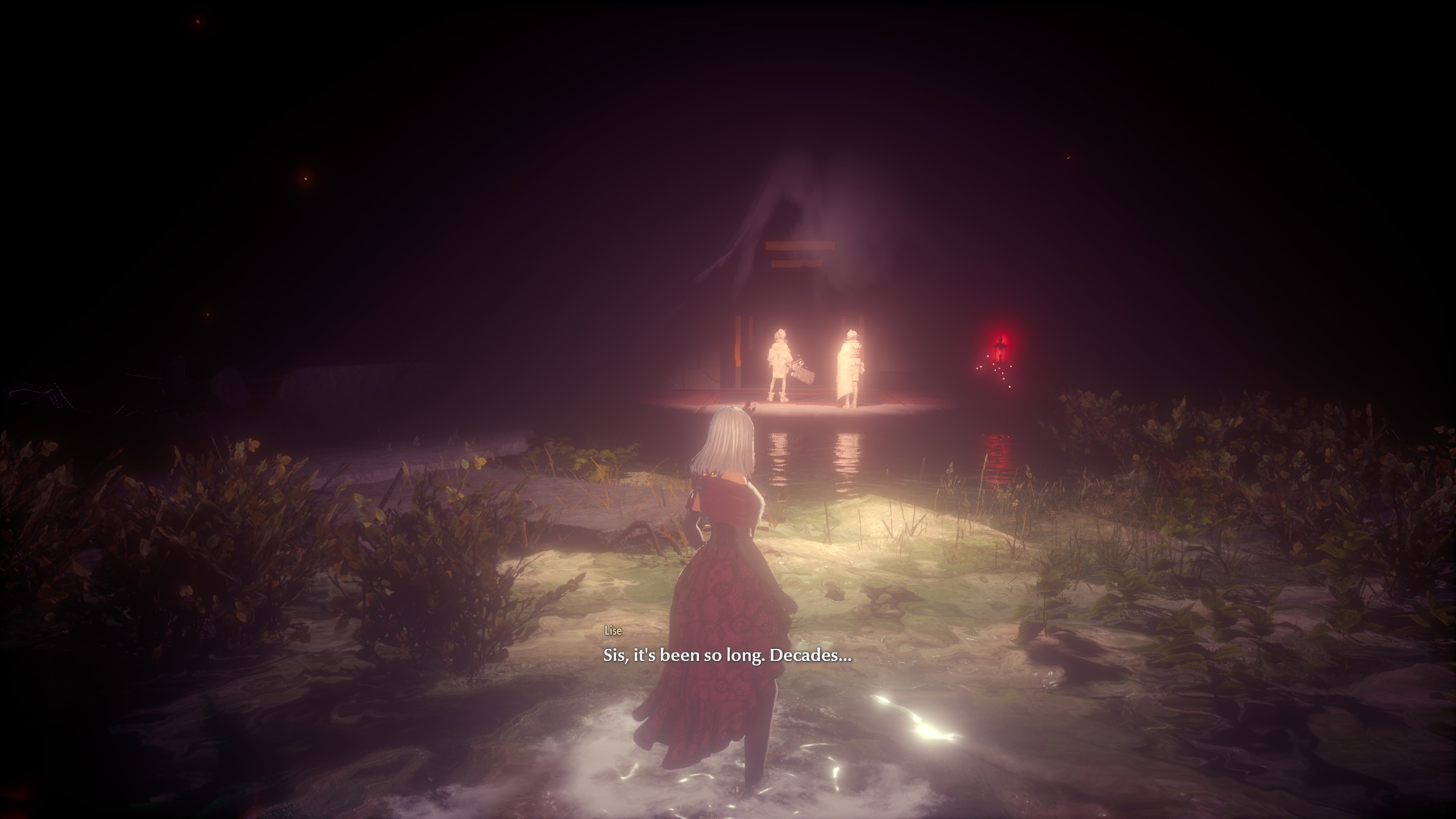
Despite my appreciation for these relatively stronger story arcs, the way they are presented is underwhelming. As players venture with these heroes in the past, the protagonist will sometimes experience an “incursion” that allows them to see the backstory of both the heroes and relevant side characters. These are often presented as linear ‘slow-walk’ exposition hallways that players hold forward through, as stills of dialogue exchanges occur. A normal cutscene with some creative camerawork would’ve been more impactful than what Code Vein II decided to do.
There’s also an odd unevenness to the distribution of characterization throughout its cast. Before setting out on the journey to the heroes’ cocoons, one of the first figures that players rescue is Noah; he is one of the few individuals who has the significant ramification of coming back alive in the present day, thanks to the player’s efforts in rescuing him from his death upon their trip to the past with Lou early on. After establishing that he’s well and alive, the narrative just chooses to do nothing with him until the end of the game.
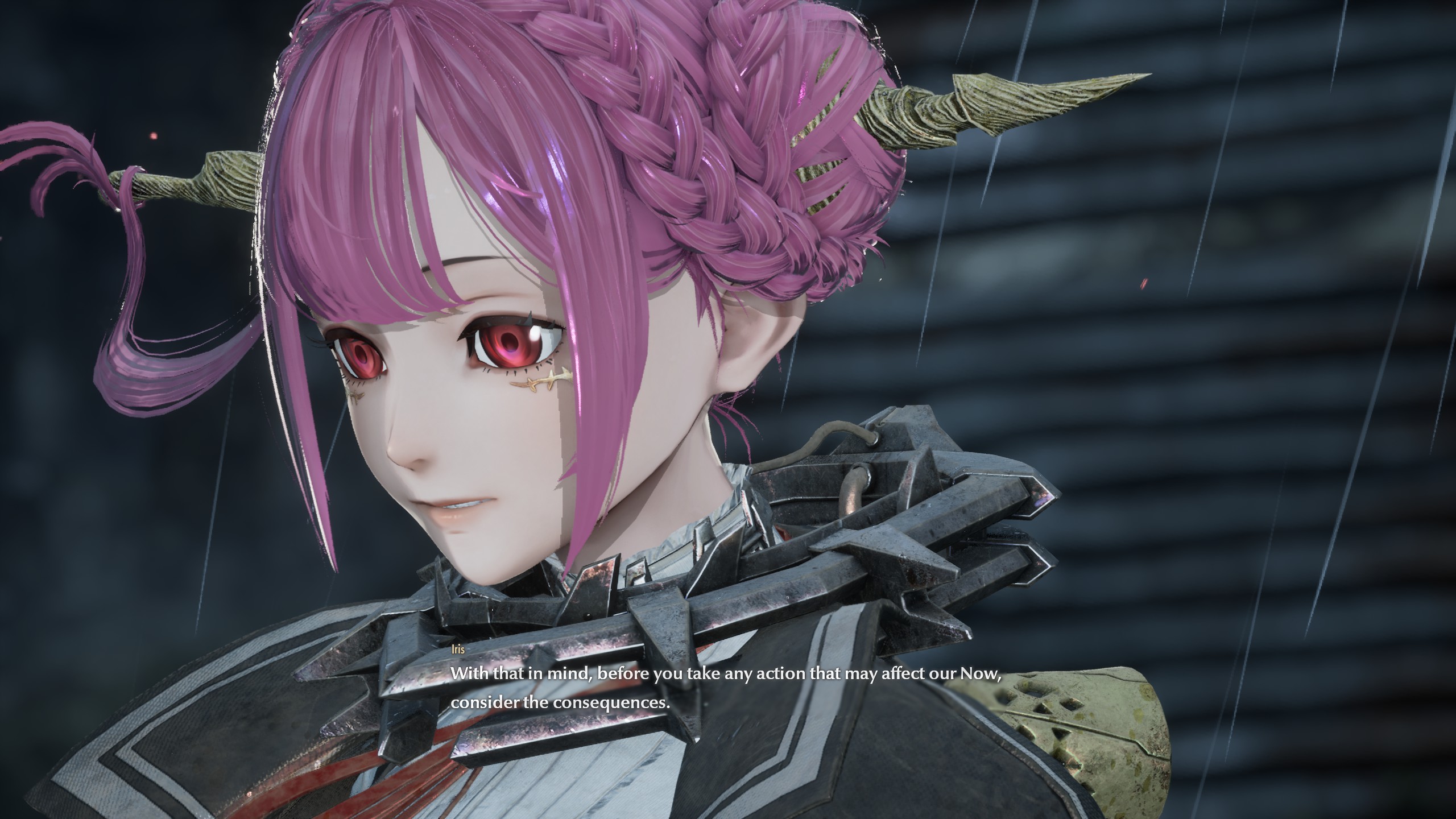
Perhaps the most forgotten character in Code Vein II is a woman named Iris. She works for the same MagMell organization that Lou and the player are aligned with, and she is also a selectable partner in gameplay. Her story relevance is… she shows up briefly to introduce a region where a single hero’s cocoon resides, with whom she has zero story ties with? It feels like the development team had bigger plans for Iris, but completely stripped everything out involving her – yet let the character herself remain.
Meanwhile, the heroes serve as temporary partners when progressing through their stories in the past timeline, and the Free Exploration era allows players to complete side quests without having to worry about the constraints of the past and present timelines where story events happen. There’s even an opportunity to explore the heroes’ backgrounds even further after beating their present-day boss forms once; they leave a faint lingering portal that players can optionally choose to pursue, though they have more involved prerequisites attached to them.
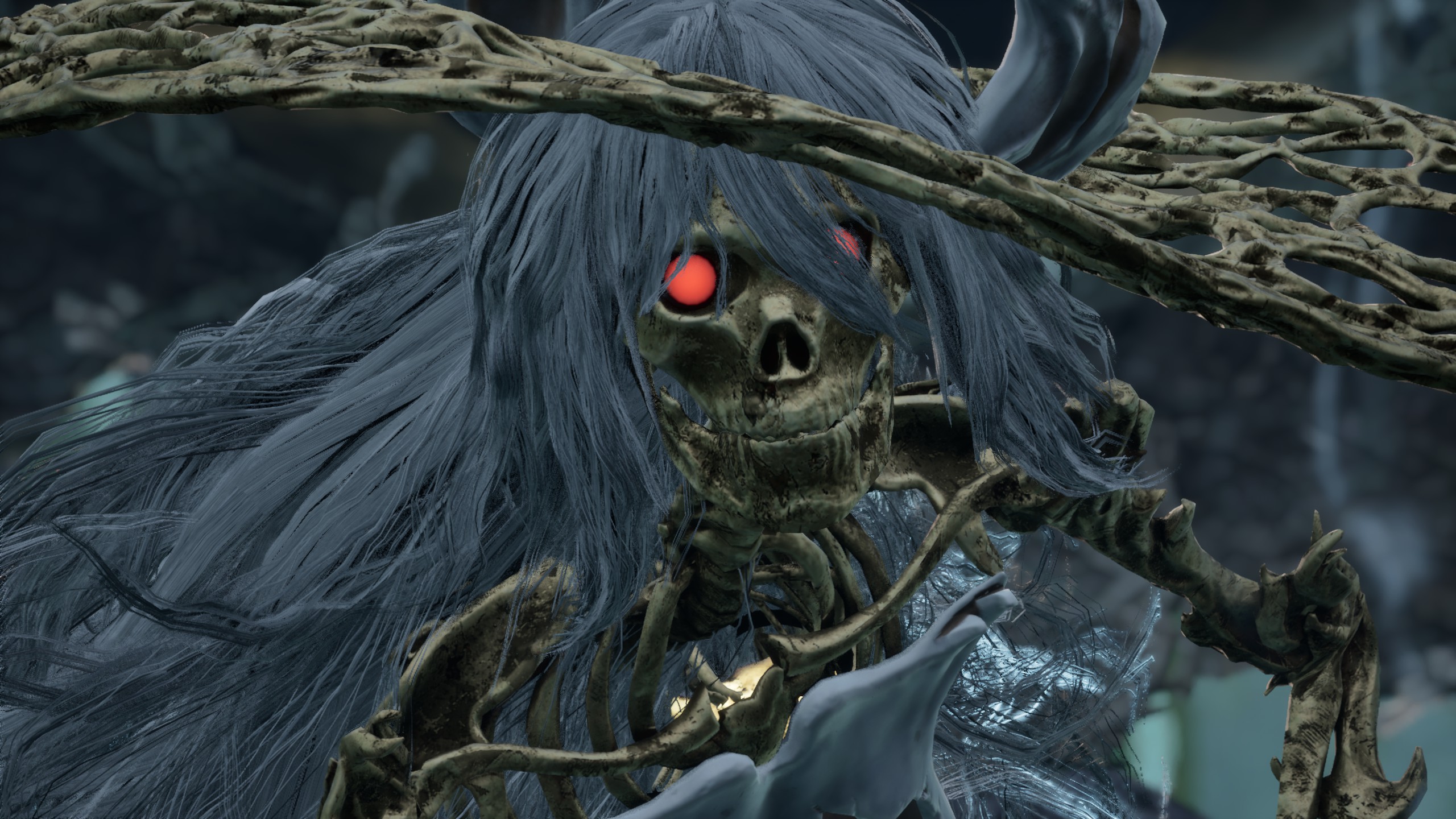
This allows players to seek a “happier” conclusion to each individual hero’s story arc in which the heroes are not only able to escape their tragic ends, but also reach a more complete emotional reconciliation with the family figures that their tales revolve around. Functionally, this allows players to affect the present-day timeline with more living NPCs and better environmental conditions that liven up the region. More importantly, fulfilling this optional extended arc unlocks a second boss fight with the heroes – but they possess new designs, new movesets, and are significantly more difficult. Slaying them a second time yields a powerful Blood Code.
One of the primary ways the first Code Vein distinguished itself from many other Soulslike action RPGs was the unique way players powered up and built their character. Although players can level up their character by consuming the souls-equivalent Haze, these only reward small stat gains. Instead, the bulk of character building revolves around equippable Blood Codes. Think of Blood Codes as classes that have their own innate quirks. For instance, one provides substantial boosts to strength and dexterity, and its own unique trait refunds one Ichor (mana) when an offensive skill is cast; in exchange, any Ichor absorbed when a character already has max Ichor will do damage to the player’s character instead.
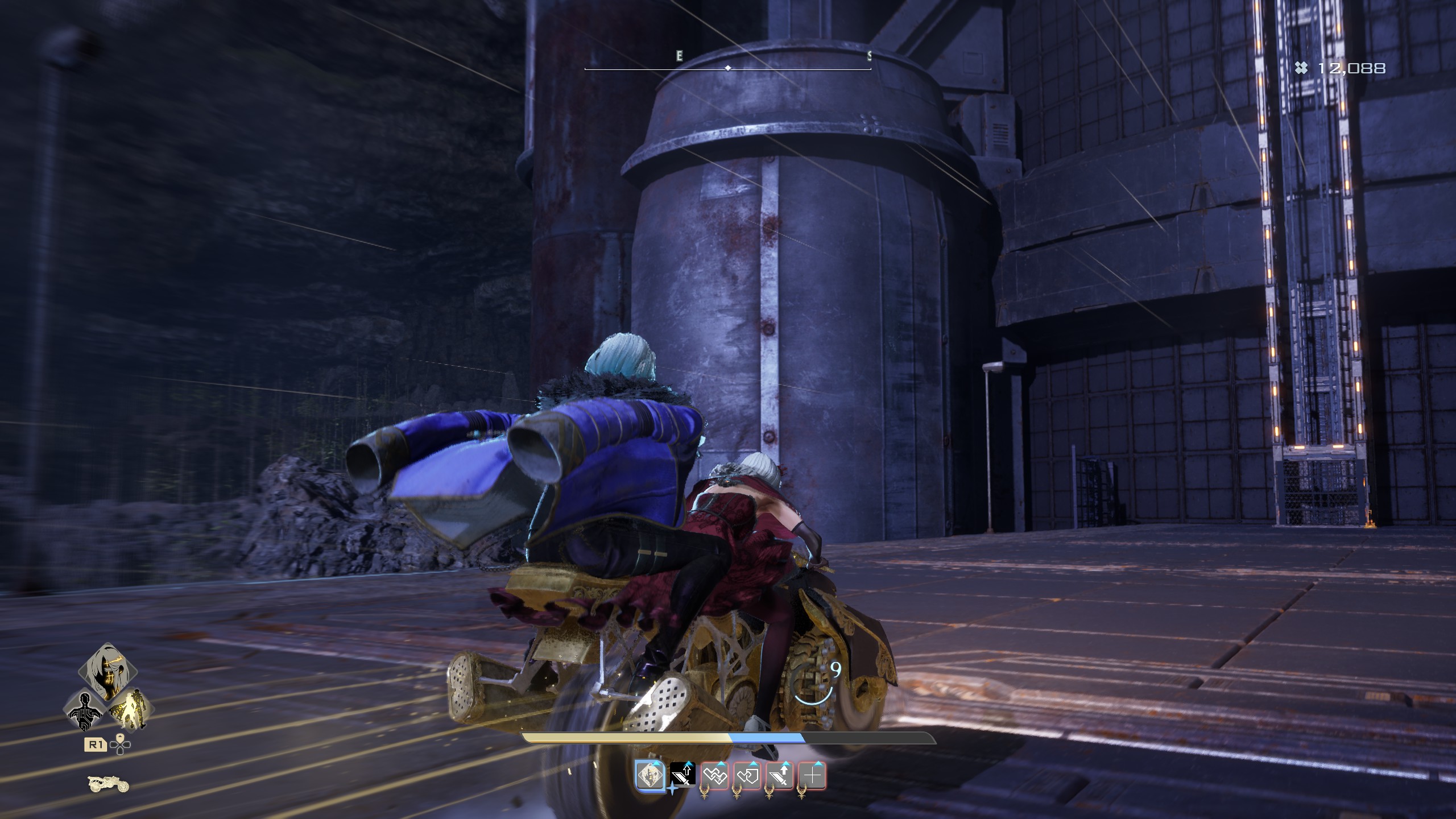
Blood Codes reallocate a character’s stats and resistances, and much of the fun in character building in both Code Vein games is finding the right combination of weapons, skills, and Blood Code that synergize towards a player’s preferred playstyle. In Code Vein II, there’s a meter beneath every attribute that indicates the burden level of a character. If that meter is fully maxed out, that means that attribute is overburdened, and having a specific attribute overburdened incurs both a benefit and a penalty. Being overburdened on the Dexterity attribute allows more Ichor to be drained by Jail weapons, in exchange for having Ichor deplete whenever a character gets hit.
The overburdened state doesn’t restrict a player from equipping a weapon. It empowers players to factor in risk versus reward builds with tangible pros and cons. Plus, being overburdened in at least two attributes gives players a slower roll. On the other hand, creating a “safer” build that manages to keep the meters on each attribute to lower levels grants better mobility options through faster rolls and dashes.
Theorycrafting and testing out different playstyles is one area where Code Vein II shines most. It builds upon its predecessor’s core foundation in creative ways. Players don’t have to worry about a finite resource to re-spec their character; simply switching out their equipment loadout and Blood Code will allow them to try out other playstyles quickly. The new Rune Blades and Twin Blades weapon types open up a considerable amount of gameplay variety, though I ended up sticking with my trusty Bayonet.
Other elements that work in Code Vein II’s favor are its character creation and music. Code Vein players sometimes characterized the first entry as a fantastic character creator that happened to have a game attached to it, and the development team for Code Vein II doubled down on giving players even more granular options in customization, such as adding the option to select the color of a character’s fingernails. There are still some limitations on clothing options, since the outfit selection for mixing and matching parts of different outfits still feels rather restrictive – yet it is relatively way more expansive than character creators in other Soulslike games.
Go Shiina and the Bandai Namco sound team reprise their roles in composing the soundtrack of Code Vein II, and it is as excellent as the first game’s OST. The boss themes against the heroes particularly stand out, since it dresses the fights in melancholic motifs. There are times when the musical tracks betray the tone of several scenes, though. Some cutscenes portray moments that, in my opinion, would’ve been better served with quieter, more intimate tracks, that were instead presented with more boisterous, triumphant sounds
Some touching farewell scenes were met with oddly upbeat tracks that caused emotional dissonance on my end. Nevertheless, the quality of the music is something that stood out to me in my time with Code Vein II.
I tend to avoid factoring in a game’s release date and environment when evaluating it, but it’s impossible to talk about Code Vein II’s downfalls without mentioning it. Quite frankly, I think a major factor that makes Code Vein II a frustrating game is that it was unfortunately released relatively close to Nioh 3 – a sequel with a time travel plotline that introduced its own open-world/field/zone as a major feature for the first time in its series.
These two action RPGs are inherently different when it comes to the cadence of their gameplay feel and flow, so I would deem it unfair to say one should have been more like the other in that department.
On the other hand, there are numerous other factors that work against Code Vein II. Removing the multiplayer feature entirely from Code Vein II, while Nioh 3 has a fantastic implementation of up to 3-player multiplayer for its open traversal, paints an unfortunate picture for it. Many players of the first Code Vein found much of its appeal in playing with others, as well. Its removal is baffling.
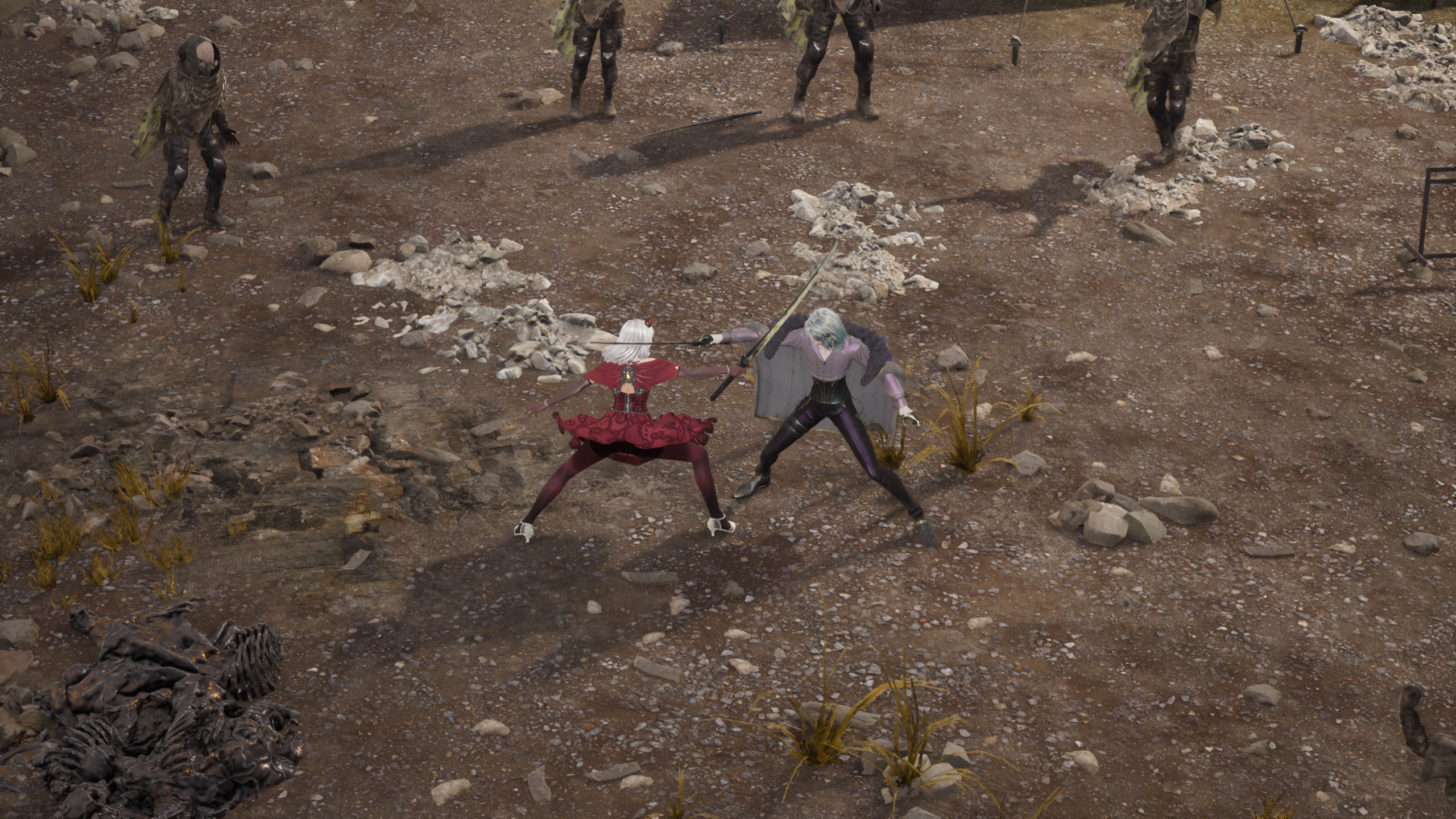
Nioh 3 also performs considerably better than Code Vein II on both consoles and PC. I played Code Vein II on PC, and its average technical performance vastly pales in comparison to Nioh 3. Team Ninja has continually been patching Nioh 3 at a continual pace to improve its performance and fixing bugs, while Bandai Namco has been… much slower to respond.
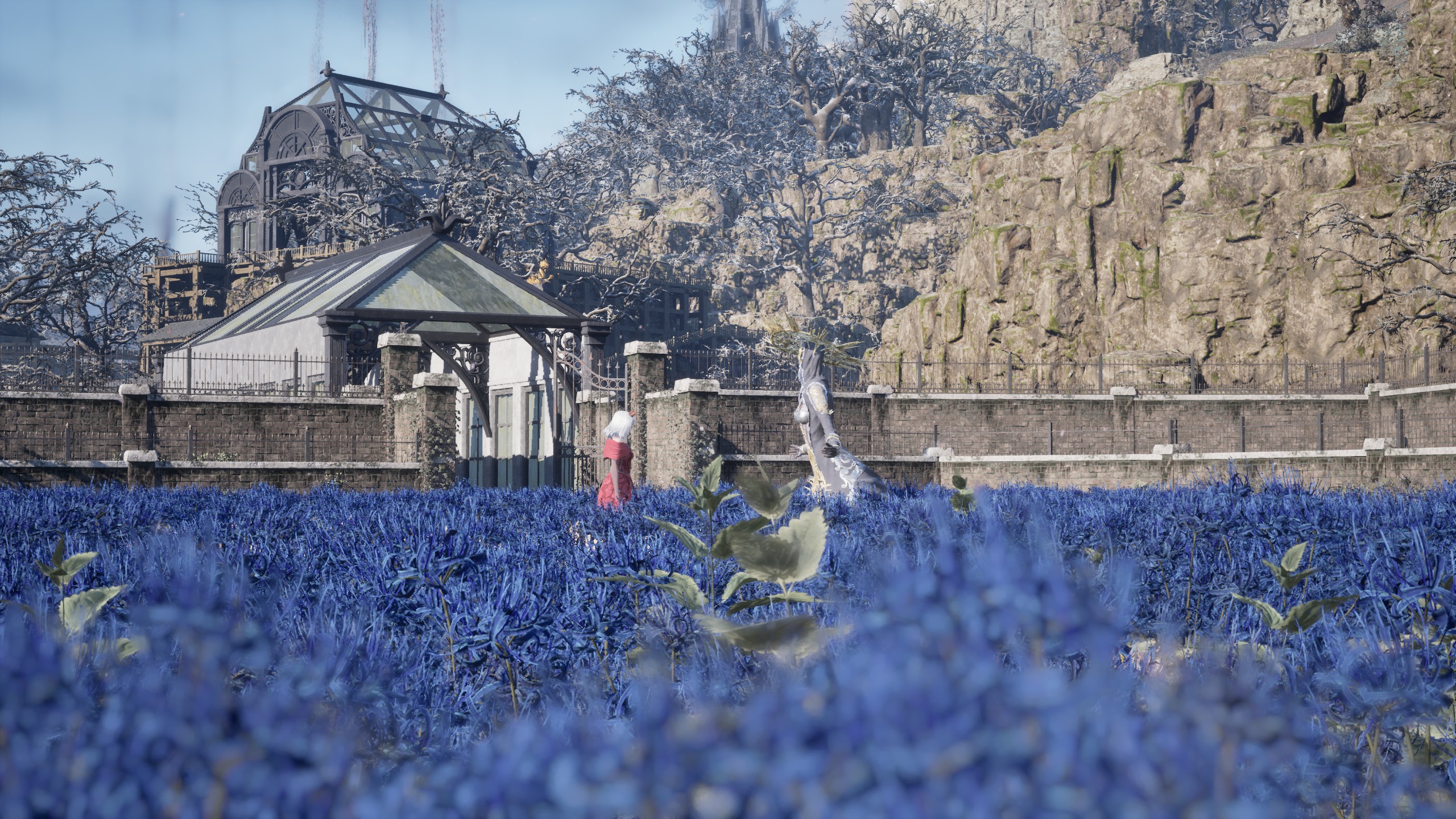
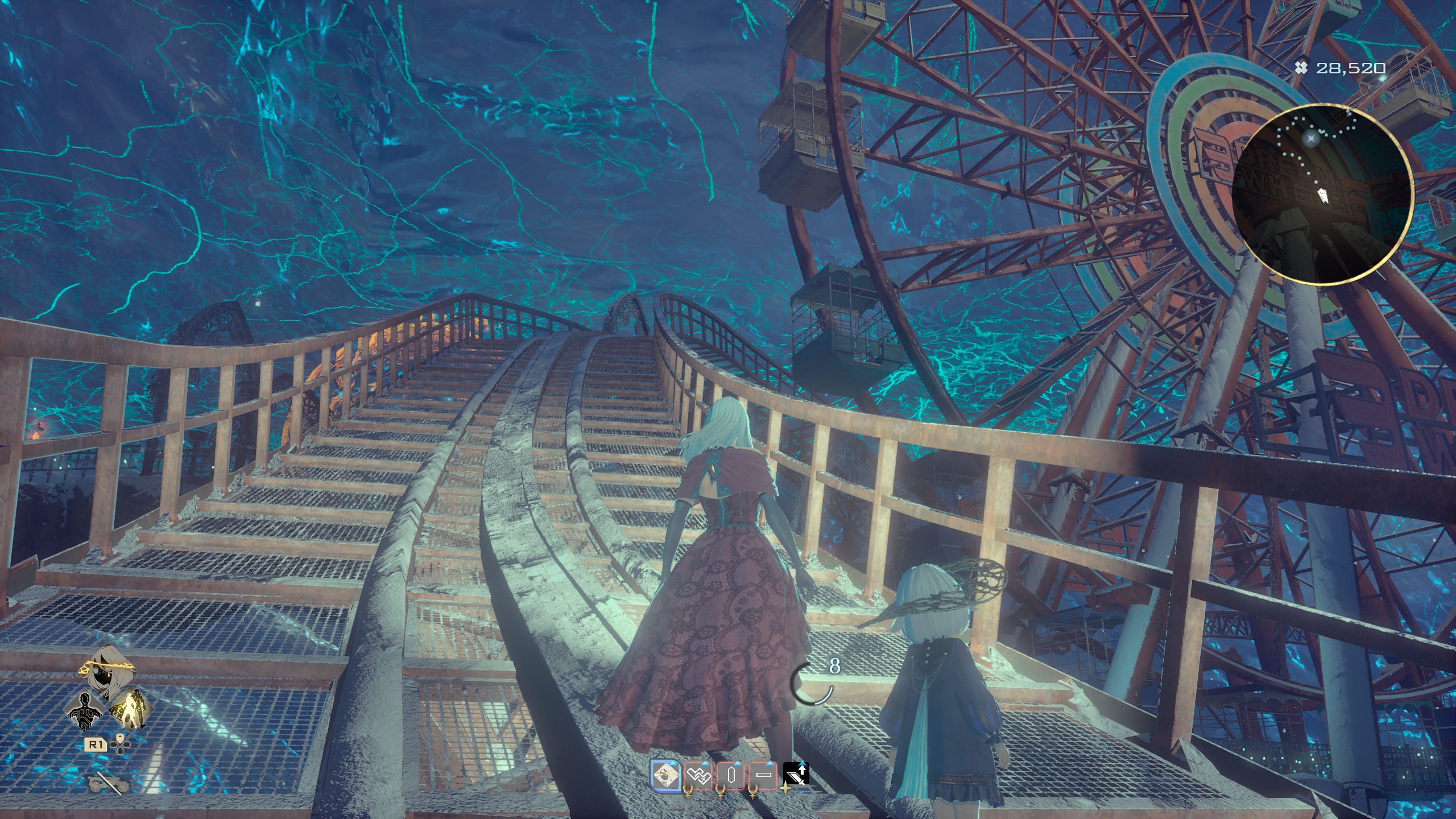
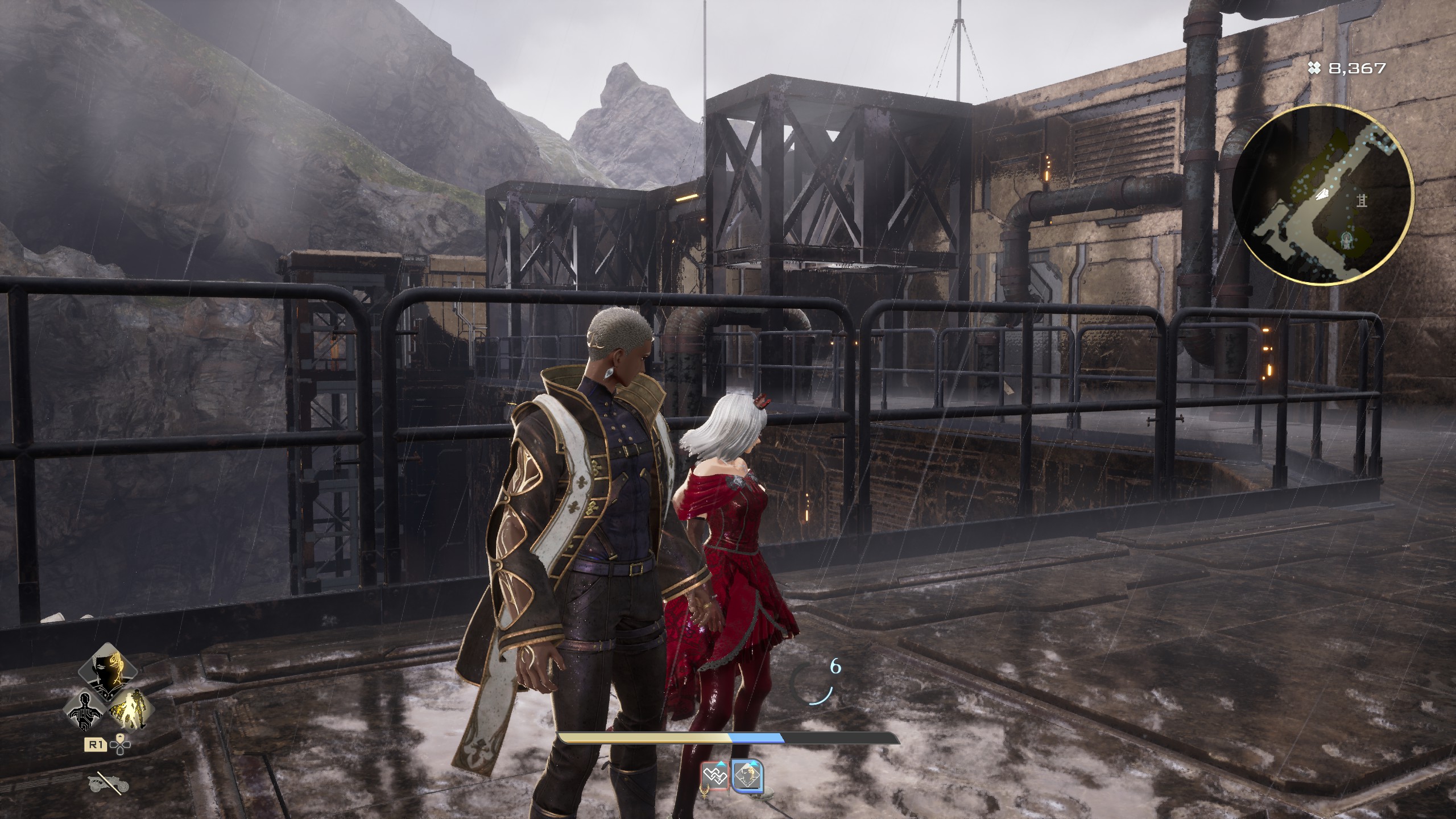
Additionally, I believe that the design of the open-world is handled much more elegantly in Nioh 3. Code Vein II’s shift to open-world is largely composed of vast stretches of empty space with very little incentive to explore them. The only somewhat impressive aspect to Code Vein II’s approach is that it seamlessly links to locations that serve as dungeons without a loading screen – though a handful of them will have elevators first to start exploring them. It’s a shame, too, because some of these dungeons are visually striking, and players are then once again reminded that these are just small peeks into something greater as they traverse the drab open world to head to the next location.
I don’t mean to harp on the comparisons between Code Vein II and Nioh 3, but I’d be hard-pressed to recommend the former over the latter if someone was conflicted on choosing which open-world time-travel action RPG that released in the first quarter of 2026 they should invest their hard-earned money and time into.
Lastly, I will give Code Vein II some props for a somewhat amusing way it incentivizes players to pursue its other two endings after finishing it for the first time. I’ll obviously keep the details vague for spoiler reasons; the first ending ends off on a deliberately odd cliffhanger and greets players with a few changes to the title screen menu. One of Code Vein II’s better characters, Zenon, has a little icon over the ‘Continue’ option urging them to click it, which leads into events that happen immediately after the game’s first ending.
All the new events that lead to Code Vein II’s second ending are actually an okay payoff to the elements of Code Vein II that I liked. It even ends on a strong note, but it unfortunately rings hollow with the third “true ending” that leans into some RPG genre tropes that I roll my eyes at. To keep it vague, it is the typical “everyone gets a happy ending and the journey to get there was hurriedly slapped together” type of finale. If Code Vein II definitively ended with its second ending, I would’ve thought higher of it.
Code Vein II is a sequel that learned all the wrong lessons from industry trends. I don’t usually like to compare games directly when evaluating them, but games don’t exist in a vacuum, and Code Vein II releasing right next to Nioh 3 puts it at a disadvantageous position because its direct action RPG competitor is superior in almost every way. Nioh 3 allows players to play with each other effortlessly, while Code Vein II removed it entirely. Code Vein II’s open world approach is a lot more dull to wade through, as Nioh 3’s smaller zones allow players to traverse it much more swiftly. The only thing I can muster is that Code Vein II probably should’ve pushed back its release to vastly improve its performance – something that Nioh 3 also has a leg up on.