

Star Ocean's Smart Use Of Its Star Trek Inspirations Is Still Its Defining Feature 30 Years Later
Many of Square Enix’s biggest franchises have not-so-subtle inspirations – Dragon Quest draws heavily from the well of Dungeons & Dragons, while Final Fantasy has often found inspiration in Star Wars. But part of what has made Square’s series so enduring is how they take those inspirations and twist them into something new and novel.
Few games have achieved that masterful inversion of inspiration better than the original Star Ocean, a game that took many of the tenets of Star Trek, arguably the most prolific sci-fi franchise of all time, and essentially inverted them, while simultaneously painting over them with something new. In 1996, Star Ocean was quite unlike anything else the RPG genre could offer, but that deep understanding of Star Trek’s spirit is what has given the series such longevity, despite its stumbles.
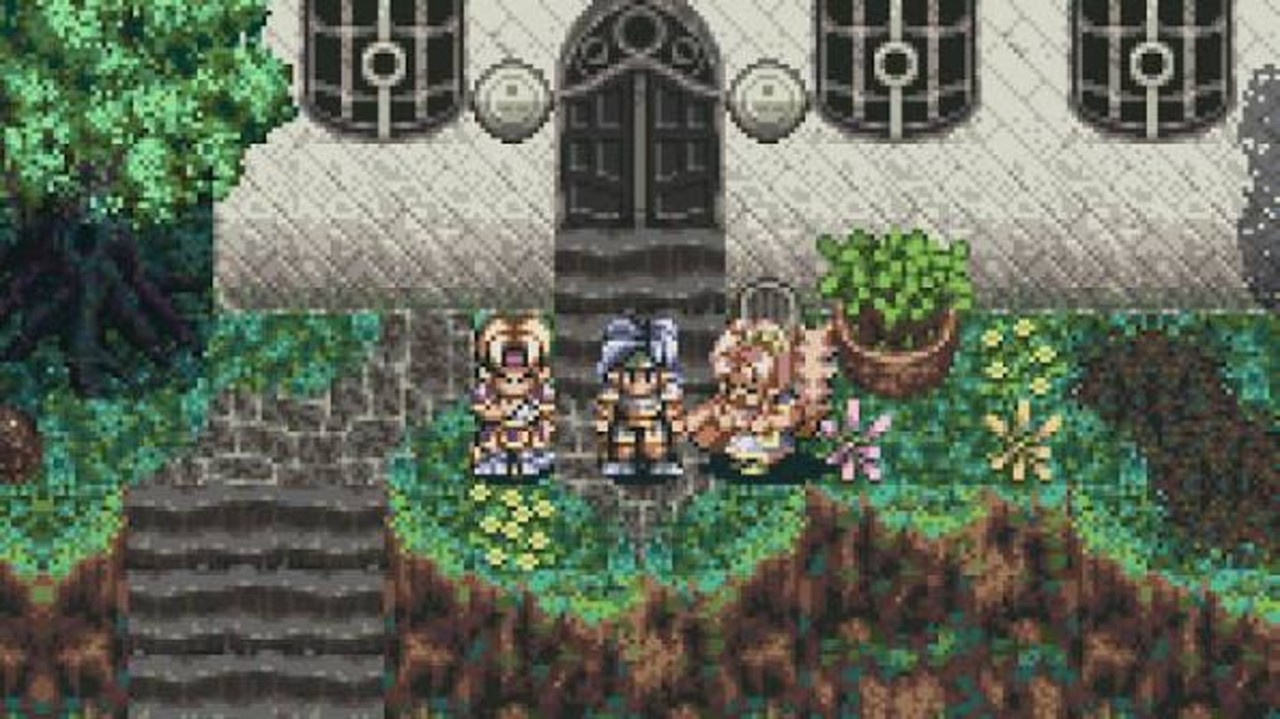
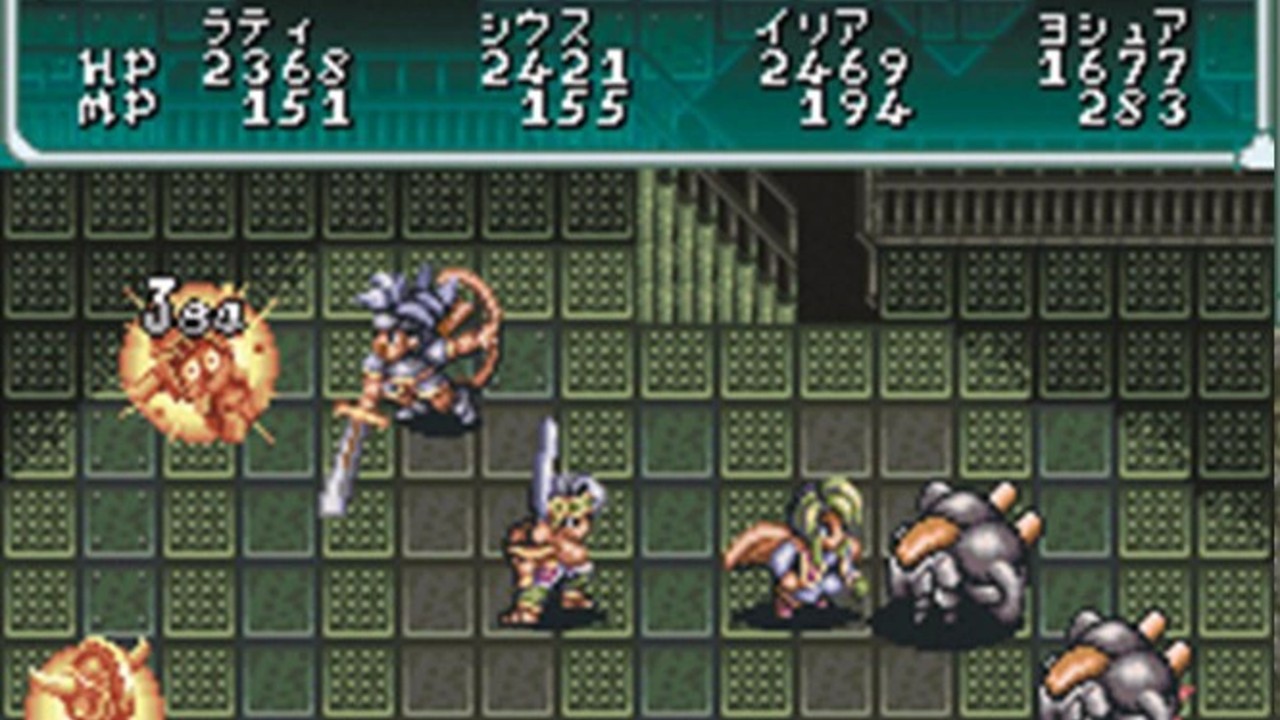
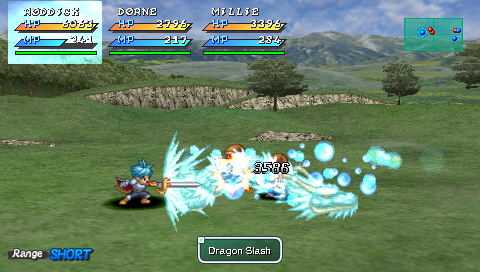
First released on the Super Famicom in 1996, Star Ocean was developed by tri-ace, which was founded by former members of Wolf Team – the studio behind Tales of Phantasia. While the combat systems of the two games bear some remarkable similarities, Star Ocean’s story was largely divergent from what was found in the Tales series, or really any other major RPG of the time. I don’t want to overbill Star Ocean as some magnificently written masterpiece; it’s a fine narrative with some fun characters, but relatively simplistic – although it has been significantly expanded in the two remakes, First Departure and First Departure R. But the game’s real strength lies in its theming and plotting.
Star Ocean opens in the small village of Kratus, on the medieval-esque planet of Roque. You follow a trio of headstrong young Fellpool (the cat-like locals) named Roddick, Millie, and Dorne. For the first stretch, Star Ocean plays out much like any other fantasy RPG, lots of swords, magic, monsters, and a terrible disease that turns people to stone. But the big twist of the game comes when Roddick and Millie ascend a mountain to gather a medicinal herb, and are confronted by a literal otherworldly being, the Earth Federation captain Ronyx J. Kenny.
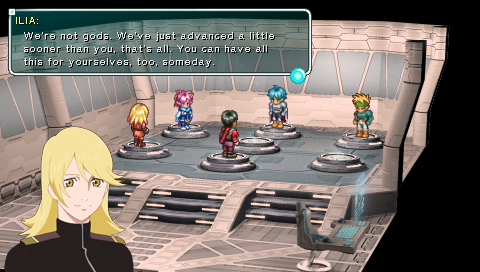
It’s an obvious inversion of the typical Star Trek exploratory narrative, where the crew heads down to an uncharted planet, meets the locals, and some kind of hijinks ensue. But that inversion also allowed Star Ocean to capture the sort of stereotypical JRPG coming-of-age story by putting you in the shoes of Roddick, learning about the larger universe. It’s a surprisingly smart way of integrating the player themselves into the world, or universe.
You don’t need to dig deep to see how Star Ocean is inspired by Star Trek; there’s an Earth Federation, teleporting that looks conspicuously like beaming, and a brave but somewhat womanizing ship captain. The game isn’t shy about it. But crucially, Star Ocean isn’t just paying lip service – it's adapting the tenets and ideals of Star Trek into something new.
Narratively, the game puts a big focus on interspecies cooperation, building a diverse party (or “crew”) that all have unique specializations. It also digs into some larger philosophical questions on if its right for spacefaring species to interfere with the trajectory of planet-bound ones, represented by the Federation’s Underdeveloped Planet Preservation Pact. While the story dives into its fair share of fantasy shenanigans, that core moral quandary is never forgotten, tying right into the finale and ending.
The other aspect here is that Star Ocean is an exploratory game at heart, but probably not in the way you think I mean. You aren’t traveling to different planets and charting unknown frontiers, but the core design of both the narrative and many of the gameplay mechanics is exploratory in nature – in how they can alter your experience based on how you piece things together.
Nowhere is that more present than with the item crafting and Special Points system, which lets you invest points into various skills for characters, such as Cooking or Determination. Not only can these affect characters’ combat stats and abilities, but they can also be used in crafting – a massively complex system that lets you create items not found in shops. There’s incredible variation in how you can build out the core gameplay experience and build your ideal party.
Similarly, Star Ocean has a massive affinity system between all party members, and as that affinity builds, you can find optional “Private Actions” that reveal more about party members and their relationships. This, ultimately, can result in 80 different variations on the endings as well, most of which don’t completely change events, but add little wrinkles. This results in something that may not have big standout moments, but both memorable, complex characters - another area that Star Trek has always flourished in. Star Ocean, like Star Trek, knows that the value in its storytelling lies not in the destinations, but in how you grow to care about its characters.
And those systems are where the true beauty of Star Ocean lies and how it embraces that exploratory nature. By providing robust systems that flesh out your party building and how deeply you understand said party members, Star Ocean creates an experience that feels bigger and grander than the sum of its parts. Something that flourishes on repeat playthroughs, or the little characters' moments you unlock, apart from the rather by-the-numbers main story. And this is clearly something that tri-Ace realized as the series’ killer app early on – as subsequent entries have continued to double down on those variable gameplay elements and divergent storytelling. Each entry has embellished on that with new ideas that help carve out even more exploratory elements,” from the dual protagonists of Star Ocean 2 to the time-traveling of The Last Hope.
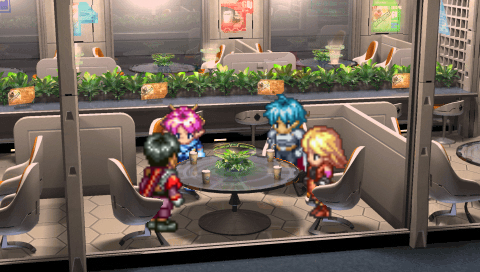
So much of Square’s "Golden Age" of RPGs is remembered so fondly because of how well they embraced their inspirations, twisting and turning them into something divergent. Star Ocean, to this day, stands tall with the best of them and, perhaps, is one of the few video game franchises out there that really "gets" what makes Star Trek's formula tick. But the key is that Star Ocean was able to carve out its own distinct identity, one that was strong enough to power the series forward for three decades.