

"The goal is to satisfy both existing fans and those new to the series" - Dragon Quest VII Reimagined producer Takeshi Ichikawa discusses remaking a genre classic
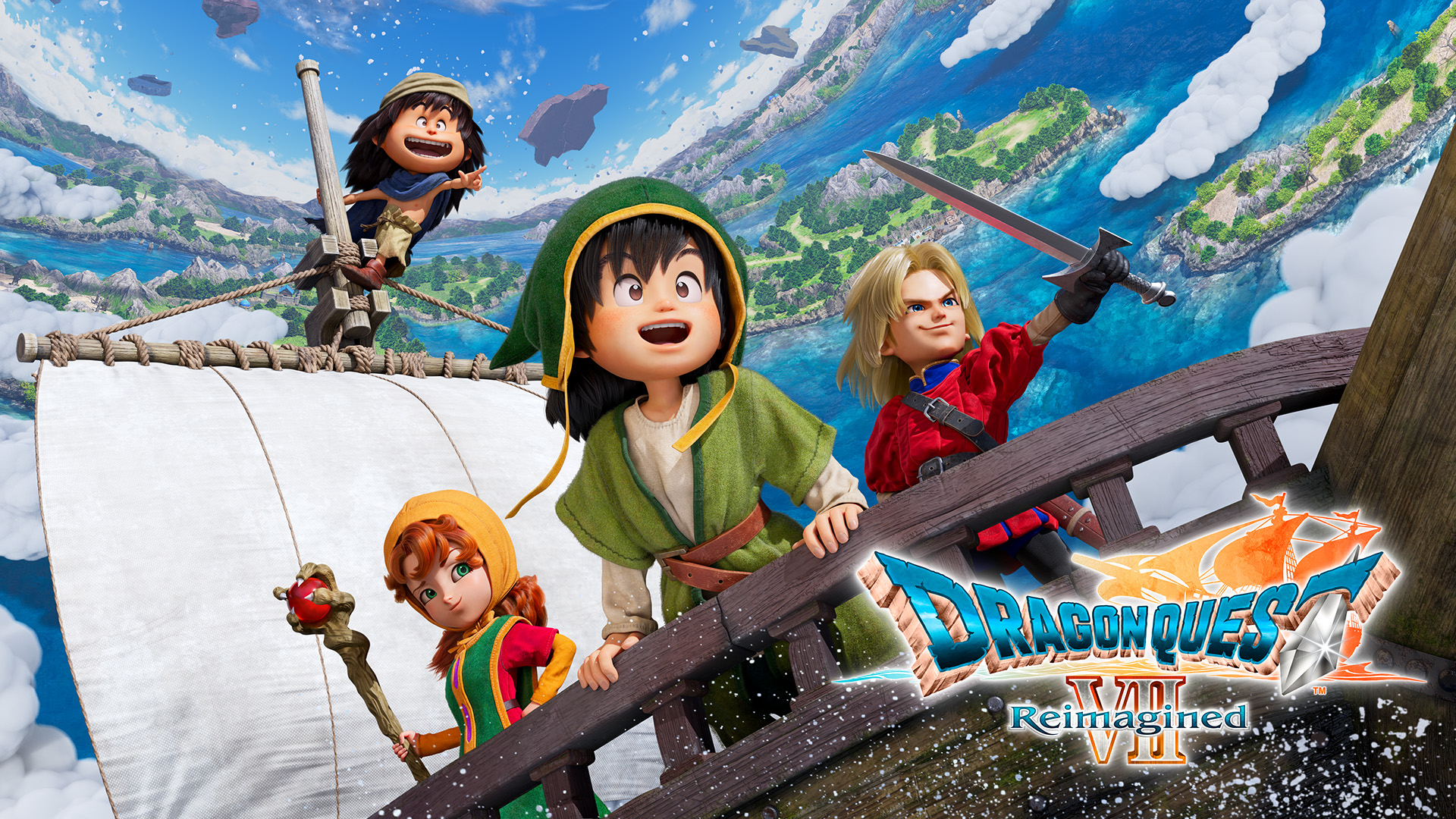
It feels like 2026 has only just started, yet we've already seen big RPG releases with several more on the way in the coming weeks. One of the most notable games is Dragon Quest VII Reimagined, a rare 2nd remake of a classic title seeing wide release on consoles and Steam twenty-five years after its original debut on PlayStation.
RPG Site has a chance to sit down with Dragon Quest VII Reimagined producer Takeshi Ichikawa, where we talked about his history with Dragon Quest, releasing Reimagined so soon after the HD-2D Remakes, adjustments made in the game, and more.
Dragon Quest VII Reimagined is set to release on February 5 for PlayStation 5, Xbox Series X|S, Nintendo Switch 2, Nintendo Switch, and PC (Steam).
This interview has been slightly edited for clarity.
Takeshi Ichikawa: In terms of my Dragon Quest history as a player, the first ever Dragon Quest I played was the original Dragon Quest Monsters. The first mainline title I played was actually DQ7 — the original version on PlayStation. Considering that the gameplay of Dragon Quest Monsters is quite different from the mainline series, when I played Dragon Quest VII afterward — as you may already know, the original Dragon Quest VII takes quite a bit of time before you even get to your first encounter or battle with monsters. The exploration before that, I remember it being very long, and it just felt so long to me as a boy. To be frank, I actually ended up not finishing it at that time. I gave up.
But I did revisit it as an adult, where I was able to properly enjoy the rich and darker narrative that Dragon Quest VII offered. In addition to that, I also played a lot of other mainline titles and spin-off titles as well, including Dragon Quest Heroes and Dragon Quest Builders.
As an employee, I worked on both Dragon Quest Builders 2 and the multiplatform version of Dragon Quest XI S as an assistant producer. Dragon Quest VII Reimagined will be the first title for me to serve as the main producer.
Ichikawa: 2000 was the year the original version of Dragon Quest VII on PlayStation was released, and it's been 25 years since then — a quarter century. When you look at the various elements that make Dragon Quest VII interesting, it really has this unique aesthetic, it has a darker story & narrative, and we felt that now was the great time to repackage that and deliver that for modern audiences.
To answer your second question, the reason why we didn't really put much time in between the Dragon Quest I & II HD-2D Remake and Dragon Quest VII Reimagined — we saw that a lot of our fans and audiences were quite pleased with the HD-2D remakes of the Erdrick Trilogy, so we really wanted to keep that excitement going for this franchise. That's why we're following up with Dragon Quest VII Reimagined.
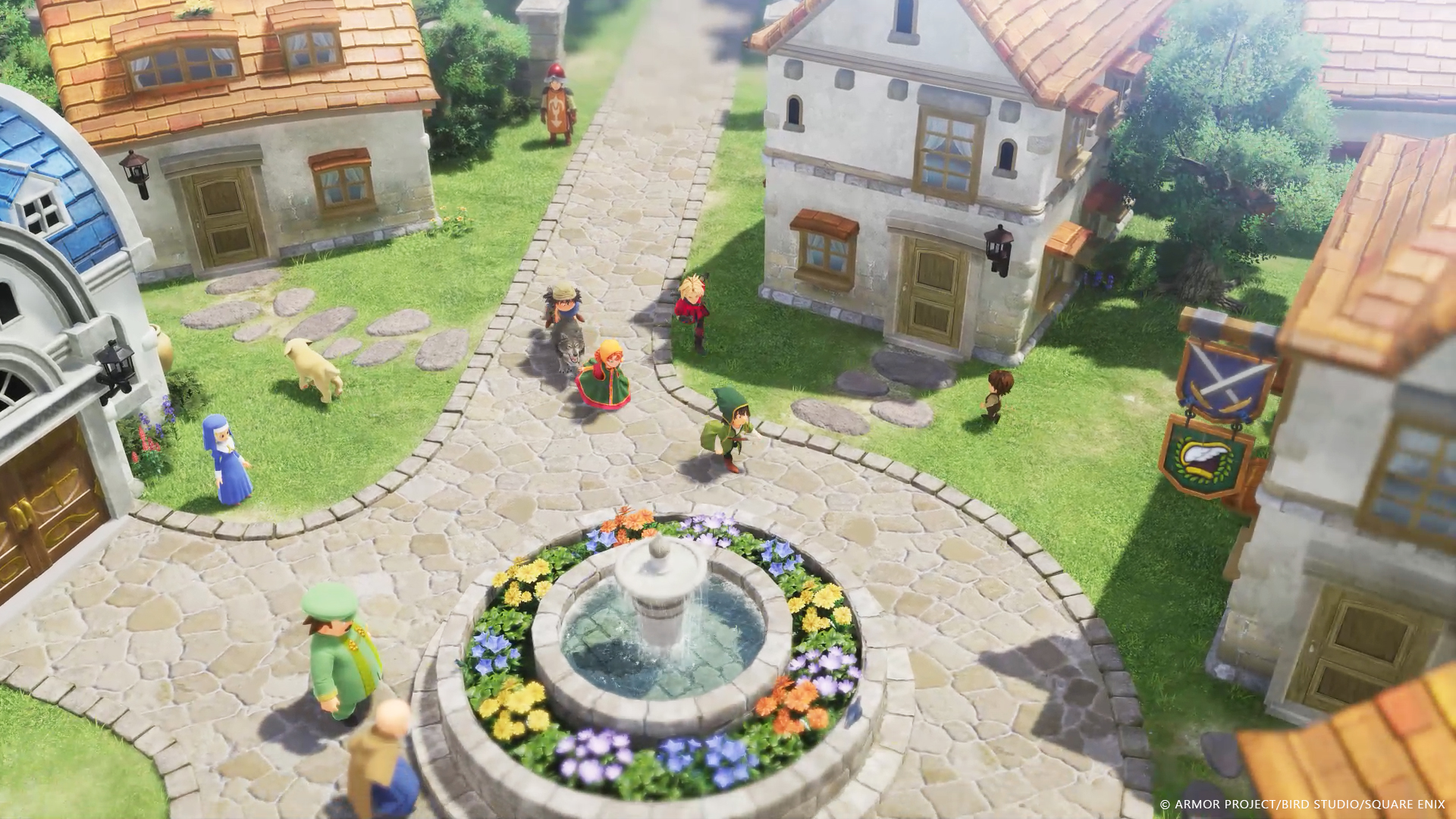
Ichikawa: I'd like to avoid discussing the names of specific titles we got inspirations from, but I can talk about the process of how this doll-like — we call it the handcrafted style — how it came about. To start off, this doesn't just apply to Dragon Quest VII, but Akira Toriyama has worked on the character designs for all of the Dragon Quest series. And when you look at the character designs for Dragon Quest VII specifically, you'll notice the characters are drawn a bit shorter than other mainline titles in the series — not just shorter, but drawn in a more 'adorable' way. So we really wanted to leverage that element of the character designs. The visual style discussion started from that perspective, and we wanted to figure out the best way to illustrate those elements of design.
In our ideation phase, we saw that there were quite a few works of art, like visual media and video games, that employed a doll-aesthetic or doll motives into their works, and we saw that these were regarded really well, too. So, that's how we arrived at the decision to employ the handcrafted style for Dragon Quest VII Reimagined.
Ichikawa: I'm fond of the vignette style that Dragon Quest VII employs. One of the big strengths that it has is that it allows the game to embody very unique characteristics for each individual story that it has. If I were to pick a favorite short story — a favorite island from the game — I would say the L'Arca region. The way the story begins, from a purely visual perspective, it really grabs the player's attention, because you see these townspeople who are turned into animals. It looks interesting, and it looks kind of cute, but as you progress through the game, you learn that they're actually going through some pretty terrible things. I feel like it's one of the stories where it really displays the strengths of Dragon Quest VII.
Ichikawa: As you know, the narrative in Dragon Quest VII is told in a 'vignette' format. In our efforts to streamline the overall story progression and provide a more engaging narrative, we decided to cut subplots — or islands — that had little to no direct relevance or impact on the main scenario. In addition to that, certain islands are still in the game, but they have been restructured into an optional format. So, once you collect the tablet Fragments for those islands, the player gets to choose whether or not they want to progress that storyline.
Further, we didn't just remove islands or make adjustments to existing ones; we're also adding completely new storylines that we never introduced in the previous releases, both 3DS and the PlayStation version. We believe new players and returning players get to have a fresh narrative experience with Reimagined.
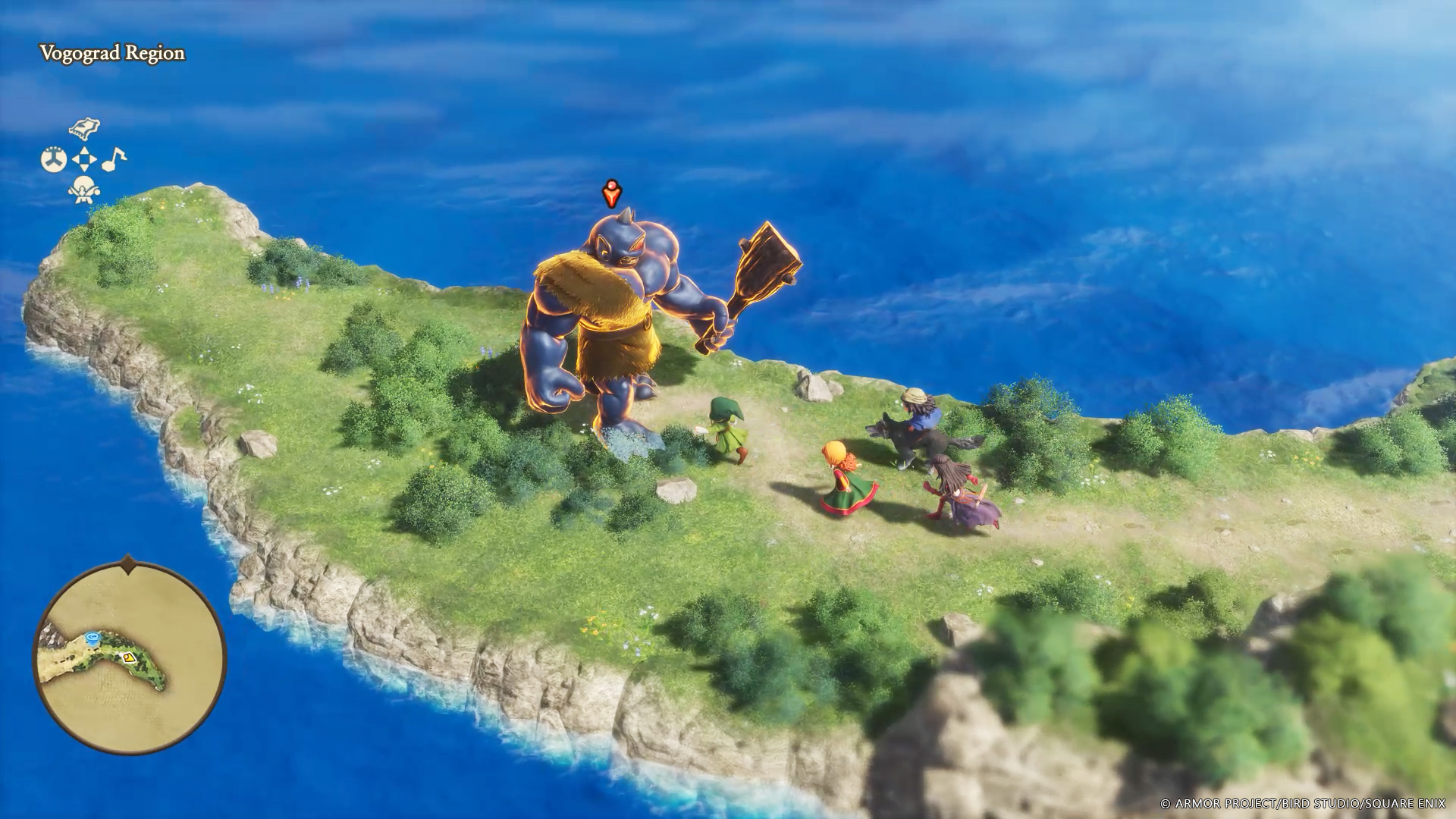
Ichikawa: The very big and general concept that we had from the early phases of development was that we really wanted to focus on three big components of this game to reimagine the game experience. The three being the visuals, the narrative, and the battles. We've already touched on the visuals and narratives. Our general approach to the combat style was that we wanted to make the standard encounters with mob enemies quick & streamlined, while making the boss battles rather deliberate and strategic. For the standard encounters, we've made a lot of adjustments or additions that make the overall game progression and the battle progression streamlined. One example is that if the level difference between your characters and the mob enemy is great, you can actually just immediately defeat the enemy on the field instead of encountering it in an actual battle.
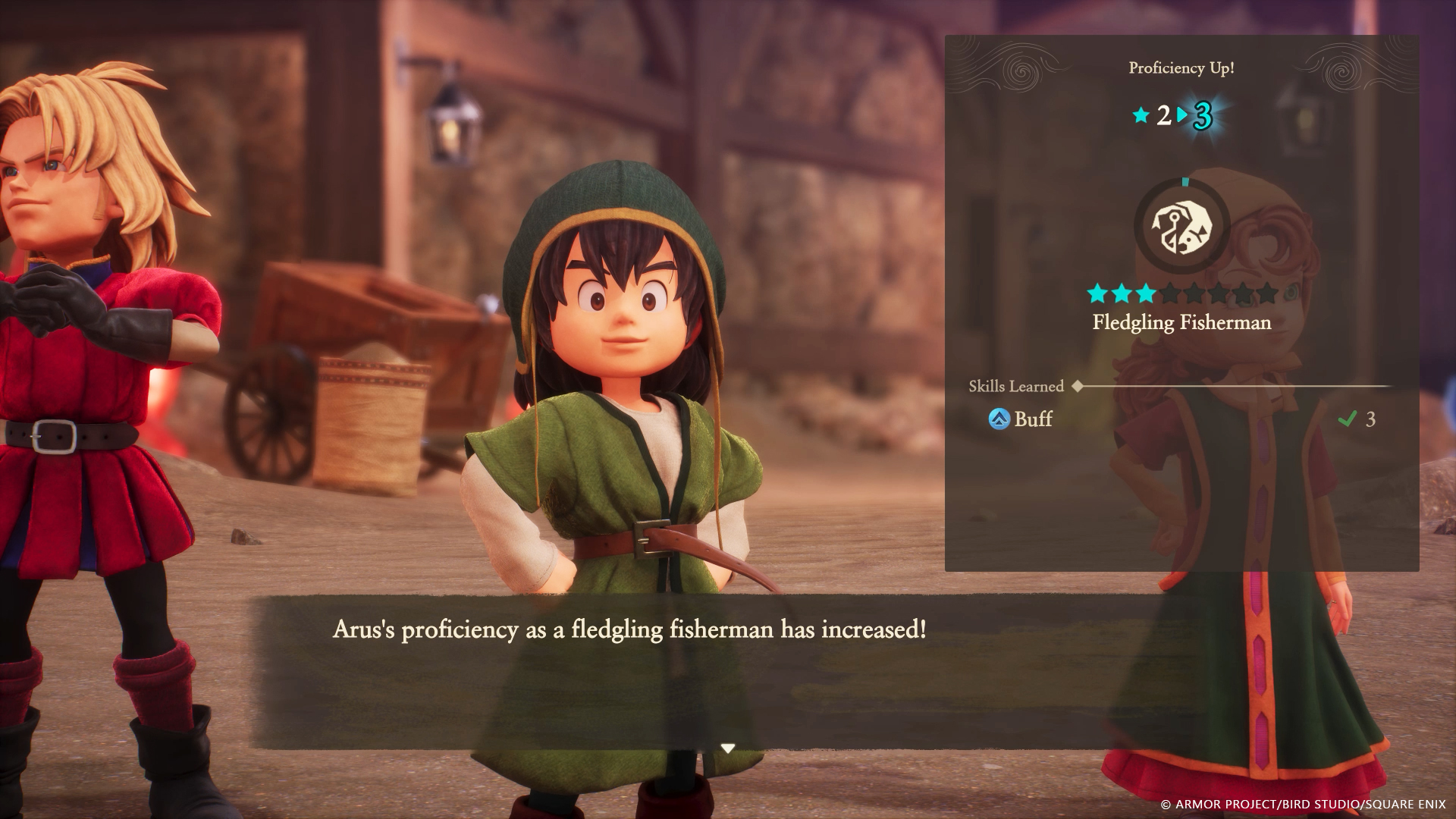
The entire vocation system has been revamped as well. So, each and every vocation is more unique and individualized. In addition to that, we're also adding a Moonlighting feature, which allows each party member to combine two different vocations at once. What that allows is it that it gives the player an opportunity to again be more deliberate and strategic in boss battles, where it might require more thought.
Ichikawa: In this version, battles flow in a way where you have to input commands for each character for each turn that they get. The main reason why we wanted to do that was, because, by doing this turn-based format, it gives the players more leeway to adapt and strategize based on the situation of that battle.
Ichikawa: The goal with Dragon Quest VII Reimagined is to deliver a title that satisfies both audiences. When I say both, I mean not just the existing Dragon Quest fans who have already played a past version of Dragon Quest VII, but also people new to the series who have never played a Dragon Quest title.
That said, we definitely don't want to disappoint existing fans either, and there were many careful discussions and considerations. We are reimagining Dragon Quest VII, but wanted it to also feel natural to those who have played Dragon Quest VII in the past. One thing we did to do that was by keeping the unique aesthetics. In terms of the more detailed adjustments, that's something that we also discussed with Yuji Horii, the creator of Dragon Quest.