

Supergiant Games Interview With Greg Kasavin and Darren Korb – Hades II, Early Access Feedback, Boss Themes, the Ending, Coffee, and the Future
Last month, Supergiant Games launched Hades II on PS5 and Xbox Series consoles alongside a big update for the game on all platforms. Hades II saw its 1.0 launch last year on Switch 2, Switch, and PC platforms. Following the new PS5 and Xbox release, I had a chance to chat with Greg Kasavin and Darren Korb from Supergiant Games. We discussed all sorts of things including Hades II, the soundtrack, guitar solos, what happened with the original Hades II ending, working with Nintendo, potential ports of older games, guitar pickups, streaming Oblivion, and much more. This interview was done on call and has been slightly edited for clarity.
RPG Site: For those unaware, tell us a little bit about yourself and what you do at Supergiant Games
Greg Kasavin: My name is Greg Kasavin. I'm creative director at Supergiant Games. I do the writing for our games, and I also contribute to their design and various other aspects of it. I've been, along with Darren, you know, we've both been here since the Bastion days. Supergiant started back in 2009. We started working on that game early on.
Darren Korb: I'm Darren Korb. I'm the audio director here at Supergiant Games. I'm responsible for composing all the music. I do the sound design and implement the audio and I direct all the voiceover, and do a little bit of voice acting here and there.
Greg Kasavin: My name is Greg Kasavin. I'm creative director at Supergiant Games. I do the writing for our games, and I also contribute to their design and various other aspects of it. I've been, along with Darren, you know, we've both been here since the Bastion days. Supergiant started back in 2009. We started working on that game early on.
Darren Korb: I'm Darren Korb. I'm the audio director here at Supergiant Games. I'm responsible for composing all the music. I do the sound design and implement the audio and I direct all the voiceover, and do a little bit of voice acting here and there.
RPG Site: Before getting to Hades II, and I don't want to spend too much time on the original, but I'm curious when you decided to do an early access release. When you finished Pyre, a game I love, what made you want to do early access?
Greg Kasavin: That was the very first thing that we decided, before anything else on Hades. We started talking about the game that became Hades only a few weeks after Pyre came out, which was in July 2017. By the end of that year we were already working on the game that became Hades.
We were drawn to making it an early access game, and part of it was we hadn't tried it before, and were naturally drawn to trying something that is new to us in some way. We also like the idea of being able to get an idea out there relatively quickly. Just to test the idea faster and then, if everyone likes it, we could keep building the biggest and best version of it. If people kind of don't like it that much, well, you could sort of wind it down a little bit faster. That's part of the reason it's not just an early access game, but also like a roguelike game, because roguelike games can have a really variable amount of content, right? There's no law that says you need three or four or 10 biomes or or whatever. They're very conducive to expansion at least up to a certain point.
So that was our thought. It was kind of as simple as that. And we chose the theme of Hades having made those decisions already. We like the idea of having more narrative be a part of it. We thought that that was like an opportunity for us to make something in the genre that could hopefully stand out, because there were already so many great games in the genre at that time like Slay the Spire, Dead Cells, Enter the Gungeon, and many others.
Greg Kasavin: That was the very first thing that we decided, before anything else on Hades. We started talking about the game that became Hades only a few weeks after Pyre came out, which was in July 2017. By the end of that year we were already working on the game that became Hades.
We were drawn to making it an early access game, and part of it was we hadn't tried it before, and were naturally drawn to trying something that is new to us in some way. We also like the idea of being able to get an idea out there relatively quickly. Just to test the idea faster and then, if everyone likes it, we could keep building the biggest and best version of it. If people kind of don't like it that much, well, you could sort of wind it down a little bit faster. That's part of the reason it's not just an early access game, but also like a roguelike game, because roguelike games can have a really variable amount of content, right? There's no law that says you need three or four or 10 biomes or or whatever. They're very conducive to expansion at least up to a certain point.
So that was our thought. It was kind of as simple as that. And we chose the theme of Hades having made those decisions already. We like the idea of having more narrative be a part of it. We thought that that was like an opportunity for us to make something in the genre that could hopefully stand out, because there were already so many great games in the genre at that time like Slay the Spire, Dead Cells, Enter the Gungeon, and many others.
RPG Site: I'm curious how it felt internally when you decided to announce your next big project as an early access game. I believe at the time, and kind of now as well, a lot of folks are sick of so many early access games. Everyone has been used to Supergiant Games' releases launching and being super polished out of the box. Did you anticipate any pushback from the fanbase?
Greg Kasavin: Well, if you recall, we announced and launched the game in early access at the same exact time in December 2018? We did anticipate a degree of skepticism because of the idea that Supergiant would launch a roguelike dungeon crawler in early access. It did seem like something that we wouldn't do, when players were more accustomed to us releasing games with a traditional kind of beginning, middle, and end in a complete state.
The idea of launching it immediately was in part so that players could experience it, and basically discover that actually this feels like something from us. Set aside many of your concerns at least hopefully, and we hoped that players would get it. Thankfully, the early response to it was quite positive in that regard.
Players got to meet the characters and hear Darren's music, see Jen's artwork, all this kind of stuff. So, it felt like something from our team still despite the genre change.
Greg Kasavin: Well, if you recall, we announced and launched the game in early access at the same exact time in December 2018? We did anticipate a degree of skepticism because of the idea that Supergiant would launch a roguelike dungeon crawler in early access. It did seem like something that we wouldn't do, when players were more accustomed to us releasing games with a traditional kind of beginning, middle, and end in a complete state.
The idea of launching it immediately was in part so that players could experience it, and basically discover that actually this feels like something from us. Set aside many of your concerns at least hopefully, and we hoped that players would get it. Thankfully, the early response to it was quite positive in that regard.
Players got to meet the characters and hear Darren's music, see Jen's artwork, all this kind of stuff. So, it felt like something from our team still despite the genre change.
RPG Site: After Hades in early access, you decided to do it again for Hades II. I know Hades II's new thing was it was the first ever sequel for Supergiant and you always do something new, but uh why early access again? Was there any plan to not do that this time?
Greg Kasavin: No, there was no plan to not do it. The game was designed once again from the ground up with early access in mind because the original Hades became far and away our most successful game in any measurable way. Reviews, popularity of the game, and all this stuff.
A ton of the reason for that, is the early access development process. It is because the player feedback that we got inspired us to make a bigger and better game than we would have made if we just did it in our traditional way.
So when we set out to make Hades II, there were aspects of the early access development process that we wanted to adjust for sure like the duration between one major update to another. We made plenty of adjustments to how we did early access, but there was no question that we were going to do early access with this game again.
We had more of the game already in place at the start of early access, but even still, our early access was longer than a year on Hades II, so it was quite a bit of time spent in that mode. Early access definitely has its challenges. It's not the perfect way to develop every video game by any means, but for certain games, it can work really well to help get their quality up to a higher standard than the developers could probably do on their own.
Greg Kasavin: No, there was no plan to not do it. The game was designed once again from the ground up with early access in mind because the original Hades became far and away our most successful game in any measurable way. Reviews, popularity of the game, and all this stuff.
A ton of the reason for that, is the early access development process. It is because the player feedback that we got inspired us to make a bigger and better game than we would have made if we just did it in our traditional way.
So when we set out to make Hades II, there were aspects of the early access development process that we wanted to adjust for sure like the duration between one major update to another. We made plenty of adjustments to how we did early access, but there was no question that we were going to do early access with this game again.
We had more of the game already in place at the start of early access, but even still, our early access was longer than a year on Hades II, so it was quite a bit of time spent in that mode. Early access definitely has its challenges. It's not the perfect way to develop every video game by any means, but for certain games, it can work really well to help get their quality up to a higher standard than the developers could probably do on their own.
RPG Site: With Bastion, you partnered with Xbox with the Xbox Live Arcade launch for the game. That was a big deal for indies at the time. When Transistor came, it was with Sony. With Hades, you worked with Nintendo. I'm curious how it was working with them on the launch for Hades 1, how that translated to Hades II being a console launch window title?
Greg Kasavin: Working with them was great. They helped us launch our game and bring it to a new audience, right? Hades had been available initially on the Epic Game Store, and then we expanded the early access to Steam, and then at version 1.0 was when it launched on Nintendo Switch as well. The folks we were working with at Nintendo, they loved the game, they wanted to support it, help get it out there. They helped us make retail box retail versions of it, which was super cool.
We're really grateful for their support. We're bigger than we used to be. We were seven people on Bastion. We're closer to like 25 now, but that's still on the smaller side of things, and working with bigger organizations like a Nintendo, or a Sony, or a Microsoft, for us it can have a really big impact in terms of like helping to raise awareness of our games, and that's that sort of thing.
Greg Kasavin: Working with them was great. They helped us launch our game and bring it to a new audience, right? Hades had been available initially on the Epic Game Store, and then we expanded the early access to Steam, and then at version 1.0 was when it launched on Nintendo Switch as well. The folks we were working with at Nintendo, they loved the game, they wanted to support it, help get it out there. They helped us make retail box retail versions of it, which was super cool.
We're really grateful for their support. We're bigger than we used to be. We were seven people on Bastion. We're closer to like 25 now, but that's still on the smaller side of things, and working with bigger organizations like a Nintendo, or a Sony, or a Microsoft, for us it can have a really big impact in terms of like helping to raise awareness of our games, and that's that sort of thing.
RPG Site: How did you decide to do cross save, and was Nintendo supportive of that idea from the start?
Greg Kasavin: It came from how long the game had been in early access already essentially. We never wiped players save data or anything like that. It requires quite a bit of additional work of doing backwards compatibility with previous saves and stuff like that. We just saw that some of our players started to get really invested in their progress. They started playing the game for like hundreds of hours in some cases.
We just felt like we should never delete this progress because it's just too much time invested. The fact that the game came to Nintendo Switch was something that we revealed later in development, and we knew that there was interest from our PC players being able to play the game on this cool portable handheld.
Cross save was something that came up because these guys with hundreds of hours of progress are not necessarily going to want to start over, so can we do this? Of course if Nintendo wasn't supportive of it, it wouldn't have happened.
Greg Kasavin: It came from how long the game had been in early access already essentially. We never wiped players save data or anything like that. It requires quite a bit of additional work of doing backwards compatibility with previous saves and stuff like that. We just saw that some of our players started to get really invested in their progress. They started playing the game for like hundreds of hours in some cases.
We just felt like we should never delete this progress because it's just too much time invested. The fact that the game came to Nintendo Switch was something that we revealed later in development, and we knew that there was interest from our PC players being able to play the game on this cool portable handheld.
Cross save was something that came up because these guys with hundreds of hours of progress are not necessarily going to want to start over, so can we do this? Of course if Nintendo wasn't supportive of it, it wouldn't have happened.

RPG Site: I was very happy to see Hades II include cross save during the review period because I just synced my Steam save over to Switch 2 and didn't need to replay a lot. Is there any hold up or are there any plans to bring cross save to PlayStation and Xbox for Hades II? Hades is too old to do it, but what about Hades II?
Greg Kasavin: We don't have those plans at the moment due to various technical limitations that we have where the platforms have differences that make it less than straightforward. It's one of those things where if we could have done it, we just would have, right? But we weren't able to do cross saves for PlayStation and Xbox on the original Hades either. So it's the same.
Again, I'm not an engineer. I don't want to get into it too much, but there are certain games where you have your account, you sign in, it syncs with some server or something like that. Like Hades and Hades II are both very quick to start games. We don't ask for your email address or any of that kind of stuff, but as a result of that, things like syncing all your data across a million devices becomes more challenging
Greg Kasavin: We don't have those plans at the moment due to various technical limitations that we have where the platforms have differences that make it less than straightforward. It's one of those things where if we could have done it, we just would have, right? But we weren't able to do cross saves for PlayStation and Xbox on the original Hades either. So it's the same.
Again, I'm not an engineer. I don't want to get into it too much, but there are certain games where you have your account, you sign in, it syncs with some server or something like that. Like Hades and Hades II are both very quick to start games. We don't ask for your email address or any of that kind of stuff, but as a result of that, things like syncing all your data across a million devices becomes more challenging
RPG Site: Speaking of PlayStation and Xbox, how does it feel to have literally launched it like what one and a half day ago (as of this recording)?
Greg Kasavin: It's great to have it out there. It's been going really well so far, which is always a relief. It's our fifth game, but launches are always a little bit nerve-wracking for a variety of reasons.
So many things, small and large, can go in unexpected ways. It's nice when the game comes out and the response is generally positive. You can breathe a sigh of relief. We've certainly heard from a lot of PlayStation and Xbox players waiting eagerly for the game in some cases. It's just nice to have it out there for more people to play.
Darren Korb: Absolutely. That's my feeling, too. It's just nice to have it available now for anybody who wants to play it, and they can pick it up on their platform of choice.
The completionist in me finds that very satisfying. So it has been great to see the response and for people to still be excited about this game that came out last year. I'm really stoked about some of the small updates as well, that we added all to all the platforms, and then for people that are experiencing it for the first time to have that stuff in there which is cool.
Greg Kasavin: It's great to have it out there. It's been going really well so far, which is always a relief. It's our fifth game, but launches are always a little bit nerve-wracking for a variety of reasons.
So many things, small and large, can go in unexpected ways. It's nice when the game comes out and the response is generally positive. You can breathe a sigh of relief. We've certainly heard from a lot of PlayStation and Xbox players waiting eagerly for the game in some cases. It's just nice to have it out there for more people to play.
Darren Korb: Absolutely. That's my feeling, too. It's just nice to have it available now for anybody who wants to play it, and they can pick it up on their platform of choice.
The completionist in me finds that very satisfying. So it has been great to see the response and for people to still be excited about this game that came out last year. I'm really stoked about some of the small updates as well, that we added all to all the platforms, and then for people that are experiencing it for the first time to have that stuff in there which is cool.

RPG Site: How did you decide to do another big patch for this launch? You didn't even reveal a lot of the important stuff in the patch notes.
Greg Kasavin: After the 1.0 update on PC and Nintendo Switch and Switch 2 came out in late September last year, we had plenty of work left to do to get the game running on Xbox and PlayStation at that time. Our engineers have been busy focusing on that effort, which left our content team, our non-engineers, including people like Darren and me, available. We started to have some ideas about a possible content update.
It's one of those things where we thought we could make the Xbox and PlayStation versions of the game potentially even better based on some of the feedback that we've seen since the 1.0 launch. It's just something for everyone else, for those who've been playing the game since launch, it hopefully can also be an exciting moment or reason to try the game again if you're so inclined and so on.
It's actually a thank you in many ways to those who've played since 1.0, and continue to give us the valuable feedback that got us all the way through early access, and helped us make a game. We couldn't have made a game to this level if not for all that feedback during early access.
Greg Kasavin: After the 1.0 update on PC and Nintendo Switch and Switch 2 came out in late September last year, we had plenty of work left to do to get the game running on Xbox and PlayStation at that time. Our engineers have been busy focusing on that effort, which left our content team, our non-engineers, including people like Darren and me, available. We started to have some ideas about a possible content update.
It's one of those things where we thought we could make the Xbox and PlayStation versions of the game potentially even better based on some of the feedback that we've seen since the 1.0 launch. It's just something for everyone else, for those who've been playing the game since launch, it hopefully can also be an exciting moment or reason to try the game again if you're so inclined and so on.
It's actually a thank you in many ways to those who've played since 1.0, and continue to give us the valuable feedback that got us all the way through early access, and helped us make a game. We couldn't have made a game to this level if not for all that feedback during early access.
RPG Site: What are your influences for your narrative and writing work before and after Hades?
Greg Kasavin: I would say it's really project dependent. Darren this is probably true for you too in your own way, right?
Darren Korb: Yeah.
Greg Kasavin: Think of all the music that you enjoy, right? if we're thinking about a new game, you start to maybe pick and choose the things that you already love, from that wider catalog that may feel appropriate. That's kind of how it is for me.
I think when it comes to writing, it's just going to depend on the project quite a bit. It's also hard to identify specific influences sometimes, because it's like a bunch of things. It's not just authors or movies or something like that. It's the way certain games made me feel or music too.
For something like Hades, one of the specific references that Darren and I would talk about when trying to figure out the vibe and the characters and so on, is the movie The Princess Bride which is a great great movie that holds up extremely well. It balances humor and heartfelt, more serious moments really well. It has these really colorful and sometimes ridiculous characters. It just had a tone that we liked a lot, and when we talked about the presence of humor in Hades, that was something that I would think of.
Darren Korb: Even the style of performance and everything, we would reference that movie for sure.
Greg Kasavin: So that's an example. I've loved The Princess Bride for a long time. If you ask me what my favorite movies are, I don't know that A Princess Bride jumps to the top of my list, but when we were thinking about Hades, that's a perfect reference for what we're going for.
I mentioned old Ultima games and stuff like that, things that left a strong impression on me as a kid. I still think about 40 whatever years later, things that I enjoyed when I was eight or 10 or something like that. Animation, movies, and so on. I don't know if that's uncommon. We experience media at a young age and it sticks with us.
Greg Kasavin: I would say it's really project dependent. Darren this is probably true for you too in your own way, right?
Darren Korb: Yeah.
Greg Kasavin: Think of all the music that you enjoy, right? if we're thinking about a new game, you start to maybe pick and choose the things that you already love, from that wider catalog that may feel appropriate. That's kind of how it is for me.
I think when it comes to writing, it's just going to depend on the project quite a bit. It's also hard to identify specific influences sometimes, because it's like a bunch of things. It's not just authors or movies or something like that. It's the way certain games made me feel or music too.
For something like Hades, one of the specific references that Darren and I would talk about when trying to figure out the vibe and the characters and so on, is the movie The Princess Bride which is a great great movie that holds up extremely well. It balances humor and heartfelt, more serious moments really well. It has these really colorful and sometimes ridiculous characters. It just had a tone that we liked a lot, and when we talked about the presence of humor in Hades, that was something that I would think of.
Darren Korb: Even the style of performance and everything, we would reference that movie for sure.
Greg Kasavin: So that's an example. I've loved The Princess Bride for a long time. If you ask me what my favorite movies are, I don't know that A Princess Bride jumps to the top of my list, but when we were thinking about Hades, that's a perfect reference for what we're going for.
I mentioned old Ultima games and stuff like that, things that left a strong impression on me as a kid. I still think about 40 whatever years later, things that I enjoyed when I was eight or 10 or something like that. Animation, movies, and so on. I don't know if that's uncommon. We experience media at a young age and it sticks with us.
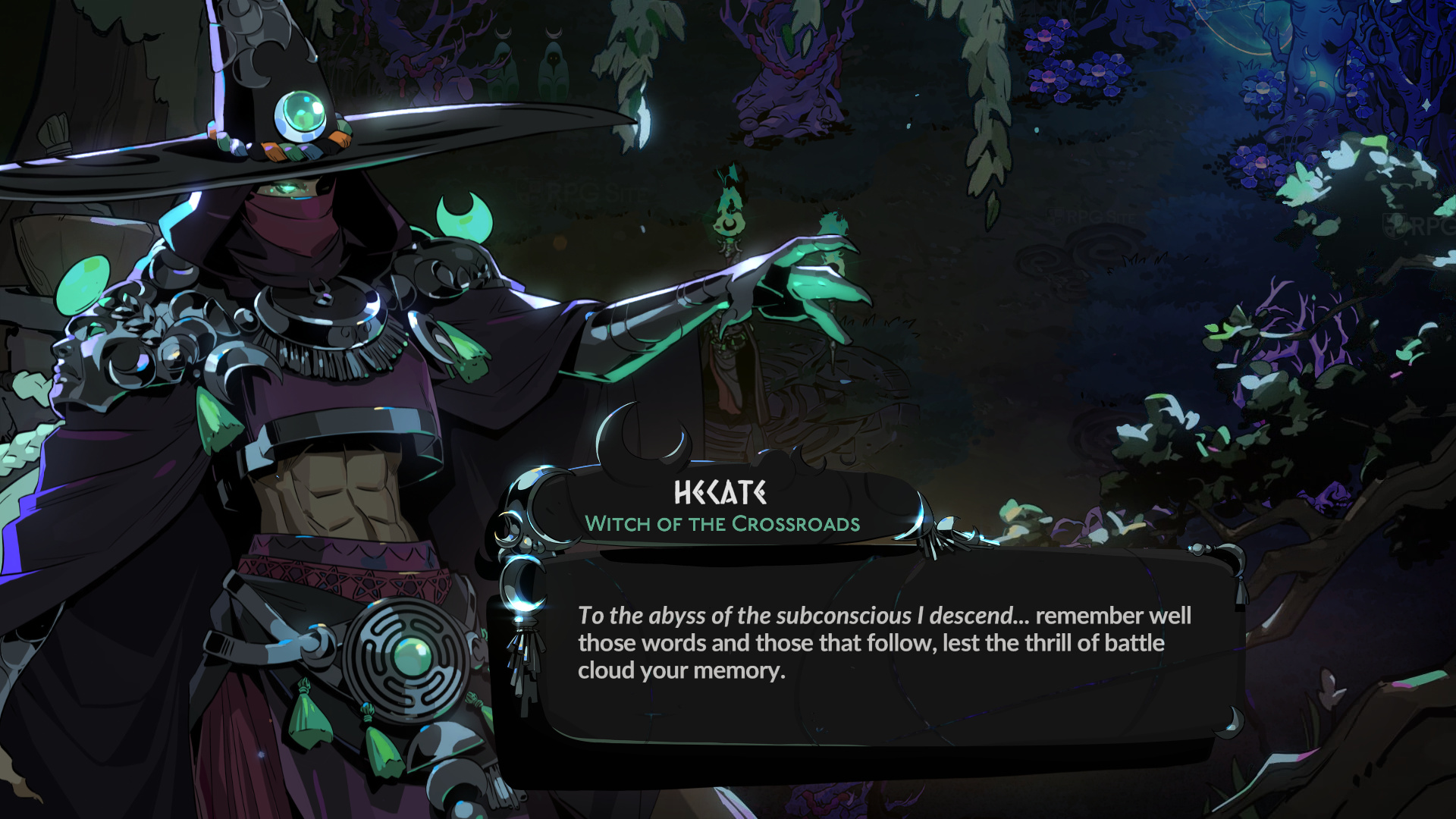
RPG Site: What was the most challenging character to write through early access in both Hades and Hades II?
Greg Kasavin: Jeez. In all of them? You see me struggling to answer that. Every character is challenging and no character is challenging in a weird way. Because if we're struggling with them a lot, then there's just something really wrong.
I don't think we've really run into that. There are some characters that feel like it's really, really important to get right, but those tend to be the most prominent characters in these stories. It's not Skellyy. Skellyy was not the hardest character to write. *laughs* I can tell you the hardest characters to write and then maybe through the process of elimination we wind up with the answer. Nobody in particular comes to mind.
I think in part because we choose characters that we're like inherently, no one is like assigning the characters to us. We just choose the ones that we're really excited about and if we're excited about them, then we probably have some point of view on them that we can move forward with.
Darren Korb: Greg you've mentioned to me that it's having these really sort of clear characterizations for these different characters, and having them each have their clear point of view, and clear things that they think. It seems to me like that helps. It's like you've mentioned in your process, that it's just whatever they would say based on that stuff.
Greg Kasavin: Which is a super fun process. Yeah. You essentially role play as them, right? It's like what would you do in this situation if you were Odysseus? What would you say based on your own background and circumstances and so on.
Hades and Hades II have the most words of any of our previous games, and that's partly because of the characters. The total volume of work could be challenging, but any given character was like a treat to work on, in part because we work with an awesome voice cast and all this kind of stuff. I'd just always be excited to hear what they would do with the material and that sort of thing.
Greg Kasavin: Jeez. In all of them? You see me struggling to answer that. Every character is challenging and no character is challenging in a weird way. Because if we're struggling with them a lot, then there's just something really wrong.
I don't think we've really run into that. There are some characters that feel like it's really, really important to get right, but those tend to be the most prominent characters in these stories. It's not Skellyy. Skellyy was not the hardest character to write. *laughs* I can tell you the hardest characters to write and then maybe through the process of elimination we wind up with the answer. Nobody in particular comes to mind.
I think in part because we choose characters that we're like inherently, no one is like assigning the characters to us. We just choose the ones that we're really excited about and if we're excited about them, then we probably have some point of view on them that we can move forward with.
Darren Korb: Greg you've mentioned to me that it's having these really sort of clear characterizations for these different characters, and having them each have their clear point of view, and clear things that they think. It seems to me like that helps. It's like you've mentioned in your process, that it's just whatever they would say based on that stuff.
Greg Kasavin: Which is a super fun process. Yeah. You essentially role play as them, right? It's like what would you do in this situation if you were Odysseus? What would you say based on your own background and circumstances and so on.
Hades and Hades II have the most words of any of our previous games, and that's partly because of the characters. The total volume of work could be challenging, but any given character was like a treat to work on, in part because we work with an awesome voice cast and all this kind of stuff. I'd just always be excited to hear what they would do with the material and that sort of thing.
RPG Site: Going back to the 1.0 launch, how did the team handle the feedback for that launch and the ending? Give me a behind-the-scenes look at everything that led to the major update soon after launch. Were you all burning the midnight oil for weeks to ship that big patch with the ending changes?
Greg Kasavin: So what happened was, after the game launched in late September, naturally some of the first people to reach the true ending that we added, at that point were our highly invested early access players. Sometimes people with like hundreds of hours played, they could wipe the floor with Chronos no problem, and they have a ton of progress already which we carried over from early access, so they're ready to get to the ending quickly.
Some of those players started getting to the ending and they did not like it. In short, it was both not what they were expecting, and not what they were hoping for. They just made their disappointment with it clear. They had a bunch of feedback about it and why it wasn't what they wanted to see and so on.
The game came out on Thursday, September 25th. By Monday morning, our studio director Amir and I were like, "Let's try to do something about this." Because the simple fact of the matter is, we cared about the feedback from our early access players all the way through development. Why would we suddenly not care about it anymore after version 1.0?
We still cared about it. They had a bunch of feedback on new content that we added. So from a certain point of view, it was straightforward for us to continue our early access process, which when it comes to tricky things like that, you mentioned you enjoyed it, other people say they didn't like it. Our process is to look at ways, to ask ourselves, can we make this better for people who didn't like it without making it worse for people who did like it? Especially when it comes to something like the ending of the story, it's very important to us that it stays true to the story that we had planned for years.
So from my perspective, there was no fundamental change to the story, but there were opportunities to respond to the specific feedback and smooth over some of the issues that the players brought up. We told ourselves that if we're not feeling good about it, we don't have to release it, etc. But let's do the work and see how it goes. We got to work on it. Darren was very very heavily involved in that process because we had to get members of the voice cast back and edit and everything, and iterate.
Darren is one of the people I work with the most closely and actually literally the most closely on the story because you record every single line. It gave us something to do for the next few weeks after that. We put it out there and our early access players, a lot of them seem to like it better, and most other people didn't seem to like it less. I guess we were pretty pleased with the result overall all things considered.
We care a lot about the endings of our games. We always have. But we don't know how those endings will go over because it's just the nature of a story. It's hard to anticipate how people and how everyone is going to react to it. The best we could do is just to give it time. We just always have tried to give our endings time in development so that they can be as impactful as possible in the way that we hope, and create the kind of reaction that we hope will happen. So in this case, it didn't start quite the way we would have liked, and we wanted to see if we could do something about it.
Darren Korb: For sure and I would say just to add to that, that the extra challenge of doing that in a game that's so sprawling, and where players can experience all of these narrative events in sort of any order in a lot of cases, or in sort of different orders, and everybody's experience of that, of their gameplay experience, of their 200 hours or whatever they put, in is totally different or can be very different.
Greg Kasavin: The stakes for that ending were especially high. Someone who buys the game on PlayStation 5 today, they could get to the true end, maybe 30 hours let's say, to get to the ending. It's not 600 hours or something like that. If you play the game for 600 hours before the ending, you're going to have pretty different expectations potentially than someone who plays for 30.
We just really care what those early access players think. That's it. We have our own process of addressing feedback, right? Responding to feedback is a delicate process in its own right because you get a lot of feedback, and you have to decide what to act on, how to act on it, how to do it in a way that's still consistent with the game that you're making, and all these kinds of things that add complexity to it.
In the end, these are players who spend a lot of time in our games. We feel a great deal of gratitude toward them, and we want them to be happy with the game that they got from us. Why wouldn't we?
Greg Kasavin: So what happened was, after the game launched in late September, naturally some of the first people to reach the true ending that we added, at that point were our highly invested early access players. Sometimes people with like hundreds of hours played, they could wipe the floor with Chronos no problem, and they have a ton of progress already which we carried over from early access, so they're ready to get to the ending quickly.
Some of those players started getting to the ending and they did not like it. In short, it was both not what they were expecting, and not what they were hoping for. They just made their disappointment with it clear. They had a bunch of feedback about it and why it wasn't what they wanted to see and so on.
The game came out on Thursday, September 25th. By Monday morning, our studio director Amir and I were like, "Let's try to do something about this." Because the simple fact of the matter is, we cared about the feedback from our early access players all the way through development. Why would we suddenly not care about it anymore after version 1.0?
We still cared about it. They had a bunch of feedback on new content that we added. So from a certain point of view, it was straightforward for us to continue our early access process, which when it comes to tricky things like that, you mentioned you enjoyed it, other people say they didn't like it. Our process is to look at ways, to ask ourselves, can we make this better for people who didn't like it without making it worse for people who did like it? Especially when it comes to something like the ending of the story, it's very important to us that it stays true to the story that we had planned for years.
So from my perspective, there was no fundamental change to the story, but there were opportunities to respond to the specific feedback and smooth over some of the issues that the players brought up. We told ourselves that if we're not feeling good about it, we don't have to release it, etc. But let's do the work and see how it goes. We got to work on it. Darren was very very heavily involved in that process because we had to get members of the voice cast back and edit and everything, and iterate.
Darren is one of the people I work with the most closely and actually literally the most closely on the story because you record every single line. It gave us something to do for the next few weeks after that. We put it out there and our early access players, a lot of them seem to like it better, and most other people didn't seem to like it less. I guess we were pretty pleased with the result overall all things considered.
We care a lot about the endings of our games. We always have. But we don't know how those endings will go over because it's just the nature of a story. It's hard to anticipate how people and how everyone is going to react to it. The best we could do is just to give it time. We just always have tried to give our endings time in development so that they can be as impactful as possible in the way that we hope, and create the kind of reaction that we hope will happen. So in this case, it didn't start quite the way we would have liked, and we wanted to see if we could do something about it.
Darren Korb: For sure and I would say just to add to that, that the extra challenge of doing that in a game that's so sprawling, and where players can experience all of these narrative events in sort of any order in a lot of cases, or in sort of different orders, and everybody's experience of that, of their gameplay experience, of their 200 hours or whatever they put, in is totally different or can be very different.
Greg Kasavin: The stakes for that ending were especially high. Someone who buys the game on PlayStation 5 today, they could get to the true end, maybe 30 hours let's say, to get to the ending. It's not 600 hours or something like that. If you play the game for 600 hours before the ending, you're going to have pretty different expectations potentially than someone who plays for 30.
We just really care what those early access players think. That's it. We have our own process of addressing feedback, right? Responding to feedback is a delicate process in its own right because you get a lot of feedback, and you have to decide what to act on, how to act on it, how to do it in a way that's still consistent with the game that you're making, and all these kinds of things that add complexity to it.
In the end, these are players who spend a lot of time in our games. We feel a great deal of gratitude toward them, and we want them to be happy with the game that they got from us. Why wouldn't we?
RPG Site: How do you balance the data you get from players, your own design sensibilities, and the feedback you get online to make a call where to go next in early access games?
Greg Kasavin: One of the really helpful things about early access is that you can collect the data, you can collect the feedback very formally, and put everything in a spreadsheet, and you can also just get a feel for it sometimes, like what are the top issues that the community is talking about? What are the things that are not going away as topics of conversation?
Those types of things tend to be worth some amount of attention and discussion. You ask yourself if there are things about this that could be better. Is something about this distracting players in a way that we don't like? Is this aspect of the game or the balance or something like that controversial? We collect voluntary gameplay data as well. So, it's a combination of our own impressions on the team as players of our own game, as the developers of our own game, listening to the community, reading all the feedback that we can, and then looking at the game data.
Somewhere between all those things, we get a picture of what are some of the higher priority issues that we could try to address. During early access development, of course, we have to weigh that against all the new stuff that we're also planning to add. So we set aside time in our development schedule to basically just address feedback and do things to improve the stuff that's there, in addition to adding new stuff. But it's certainly a very active process and it's one where you can't necessarily make every single player happy, right? Nevertheless, you could, right?
Darren Korb: In that regard I really don't envy Amir and the design team, who have to parse that feedback and figure out if someone is saying a particular thing, you have to think if you give that to them, it won't be a fun game anymore. You know this as a game designer, you have to find a way to address this feedback, act without just doing the suggestion, or whatever it is that this person wants, but your game designer brain has to figure out the thing that they actually want you to implement.
Greg Kasavin: People can give feedback however they want, but the kind that is extremely valuable is when it's rooted in someone's personal experience. When they just say they found something really frustrating or they found something really confusing. Sometimes you'll see internet comments like, "Oh man, you know, this boss, like I got past this boss, you know, in just a couple of tries, but I could see how this is going to be really hard for everyone else." It's like, you don't need to speak on behalf of everyone else. What's your experience with the game? What did you find surprising or unpleasant or whatever? We want to hear about that stuff.
It could be really useful to watch people play, right? Because you see their emotional reactions or their confusion and that sort of thing. As game developers, you can't go back to not knowing how to play your own game. No matter how much you try to play it like a new player, it's impossible if you've been working on it. It's just really important to keep hearing from new players and seeing them interact with the game just to try to make it as approachable as possible, if you want it to be, which we did with something like Hades and Hades II
Greg Kasavin: One of the really helpful things about early access is that you can collect the data, you can collect the feedback very formally, and put everything in a spreadsheet, and you can also just get a feel for it sometimes, like what are the top issues that the community is talking about? What are the things that are not going away as topics of conversation?
Those types of things tend to be worth some amount of attention and discussion. You ask yourself if there are things about this that could be better. Is something about this distracting players in a way that we don't like? Is this aspect of the game or the balance or something like that controversial? We collect voluntary gameplay data as well. So, it's a combination of our own impressions on the team as players of our own game, as the developers of our own game, listening to the community, reading all the feedback that we can, and then looking at the game data.
Somewhere between all those things, we get a picture of what are some of the higher priority issues that we could try to address. During early access development, of course, we have to weigh that against all the new stuff that we're also planning to add. So we set aside time in our development schedule to basically just address feedback and do things to improve the stuff that's there, in addition to adding new stuff. But it's certainly a very active process and it's one where you can't necessarily make every single player happy, right? Nevertheless, you could, right?
Darren Korb: In that regard I really don't envy Amir and the design team, who have to parse that feedback and figure out if someone is saying a particular thing, you have to think if you give that to them, it won't be a fun game anymore. You know this as a game designer, you have to find a way to address this feedback, act without just doing the suggestion, or whatever it is that this person wants, but your game designer brain has to figure out the thing that they actually want you to implement.
Greg Kasavin: People can give feedback however they want, but the kind that is extremely valuable is when it's rooted in someone's personal experience. When they just say they found something really frustrating or they found something really confusing. Sometimes you'll see internet comments like, "Oh man, you know, this boss, like I got past this boss, you know, in just a couple of tries, but I could see how this is going to be really hard for everyone else." It's like, you don't need to speak on behalf of everyone else. What's your experience with the game? What did you find surprising or unpleasant or whatever? We want to hear about that stuff.
It could be really useful to watch people play, right? Because you see their emotional reactions or their confusion and that sort of thing. As game developers, you can't go back to not knowing how to play your own game. No matter how much you try to play it like a new player, it's impossible if you've been working on it. It's just really important to keep hearing from new players and seeing them interact with the game just to try to make it as approachable as possible, if you want it to be, which we did with something like Hades and Hades II
RPG Site: With the PS5 and Xbox launches and updates, should we assume that Hades II is done or do you still have things you want to do with it?
Greg Kasavin: We don't know what the future holds is the simple answer to that and the truthful answer as well. *laughs*
One thing we do at Supergiant is we take things one step at a time. We plan our projects these days, but we don't have multiple things planned. We focus on one big thing at a time, and lately that has been this launch on Xbox and PlayStation.
RPG Site: I realize that I've just asked you about the future after you've just shipped a major update and launched on new platforms, but I couldn't not ask, right?
Greg Kasavin: I think many studios know or probably know the next two games they want to make, or they have their road map for the next six live updates they're going to do or something like that. With the original Hades, we actually never did like a content update after that game shipped in 1.0. It's something we wanted to try this time, and now we're in a mode where we have to figure out what's next generally.
We're one team. We don't have multiple teams or something like that. We just have to weigh a bunch of options as we consider our future. One thing's for sure. We want to stick together and keep making games together, which has been our most basic goal all this time. All seven of us from the Bastion days are still together. We want to be able to keep that going for as long as we can, keep making games together.
Greg Kasavin: We don't know what the future holds is the simple answer to that and the truthful answer as well. *laughs*
One thing we do at Supergiant is we take things one step at a time. We plan our projects these days, but we don't have multiple things planned. We focus on one big thing at a time, and lately that has been this launch on Xbox and PlayStation.
RPG Site: I realize that I've just asked you about the future after you've just shipped a major update and launched on new platforms, but I couldn't not ask, right?
Greg Kasavin: I think many studios know or probably know the next two games they want to make, or they have their road map for the next six live updates they're going to do or something like that. With the original Hades, we actually never did like a content update after that game shipped in 1.0. It's something we wanted to try this time, and now we're in a mode where we have to figure out what's next generally.
We're one team. We don't have multiple teams or something like that. We just have to weigh a bunch of options as we consider our future. One thing's for sure. We want to stick together and keep making games together, which has been our most basic goal all this time. All seven of us from the Bastion days are still together. We want to be able to keep that going for as long as we can, keep making games together.
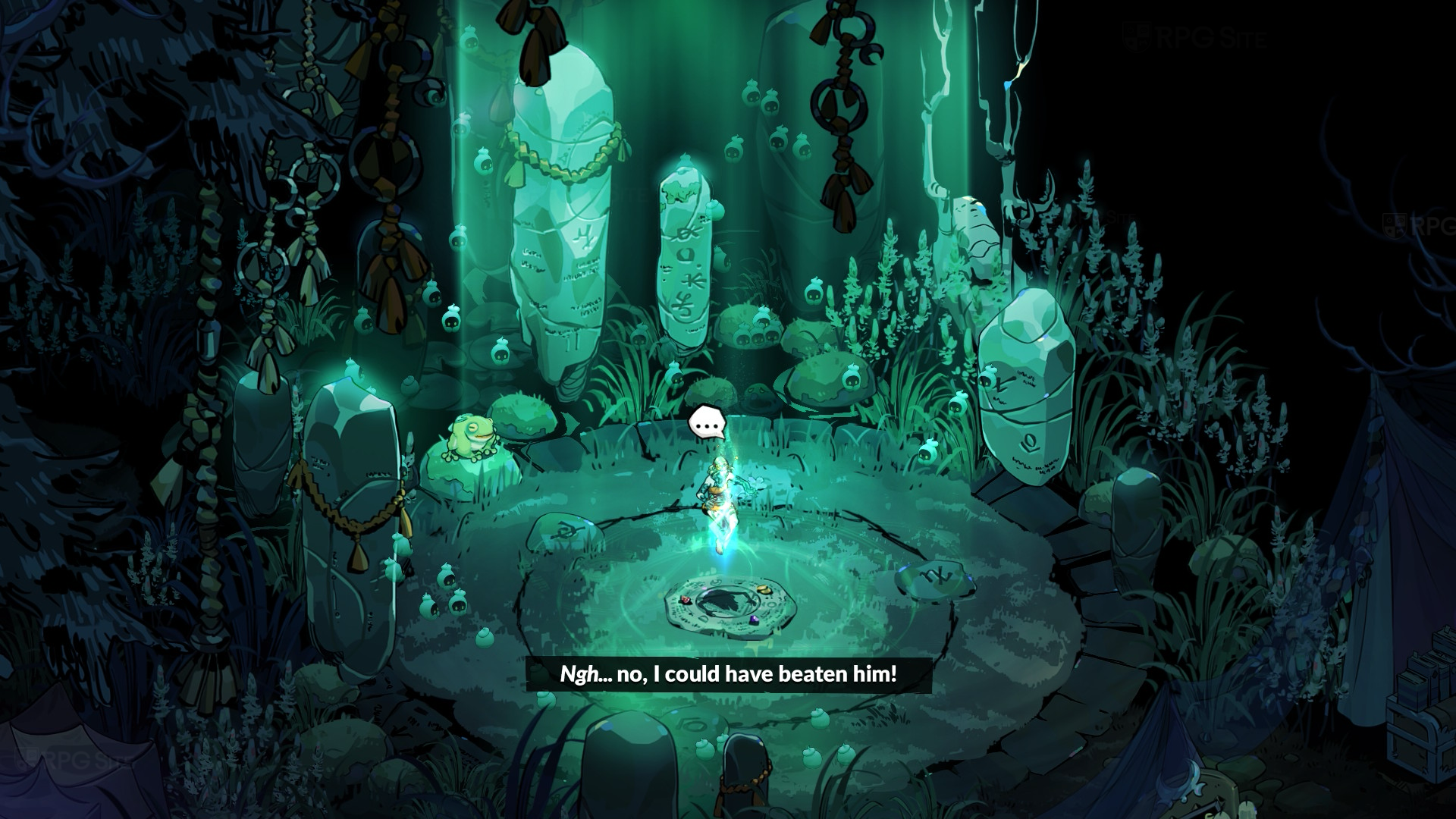
RPG Site: When Hades II was announced for Switch 2 during the Direct, I think it was confirmed as a 1080p 60fps release, but then when it launched, it had 120fps support as well docked. I'm curious about a few things because Hades 1 was a 720p 60fps target game on Switch docked and handheld. Hades II's 120fps mode is only docked. Was there any plan to do that handheld?
Greg Kasavin: I'm not an engineer, but 60 was our target because it was the target for the original Nintendo Switch, and we knew that the game felt good to us at least running at 60. Then we realized that 120 was in reach in certain situations on Switch 2, and it was one of those things where we had to test it a bunch internally. It's like "Whoa this seems really good, but is it going to work? Are there new bugs with it?" There are definitely technical issues that needed to be smoothed out, but I think basically our technical conclusion was that this is possible in docked mode. So it seemed better to have it in one mode than in zero modes considering the feel of 120.
RPG Site: I really appreciate the effort the team put into the PS5 controller features like the light bar responds to the boon correctly and you have the haptics as well. I remember emailing Greg pre-release asking about PS5 Pro enhancements and he said it was already running at full spec at 4K 120.
Greg Kasavin: Yeah, it's at the full like PC quality essentially on the base PlayStation 5. There were no additional things that could be added. I think for certain games, they have high-end, PC graphics features that maybe are only enabled on very powerful graphics cards or something like that, but our game is already at full quality based on what our team wants it to look like.
Greg Kasavin: Yeah, it's at the full like PC quality essentially on the base PlayStation 5. There were no additional things that could be added. I think for certain games, they have high-end, PC graphics features that maybe are only enabled on very powerful graphics cards or something like that, but our game is already at full quality based on what our team wants it to look like.
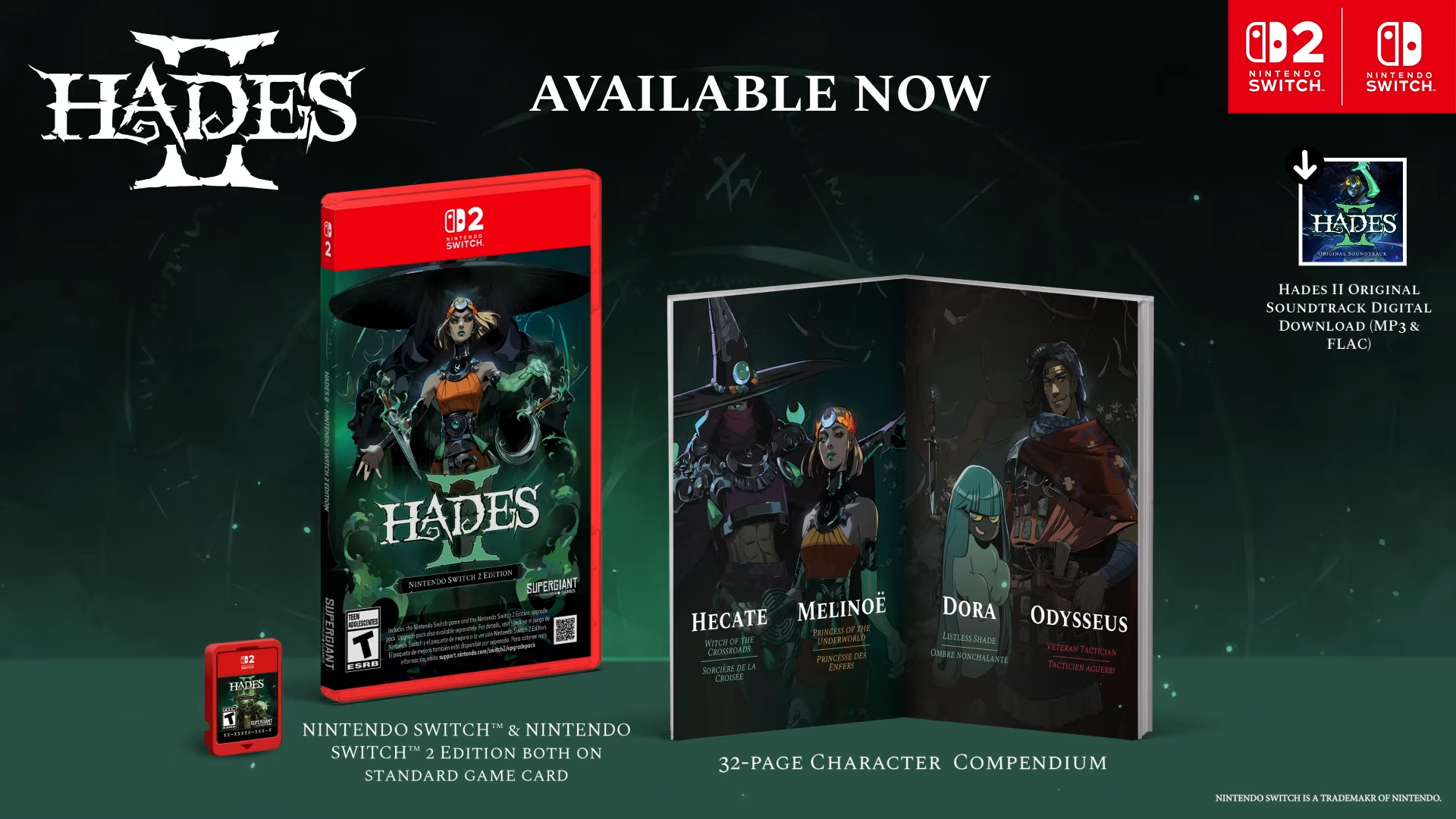
RPG Site: The Hades and Hades II physical releases were done by Nintendo for their platforms. Private Division did the PlayStation and Xbox versions of Hades. I bought them all. Are there any plans to do a PS5 and Xbox physical for Hades II?
Greg Kasavin: That is correct. You have done your homework on all of this. We don't have plans for additional physical editions at this time, though just because we don't have plans doesn't mean we never will. It means that we don't have plans and we don't know right now.
We certainly see that there is interest there. It's just one of those things. If only everything was easy and quick to do, then we would just do everything. Those kind of projects are significant undertakings for us, especially when our prior physical publisher no longer exists.
Greg Kasavin: That is correct. You have done your homework on all of this. We don't have plans for additional physical editions at this time, though just because we don't have plans doesn't mean we never will. It means that we don't have plans and we don't know right now.
We certainly see that there is interest there. It's just one of those things. If only everything was easy and quick to do, then we would just do everything. Those kind of projects are significant undertakings for us, especially when our prior physical publisher no longer exists.
RPG Site: Hades was the first big voiceover project for Supergiant Games right?
Greg Kasavin: Voiceover has been really important to our games like from the start, right, with Bastion. But yeah, it was certainly our first game with that level, with as big of a cast of characters, and that many voice lines in it.
RPG Site: Since Hades was essentially your (Darren's) first big voice direction project, you also ended up doing a lot of voice acting on this one. Did you always know you were going to be Zagreus?
Darren Korb: No, not at all. We had a thing in mind for Zagreus, I think, on the team, and we were hearing auditions for it, and none of them were exactly what we were thinking. None of them quite landed in the way that we had hoped. So just to kind of get something in and maybe try to help illustrate the thing that we all had in mind, I'm like, well, let me take a stab at the kind of thing I think we're thinking about. So I recorded some test scratch voice over for Zagreus and we put it in the game and people liked it, and so we just kind of kept it, and we're like, "Okay, cool. So, that'll work for now until we cast this and replace it.
Greg Kasavin: As soon as I heard the audition, I was like, "What the hell?" *laughs*
Darren Korb: I mean, I was just under the impression that we'd replace it eventually, basically.
Greg Kasavin: I remember we did a slightly sneaky thing where it wasn't sneaky. It's like we didn't want to bias our team to be like "Oh by the way this is Darren's voice." For me it was like wait this is kind of perfect, but let's see what people think. Let's put it in but we won't tell them who this is. We're just going to have Zagreus talking. And then we did our like internal play test and asked how everyone liked the voice. Then we said it was Darren. So it was kind of a big reveal to the team. I mean we never looked back once we got it in the build. That first play test, I think, everyone liked it, and we knew it would have big advantages, right? Like with you being able to do it and stuff.
Darren Korb: I guess there was a certain point where we kept recording more Zagreus and so at a certain point, I was like, "Okay, I guess we're not replacing this."
Greg Kasavin: Yeah. We never know when something is final or not, right? Sometimes it just sticks. For me, hearing your audition is like a very vivid memory because as you're saying, we were searching for it, we had gotten a couple of auditions. Why is this so hard?
Darren Korb: Yeah, there's some cool stuff about these, but they're not exactly the thing we have in mind
Greg Kasavin: Yeah.
Greg Kasavin: Voiceover has been really important to our games like from the start, right, with Bastion. But yeah, it was certainly our first game with that level, with as big of a cast of characters, and that many voice lines in it.
RPG Site: Since Hades was essentially your (Darren's) first big voice direction project, you also ended up doing a lot of voice acting on this one. Did you always know you were going to be Zagreus?
Darren Korb: No, not at all. We had a thing in mind for Zagreus, I think, on the team, and we were hearing auditions for it, and none of them were exactly what we were thinking. None of them quite landed in the way that we had hoped. So just to kind of get something in and maybe try to help illustrate the thing that we all had in mind, I'm like, well, let me take a stab at the kind of thing I think we're thinking about. So I recorded some test scratch voice over for Zagreus and we put it in the game and people liked it, and so we just kind of kept it, and we're like, "Okay, cool. So, that'll work for now until we cast this and replace it.
Greg Kasavin: As soon as I heard the audition, I was like, "What the hell?" *laughs*
Darren Korb: I mean, I was just under the impression that we'd replace it eventually, basically.
Greg Kasavin: I remember we did a slightly sneaky thing where it wasn't sneaky. It's like we didn't want to bias our team to be like "Oh by the way this is Darren's voice." For me it was like wait this is kind of perfect, but let's see what people think. Let's put it in but we won't tell them who this is. We're just going to have Zagreus talking. And then we did our like internal play test and asked how everyone liked the voice. Then we said it was Darren. So it was kind of a big reveal to the team. I mean we never looked back once we got it in the build. That first play test, I think, everyone liked it, and we knew it would have big advantages, right? Like with you being able to do it and stuff.
Darren Korb: I guess there was a certain point where we kept recording more Zagreus and so at a certain point, I was like, "Okay, I guess we're not replacing this."
Greg Kasavin: Yeah. We never know when something is final or not, right? Sometimes it just sticks. For me, hearing your audition is like a very vivid memory because as you're saying, we were searching for it, we had gotten a couple of auditions. Why is this so hard?
Darren Korb: Yeah, there's some cool stuff about these, but they're not exactly the thing we have in mind
Greg Kasavin: Yeah.
RPG Site: Darren, this is your second game with a big or like bigger voice cast. Were you responsible for casting Ben Star?
Darren Korb: I think Greg brought Ben to my attention. Once I'd heard Ben's work, I was like, "Oh, yeah. I mean, he'd be amazing." We had him read for Prometheus, and we loved his audition and thought it was perfect.
Darren Korb: I think Greg brought Ben to my attention. Once I'd heard Ben's work, I was like, "Oh, yeah. I mean, he'd be amazing." We had him read for Prometheus, and we loved his audition and thought it was perfect.
RPG Site: How did you discover Ben? Was it Final Fantasy XVI trailers or something?
Greg Kasavin: Yes. It was playing through Final Fantasy XVI just straight up. While writing Prometheus I just thought of Ben's voices. With most of our characters, it's less common that we have like a very specific actor immediately in mind, for a character, but Prometheus is an example of that where we hoped we could get Ben and we did.
Greg Kasavin: Yes. It was playing through Final Fantasy XVI just straight up. While writing Prometheus I just thought of Ben's voices. With most of our characters, it's less common that we have like a very specific actor immediately in mind, for a character, but Prometheus is an example of that where we hoped we could get Ben and we did.
RPG Site: Were you able to get everyone you wanted if you can say?
Greg Kasavin: Yes. I guess we did, right Darren?
Darren Korb: Yeah.
Greg Kasavin: We got Asa Butterfield for Icarus. We love our voice cast. Darren is the one in all the recording sessions. So you work with them the most closely, but even for me, just working with our voice cast is one of the highlights of development.
Darren Korb: We have a wonderful cast and I'm thrilled with how everything turned out in the game. So yes, for sure.
Greg Kasavin: Their work just brings the characters to life. We've worked on games that aren't as fully voiced. It's just one of our early lessons from the Bastion days. When you add the human voice, things just come to life.
Greg Kasavin: Yes. I guess we did, right Darren?
Darren Korb: Yeah.
Greg Kasavin: We got Asa Butterfield for Icarus. We love our voice cast. Darren is the one in all the recording sessions. So you work with them the most closely, but even for me, just working with our voice cast is one of the highlights of development.
Darren Korb: We have a wonderful cast and I'm thrilled with how everything turned out in the game. So yes, for sure.
Greg Kasavin: Their work just brings the characters to life. We've worked on games that aren't as fully voiced. It's just one of our early lessons from the Bastion days. When you add the human voice, things just come to life.
RPG Site: I want to discuss the soundtrack now. When I bought the Hades II soundtrack on Steam during early access, I thought it sounded pretty different to Hades. There's definitely a more industrial and synth thing going on which was not in Hades at all. I even felt like Across the Rift had a Black Sabbath influence. Austin Wintory played a big part on the Hades II soundtrack. How was it working with him?
Darren Korb: For Hades II, I knew I wanted to retain some aspects of the music from Hades and add some new elements to reflect the new tone and the new sort of witchy vibes. So my mind goes to, I feel like aspects of like The Craft soundtrack from the '90s. I think of pop culture kind of witch associations and stuff, and for me industrial music has some of that sort of gothic or goth vibes which I found really really exciting, and had a lot of promise there. So sort of like synthy industrial stuff for sure was an influence more than on the first game for sure.
Working with Austin, we'd collaborated in the past, not as deeply, like he'd helped me with some arrangements on the first game for 'On the Coast' and 'In the Blood'. In this game, we wanted to try something bigger and we figured that you're actually getting to Olympus this time, so we really want to increase the scale of the orchestral elements appropriately to reflect the grandiosity of the environment that you are ascending to.
So we went with a full orchestra and it was like 45 minutes of music that we recorded with this orchestra. I co-composed those pieces with Austin, in a way that was really fun, lovely, and very different . I'm usually just toiling away by myself, so it was really delightful because I think we know each other's strengths really well. We were able to set the other person up to do their thing and then we were able to go back and forth in a really satisfying way. It was a real fun process working with Austin. Of course recording a full orchestra and a 20 person choir and a percussion ensemble at Abbey Road was a dream come true for sure.
Darren Korb: For Hades II, I knew I wanted to retain some aspects of the music from Hades and add some new elements to reflect the new tone and the new sort of witchy vibes. So my mind goes to, I feel like aspects of like The Craft soundtrack from the '90s. I think of pop culture kind of witch associations and stuff, and for me industrial music has some of that sort of gothic or goth vibes which I found really really exciting, and had a lot of promise there. So sort of like synthy industrial stuff for sure was an influence more than on the first game for sure.
Working with Austin, we'd collaborated in the past, not as deeply, like he'd helped me with some arrangements on the first game for 'On the Coast' and 'In the Blood'. In this game, we wanted to try something bigger and we figured that you're actually getting to Olympus this time, so we really want to increase the scale of the orchestral elements appropriately to reflect the grandiosity of the environment that you are ascending to.
So we went with a full orchestra and it was like 45 minutes of music that we recorded with this orchestra. I co-composed those pieces with Austin, in a way that was really fun, lovely, and very different . I'm usually just toiling away by myself, so it was really delightful because I think we know each other's strengths really well. We were able to set the other person up to do their thing and then we were able to go back and forth in a really satisfying way. It was a real fun process working with Austin. Of course recording a full orchestra and a 20 person choir and a percussion ensemble at Abbey Road was a dream come true for sure.
RPG Site: When you started composing for Hades II, when did you decide to get Louis Cole and Pau Figueres on board?
Darren Korb: Pretty early on tried to get Clown Core to be on the soundtrack. It is assumed that Louis Cole and Sam Gendel are in this band called Clown Core. Nobody knows for sure, but it's probably them.
RPG Site: Like Ghost BC.
Darren Korb: They wear masks and stuff. I reached out to Clown Core about playing on a track, and then I was able to get Sam Gendel to play on this track. That was pretty early on. That was when we were doing the music for Ephyra which was in the game when early access launched. Then I was waiting for the perfect moment to ask Louis Cole, but I knew I wanted him to play on the soundtrack. He's one of my favorite musicians in the world so I knew I wanted him to play on the soundtrack early on.
As for Pau Figueres, he was recommended to me by a buddy of mine, Mason Lieberman. Anytime I need a connection to an incredible musician, he's like, "Yeah, I know the person and I have their contact information." Mason's like this nexus of incredible musicians. My idea was for a romantic sort of flamenco guitar piece for Narcissus. I had already made Echo's music and I wanted it to basically just be a romantic flamenco cover of that music I'd made for Echo. So I got in touch with Pau and sent him that track. I was like, "Hey, can you just do this? No percussion, just like a real romantic version of this that's over the top in its flamenco eccentricity and he just knocked it out of the park.
I thought that was a fun and silly thing to hear when you walk into Narcissus' chamber.
Darren Korb: Pretty early on tried to get Clown Core to be on the soundtrack. It is assumed that Louis Cole and Sam Gendel are in this band called Clown Core. Nobody knows for sure, but it's probably them.
RPG Site: Like Ghost BC.
Darren Korb: They wear masks and stuff. I reached out to Clown Core about playing on a track, and then I was able to get Sam Gendel to play on this track. That was pretty early on. That was when we were doing the music for Ephyra which was in the game when early access launched. Then I was waiting for the perfect moment to ask Louis Cole, but I knew I wanted him to play on the soundtrack. He's one of my favorite musicians in the world so I knew I wanted him to play on the soundtrack early on.
As for Pau Figueres, he was recommended to me by a buddy of mine, Mason Lieberman. Anytime I need a connection to an incredible musician, he's like, "Yeah, I know the person and I have their contact information." Mason's like this nexus of incredible musicians. My idea was for a romantic sort of flamenco guitar piece for Narcissus. I had already made Echo's music and I wanted it to basically just be a romantic flamenco cover of that music I'd made for Echo. So I got in touch with Pau and sent him that track. I was like, "Hey, can you just do this? No percussion, just like a real romantic version of this that's over the top in its flamenco eccentricity and he just knocked it out of the park.
I thought that was a fun and silly thing to hear when you walk into Narcissus' chamber.
RPG Site: Because of Chronos and the time theme, you have time signatures all over the place in the soundtrack. What are your progressive metal influences here and have you watched reactions to the Louis Cole song? I've seen loads of people lose their mind over it.
Darren Korb: Yeah. Louis Cole is like a one of one kind of musician. I don't know that there is anybody else who can do what he does. They could maybe learn a Louis Cole part and do it, but he just generates those things. He's incredible. I have seen some of those reactions and they're wild.
For time signatures, stuff like Rush and Soundgarden even, who sneakily use a lot of weird time signatures. I checked out bands like Opeth and a little bit of bands like um Kansas and stuff. There's some jazz stuff that does crazy time signature stuff that I've been digging into. For me, part of it was it's a holdover from the first game as well, which has a lot of funky time signatures which to me it's sort of reflective of the nature of the game, and the everchanging nature of the underworld, and the runs, and the randomized nature of the the roguelike that we're doing the room to room combat.
It's like something about odd time signatures keeps you on your toes in a way that feels kind of like tumbling forward, not knowing what to expect. To me it just felt very appropriate for the style of game we were making.
Darren Korb: Yeah. Louis Cole is like a one of one kind of musician. I don't know that there is anybody else who can do what he does. They could maybe learn a Louis Cole part and do it, but he just generates those things. He's incredible. I have seen some of those reactions and they're wild.
For time signatures, stuff like Rush and Soundgarden even, who sneakily use a lot of weird time signatures. I checked out bands like Opeth and a little bit of bands like um Kansas and stuff. There's some jazz stuff that does crazy time signature stuff that I've been digging into. For me, part of it was it's a holdover from the first game as well, which has a lot of funky time signatures which to me it's sort of reflective of the nature of the game, and the everchanging nature of the underworld, and the runs, and the randomized nature of the the roguelike that we're doing the room to room combat.
It's like something about odd time signatures keeps you on your toes in a way that feels kind of like tumbling forward, not knowing what to expect. To me it just felt very appropriate for the style of game we were making.
RPG Site: I know Darren and you are very heavily involved from the start for any new project. Supergiant's soundtracks are what always get me in. Bastion's soundtrack got me to buy the game on Xbox 360 and Transistor was one of the reasons I wanted a PS4. At what point do you decide the vibe of the soundtrack?
Greg Kasavin: Day zero, right?
Darren Korb: Yeah. Day zero. Basically, as soon as we have an idea of what the game might be, and what the tone might be, and what the setting might be, I'm already off to the races experimenting on music. That's the first thing I do on a project. It's something that I begin immediately, and it continues kind of throughout the entire project. It's something that leads maybe a little bit at the beginning, and then follows as the project goes on. Definitely right away.
Greg Kasavin: Just to echo what Darren said, it's one of the things. We do care a lot about the atmosphere and the vibe of our games generally, and the music is like a not so secret weapon in our games and I think in many others. Working with someone like Darren, from the beginning, we could do so much more with the music by building it into the story and the world and all this kind of stuff rather than having it. I think there are games where they have very talented musicians work on them, but the music might come in at the end, so they can't necessarily do that much with it. They could just have music played during a level, and that's fine, but it's such a powerful part of gaming experiences, as you well know.
It's also in the early days when we have almost nothing about our games, it's one of the first kind of complete feeling things that can be created. An artist can create a mood painting or something like that, but you can't necessarily put that in the game. Whereas Darren's music can go straight into the game from the start when we have really no other assets or whatever.
Darren Korb: It can go into the gray box prototype and all of a sudden it starts to feel a certain way.
Greg Kasavin: We use voice over in a similar way. The early days of Bastion, when it was just, gray box stuff and then Logan Cunningham's voice goes into the game, and it starts to feel like something, and some idea starts to coalesce in a really powerful way between the music and the voice.
Darren Korb: Right.
Greg Kasavin: Day zero, right?
Darren Korb: Yeah. Day zero. Basically, as soon as we have an idea of what the game might be, and what the tone might be, and what the setting might be, I'm already off to the races experimenting on music. That's the first thing I do on a project. It's something that I begin immediately, and it continues kind of throughout the entire project. It's something that leads maybe a little bit at the beginning, and then follows as the project goes on. Definitely right away.
Greg Kasavin: Just to echo what Darren said, it's one of the things. We do care a lot about the atmosphere and the vibe of our games generally, and the music is like a not so secret weapon in our games and I think in many others. Working with someone like Darren, from the beginning, we could do so much more with the music by building it into the story and the world and all this kind of stuff rather than having it. I think there are games where they have very talented musicians work on them, but the music might come in at the end, so they can't necessarily do that much with it. They could just have music played during a level, and that's fine, but it's such a powerful part of gaming experiences, as you well know.
It's also in the early days when we have almost nothing about our games, it's one of the first kind of complete feeling things that can be created. An artist can create a mood painting or something like that, but you can't necessarily put that in the game. Whereas Darren's music can go straight into the game from the start when we have really no other assets or whatever.
Darren Korb: It can go into the gray box prototype and all of a sudden it starts to feel a certain way.
Greg Kasavin: We use voice over in a similar way. The early days of Bastion, when it was just, gray box stuff and then Logan Cunningham's voice goes into the game, and it starts to feel like something, and some idea starts to coalesce in a really powerful way between the music and the voice.
Darren Korb: Right.
RPG Site: Didn't Darren go to Turkey and do that space camp or something where you ended up finding an instrument that played a very important role in the Hades soundtrack?
Greg Kasavin: Was that the Bouzouki?
Darren Korb: No. The one from Turkey is the Bağlama. In 2005, I was a counselor at a space camp in Turkey for a summer. I lived there for a few months, and was exposed to a lot of cool instruments and sounds. I ended up buying a Bağlama, and then I was like traveling, and I couldn't transport it with me, so I left it in Turkey and then when we started working on Hades, I thought I should probably reacquire some Mediterranean instruments, and the Bağlama was one that that stuck with me. I was like, I remember that. It's pretty cool. I'm going to pick up another one of those.
I just went online and Google, shopping, and ordered from random websites, these various Mediterranean instruments, and that became an important part of the sound for me.
Greg Kasavin: Was that the Bouzouki?
Darren Korb: No. The one from Turkey is the Bağlama. In 2005, I was a counselor at a space camp in Turkey for a summer. I lived there for a few months, and was exposed to a lot of cool instruments and sounds. I ended up buying a Bağlama, and then I was like traveling, and I couldn't transport it with me, so I left it in Turkey and then when we started working on Hades, I thought I should probably reacquire some Mediterranean instruments, and the Bağlama was one that that stuck with me. I was like, I remember that. It's pretty cool. I'm going to pick up another one of those.
I just went online and Google, shopping, and ordered from random websites, these various Mediterranean instruments, and that became an important part of the sound for me.
RPG Site: What kind of collaboration happens between Greg and you when you both are approaching a boss theme? Do you have free rein and that results in us getting something like Scourge of the Furies?
Darren Korb: For something like Hades, once we figure out what the structure of the game is, that's leading up to the boss, and then the boss itself, once I kind of figure out the structure of the pieces and how we're going to implement them, then I feel like I'm kind of off to the races.
But that process takes some iteration and just sort of sorting out how we're going to, for Hades, for example one of the concerns was how do we prevent the music from feeling repetitive in a game you can play over and over, and how do we try to make your run feel scored as much as possible, like the music is responding to what you're doing, and the two-pronged approach to the solution to that for us was, we have stems that can randomize when you enter a new chamber, and we have drums that turn on when there's enemies present, they turn off when you kill the last enemy, and then we also have sections where a piece will begin to play.
The first couple chambers will be a very chill section and then it will advance to sort of a folk arrangement of the piece, and then when you get to a boss or mini boss, it'll advance to the like a hard rock version of that same piece. So once we discovered that format for the pieces and how we were going to implement them, then I sort of was just like, "Okay, I'm going to go do this."
Greg Kasavin: But then even more broadly, like we collaborate a ton when it comes to what opportunities the music can have in the game. Darren's the composer, but for my part, I feel like I'm always trying to think about, like Ashley Barrett who's been a vocalist in all our games, I'm personally always thinking about what Ashley could do in this, like what character can Ashley represent in a new game? So we're thinking about how to build the music into key parts of the play experience, whether it's a particular level like Prosper Bluff (Bastion) which was our first heavily music themed level in one of our games.
In every game we work on, it's like where can we use music in some sort of powerful way? Where can we use the songs? And then you and I always talk about what is thematically important about this piece? You ask questions related to that, and then go and write the pieces.
Darren Korb: Exactly. I think in particular for the vocal pieces, finding moments for those in the game, is something that we need to definitely decide on just because it's not as easy to just slot in a vocal piece. It can really draw focus and you don't want to pull that kind of focus unless you have a moment built around. That's my feeling.
So it really helps to find opportunities to have these pieces with lyrics..So Greg and I will sort of plan that, the best we can together. As Greg mentioned, when I start writing a piece, I'll be like, "So thematically, what are we thinking for this?" Here's some ideas that I had. Greg and I will discuss that stuff, and then I'll go off and I'll write the thing, and come back with the lyrics and be like, "What do you think?" Sometimes we'll have some iteration in that process.
Darren Korb: For something like Hades, once we figure out what the structure of the game is, that's leading up to the boss, and then the boss itself, once I kind of figure out the structure of the pieces and how we're going to implement them, then I feel like I'm kind of off to the races.
But that process takes some iteration and just sort of sorting out how we're going to, for Hades, for example one of the concerns was how do we prevent the music from feeling repetitive in a game you can play over and over, and how do we try to make your run feel scored as much as possible, like the music is responding to what you're doing, and the two-pronged approach to the solution to that for us was, we have stems that can randomize when you enter a new chamber, and we have drums that turn on when there's enemies present, they turn off when you kill the last enemy, and then we also have sections where a piece will begin to play.
The first couple chambers will be a very chill section and then it will advance to sort of a folk arrangement of the piece, and then when you get to a boss or mini boss, it'll advance to the like a hard rock version of that same piece. So once we discovered that format for the pieces and how we were going to implement them, then I sort of was just like, "Okay, I'm going to go do this."
Greg Kasavin: But then even more broadly, like we collaborate a ton when it comes to what opportunities the music can have in the game. Darren's the composer, but for my part, I feel like I'm always trying to think about, like Ashley Barrett who's been a vocalist in all our games, I'm personally always thinking about what Ashley could do in this, like what character can Ashley represent in a new game? So we're thinking about how to build the music into key parts of the play experience, whether it's a particular level like Prosper Bluff (Bastion) which was our first heavily music themed level in one of our games.
In every game we work on, it's like where can we use music in some sort of powerful way? Where can we use the songs? And then you and I always talk about what is thematically important about this piece? You ask questions related to that, and then go and write the pieces.
Darren Korb: Exactly. I think in particular for the vocal pieces, finding moments for those in the game, is something that we need to definitely decide on just because it's not as easy to just slot in a vocal piece. It can really draw focus and you don't want to pull that kind of focus unless you have a moment built around. That's my feeling.
So it really helps to find opportunities to have these pieces with lyrics..So Greg and I will sort of plan that, the best we can together. As Greg mentioned, when I start writing a piece, I'll be like, "So thematically, what are we thinking for this?" Here's some ideas that I had. Greg and I will discuss that stuff, and then I'll go off and I'll write the thing, and come back with the lyrics and be like, "What do you think?" Sometimes we'll have some iteration in that process.
RPG Site: I'm glad you brought up Ashley Barrett. I remember when Transistor was launching, everyone I know who looked down on game music, suddenly started treating it right. I just got them all to listen to the Hades soundtrack a few years later and everyone I know who likes metal loves that. So when are we getting a Hades metal album?
Darren Korb: I mean, I just did a show recently at GDC with a Hades metal cover band. It was super fun.
Greg Kasavin: Yeah, they were awesome.
Darren Korb: It was a blast.
Darren Korb: I mean, I just did a show recently at GDC with a Hades metal cover band. It was super fun.
Greg Kasavin: Yeah, they were awesome.
Darren Korb: It was a blast.
RPG Site: So looking back at Bastion, Transistor, and Pyre. A lot of people love them. I love them. Would you like to revisit any of them or do anything more in those universes? Maybe port them to more platforms?
Greg Kasavin: Who knows. Your guess is quite honestly as good as mine in the sense that we like to surprise ourselves when we decide what to do. We love all the previous worlds of our games. People thought we would never make a sequel and then we made Hades II. Again why would we want to go back to one of our previous worlds when we could make a whole new one or what have you.
We love all the worlds of those games. I also think on a personal level that it's okay if things just end sometimes. I like having games that are unique. We talked about Vagrant Story (Editor's note: This separate discussion was for another feature. Stay tuned for that) before we started this specific interview. Maybe it would have been nice for Vagrant Story to become a whole franchise, but there's something very special about Vagrant Story being one of a kind in the way that it is.
We try to create worlds that feel rich and interesting to where you could imagine other stories in them, but we also don't imagine our games as like the start of a franchise. We just want to make one worthwhile game at a time and go from there. We don't know that we'll go back to any of those worlds, though we always appreciate the interest and the fact that people still remember some of our older games.
Greg Kasavin: Who knows. Your guess is quite honestly as good as mine in the sense that we like to surprise ourselves when we decide what to do. We love all the previous worlds of our games. People thought we would never make a sequel and then we made Hades II. Again why would we want to go back to one of our previous worlds when we could make a whole new one or what have you.
We love all the worlds of those games. I also think on a personal level that it's okay if things just end sometimes. I like having games that are unique. We talked about Vagrant Story (Editor's note: This separate discussion was for another feature. Stay tuned for that) before we started this specific interview. Maybe it would have been nice for Vagrant Story to become a whole franchise, but there's something very special about Vagrant Story being one of a kind in the way that it is.
We try to create worlds that feel rich and interesting to where you could imagine other stories in them, but we also don't imagine our games as like the start of a franchise. We just want to make one worthwhile game at a time and go from there. We don't know that we'll go back to any of those worlds, though we always appreciate the interest and the fact that people still remember some of our older games.
RPG Site: This isn't a question and more of me expressing interest, but I'd love to see Pyre on Switch or Switch 2. That's all.
Greg Kasavin: I appreciate that. It's again one of those things. There's some technical challenges there.
Darren Korb: If it were easy, we'd do it for sure.
Greg Kasavin: I appreciate that. It's again one of those things. There's some technical challenges there.
Darren Korb: If it were easy, we'd do it for sure.
RPG Site: When I was playing Hades II last year, I was putting together some fun questions that I'd bring up in potential interviews based on what I know following you for years now. Greg, do you still play Hearthstone?
Greg Kasavin: I've been Hearthstone sober for a number of years, but I still follow the community. I still pay attention to every expansion and stuff like that. I look at the new cards. So I play it in my head, but haven't been playing it for a while.
Darren Korb: I quit as well at some point.
Greg Kasavin: I've been Hearthstone sober for a number of years, but I still follow the community. I still pay attention to every expansion and stuff like that. I look at the new cards. So I play it in my head, but haven't been playing it for a while.
Darren Korb: I quit as well at some point.
RPG Site: I'm going to link you to a video because a good friend of mine told me I had to ask you this whenever I was able to finally interview you again. He wanted me to ask you: "How does it feel to basically have invented game streaming before anyone else had done it?"
Greg Kasavin: *laughs* Yeah. It feels pretty good. I think the case could be made as you're saying. Certainly when we did it at GameSpot with Oblivion, it was using a weird technological setup that we knew we were doing something that other people had not done before. The only reason it was able to happen was because we did it fast. We didn't ask for a lot of permission. The circumstances were, I was editor in chief there at the time, but I was also writing a lot of reviews.
We didn't have as much lead time on the Oblivion review copy as I would have liked. So I'm like, I'm going to be playing this shit all night. I'm going to play it all night anyway, so why don't we just show it? I didn't know, like there was no chat, right?
I knew that the stream was live, but I had no concept of whether people were watching or anything like this. The following morning at like 6:00 a.m. when people started coming back into work, they're like, "Dude, this blew up." And I was like, "Whoa, really?" Like we had no expectation that people would tune in. So it was a memorable thing that we did back then.
Greg Kasavin: *laughs* Yeah. It feels pretty good. I think the case could be made as you're saying. Certainly when we did it at GameSpot with Oblivion, it was using a weird technological setup that we knew we were doing something that other people had not done before. The only reason it was able to happen was because we did it fast. We didn't ask for a lot of permission. The circumstances were, I was editor in chief there at the time, but I was also writing a lot of reviews.
We didn't have as much lead time on the Oblivion review copy as I would have liked. So I'm like, I'm going to be playing this shit all night. I'm going to play it all night anyway, so why don't we just show it? I didn't know, like there was no chat, right?
I knew that the stream was live, but I had no concept of whether people were watching or anything like this. The following morning at like 6:00 a.m. when people started coming back into work, they're like, "Dude, this blew up." And I was like, "Whoa, really?" Like we had no expectation that people would tune in. So it was a memorable thing that we did back then.
RPG Site: Darren, what's your favorite guitar? I want to know your favorite guitar which you've had for a long time and your favorite recent guitar purchase you've made?
Darren Korb: My favorite guitar right now is a Gibson SG standard I bought a few years ago. My favorite guitar I've had for a long time? Unfortunately, I had a bunch of gear uh stolen during the pandemic. We had the office burglarized, and I had a bunch of equipment there, and like my guitar I had since a teenager, and all that stuff was stolen. I have a bass that I bought when I was like 13 years old, that I still have and use all the time. It's like a Mexican made Fender Jazz bass that I got for like 200 bucks in 1997 or whatever. I've had it for a long time.
Darren Korb: My favorite guitar right now is a Gibson SG standard I bought a few years ago. My favorite guitar I've had for a long time? Unfortunately, I had a bunch of gear uh stolen during the pandemic. We had the office burglarized, and I had a bunch of equipment there, and like my guitar I had since a teenager, and all that stuff was stolen. I have a bass that I bought when I was like 13 years old, that I still have and use all the time. It's like a Mexican made Fender Jazz bass that I got for like 200 bucks in 1997 or whatever. I've had it for a long time.
RPG Site: Does the Gibson SG have stock pickups?
Darren Korb: Gibson SG standard stock pickups. That guitar, lately, it's just been like when I played live recently, it was like so great for that. And I played with it last year at GDC as well. It sounded killer.
Darren Korb: Gibson SG standard stock pickups. That guitar, lately, it's just been like when I played live recently, it was like so great for that. And I played with it last year at GDC as well. It sounded killer.
RPG Site: I mentioned the Black Sabbath influence on Across the Rift. Was that intentional?
Darren Korb: Not specifically. The thing that was specific, is I wanted to try the Purdie Shuffle. I wanted to do a song with that specific feel. I thought it was like a fun opportunity to do that there.
The Sabbath influence just sort of creeps in. You want to make something that sounds a little evil and has a little bit of sludge to it? It's going to evoke Sabbath. What are you going to do?
Darren Korb: Not specifically. The thing that was specific, is I wanted to try the Purdie Shuffle. I wanted to do a song with that specific feel. I thought it was like a fun opportunity to do that there.
The Sabbath influence just sort of creeps in. You want to make something that sounds a little evil and has a little bit of sludge to it? It's going to evoke Sabbath. What are you going to do?
RPG Site: Then Wrath of the Heavens has this doom metal thing going on. This gets me to my next question. When you release the soundtrack, you usually have the opening being slower and mellow building up into the second half with the metal or heavier sections. You've probably noticed that there are people on YouTube that cut it up into just having the first or second part extended and looping. Have you considered doing album variations like that when you upload them online?
Darren Korb: We did it for the Scylla songs just because they are two songs. They're like two different songs. We have put a split in there. I guess for the people who use the folk versions as their role playing music, you know what I mean? It would be friendly. It would be nice to those people if we did something like that, but people could do that themselves these days. They don't need me to do it. They can cut it up and make their own playlist and whatever. It's like they don't need my help with that.
Darren Korb: We did it for the Scylla songs just because they are two songs. They're like two different songs. We have put a split in there. I guess for the people who use the folk versions as their role playing music, you know what I mean? It would be friendly. It would be nice to those people if we did something like that, but people could do that themselves these days. They don't need me to do it. They can cut it up and make their own playlist and whatever. It's like they don't need my help with that.
RPG Site: When I was reviewing Hades II, I was listening to Scourge of the Furious more than anything else and it got me to get my acoustic guitar out as well after months of not touching it. I found this three hour loop of the second half and thought it would be great if you just did it officially. I wanted to bring that up if I ever got to interview you.
Darren Korb: Amazing. I mean, go nuts. People do all sorts of cool stuff with that and it's like, go nuts, experience it how you want.
Greg Kasavin: Darren, Scourge of the Furies was like quite an early piece if I remember correctly, right?
Darren Korb: I think it was the third Tartarus piece I wrote, but that one was super fun. That one for me is like a very Paramore influenced song specifically. That one was really fun to make.
Darren Korb: Amazing. I mean, go nuts. People do all sorts of cool stuff with that and it's like, go nuts, experience it how you want.
Greg Kasavin: Darren, Scourge of the Furies was like quite an early piece if I remember correctly, right?
Darren Korb: I think it was the third Tartarus piece I wrote, but that one was super fun. That one for me is like a very Paramore influenced song specifically. That one was really fun to make.
RPG Site: I have one last question about the soundtrack for the original Hades. How did you decide who to get on board for The Unseen Ones guitar solos?
Darren Korb: My buddy Mason LiebermanI was like, "Hey, I have this idea where I have this track. It's kind of like a speed metal like Megadeth-style track and it's like four minutes long and then I want to do an even more intense version of that with something like a guitar battle, a guitar solo over the top." I was like, "Do you know John Petrucci? *laughs* Can we get Marty Friedman on it? *laughs*" He's like "I know these two guys." Let me just hook you up with these guys.
I had one brief text chat with these gentlemen, and I said I'm thinking it should be like a Tornado of Souls Megadeth-style 4 minute guitar duel. That's basically it. That's literally it. Then a day and a half later, they came back with this and it was perfect. It was basically mixed. I just dropped it on top of that part and it was perfect.Those guys are incredible.
Greg Kasavin: I'm glad you noted the speed, because even from my perspective on the sidelines, we went from just talking about the idea. Earlier I talked about hearing Darren's audition for the first time, but hearing The Unseen Ones also, it's like what?! Where did this come from? It fulfilled all our hopes and dreams for what that track could be.
RPG Site: You didn't do those solos in every song, so when they did play it, the impact was amazing. Even the transition in The Painful Way is incredible.
Darren Korb: My buddy Mason LiebermanI was like, "Hey, I have this idea where I have this track. It's kind of like a speed metal like Megadeth-style track and it's like four minutes long and then I want to do an even more intense version of that with something like a guitar battle, a guitar solo over the top." I was like, "Do you know John Petrucci? *laughs* Can we get Marty Friedman on it? *laughs*" He's like "I know these two guys." Let me just hook you up with these guys.
I had one brief text chat with these gentlemen, and I said I'm thinking it should be like a Tornado of Souls Megadeth-style 4 minute guitar duel. That's basically it. That's literally it. Then a day and a half later, they came back with this and it was perfect. It was basically mixed. I just dropped it on top of that part and it was perfect.Those guys are incredible.
Greg Kasavin: I'm glad you noted the speed, because even from my perspective on the sidelines, we went from just talking about the idea. Earlier I talked about hearing Darren's audition for the first time, but hearing The Unseen Ones also, it's like what?! Where did this come from? It fulfilled all our hopes and dreams for what that track could be.
RPG Site: You didn't do those solos in every song, so when they did play it, the impact was amazing. Even the transition in The Painful Way is incredible.
RPG Site: How important was the Moog Matriarch in Hades' music?
Darren Korb: I got it uh between games. In the second game, it was very important. A lot of the synthesizer stuff, it was a real part of the identity of the second game.
I still use the Casio SK-1 theremin-like sound a lot, but sometimes the Moog is doubling it, sometimes it is doing harmonies with it, and adding its own flavor with that wild analog synth vibrato and all that stuff that adds a lot of character, and the glides and all that stuff, that can be really expressive. I love all that and it's just super easy to make that thing sound really cool.
Darren Korb: I got it uh between games. In the second game, it was very important. A lot of the synthesizer stuff, it was a real part of the identity of the second game.
I still use the Casio SK-1 theremin-like sound a lot, but sometimes the Moog is doubling it, sometimes it is doing harmonies with it, and adding its own flavor with that wild analog synth vibrato and all that stuff that adds a lot of character, and the glides and all that stuff, that can be really expressive. I love all that and it's just super easy to make that thing sound really cool.
RPG Site: What are the games from 2025 that you both enjoyed the most?
Greg Kasavin: I have to admit I have a fairly generic list. I loved Silksong. I didn't think I'd be able to get all the way through it, but I sort of got over the initial difficulty hurdles, and found that game incredibly compelling and really well crafted. I loved Expedition 33. I have the pleasure of working with, I won't embarrass Darren too much, but let's just say I would be a big fan of Darren's music. I think even if I didn't get to work with him, the music of Expedition 33 was really special also. The game had a really unique atmosphere, and I think quite a bold story. I really liked Dispatch. Really well written, really funny. The dream of playing an animated movie or something like that. I feel like Dispatch basically delivered that.
Darren Korb: I loved Ball X Pit a lot. That was one of my favorites from last year. I also loved Expedition 33 and Dispatch. I'm trying to think because I only became available to play video games in September last year. Like late September. I tried to catch up as best I could. I spent some time with South of Midnight. That was cool.I would say Ball X Pit was a big one for me last year.
Greg Kasavin: I have to admit I have a fairly generic list. I loved Silksong. I didn't think I'd be able to get all the way through it, but I sort of got over the initial difficulty hurdles, and found that game incredibly compelling and really well crafted. I loved Expedition 33. I have the pleasure of working with, I won't embarrass Darren too much, but let's just say I would be a big fan of Darren's music. I think even if I didn't get to work with him, the music of Expedition 33 was really special also. The game had a really unique atmosphere, and I think quite a bold story. I really liked Dispatch. Really well written, really funny. The dream of playing an animated movie or something like that. I feel like Dispatch basically delivered that.
Darren Korb: I loved Ball X Pit a lot. That was one of my favorites from last year. I also loved Expedition 33 and Dispatch. I'm trying to think because I only became available to play video games in September last year. Like late September. I tried to catch up as best I could. I spent some time with South of Midnight. That was cool.I would say Ball X Pit was a big one for me last year.

RPG Site: How do you like your coffee? Go into as much detail as possible.
Greg Kasavin: Mine is a very easy answer. Just freaking just black. That's it.
Darren Korb: Black and endless.
Greg Kasavin: I drink coffee all the time and at a certain point I just started drinking it black, partly because it just removes all the calories from dumping cream into it all the time.
Darren Korb: I'm generally a black coffee kind of dude. I would say it is my default. I'll occasionally go for a Vietnamese coffee or whatever, but black coffee tends to be my way.
I have an espresso maker that I use a lot. So, I'll make americanos for myself at home. Sometimes, if I want to be real fancy, I'll make a seltzer iced coffee with a little splash of chocolate syrup in it or something. That's pretty wild if you want to go crazy.
Greg Kasavin: Mine is a very easy answer. Just freaking just black. That's it.
Darren Korb: Black and endless.
Greg Kasavin: I drink coffee all the time and at a certain point I just started drinking it black, partly because it just removes all the calories from dumping cream into it all the time.
Darren Korb: I'm generally a black coffee kind of dude. I would say it is my default. I'll occasionally go for a Vietnamese coffee or whatever, but black coffee tends to be my way.
I have an espresso maker that I use a lot. So, I'll make americanos for myself at home. Sometimes, if I want to be real fancy, I'll make a seltzer iced coffee with a little splash of chocolate syrup in it or something. That's pretty wild if you want to go crazy.