

"You need to dream a bit. You need something to invent," Assassin's Creed Black Flag Resynced Developers Discuss Ubisoft's First Big Remake, Enhancements, Modern-Day, and More
Despite the sheer size and legacy of Assassin's Creed, it's strange to think the 20-year-old series is only getting its first remake now. In fact, Assassin's Creed Black Flag Resynced is really Ubisoft's first big remake in any fashion. That inevitably raises some major questions about how the company approaches the idea of remaking a game, especially one as beloved as Black Flag.
It's abundantly clear that Resynced is much more than a simple remaster upgrade; it's a completely rebuilt from-the-ground-up game using Ubisoft's Anvil Engine, the same tech that powered Valhalla and Shadows. At a recent preview event, we had the chance to sit down with three of Resynced's key developers: game director Richard Knight, creative director Paul Fu, and technical architect Nicolas Lopez. We dug into the ethos behind this remake, how the modern-day has changed, pulling elements from across the franchise, and much more.
Knight: Yeah, I mean, we do feel some extra weight, but there’s a pro and a con to it. The pro is that we have this blueprint of the original game, in some ways, it’s easier than making a new one, but there’s a lot of weight because players love Edward, they love that adventure, they remember all the details, they can see all the details, and question us about it. The original development team is around in places, right? We can call up Jean Guesdon, and he can tell us what he feels.
So there’s weight, but it’s an exciting challenge. How do we get that spirit that everybody loves from the original, but do we modernize it?
We built this as the next modern Assassin’s Creed game after Shadows. So we hope it stands alone in the sense of, whether you’re a new or existing player, you’ll play this and have a great time with it. But what does it mean for the future of AC? I think the cool thing with AC is that it’s got so many different settings and characters, there’s always room for a few more. But it does open a door in case there’s another one we need to go back to.
For now, we’re just focused purely on finishing Resynced, and we’ll see what the future brings. Sometimes we feel like we’re historians on this game, trying to pull the things that made the most sense from Black Flag forward, and then modernize it where we need to maybe pull stuff from other games where it makes sense. Hopefully, it creates a little bit of a blueprint for others.
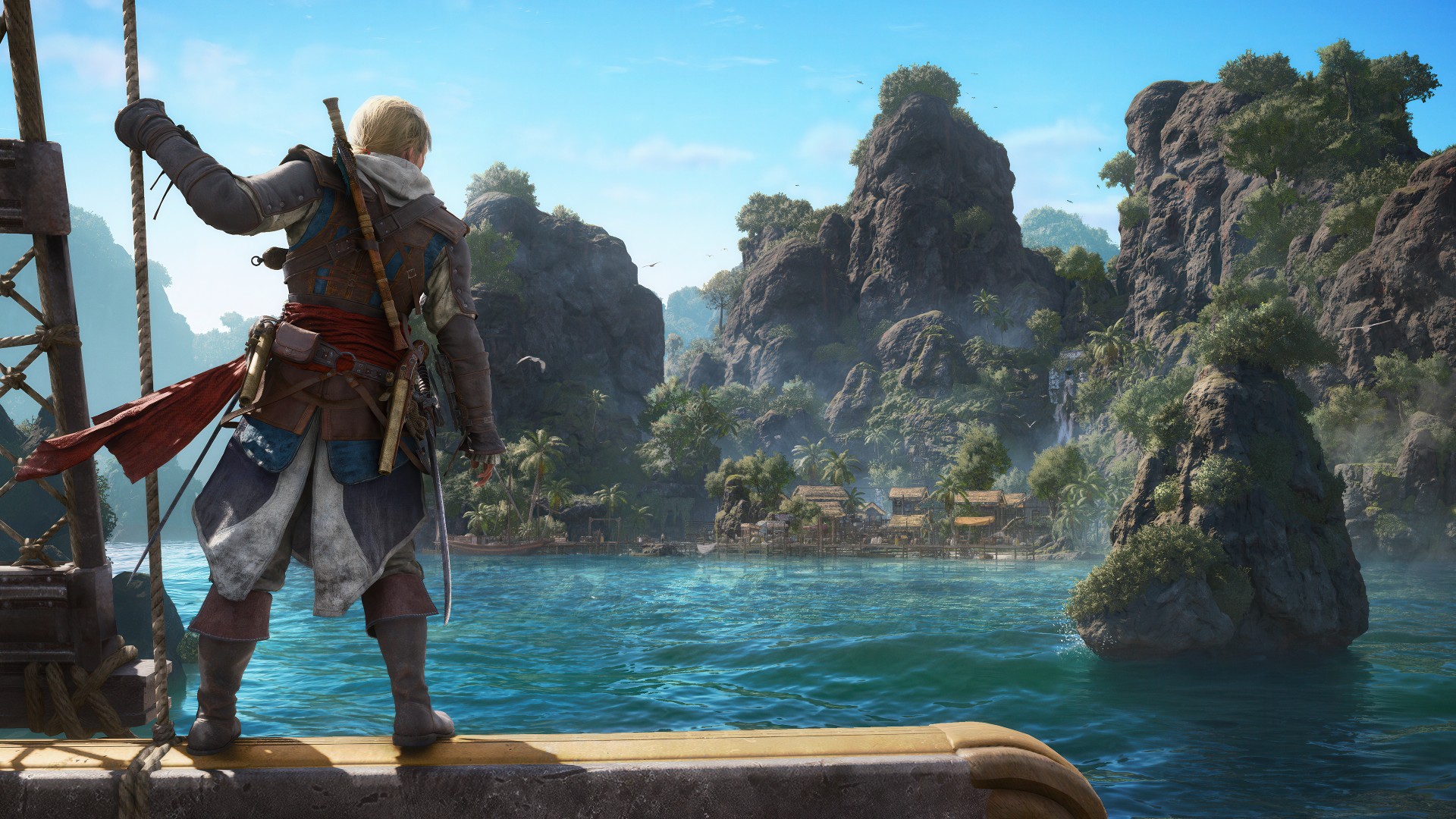
Knight: The main thing I like to think about is you need to dream a bit, right? You need something to invent. So when we looked at Black Flag, it had all these advantages to it. This iconic character, it has two different gameplay styles: the pirate and assassin stuff. So the dreaming part is, okay, what if we brought these into the future? What if we could add the technology that we have today with Anvil? What if we could crouch anywhere and put the hood up and down?
There are all these different ways that we can dream, and that gives us room to develop. It gives us room to do the game-making stuff, and say we should improve key things here, we should reinvent there. Or keep things the same. When we look at it as a remake, a remake is to build something, rebuild it from the ground up. That means some things stay the same, and some things change, but you also need room to dream about what it could be.
Fu: There were a lot of games that inspired me. I personally played quite a few remakes. What we did in the beginning was play through the entire game, so we have this huge 100-page document where I made notes on every single quest and asked myself, what could be added, modified, and what should we exclude? And for the most part, we decided to keep the game as-is from the original, but just expand on its concepts.
That same philosophy was applied to the game systems as well. The fighting, the secondary fighting with naval, they all had different guidelines on what we could and should change, or keep the same. This took a lot of communication, because hundreds of people work on HD games, and we needed to make sure the vision was driven forward with these things in mind.
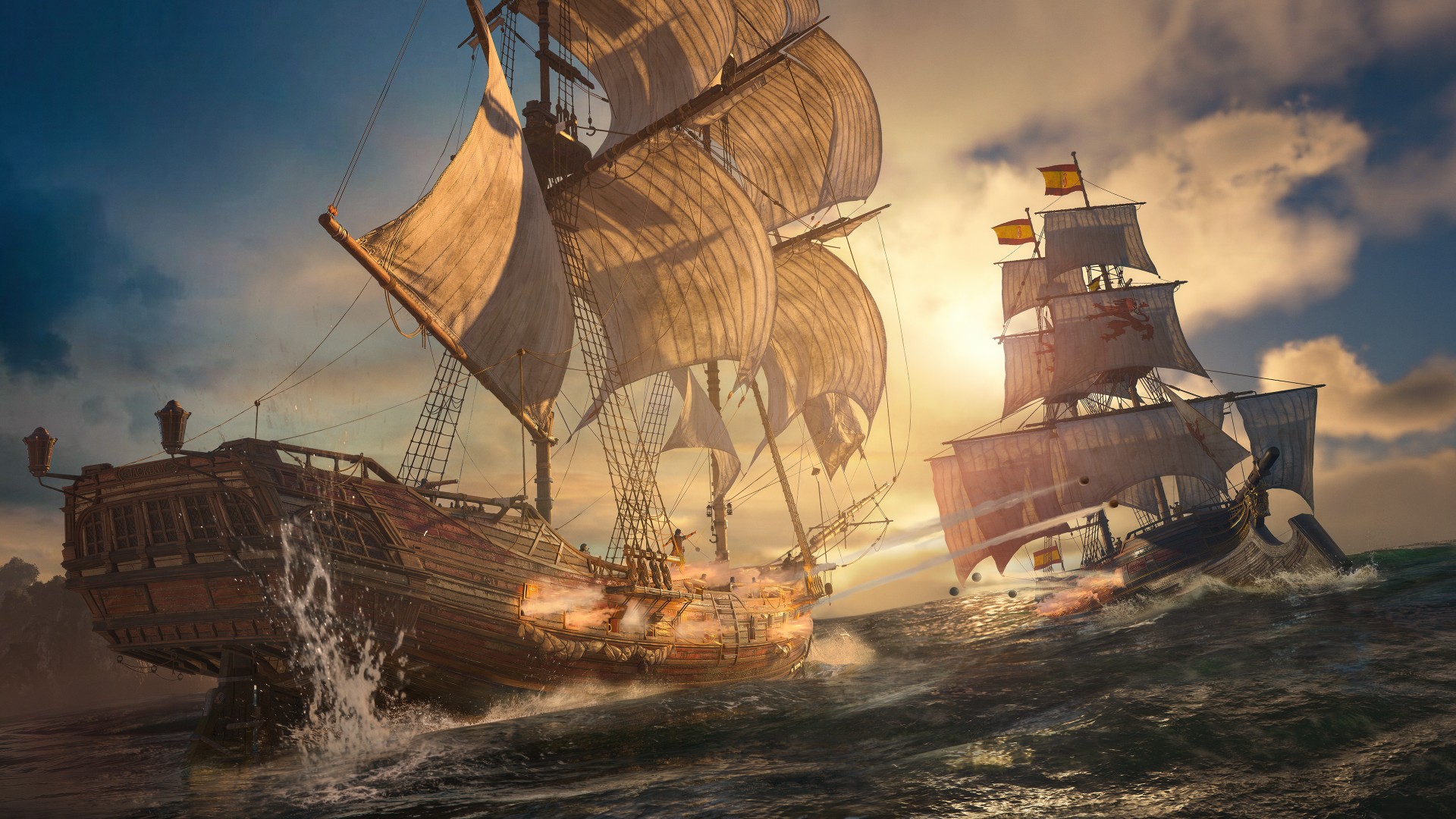
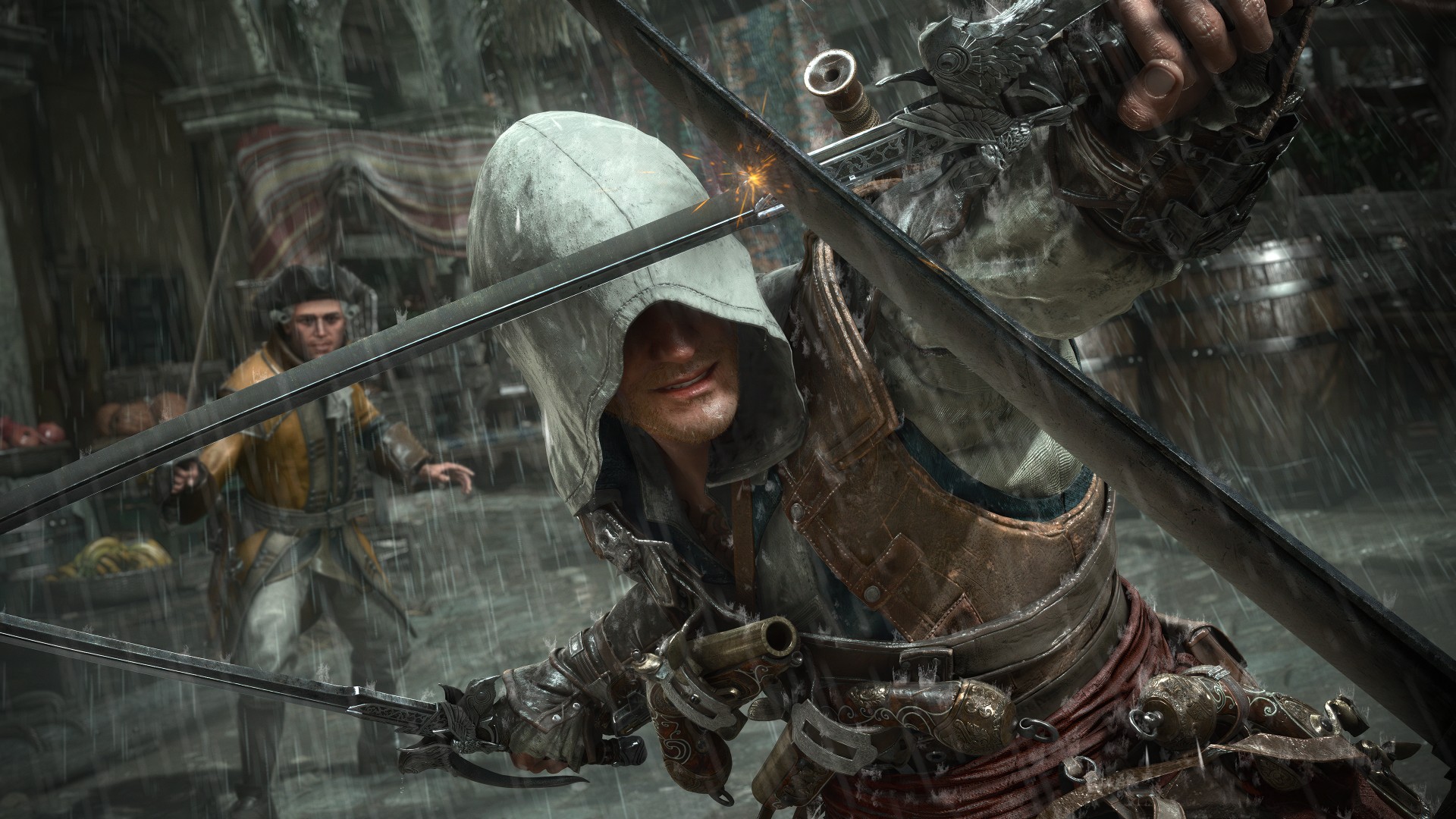
Fu: For combat, we took the core of Shadows, but had to reinvent a lot of things. So the way moves are interrupted into each other, the way enemies react to repetitive behavior. We created a lot of new systems, but the most important thing is that we wanted to make the fighting system in Resynced deterministic – so essentially we had to reboot that. And naval didn’t exist in Anvil, so we had to recreate it from scratch.
One of the core things we took from the more modern Assassin’s Creed games is the concept of the world having more opportunities than main path missions. In the original Black Flag, it was already quite ahead of its time – it had Templar Hunts, Assassin Contracts, label contracts. There was quite a lot to do with the open world and some side quests here and there, and we expanded on that concept without making it an RPG, if that makes sense.
There are new side quests, new officer missions, there’s an entire new chapter added to the game. These are all presented as side content, but with the realization that we expect from a Black Flag game without dialogue branching. Of course all the RPGs in Assassin’s Creed have dialogue choices, but we made the decision early on to not have that. We wanted to make sure there was a distinct difference while still learning what’s best with the modern Assassin’s Creed games.
Lopez: Maybe an extra thing is that Black Flag, back in the day, pre-Origins, was more like it was made of different maps, and it was also a technical limitation. So Origins didn’t only bring RPGs, it also brought the larger-scale Assassin’s Creed, where it’s not just a city but an open world, like almost a province or state. And now with Black Flag, we think it’s more seamless, actually. You can navigate directly to cities, and so on, it’s one of the things that is a big benefit from post-Origins.
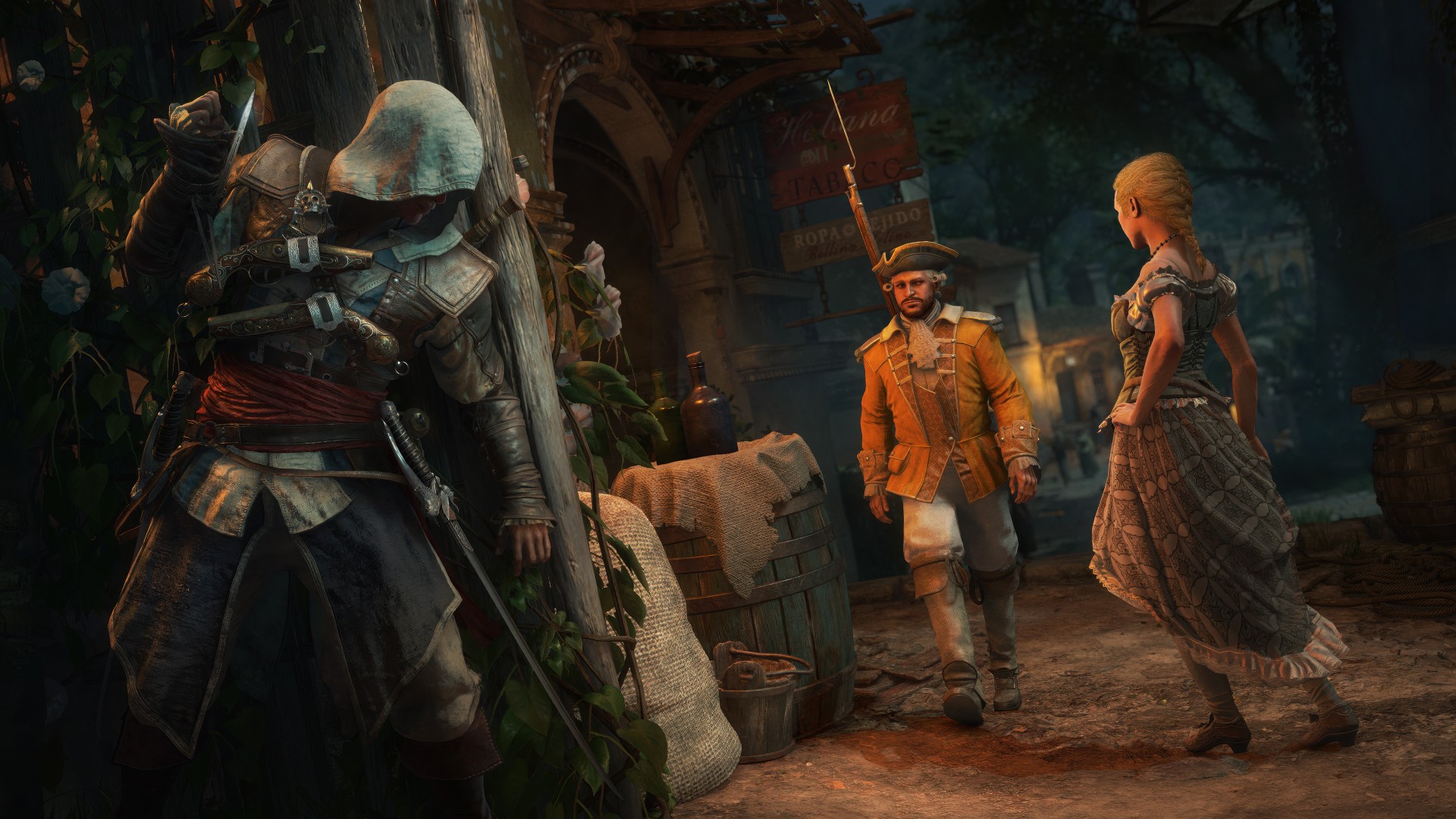
Knight: It could be quite difficult at times, because we don’t want to change the layout of the world that much. We want Havana to be roughly the same place and have roughly the same fields, to a certain extent. But the good news is that it’s more the devil’s in the details.
Adding a crouch is actually great; it’s player expression – you choose to crouch. But the gameplay is roughly the same. There are other things where you need a little more adjustment, because the scale of the world is slightly different over the years, and the metrics of how you jump and things have slightly changed over the years. So there’s always a bunch of work on the details to make it fit.
But what I would say in general, it’s the same way we applied to the remake as a whole. There are things that you carry over and things you adjust based on other Assassin’s Creed games. For example, we’re not the only game with blow darts, so we can look at other ones and decide which have the best mechanics and controls. Then there are ones where we have to just restart from scratch, something like the combat system; we had to do major changes there. Whereas the naval campaign is mostly the same, with some great quality-of-life and tactical options.
Fu: We definitely took from Shadows. We had a lot of help from the Shadows team to make sure that the moves from Shadows had their own flair. We also have to adjust the world as well, because parkour is about two things: systems and world. Again, it’s the metrics.
Knight: We had two objectives. We knew from the beginning that we couldn’t take back the original modern day, because for the most part, Desmond’s story has already been told. We’re not dying to know what happened to his friends anymore; that story has already been told, and you can still buy that game today.
But it comes in the name. It’s “Resynced.” We’re not just a remake, there’s some modernization and stuff, but because we’re that next AC game, it was important for us to continue a little bit of the modern-day stuff you’ve seen in Shadows – but also tell something tied to Edward himself. The other part of that modernization is we didn’t want you to feel like you’d stop playing Black Flag, play this other thing for a few hours, and then come back to Black Flag later.
We made sure that with these new rifts we have, in the “what if” tales that they’re telling, they’re still tied to Edward and his friends. So you still feel like you’re connected. We wanted you to feel more connected and feel like it’s the next step in that overall journey. And then, like I said, if you want to go back to Desmond’s friends, you can.
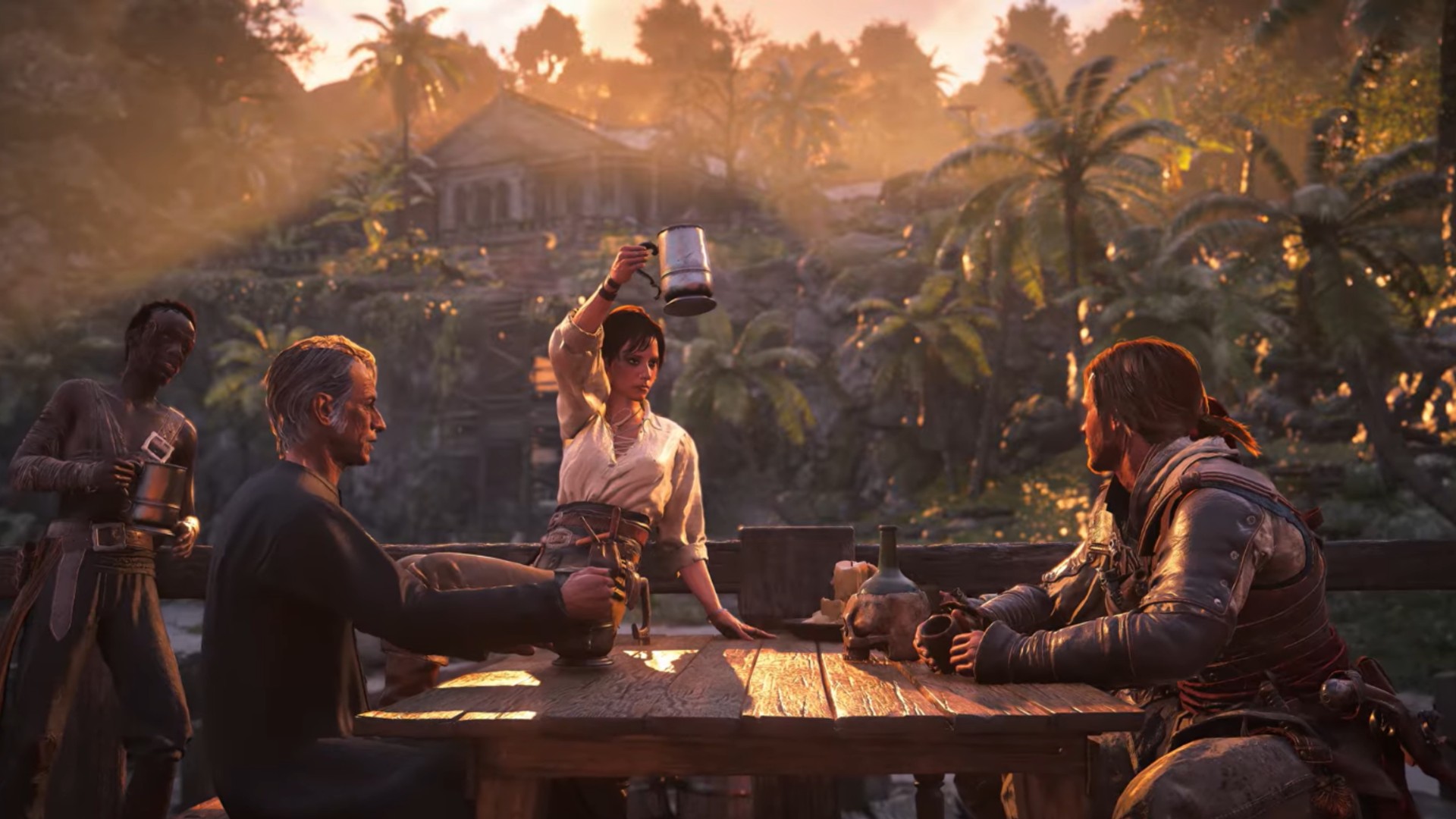
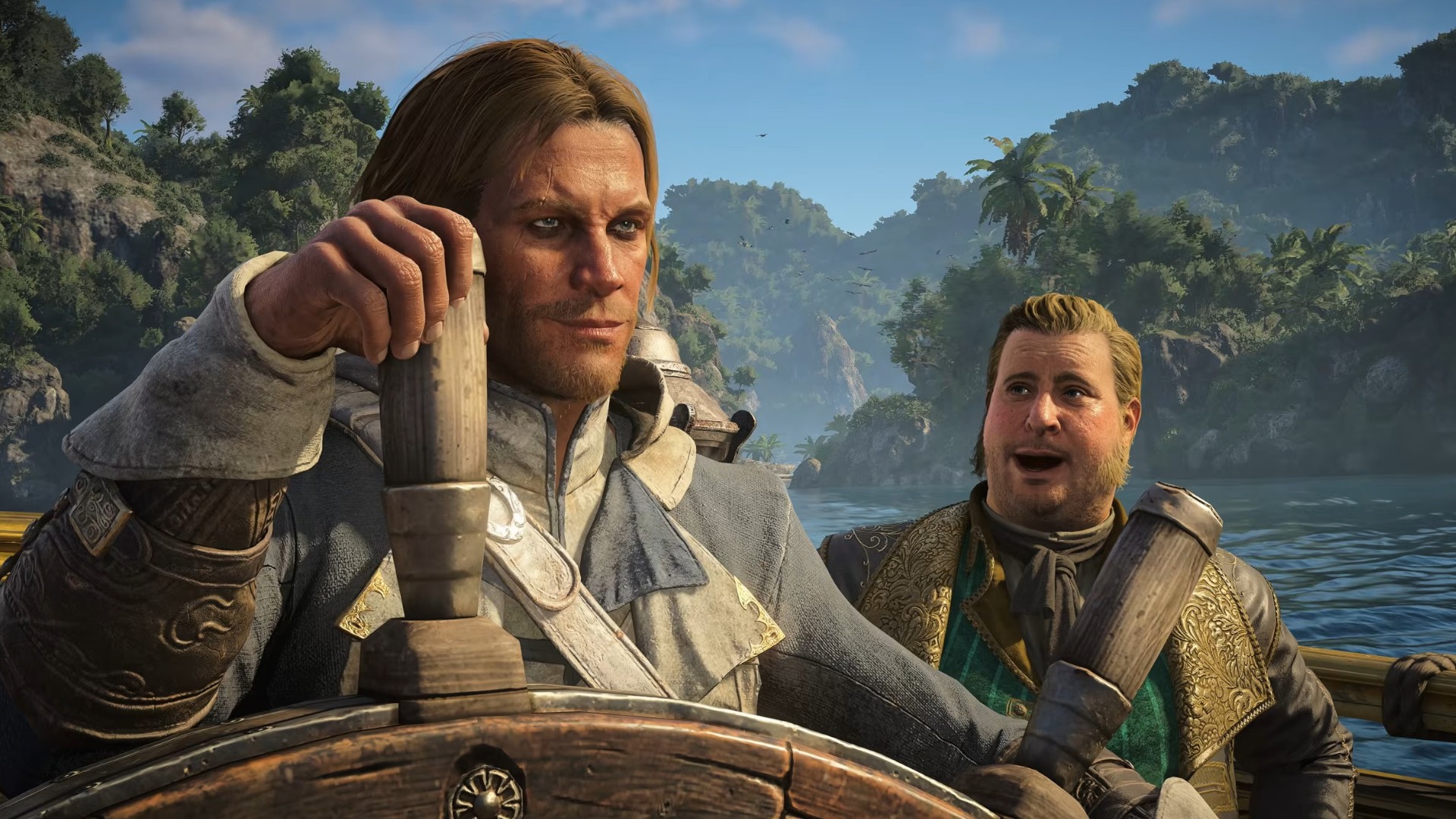
Knight: I don’t know the specifics of how they were generated story-wise, but as a game director, the part I’m usually in charge of is more the gameplay stuff. What I’d say is that each of them has two sides to it. One is that they embody a gameplay feature, like Lucy’s Perfect Brace is all about defense – how can I survive against those legendary ships without dying? Dead Man is about wanting to fire more, I want to fire more shots, but now I have to consider the tactical effect of doing that. And Padre is about boarding and rams.
So each of them has gameplay elements to them, but then non-story-wise, the interesting thing with each is that they also kind of reflect on Edward himself. They’re not there to pad out the game, but as you’re playing and going through requests, you get to see more of Edward the ship captain: how he really likes gold, and how he acts with the crew. Those were things we didn’t really get to explore with the original, so you get to see a bit more of that. It’s important to us that when we add these new characters, they’re not just there to be there, right? They’re there to show you something about the heart of the game. In this case, it's who is Edward, and what is this pirate life he’s leading?
Fu: Yes, actually, we did. In Resynced, you’re going to be spending a bit more time with Adewale. There are a couple of missions where you either follow, spend time, or fight with him. These moments didn’t exist in the original, or they were very short and original – we expanded on them.
I personally like the bromance story between Adewale and Edwared, so we added quite a few of those moments as well.
Fu: That’s an interesting, wide-ranging question. I think that with pirate games as a setting, I’ve been working on naval games for a very long time, Skull & Bones, AC 3, Black Flag, for example. I do believe there’s a space carved out for pirate games, but what makes Black Flag special, that sets it apart from other pirate games, is really Edward Kenway’s story. If you think about it, Black Flag is not just about pirates, it’s really a story about Edward, which is why
Lopez: It works so well, but at the same time, if you remove just one element, it doesn’t work anymore – like you can’t remove the boats. It’s this combination of all these elements that creates this recipe that people want to dive into again and again, so replicating that is very hard actually, because there’s a bit of magic in it.
Do you think that character focus is a particular strength of the Assassin’s Creed series as a whole? Is that a vital piece of its identity?
Lopez: Arno, Ezio, and Edward are some of my favorite characters in any video games, so it’s definitely one of the IP's strengths. History as well. History is Assassin’s Creed’s playground.
Like, Final Fantasy, you know, each game is super refreshing because you know you are going to find things you know, but the characters will be new, the city will be new, the story will be something else. I would say my favorite games of all time are Assassin’s Creed 1 and Final Fantasy 7, just for what they mean to the industry.
Okay, I’ve had this theory that Assassin’s Creed is just historical Kingdom Hearts. What do you think?
Lopez: You mean in the sense that it’s convoluted?
But in a good way.
Lopez: Yeah, I mean, I think Kingdom Hearts is a fairly big IP as well. Assassin’s Creed is 20 years old: it’s convoluted, there are all these different characters, abilities, etc. I think every big IP is like that *laughs*.