

People of Note brings a melodic twist to the classic Final Fantasy formula
The rise of grunge and punk rock left the classics behind – no one cares about real rock anymore. No, that’s not what I think – that’s what I learned when trying to recruit the tattooed rock legend Fret into my party, in an effort to create the ultimate band. But that’s when I saw the parallel, Fret is the grumpy old man character you have to convince with the headstrong power of youth, like Cid in Final Fantasy VII. It’s just one of many examples of how People of Note, a music-powered turn-based RPG, draws inspiration from Final Fantasy but remixes it in a way that feels nicely fresh. Through a short hour-long demo, it becomes clear that People of Note isn’t afraid to show its inspirations, but has just the right amount of confidence in its unique setup, a rhythmic world where everything ties into the power, and connection, of music.
People of Note takes place in a musical world called “Note,” where each city represents a different genre or style. The story centers on a young pop artist named Cadence, whose solo act gets shut out of the Noteworthy Song contents. Dejected, Cadence sets out on a quest to recruit a band and learn about the power of other types of music, and seemingly ends up stopping some great evil along the way.
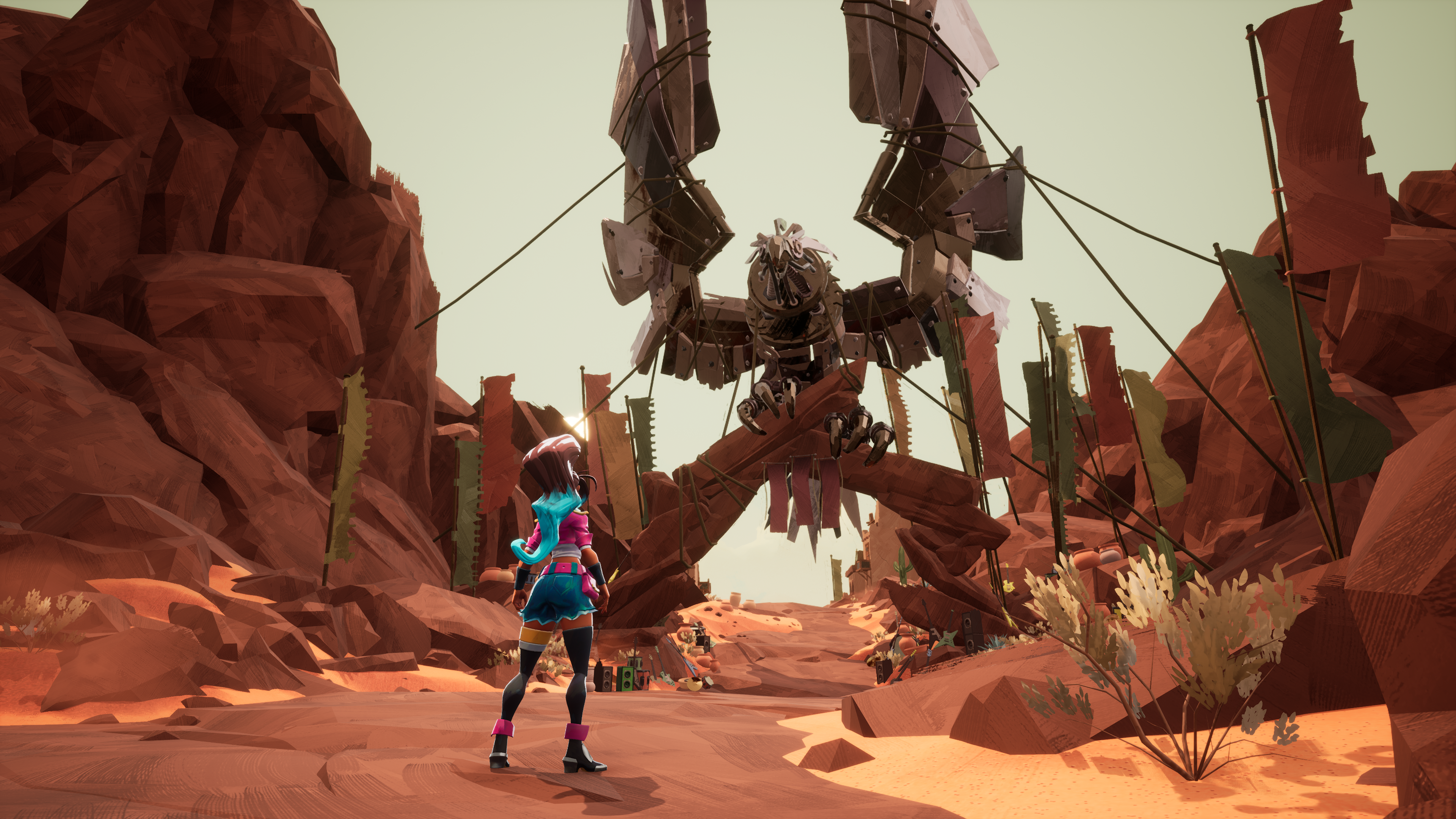
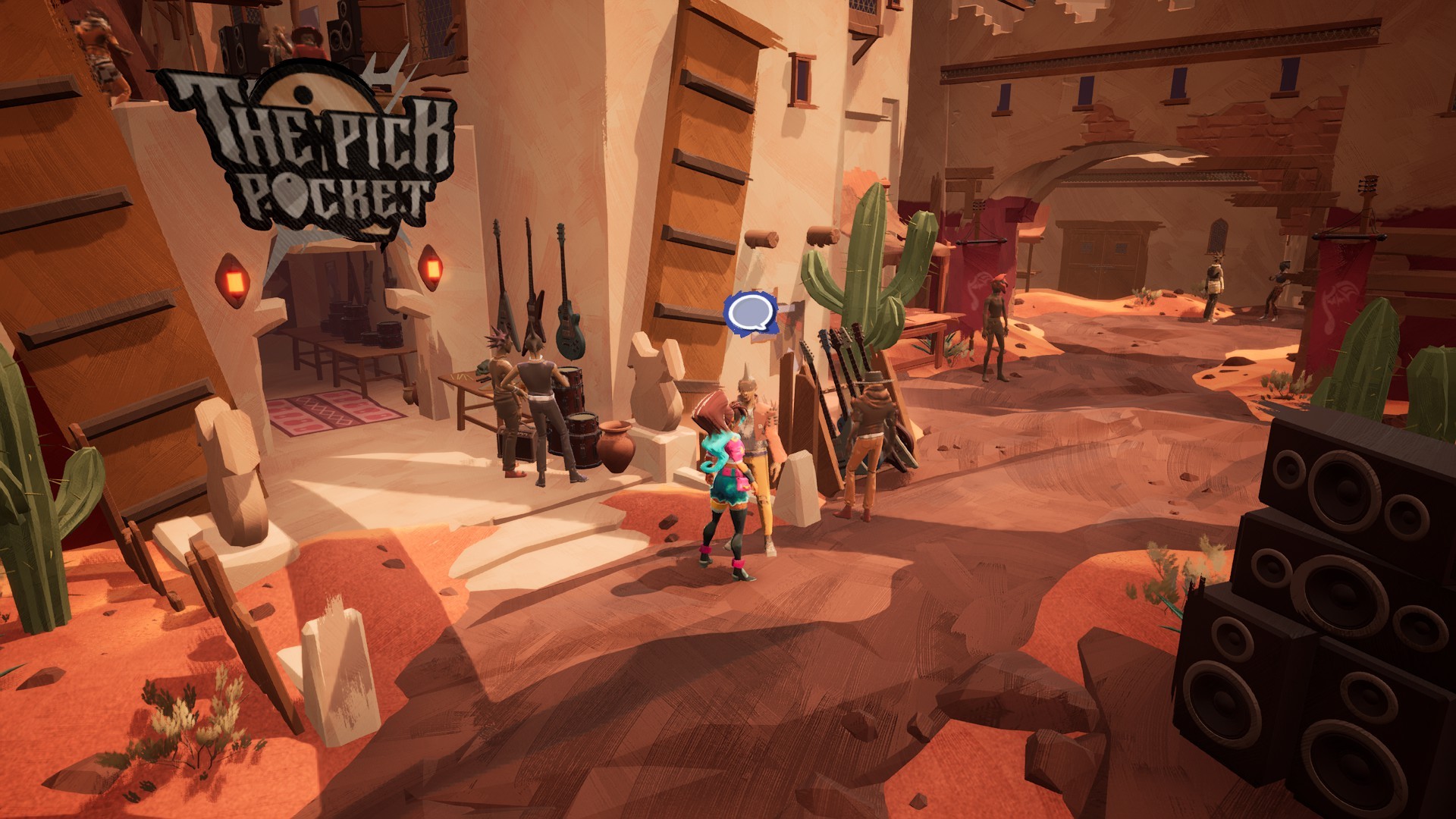
My demo took me to the Rock City of Durandis, which is named quite literally, in both ways you’re thinking. This harsh city is built right into a canyon, with buildings propped up on precarious spires, while all its inhabitants are, of course, obsessed with rock music. That Final Fantasy DNA is pretty apparent right off the bat, specifically the series’ PS1 era. People of Note uses the same style of fixed camera angles for its world, letting you explore areas that are propped up against rich backdrops and filled with little details. And if Durandis is anything to go by, there’s an abundant amount of charm in this game.
Each district of the city corresponds to a different sub-genre of rock, such as punk, metal, and grunge. This not only gives each area a distinct visual flavor and alters how NPCs speak, but also puts that respective twist on the music. It’s a fun little way to make the city feel vibrant and distinct.
At the same time, Durandis is currently being invaded by a country group named the Homesteaders, who want to, you guessed it, squash the power of rock and instill country in its place. There’s a kind of tongue-in-cheek air to the writing and dialogue in People of Note – Iridium Studios clearly gets the game’s goofy idea, and runs with it. But this also results in a clear penchant for puns, some of which I genuinely enjoyed, while others, not so much. One particular little detail I loved was a cage with a bird sitting near a shop that simply had a sign that said “Free Bird.” The other I didn’t love so much was a bizarre accordion dog known as an “Acorgian.”
But despite a few groan-worthy jokes, People of Note clearly has a briskness to its writing, and a sense of whimsy – something I have no doubt was also inspired by Final Fantasy. During a pre-demo brief, game director Jason Wishnov even cited some of the game's direct influences, with the likes of Chrono Trigger and Final Fantasy IX feeling like particular standouts of the group. I’m interested to see more of this musically inclined world, but not entirely sure just yet that the game’s storytelling and sense of humor will be as strong stretched out across a dozen hours.
But that’s alright, because the thing that really sold me on wanting to see more is the combat system, which feels like a genuinely inventive take on turn-based battles. At its core, People of Note is an active turn-based system, where you need to press button inputs at the right time during attacks to boost their power. But the real twist is the Stanza system, essentially a Final Fantasy X-esque turn order at the bottom of the screen. Each Stanza is made up of both your allies’ turns and the enemies', showing where in the turn order each will act. This gives you a chance to plan, but what really makes things interesting is how each of your party members uses their different music genres. For each Stanza a card will show which genre is being used, and this can boost the power of your attacks and skills. For example, a pop Stanza might boost Cadence’s skills, and her skills might also get specific boosts if they’re used in the right spot in the Stanza.
This provides a ton of strategy to each battle, making it vital that you plan your turns around when genres are going to be used, on top of dishing out damage, healing, and all the normal stuff. Alongside all this, you have a Bravely Default-style BP (Beat Points) system that dictates your skill use, and a Harmony meter for big team-up attacks. Extra complexity is then layered in with Songstones that you equip on each character to change their battle skills, and then Remix Stones that can add a variety of effects onto those skills – like healing whenever you use the skill the Remix Stone is attached to. Even in just the short snippet I played, there was a lot of variety in terms of how to tune your party, and I’m hopeful for what that might look like with a full party.
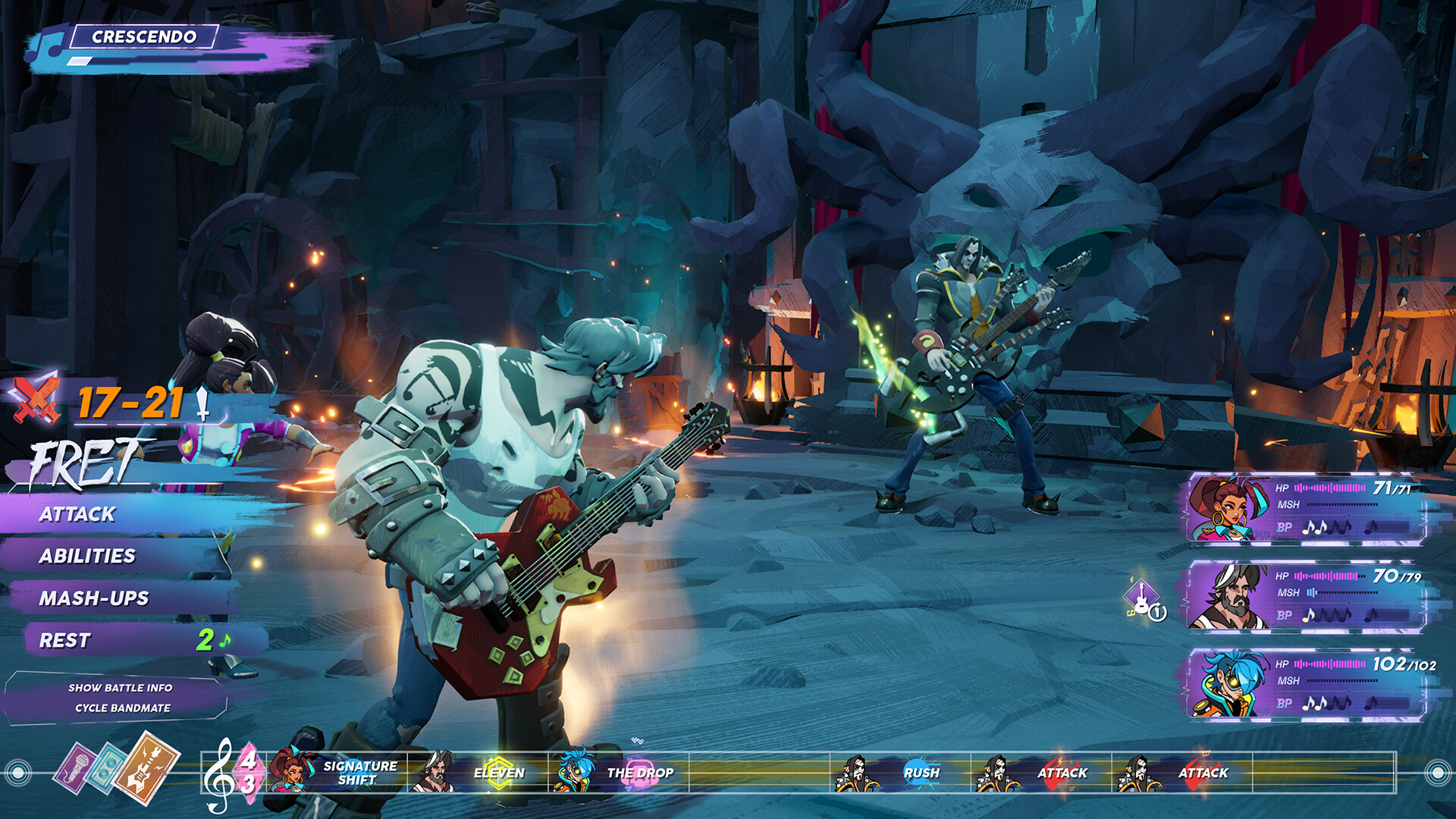
It’s a combat system that feels primed to have some real depth and variety, especially in boss battles that throw in extra wrinkles like the boss powering up after a certain number of Stanzas. But equally, it ties into the game’s style and presentation, inherently changing the flow and feel of the music as you swap between genres.
Between the sheer personality of People of Note’s world and its promising twist on turn-based combat, I feel sufficiently interested to see how the whole thing pans out. But I do have some reservations about the game’s sense of humor and quippiness stretched across hours, and if the battle system can sufficiently grow with extra party members.
There’s the makings of something special at the core of People of Note, but I just need to see if it can hit all the right notes to make something that truly sings.