

Sometimes a game just didn't need a demo at a convention, and Qliphah in Providence's Shadow was one of them
I've mentioned it time and time again, but one of the challenges with covering RPGs is how they're inherently one of the toughest genres for getting to grips with how a game actually plays during events. It's something I've always tried to be cognizant of during shows like Summer Game Fest or Anime Expo; while you're always going to be playing a very limited slice of a game no matter the genre, you usually get a better sense for the gameplay loop in any other type of game compared to an RPG.
All of that is to say that while this preview was meant to go up a week ago, I've been struggling with how best to talk about Qliphah in Providence's Shadow. No matter how I wrap things around in my head, I come to the same conclusion; this Anime Expo demo shouldn't have existed.
Qliphah in Providence's Shadow is an upcoming RPG being published by Arc System Works, where players take control of a set of dual protagonists as they investigate a ruined Tokyo and try to uncover what led to the Collapse that has had reality unraveling at the seams. On its surface, it's a very stylish game with an interesting art style. I struggle to explain much about what the game's structure actually looks like.
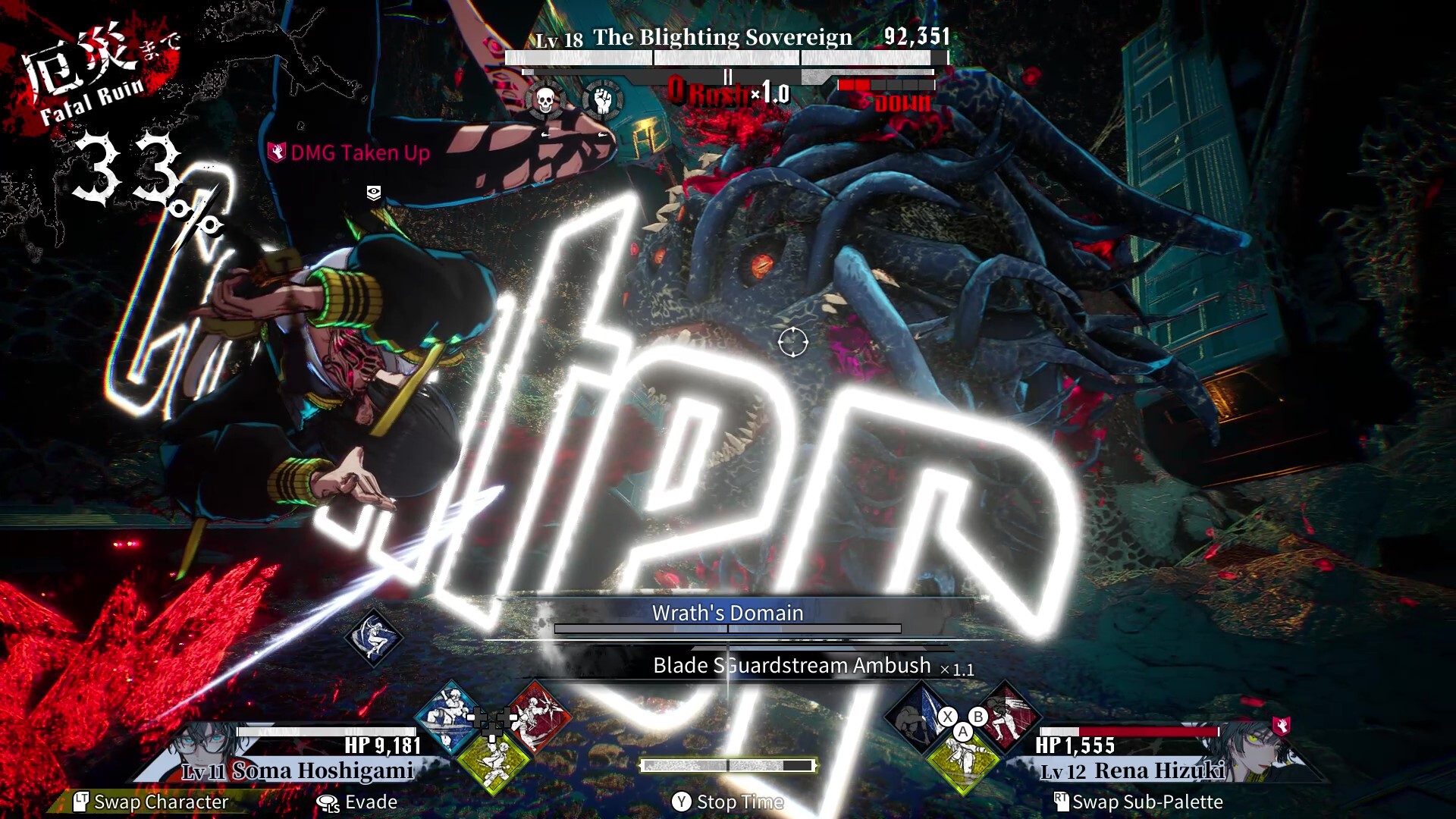
Don't get it twisted; I don't know - or, more accurately, I can't know - whether or not Qliphah is a good or bad game yet. That's not the problem with the demo I played, which tasked me with fighting a basic enemy using the game's "tactical timeline" gameplay, which game designer and Director Satoshi Hirayae described to us as lining up your actions, with upcoming enemy actions telegraphed like "frames in a fighting game training mode", allowing players to know in advance when they need to counter an attack, or when they can take a chance to regain their footing.
Taken in a vacuum, I completely understand why Arc System Works opted to try and showcase Qliphah's combat. It's the type of RPG that doesn't exactly lend itself elegantly to being described. Before I'd had the chance to demo it myself, Hirayae's words didn't quite get things across. It was only after I'd had the chance to go hands-on and ask a few follow-up questions to reps that I started to understand what the combat was going for, and why the more relaxed encounter on display supposedly wasn't representative of the full game.
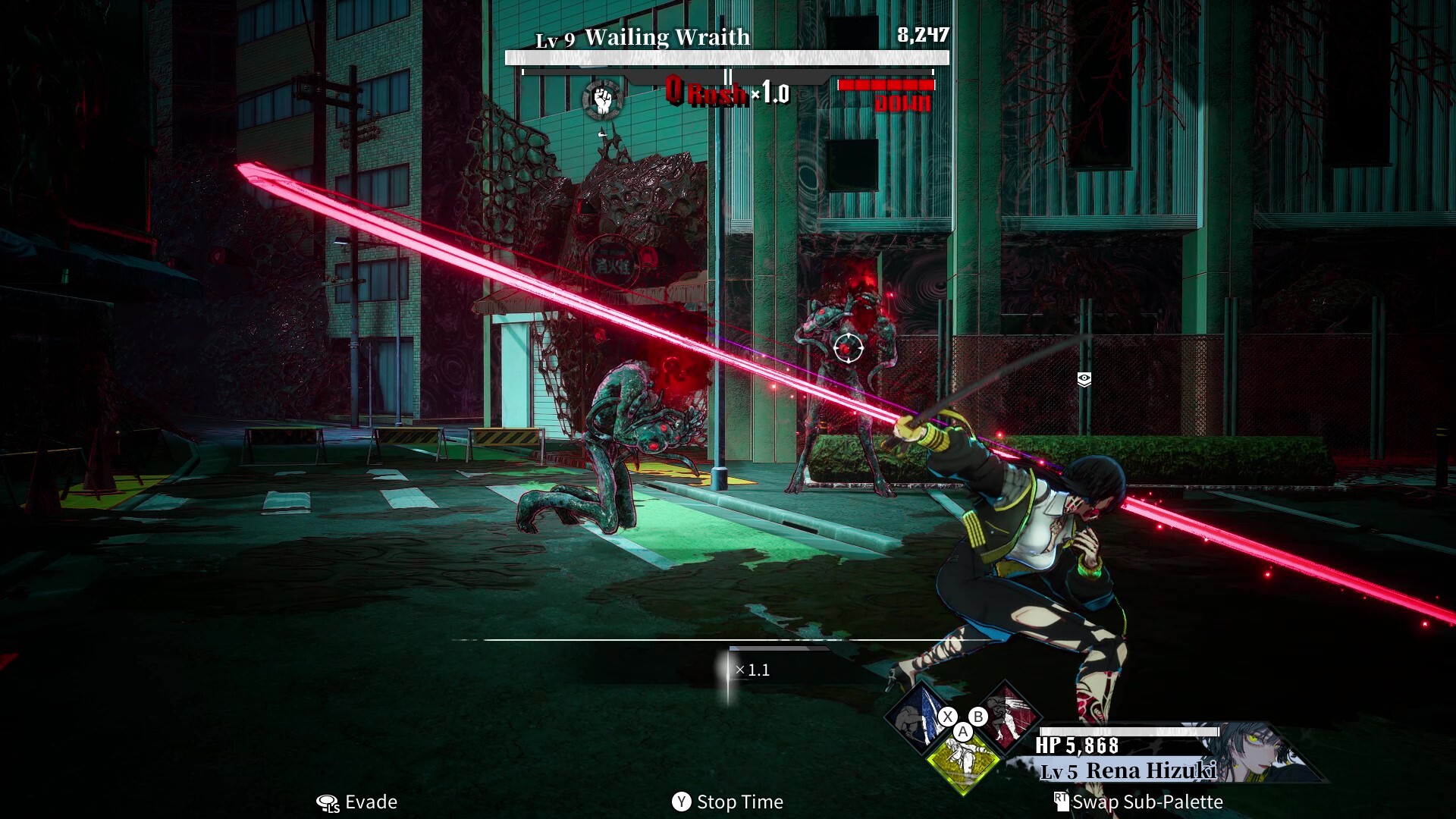
On paper, Qliphah's combat revolves around the give and take of knowing when to dodge or counter attacks. On the timeline, enemy actions will be highlighted and color coded; if an action is blue, you can time one of your character's blue actions to try and counter it. The same if it's red or yellow. Actions without a color can't be countered, so you have to control any character being targeted to move them out of the way. When you're not acting, time moves more slowly to help facilitate your actions - though moving in any direction with an evade will speed things up for the duration of the dodge.
It's not a particularly engaging combat system when an enemy isn't aggressive. It's worth noting that there is in fact a cooldown system for your skills which helps power them up, and also makes the timing much less lenient for countering enemy attacks; you can spam skills as much as you like, acknowledging that your inputs will be buffered, but it's a risk when you don't quite know when you'll want to save a specific action to counter an enemy's later. While you have both your character's skills to work with, some enemy attacks require both of your characters to attack with the same color and timing to counter rather than just the one.
I was told that fights in the game would include enemies that send out attack combos, requiring players to chain together skills across both the characters at once. If that's the case, and accounting for a single screenshot that implies that multiple enemies can be present in a battle at once, I could see the battle system being far more interesting in the final game. Regardless, that's still a very small slice of the game as a whole. I still know little to nothing about its story, nothing about what you do outside of battles, and nothing about stats and progression.
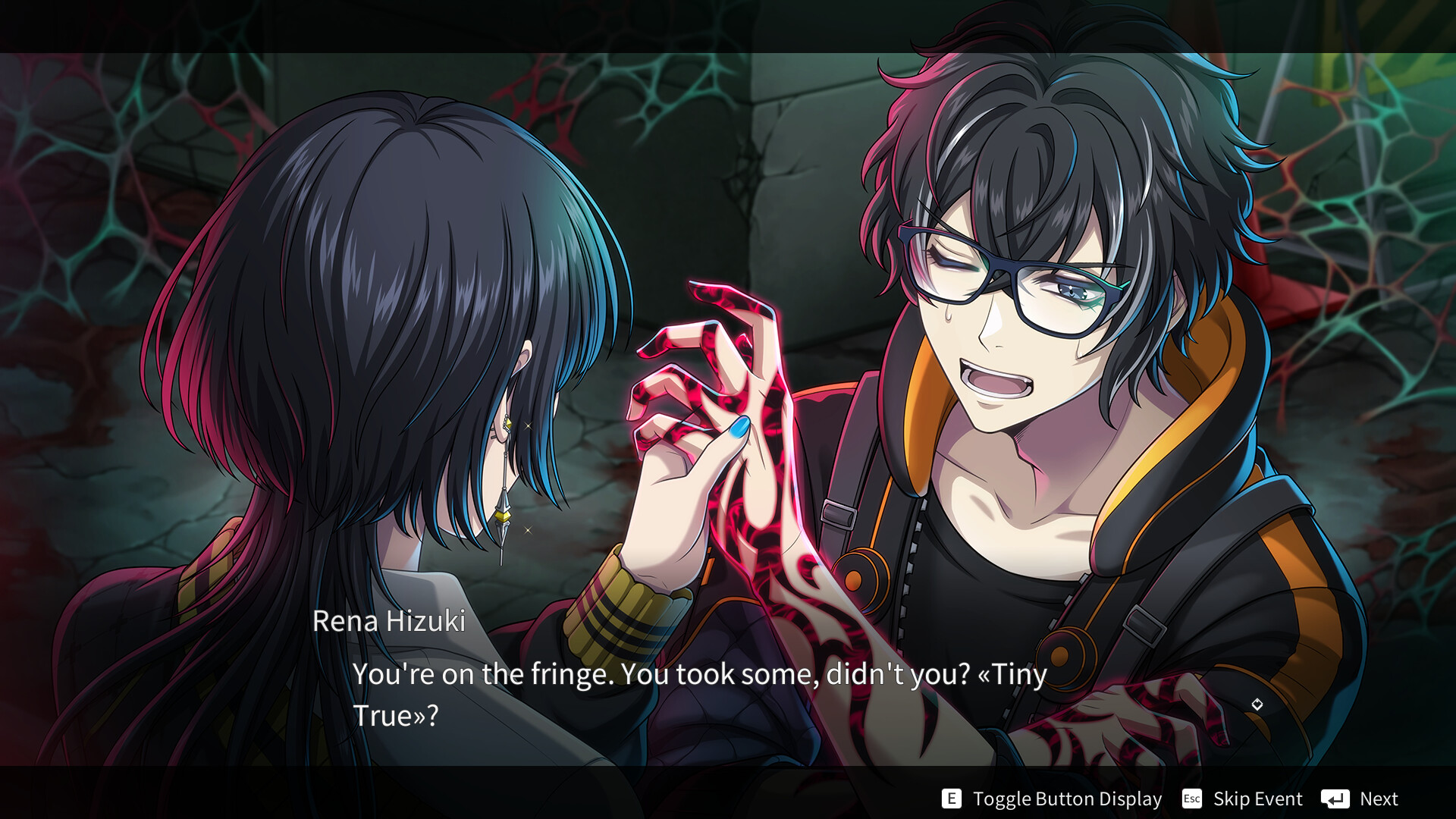
What I do know, again, comes from some screenshots on the Steam store page; the game's story is portrayed as a Visual Novel between battles. There's autonomy with which areas in Tokyo to explore on a world map, which lets you know the power of the enemies you can come across, and what rewards you might receive if applicable. There is, at least, the suggestion of some sort of time limit.
I don't know what to think, and if anything this preview has left me with far more questions than answers. I don't know if I'll have the time to play it alongside everything else releasing in September, but stay tuned just in case for when the game launches on PlayStation 5, Nintendo Switch and PC (Steam, Epic) on September 24.