

Final Fantasy Resonance feels like a Limit Break for HD-2D
I thought I knew what to expect from Final Fantasy Resonance. I reviewed last year's Octopath Traveler 0, after all - and it's a very easy comparison to make, contrasting these RPGs. Both are based on a free to play mobile game release, retooled for play on consoles and PC. Octopath successfully made the jump last year, so if that's all Final Fantasy Resonance was it would probably be a success on those merits. But then I was reminded what Final Fantasy Brave Exvius actually looked like.
All it takes is a single look at the original Brave Exvius right next to Final Fantasy Resonance to make it clear that this is a far more ambitious conversion than Octopath Traveler 0. Part of that is undoubtedly the age of Brave Exvius; but the sheer scope of the project makes itself quite apparent when you sit down to play. Square Enix has released many games under the HD-2D moniker over the years, but so far Final Fantasy Resonance marks the largest departure for the formula yet.
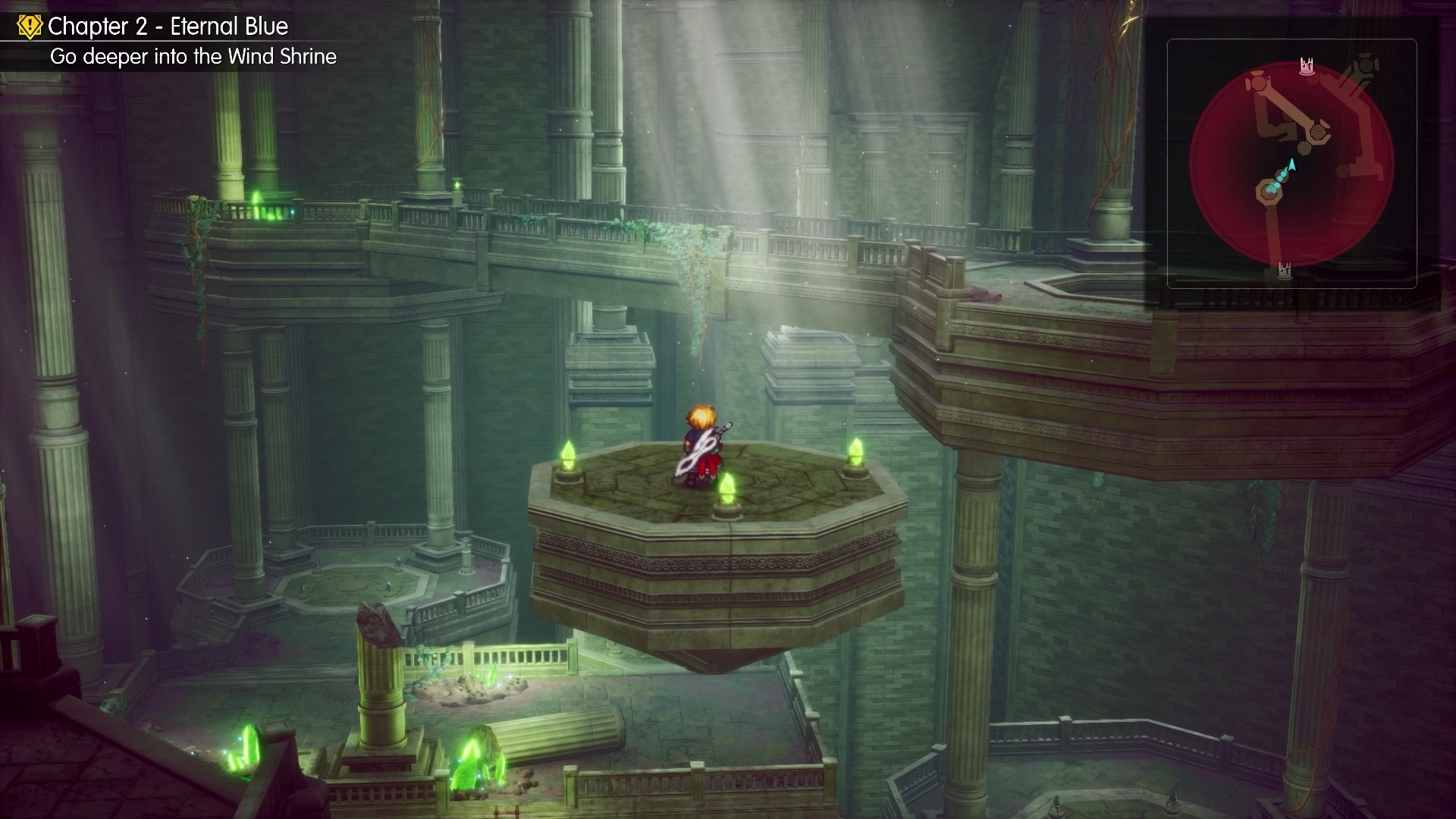
A big part of it revolves around the specific presentation. While many scenes adhere to the isometric perspective hallmark to HD-2D, Final Fantasy Resonance employs varied camera angles; some towns will drag the camera right behind the player character, shifting things to an over-the-shoulder view. During our demo session, we tackled a dungeon taking place in a tower with multiple elevators escorting us up and down various floors; the shifting camera angles offering a proper sense of scale for it all.
We only managed to see a small slice of the overall package, but it's enough to send the message loud and clear; Final Fantasy Resonance isn't just "another HD-2D project", but rather the next step that Square Enix is taking with the tech. In that sense, the original Brave Exvius is being used as a test bed for what the limits of the engine actually amount to. Even down to cutscenes with proper cinematography, which I never would have dreamt was even possible in HD-2D.
The other half of the equation we can speak to at this stage is combat and partybuilding. Much like in the original, Visions of Final Fantasy protagonists offer their support to your party. The best way to conceptualize this is that each Vision is, in essence, a Job. Players equip them much like gear, and they offer abilities in addition to whatever comes standard to a party member; in addition to gaining experience from battles, so to do Visions in a way - unlocking new passive and active abilities over time.
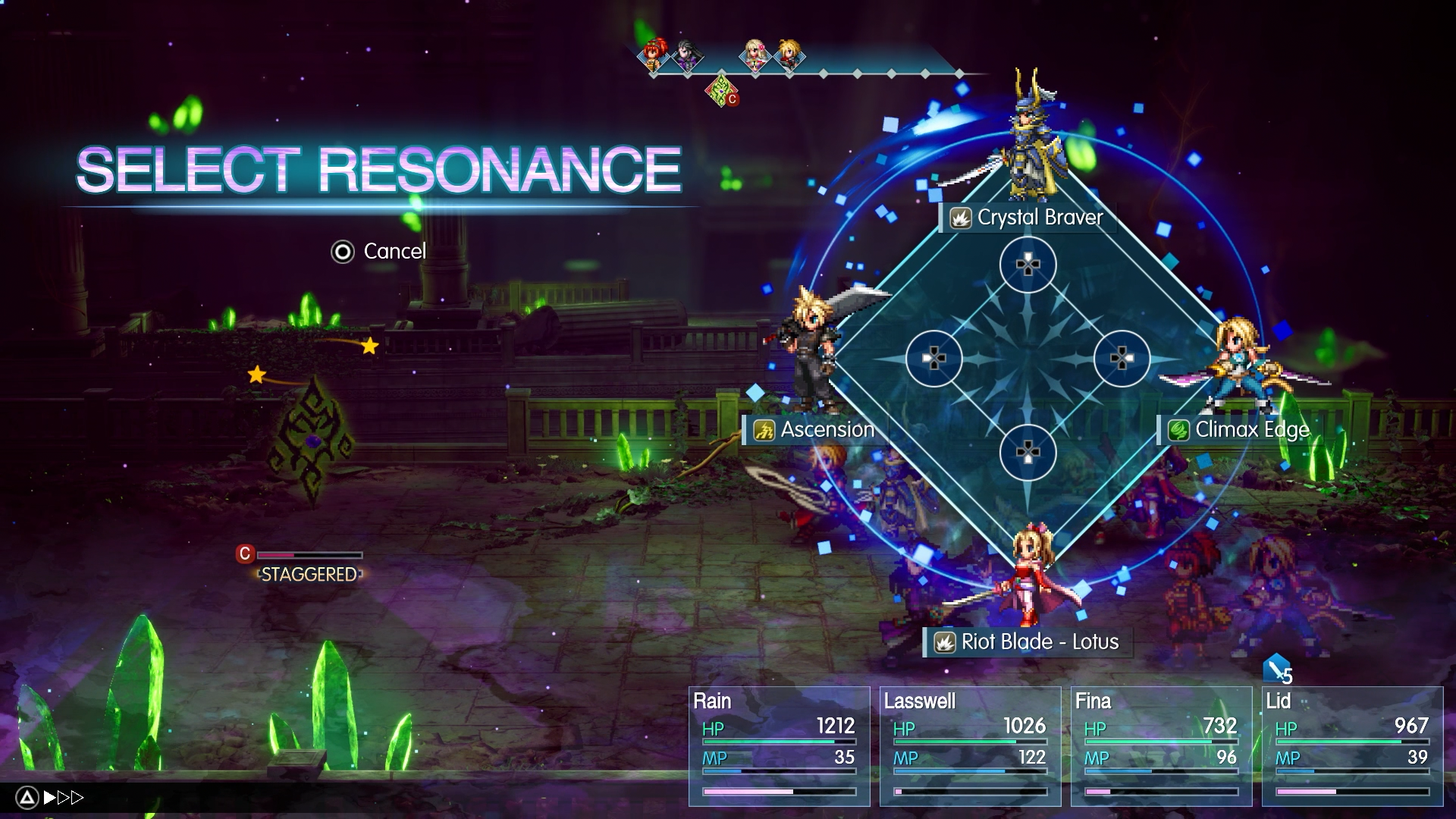
During combat, enemies come equipped with both a regular health bar, as well as a stagger meter. Any attack commands at your disposal will have a set "health" and "stagger" damage attached, with striking weaknesses amplifying both effects. Staggering an enemy offers a character an additional opportunity to act at the end of a turn; staggering every enemy allows every party member another chance to act, and allows the use of one of your equipped Vision's Resonance - ranging from powerful attacks, to support skills buffing or healing your party.
It's a promising start, but we still have more than a few questions. For one, what's the scope of quests? We got to view a handful during our session, but most were actively outside of the play area we were permitted to explore. The same can be said for the story, and exactly how much it might have changed from Brave Exvius; the presentation has changed, but how much of the plot remains the same? Regardless of the answer, I'm excited for my next chance to go hands-on with the game as we approach its October 22 release for PlayStation 5, Xbox Series X|S, Nintendo Switch, Nintendo Switch 2 and PC (Steam).