

Paranormasight: The Mermaid's Curse Review
Square Enix caught me off-guard with Paranormasight: The Seven Mysteries of Honjo three years ago. It was a horror adventure that cleverly utilized its framework as a video game to bolster its narrative design, which made its character ensemble unforgettable to me. At the time, I crossed my fingers and prayed that Paranormasight wasn’t a one-and-done endeavor; the creative team at Xeen created something special, and I needed more.
News of Square Enix’s recent restructuring and comments on ‘quality over quantity’ made me fear its future, though. There were reports that many smaller, unannounced projects were getting cancelled behind the scenes, and I was afraid something smaller in scope and experimental, like Paranormasight, may not get another chance. Thankfully, my worries subsided as Paranormasight: The Mermaid’s Curse made a surprise debut at the recent Nintendo Partner Direct showcase two weeks ago.
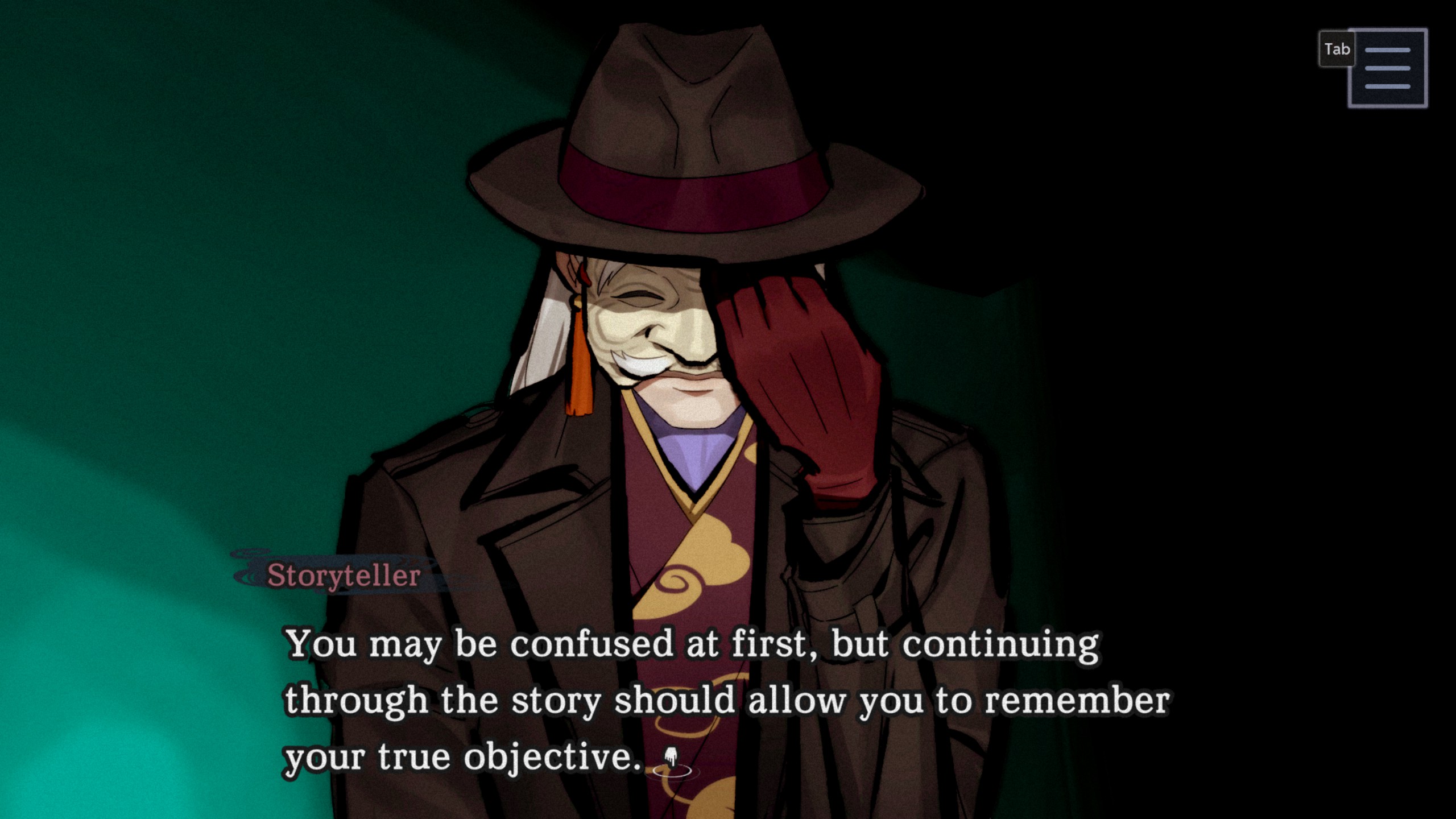
Although Mermaid’s Curse is a standalone follow-up to Seven Mysteries of Honjo, it is a natural evolution of the foundation that its predecessor built. The sequel takes place a year after the events of Honjo with an all-new cast of characters. Playing through the first Paranormasight isn’t mandatory to fully understand and enjoy Mermaid’s Curse, but there will be bits of info here and there that do reference it.
Players of the Seven Mysteries of Honjo will feel right at home immediately with Mermaid’s Curse; a considerable amount of its system mechanics and navigation is structurally identical to the prior Paranormasight entry. The narrative is divided into scenes on a Story Chart that taps into the perspectives of different characters to tell its tale.
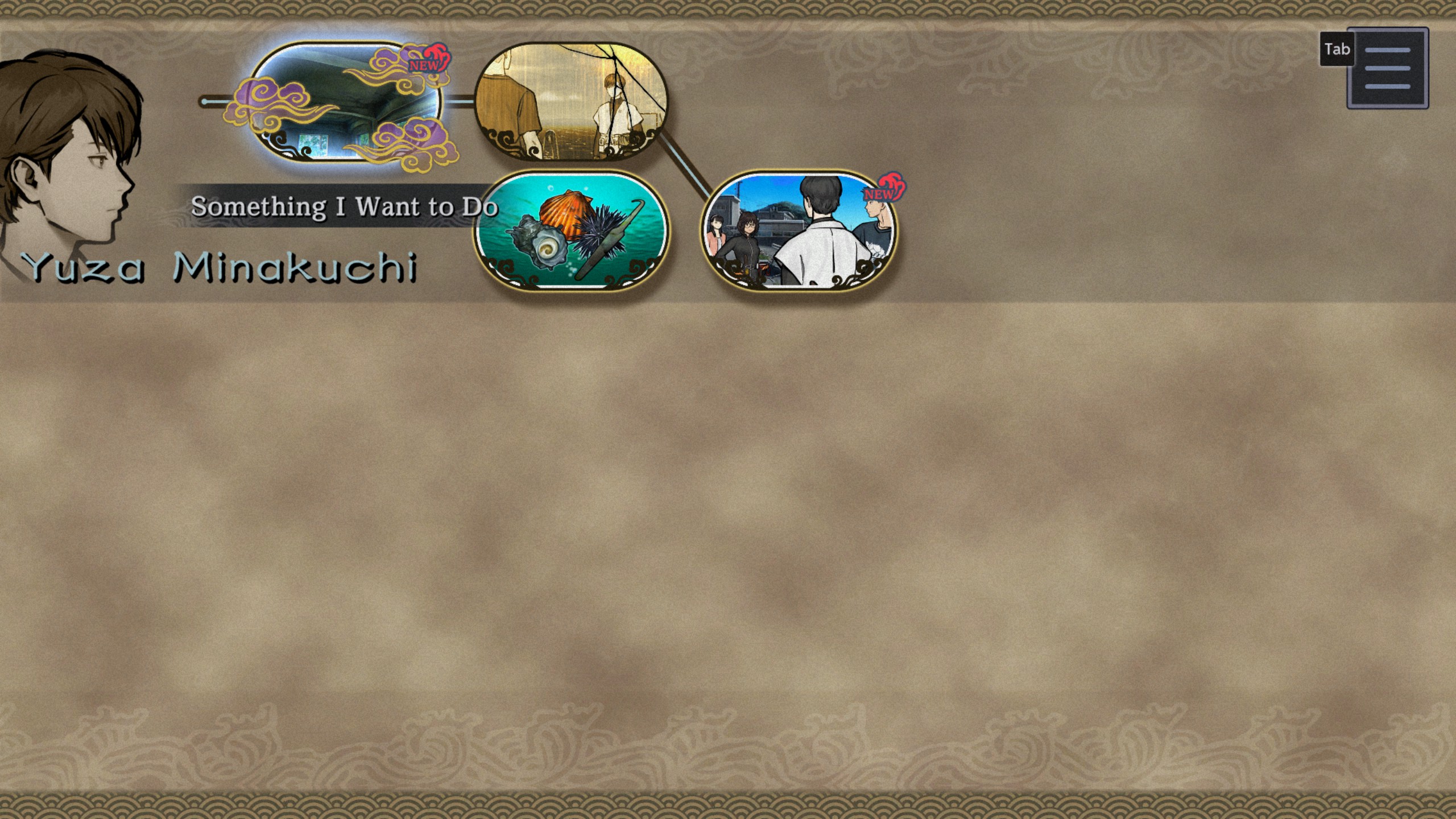
Our initial protagonist this time around is Yuza Minakuchi, an aspiring diver who wants to learn the truth about his late mom after a tragic accident struck her five years prior. His diving session goes awry when a mysterious paranormal incident occurs, providing him with a lead on what he’s seeking.
The Mermaid’s Curse is a drastic change of scenery from Seven Mysteries of Honjo, as it is now set in the Ise-Shima region of Japan and revolves around the fictional remote island of Kameshima. Of course, it takes inspiration from a handful of real-life locations that are rich with legends and mythology concerning mermaids.
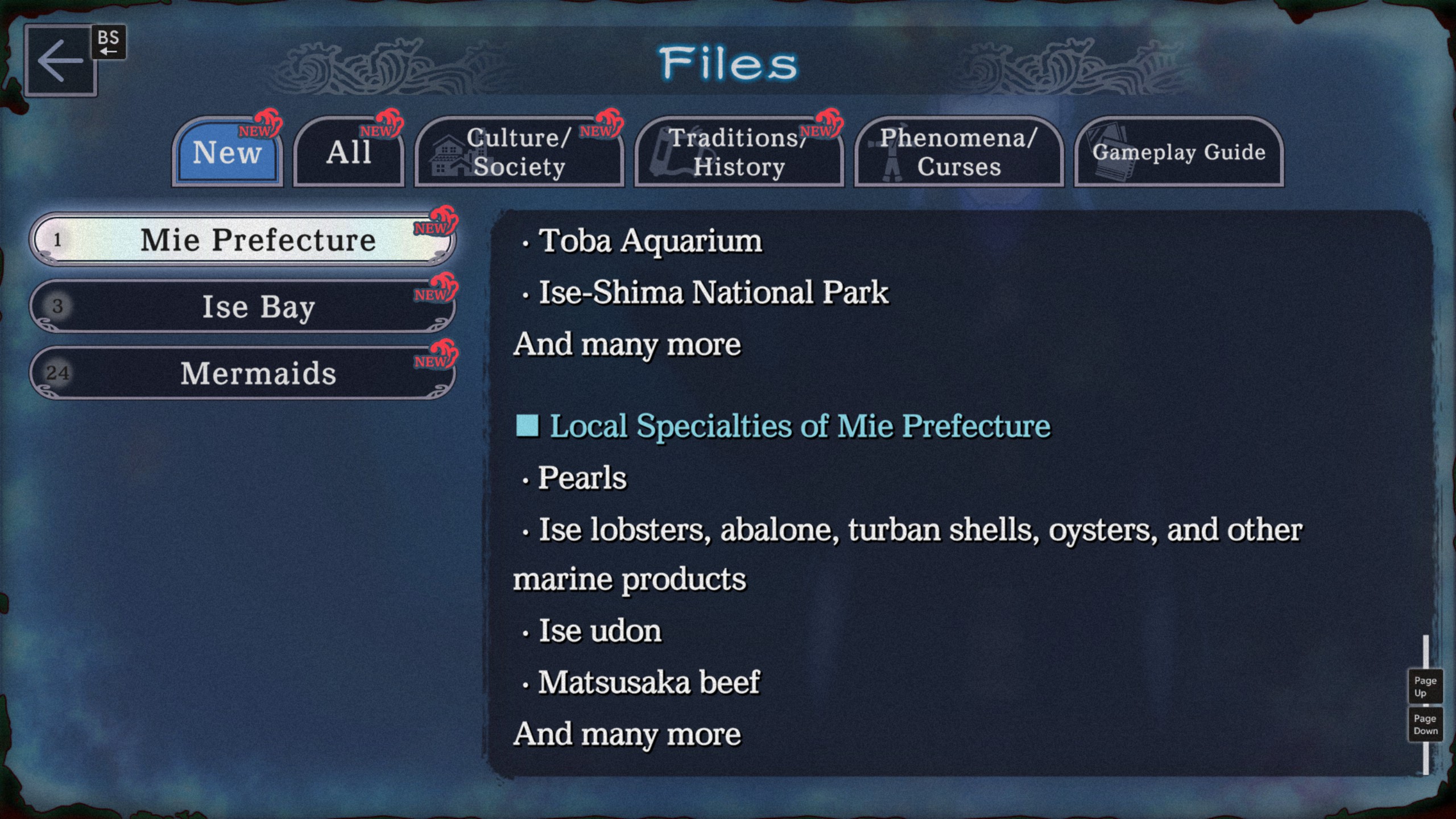
This second entry of Paranormasight continues the precedent of providing players with extremely well-done journal entries that gradually unlock via story progression. The Mermaid’s Curse provides detailed descriptions of the backgrounds of characters and locales, along with a treasure trove of historically relevant information. Once again, the Paranormasight creative team is very open with their love of the occult, no matter where it’s located, and are more than happy to provide educational lessons along the way.
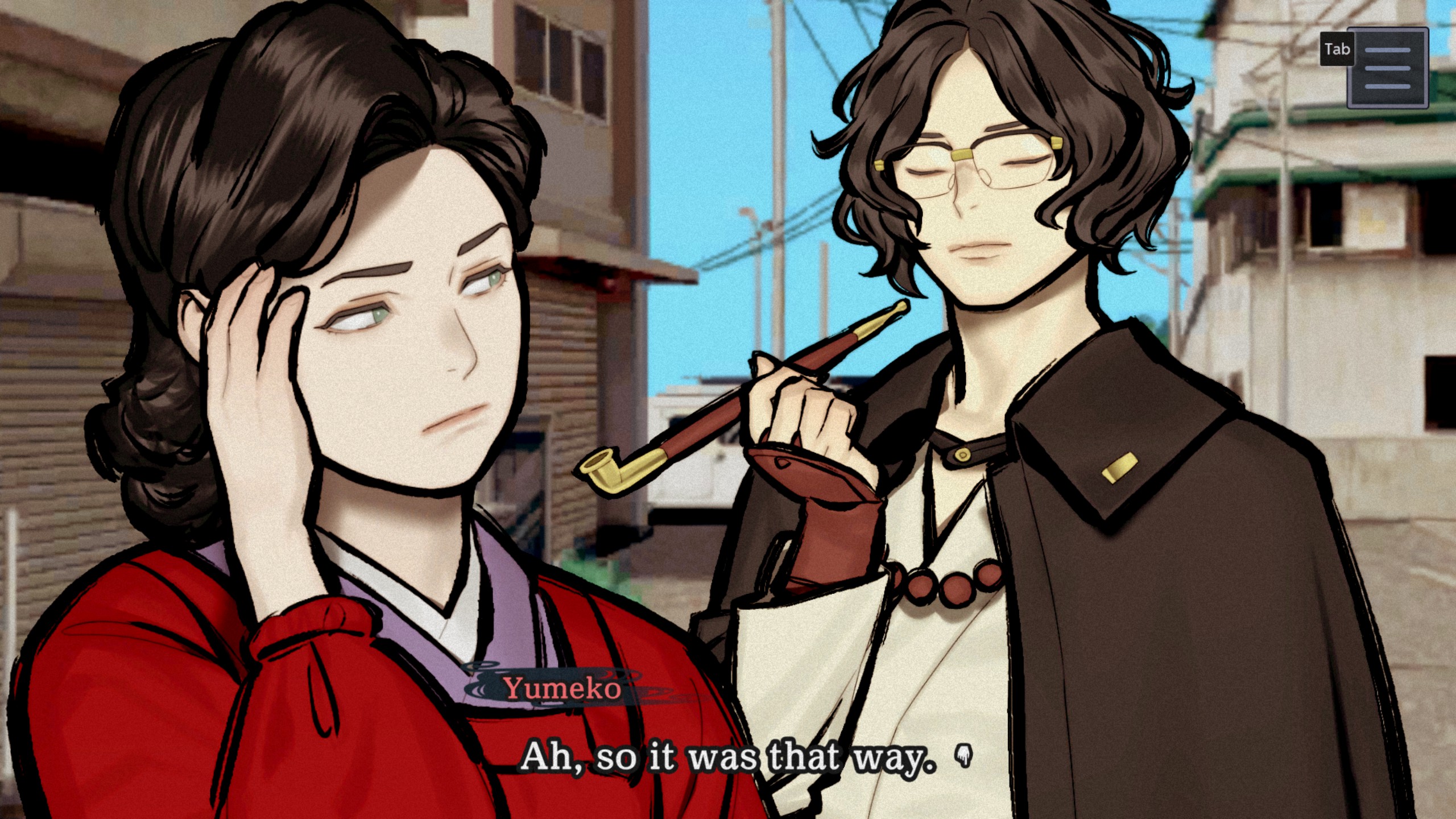
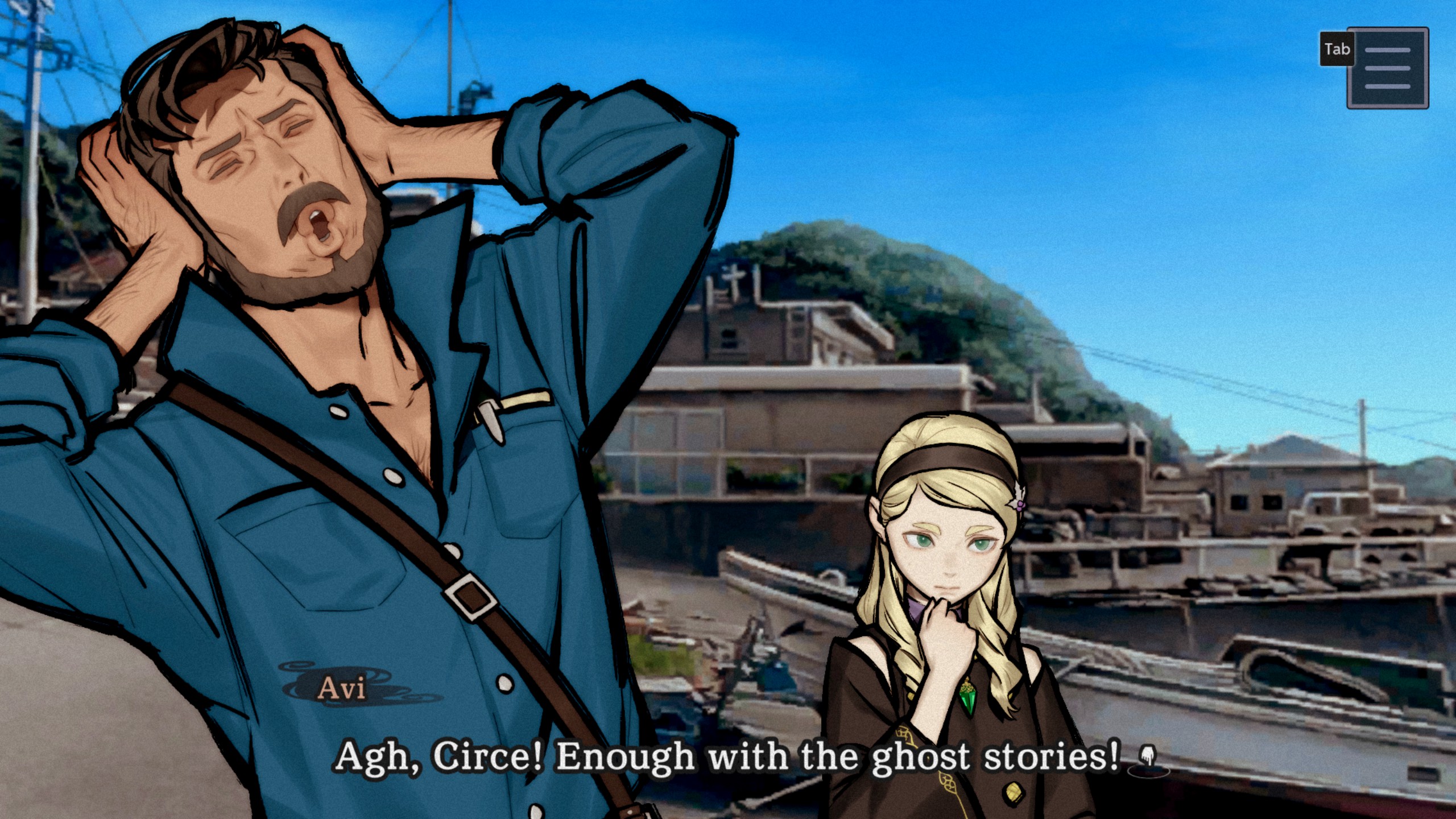
I couldn’t stop admiring all the visual upgrades to Mermaid’s Curse as I played it. Perhaps thanks to the success of Seven Mysteries of Honjo, the Paranormasight team seems to have received more resources in the development of Mermaid’s Curse. Characters are noticeably more expressive throughout dialogue exchanges, and the camera choreography is much more varied.
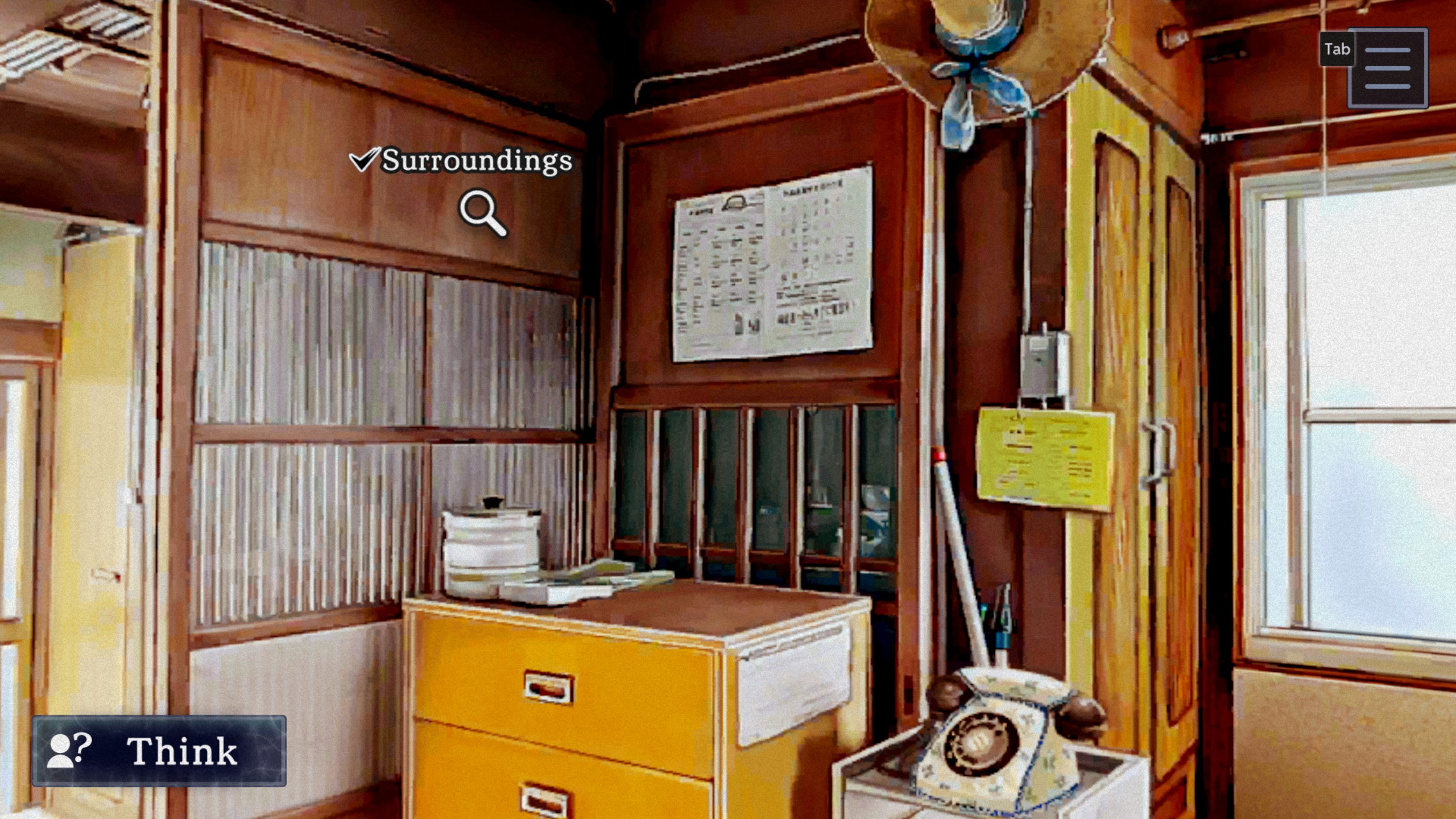
The 360-degree panoramic fish lens perspective feels more refined as well. Part of this is due to a shift in its location and premise. Much of the first Paranormasight occurred during nighttime and possessed a light filter over its scenes to complement its novel period-piece presentation through a retro television.
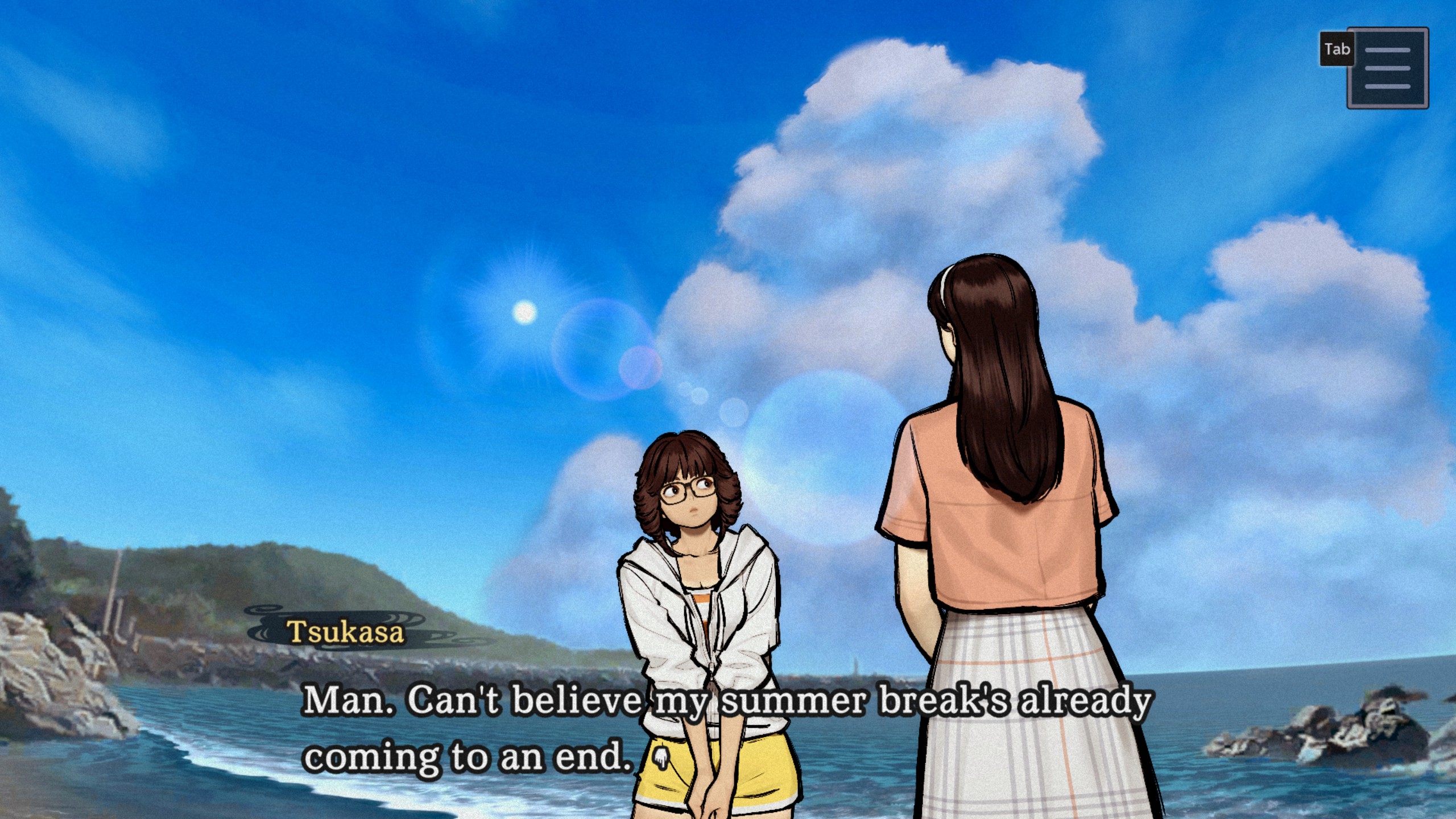
Now, many scenes are set during the daytime compared to the first game, and while it’s still set during the 80’s, there isn’t a retro television aesthetic that justifies placing a light visual filter over it. The unique stylized backgrounds involving touched-up photography of real-life locations to give them an “illustrative” look pop out a lot more due to these alterations in time, place, and aesthetic.
Another consequence of departing from Seven Mysteries of Honjo’s old TV look is that the HUD and UI received updates, too. Previously, accessing the menu would be accompanied by sound effects and scene transitions as if it were turning on and switching the channel on an early TV; Mermaid’s Curse now appropriately presents its menus with a water-themed coat as if the player is swimming through its menus.
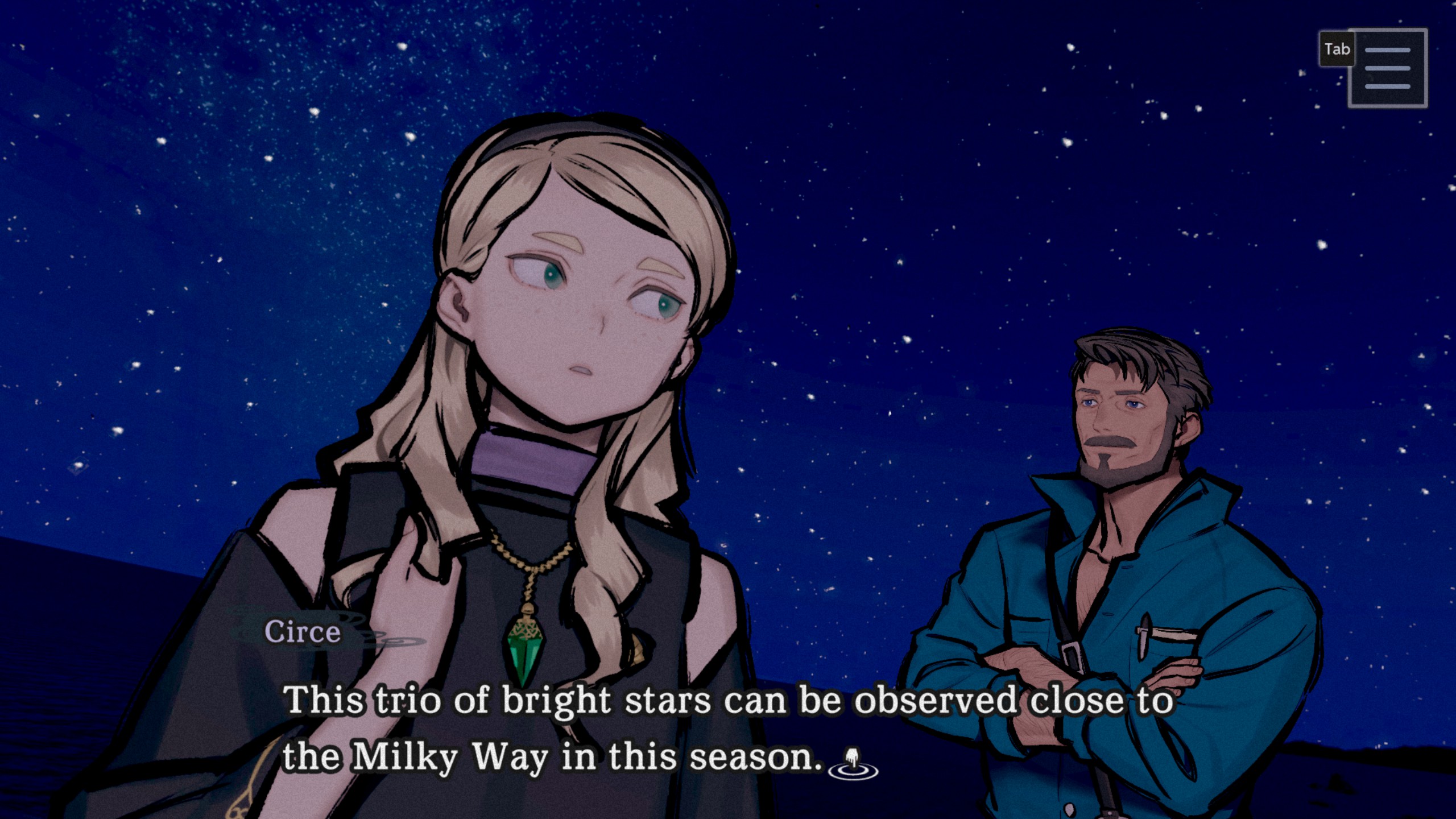
The Mermaid’s Curse provides a different tonal flavor of Paranormasight. Seven Mysteries of Honjo was filled with tense, sometimes horrific, encounters with several Curse Bearers that made players fearful of the night and provided a needed respite during the daytime. Its ensemble was largely composed of acquaintances, coworkers, and convenient strangers.
Meanwhile, a significant chunk of the cast in Mermaid’s Curse is part of a community. Yuza has a small group of friends that he hangs out with, and they are all part of the small town living on Kameshima itself. The Mermaid’s Curse emphasizes much of its narrative direction toward the relationship people cultivate with the land they live on.
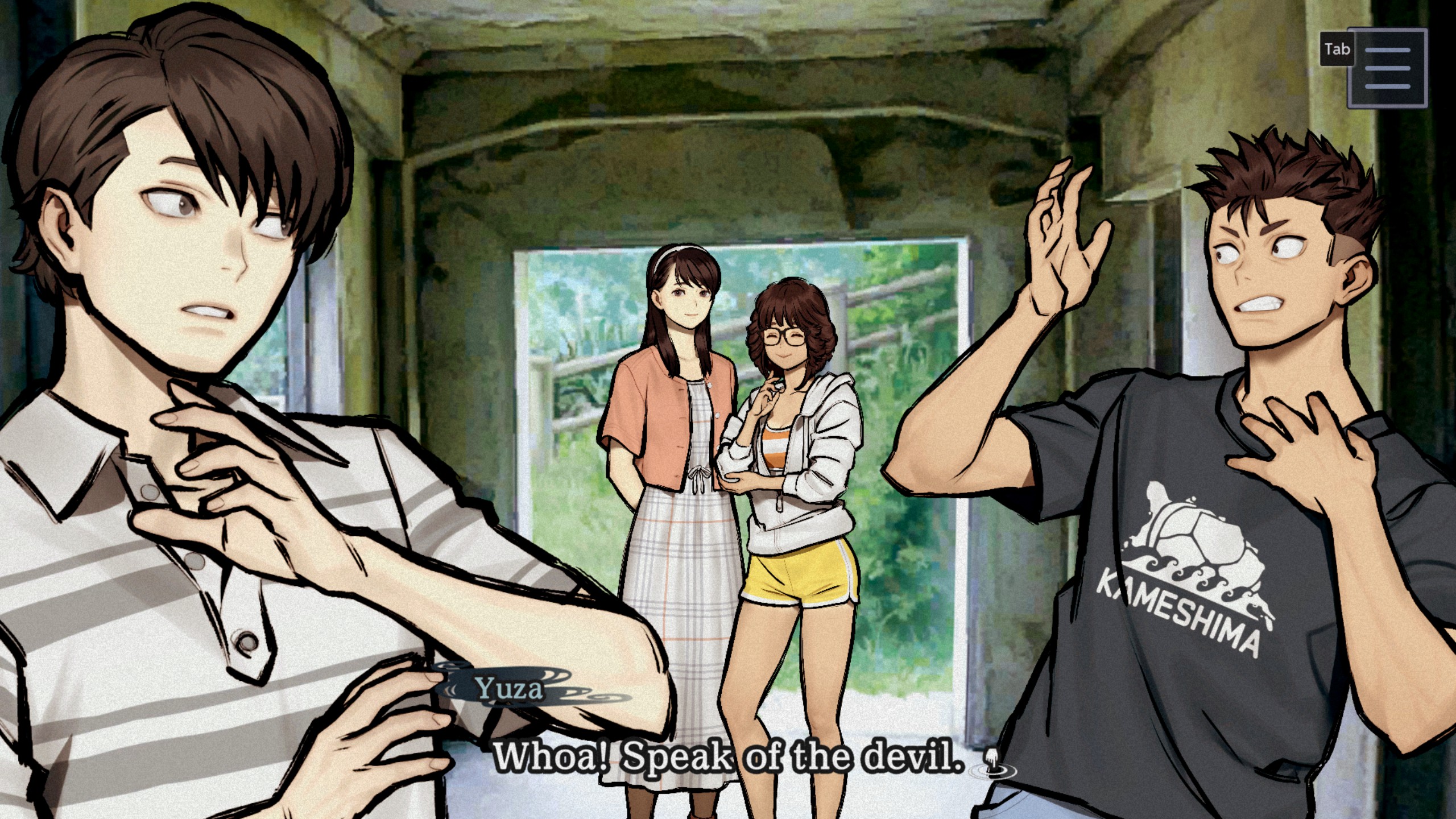
While there are still some horror elements in Mermaid’s Curse, it’s relatively less of a horror title than Seven Mysteries of Honjo. I’d call much of its cadence more along the lines of a deliberate calm before the storm, instead. There’s a gradual build-up of dread that it wants to instill into the player. Even though there are many peaceful scenes at first, there’s a hint of lingering discomfort that often left me restless.
I think that’s the biggest change I had to make peace with coming from the original Paranormasight. The Mermaid’s Curse is a less scary game to me overall, but I think I’m ok with that. Its nonlinear flow and pace work against it at times, though.
Sometimes, throughout certain dialogue exchanges, there will be a prompt at the top left corner to press a button to unlock a Recollection story chapter. These open up prologue story scenes either for the current protagonist or for another character. Much of the early flow of Mermaid’s Curse felt like I was going through the story backwards, since these Recollection sequences kept unlocking other characters and chains of events that led up to how they became involved.

This itself didn’t necessarily bother me, but there were often frequent, and sometimes lengthy, journal entries unlocking that felt like it dragged the pace down before the story even got going. It oddly reminded me of long nights at the library many years ago, reading supplementary text before starting a research paper. What the Mermaid’s Curse had to share was undoubtedly interesting to me, though I have to admit it was a tad heavy-handed in some spots.
In exchange for scaling back its horror elements, there’s quite a bit more involved puzzle-solving in Mermaid’s Curse. I won’t delve into details to avoid spoilers, but several puzzles are quite clever in how players interact with them. One of them I particularly liked involved seeing through a treasure map. There’s a handful of fill-in-the-blank sections, too, that require some light reading comprehension from journal entries and character profiles. None of them are too complicated as long as players remain vigilant in reading all the supplementary material.
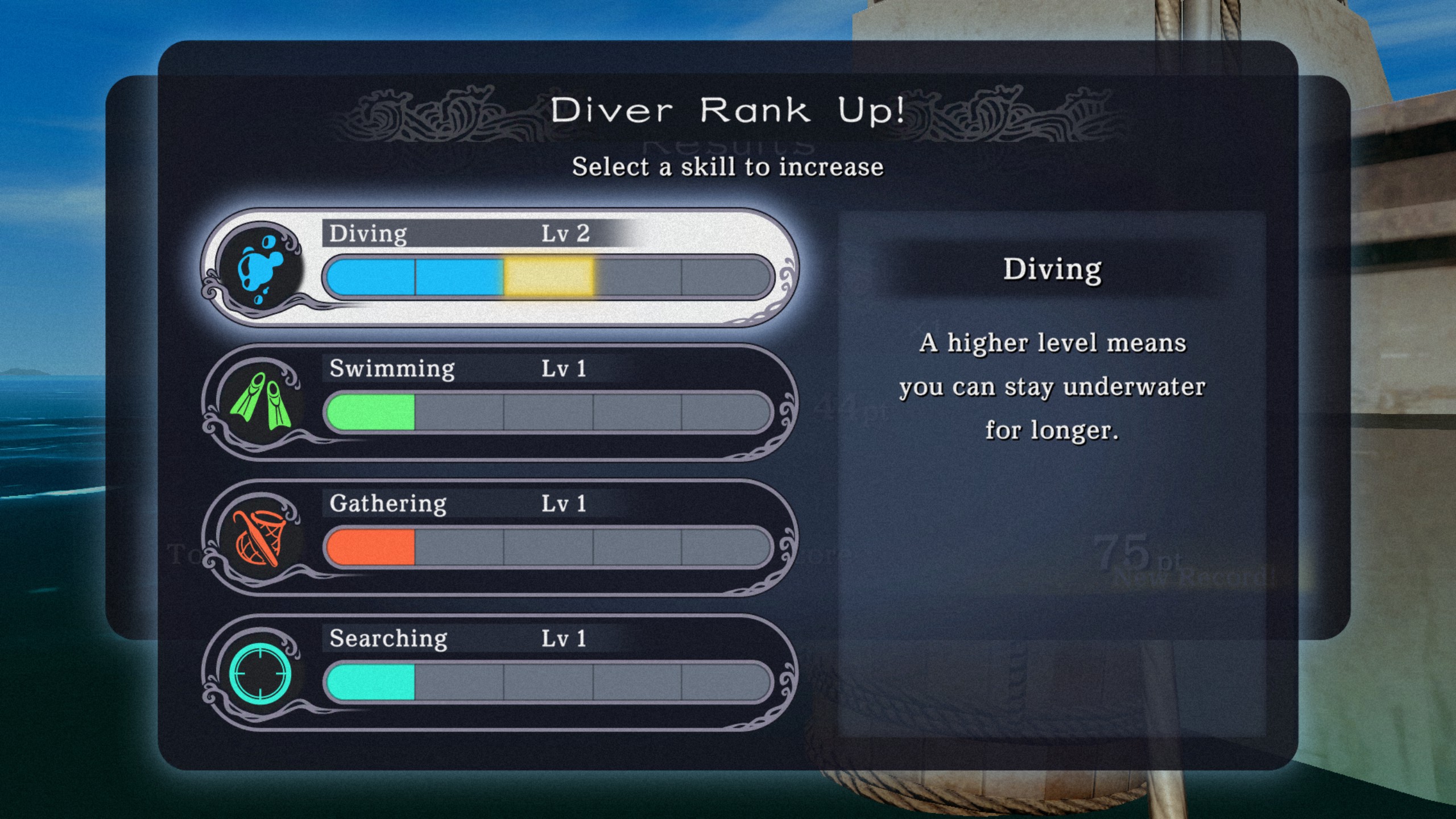
One major new system added to Mermaid’s Curse is a diving minigame for Yuza specifically. Players can repeatedly dive into the sea to collect as many shells, urchins, and other objects of interest before the oxygen meter depletes. Everything that’s collected will be converted to experience points in order to raise Yuza’s Diver Rank. Upon leveling up, players can choose to either improve skills such as reducing how fast the oxygen meter depletes, swifter movement, faster resource gathering, or expanding the range of detecting interactable objects. It’s a relatively simple minigame, and it does have some relevance in the bigger picture, but I obviously can’t divulge how it does.
Part of the reason why I – and many others – grew fond of the first Paranormasight is its awareness as a video game, so it would sometimes utilize breaking the 4th wall in meticulous ways as solutions for players to discover. Mermaid’s Curse continues to employ this feature in brilliantly absurd ways. This is a bit selfish of me to vocalize in a review, but I hope people earnestly try to figure out everything on their own first, as hard as they can, before consulting a guide immediately. A good chunk of what made both Paranormasight games memorable to me is the mental hoops I had to work through to fully solve them.
It took me longer to fully complete Mermaid’s Curse than Seven Mysteries of Honjo. The first Paranormasight installment took me roughly 12-13 hours to complete. On the other hand, my overall playtime for Mermaid’s Curse is somewhat of an anomaly. I suspect the average completion time will be 15-18 hours for most folks – unless they attempt to go for the secret true end without any guide.
Just like Seven Mysteries of Honjo, there is a secret true ending in Mermaid’s Curse that I obviously won’t talk about in detail here. I did want to mention it because it took me multiple hours of trial and error figuring out exactly what needed to be done, so it inflated my playtime by quite a bit… all the way up to a little over 20 hours. Now, I’m not saying this will be the case for everyone, but I truly had to spin up my brain; let’s just say that it wasn’t a pleasant process in trying to figure it out.
Although I quite liked the overall story, there are a few portions of it that didn’t entirely land for me. Once again, it’s difficult to discuss these points in detail in order to keep this review spoiler-free. I appreciated many parts of the narrative in the overall theme it’s portraying, but some of the connective tissue in the underlying motivations felt thin to me. It’s still a remarkable story nonetheless, yet it didn’t resonate with me as much as the first title in several ways.
Lastly, the Paranormasight sound team continues to be phenomenal. They’re starting to establish the identity of the Paranormasight series as they’ve retained some memorable tracks from the first game, such as the title menu theme and a few investigation tracks. Many new tracks complement the more tropical setting, of course, and they’ve found a great balance in instilling hints of eeriness in otherwise carefree scenes that don’t ruin their feel. Maybe they could tone down the number of times a certain thwack sound effect is employed just a smidge, but that’s my only real gripe in an otherwise excellent-sounding game.
Much of what I loved in Paranormasight: The Seven Mysteries of Honjo still applies in Paranormasight: The Mermaid’s Curse. It is a compelling mystery adventure game that tones down the horror aspect of the previous entry in exchange for more involved puzzle-solving segments. I think it is also an extremely tricky game to write about in a pre-release capacity because much of its charm is wrapped up in spoiling surprises. I have a few qualms with how its story comes together in a few spots, but it is a minor blemish in an otherwise extremely great entry in the Paranormasight series again, and I hope they continue to make more in the future.