

Pragmata Review
Exuberant. That’s the single best word that I can think of to describe the feeling of playing Pragmata – an experience simply packed with unbridled joy at nearly every turn. Despite a wealth of long-standing franchises in their catalog, Capcom has also managed to release suprisingly inventive games in the last few years with the likes of Exoprimal and Kunitsu-Gami: Path of the Goddess. To my amazement, that trend is continuing strong in Pragmata.
One of the most unique shooter experiences I’ve ever experienced, Pragmata is a game instilled with an infectious kind of energy that grabs hold early on and never lets go, through both its ingenious combat system and surprisingly lovable and emotionally resonant main duo – the same kind of energy you might find in the best Pixar films. It’s yet another example from Capcom of the importance of fresh, genuinely inventive ideas in the video game space, and a game that I feel will ultimately go down as one of the defining releases of the year.
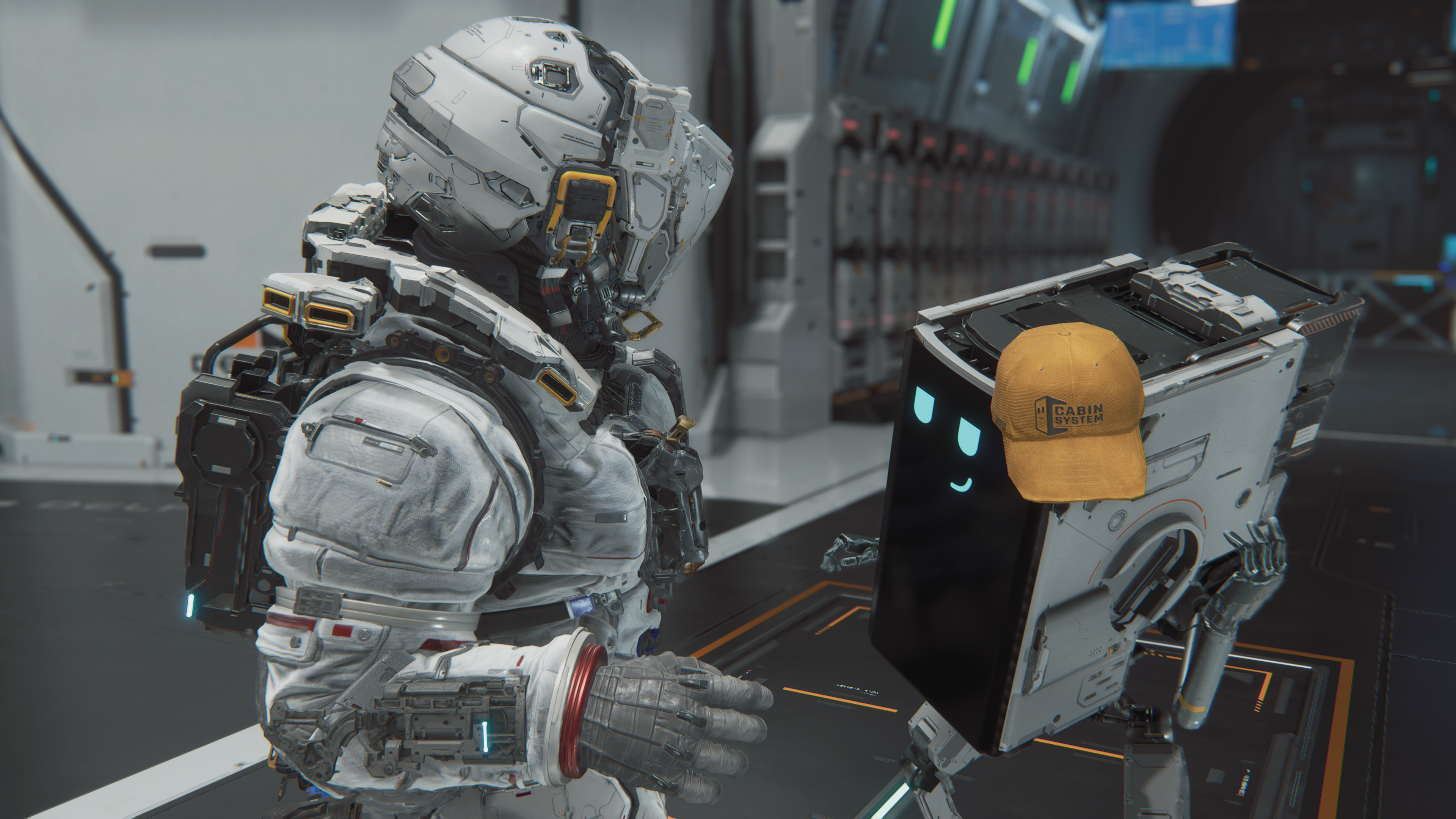
Pragmata is a sci-fi shooter that takes place in an unspecified near-future. You play as Hugh, a member of an investigation team sent to investigate a lunar research facility that’s gone dark. As you might expect, things quickly go wrong as Hugh learns the facility’s AI management system, IDUS, has gone rogue, and none of the actual humans assigned to the base are to be found. Lost and alone, Hugh runs into a bizarre childlike android named Diana, and the pair have to band together to fix IDUS and find a way to return to Earth.
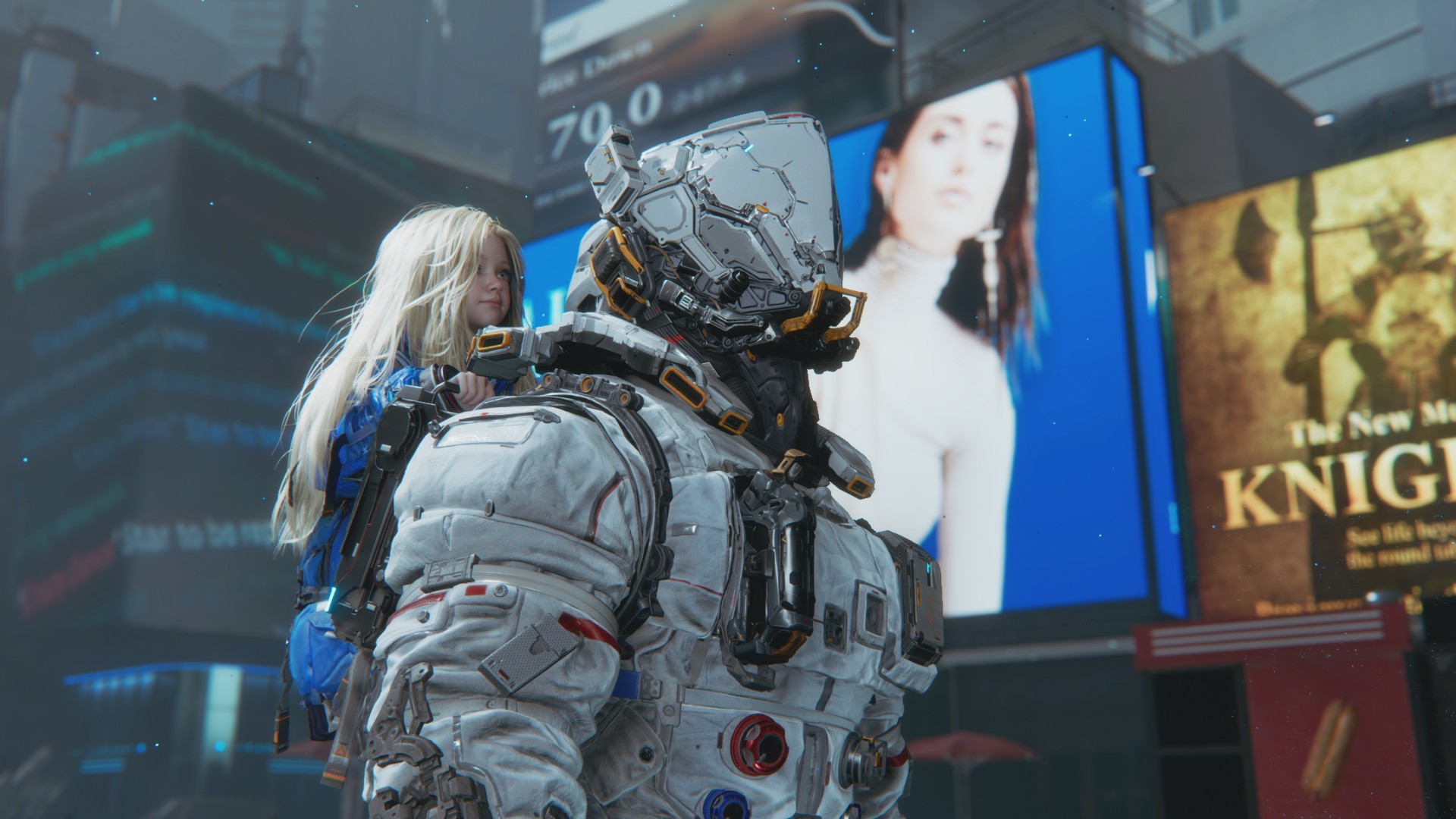
That setup fully allows Pragmata to dive into a story of found family and finding camaraderie in souls that are lost, just like you. The game’s narrative is intentionally vague at first, stringing along a core mystery that lets you uncover bits and pieces as you progress, through both the main story and a wealth of optional notes and recordings you can find. There’s a lot of sci-fi mumbo jumbo to unpack, and a few fun twists along the way.
And while the core baseline narrative can be fairly predictable, the beating heart of what makes Pragmata so special is the budding relationship between Hugh and Diana – a genuinely heartwarming dynamic that made me cry more than once by the end of it all.
I genuinely mean it when I say Pragmata feels like one of the closest approximations of a Pixar movie in video game form. There’s a specific kind of spirit to Pixar’s films, a sort of childlike sense of wonder that meshes with a more adult comprehension of emotional depth – it’s what has made the studio’s films so enduring to audiences of all ages. That same kind of palpable energy seeps into every aspect of Pragmata, making an otherwise fairly standard story something special. Throughout the game’s 12-15 hours of runtime, you’re drip-fed bits and pieces of Hugh and Diana’s respective stories, while the two clearly learn more about life from each other.
Diana is undeniably charming, filled with an infectious energy that both Hugh and the player can feel. But, astoundingly, Hugh himself might be the even bigger surprise, as a hilarious kind of everyman, that super nice dude you might meet at the bar who randomly says something disturbingly profound that you remember for the rest of your life. In many ways, that everyman spirit, to me, makes him feel like Ethan Winters 2.0 – a protagonist that faces the ever-increasingly ridiculous plot with a sense of profound exasperation. Amusingly, Hugh is even a “Systems Engineer,” just like Ethan.
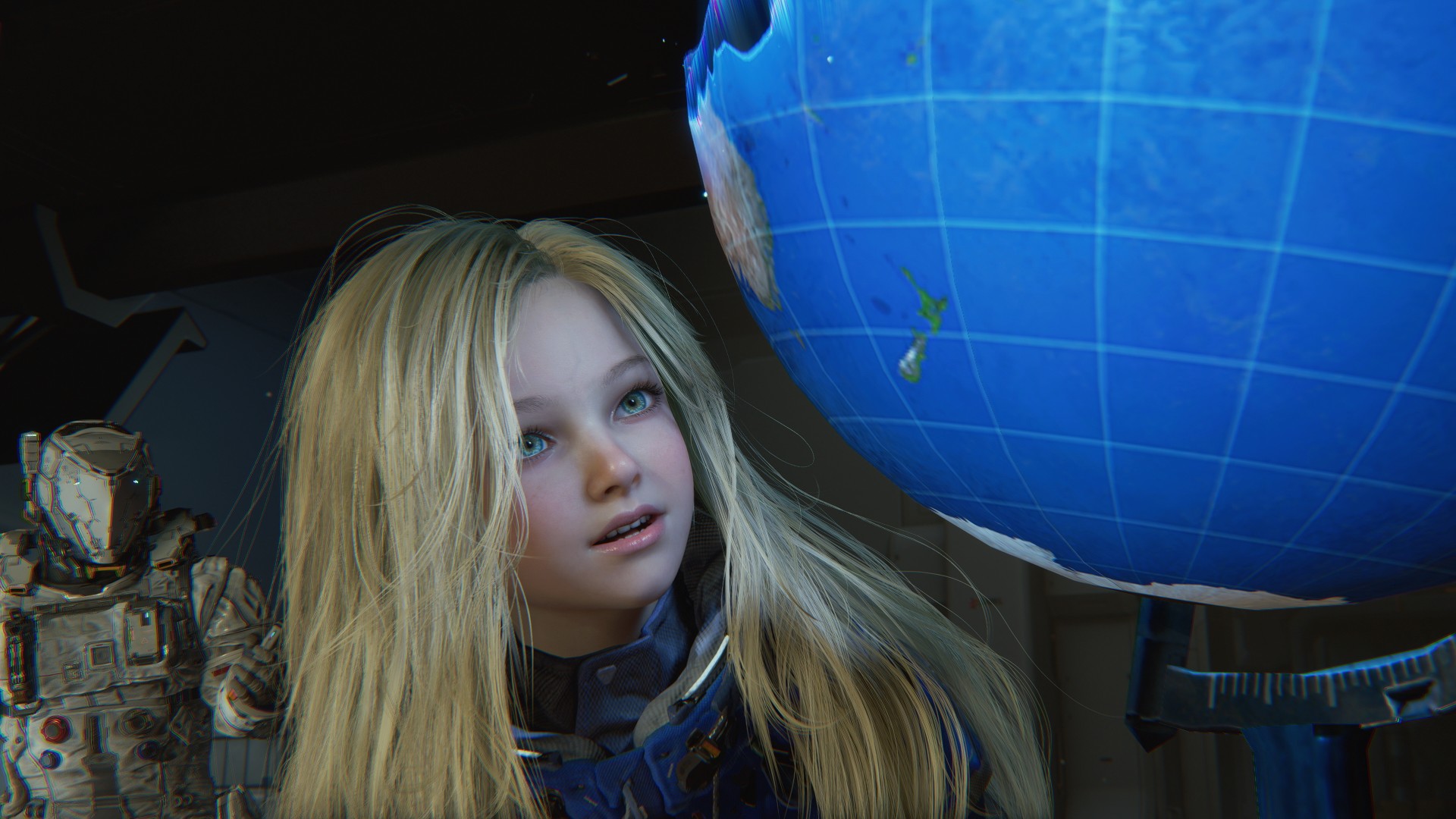
At every opportunity, Pragmata takes the time and care to meaningfully flesh out Hugh and Diana’s relationship – not afraid to slow the action down for quiet moments of introspection. And that methodical character building undeniably has an effect on the player, integrating you into the duo’s story and their place in this world.
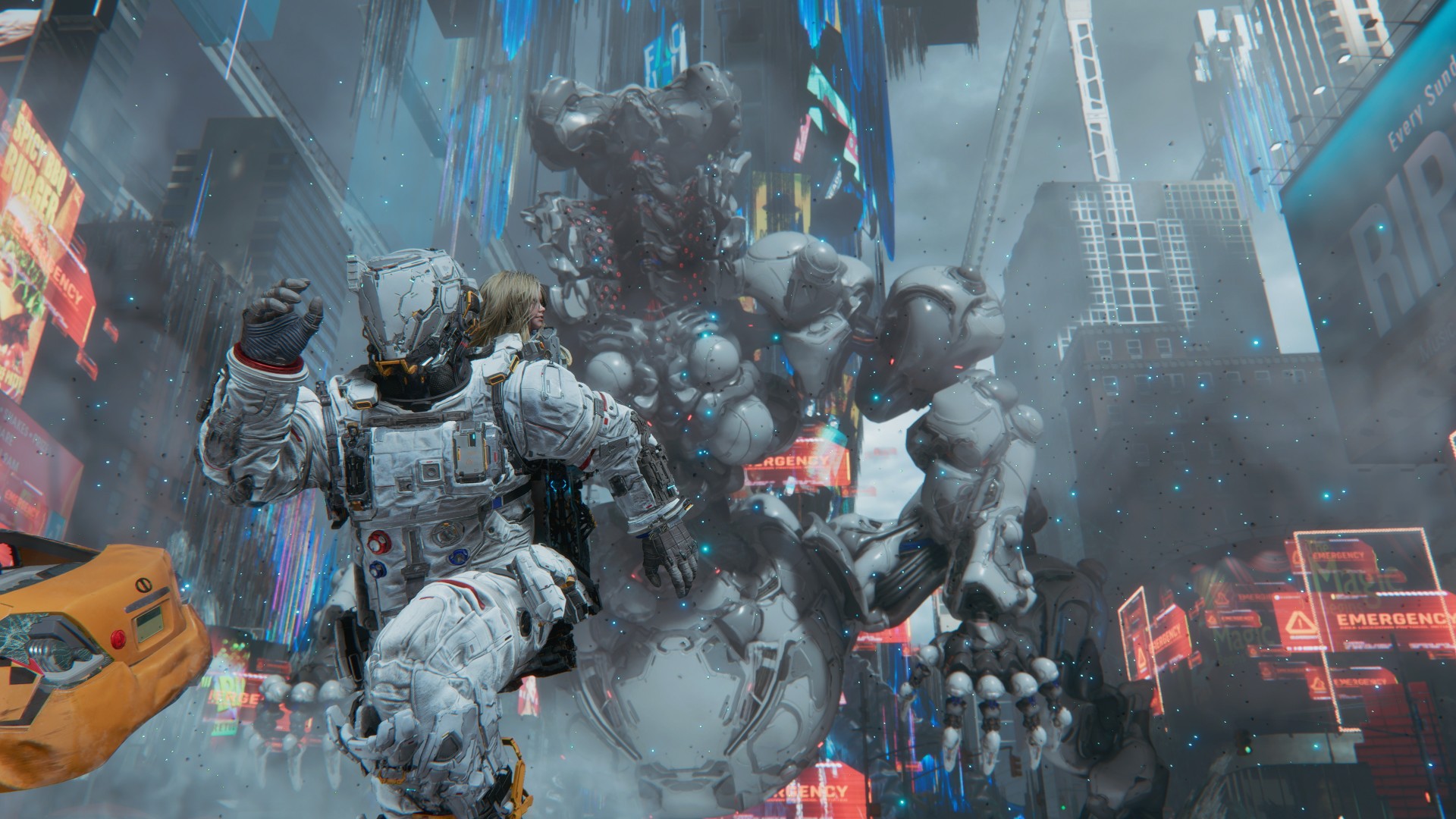
The other element that really helps Pragmata stand out is its fiercely unique visual style, which I’d describe as more NASA punk than anything. There’s a kind of chunkiness to the world of Pragmata; big and bulky technology that feels reminiscent of the space race boom - a sort of nostalgic vision of how technology could have turned out. But that element is mixed with the rampant AI of the lunar base, a facility where an element known as “Lunafilament” can be used to essentially 3D print nearly anything – cars, buildings, even food. As the facility goes haywire, this creates a twisted version of Earth, where the AI essentially has created an in-progress version of what something like, say, New York’s Times Square is “supposed” to look like.
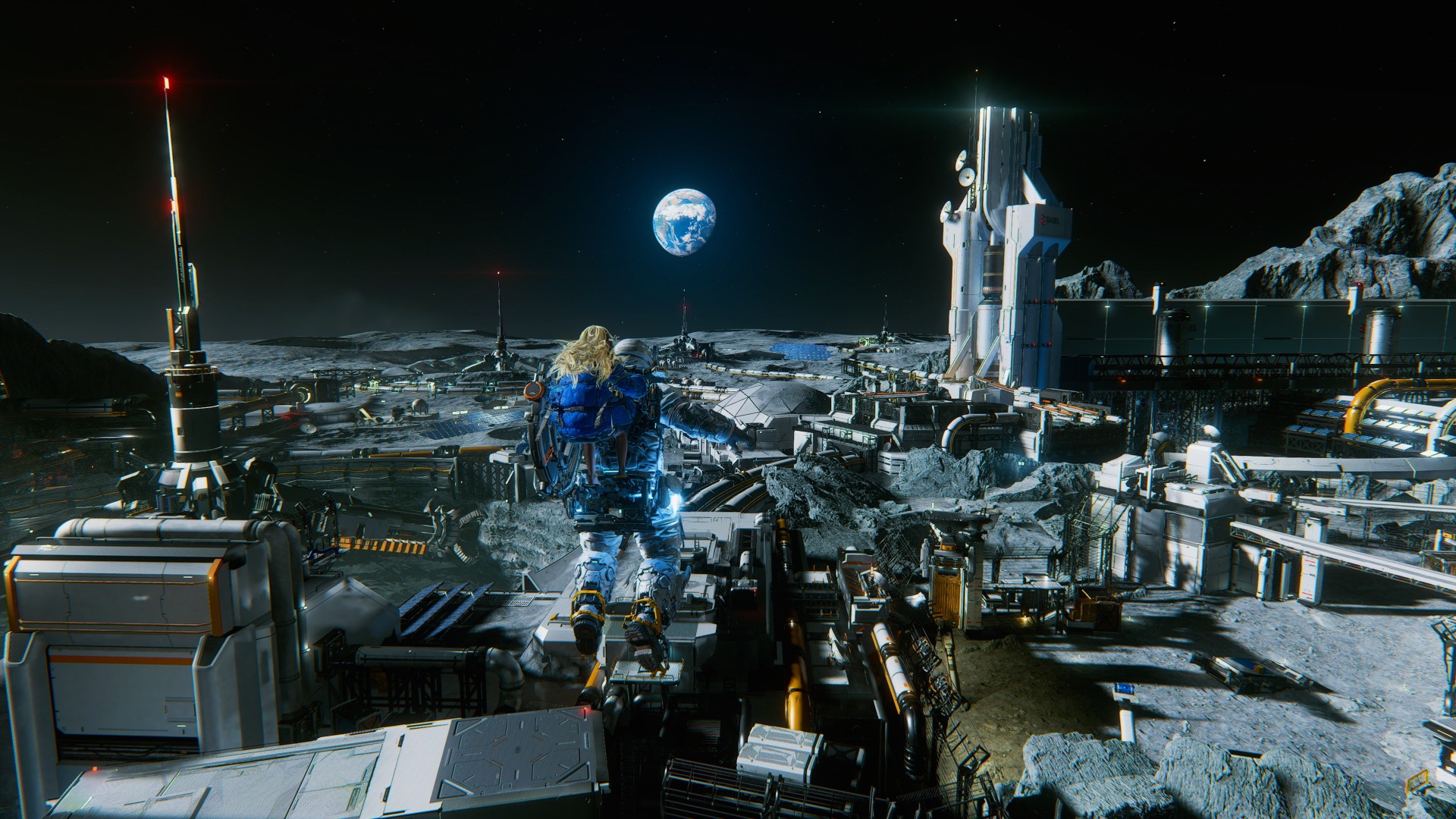
That character work and worldbuilding alone could make a good game when coupled with compelling systems, but Pragmata’s combat and underlying gameplay are also utterly exceptional – even better than its lovable duo. Although they’re very different games, the sense of adrenaline and satisfaction Pragmata imparts heavily reminds me of one of my favorite shooters of all time, Vanquish. I largely believe that’s because of how Pragmata engages your brain in multiple ways, almost massaging it with interconnecting gameplay systems.
The simplest description is that Pragmata is a third-person action puzzle shooter. What that means in practice is that you’re essentially juggling playing as Hugh and Diana at the exact same time. Hugh takes the role of the standard shooter fare, able to dodge with his suit’s boost, use a variety of different weapons, etc. Diana rides on his back and, as an android, can “hack” enemies to expose their weaknesses, via a grid-based mini-game where you open nodes. All of the bots you fight on the moon are heavily armored, meaning you need to hack them to open them up, before causing damage with your weapons.
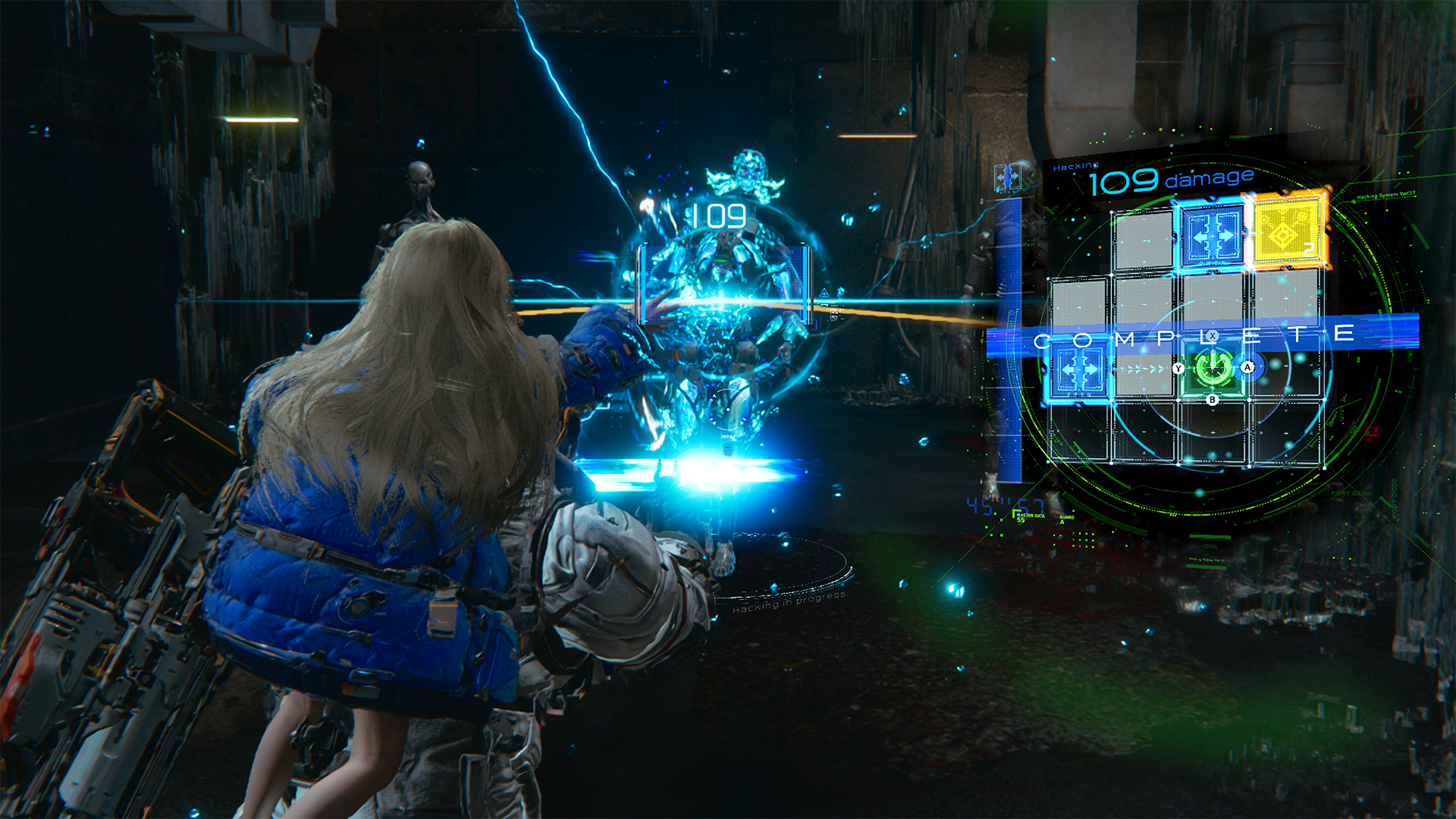
That’s the basic premise, and the idea is that you need to navigate Hugh around the battlefield while simultaneously juggling Diana’s hacking. It’s a system that feels surprisingly unique at first blush, but my biggest fear going into Pragmata is that Capcom wouldn’t be able to meaningfully grow the systems across an entire game. And I’ve never been more pleased to be completely wrong.
Across nearly the entire experience, Pragmata finds fascinating new ways to add little wrinkles and changes to that core system. You can equip hacking nodes that give various kinds of boosts if you move through them on the hacking screen before hitting the core – maybe you’ll restore a bit of health, or spread your hack to other nearby enemies, or confuse an enemy to make them attack their own.
Hugh gets a fantastic variety of weapons that all feel meaningfully different. The Statis Net lets you shoot an energy field that locks enemies in place momentarily, a drone attachment sends out a dozen little robots to pepper enemies with blasts, and there’s the Sticky Bomb, which literally eliminates lines from the hacking grid to momentarily make hacks easier. There are also other gimmicks and environment elements added in, laser fields you can use to strike enemies, and Zero-G environments where your movement is weighted down and a giant mechanical worm stalks you. All of this is mixed with nicely varied enemy design, providing a wealth of different threats that can exploit your abilities in one way or another.
Pragmata’s combat is admittedly complex and initially hard to wrap your head around at first, but once it all clicks, it’s satisfying in a way few other games can match. Getting locked in a room with a dozen enemies and furiously hacking your way through it all is genuinely thrilling, over and over.
A big part of that is how tightly paced Pragmata is overall. It’s a generally linear game that has some degree of exploration, where you can uncover upgrade materials and collectibles – it very much feels like one of those semi-linear PS2 games, in a good way. You have a hub that you can return to called the Shelter, where you can upgrade Hugh and Diana’s stats, use Lunafilament to purchase weapons and upgrades, take on training materials to gain materials, and give Diana gifts.
There’s a really nice ebb and flow to the progression of Pragmata, consistently unlocking new weapons, upgrades, and skills that shake up the game’s formula – but never so much that it completely breaks from the core. That couples with the nice flow of the story to create an experience that feels completely engaging from start to finish, with not even a minute that feels like wasted time. And on top of that, there’s a fairly robust piece of post-game content that unlocks after the main game, for anyone who really wants a challenge that requires you to master the game’s systems.
I simply cannot overstate how well the various puzzle pieces of Pragmata click together, how effortlessly its joyful story and gameplay go hand-in-hand to create something that’s more than the sum of its parts. There are certainly minor quibbles you can find here and there, the occasional odd boss battle that feels overwhelming, or a standard main narrative. The core puzzle-shooter idea is rock solid on its own, but it's the little embellishments and advances that the game layers in that make it truly something special.
In nearly every single regard, Pragmata feels like such a breath of fresh air, a truly innovative game that shakes up the shooter formula in profound ways. And ultimately that’s exactly what I want from big-budget games from a studio like Capcom, something that feels truly fresh and original – dares to take a chance on something subversive and stick with it.