

Starbites Review
My immediate takeaway after finishing Starbites is that I was simply impressed at how much this turn-based RPG punched above its weight. Although its first few hours were its weakest, Starbites grew on me a considerable amount the more that I played. By the end, I adored my time with it, despite some rough aspects here and there.
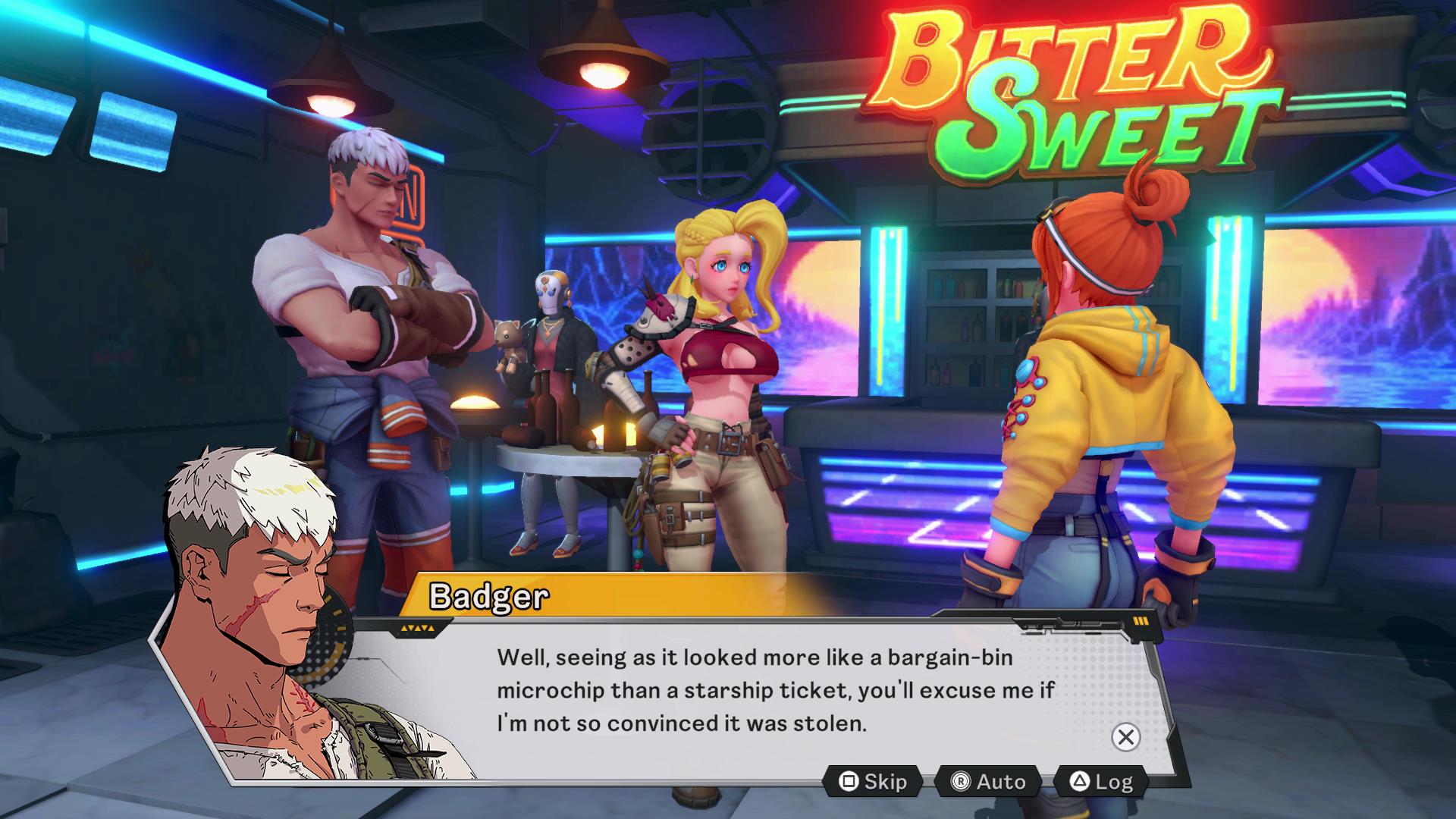
Starbites revolves around a struggling salvager named Lukida on the barren desert planet of Bitter. She’s trying to scrounge up enough funds to leave her hometown of Delight, because she’s fed up with the town’s overseer, Fennec, exploiting her labor. Fennec continually accrues a financial debt over Lukida – one that Lukida could never hope to pay off.
The game kicks off right as Lukida obtains a ticket to a ride off Bitter. After she informs her friends Gwendoll and Badger about it, things predictably go awry as she is ambushed by a mysterious mech. After losing to it in battle, Lukida wakes up back at Delight and notices that her ticket to a better life has now gone missing.
Now, this wild goose chase to find Lukida’s missing ticket is where I initially thought the overall story of Starbites was heading. I was wrong. Soon enough, there’s a certain turning point in the plot where events begin to go far beyond this initial premise. While I had an inkling about the potential directions that Starbites’ plot could take, I didn’t expect certain key moments to surface in the way that they did. While I obviously won’t spoil these story beats, it marked the beginning of when I began to become more invested in Starbites’ tale.
Although its story does begin to pick up further in, the ebb and flow of Starbites’ narrative is a tad slipshod when it comes to providing a reason why Lukida and her party must repeatedly travel through map zones that they’ve previously traversed. One of the most significant downfalls throughout Starbites is the constant backtracking in both the main story and side quests. There will be multiple times in which players have to retrace the same routes they just traveled for a new fetch quest that opened up.
Fast travel points are a bit on the scarcer side, too, which makes this issue more prevalent. Though there are a healthy number of save point stations throughout the map zones, they don’t function as fast travel terminals. Only the small handful of town hubs are fast travel points; players can fast travel back to them at any time when they are out on the field, but must manually traverse back to whence they came.
Enemy mobs roam the desert planet, and running into one initiates a turn-based combat encounter with up to three party members. Each character has a HP bar and SP bar for their skills, along with a DH (Driver’s High) gauge. The DH gauge is normally filled up by attacking and taking damage. When it’s full, that character can activate it even during another party member or enemy’s turn, so they can act immediately. Plus, the DH state enhances their damage and skill properties depending on which upgrades that character has picked up on their skill tree.
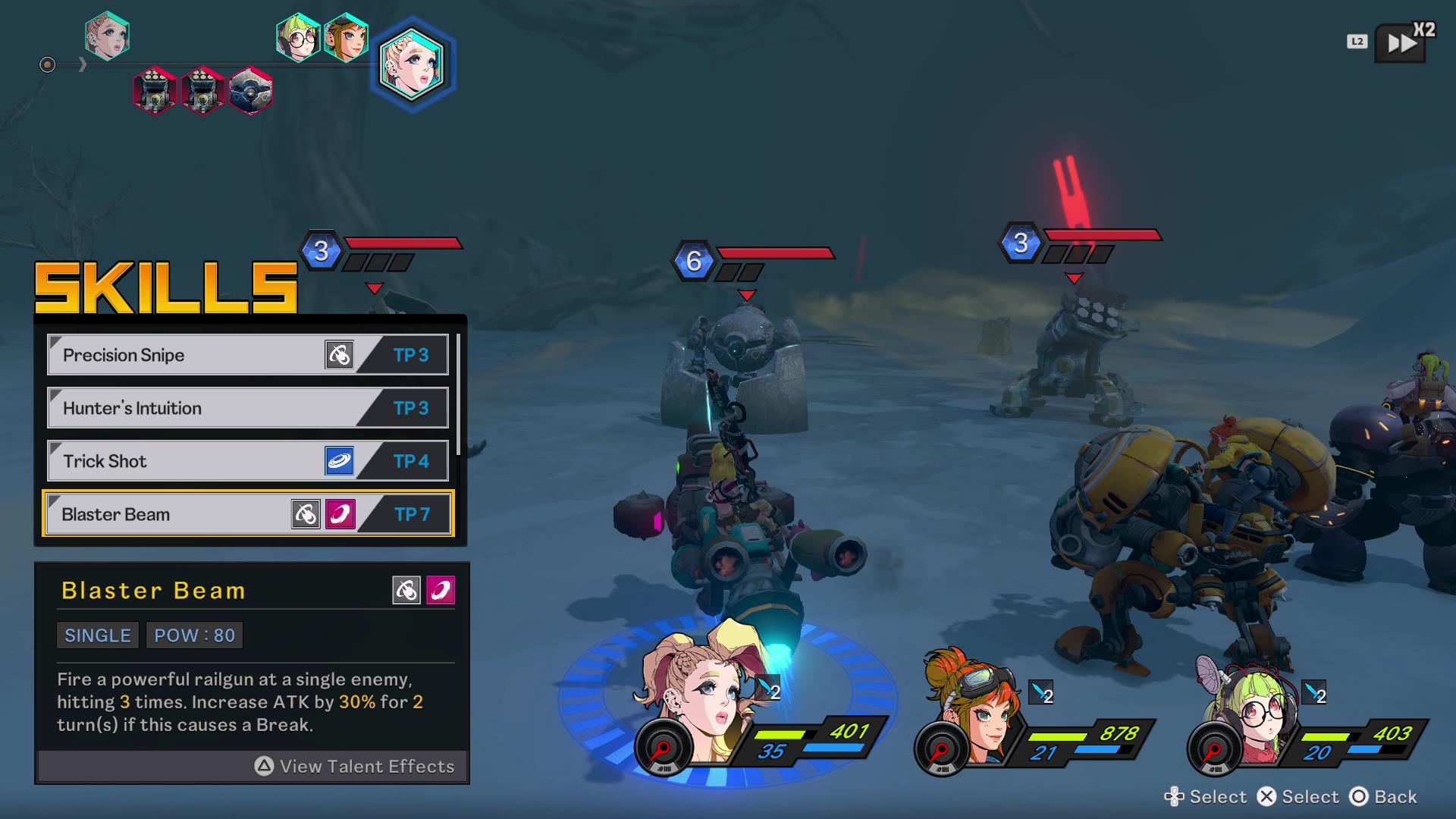
Ikinagames may have been a little bit inspired by how Octopath Traveler handled its enemy weakness system, because Starbites conveys it in a similar manner. When a player encounters an enemy for the first time, there will be multiple blank slots underneath its HP bar representing that their weaknesses haven’t been uncovered yet. Almost every attack and skill has an attribute such as Cut, Thermal, Plasma, and so on. Trial and error will expose enemy weaknesses over time, though a specific party member eventually learns a handy skill that unveils them all at once.
Also similar to Octopath Traveler, a numerical shield value depletes every time a weakness is hit. When it reaches zero, the enemy will enter a Break state, and their position in the turn order timeline is pushed further back. They will receive increased damage when broken. Several skills hit multiple times to deplete the shield value faster, and some skills can even be upgraded to possess a second attribute. If a single skill happens to hit an enemy that carries both of its attributes as weaknesses, it will double up on reducing the shield value.
The positional formations of enemies in Starbites’ battles matter a lot, as well. It isn’t simply three to five enemies in a straight line right by each other all the time. Sometimes it’s two groups of two enemies with a gap in between each of them, or three single enemies that are spaced out from one another. These formations cause AoE skills to have a more situational utilization, rather than being the default answer to deal with every combat encounter with trash mobs swiftly.
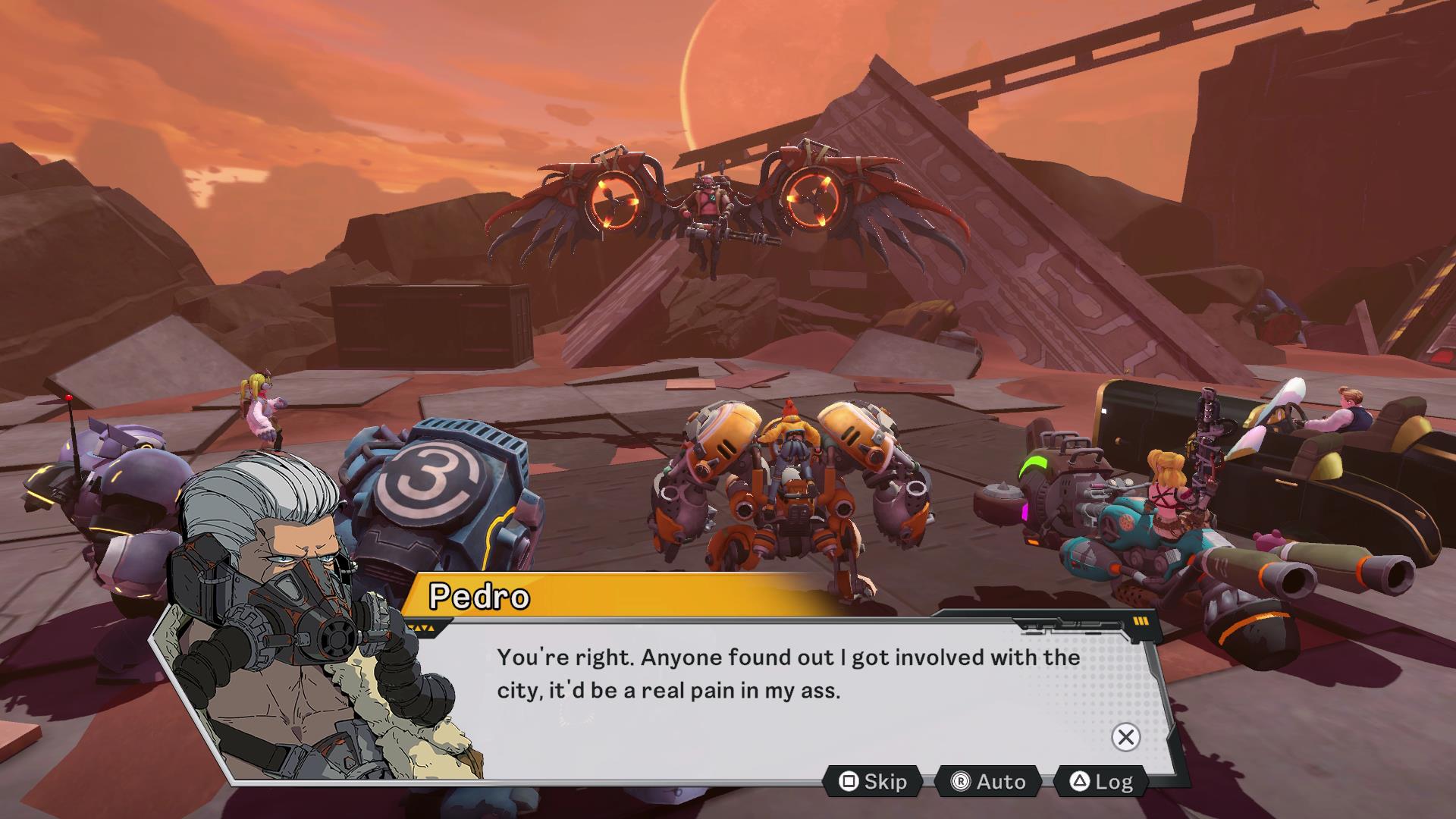
While Starbites’ battles may start out simple and easy in its first few hours, later bosses have mechanics that play around with its systems in a puzzle-esque manner. I appreciated that there is some bite in its bosses, because I found much of the game to be easy up until then. Three difficulties are available, and they can be switched up at any time, though.
There is a lot of flexibility and versatility in how characters are built. They gain one skill point every time they level up. These can be invested into their skill trees that power up their skills, stats, and the functionality of their moves when in the DH state. Buffs and debuffs are very valuable in Starbites, which I appreciate. Basic attacks even replenish SP a little, and can be upgraded to restore more SP along with HP. Skill tree respecs are completely free, too! They can be reset at any time, so exploring different playstyles and party synergies is painless.
Plus, each character’s mech that they ride into combat has swappable equipment, including their weapon, upper frame, lower frame, and sub frame. Equipping different frames can sometimes change the appearance of the mech, which leads to some amusing Frankenstein’s monster-esque designs – though this feature is disappointingly not as robust or universal as I would like. Some mechs, especially the ones from later party members, are rigid in what frames alter their appearance.
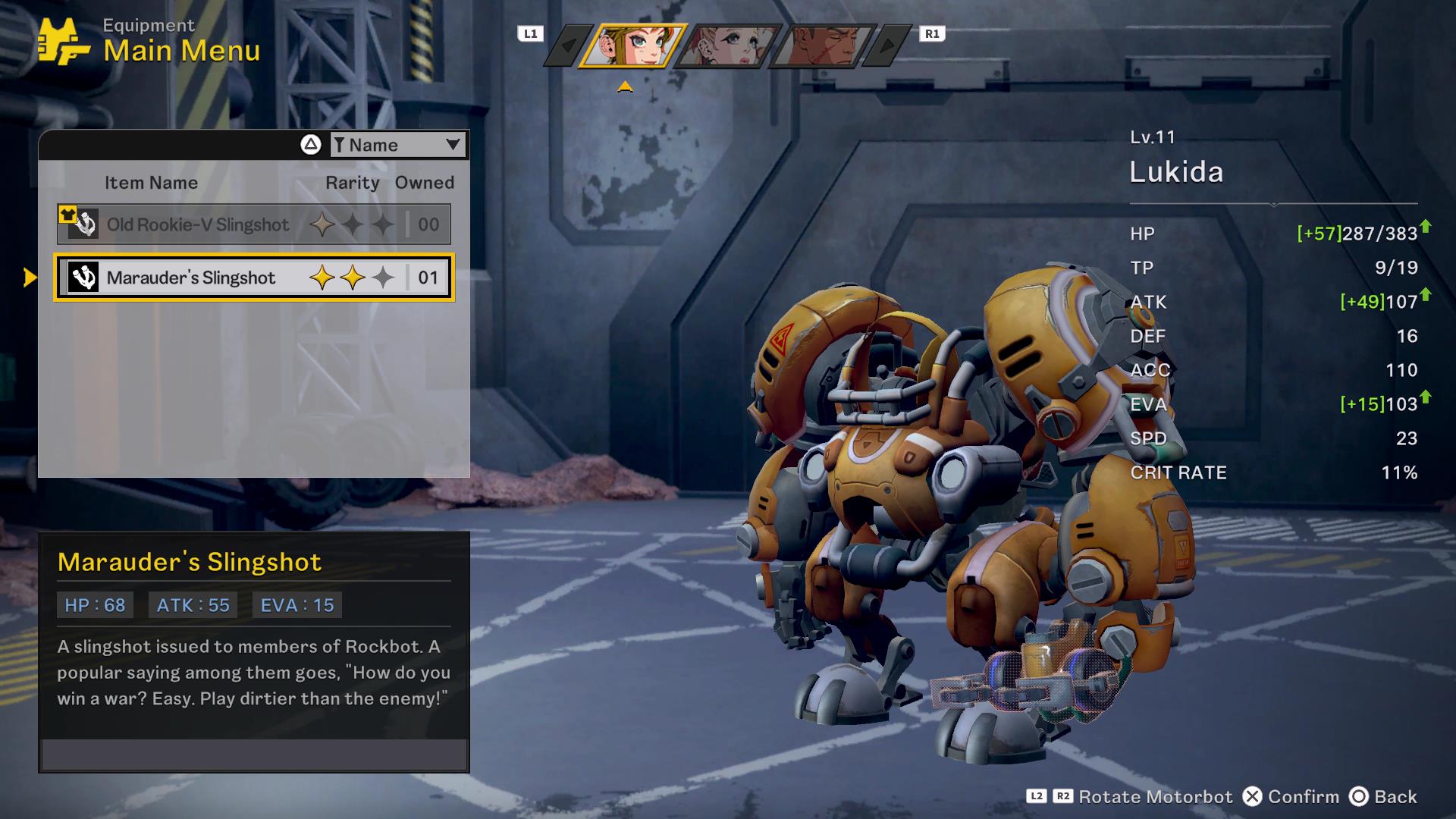
Engines and cores are additional pieces of equipment that can sometimes define a character’s build. Different engines have a set number of cores that can be equipped, and only one type of core can be equipped onto an engine. For instance, an engine may specialize in enhancing Crit Rate and can support up to two cores. I can equip a core that automatically activates as the battle begins, which increases my attack by 40% in the first two turns. Since I have a core that activates on battle start, I cannot equip another core that also activates on battle start anymore. Instead, I would have to equip cores that activate differently, such as ones that activate when that character’s HP is depleted, or one that can proc when a character uses a basic attack.
Starbites is at its best when all its party members are assembled, and players have free rein to begin tinkering with a party composition that suits them best. Party members not on the frontlines still earn EXP, albeit at a reduced rate, and occupy a Support slot for one of the active party members. When their assigned frontliner breaks an enemy, they swoop in for a follow-up attack, and it’s often a pretty powerful one.
I think Starbites’ gameplay progression is its strongest aspect, while everything else ranges from middling to competent. Navigating its menus often wasn’t as snappy as I wanted it to be. Traversing map zones quickly became repetitive, and it was easy to miss hidden treasure chests if I wasn’t spamming the Scanner function once I received it. Oddly enough, I appreciated that Starbites had actual distinct dungeons with light puzzle mechanics – an element that feels like it’s getting more and more scarce in modern RPGs, though the last third of Starbites’ dungeons ran on longer than I expected.
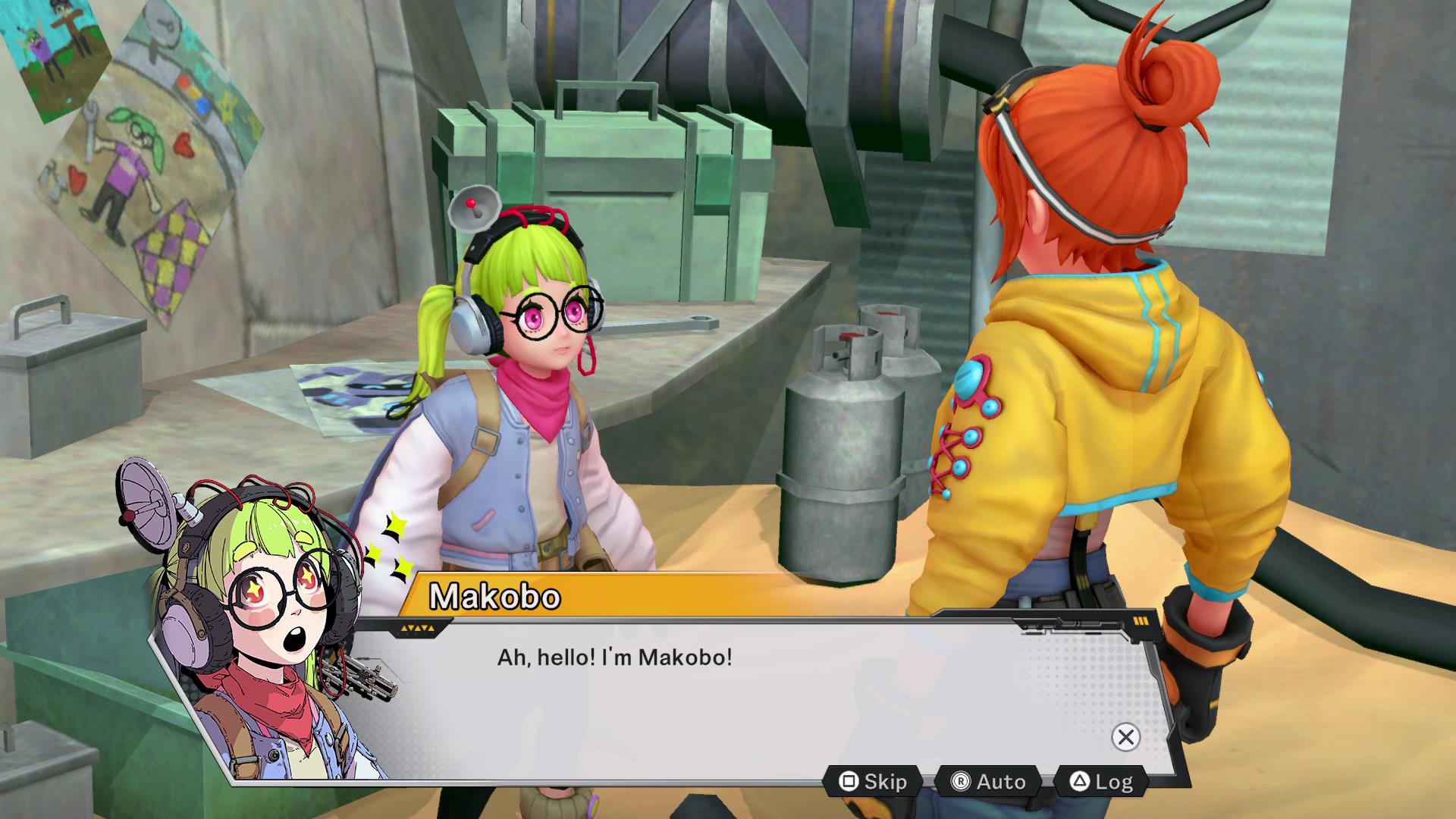
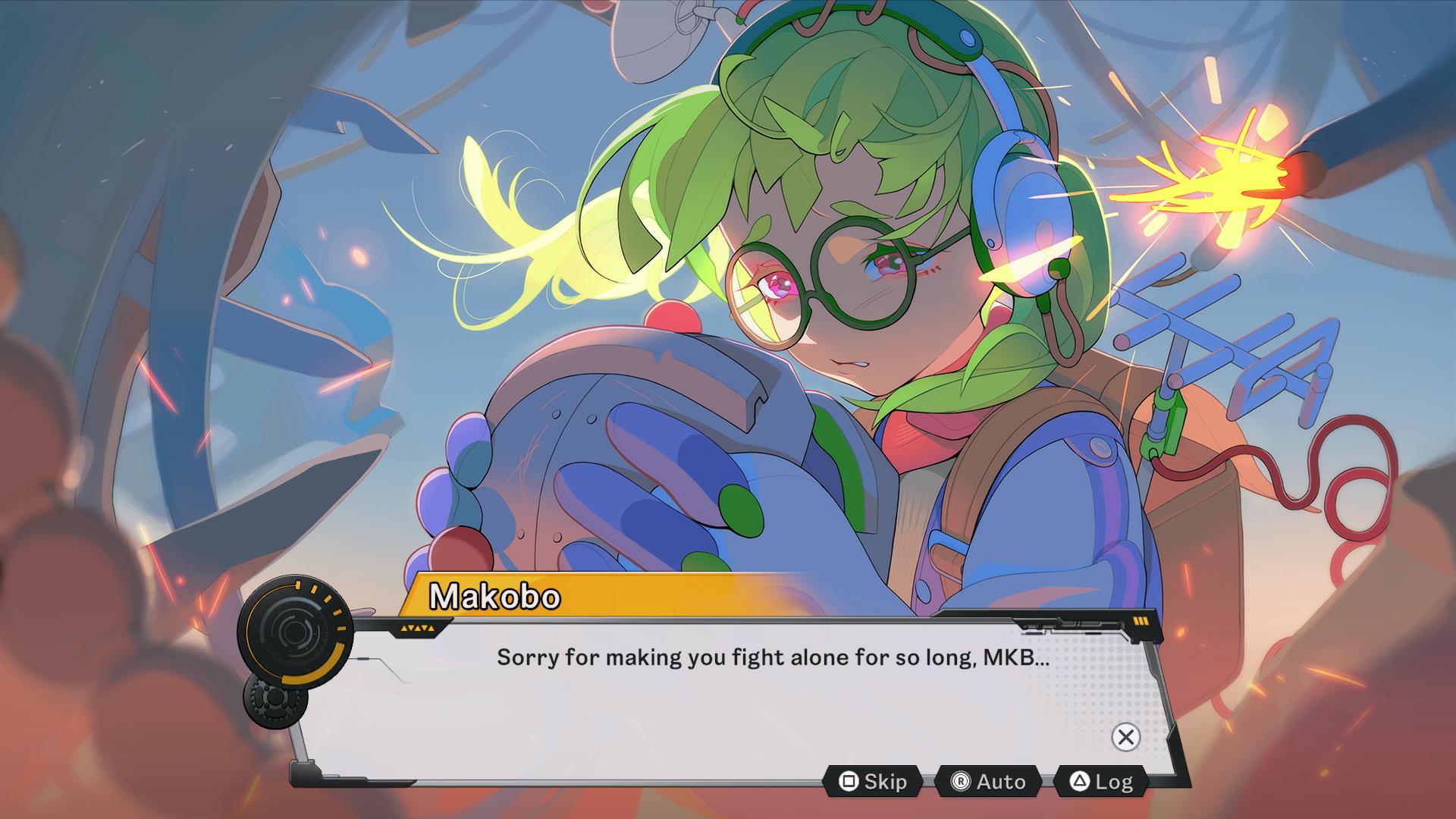
My most significant qualm with Starbites is trying to reconcile its disparity between its gorgeous 2D artwork and its not-so-gorgeous 3D models. I love that its 2D artstyle straddles a happy medium between an anime approach with a twinge of western comic stylizations, which is most apparent in the portraits that appear during character interactions. Unfortunately, Starbites’ in-game 3D models are considerably less refined and don’t quite live up to the 2D artwork rendition of its characters. It reminds me of the dissonance in the 2D and 3D character designs that Star Ocean: The Last Hope portrayed, though I think Starbites is a bit more elegant with it.
The most charitable read I can grant Starbites’ 3D models is that it does embody the spirit of a late 90s / early 00s Saturday morning cartoon, as those shows started to experiment with 3DCG. Visual blemishes do muddy up the 3D models further, including noticeable aliasing and an intrusive depth of field effect. I played the PlayStation 5 version for this review, and it maintained a smooth 60fps as far as I could tell.
I encountered a few bugs throughout my Starbites playthrough, as well. If I encountered another enemy mob too quickly after finishing a battle, the transition to that combat screen often lingered to the point that it felt like the game locked up momentarily. Camera behavior is also a bit erratic when traversing zones, and it would sometimes sporadically pan across a zone if a battle finished and the camera had to quickly focus back on my character because it was arbitrarily focused on another point in the map.
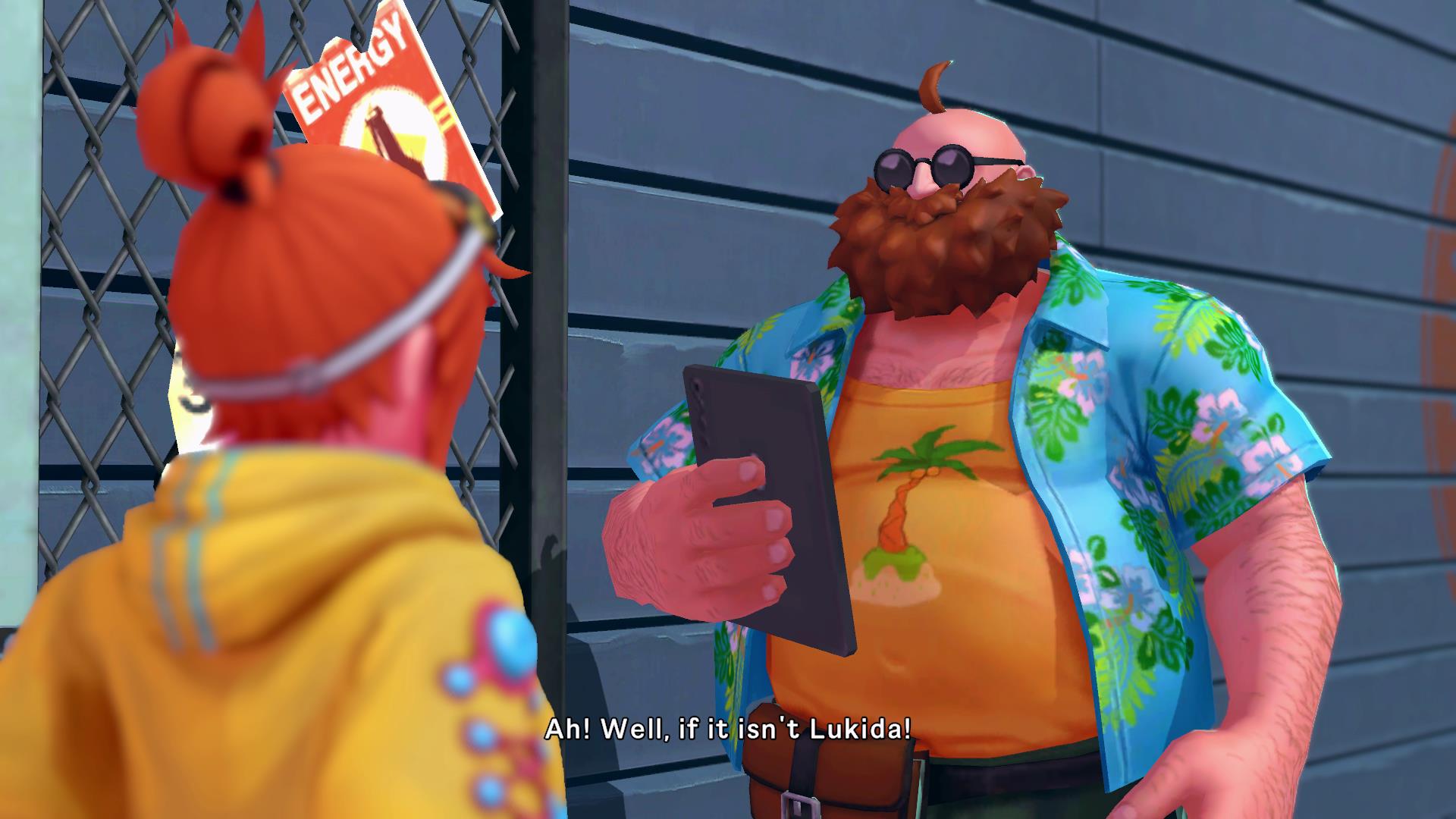
There was one amusing bug in which the camera was locked in a “character interaction event” state. When I could move my characters again after a specific character interaction with two NPCs for the main story, the camera remained on those two characters, so I had to carefully navigate my characters off-screen to get out of town onto the field, so I could forcefully reset the camera back to them. This only happened that one time.
My favorite bug that I encountered in Starbites involved a wandering cat in Delight. They would frequently linger around a bar area, but a certain moment in the story had a lot of NPC models huddled up in this area. This caused some sort of bizarre phenomenon that caused the positional trigger or behavior of the cat to start warping out rapidly as it tried to make sense of how to position the cat, because it seemed like it didn’t account for having that many NPCs there.
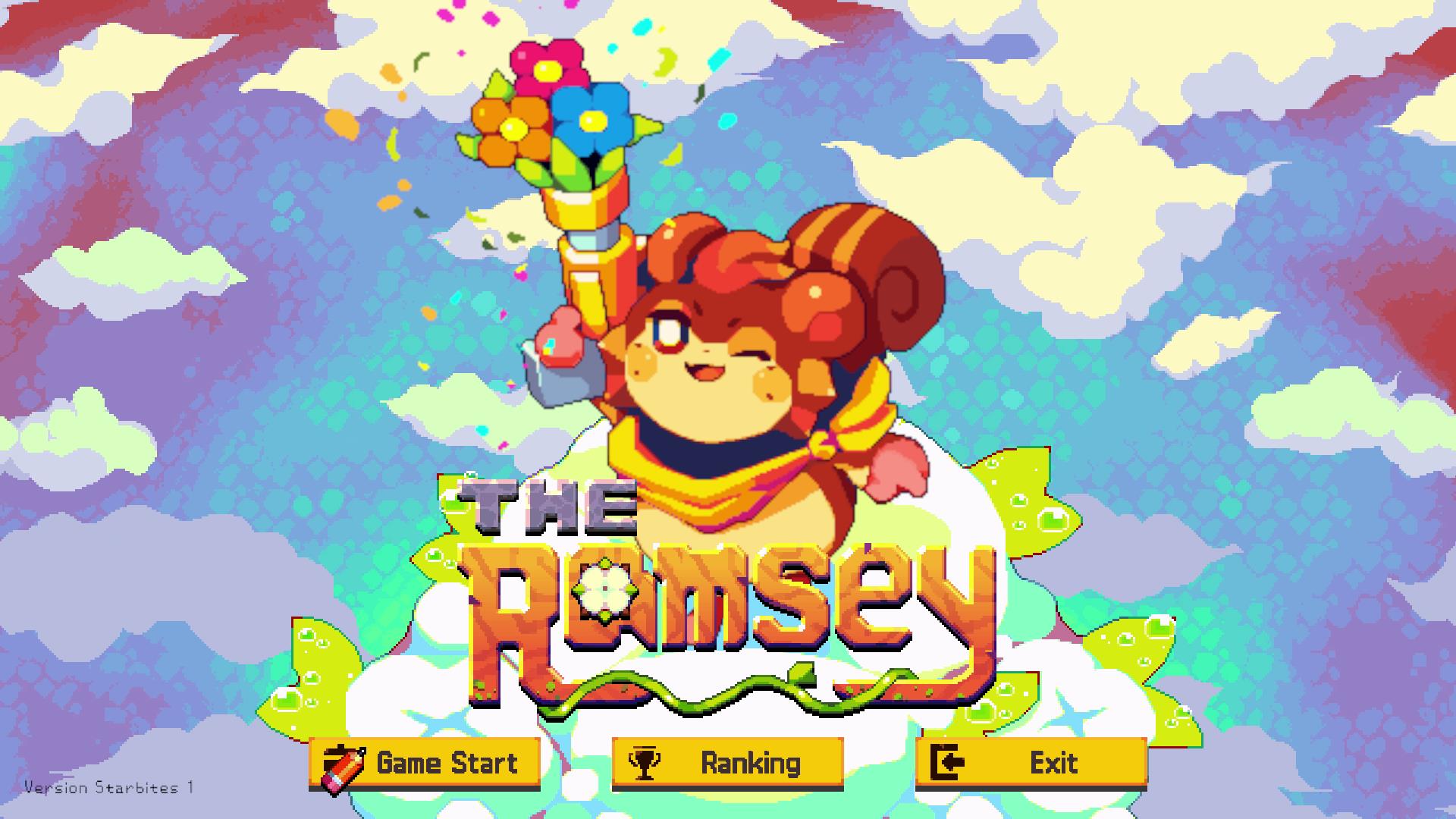
Aside from the main story and side quests, Ikinagames also included their 2023 puzzle platformer, The Ramsey, as an optional side activity that can be played within Starbites. As far as I can tell, the version of The Ramsey in Starbites is the entire game. It was a pleasant surprise to see that included.
Starbites is a simple, yet solid turn-based RPG. Though its first few hours did not leave a strong impression on me, the game got much better the more I played. Despite a few bugs, frequent backtracking, and the disparity over its 2D and 3D visuals, I can certainly tell that Ikinagames tried their best with this game as a small studio with ambitious goals. They succeeded in providing a satisfying gameplay loop, because Starbites is at its best when it comes to customizing party synergies to push through tougher fights. If you’re willing to give Starbites some time to blossom, I think you will walk away with a satisfying RPG experience.