

Zero Parades: For Dead Spies Review
I’ve deliberated for days on how to start this review, how to properly talk about Zero Parades: For Dead Spies – a game that infiltrated my consciousness and stuck there like a parasite for weeks. It’s a supremely difficult game to talk about, due in part to how dense and complex it is, as well as the genuinely distressing circumstances around the studio and its predecessor, Disco Elysium. Zero Parades is a game that clearly wants to carve out its own space, but is naturally linked to the very structure and formula that made Disco Elysium successful, while trying to meaningfully examine the role that media and entertainment play in government, control, and ideology.
Sometimes veering toward being too verbose for its own good, Zero Parades is a game that I absolutely can’t get out of my head. A gripping spy story wrapped up in multiple layers of thematic complexity – a work that grips your heart and relentlessly never lets go.
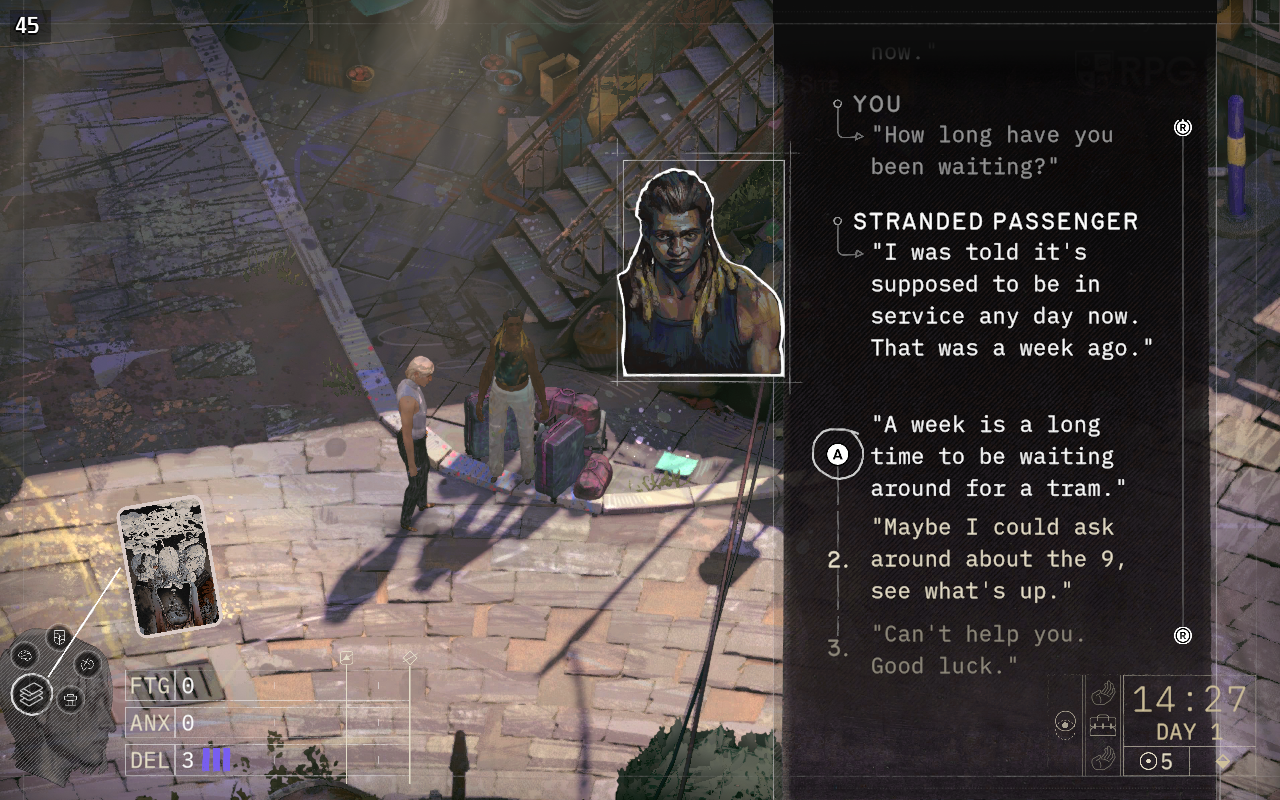
Zero Parades is the second game from independent studio ZA/UM, which released the beloved Disco Elysium in 2019. Things turned sour, however, after the creators of Disco Elysium got into an ugly legal battle with studio leadership. For the purposes of this review, I won’t cover the events of said legal battle, but will note its important context to understand the place Zero Parades, and its developers (under said leadership), are in. There are many great articles and blog explainers you can read for context, and I’d highly recommend you couple that with anything for Zero Parades. But for this, I’m evaluating Zero Parades on the content of the game – as I do believe there’s merit in evaluating what these developers, specifically, have crafted.
The easiest way to describe Zero Parades is as a “spiritual successor” to Disco Elysium – entirely unrelated narratively, but still very much using a lot of the mechanical structure of that game. You play as Hershel Wilk, codename Cascade: a burnt-out operative for the communist spy agency known as The Opera, conducting a phantom war against technofascist forces for control of the city-state Portofiro. Cascade has been stuck on desk duty for five years after their last operation went horribly wrong, and you’ve now been put back “in theatre” as a last-ditch effort to make you do something actually useful.
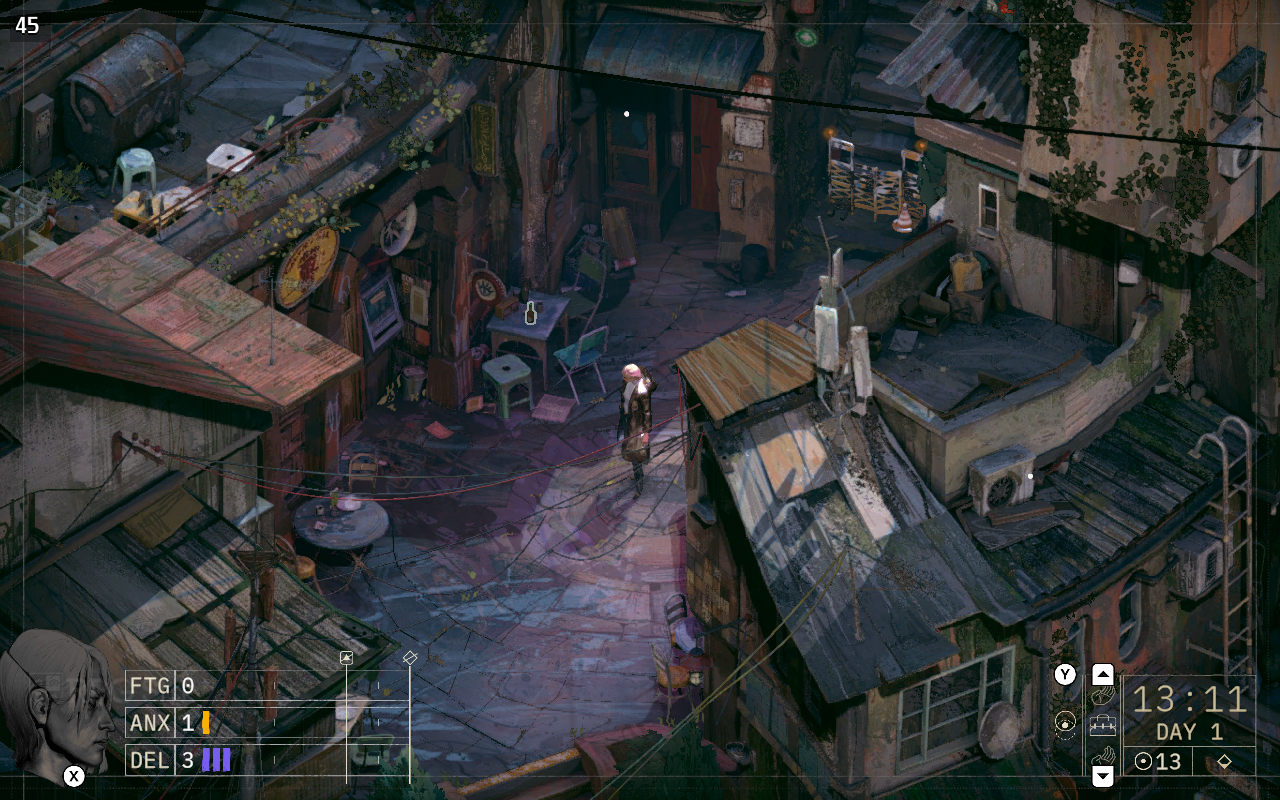
From the very start of the game, Cascade is thrown into the deep end with no idea of what their objective or mission is, forcing you to make everything up along the way, contending with other espionage forces at a disadvantage. And while this isn’t exactly what you’d call a bombastic spy game, the way that Zero Parades fleshes out and emphasizes its espionage is utterly fascinating.
To be clear, I mean this as a compliment, but the game has an obsession with verbosity – absolutely revelling in dense dialogue, absurd characterization, and illustrating espionage as a form of conversation and communication. While you might tap the occasional phone or put on a disguise, all of Zero Parade’s “spy” elements are integrated through dialogue choice, skill checks, dice rolls, and a healthy dose of intrigue. It’s a fascinating approach to an espionage game, putting a huge emphasis on the wide array of personas Cascade can don, the “boring” parts of the job, if you will. On that facet alone, I think Zero Parades is incredibly compelling, but it’s how the game adds layer upon layer of themes and social commentary that elevates it to something truly special.
It almost goes without saying that, like Disco Elysium, a central theme of Zero Parades is the conflict and interplay of ideals between communism, fascism, and capitalism. Given the events that affected ZA/UM, it’s impossible not to see this sort of idealistic struggle as some layer of meta commentary, raising questions that don’t have easy answers. It took me two dozen hours before I really felt like I was uncovering the throughline of what the game wanted to say, its heaviest commentary on what art means in each of these societal systems, how media is used to control the masses and dilute opposing ideas, and what being an artist even means when what you make is controlled.
Those questions are fascinating to ponder, but far more interesting, in my mind, is how the game explored these ideas through specific characters. And a big part of this is how intoxicating Cascade themselves is as a protagonist – a character with multiple defined personalities, where you spend most of the game trying to uncover who the real Hershel even is.
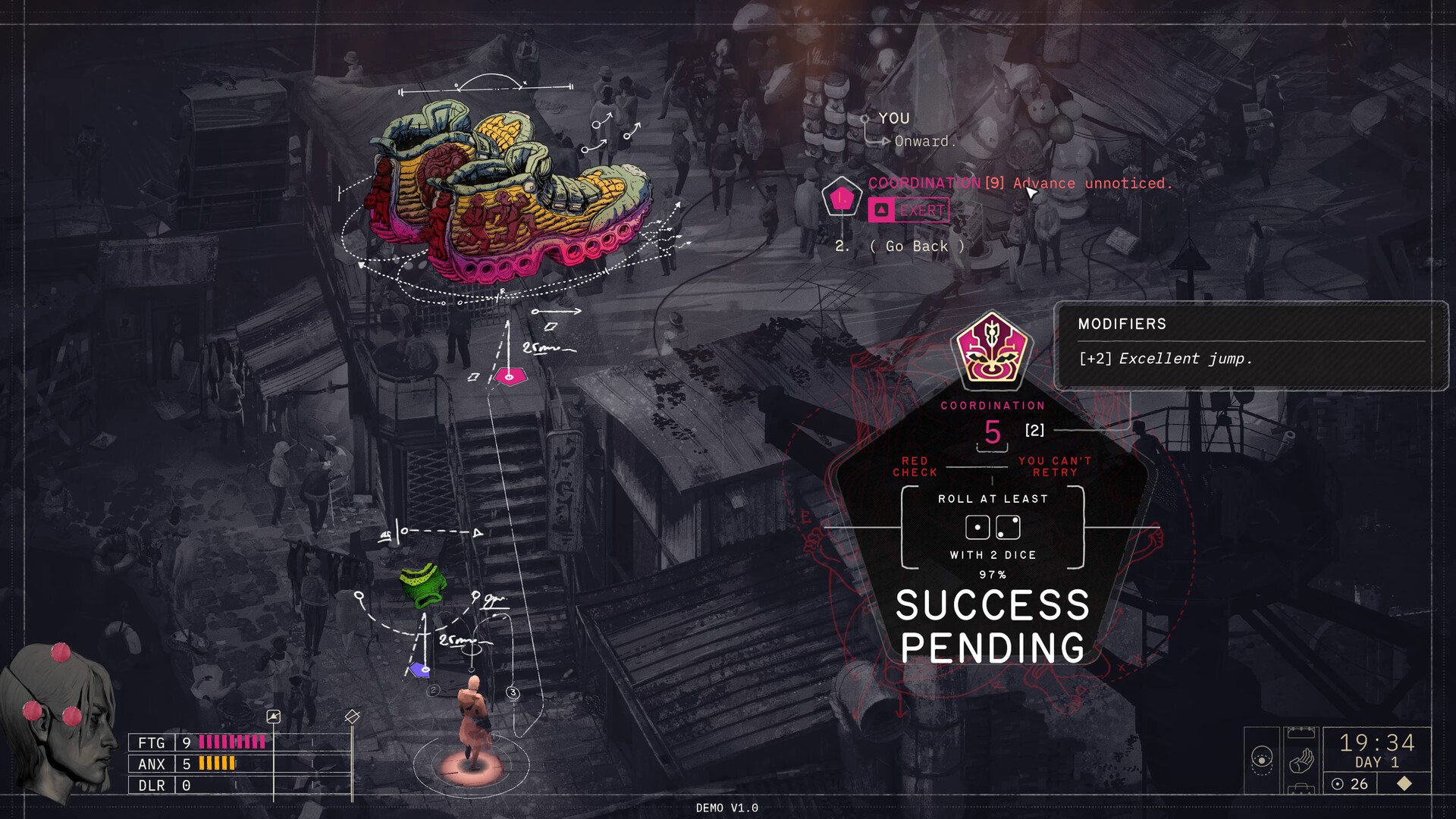
The game’s skill system is broken out into three different faculties: Action, Relation, and Intellect. Then, within these faculties, you have five different skills, things like Personalism, Coordination, and Grey Matter. All of these skills can drastically affect dialogue throughout the game, and you can raise each one with skill points from levelling up. At the same time, organically through dialogue and exploration, you can uncover “ideas” that you can imprint onto Cascade’s mind, for a variety of stat-boosting effects and extra dialogue options. These oftentimes provide some wild twists to gameplay, with my personal favourite making my Cascade absolutely convinced that an apocalyptic rocket strike could happen at any time.
When you really boil it down, these skills each function as a different “voice” in Cascade’s head, constantly interjecting their own thoughts in conversations. It’s a representation of the fractured persona and psyche that Cascade has developed from a lifetime of espionage.
That leads directly into one of the more harrowing, for me personally, themes of the game – self-discovery. Cascade has led multiple lives, and throughout Zero Parades, you learn more about those past lives and how utterly let down their team. This is something you constantly need to decide if you want to come to grips with, or not. But on a personal level, I found this was the element of the game that struck a chord the most; the idea that different spans of time can feel like we’ve lived as completely different people in the past.
As someone who’s long experienced levels of dissociation, I sometimes struggle with figuring out who I really am – agonizing over past decisions and who I could have been. Zero Parades isn’t afraid to ask if people deserve repentance, internalizing that as a core part of Cascade’s character. Can you change, or are you even willing to change? How important is belonging to somewhere, or some idea? And to finish your objective, who, and what, are you willing to sacrifice? It’s through these various personalities and voices that Zero Parades really starts to separate itself from Disco Elysium, veering far more into the idea of guilt and repentance.
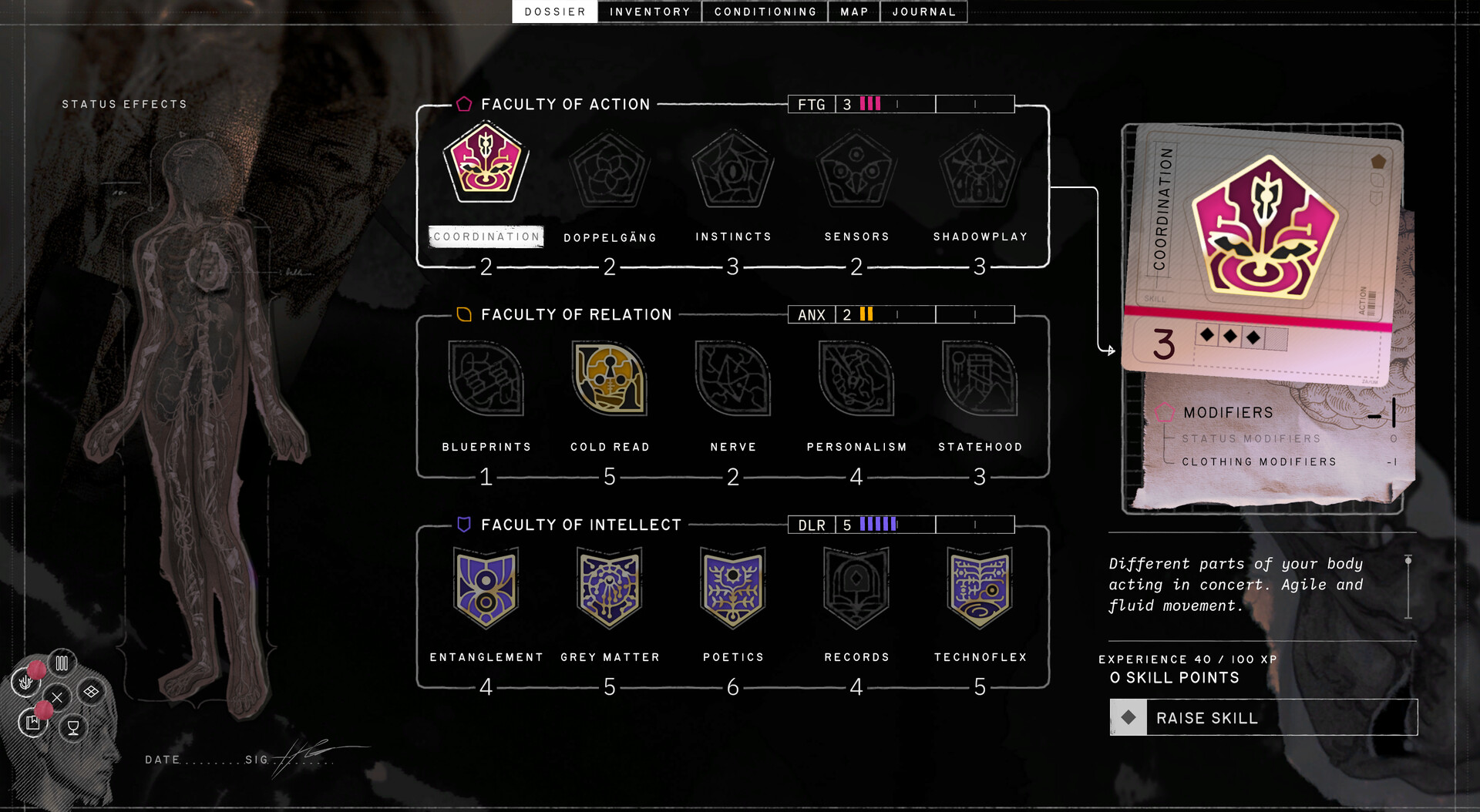
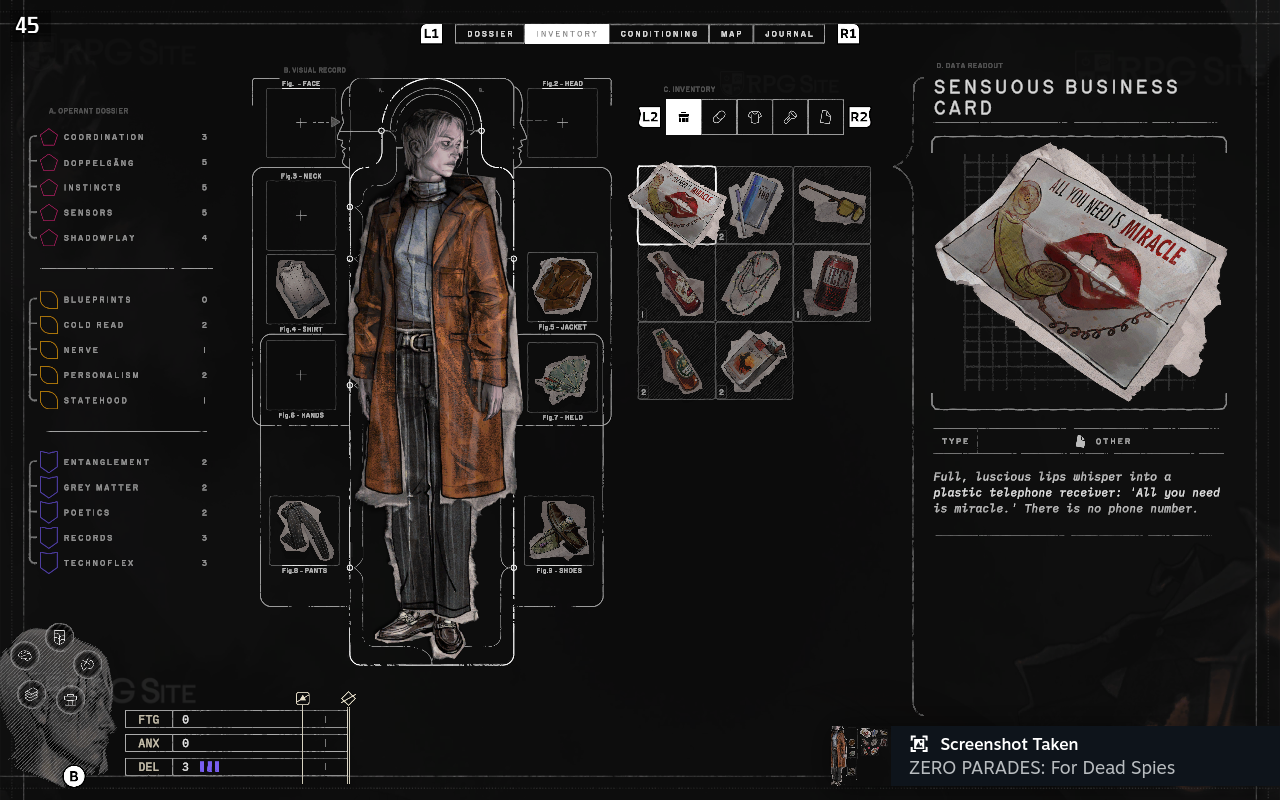
Integrally, to emphasize that, failure is a core part of Zero Parades. You don’t know what skill checks are going to happen, and while you can equip different clothes to boost skills, you’re inevitably going to fail in dialogue checks, and a core part of the experience is dealing with the fallout and figuring out how to push on. There are also three status effects that you constantly need to manage across the game: Delusion, Anxiety, and Fatigue. Choosing specific lines in dialogue or choices you make can cause these effects to accrue points, and the higher your points, the more detrimental they’ll be to your skill checks. You can manage these statuses through sleep or by imbibing alcohol and drugs. This gives you an extra layer of things to juggle, smartly ratcheting up the natural tension that’s already built into the storytelling and dialogue.
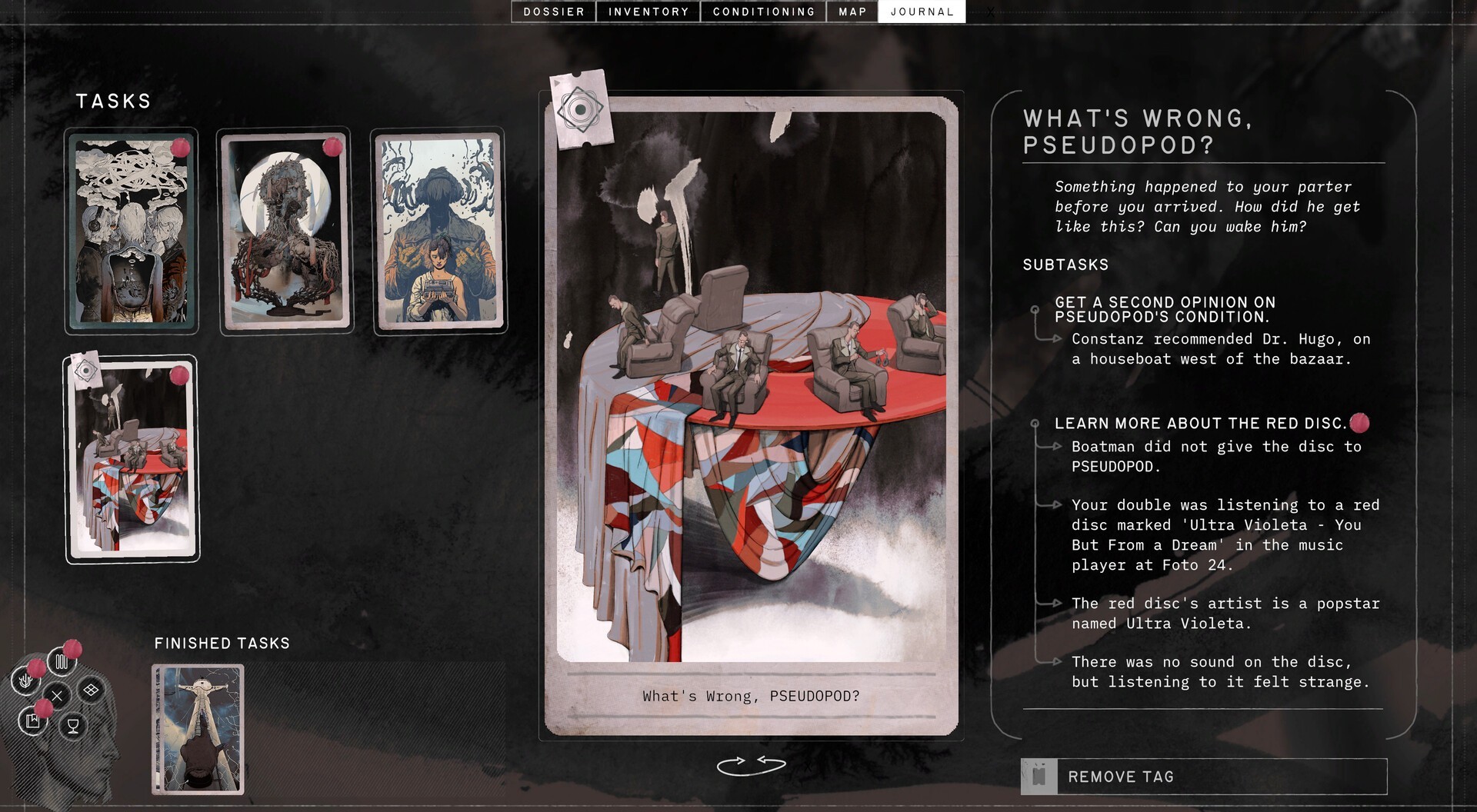
But another integral part of what makes Zero Parades shine is the individual stories you uncover in Portofiro – figuring out how they each tie into the overall tapestry of the main narrative and themes. A literal talking monkey known as the “King of Trade” has set up shop in a defunct pet store. An old music seller bemoans the rise of pop music while laying bare his sort of perversion for physical media. A drunk businessman is more than happy to spill his guts on the world-controlling bank he works for. One of your old pals is convinced a little creature is living inside his brain, controlling his every move. Everything is tinged with just a touch of paranoia and the supernatural.
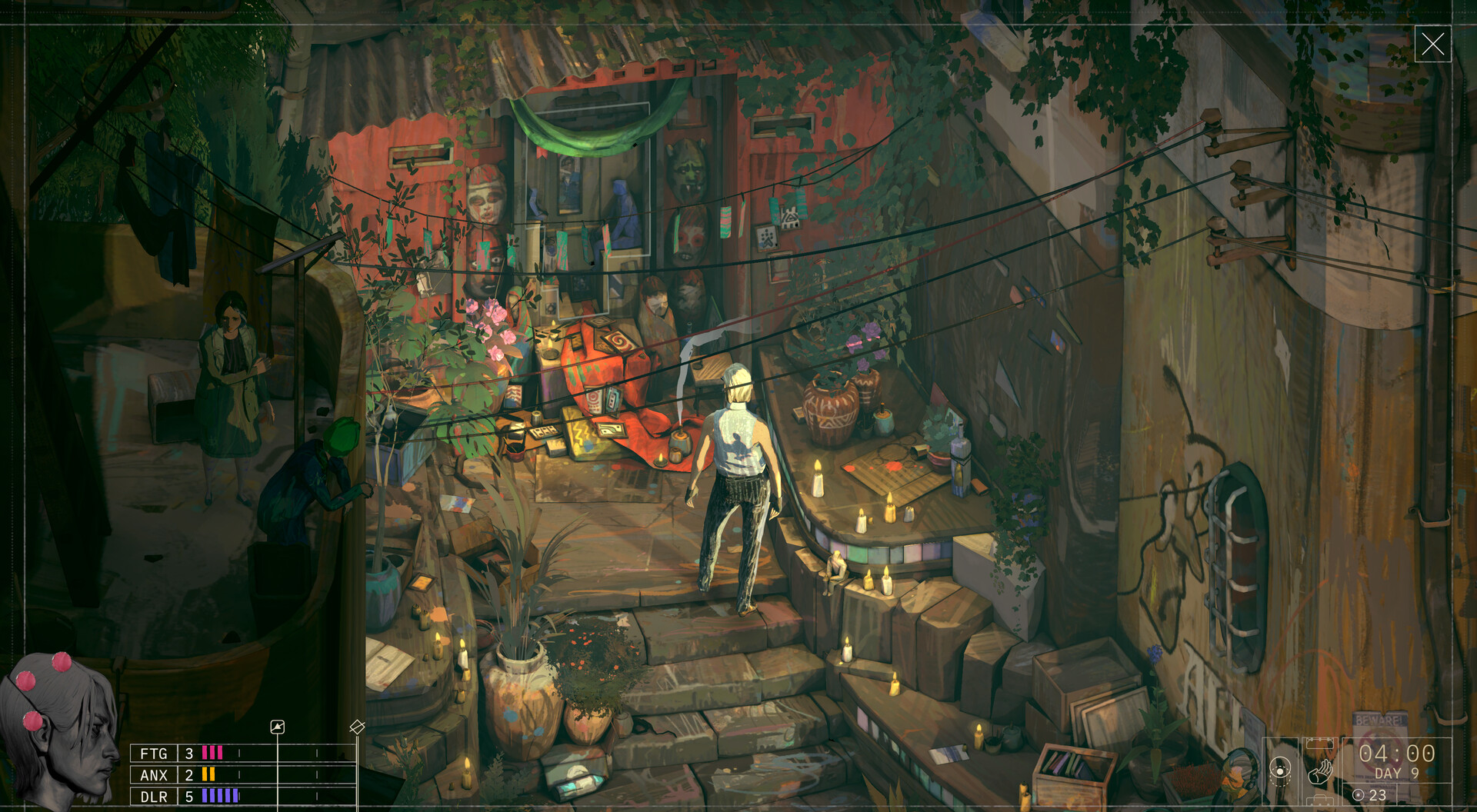
The game's dozens of characters paint a wonderful tapestry for how the narrative plays out, while crucially exploring those themes of grief, loss, and regret from a variety of different angles. And the game’s generally superb writing never forgets you’re playing the role of Cascade, constantly making the player decide how they bounce off of the eclectic casts of side characters, and how each one can affect your mission. In the process, you also get a deep understanding of how this world works and the allegory it establishes for the Cold War.
If it sounds like I’m talking about the writing and story a lot, it’s intentional, because the various gameplay elements of Zero Parades are there in service of the storytelling. And whether you enjoy the “spy,” vibe or not entirely hinges on how much you’re willing to extrapolate the idea of espionage as an experience that hinges on dialogue 90 percent of the time.
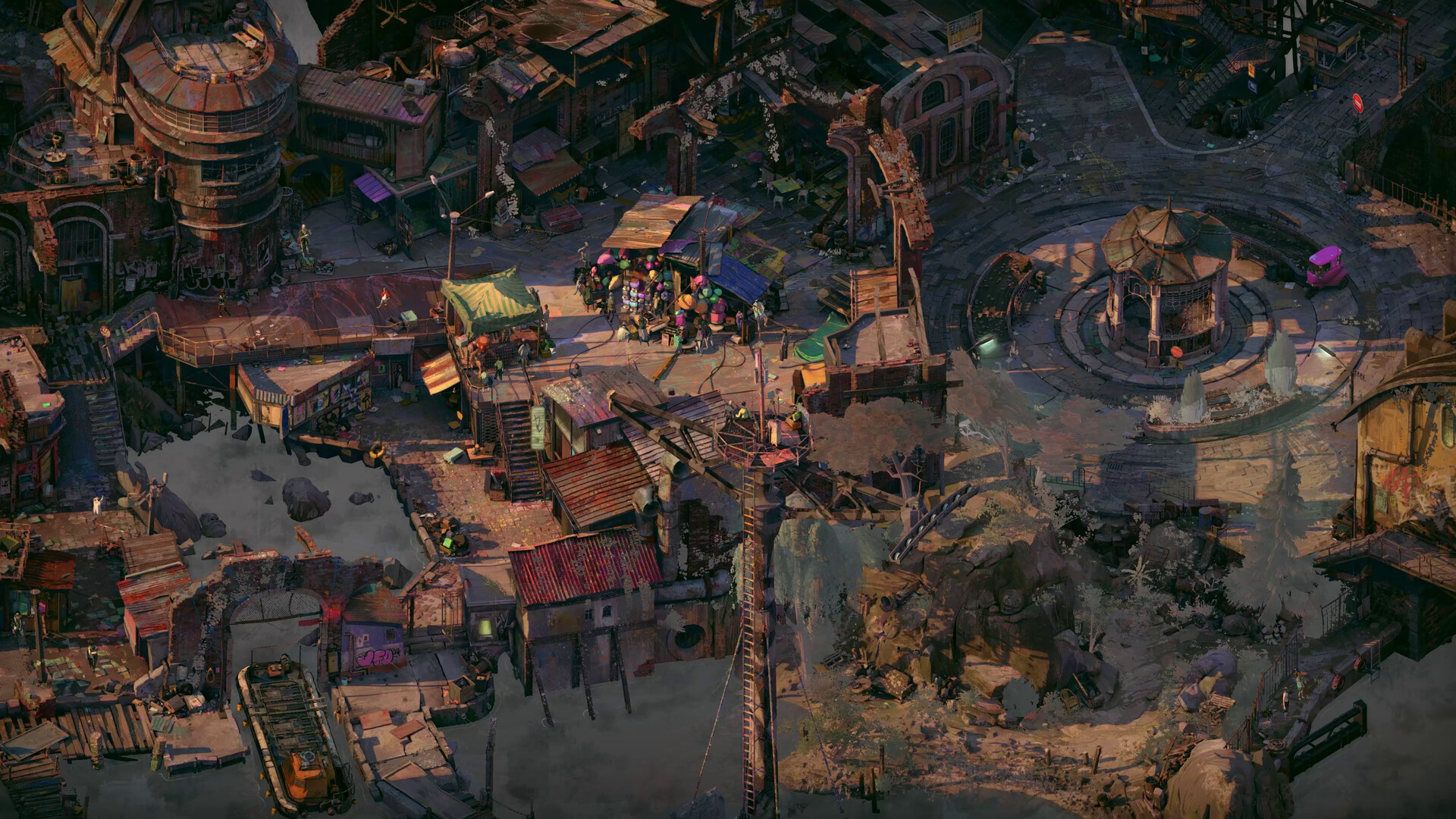
That being said, the visual and audio presentation does, generally, help support that vibe as well. At a glance, Zero Parades aesthetically feels very similar to Disco Elysium, a grimy city thick with danger, a subdued sort of acidic soundtrack, and striking artwork that plays into the ideals of communism and capitalism.
Zero Parades also isn’t free of a few noticeable technical issues. There’s the occasional hitching and environment pop-in, much more noticeable when I played on Steam Deck. I’d occasionally run into bugs when traversing ledges to climb over, and once in a while, I’d have a bug where a skill check wouldn’t get off my screen, forcing me to restart the game. Equally, I think how verbose this game is can feel a bit overwhelming at times, as Zero Parades painstakingly explains every nook and cranny of the world. You might spend a good fifteen to twenty minutes just learning about the local boar population – and that sort of approach can occasionally lead to sluggish pacing.
If there’s a single word that I can think of to describe Zero Parades, it’s “haunting.” The intense look the game takes at atonement and guilt struck deep into my personal life, while the larger questions about the role art and artists play in society have left me pondering for nights on end.
But I equally understand there’s a metatextual level to Zero Parades that is going to be incredibly hard for people to look past, nor do I think they should simply just look past it. Zero Parades consistently questions the homogenization of media and capitalistic control of art – how we wring the towel dry to get every little drop we can from “franchises” and “IP.” It raises questions on how the very nature of capitalism and artistic expression are opposed, and when you look at what happened to Disco Elysium and its creators, it’s impossible not to see it within that context.
There’s no easy way to look at Zero Parades, but through it all, maybe the sheer act of considering the questions it raises, with a sufficient helping of skepticism, is enough.