

Blue Reflection Quartet Review
The Atelier series has always been one of Gust's main franchises. As I've mentioned in my Atelier Yumia review, I was first introduced to Gust with Atelier Totori. One of the things that has always stood out to me is Mel Kishida's artwork. His illustrations are known for their beautiful girls dressed in frilly outfits, and Totori was the first game in the Arland Saga that piqued my interest, mostly because of how Gust was able to translate Mel's gorgeous artwork in-game.
As the Arland saga came to an end, Koei Tecmo launched a lineup of titles centered around its "Beautiful Girls Festival" project, with Gust's final contribution eventually becoming Blue Reflection. It featured a modern high school setting with magical girl elements and, most of all, Mel Kishida's artwork. Eventually, the series expanded to include a sequel, an anime spinoff, and even a mobile game. Fast forward to today, and Koei Tecmo has released all the Blue Reflection projects together as one package titled Blue Reflection Quartet. In this review, I'm going to cover each of the titles included in short for newcomers and also highlighting what was added in this new bundle.
Blue Reflection
In Blue Reflection, you play as Hinako Shirai, a ballet prodigy whose career is cut short after suffering a serious knee injury. Unable to do ballet, she is reluctant to attend school. On the first day of school, Hinako encounters a classmate who recognizes her from her days as a ballerina. After brushing her off, the encounter creates a powerful negative emotion that leads Hinako into the Common. This is a dangerous alternate world where people's emotions can manifest into monsters from its distorted reality. There, she receives the Reflector Ring, allowing her to transform into a Reflector and battle monsters within. As the story progresses, Hinako meets the mysterious twins Yuzu and Lime, who explain the source of her powers and reveal that defeating all the Sephira will grant her a single wish. Hearing this story, Hinako is determined to make her wish come true.
Released nearly a decade ago, the original Blue Reflection follows a structure where each chapter focuses on a different classmate whose emotional struggles create a new Common. Hinako helps each girl overcome her personal issues by venturing into their Common and defeating the monsters born from their negative emotions. The gameplay is usually broken down into daily activities with Hinako, and the combat aspect is explored when Hinako ventures into someone's Common.
Combat uses a traditional turn-based battle system with a timeline displayed at the top of the screen to indicate turn order. When Hinako is outside of a Common, Hinako performs activities in her everyday life that reward Fragments, which can be used to attune stats. Whenever a character levels up, they earn points that can be allocated across four different categories. Reaching certain thresholds unlocks new Ether Skills, giving you additional options in combat.
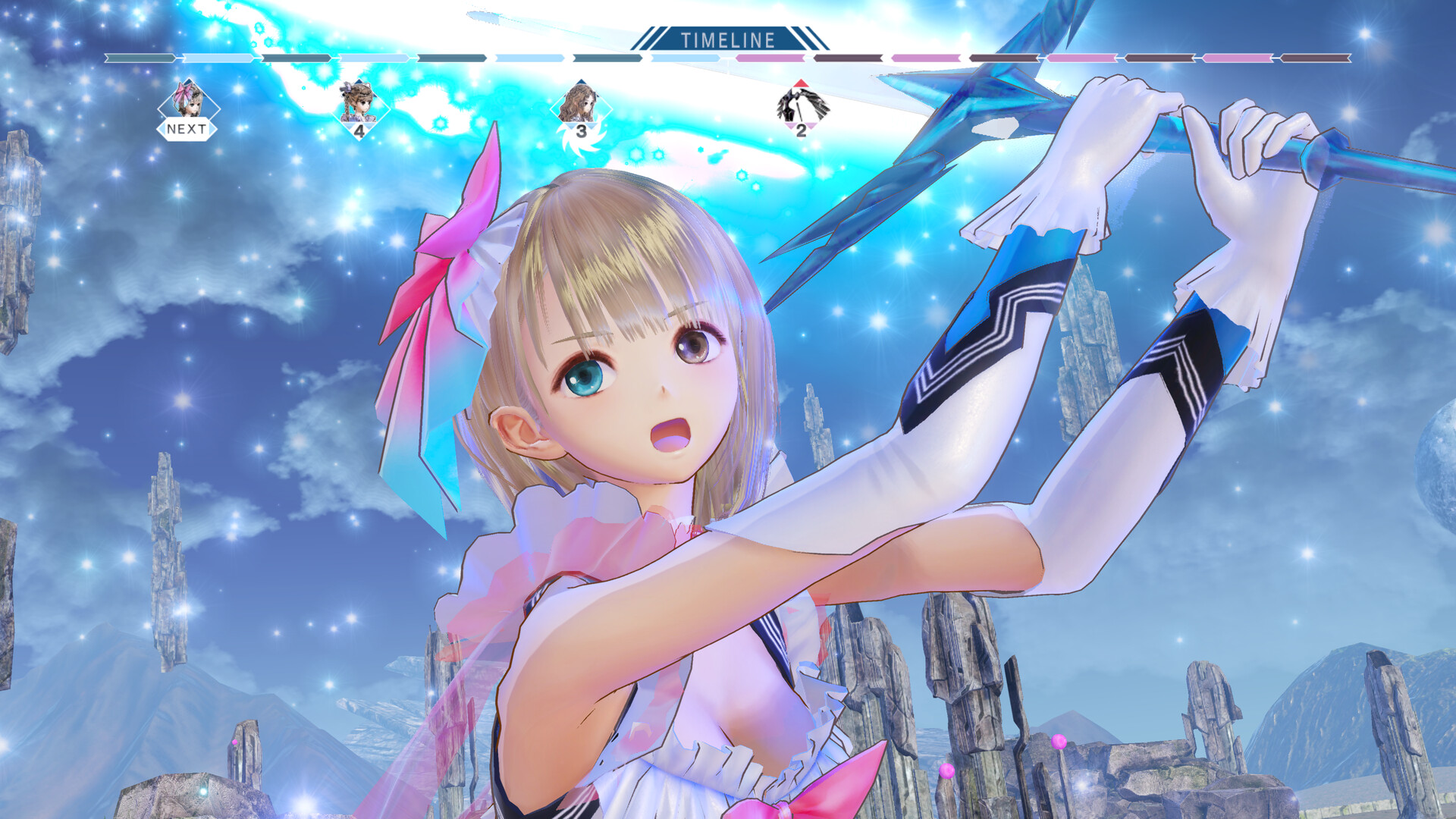
Overall, the gameplay is fairly bare-bones. While there are incredibly powerful Ether Skills and builds that can trivialize the game, most players will likely finish the game without ever discovering them. Exploration is pretty bare, as each Common zone is often recycled and would be a map of going through a small circular field. I do think that the story is one of the stronger aspects of the game, as games released during that period often with charactes that are overly positive, and Hinako's cynicism was a breath of fresh air, as she learns to be better. The only issue is mainly that there wasn't much to Hinako's backstory, which eventually was addressed in the sequel.
As with all the games in the Quartet rerelease, there are several quality-of-life improvements, including a fast-forward option and general optimizations. There is even an added glossary whenever you see characters talking about some of the game's terminology. However, there are some scenes that are now censored from its original release, which can seem minor and may have deterred players from getting this version. I don't think the original game is bad by any standard, but it just feels a bit undercooked with a lot of room for improvement.
Blue Reflection Ray
The next title in the collection is Blue Reflection Ray, which the game recommends playing after the original Blue Reflection, since it is set following the events of the first game. Blue Reflection Ray was originally released as an anime around five years ago. Rather than including the anime itself, Gust has reworked it into a playable game.
As someone who has never watched the anime, I was curious about what this game would actually play like. Obviously, they weren't going to include an entire anime series in the package, so I expected some kind of adaptation. Blue Reflection Ray in Quartet was one of the worst gaming experiences I've ever had.
This version of Ray begins near the end of the original anime. You take control of what I assume are the show's two main protagonists (Hiori and Ruka) as they confront the main antagonist, lose the battle, and wake up with amnesia. From there, the pair explores the aforementioned Common in search of memory fragments to recover their Reflector powers.
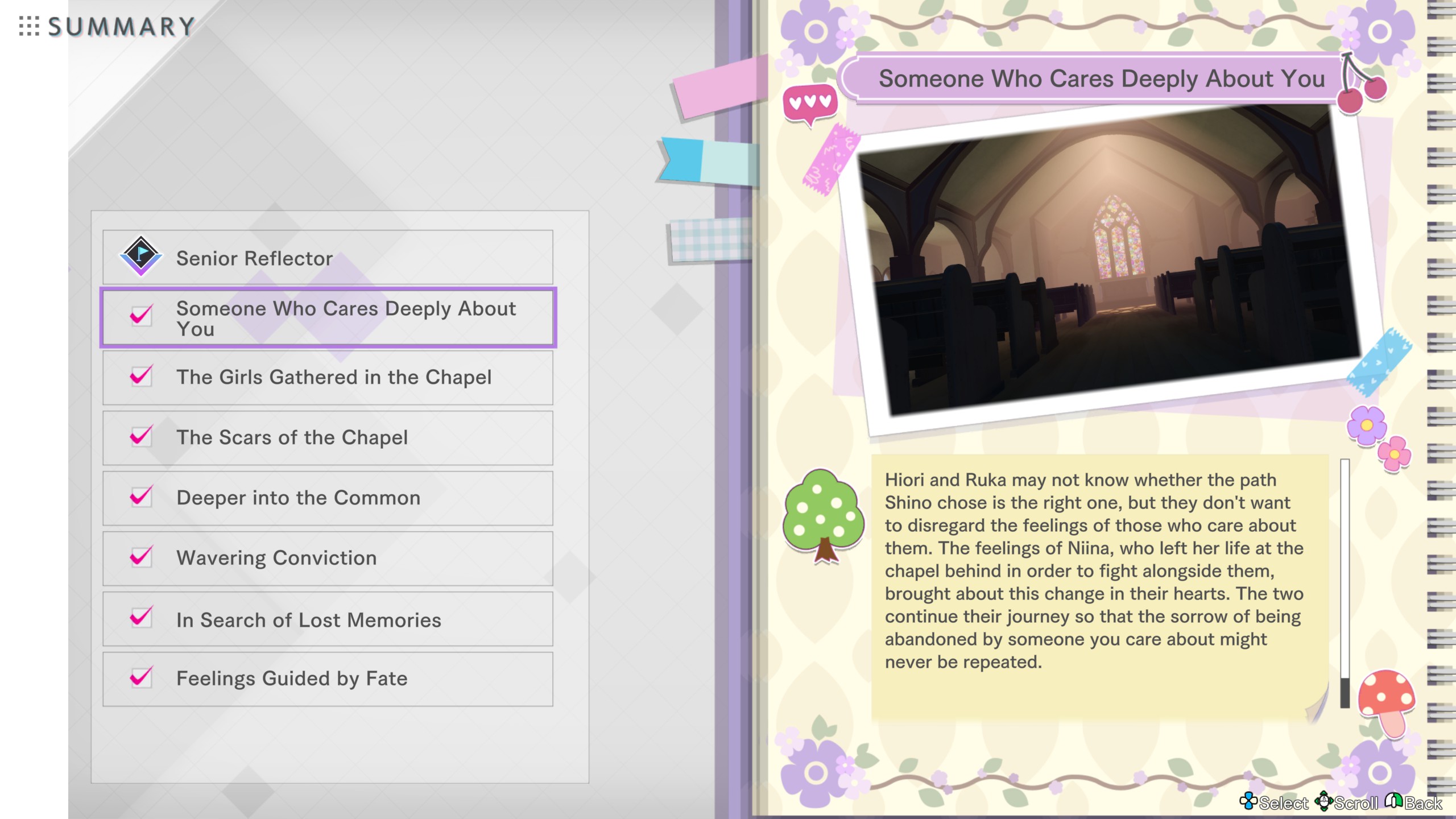
You're essentially dropped into the final act of a story with almost no explanation. There is no combat whatsoever. Instead, you simply control Hiori as she explores the Common searching for memory fragments. Each fragment unlocks a still image from the anime accompanied by a short piece of narration from one of the protagonists. Without having watched the series, these moments gave me zero context and made me feel nothing.
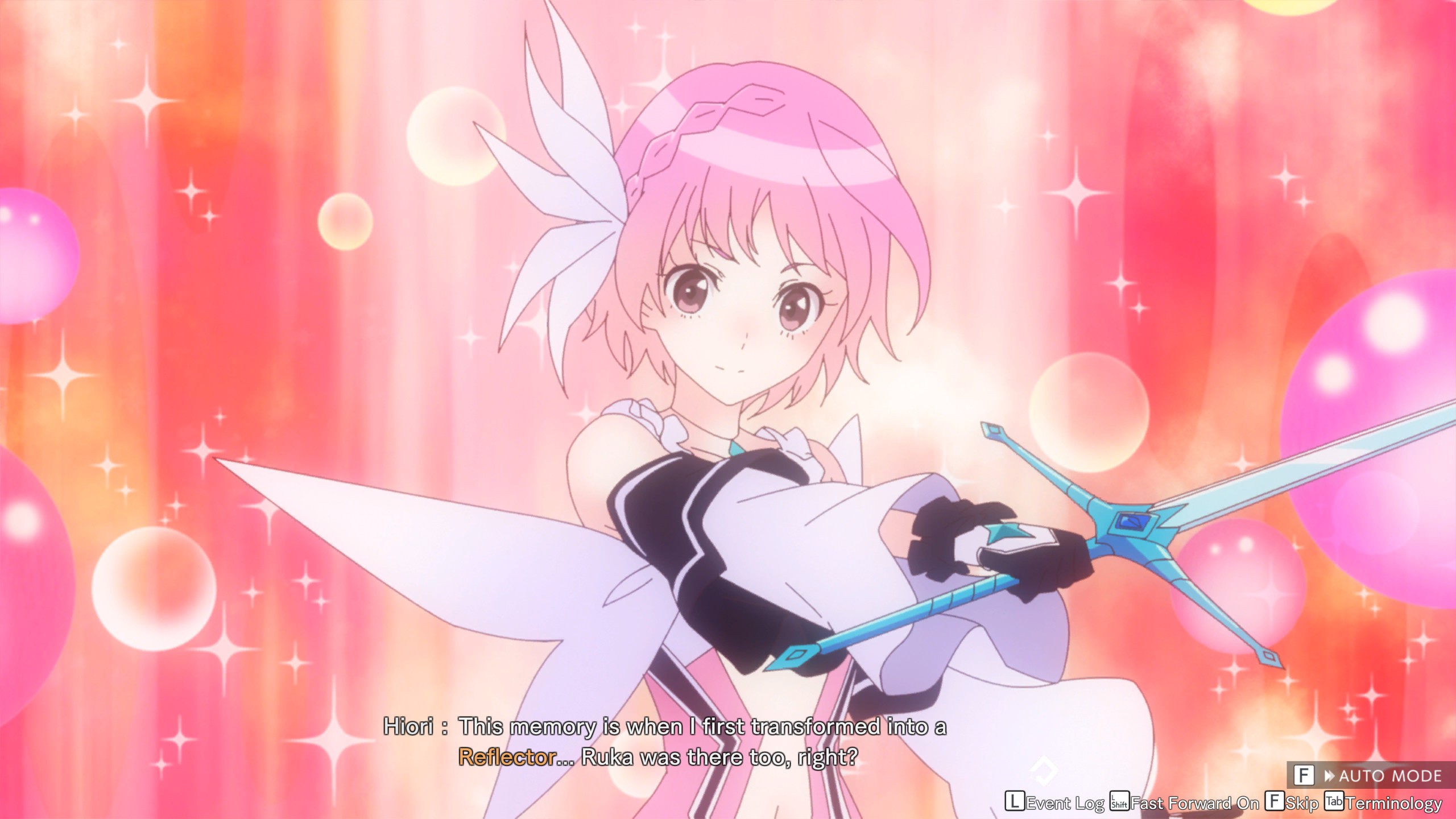
The protagonists constantly ask each other questions like, "Do you remember when this happened with this person?" but as someone unfamiliar with the anime, I had no idea who these people were or why I should care about anything. While the game does include documents that provide additional context, relying on optional text logs to explain major plot points reminds me of Final Fantasy XIII's Datalog. It's one of the worst ways to tell a story.
Blue Reflection Sun
The third game in the collection is Blue Reflection Sun, which was originally a Japan-exclusive mobile title. For Quartet, Gust has reworked Sun into a single-player experience, stripping away all of its gacha mechanics. Story-wise, it takes place during the events of the original Blue Reflection and begins immediately during the ending of the first game, where Hinako succeeds in defeating the Sephirot but unknowingly triggers the world's downfall.
The disaster creates the Ashen World, where mysterious ashes begin falling from the sky. Those exposed to it either transform into monsters known as the Testa or develop supernatural abilities while retaining their sanity. These survivors are known as the Eroded. You play as a nameless protagonist who commands a squad of Eroded and Reflectors as they combat the growing Testa threat.
The gameplay is divided into two main sections. Between missions, you spend time at the school interacting with your teammates, and you will get a story scene that learn more about each squad member. I imagine many of these scenes were originally event sequences from the mobile game. The other section consists of battles.
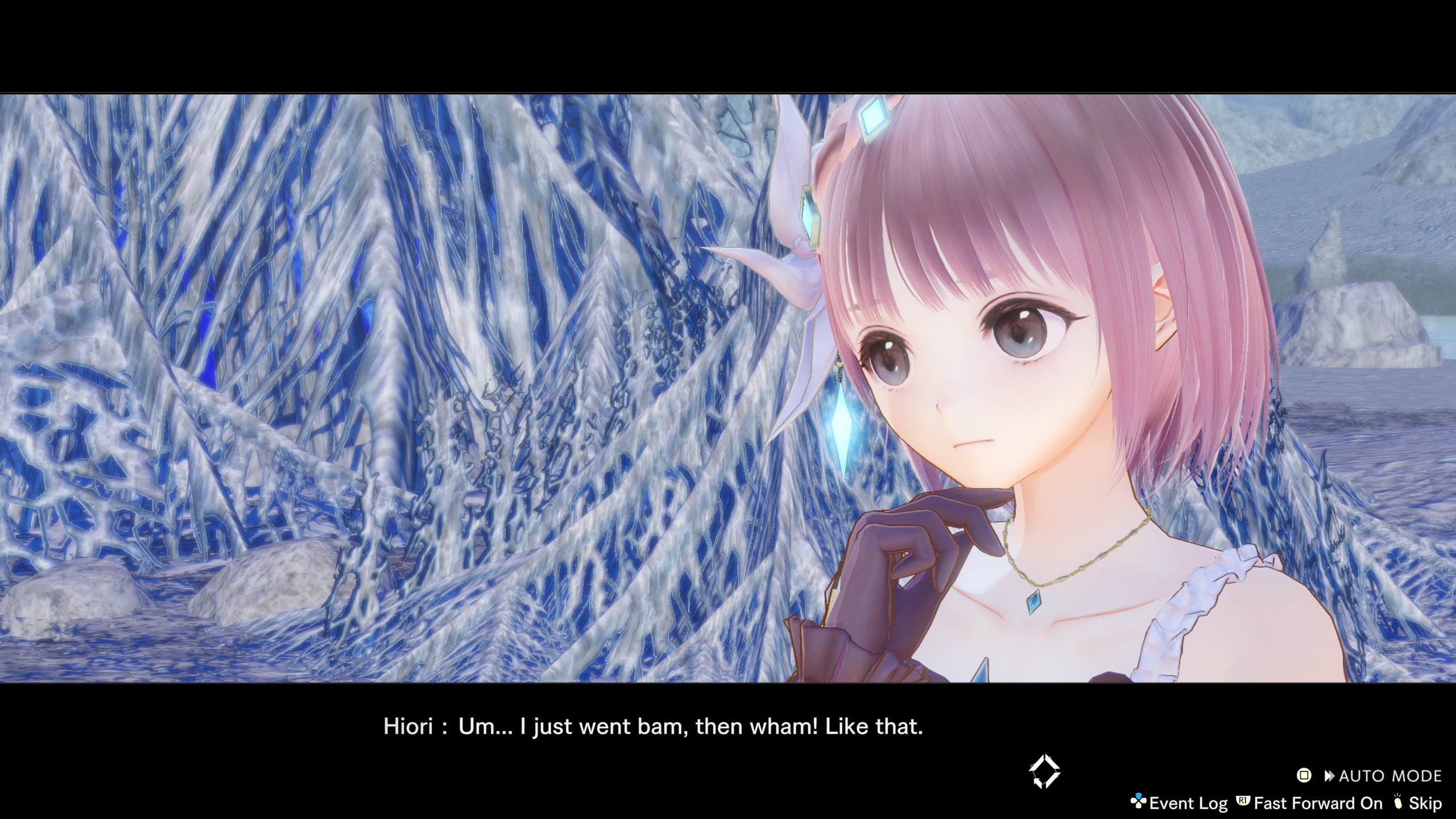
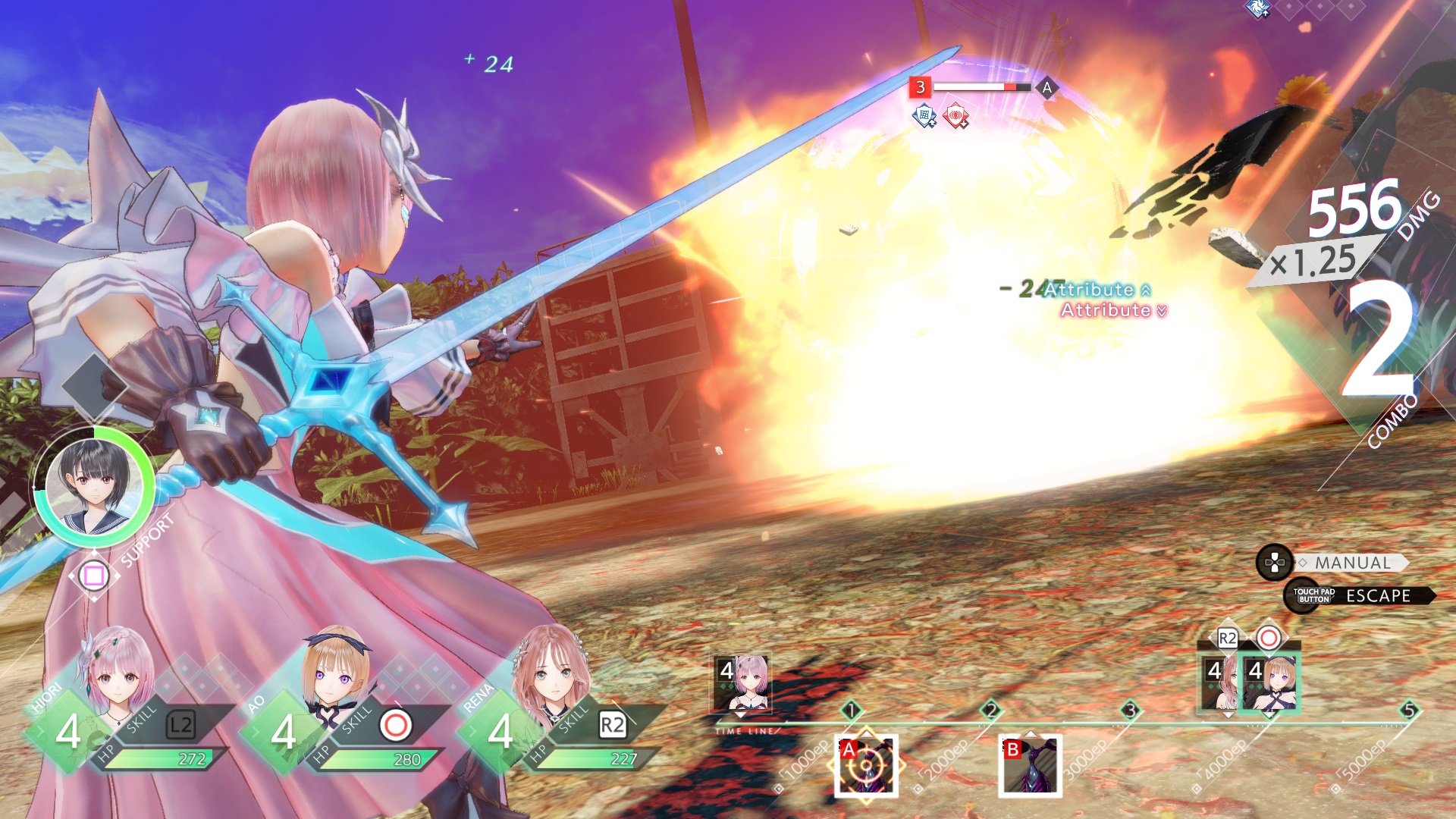
Blue Reflection Sun is an odd experience because it does not resemble the original mobile game and is more like a Blue Reflection: Second Light mod. Gust has reused Second Light's engine, battle system, and much of its overall structure for Quartet's Sun, creating something that feels like a Frankenstein hybrid of both games.
I strongly detest gacha monetization mechanics with a passion, but I still wanted to see what Blue Reflection Sun originally played like. From the footage I've watched of the mobile version, it had its own elemental weakness system, a different battle system, and even a separate soundtrack. In Quartet, however, much of the music has been replaced with recycled tracks from Second Light, and the gameplay closely mirrors that as well.
I don't think this version of Sun is a bad experience, but Gust has stripped it of its identity with how it is presented in Quartet. It feels like a reskinned version of Second Light instead of what I've seen of Sun.
Blue Reflection: Second Light
This is the final game in the collection. Blue Reflection: Second Light takes place last in the series timeline. Some of the characters introduced in this game also appeared in Blue Reflection Sun, but I don't think playing that title beforehand will make you feel differently about them.
In Second Light, you play as Ao Hoshizaki, a girl who finds herself transported to a parallel world alongside three other girls. Unlike the others, Ao retains her memories and is determined to find a way back home. But before she can do that, everyone must navigate through the most dangerous part of the parallel world, which is the Heartscape.
I still think Blue Reflection: Second Light is the best game in the series. I already reviewed it and thought quite highly of it, and my opinion has not changed with Quartet. It remains the most refined entry in the series. This new version adds some of the quality-of-life improvements I covered earlier. If you haven't played it yet, Second Light is a sequel that builds on the original in every way across its story, battle system, and characters. The only aspect that isn't done well is the mandatory stealth segments.
With all four titles included, Blue Reflection Quartet offers a tremendous amount of content for its asking price. Having all the available entries in one collection makes it an excellent starting point for newcomers interested in the series. Quartet isn't perfect though. The ports themselves are relatively modest upgrades. Quartet's Blue Reflection Ray is awful and Blue Reflection Sun doesn't feel like a faithful representation of the original game. Despite that, I think the main Blue Reflection games are worth trying, making this a worthwhile release.
If you've never played these games before, Quartet is an easy recommendation for two of the four titles included and its budget asking price. If you already own these games, there isn't anything here to justify a new purchase barring an improved PC port for the original game. Having the entire franchise in one collection sounds great on paper, but two of the four titles weren't handled well.