

Another Eden Begins Review
Mobile game to offline premium game conversions have been a particularly interesting trend that has emerged in games. Square Enix started to dabble with it through last year’s Octopath Traveler 0 and the upcoming Final Fantasy Resonance. Capcom also gave it a chance with Megaman X Dive Offline.
While these examples possess different degrees of how much they’ve added, changed, revamped, or transformed their original mobile bases to be more palatable as a premium traditional game, they all showcase that there is an audience for them. Of course, the most common reason that dissuades people from engaging with their original mobile game incarnations is usually the monetization, which often contains a gacha aspect to obtain characters, weapons, and/or other resources to drive its gameplay experience.
Another Eden Begins joins this wave of games as it adapts the entire first story arc from its original mobile game, Another Eden: The Cat Beyond Time and Space. The original developers from Wright Flyer Studios spun out and started their own team with the newly formed Studio Prisma to create Another Eden Begins.
I played Another Eden’s mobile release several years ago and adored it. I love it even more now with this offline conversion.
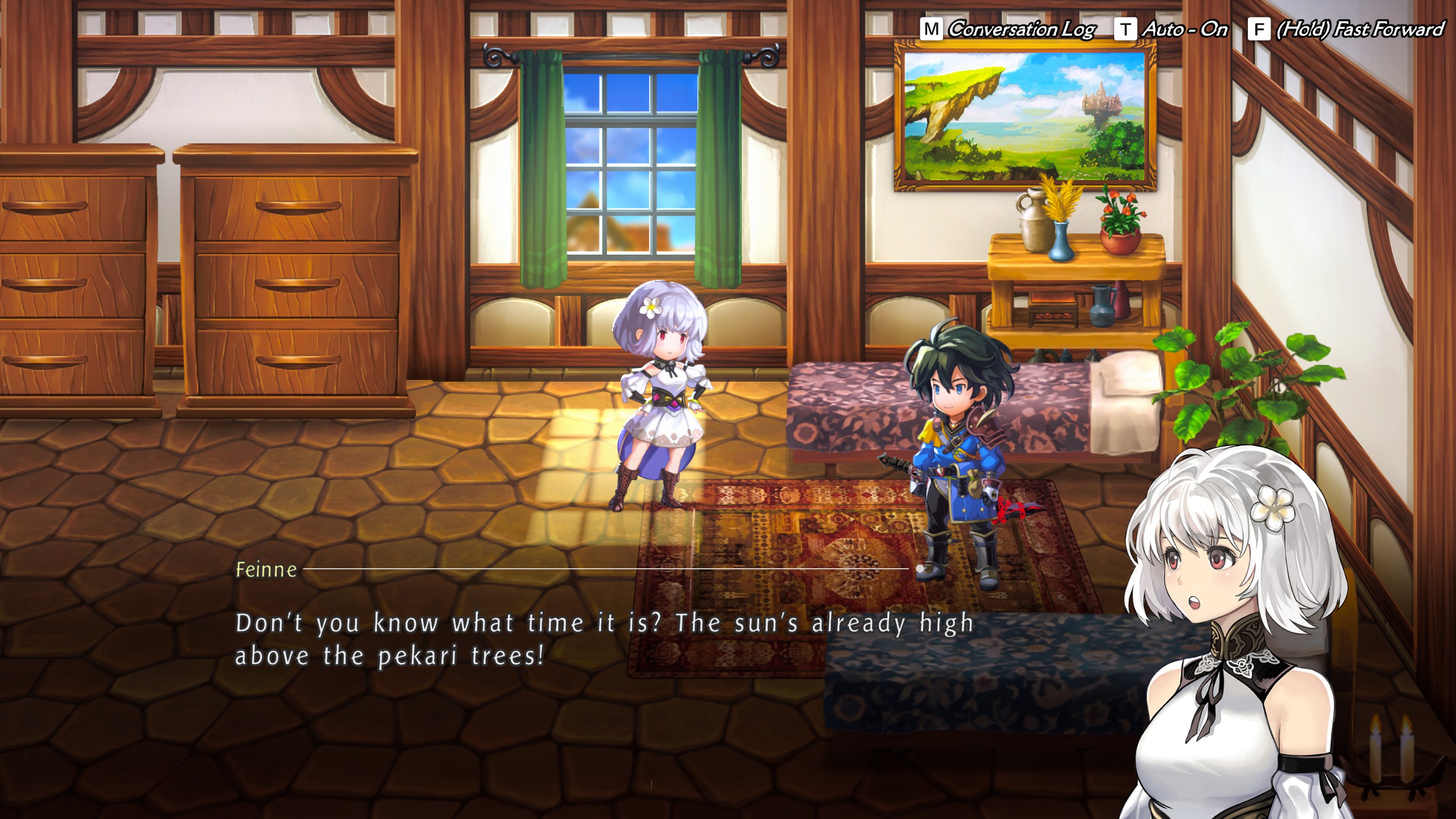
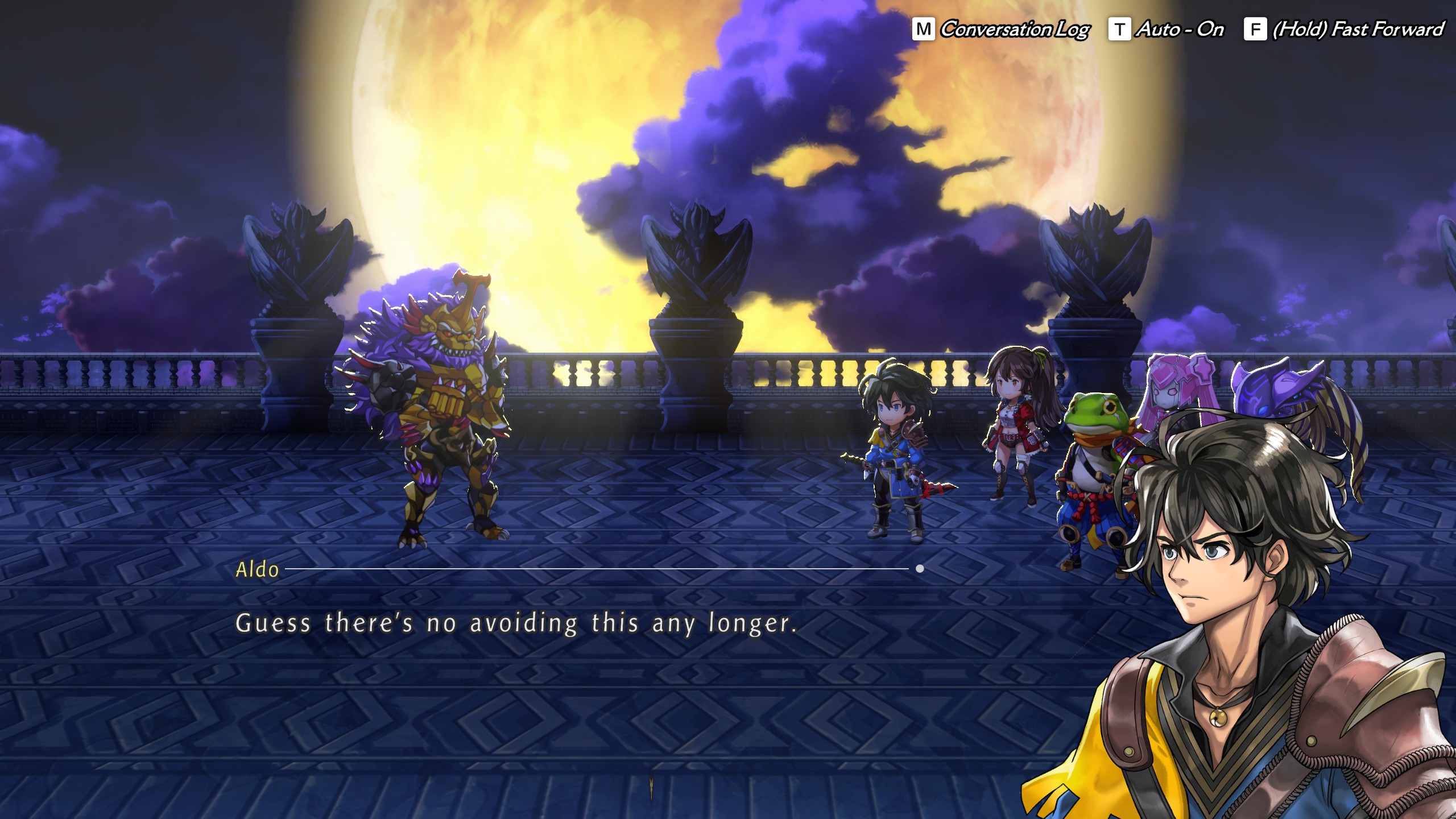
Another Eden Begins’ narrative events are a faithful 1:1 adaptation of how this story arc was presented in the mobile game. It revolves around a young man named Aldo living with his sister Feinne and adoptive parent in the small village of Baruoki. His life changes as Feinne is suddenly kidnapped by the Beast King. As Aldo pursues him to rescue her, he is sucked into a time vortex that sends him to another era across time and space.
Those familiar with Another Eden will know that acclaimed scenario writer Masato Kato has been working on it for about a decade now. Another Eden Begins is a spiritual follow-up of his previous work on Squaresoft’s Chrono Trigger and Chrono Cross duology; the first story arc that Another Eden Begins covers is on a similar wavelength to them as Aldo gradually recruits party members from different eras.
What fascinated me the most about Another Eden Begins are the new story elements included just for it – stuff that was not in the original mobile game. The majority of it only pops up on a New Game+ playthrough. While I can’t go into specifics of course, the marketing for Another Eden Begins does boast that it contains over 10 endings. Those are all attainable in that second playthrough, and the way Another Eden Begins handles its New Game+ experience is one of the coolest I’ve seen done in an RPG.
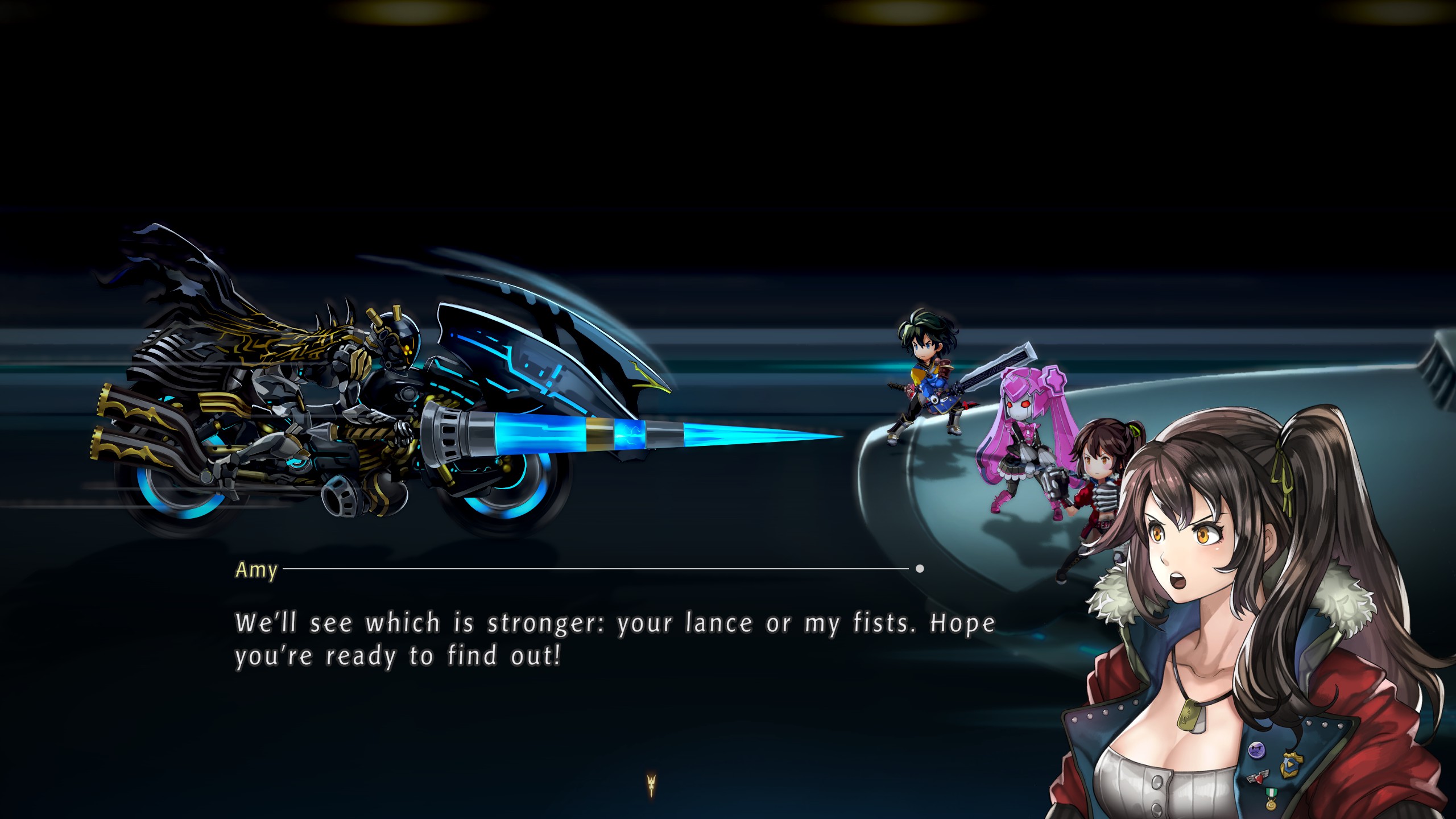
One significant way that Another Eden Begins enhances its narrative experience over the mobile game is that all the dialogue pertaining to the main story is fully voice-acted. I decided to use the English voices for my playthrough, and they were all quite solid across the board. Some voice deliveries that stood out for me were Amy’s and the Man in the Observatory’s performances. The brand-new original character in Another Eden Begins, Ramiu, also had a lot of great voice lines.
The English voice track comes with two noticeable caveats. First, some voice lines had inconsistent audio balancing, so their volume was way lower than the surrounding voice lines. I hope this issue is ironed out quickly, because it does blemish the experience during the moment. The other issue is that only the dialogue that pertains to the main story is voiced. All the side quests are sadly not voiced in English.
This is a bit of a shame. Another Eden Begins, and its original mobile game, often utilize lesser-known English voice talent to breathe life into their characters; I found it very refreshing to see these talents shine in Another Eden Begins now that they could fully perform their dialogue lines in the main story.
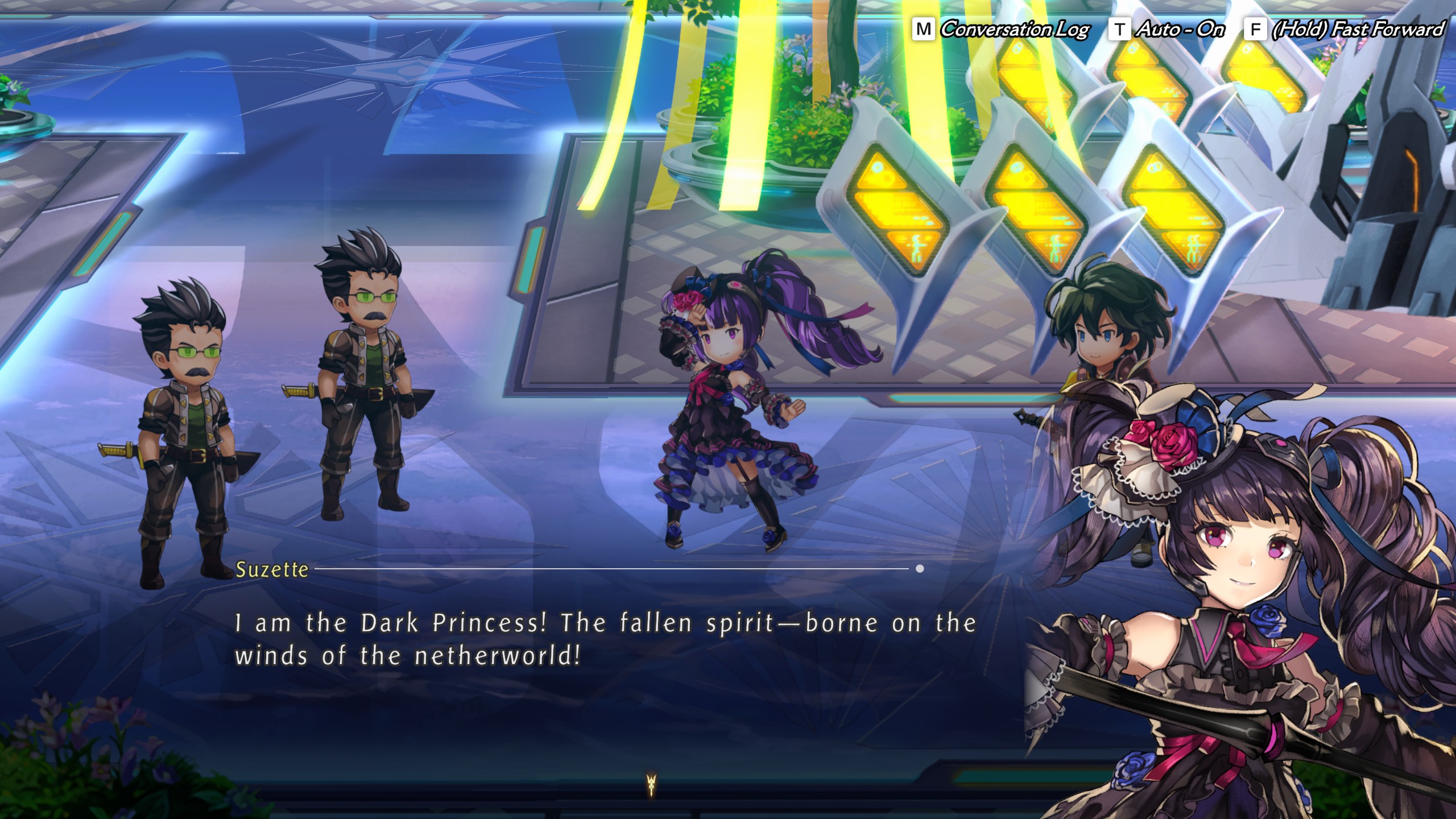
Most of the playable characters in Another Eden Begins are optional, though. Their recruitment quests and side stories are, well, not relevant to progressing the main story. They do have voiced lines, but they are merely just a few phrases they shout during battle like in the mobile game. I think this is a huge, missed opportunity that creates a divide over the quality of the presentation of main story interactions versus side story interactions.
Normally, I would be okay with this juxtaposition of what’s voiced and unvoiced in most RPGs. This instance stings a little more, since I was particularly fond of the variety of uncommon voice talent I heard in Another Eden Begins. Plus, there can be long stretches of unvoiced interactions because side quests usually come in batches as main story progression dictates when they become available.
Here’s the thing. On the Japanese voice track, both of these caveats vanish. The audio balancing was no longer an issue, and all of the side quest scenes were fully voiced. I’m not sure if the developers plan to add the English voices by the time Another Eden Begins launches or in a post-update patch, but I really, really hope they do.
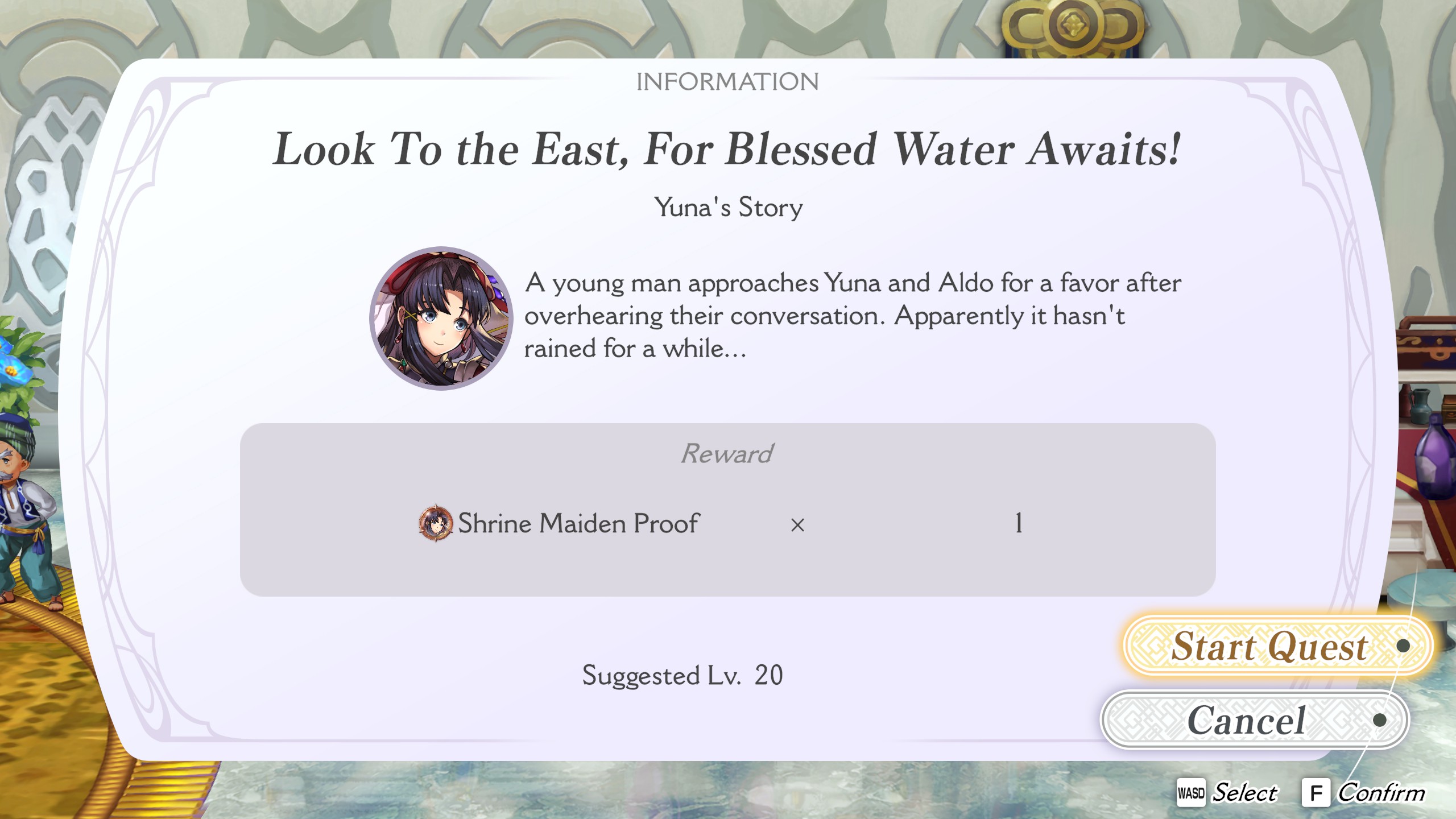
Another aspect that was a letdown for me is the lack of variety in its side content. Almost the entirety of its side quest offerings revolve around Ally Quests. These mostly mirror the character quests from the original mobile game; they are mini story arcs that are presented in three parts. Ally Quests often reveal a character’s background, personal reasons for doing what they do, and/or expose a part of themselves they don’t let others know.
Ally Quests are available for almost every single one of the 16+ playable characters, so that’s already at least a total of 48 Ally Quests. Most of these quests are simple “head to the next objective point to see the next scene” and sometimes there will be the occasional fight. They aren’t too interesting when it comes to player interactivity, though the overall story beats for them range from okay to great.
None of the Ally Quests are necessarily bad, though they can often feel like a chore when doing multiple chains of them in a row. I see Another Eden as a vessel to deliver many smaller varied stories, and that can be detrimental to the pacing of its main story if you are like me and want to do all the side content as soon as they become available.
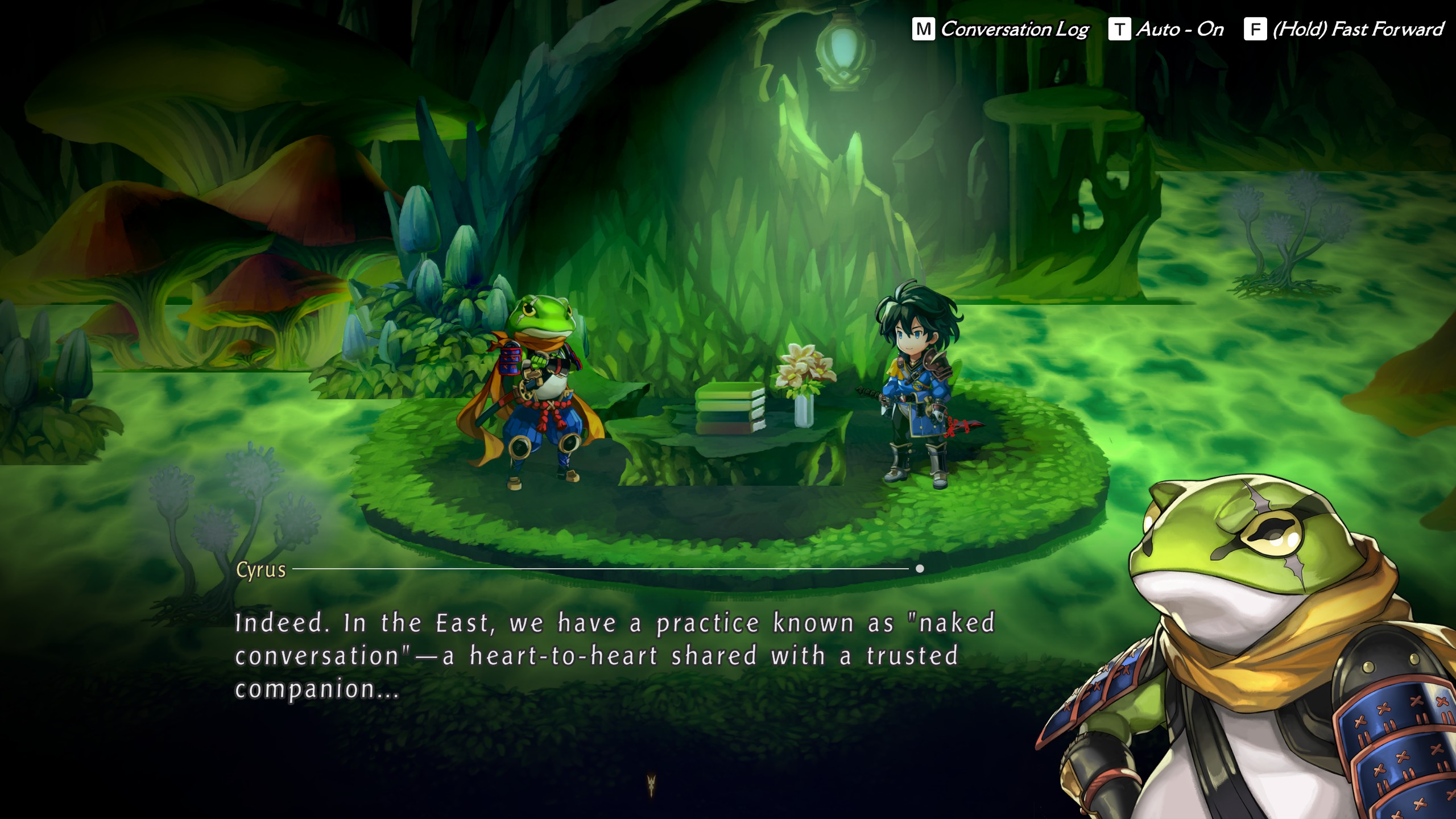
While the three-part character quests in Ally Quests are the main course of an optional character’s story arc, the new Encounter Quests and Kinship Events in Another Eden Begins help flesh them out in small ways.
Since these optional characters are no longer obtained through a gacha system, Encounter Quests are small tasks to recruit them as they gradually unlock throughout the main story. Some characters do have slightly more involved tasks before they join Aldo, in which players must utilize the newly added crafting system.
Meanwhile, Kinship Events are new tiny follow-up scenes after every character quest is done. They unlock when a character’s kinship level reaches certain thresholds and are required to progress to their next character quest. It’s impressive how well these events have integrated themselves in between the character quests, because these are all new for Another Eden Begins. Though the scope of these scenes is relatively small, I liked how often they made a character’s friendship with Aldo feel more cohesive and organic.
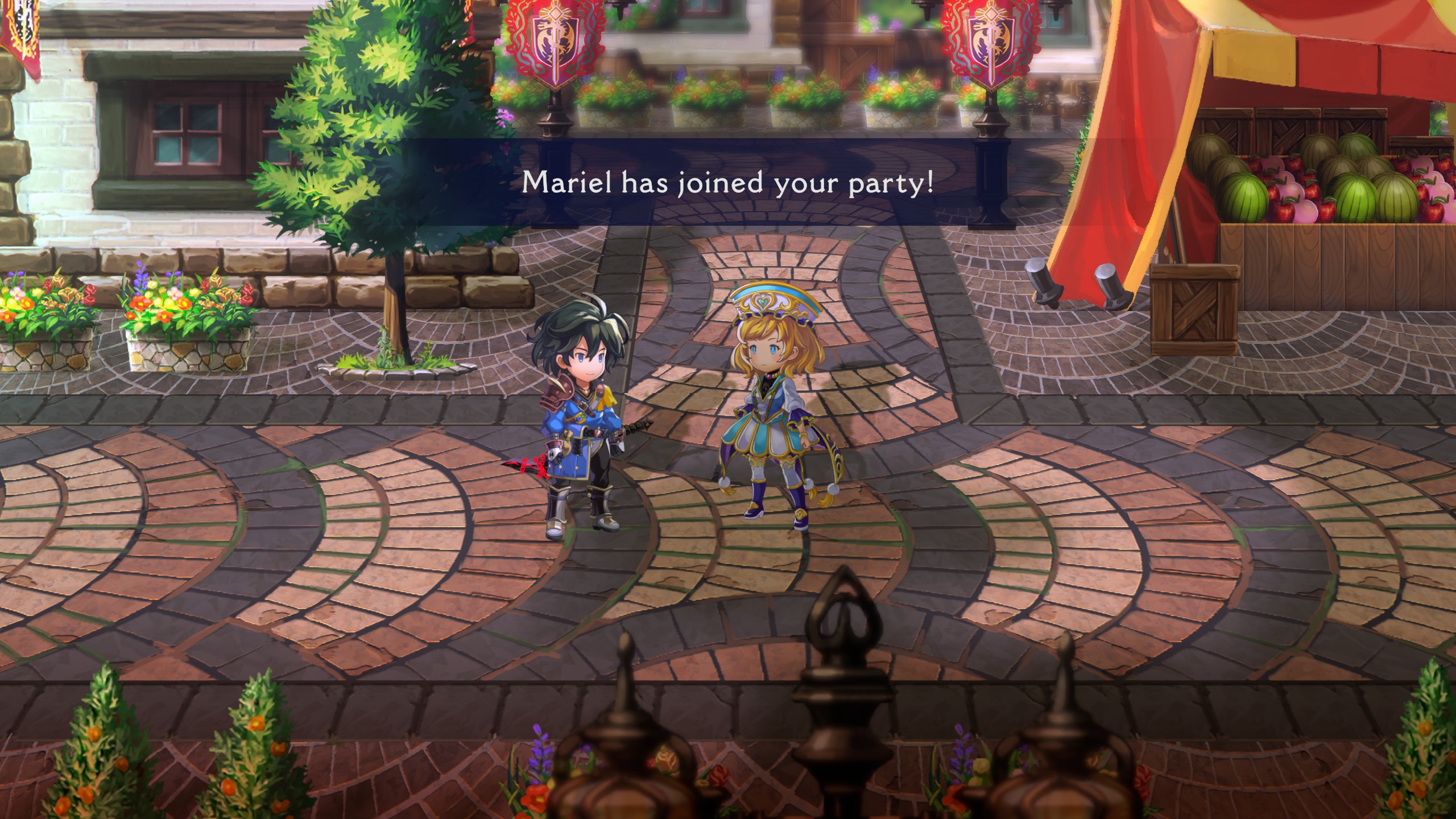
I wish Another Eden Begins included a few more side questlines that weren’t part of Ally Quests. There is only one side quest chain that isn’t tied to an Ally Quest, which makes the separate Side Quests tab just to display this one quest chain comedic once I came to that realization. I’m a little surprised that even The Time Mine and the Dreamers side quest from the mobile game didn’t make its way to Another Eden Begins, since that entire quest chain took place during the first story arc of Another Eden.
Nevertheless, I kind of understand the tricky balancing act of why a lot of the side quests from Another Eden’s original mobile game didn’t make it. A lot of them feature characters that were playable in that game, but not in Another Eden Begins. The lengthier, more involved Mythos side stories were introduced after the first story arc concluded, as well. Plus, including too many would make Another Eden Begins feel bloated on top of all the Ally Quests that might overwhelm newcomers.
While Another Eden Begins faithfully adapts the beginning of Aldo’s journey to the conclusion of its first story arc, it makes some meaningful changes to its gameplay that significantly separates it from the mobile game’s experience.
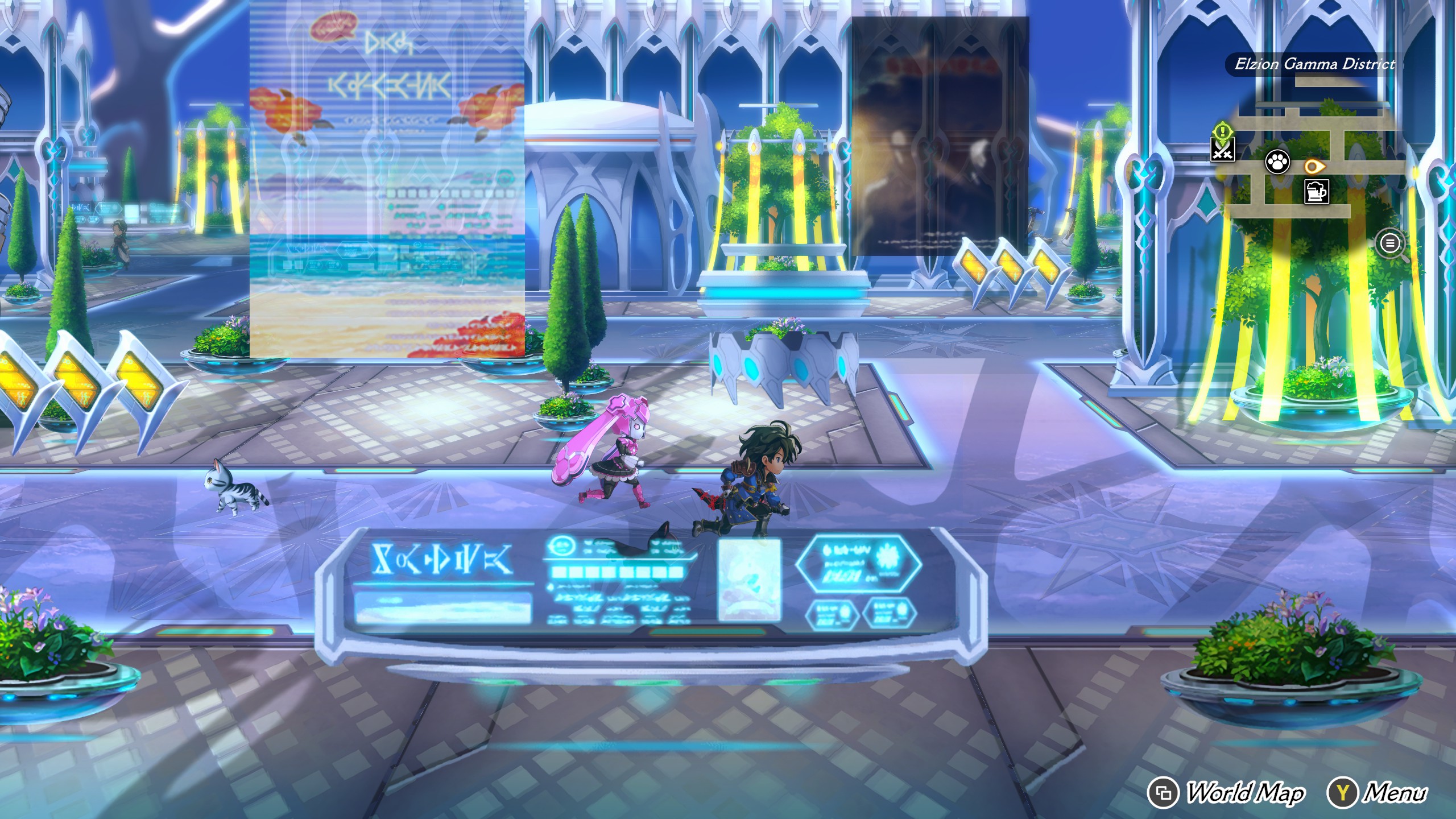
Another Eden: The Cat Beyond Time and Space’s movable space only allowed players to move strictly left and right, while occasionally moving “up” or “down” as if the player was switching lanes to further continue down a linear path. Another Eden Begins still keeps the mobile game’s map layouts, but people can now move their characters freely in 360-degrees, so the act of movement feels considerably smoother and less restrictive.
This pairs nicely with another new change in Another Eden Begins. Instead of initiating combat through random encounters, enemies now roam around. Players can choose if they want to engage or run past them if there’s enough space to do so. Traversing through areas goes by much more quickly, especially if the next part of a quest is somewhere in the middle of a dungeon. I hope that the developers add a run toggle in the options; having to always hold down a button to run for hours does suck.
Battles in Another Eden Begins exhibit a nice facelift compared to the mobile game. While its basic mechanics seem similar on the surface, the new systems introduced in Another Eden Begins make it feel completely different altogether. An active combat party still consists of four party members on the field.
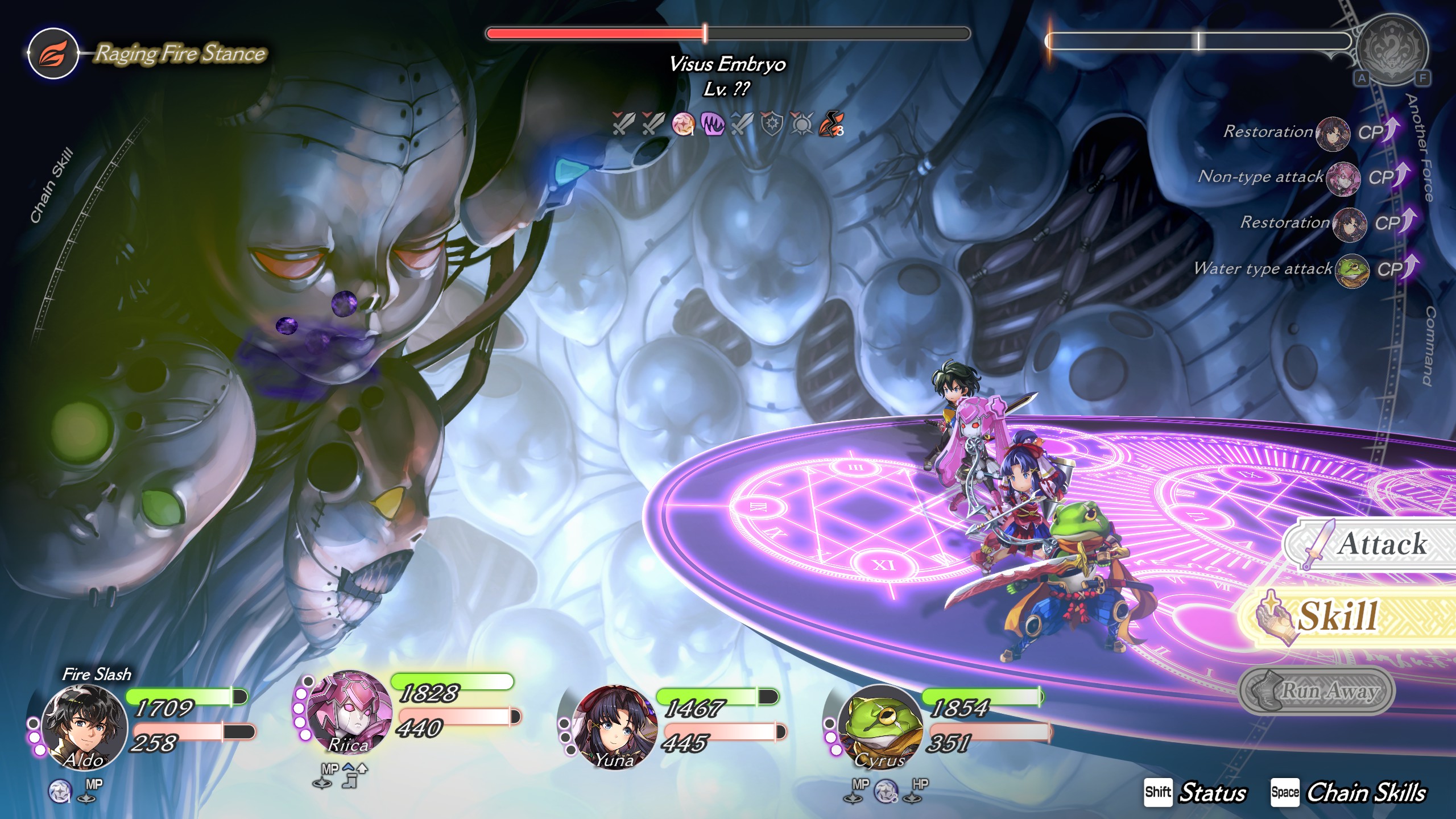
Unlike the mobile game, characters in Another Eden Begins now have a chain skill that automatically fires off when a character gains enough chain points. The chain skills themselves have different ways they acquire chain points; some gain them when an ally’s HP is restored, when a certain elemental attack is utilized, when a status ailment ticks, and such.
What makes this chain skill system compelling is that several chain skills possess attack properties themselves, so they can be the pre-requisite of filling up the chain points of other party members.
For instance, the chain skills of Aldo and two other party members may require fire attacks to fill up their chain points, and they may need two or three chain points to execute them. A party member might have a skill that attacks an enemy three times with a fire attack, so that “primes” the chain skills of the other party members. That party member’s chain skill requires slash attacks to execute – so Aldo’s chain attack, that’s a slash attack, then fills up the chain points for that character’s chain skill, which is a fire attack.
While there is an upper limit to how much a chain skill can be used in succession to prevent an infinite loop, there is an element of Another Eden Begins that makes it highly addictive for people who love experimenting in optimizing their combat performance. A fun addition to this mechanic is the two accessory slots for each character.
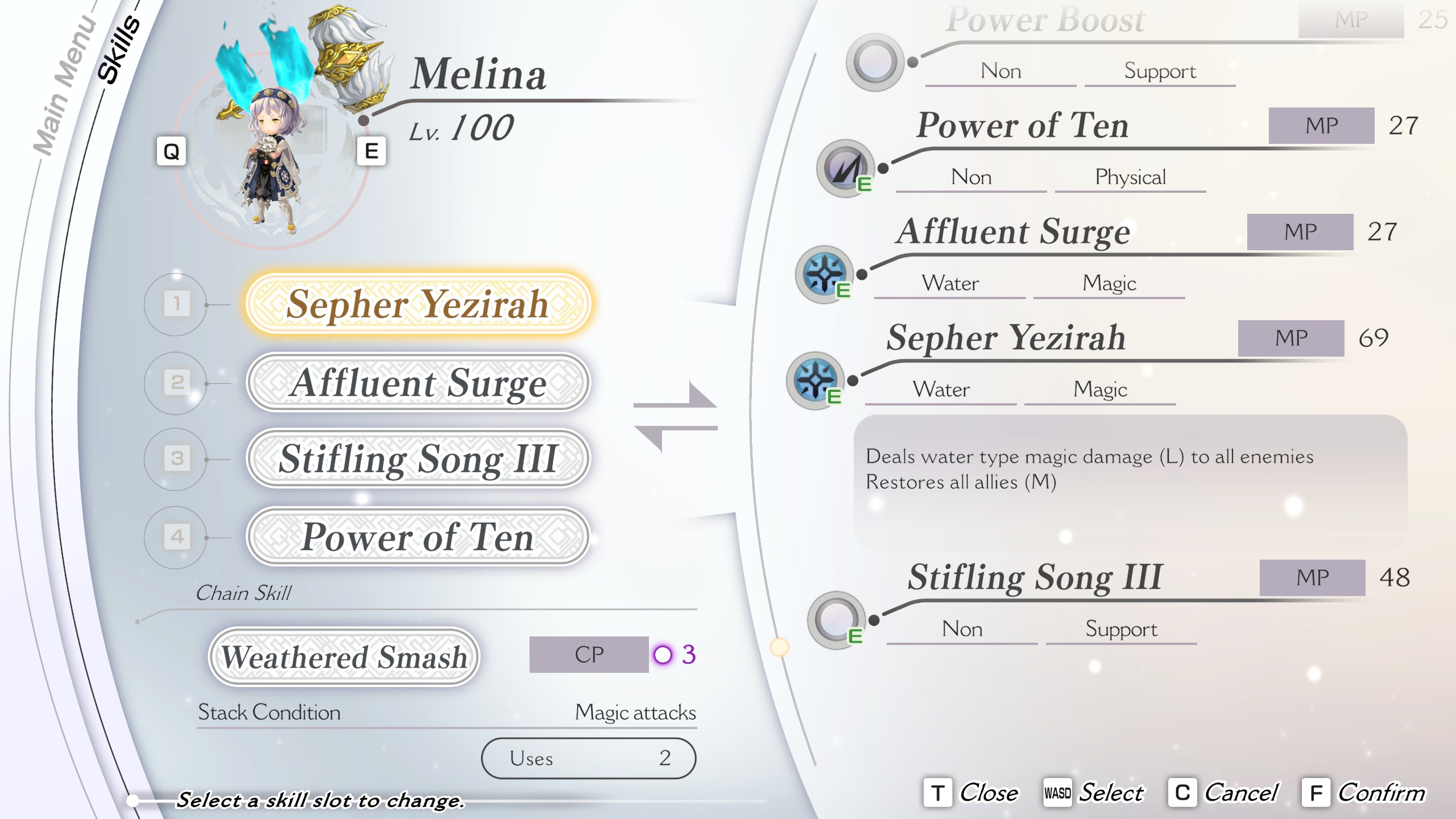
As people take down elite enemies and bosses, they’ll acquire their badges or proofs that can be equipped as accessories. These can provide stat boosts, passive traits, or add a new active ability. A character that may not mesh well with a wind-focused party at first might become more viable for it once a suitable badge or proof grants them a wind ability to trigger the chain skills of the other party members.
Furthermore, completing all the character quests for a specific ally will reward players with that character’s badge. Another ally of the same weapon type can equip that character’s badge and equip one of their chain skills onto them. This opens up even more possibilities and avenues of experimentation that makes the combat system in Another Eden Begins incredibly engaging and versatile.
Unfortunately, Another Eden Begins has no useful sorting or filter options for its inventory. Once I obtained a sizable amount of badges and proofs, finding specific ones for characters became annoying. Those that give an active skill only say the name of the skill; people have to go to a character’s skill list and hover over that skill to find out what it actually does.
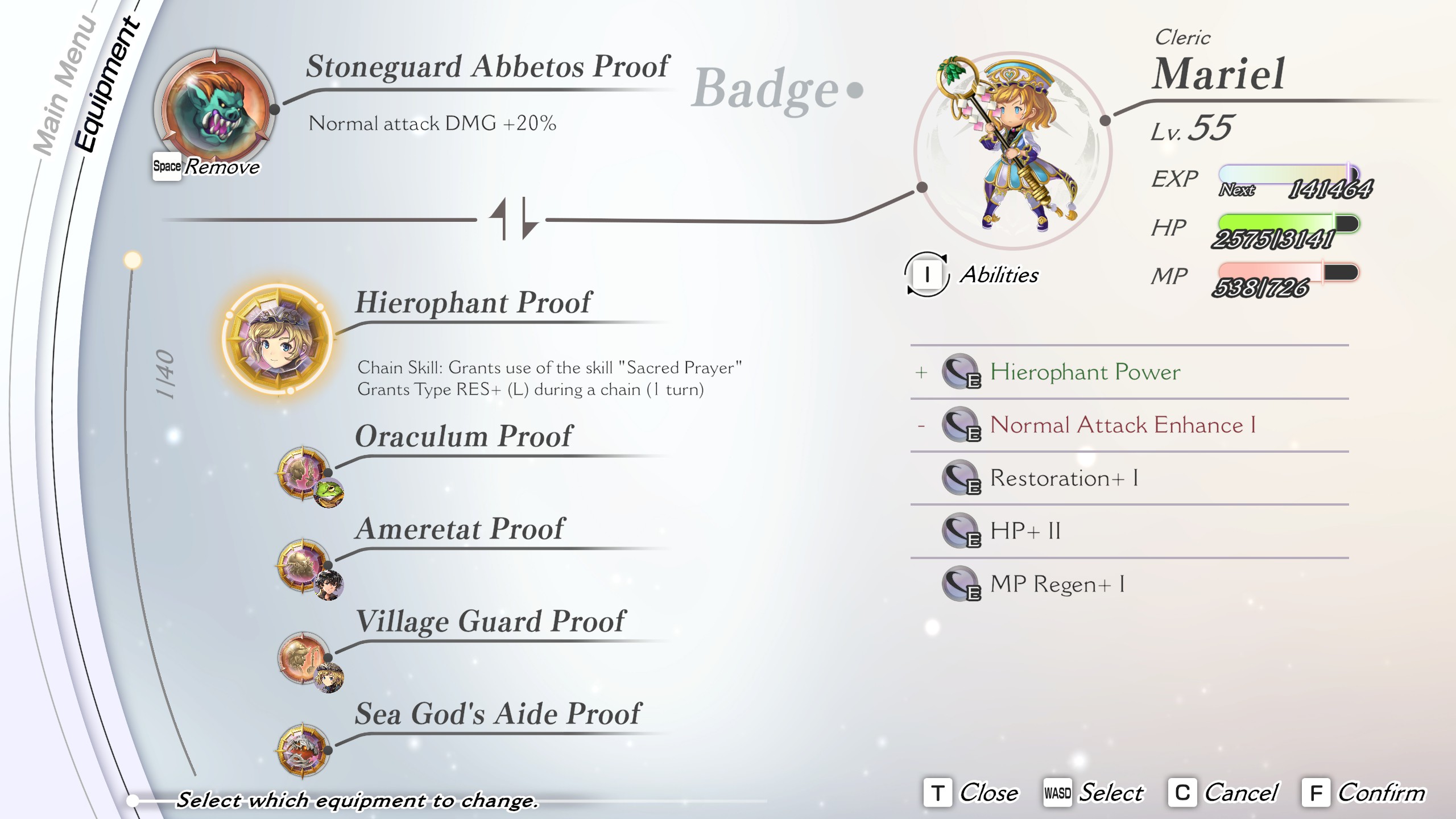
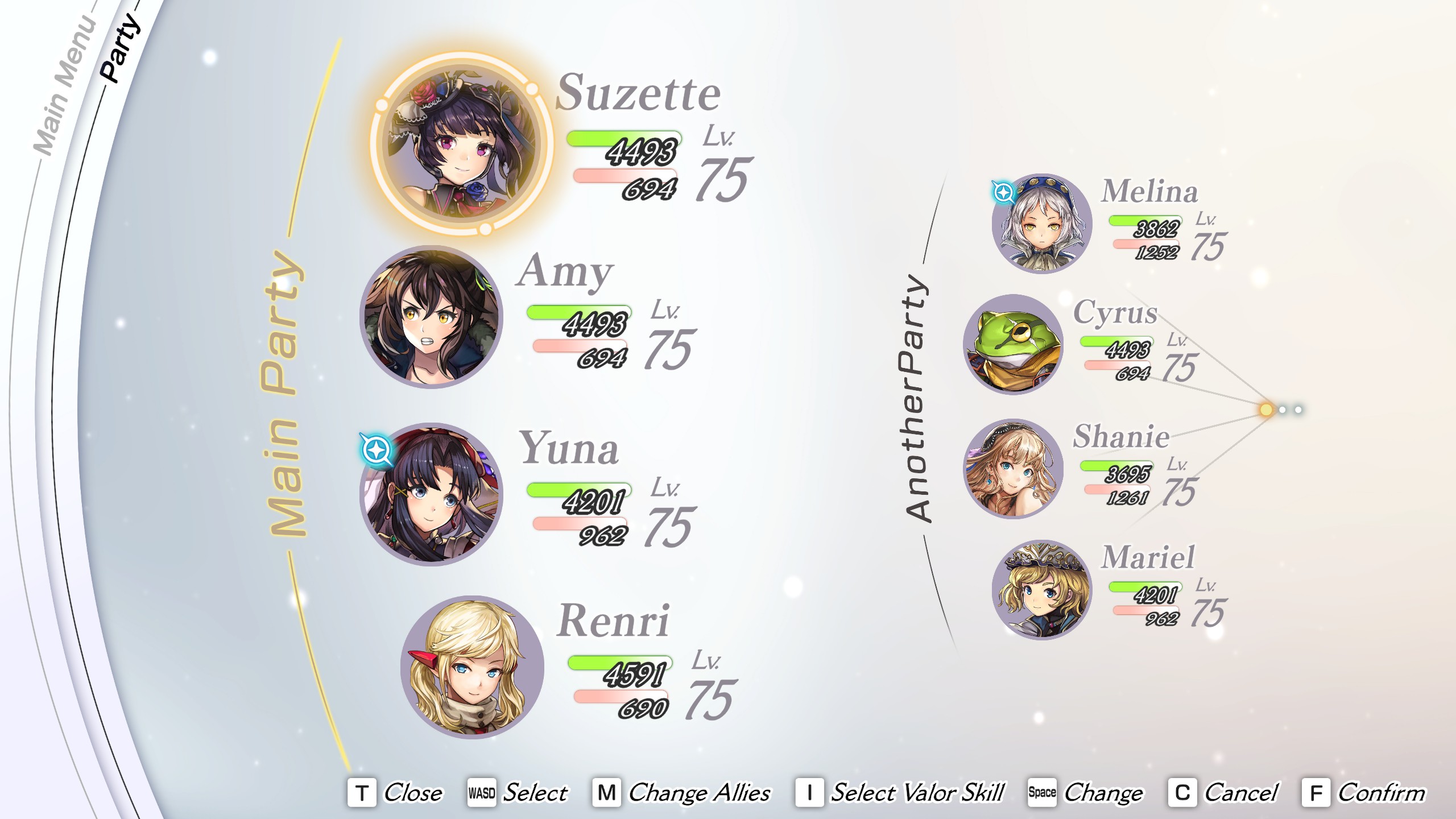
Players are heavily encouraged to form multiple combat parties. The new Valor Change system allows people to seamlessly swap to a different party of four, once the Valor Change command has gained at least three charges; one charge is built per turn and persists after a battle ends. Switching to another party activates that party’s leader skill, which varies per character.
Up to three secondary parties can be formed. When performing a Valor Change with the current active party, players can decide which of the three other parties to swap to. If a character is slotted into any of the parties, main or otherwise, they will receive full EXP from a battle so leveling multiple characters simultaneously isn’t a concern.
One legacy mechanic still present in Another Eden Begins is the Another Force system. Once its meter is at least half full, players can activate Another Force to freeze the battle and attack relentlessly with their party’s skills that are now on a timed cooldown. Obviously, activating Another Force when it has more meter means it will last longer.
Since Another Eden Begins expects people to build multiple parties, the game naturally doesn’t shy away from providing its healthy dose of mean bosses. While it does take awhile for its difficulty to get going, the bosses in the latter part will happily kill a squishier party member in two hits. Buffs, debuffs, and knowing when to switch to another party becomes an expectation.
I personally find it oddly rejuvenating that Another Eden Begins, like its original mobile version, doesn’t rely on stagger bars to arbitrarily extend a fight. There is a life bar and sometimes, a boss might have another phase; there are no additional bars that dictate when players can start to do substantial damage. Kill the boss before it kills you and if a player happens to find a tactic that shaves off a boss’s HP bar in half on the first turn, congratulations!
When characters reach certain levels, they’ll obtain ability points. These are spent on a character’s two ability trees. Aldo’s two trees, for example, specialize in his ability to deal fire or non-elemental damage. People can freely invest their ability points between the two trees, though the more powerful skills and passives are naturally located in the deeper parts of the trees. There is a consumable item that allows a character to refund all their ability points if a player wants to respec.
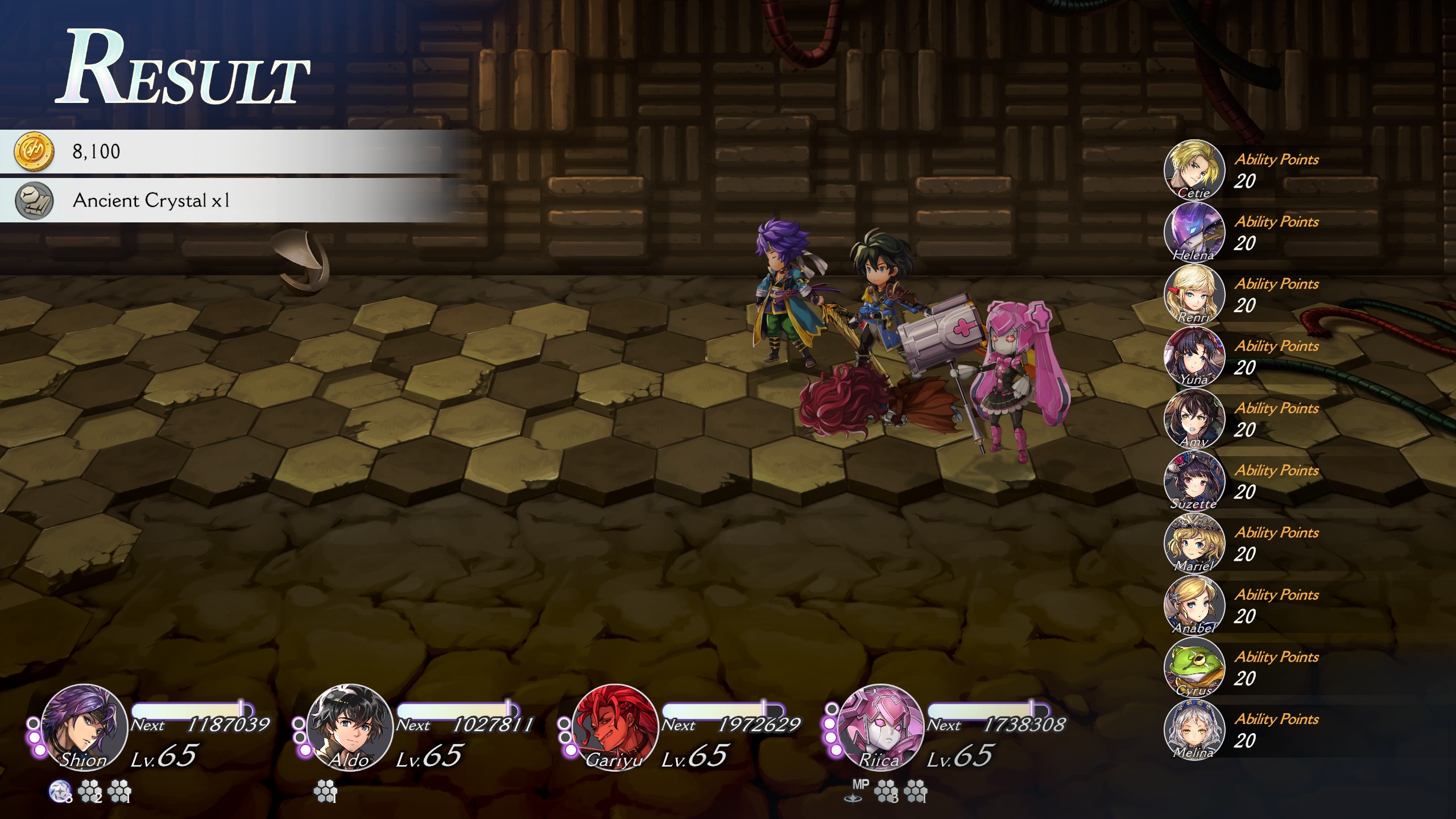
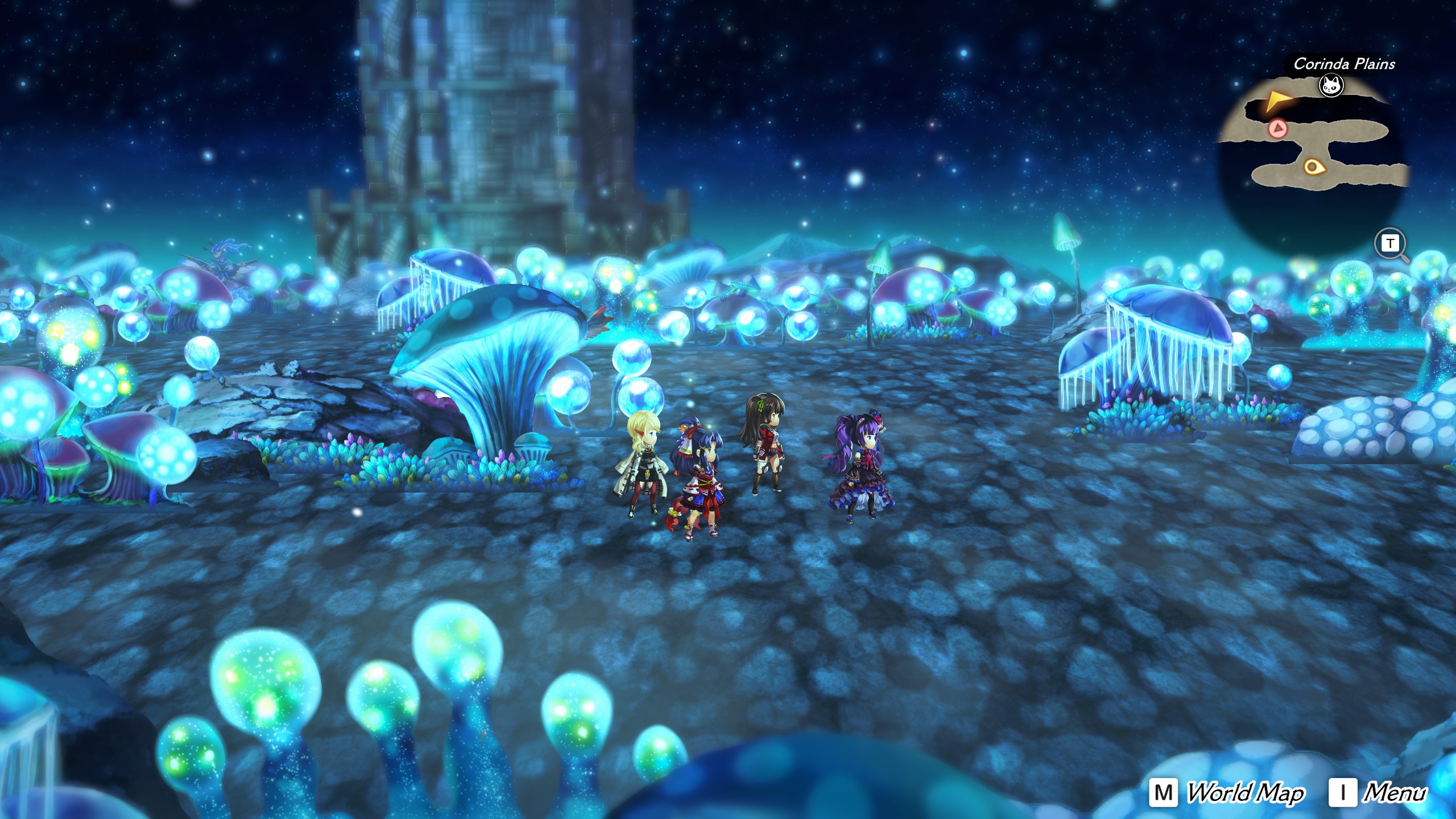
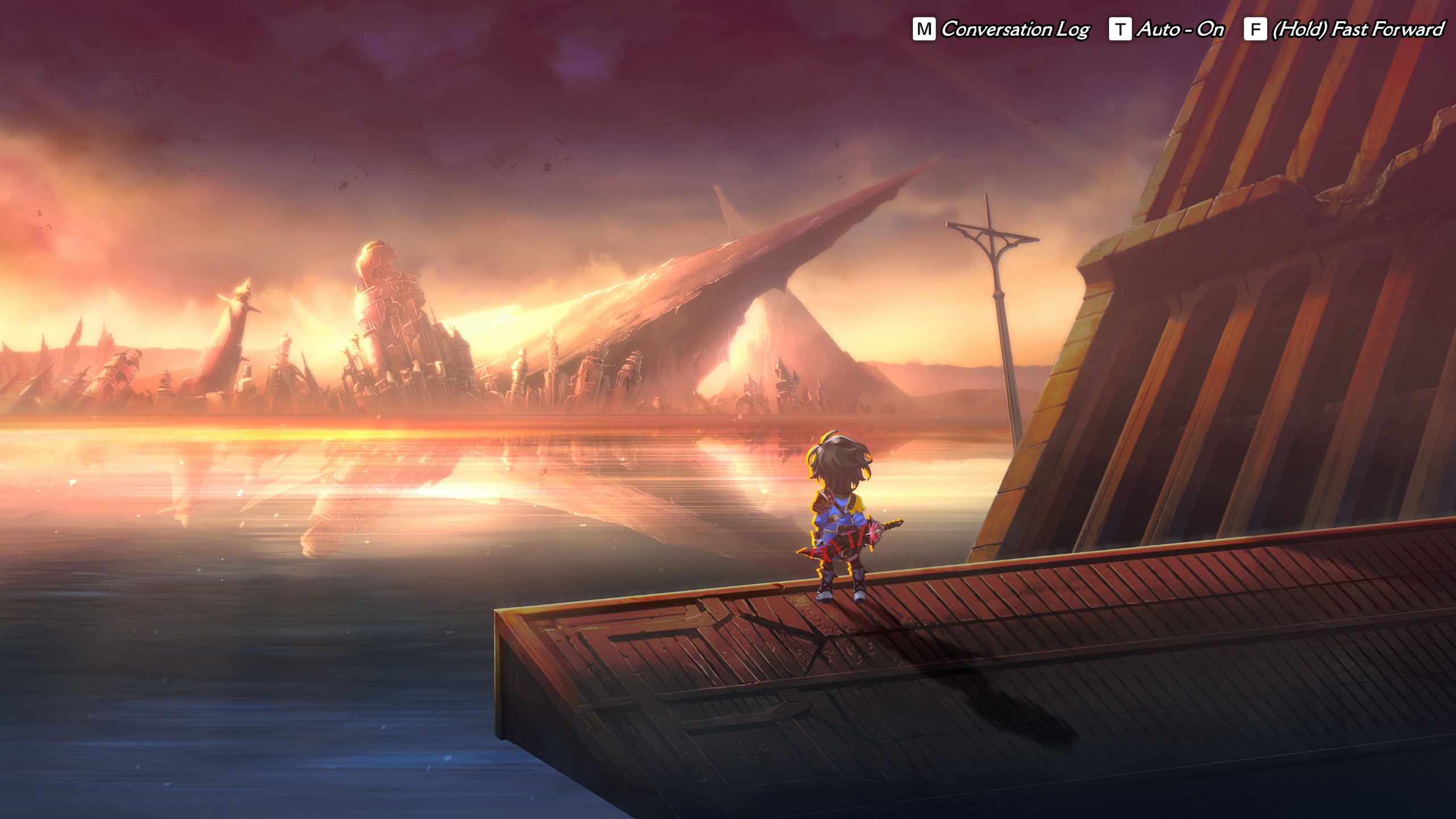
Those that have previously played the Another Eden mobile game will immediately notice the amazing visual enhancements that Another Eden Begins provides. The improvements to the environmental lighting are vividly striking, and the overall color palette is considerably more vibrant. Everything feels fresh again. I especially love what they did to the lighting in the Spacetime Rift and Corinda Plains.
Another Eden’s visual identity is preserved in Another Eden Begins with a tasteful amount of polish enhancements that don’t take away from what makes it charming. Whether someone jives with its artstyle and graphical direction is a matter of opinion of course, though no one can deny that Another Eden has paved its own look and feel that is unique to it.
I think Another Eden Begins captures the spirit of a PS1-era JRPG very well. There have been similar projects that convey that they want to deliver a PS1-era JRPG, yet misunderstand or miss the mark of why those games are timeless. Some are too tastelessly referential, while others lose sight of their inspirations to chase the trends of that moment.
The RPGs that people grew up with and revere on the PS1 were crafted for a broad age range, and I think a lot of modern games that try to capture that specific form of nostalgia often forget that element. Systems and mechanics in several PS1 RPGs were undoubtedly too complex for some at the time, but the stories they told were usually straightforward, simple, and earnest.
That core element is what makes me fond of Another Eden Begins. Its message and themes are easily understood; it isn’t trying to obfuscate them, nor is it beating the player over the head with it through constant comedic quips.
Additionally, Another Eden Begins’ soundtrack is amazing. It’s composed by Procyon Studio’s Yasunori Mitsuda, Shunsuke Tsuchiya, and Mariam Abounnasr. RPG fans know that all of their track records speak for themselves. Another Eden Begins contains many new rearrangements of the classic tracks that were featured in this first story arc of Another Eden, and they sound incredible. They’re handled in a similar manner to its visuals as they maintain the core identity of its tracks while subtly adjusting several parts to come off in a more pronounced, refined manner.
While I do think the initial playthrough of Another Eden Begins is a solid experience, what truly makes it special is its New Game+ changes and additions. That is sadly all I can say about it; I want to say more, but I’m both not allowed to and I want people to discover it for themselves. Scenario writer Manami Okawa is responsible for a lot of Another Eden Begins’ plot beats in New Game+ and her narrative direction resonates elegantly with parts of Masato Kato’s style of storytelling in a way I don’t think I’ve ever seen before. I really, really liked it - way more than I thought I would.
I normally don’t bring up external factors when reviewing a game, but I think it is appropriate for Another Eden Begins. These revolve around its brutal release timing and DLC situation that adds playable characters.
Despite technically announcing its release date before Trails in the Sky 2nd Chapter and Fire Emblem: Fortune’s Weave did, Another Eden Begins finds itself as a direct competitor to both of these titles on its release date. I can only wish it the best of luck and strongly urge people to check it out whenever they can. It’s a fantastic game, and I think it’s one of the best RPGs that’s come out this year, so far.
Another factor that doesn’t work in the game’s favor is the five DLC packs that add two characters each, along with their respective Ally Quest chains. They are $10 USD per pack and the “Season Pass” to get them all at once is about $45 USD. Two of those packs, adding four playable characters, will be available on the game’s release date… which doesn’t look great compared to Trails in the Sky 2nd Chapter and Fire Emblem: Fortune’s Weave.
I honestly think this is a big misfire for Another Eden Begins, which is a shame. They should’ve either been all included, or the asking price should’ve been much lower. Even without any of those DLC characters, I still remain steadfast in my belief that Another Eden Begins is an incredible game, though I wholeheartedly understand people’s reluctance and hesitation to get it because of this reason.
Another Eden Begins is another fantastic addition to the growing lineup of RPGs that were originally mobile games, yet received an offline version without any of the monetization practices from their parent mobile release. The enhancements to its visuals are stunning as someone who once played the mobile game years ago. Meanwhile, its new combat mechanics are highly addictive for those who love to optimize their battle performance. Its inconsistency of what’s voiced between language tracks is a bummer and other flaws do hold it back in unfortunate ways, but I believe how Another Eden Begins handles New Game+ is its X-factor in tipping the balance to make it an astonishing game overall.