

Etrange Overlord Review
Etrange Overlord is my biggest surprise of the year so far. A perfectly-paced action RPG with a phenomenal cast of characters, and a genuine sense of ironically grim humor. It's also, at least partially, about fixing the inept mistakes of God himself, swearing off any kind of "pre-determined" route for your life. It's a scrappy little game that constantly punches above its weight and knows exactly what it wants to be. The result is something utterly delightful from start to finish, with no fluff in between.
Etrange Overlord comes from Gemdrops, SuperNiche, and Sohei Niikawa, the creator of the Disgaea franchise. And if you're familiar with the latter, you'll instantly see the same sort of irreverent off-the-wall humor in Etrange Overlord. This is a story that decidedly never takes itself too seriously, more than happy to throw a few ridiculous twists into the mix while subverting a whole host of game and anime tropes — from poking fun at the generic feel of Isekai stories, to naming one of its major characters Doomaz (reads as 'dumbass').
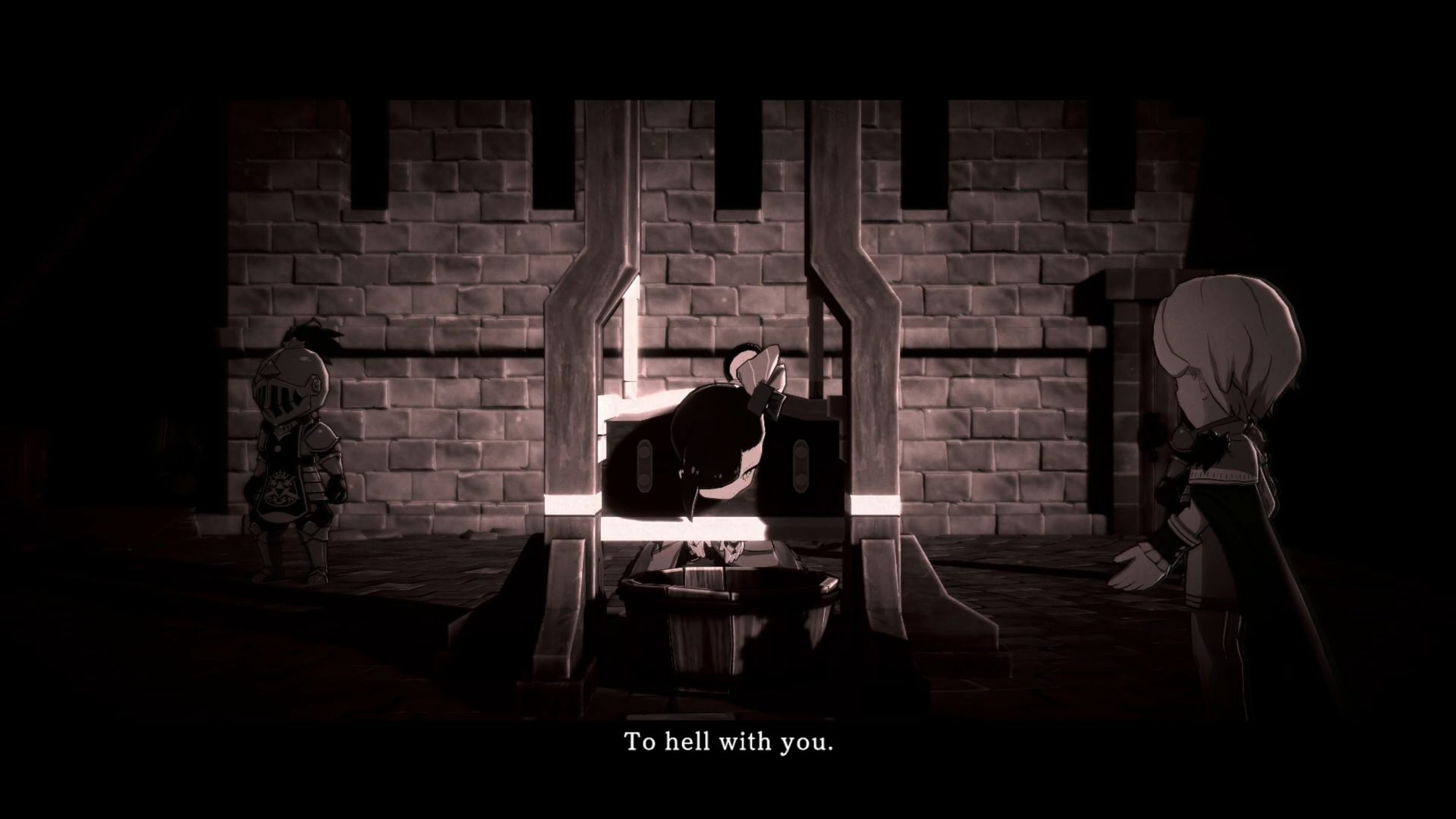
You play as Etrange von Ronsenburg, and the game quite literally opens with her execution after she was falsely accused of assassinating the king & queen. Sent to hell for a crime she didn't commit, the aloof Etrange becomes determined to live a "happy life" in the underworld, and she begins defeating the resident hierarchy of demons. Although she's not set on a revenge quest, her wish to live a happy life inadvertently puts Etrange at odds with the rulers of hell, and ultimately, even heaven. The overarching theme of this story is living life the way you want and not letting other people, organizations, or even religions define who you are.
While that main theme is driven home, there are some surprisingly thoughtful critiques of the way we view religion in our lives, the idea of an omnipotent God, and how that faith is challenged in the wake of great tragedies. It's especially surprising that those elements are present because Etrange Overlord isn't a serious game. There's constantly slapstick humor and absurd dialogue thrown in your face, but the game manages to effortlessly balance that with truly meaningful character work, bringing a cast of charming weirdos to life. Etrange herself is a fascinating heroine who doesn't really need to go through any "growth," but is already filled with self-determination, confidence, and a strong moral compass, which partially makes the juxtaposition of her going to hell even more comedic.
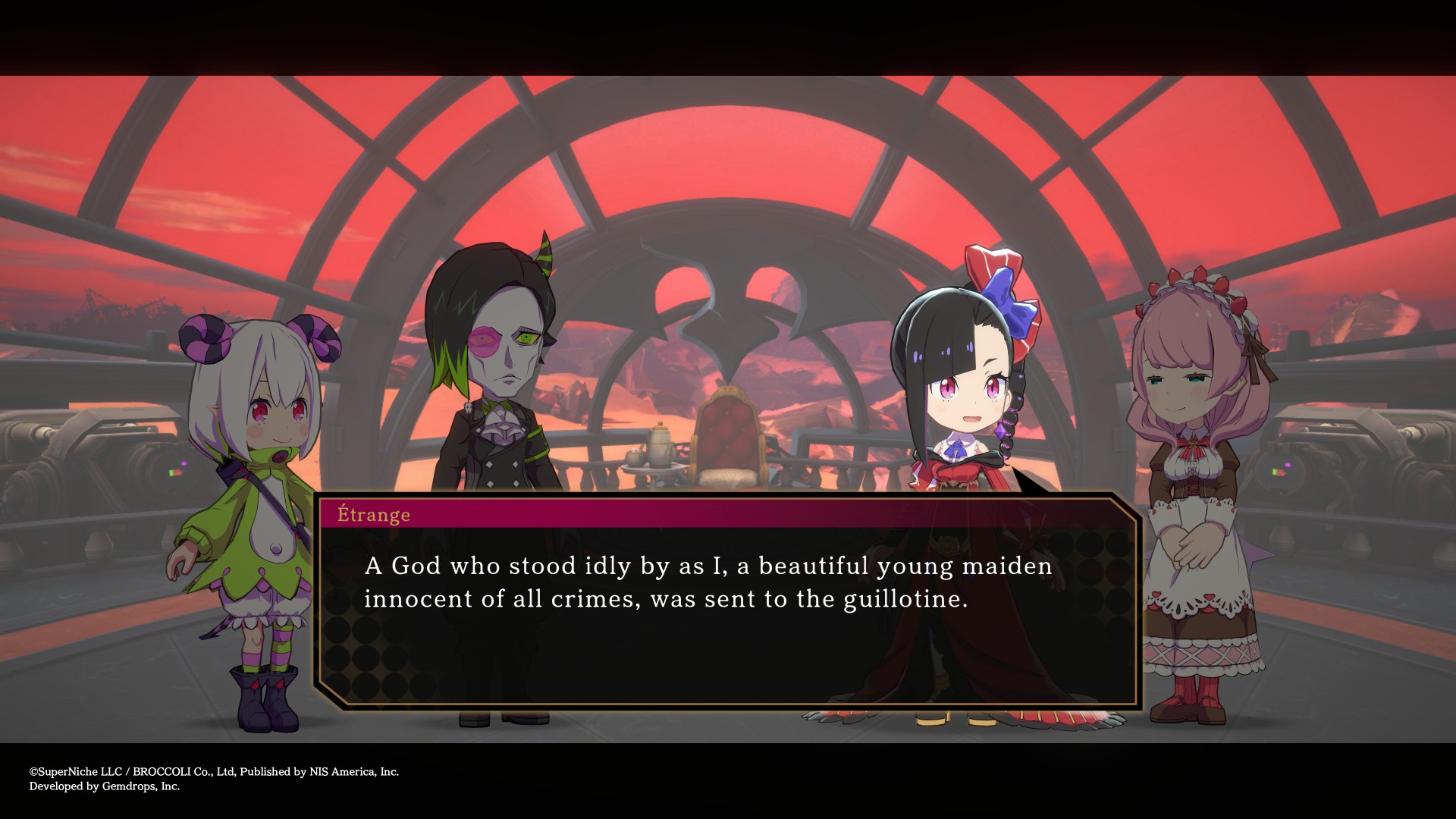
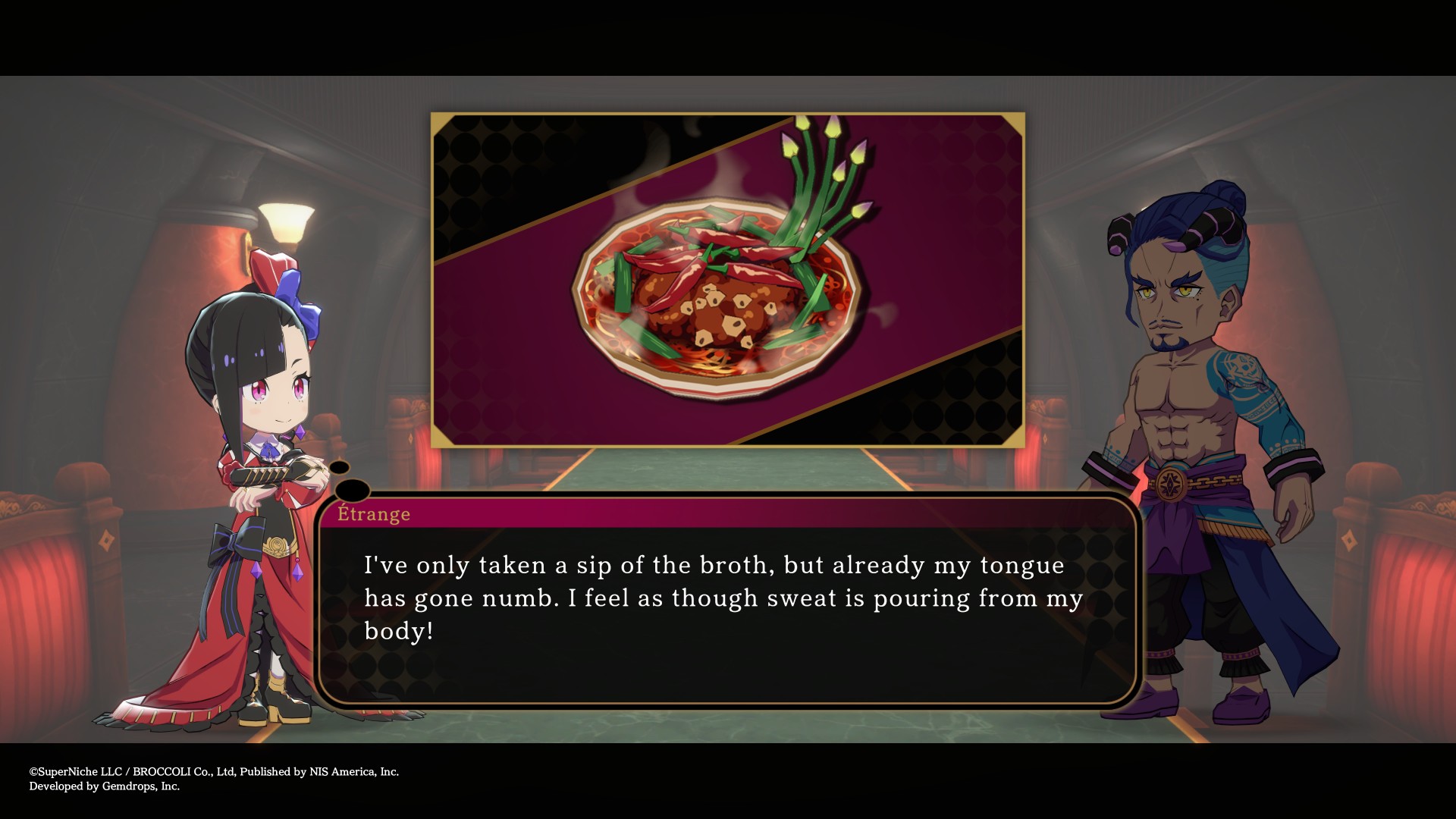
Etrange partially plays into that trope of the overpowered Isekai hero, but flips it on its head in some unexpected ways. Then there's the ensemble cast that all feel equally distinct, from the gun-toting mercenary Schwartz, who's beaten by Etrange and grows a deep admiration (and fear) for her, to Cerberus, the guardian of hell, turning into three catgirls obsessed with dessert. Get used to lengthy talk about sweets, as both Etrange and the game itself are obsessed with culinary delights of all kinds.
And while I won't claim that Etrange Overlord has some grand thematic treatise, part of the game's biggest surprise is just how genuinely well-written it is. There's a real flow to the way dialogue plays out, and it's headier than what you might be expecting from this. That comes as a blessing as dialogue makes up much of Etrange Overlord's runtime, and that edge to its writing means that the story and world are constantly engaging. It's simply a joy to spend time with these characters. The only real catch with Etrange Overlord's story is that the game bills itself as a "musical adventure," and I admittedly found the musical element to not be quite as present as I would have liked. I'm actually a sucker for musicals; I have been my entire life, but Etrange' Overlord's songs, while fun, feel too thin and scattered. The story itself is snappy and hooking, but the musical element can sometimes feel like an afterthought.
But even with that fact, Etrange Overlord is perhaps one of the most perfectly paced games I've ever played, as it knows how to keep the gameplay experience varied and the story moving along. Part of that is because of the relatively simplistic gameplay and combat design, which, in the case of this 15-20 hour experience, packs in just the right amount of depth.
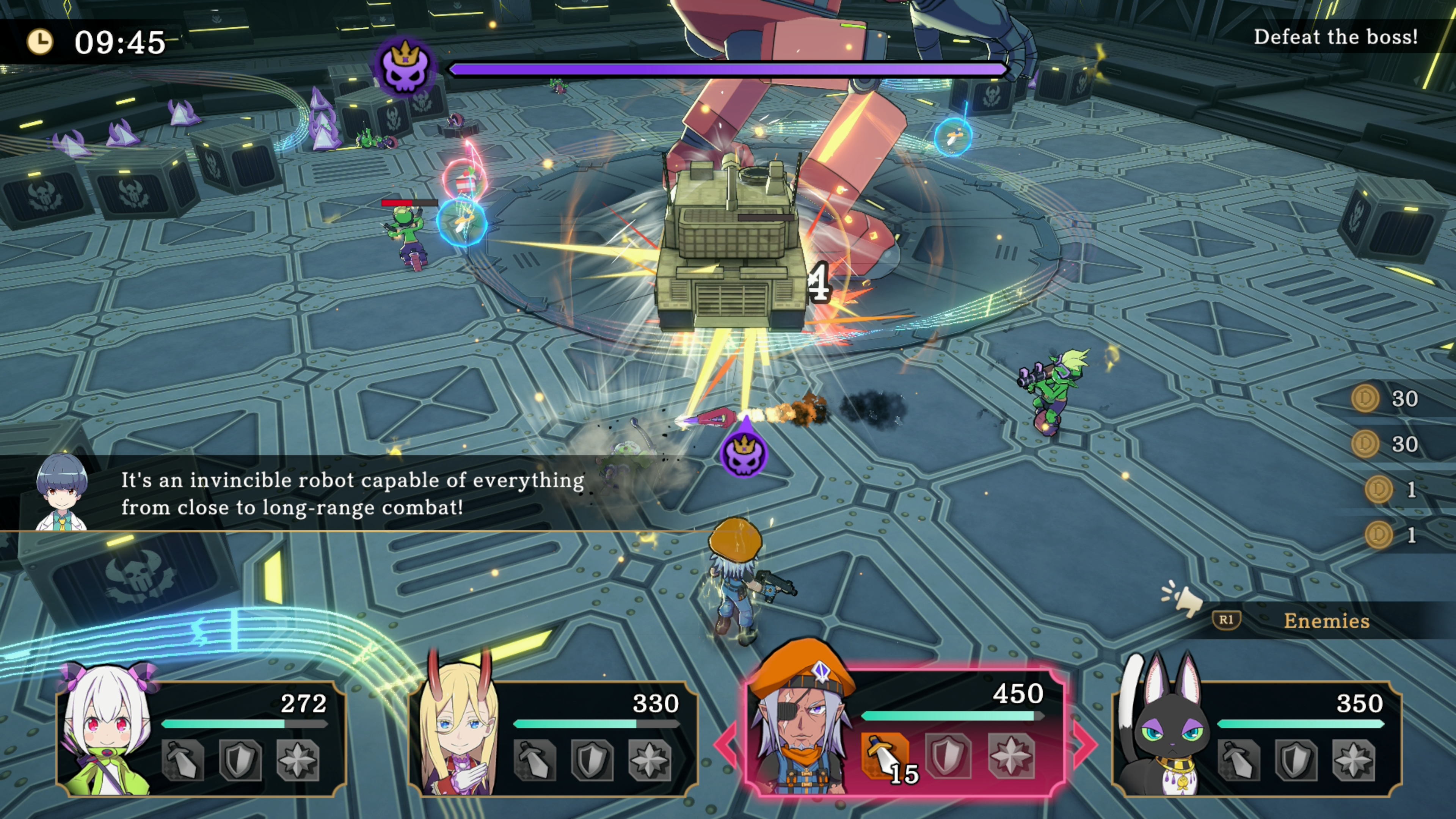
The game plays out on a world map, where you undertake bite-sized combat missions, while a selection of side missions gives you extra details on characters and new recipes for food to cook. Etrange Overlord's combat is decidedly simple; you take four characters into battle, and each one has a combo attack, dodge, and special attack, and that's it. Every character does have their differences, but the complexity of Etrange Overlord really comes with its Lane System. During battle, items and power-ups will flow along a musical track, things like boosting your attack power, bombs you can throw, special attack charges, electricity bolts to power machines, and more.
Even though the core mechanics of combat might feel initially restrictive, Etrange Overlord brilliantly uses the Lane system to introduce a wealth of little tweaks and gimmicks into combat. Across the entire experience, you're constantly introduced to fun little twists that shake up combat. In one mission, you need to throw robotic devices into a machine to turn them into bombs, before timing it just right to make the boss suck the bomb up and stagger it. Another is a one-on-one duel between Etrange and the boss, with an electrified wrestling ring where you need to stand on a switch to get the Lane to move, and the items you need, all while dodging attacks.
I would have liked to see a little more depth in those core combat mechanics, but the gimmicks and Lane system do such a good job of mixing the formula up that I ultimately don't really care about that initial simplicity. In between battles, you can improve your forces aboard Etrange's ship, the Macaron, by upgrading weapon levels, boosting specific power-ups on your Lanes, and cooking dishes that provide buffs for one battle. As you get further in the game, you'll also unlock new ways to gather items, namely a dispatch system where you send your allies to specific regions to conduct missions, and occasionally put down a rebellion against you as hell's new overlord.
Much like everything else in Etrange Overlord, what astounds me about all these progression systems is how well-tuned everything feels. Progression isn't bogged down by overly complex systems or the need to grind, but expertly drip-fed throughout the entire experience, bolstering that already snappy pacing.
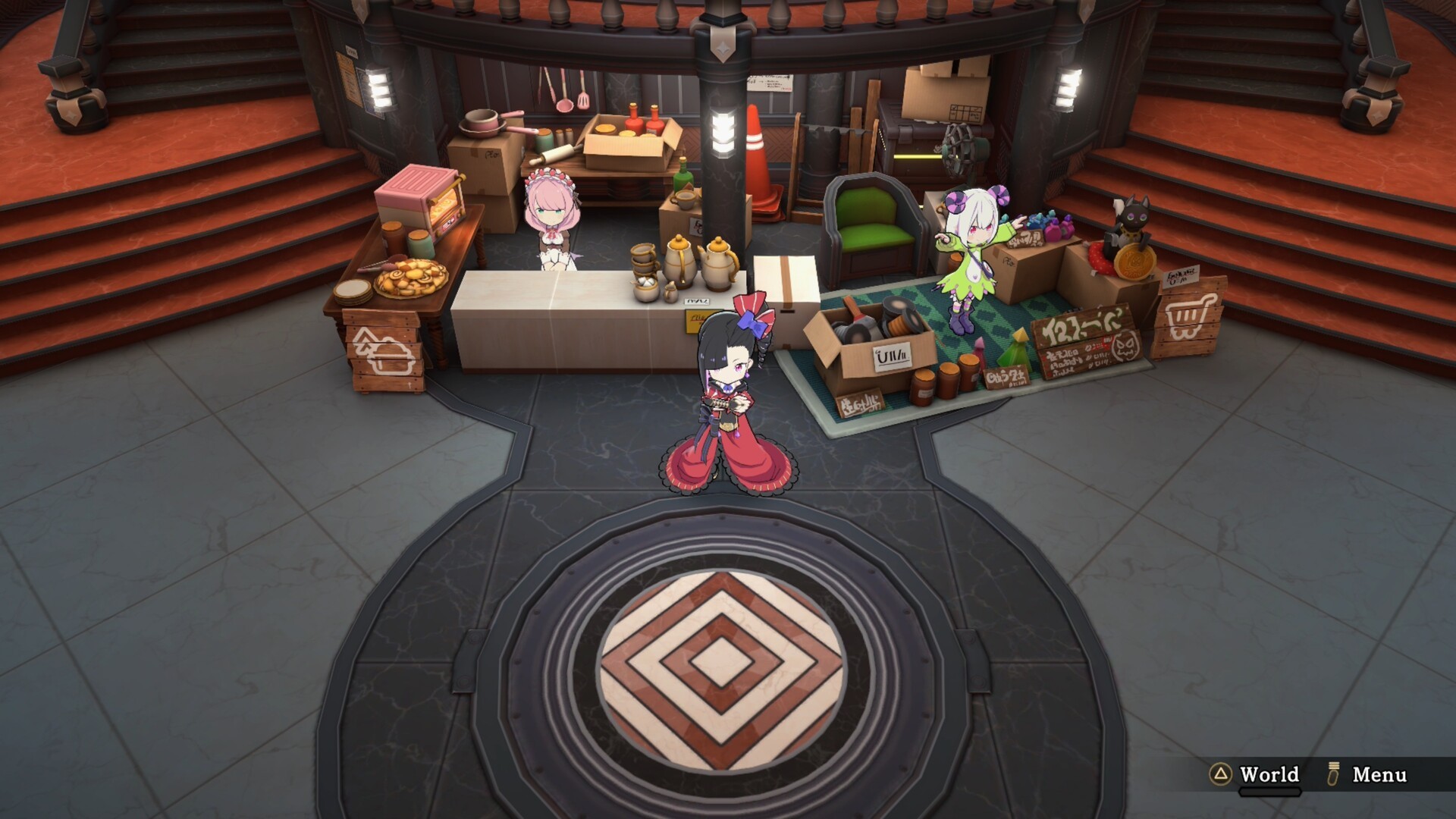
That's what makes Etrange Overlord really stand out to me: how neatly tuned and organized everything feels. This is a compact experience in every sense, and a wonderful reminder that not every game needs to have excessive amounts of side content or over-designed levelling systems. Everything in Etrange Overlord is there to serve a purpose. There's absolutely nothing superfluous, and thereby not a single moment I found myself bored with the game.
The sheer quality of writing and surprising narrative statements help give Etrange Overlord a bit of an edge, and the experience may sit with you after the credits roll. It's a journey that leaves you as warm and satisfied as the desserts its indelible heroine is so obsessed with.